









Human Robot Harmonic Joint Module with Torque Sensor and Integrated Cable Connector
● Introduction
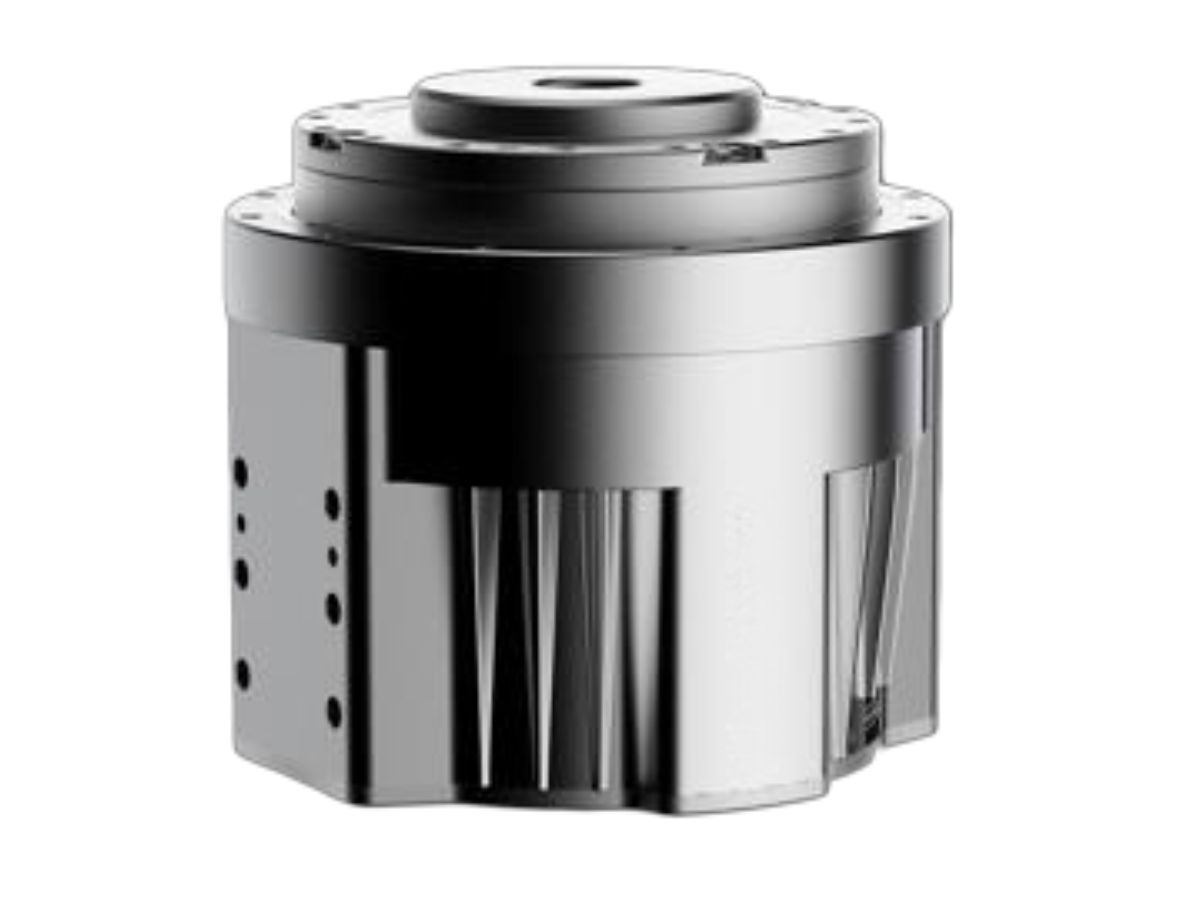
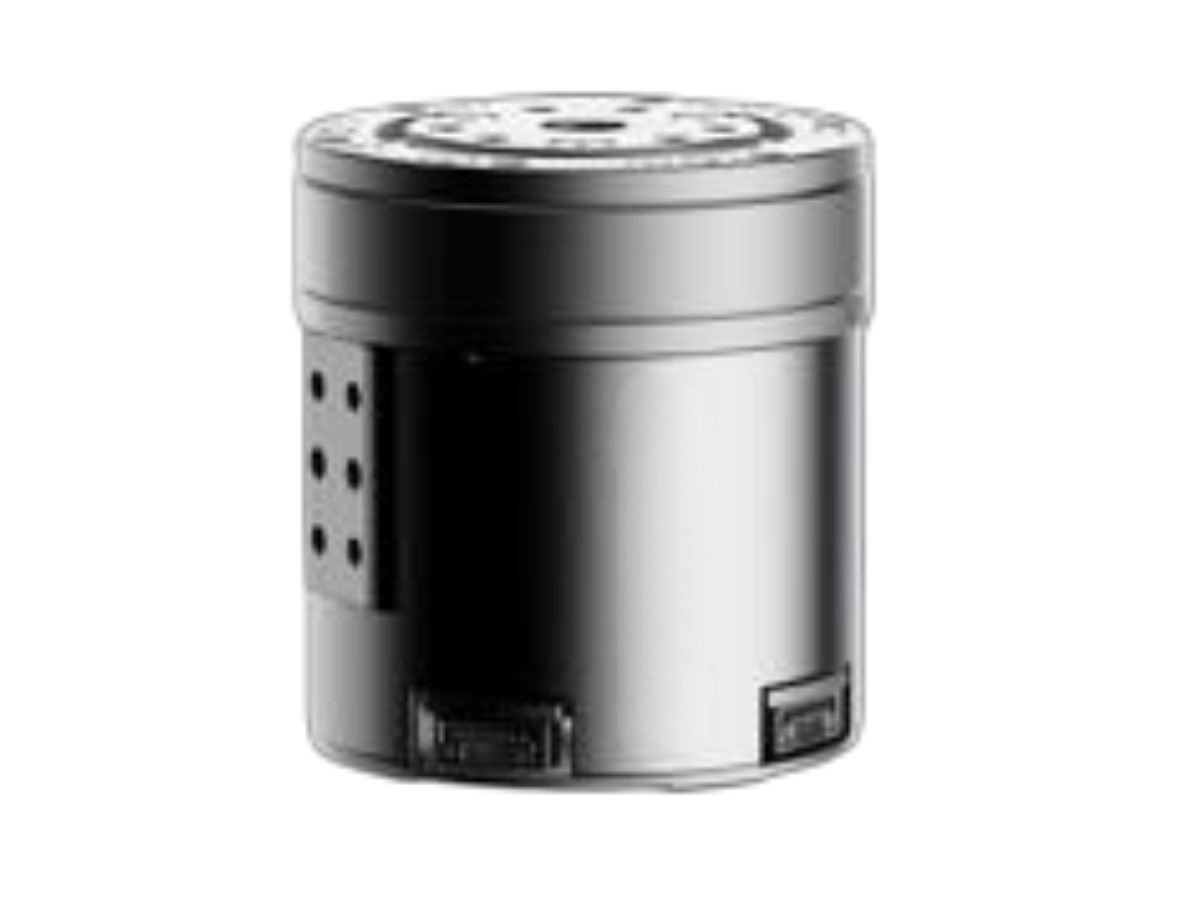
The module features fully integrated cables and connectors, allowing fast, precise component connections and enabling safe, responsive motion control through a highly integrated design.
Multiple Connection Methods
This joint module support flexible and diverse installation options:Double-sided mounting,Single-sided mounting,Bilateral through fixation,Bottom mounting,Radial fixation,Rod fixation

Designer Speaking
Primarily developed for users in the field of embodied intelligence, this system features comprehensive mounting interfaces while significantly reducing joint volume and weight, allowing users to systematically reduce the weight and manufacturing complexity of connecting components. Furthermore, it integrates an output torque sensor without increasing the weight or volume of the joint, enabling the robot to achieve higher dynamic response performance, superior data acquisition quality, and greater load-carrying capacity.
Features of TCHL Harmonic Joint Module
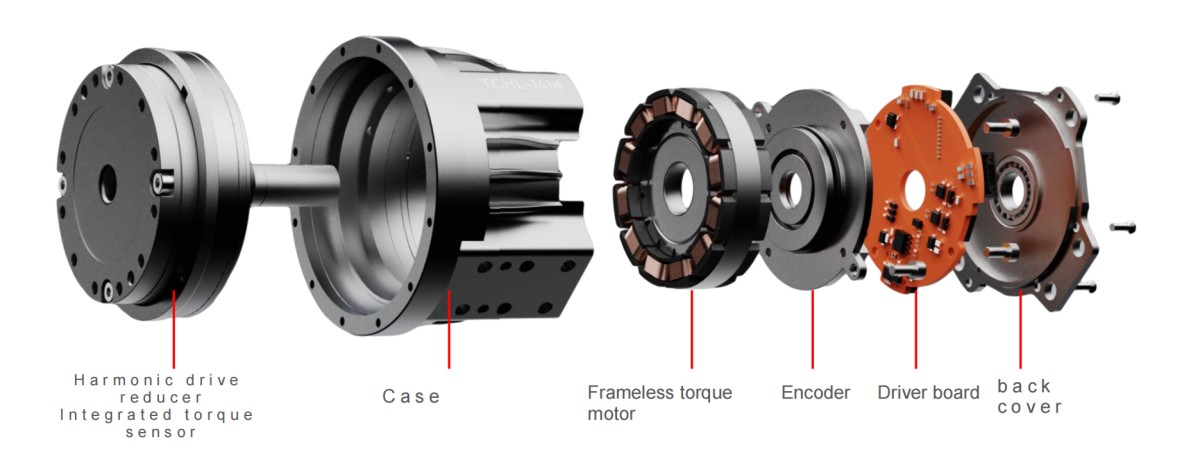
Integrated force/torque sensor on the reducer side, enabling closed-loop force and position control
Fully integrated cables and connectors for simpler and more reliable robot wiring
Ultra-lightweight design: the 14-size model weighs only 0.5 kg
Innovatively integrated electrical connectors, supporting flexible and diverse installation configurations
Supports CAN and EtherCAT communication protocols
Integrated power supply and multi-protocol bus, capable of passing through the hollow shaft of size 14 and above
Specification
Sheet 1
Specification
What Is the HONPINE TCHL Lightweight Harmonic Joint Module?
The HONPINE TCHL is an integrated harmonic robot joint module designed for applications that require a combination of lightweight construction, compact dimensions, high torque density and force-control capability.
Instead of treating the motor, harmonic reducer, bearing, sensing and mechanical interfaces as completely separate components, the TCHL platform integrates key joint functions into a compact architecture. This approach helps robot manufacturers reduce mechanical integration complexity while creating more freedom in overall robot design.
The TCHL Harmonic Joint Module can be considered for humanoid robots, collaborative robots, lightweight robotic arms, special-purpose manipulators and other advanced robotic systems.
How Does the TCHL Harmonic Joint Module Reduce Robot Weight?
For a robot, joint weight affects more than the joint itself.
A heavier wrist increases the required torque of the elbow, while a heavier elbow can further increase the load requirement of the shoulder. This means that reducing joint weight can influence the mechanical requirements of multiple upstream joints.
The TCHL lightweight harmonic joint module uses an integrated structural design combining the cross roller bearing and circular spline, together with topology optimization technology.
According to the design configuration, the lightweight structure can help reduce joint weight and installation volume compared with conventional joint architectures using multiple separate components.
The practical benefit is not simply a lighter actuator. It can also help robot manufacturers reduce the overall mass and inertia of the complete robotic system.
Why Is Lightweight Design Important for Humanoid and Collaborative Robots?
Humanoid robots and collaborative robots require a difficult balance between torque, weight and dynamic performance.
If the joints are too heavy, the robot may require larger actuators to move its own structure. This can create a chain reaction in which heavier joints require larger motors, reducers and supporting structures.
A lightweight robot joint module can help reduce this system-level burden.
For dynamic robots, reducing joint mass can also improve acceleration, deceleration and overall motion response. For mobile robots and humanoid robots, lower joint weight may additionally help improve energy efficiency and overall system design flexibility.
Does the TCHL Harmonic Joint Module Include a Torque Sensor?
Yes. The TCHL Harmonic Joint Module can integrate a high-precision force or torque sensing function at the output side of the harmonic transmission structure.
This allows the joint to obtain information about the mechanical interaction occurring at the output rather than relying only on motor-side position feedback.
For robots that need to physically interact with objects or the surrounding environment, this information can support more advanced force-aware motion control.
What Is the Advantage of Output-Side Torque Sensing?
Motor-side feedback can provide important information for motion control, but it does not always directly represent the mechanical interaction occurring at the final output.
An output-side force or torque sensing architecture can provide additional information about the actual load condition of the joint.
This can support applications involving force-position hybrid control, contact detection, compliant motion and interaction with external objects.
For example, during precision assembly, the robot may need to detect contact before applying additional force. During grinding or polishing, the robot may need to regulate contact force. During grasping and handling, torque feedback can help the control system respond to changes in external load.
Can the TCHL Support Force-Position Hybrid Control?
The integrated output-side torque sensing architecture provides the feedback foundation required for force-aware motion control and force-position hybrid control.
In these applications, the robot does not only follow a predefined position command. The control system can also use force or torque feedback to adjust its motion according to interaction with the environment.
This can be particularly valuable in precision assembly, compliant manipulation, grinding, polishing, insertion, contact detection and other tasks involving physical interaction.
The final control performance depends on the complete robot controller, control algorithm, communication architecture and application conditions.
How Does the TCHL Harmonic Joint Module Simplify Robot Integration?
Traditional robot joint development can require engineers to separately select and integrate the motor, harmonic reducer, bearing, encoder, sensor and supporting mechanical structure.
Every additional component introduces another mechanical or electrical interface.
The TCHL Harmonic Joint Module integrates key functions into a joint-level solution. This can help reduce the number of separate components and simplify mechanical installation and system development.
For robot manufacturers, this allows more engineering resources to be focused on robot mechanics, motion control, perception, AI, end-effectors and application development.
What Installation Options Does the TCHL Support?
The TCHL Harmonic Joint Module is designed with multiple standardized mechanical interfaces integrated around the housing.
Depending on the robot structure and installation requirements, the joint can be evaluated for different assembly configurations, including double-side mounting, bottom mounting and radial mounting around the housing.
This flexibility can be particularly valuable for special-purpose robotic arms and customized robot structures that do not follow the mechanical architecture of a conventional industrial robot.
Instead of forcing the robot structure to adapt to one fixed actuator mounting direction, engineers can evaluate different mechanical integration approaches according to the complete joint architecture.
Why Is Flexible Mounting Important for Special-Purpose Robots?
Not all robots have the same mechanical structure.
Humanoid robots, medical robots, research platforms, collaborative robots and customized automation equipment may all use different joint arrangements and installation methods.
If an actuator provides only one mounting configuration, additional brackets or connecting structures may be required. These additional components can increase weight, consume installation space and reduce mechanical stiffness.
A joint module with flexible mechanical interfaces can help reduce the amount of additional supporting structure required around the actuator.
For compact and application-specific robots, this design flexibility can be just as important as torque or reduction ratio.
What Applications Are Suitable for the TCHL Harmonic Joint Module?
The TCHL Harmonic Joint Module is particularly suitable for robotic applications where several requirements need to be addressed at the same time, including lightweight construction, compact integration, harmonic transmission and force or torque feedback.
Typical applications may include humanoid robot joints, collaborative robots, lightweight robotic arms, dexterous manipulators, special-purpose robots and precision automation systems.
It can also be considered for applications involving precision assembly, compliant motion, grinding, polishing, handling and other tasks that require interaction between the robot and its environment.
How Should Engineers Select the Right TCHL Harmonic Joint Module?
Selection should begin with the application rather than simply comparing rated torque.
Engineers should consider continuous torque, peak torque, operating speed, load inertia, joint weight and available installation space.
For force-control applications, the required sensing performance and control architecture should also be evaluated. Communication interfaces, feedback requirements, mounting configuration, cable routing and operating conditions can further influence the final joint selection.
For preliminary product selection, customers can refer to the main specifications of the HONPINE TCHL Harmonic Joint Module. For detailed technical parameters and final model confirmation, the application requirements should be discussed with the HONPINE technical and sales team.
Can Different Robot Joints Use Different TCHL Configurations?
Yes. Different robot joints usually have different engineering requirements.
A shoulder joint may prioritize torque capacity and stiffness. An elbow may require a balance between torque and dynamic response. A wrist may place greater emphasis on low weight and compact dimensions. A force-sensitive joint may require torque feedback.
For this reason, robot manufacturers should not assume that one actuator configuration is suitable for every axis.
The joint module should be selected according to the mechanical, control and integration requirements of each robot joint.
Can HONPINE Provide Technical Support for TCHL Joint Selection?
Yes. Robot joint selection is a system-level engineering process.
In addition to torque and speed, factors such as load inertia, installation dimensions, robot structure, control requirements, feedback architecture and application conditions can influence the suitability of a joint module.
HONPINE can evaluate these requirements together with customers and support preliminary model selection and application-specific joint integration.
The objective is not simply to select the joint with the highest specification.
The objective is to identify a harmonic joint module architecture that fits the complete robot.