






Industrial Robot End Effector/Dexterous Robot Hand
Dexterous Robot Hand
HONPINE supports all three major transmission solutions—tendon-driven, direct-drive, and linkage-driven systems—allowing its dexterous hands to adapt to different application scenarios. Since key components such as motors, reducers, and sensors are all developed in-house, and with the support of China’s strong supply chain ecosystem, HONPINE has achieved mass production and cost advantages for its dexterous hands. This has played a key role in advancing humanoid robots, industrial automation, and embodied intelligence.
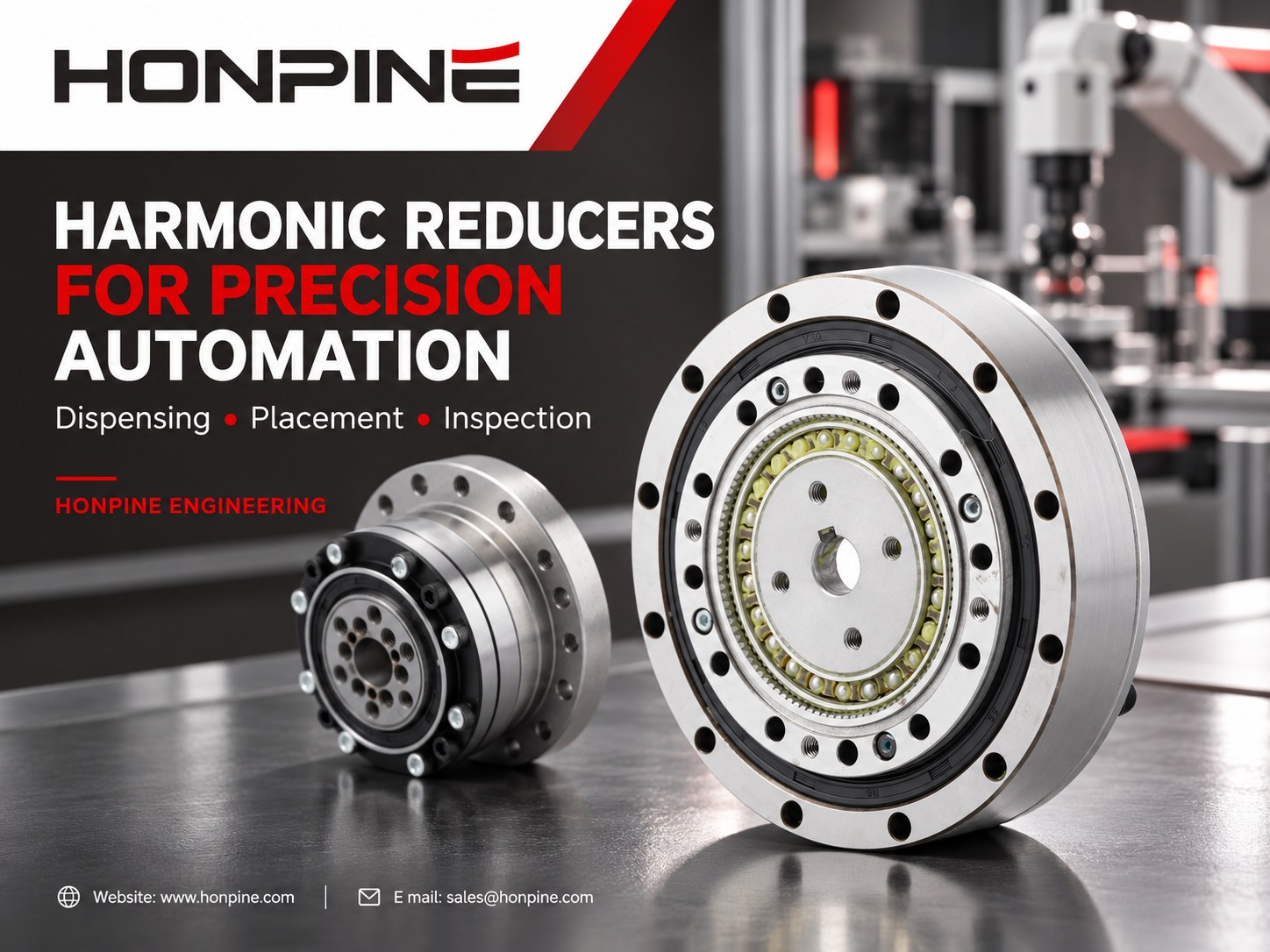
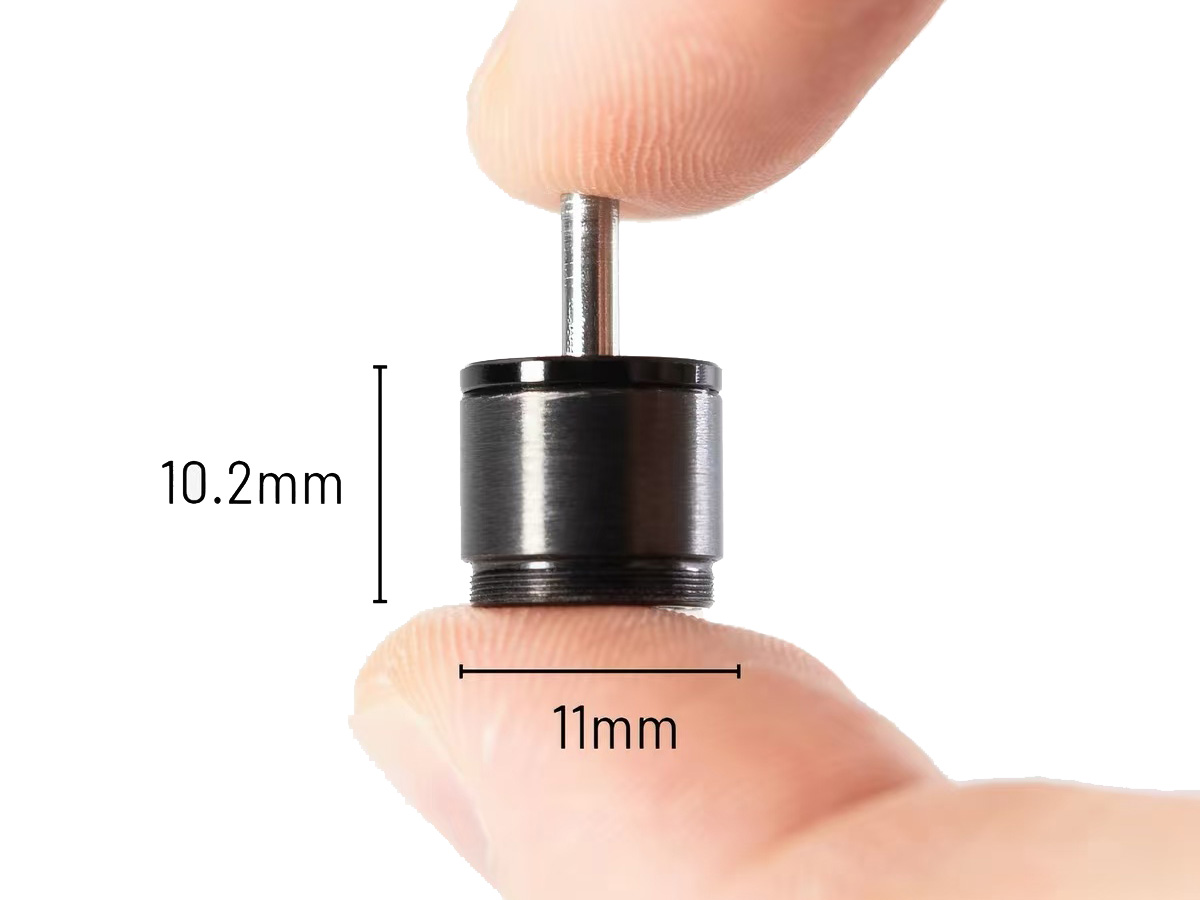
 Micro Harmonic Drive Reducer for Humanoid Robot HandsHumanoid robot hands require highly flexible and precise movements while maintaining a compact, lightweight structure. They also need low operating noise, high torque density, and long-term reliability. Considering these requirements, the HONPINE CSF Micro Harmonic Drive Reducer is an ideal transmission solution for humanoid robot hands and dexterous robotic fingers.
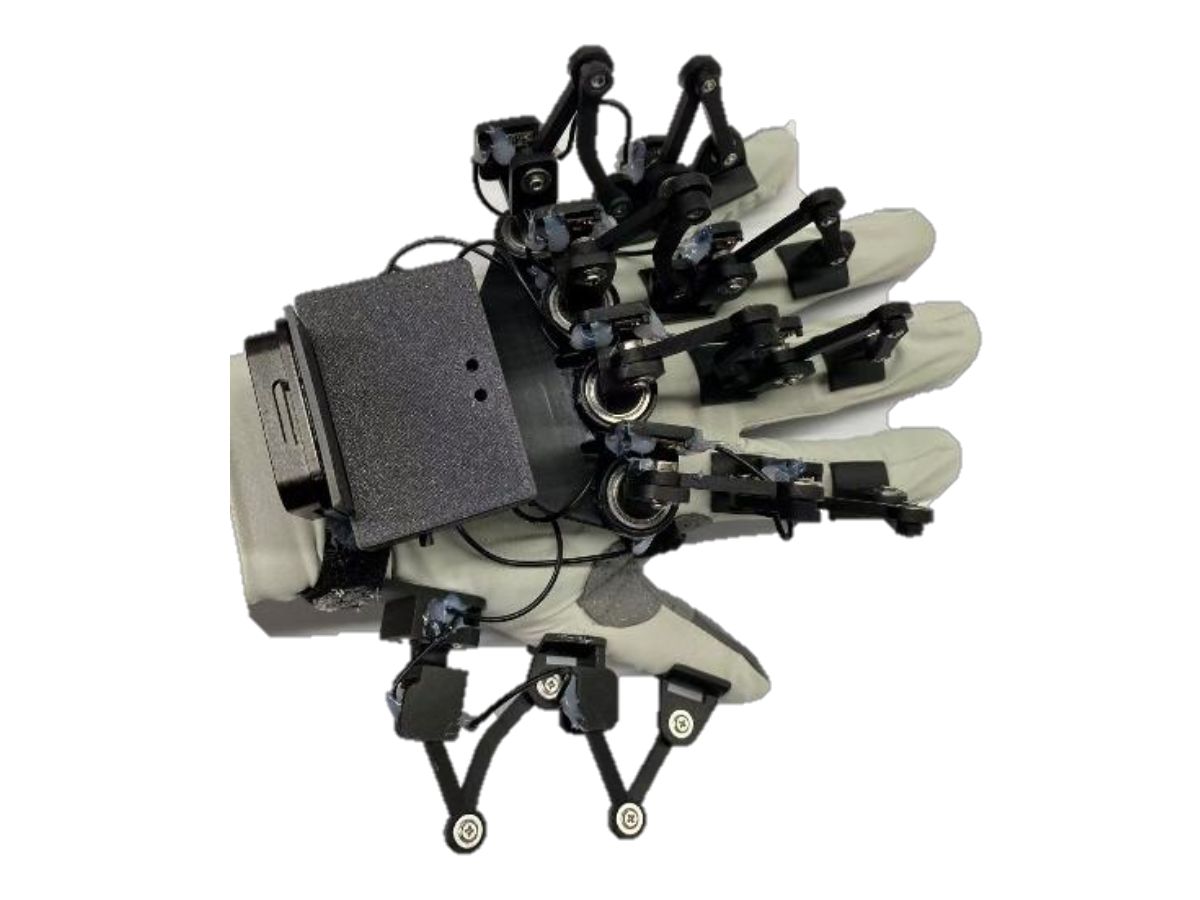
Compact design: The small and lightweight structure makes it easier to integrate into the limited space of humanoid robot hands and finger joints.Details High Precision Teleoperation Mechanical Exoskeleton GloveHonpine EG mechanical exoskeleton glove is an exoskeleton glove product dedicated to high-precision hand motion capture and auxiliary control. Equipped with core magnetic encoder technology, the glove not only delivers high precision in hand joint angle detection but also eliminates position drift. Additionally, by integrating ESP-NOW wireless transmission technology with a dynamic mapping calibration algorithm, it enables high-precision teleoperation of dexterous hands. Currently, the product is widely applicable in industrial manufacturing, medical rehabilitation, scientific research, and other fields, meeting the practical application needs of diverse scenarios.Details
 Intelligent Robotics Teleoperation Glove for VR AR Remote OperationsThe HONPINE Teleoperation Glove is a high-precision hand motion capture device designed for intelligent robotics and remote control applications. Based on advanced motion capture technology and the company’s independently developed dynamic mapping algorithm, the glove enables precise control of dexterous hands. By capturing and transmitting hand movements in real time, users can operate robotic hands naturally and intuitively, meeting the needs of various application scenarios such as remote operations, virtual reality (VR), augmented reality (AR), and smart manufacturing.Details
 High Precision Control 21-DoF Industrial Dexterous Human HandHONPINE L30 is a 21-DoF dexterous hand that accurately replicates fine human hand movements with millimeter-level operation precision. It adopts advanced tendon drive and highly integrated mechatronic systems for stable movement and precise control, and supports multi-modal perception (force, touch, vision) to enhance real-time perception and interaction reliability. With high DoFs, multi-modal perception, and leading motion control algorithms, it is widely used in industrial automation, medical assistance, and research experiments—providing a highly adaptable, reliable end-effector solution.Details
 High Precision 21-DoF Natural Human Hand Grasping Dexterous HandHONPINE L20 is a 21-DoF dexterous hand that accurately simulates natural human hand grasping with delicate operations. It adopts innovative linkage transmission and self-developed motors for high-precision movement, and supports force, vision, and tactile sensors—enhancing environmental adaptability and intelligent interaction via multi-modal perception. With high DoFs, multi-modal perception, and force-position hybrid algorithms, it is widely used in education & research, industrial automation, household assistance, and elderly care—providing precise, dexterous operation solutions.Details
 High Performance Precise Control Robot Human Bionic Dexterous HandHONPINE Robot Hand L10 is a high-performance dexterous hand with 20 DoFs. Equipped with self-developed motors and linkage transmission mechanisms, it ensures traction stability while enabling precise control and smooth movement. Widely used in education & research, piano performance, household assistance, and elderly care, it drives the advancement and implementation of intelligent robots and human-robot collaboration. It supports multi-modal
environmental perception via various sensors and is compatible with ROS/QT environments (with standard ROS plugins for secondary development).Details High Performance 17 DoFs Dexterous Hand for Robotic SystemsHONPINE 07 robot hand is a high-performance dexterous hand with 17 DoFs. Powered by self-developed motors, it balances cost control with reliable grasping and operation performance, meeting diverse application needs. It provides ROS plugins for secondary development, suitable for education & research, auxiliary grasping, and intelligent interaction—offering an efficient, economical dexterous hand solution for robotic systems.Details
 High Precision Compact High Gripping Force Bionic Dexterous HandThe HONPINE O6 bionic dexterous hand features 6 active joints and 5 passive joints. It offers high gripping force, precise force control, compact size, and lightweight design. It is particularly suitable for applications such as logistics handling, industrial assembly, and irregular-shaped object grasping.Details
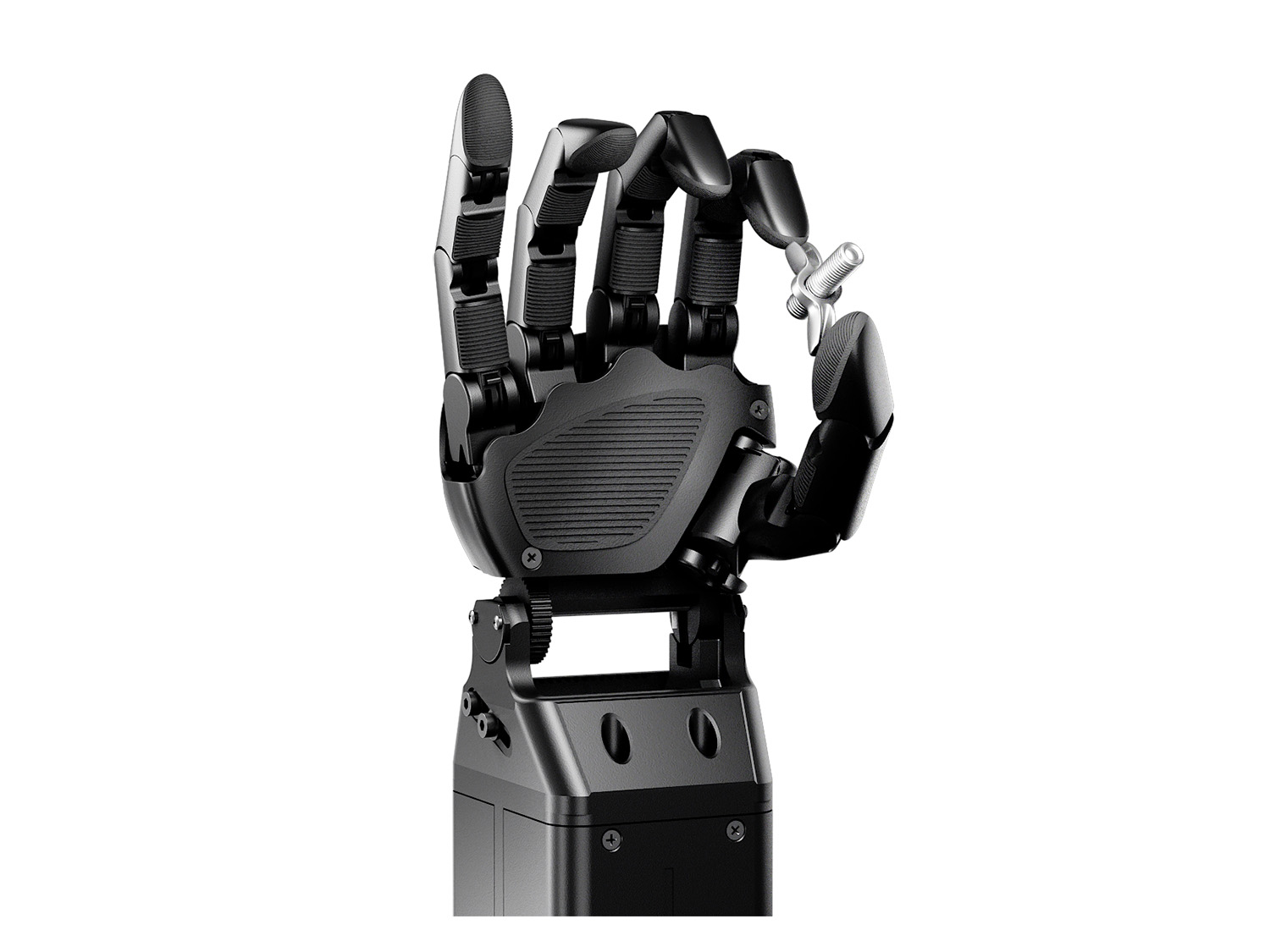
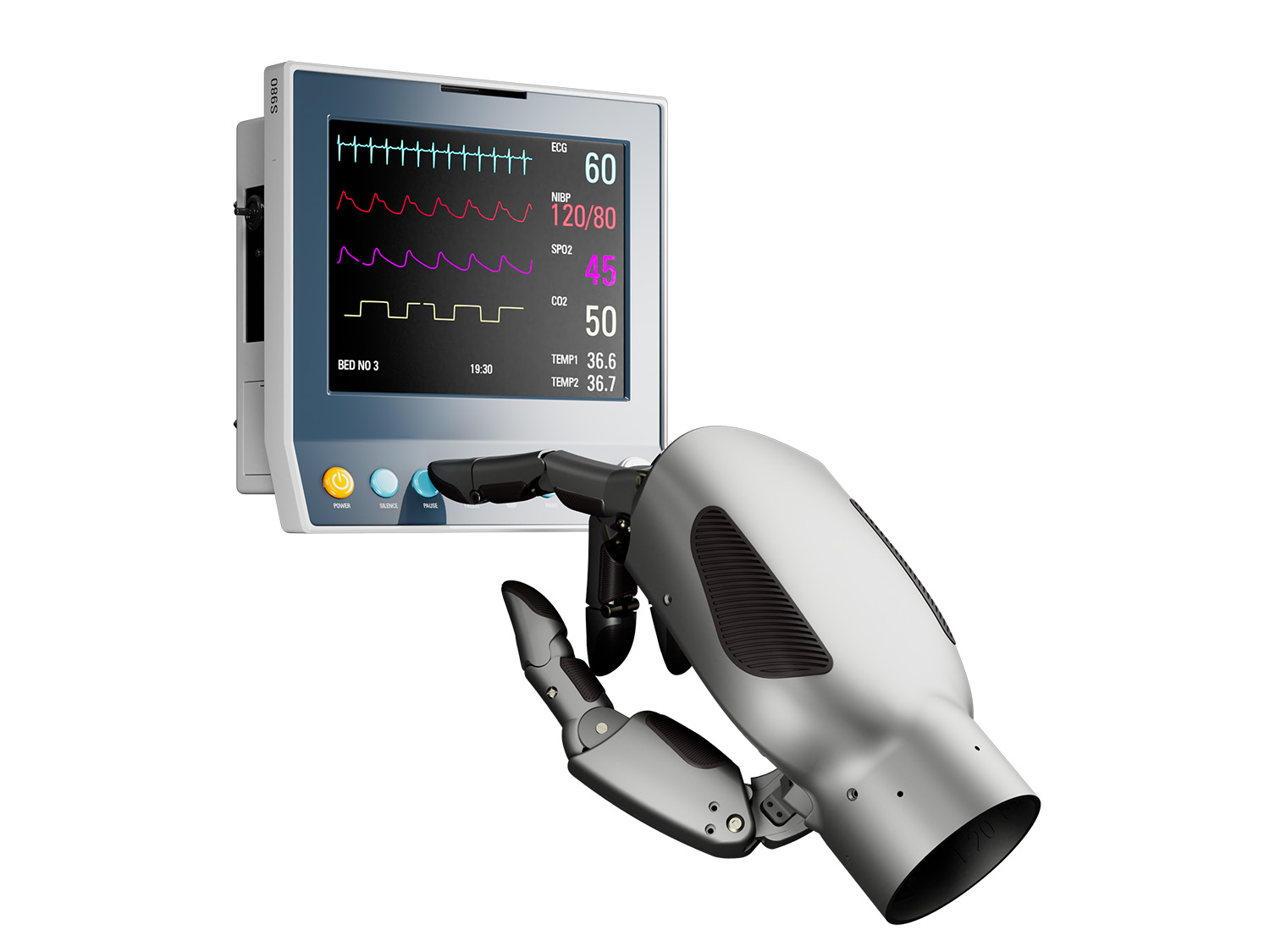
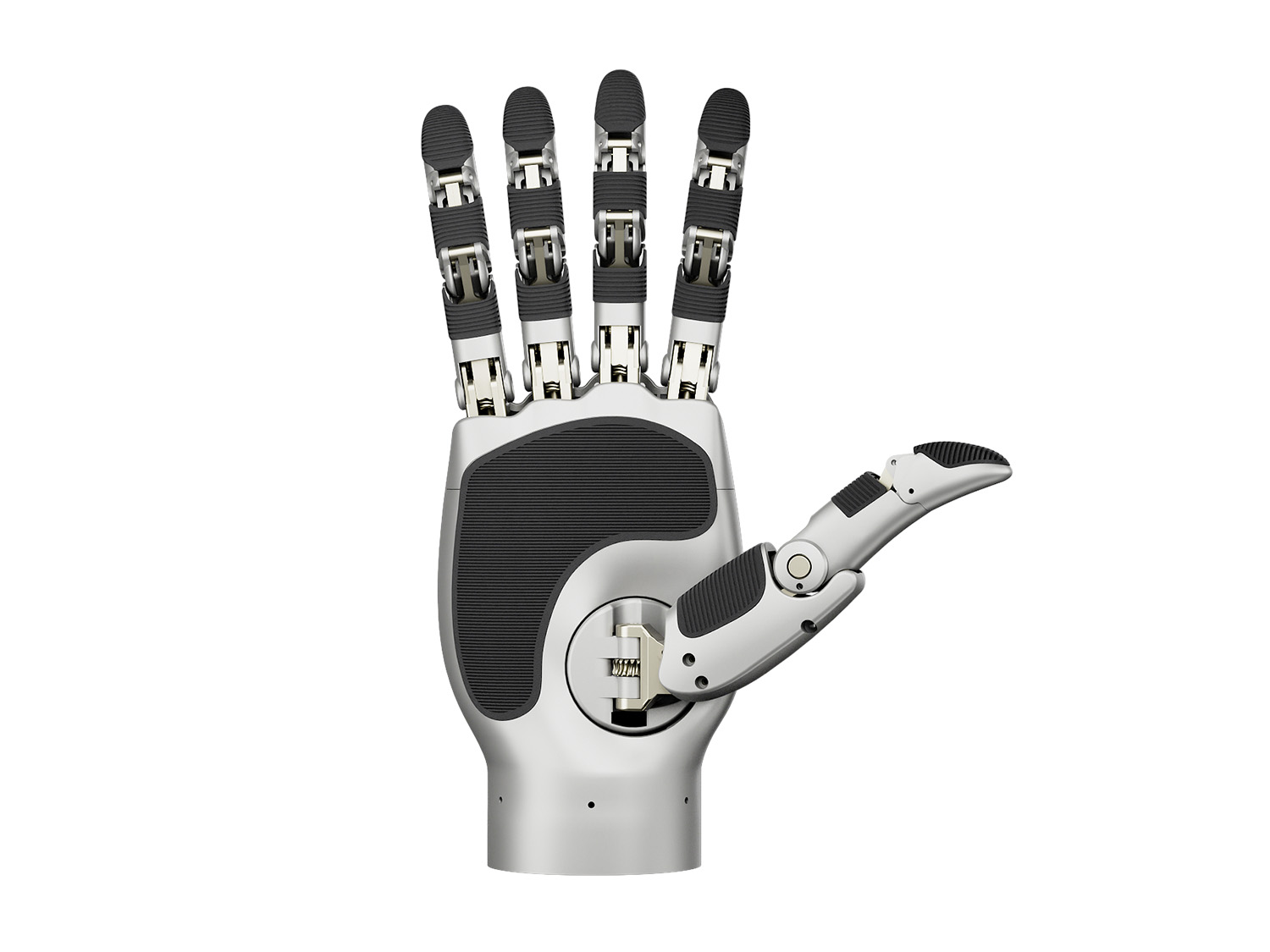
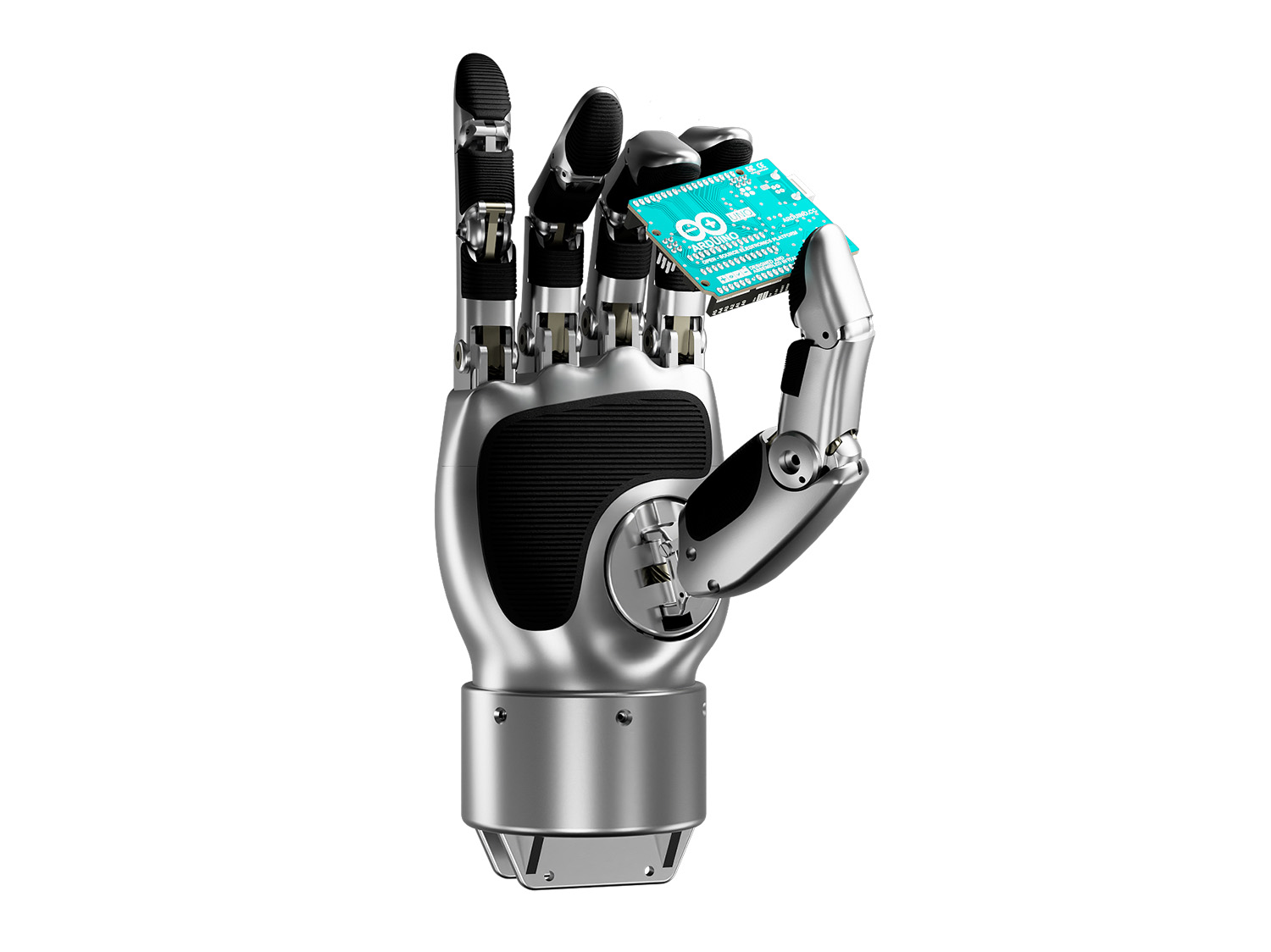
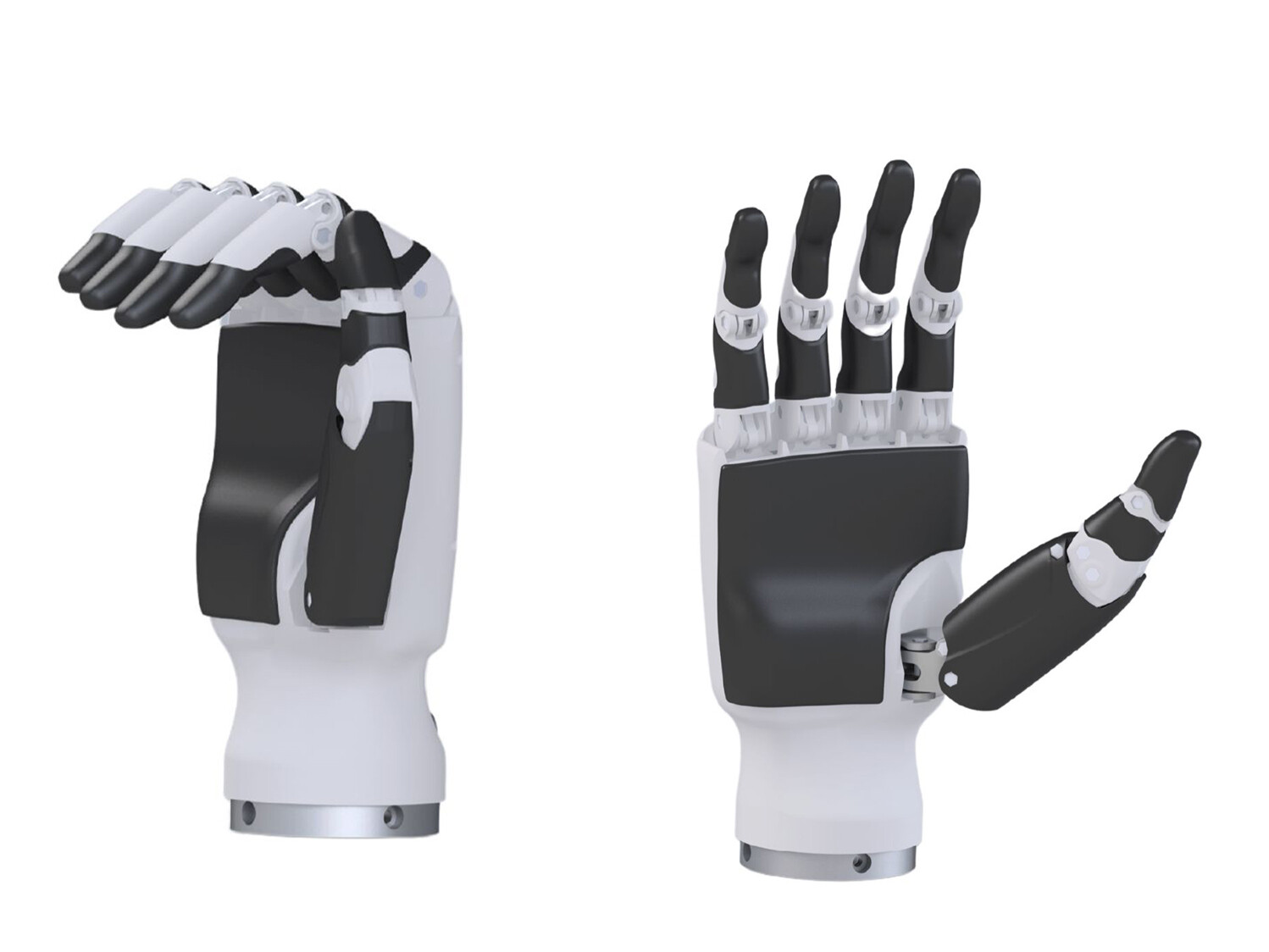
 Humanoid Finger Joint Design Robot Dexterous HandThe robot dexterous hand is a robot end effector that is highly imitative of the human hand. It adopts a five-finger anthropomorphic structure design and simulates the joint movement of the human hand through more than 15 degrees of freedom to achieve fine operations such as grasping and pinching. It is the core component of the robot to perform complex tasks. It belongs to the gripper type device in the robot end effector. Different from the traditional two-finger gripper, it has multi-modal perception and intelligent control capabilities, can adapt to irregular objects and complete precision operation tasks.Details


Electric Gripper
HONPINE robotic end effectors were developed by a Chinese national key laboratory with more than 30 years of technological expertise in dexterous grasping technology. By replacing pneumatic systems with electric servo solutions, HONPINE has developed more than ten product models that address the mainstream needs of industries such as 3C electronics manufacturing, medical devices, semiconductor equipment, warehouse logistics equipment, and hazardous-environment operations.
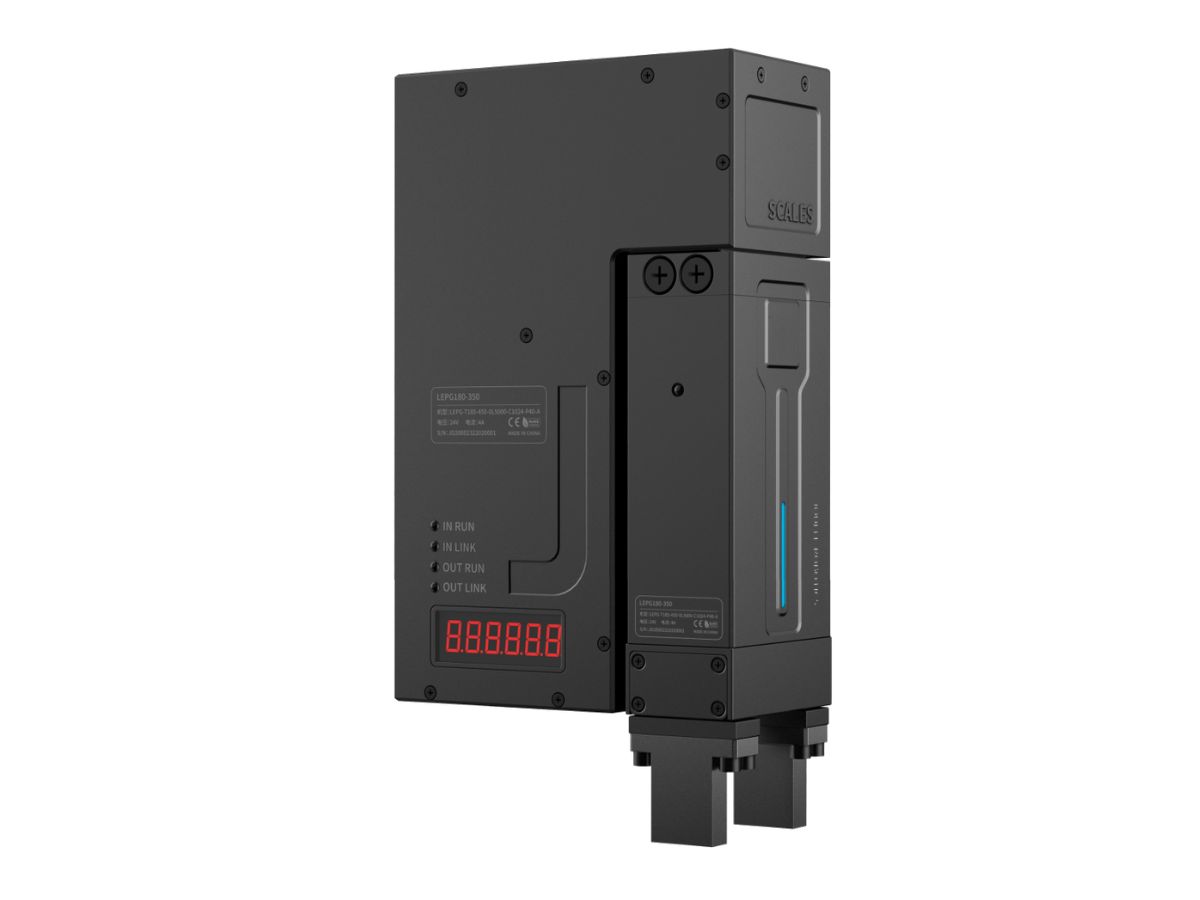
 HONPINE WEPG Series Food Industry Weighing Electric GrippersThe HONPINE WEPG Series Weighing Electric Grippers currently includes models WEPG01, WEPG05, WEPG-T08, and WEPG-T15, covering maximum payloads of 1 kg, 5 kg, 8 kg, and 15 kg respectively. This range fully supports the weight requirements of lithium battery production and covers most industrial weighing applications.
In addition to wide adoption in lithium battery manufacturing lines, the WEPG Series has also been successfully implemented in automotive, pharmaceutical, and food processing industries, with benchmark customers across multiple sectors. The series also supports customized solutions for multi-scenario weighing applications.Details HONPINE EPG-FLEX Series Electric Parallel Grippers for Precision ManufacturingWith the rise of small-batch, multi-variety flexible manufacturing, rapid reconfiguration of automation equipment has become essential. Traditional fixed-design electric grippers often struggle to meet frequent changes in production processes and application scenarios.
The HONPINE EPG-FLEX Series Electric Parallel Grippers are designed to address this demand, based on a concept of modular standardization and flexible configuration. As an advanced upgrade in HONPINE’s electric gripper portfolio, the EPG-FLEX Series offers a more adaptable solution for complex industrial automation environments.
The series has demonstrated strong performance in applications such as multi-type component assembly in the 3C electronics industry, multi-station switching in new energy production lines, and auxiliary material handling in semiconductor manufacturing.Details Electric Parallel Gripper for Industrial Automation Replace Pneumatic Grippers EasilyThe HONPINE EPG-ST Series Electric Parallel Grippers are designed as a cost-effective replacement for traditional pneumatic grippers in pick-and-place and material handling applications. With an integrated motor, driver, and controller, they enable direct replacement of pneumatic grippers of the same size without modifying existing production lines. Compared with pneumatic solutions, the EPG-ST Series reduces compressed air consumption, simplifies installation and operation, and delivers greater control and reliability. Proven in applications such as 3C electronics assembly, new energy battery handling, and life science laboratories, the EPG-ST Series offers an efficient, user-friendly solution for accelerating the transition from pneumatic to electric automation.Details
 High Precision ZR Linear Rotating Rotary ActuatorThe linear rotary actuator (also known as the ZR actuator) is a highly integrated two-dimensional motion module that combines linear lifting (Z-axis) and 360° rotation (R-axis) functions. It uses a linear motor for precise linear motion and a servo motor to drive rotational motion. By combining the two axes, it can perform synchronized compound actions such as lifting, rotating, and angle calibration. It is ideal for high-precision applications such as semiconductor chip placement and precision assembly.Details
 Industrial Intelligent Robot Servo Electric GripperThe robot electric gripper is an intelligent end effector driven by a servo motor, designed for industrial automation scenarios, and can achieve precise material grabbing, handling and assembly at the end of the robot. Its core consists of a motor, a reduction mechanism, a sensor and a control system, and supports adaptive gripping with millimeter-level to micron-level precision, and is suitable for the flexible production of micro workpieces such as electronic components, medical equipment, and precision parts.Details
 360°Precise Control Electric Rotary Gripper End EffectorThe electric rotary gripper is a mechatronic end effector that combines gripping and rotation functions. It drives the gear or synchronous belt mechanism through the built-in servo motor to achieve synchronous rotation during the workpiece grasping process (such as screwing bottle caps and assembling gears). Its core consists of a motor, a reducer, a gripper mechanism, and a controller. It supports 360° rotation without dead angles and precise control of the rotation angle, and is suitable for scenes such as automated assembly lines and laboratory instrument operations.Details
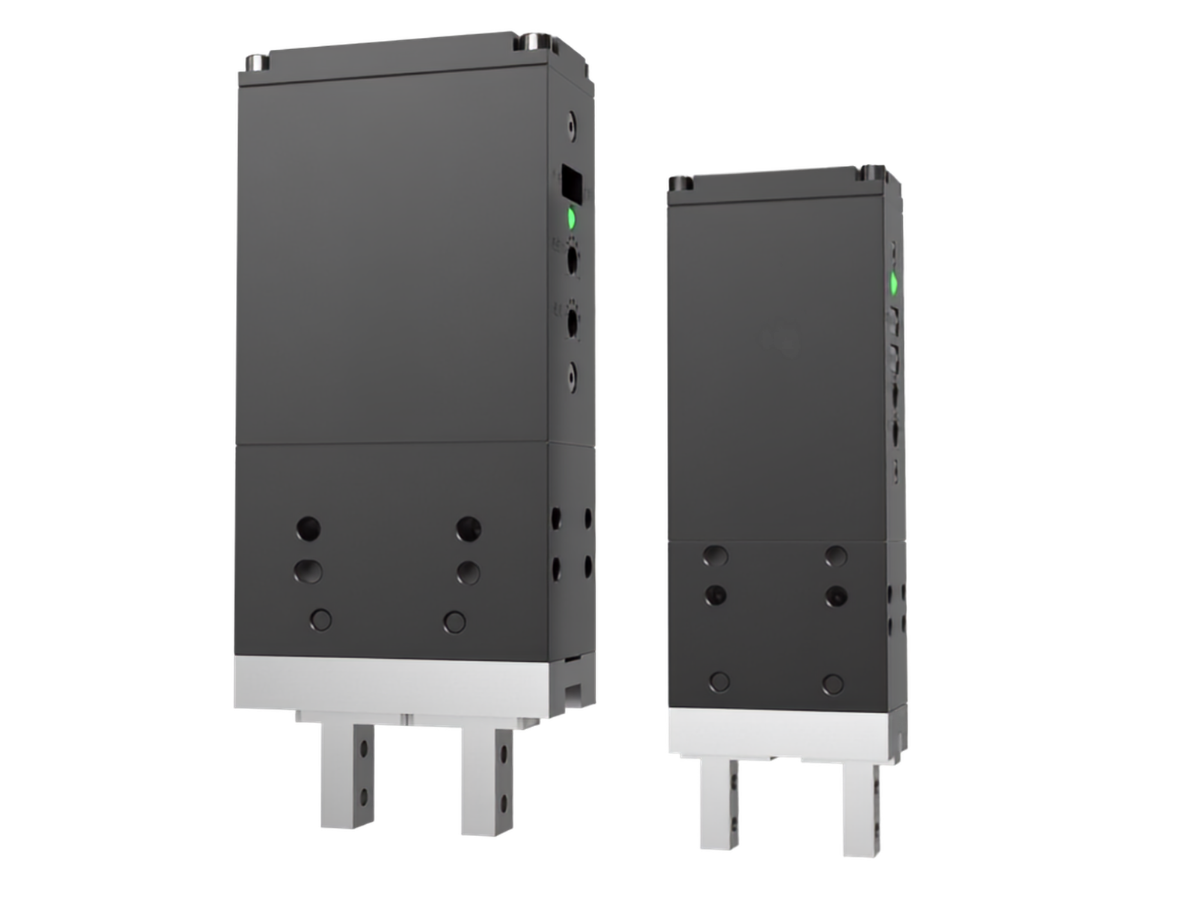
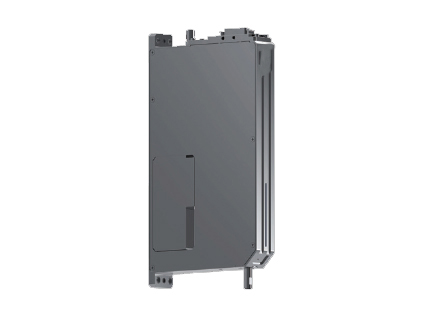
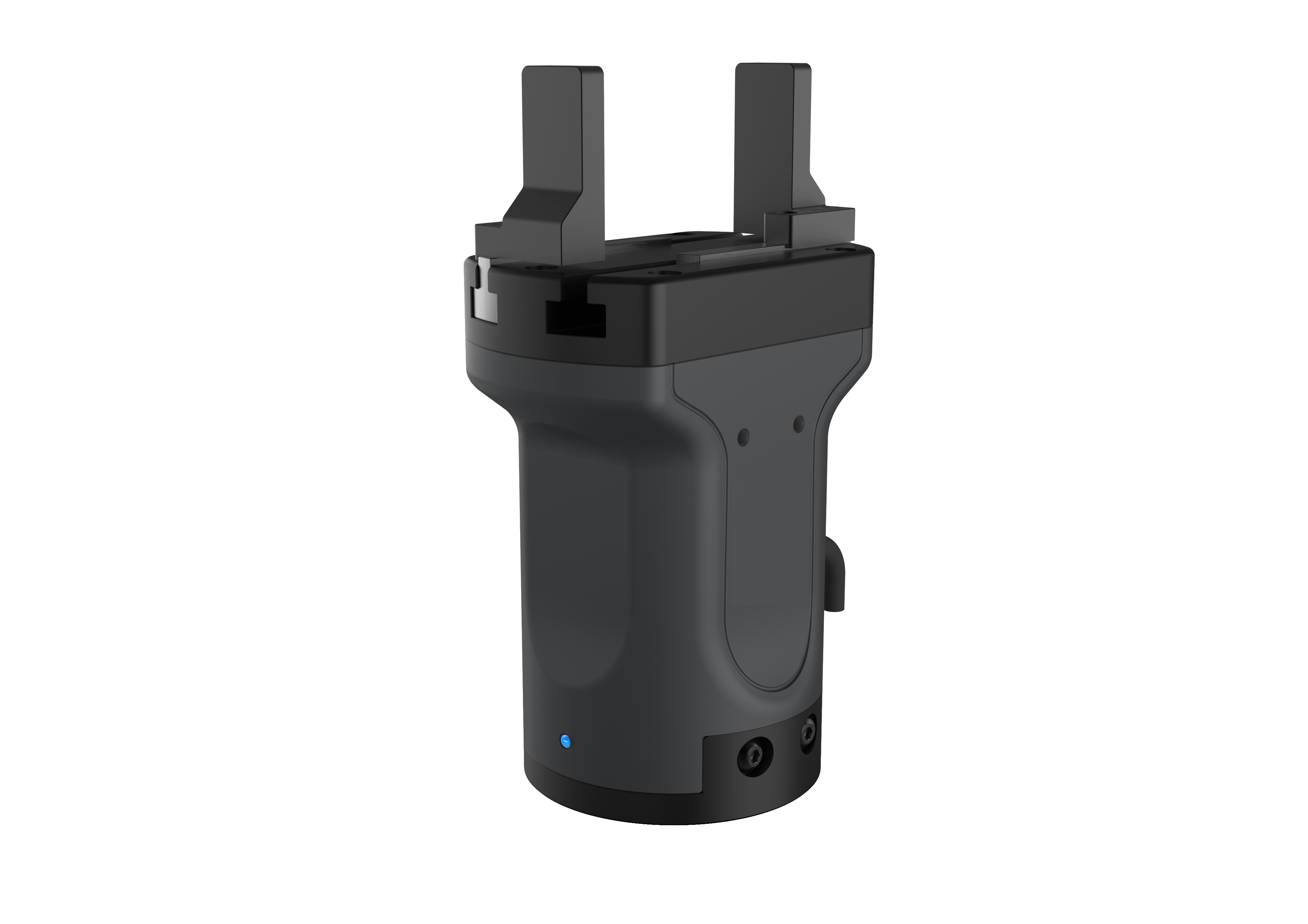
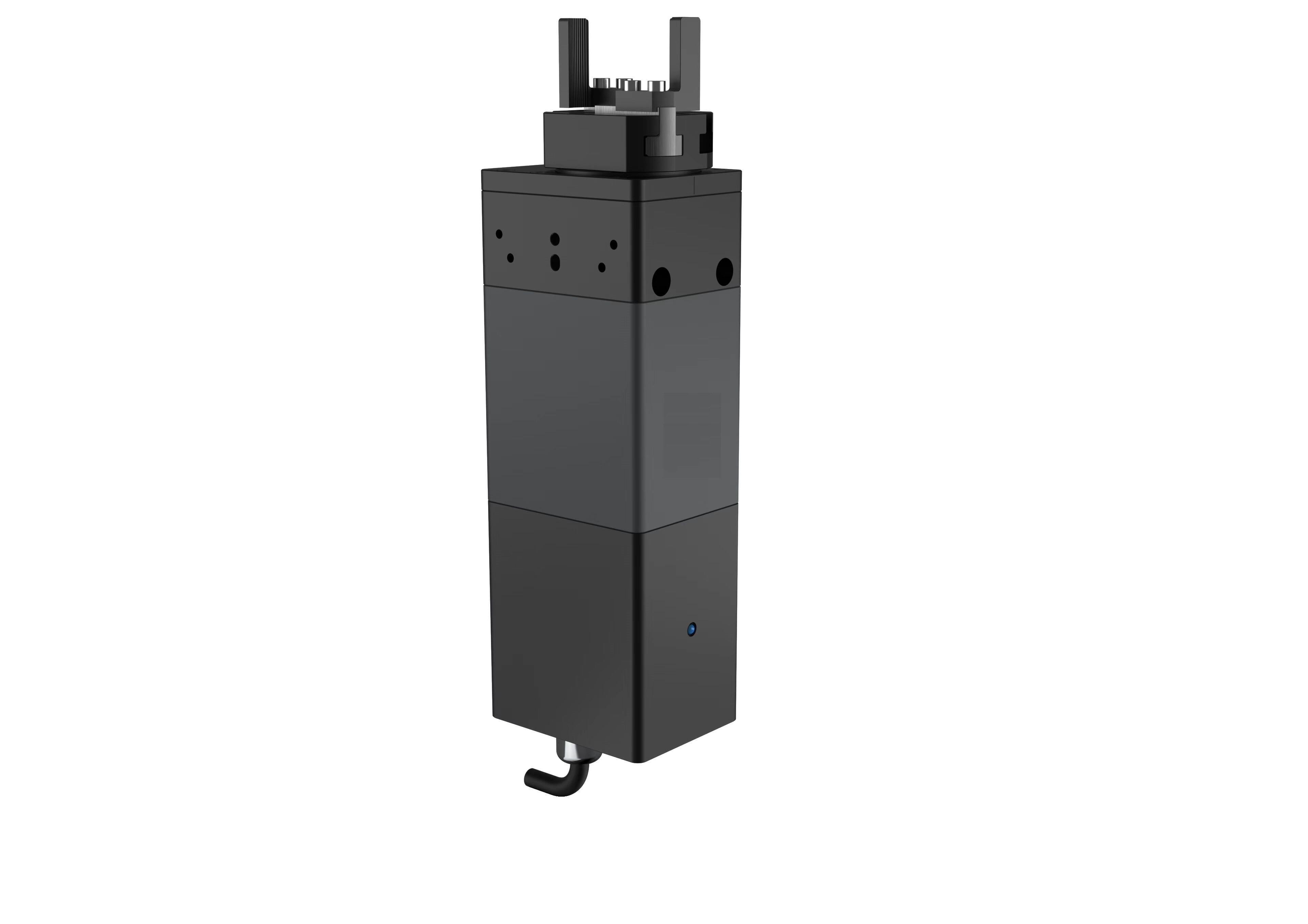
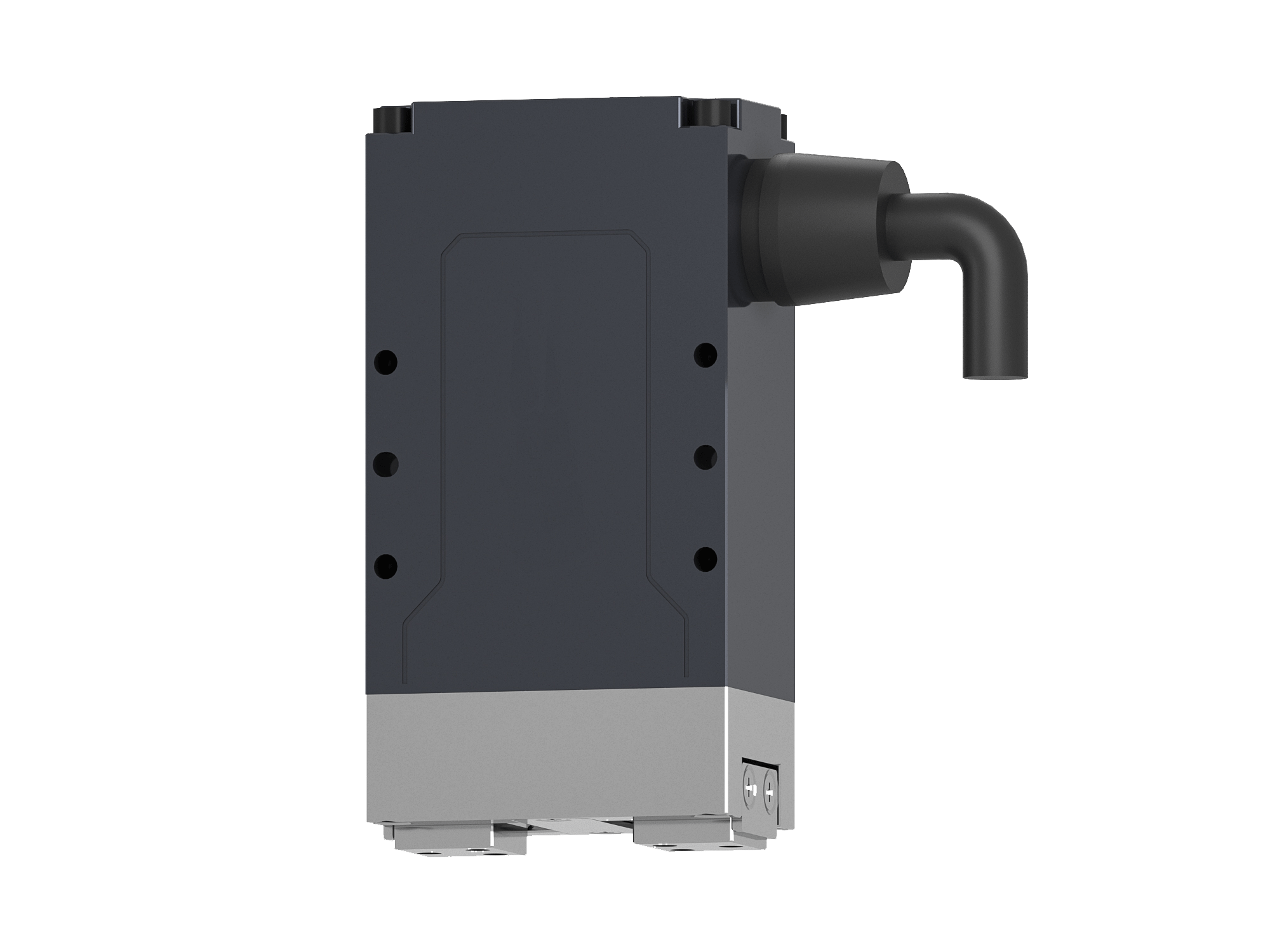
 Fast Stable Robot Electric Parallel GripperThe electric parallel gripper is an innovative robot end effector that achieves fast and stable gripping of objects through precise motor drive and transmission mechanism. Its gripping fingers move in parallel on a plane, with a maximum adjustable stroke of 0-180mm and a single-finger gripping force of 2N~800N. It uses advanced motor technology and artificial intelligence algorithms to automatically adjust the gripping method in various complex environments to adapt to different object shapes, sizes and positions. This device does not require an external air source, has a compact structure, supports multiple installation methods, and is suitable for deployment in small spaces.Details
Micro Electric Cylinder
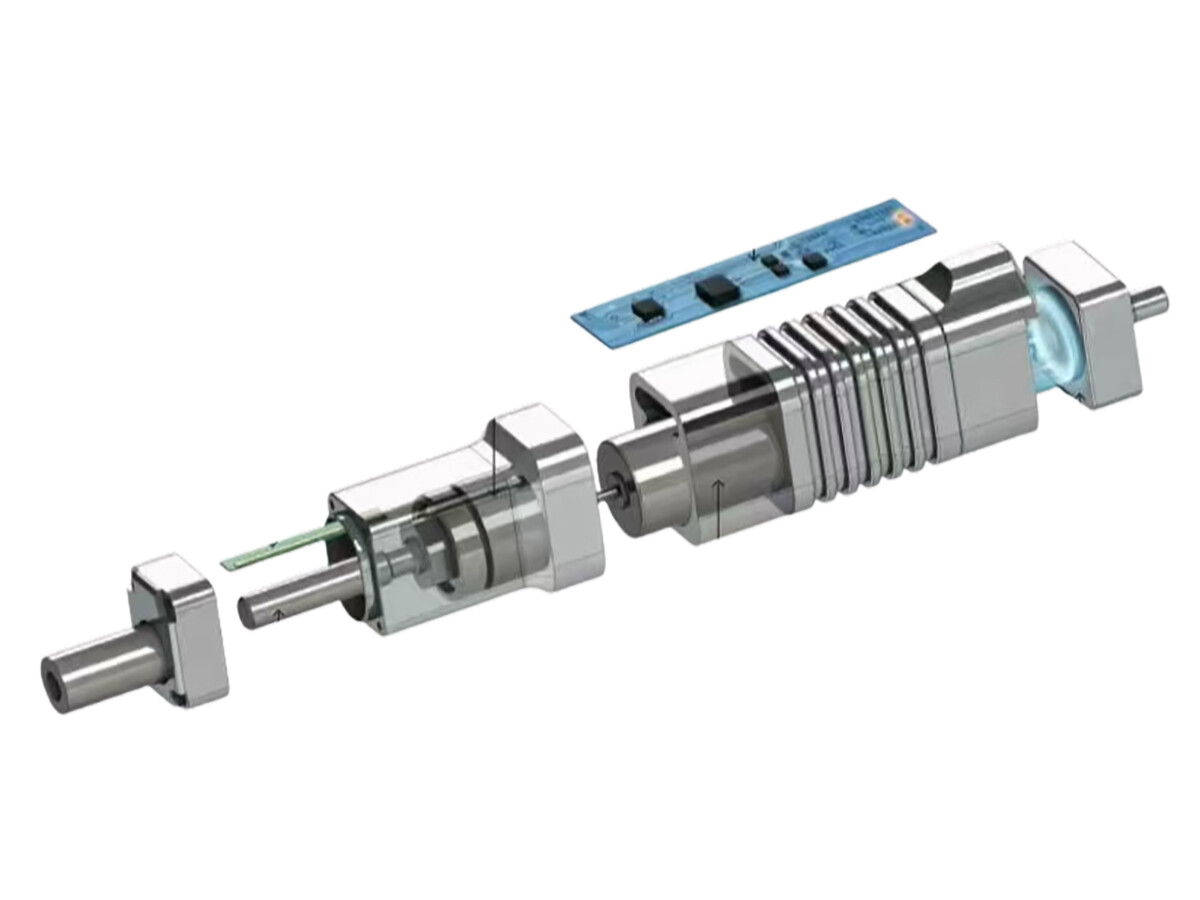
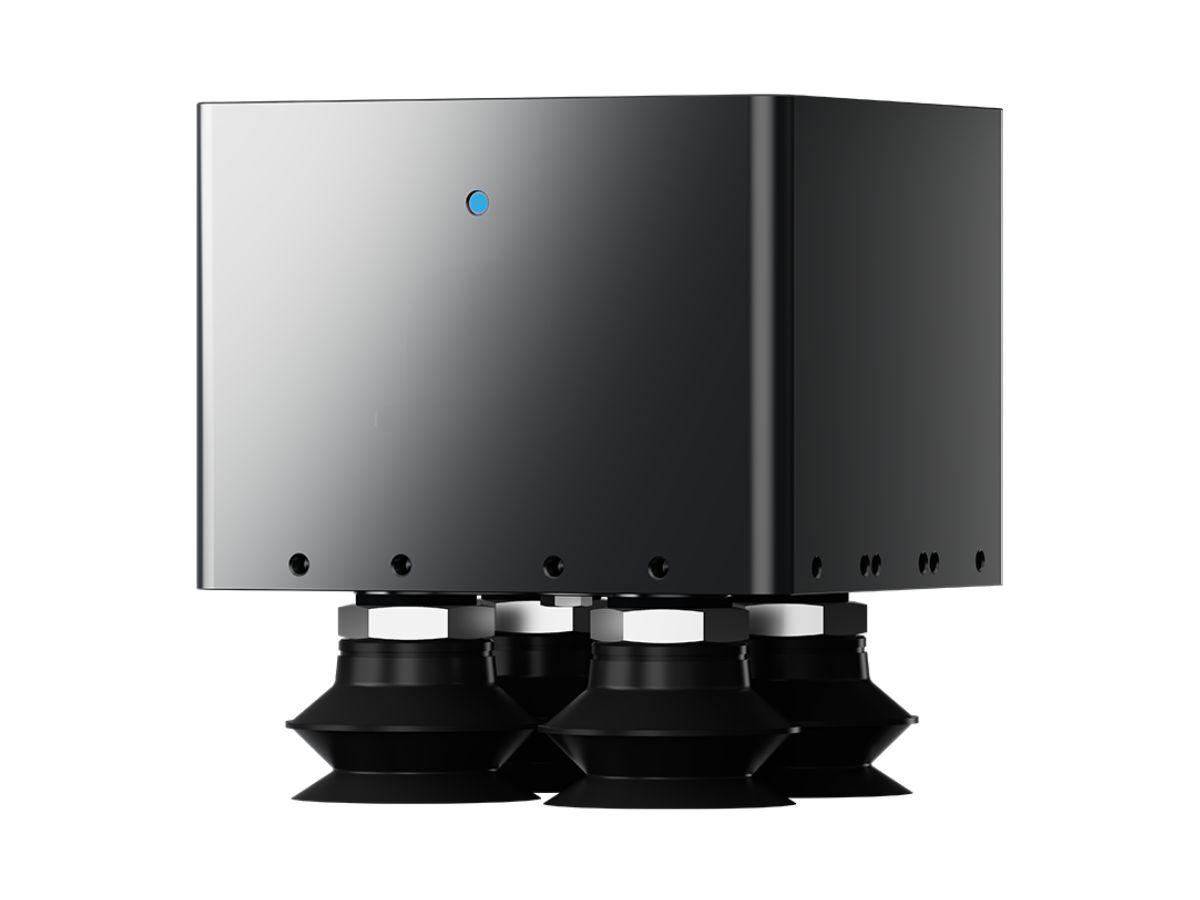
Electric Vacuum Sunction Cup
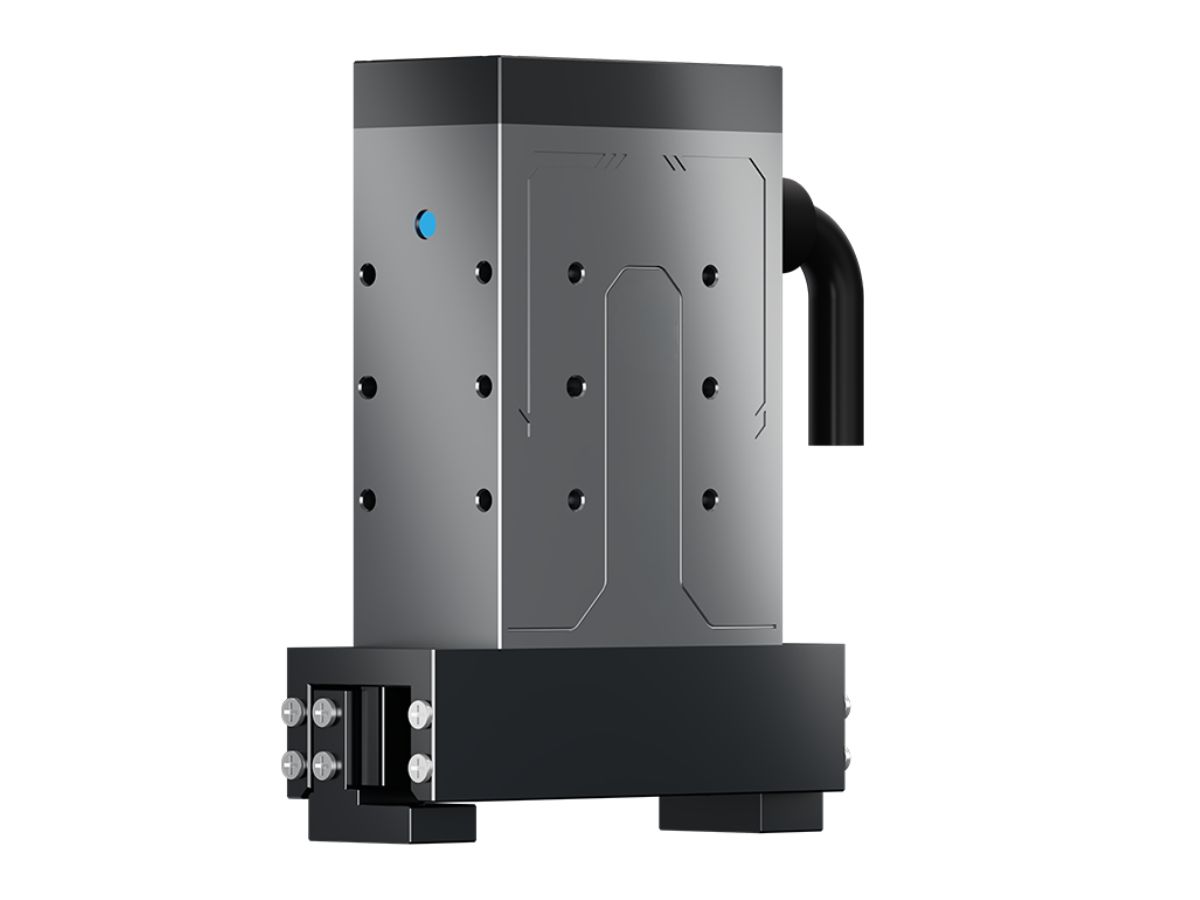
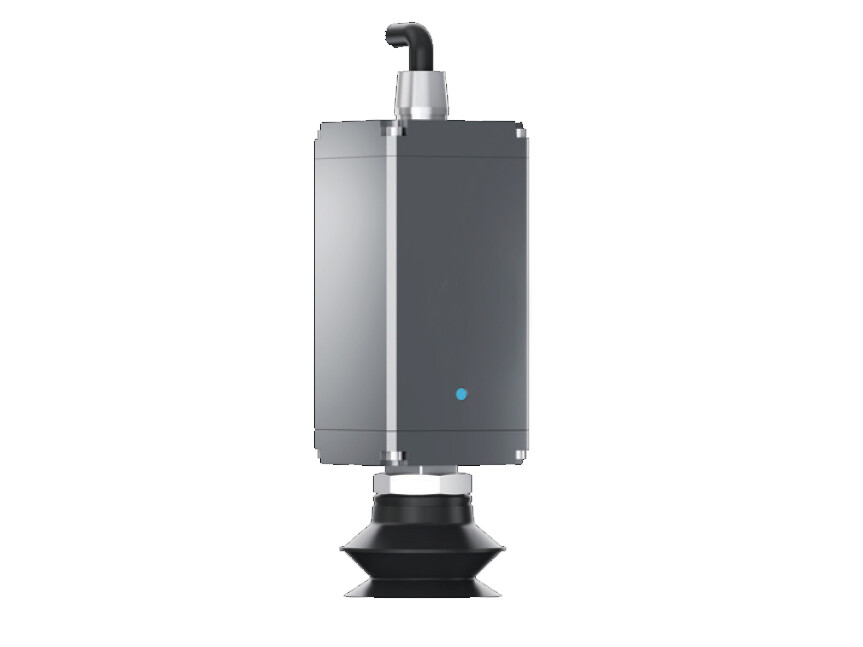
 EVS Series Electric Vacuum Actuator for Industrial Automation PalletizingThe HONPINE EVS Series Electric Vacuum Actuator is a compact and energy-efficient EOAT solution designed for industrial automation such as pick-and-place, palletizing, and material handling.
Weighing only 2.5 kg with a payload capacity up to 10 kg, it delivers strong performance in a lightweight structure. Powered by a 24 V low-voltage system, it reduces energy consumption to about 20% of traditional pneumatic systems, helping lower operating costs.
The EVS features adjustable suction force from 102 N to 510 N for different workpieces. Its compact design is 30% smaller than pneumatic solutions, making it suitable for space-limited robot applications.
With direct robot mounting, real-time vacuum feedback, and intelligent monitoring functions, the EVS ensures stable, efficient, and reliable operation in automated production lines.Details Robot Electric Vacuum Sunction CupThe robot electric vacuum suction cup is an electrically driven end-effector based on the principle of vacuum adsorption. It uses a built-in vacuum pump to generate negative pressure for object gripping, effectively replacing traditional manual handling methods. The core design integrates an intelligent control system and a multi-layer sealing structure, making it suitable for handling smooth or slightly rough surfaces such as tiles, stone slabs, and glass.Details
Dexterous Robot Hand- FAQ
Contact Honpine to learn more about our Robotic Dexterous Hands. Get the latest product catalogs, technical specifications, and one-on-one support from our engineering team.
1. Dexterous Hands
Dexterous hands are high-DOF end effectors that mimic human hands, enabling grasping, twisting, rotating, and other complex tasks for humanoid robots.
2. Clamping-Type End Effectors
These use mechanical grippers to securely hold objects and are commonly used in industrial automation.
3. Vacuum/Suction-Type End Effectors
These use vacuum suction for handling flat or lightweight items such as glass, packaging, and electronics.
4. Specialized End Effectors
Custom-designed tools for specific tasks such as welding, painting, polishing, or surgery.
A. Payload Capacity
Includes the weight of both the end effector and the object being handled. Torque caused by the object’s center of gravity must stay within the robot wrist’s load limit.
B. Degrees of Freedom (DOF)
Basic grippers usually have one DOF (open/close), while complex tasks may require multiple DOFs, increasing flexibility but also cost and control complexity.
C. Precision and Repeatability
High-precision tasks require micron-level repeatability. Electric grippers typically offer better position control than pneumatic ones.
D. Environmental Adaptability
Special designs may be needed for extreme temperatures, cleanrooms, or explosion-proof industrial environments.
E. Tool Changer Systems
Automatic tool changers allow robots to switch tasks quickly through reliable mechanical, electrical, and pneumatic/hydraulic connections.
For humanoid robots to truly replace humans in tasks such as grasping, carrying, assembly, twisting, and manipulation, these actions must ultimately be executed through the “hands.”
As the robot’s end effector, the dexterous hand serves as the direct physical interface between the robot and the external world. Its performance fundamentally determines the practical capability boundaries of the robot.
Without dexterous hands, humanoid robots may be able to “see” and “walk,” but they cannot truly “do.”
This is why Elon Musk has described the dexterous hand as one of the most difficult technical challenges in developing Optimus.
The new-generation modular humanoid dexterous hand, Linker Hand L30, features 22 degrees of freedom across the entire hand, deeply integrating biomimetic principles with advanced mechatronic technologies.
While achieving a highly anthropomorphic design, it also incorporates high-precision control and real-time sensing capabilities. Core joint speeds exceed 400°/s, and full hand opening or closing can be completed in just 0.2 seconds.
Its high-speed motion performance and precise manipulation have impressed audiences at live demonstrations.
HONPINE’s dexterous hand achieves an optimal balance between performance and cost through self-developed low-cost drive modules combined with open-source algorithm frameworks.
This is further supported by China’s well-established supply chain ecosystem. In addition, extensive applications in industrial and medical scenarios provide abundant real-world data for rapid technological iteration. Together, these factors form the core foundation for building a globally competitive “China-based technology solution.”
By leveraging a biomimetic tendon-driven structure, high-precision torque control, and fast dynamic response, HONPINE dexterous hands demonstrate exceptional fine manipulation capabilities.
They fully showcase the technical advantages of multi-DoF coordination and force-controlled perception, enabling precise, stable, and dexterous robotic hand operations.
Passive Degrees of Freedom (DoF):
These degrees of freedom are not directly actuated by motors. Instead, motion is transmitted through mechanical elements such as gears, tendons, or linkages, allowing adaptive movement driven by external forces or coupled joints.
Active Degrees of Freedom (DoF):
These degrees of freedom are directly and automatically controlled by motors, enabling precise, programmable motion and force control.
The hand itself does not integrate a built-in vision sensor. However, an external vision module can be added to enable visual perception.
For tactile perception, capacitive or piezoresistive (resistive) sensing pads are required to detect contact, pressure, and interaction forces.
The specifications of the piezoresistive and capacitive sensors will be provided according to your specific product configuration and selection requirements.
Yes, we offer teleoperation gloves, and their pricing is more competitive than most alternatives on the market.
HONPINE’s dexterous hand achieves an optimal balance between performance and cost through self-developed low-cost drive modules combined with open-source algorithm frameworks.
This is further supported by China’s well-established supply chain ecosystem. In addition, extensive applications in industrial and medical scenarios provide abundant real-world data for rapid technological iteration. Together, these factors form the core foundation for building a globally competitive “China-based technology solution.”
By leveraging a biomimetic tendon-driven structure, high-precision torque control, and fast dynamic response, HONPINE dexterous hands demonstrate exceptional fine manipulation capabilities.
They fully showcase the technical advantages of multi-DoF coordination and force-controlled perception, enabling precise, stable, and dexterous robotic hand operations.
The new-generation modular humanoid dexterous hand, Linker Hand L30, features 22 degrees of freedom across the entire hand, deeply integrating biomimetic principles with advanced mechatronic technologies.
While achieving a highly anthropomorphic design, it also incorporates high-precision control and real-time sensing capabilities. Core joint speeds exceed 400°/s, and full hand opening or closing can be completed in just 0.2 seconds.
Its high-speed motion performance and precise manipulation have impressed audiences at live demonstrations.
In robotics, an end effector is the tool attached to the end of a robotic arm that interacts with the external environment. Also known as End-of-Arm Tooling (EOAT), it is defined by ISO standards as a device connected to the robot arm via a flange for task execution, and is not considered part of the robot arm itself.
In robot kinematics, the end effector is essentially the robot’s “hand.” The coordinate system attached to it is called the tool frame, whose origin is typically defined as the Tool Center Point (TCP). Users can also customize the TCP for specific tasks, such as setting the tip of a welding nozzle as the TCP in robotic welding.
Common end effectors include grippers, tool changers, welding guns, suction cups, and spray guns. Sensors can also be integrated to improve task performance and precision.
Electric Gripper - FAQ
The following FAQs are based on real-world applications and engineering experience with Honpine Electric Robot Grippers. They cover common questions about gripping force, control methods, installation, applications, and selection. If you need more technical information or product recommendations, please contact our engineering team.
Each HONPINE electric gripper supports a unique Modbus Slave ID, allowing multiple grippers to be connected on a single communication bus (daisy-chain wiring).
There are two methods to set or modify the Slave ID:
Method 1: Via PC Configuration Software (Recommended)
Use HONPINE upper computer debugging software:
Connect the gripper via serial communication
Open Serial Port Operation
Use the Scan ID / Device Search function
Select the target gripper
Modify and write the new Slave ID
Save configuration to complete setup
This method is recommended for fast commissioning and multi-device debugging.
Method 2: Via Modbus Register Commands
The Slave ID can also be modified directly using Modbus write commands.
Refer to the register table below:
Address Register Name Access Description
0x138C Firmware Version Code R High byte = major version, low byte = minor version
0x138D Modbus Slave ID W Write value range: 1–247 to set device address
0x138E Baud Rate Configuration W Same encoding
The HONPINE electric gripper supports standard Modbus RTU communication and uses the following function codes:
0x03 – Read Holding Registers
Used to read device status information, including:
Firmware version
Temperature data
Fault and error codes
Current position feedback
This function is used for monitoring and diagnostics.
0x10 – Write Multiple Registers
Used for motion control and configuration, including:
Gripper open/close control
Rotation or clamping commands
Slave ID modification
Baud rate configuration
Zero point calibration
Preset position parameter writing
This function is used for device control and parameter setup.
Yes. Multiple grippers can be connected on the same RS485/Modbus bus as long as:
Each device has a unique Slave ID (1–247)
Baud rate is consistent across all devices
Proper termination resistors are used for long-distance wiring
This allows efficient multi-gripper control in robotic systems and automation lines.
Typical default settings (may vary by model):
Protocol: Modbus RTU
Default Slave ID: 1
Baud rate: configurable (e.g., 9600 / 115200 depending on model)
Parity: None / Even (configurable)
HONPINE electric grippers are widely used in:
Industrial robotics and robotic arms
3C electronics assembly
Semiconductor handling systems
Automated production lines
Precision pick-and-place systems
Laboratory automation equipment
Industry Trends
- 00
0000-00
What is robot joint actuator?How to Choose the Best Robot Rotary Joint Actuator?
- 00
0000-00
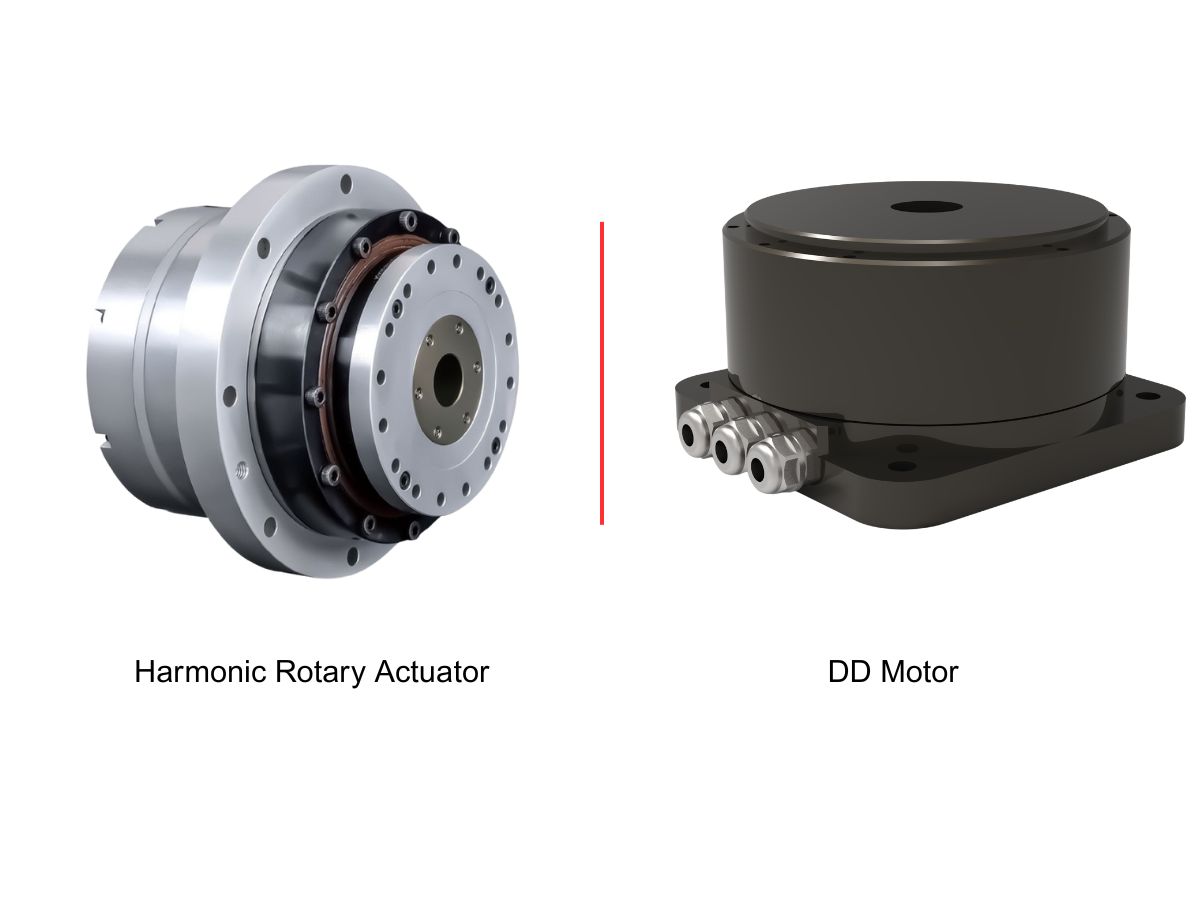
DD Motors VS Harmonic Rotary Actuators
- 00
0000-00
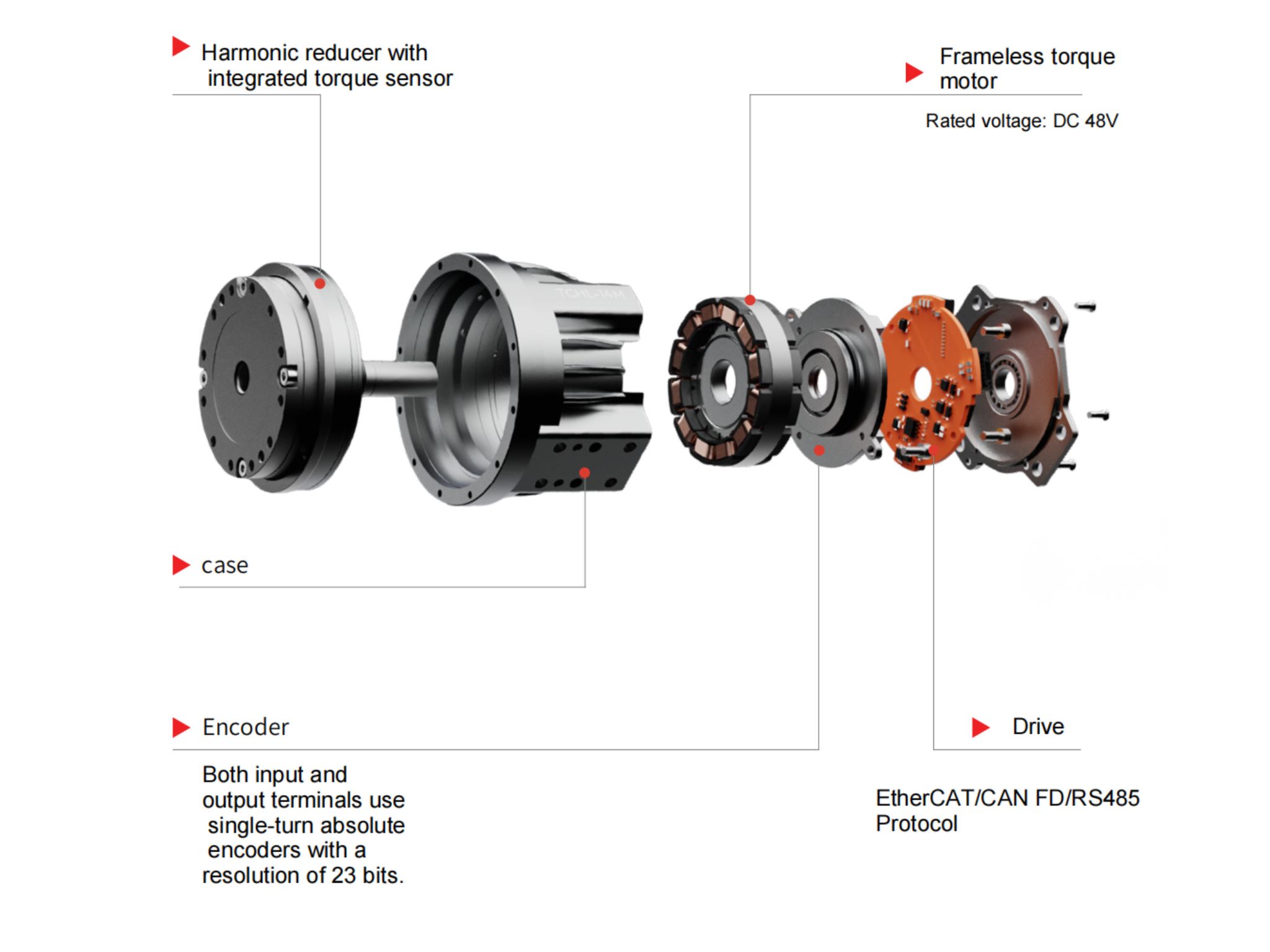
OMG Ultra Compact Harmonic Drive Joint Module with Built-in Torque Sensor
- 00
0000-00
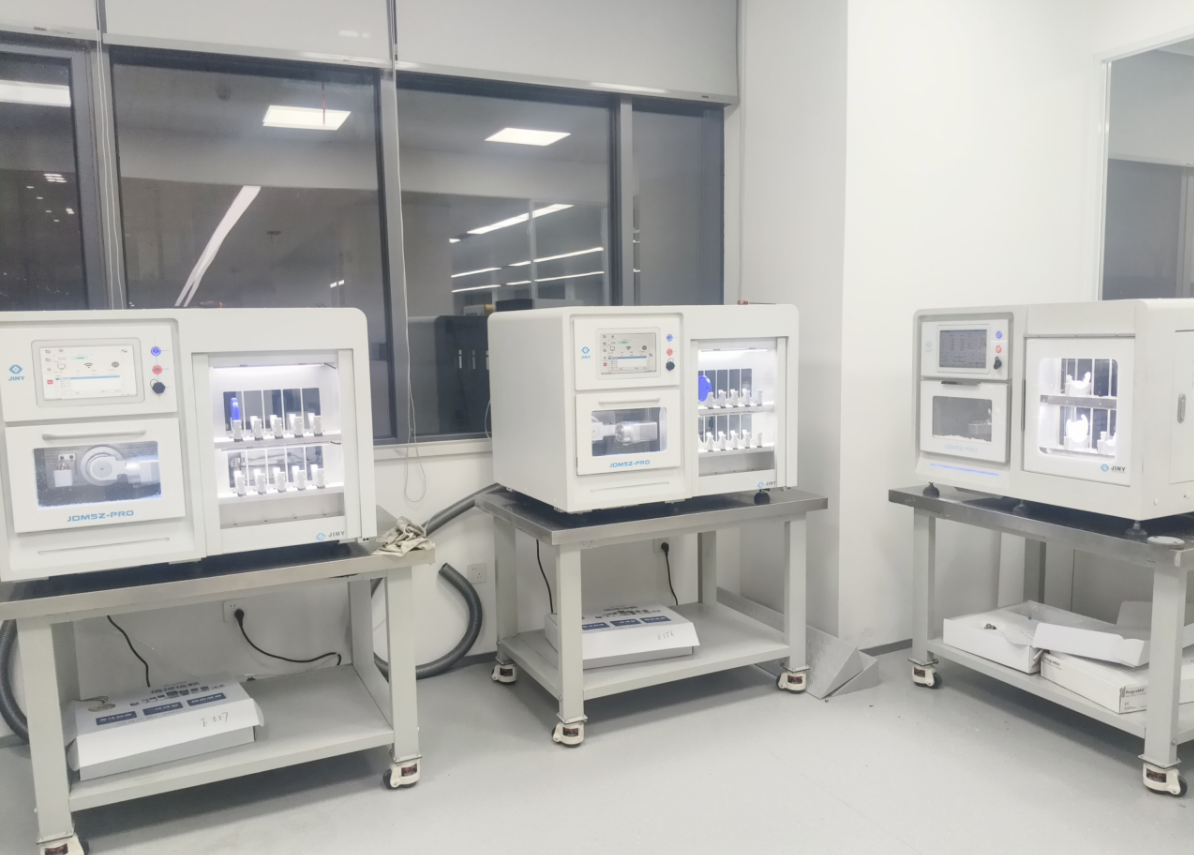
The Role of Harmonic Drive Gears in Achieving 5–10 μm Accuracy in Dental Milling Machines
- 00
0000-00
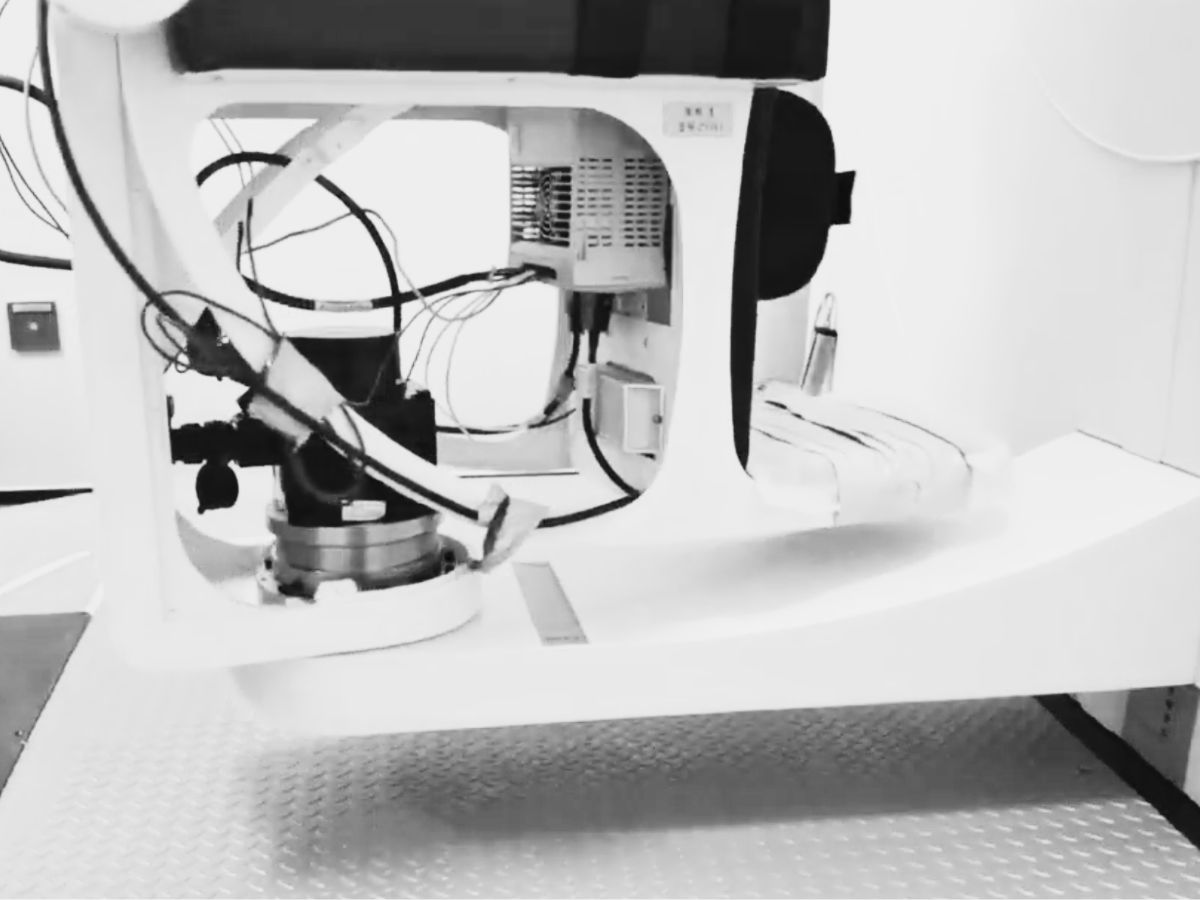
Why Are Harmonic Rotary Actuators Perfect for Medical Equipment?
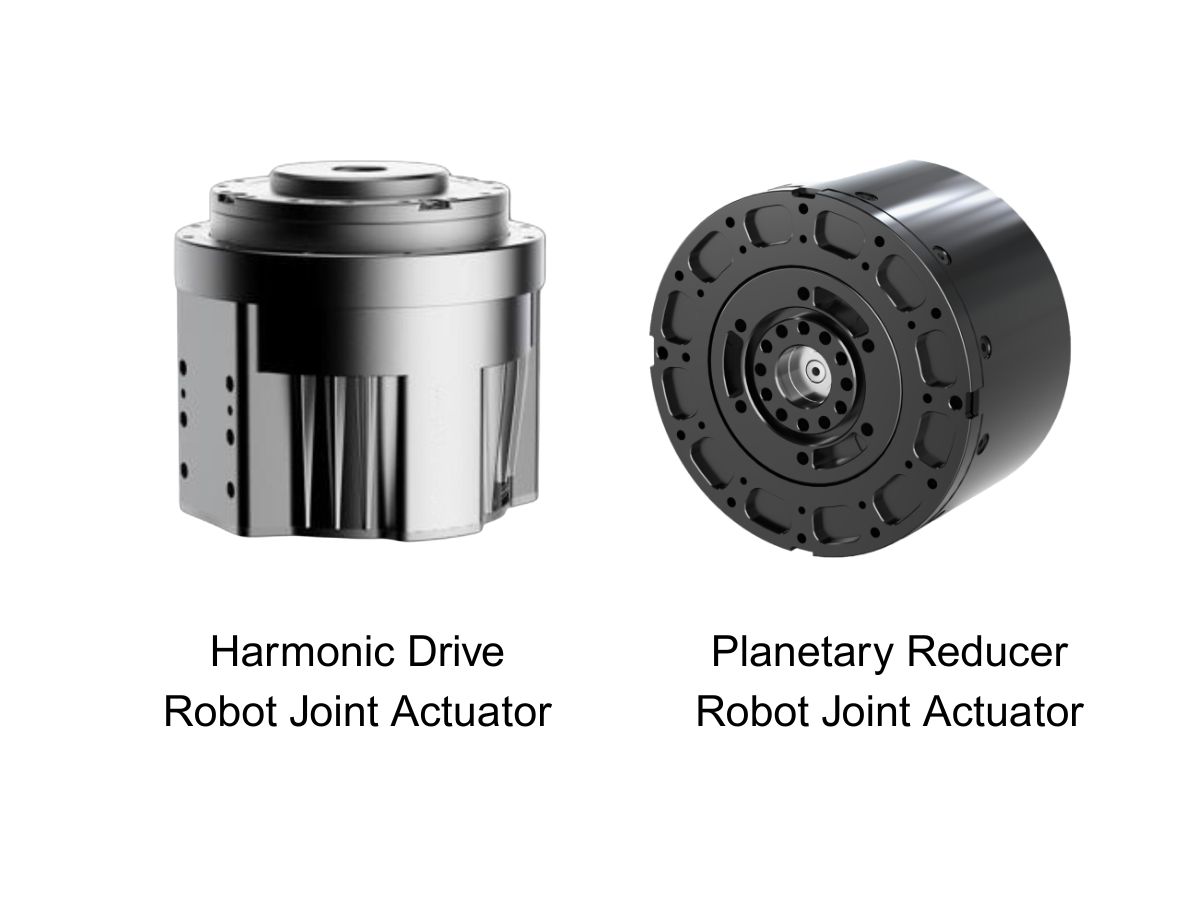
Application of Robot End Effector
Robot end effector offers nine series including industrial dexterous hands, smart electric grippers, electric suction cups, and multi-functional models for medical automation, lithium battery, 3C, semiconductor, and food industries. Compact in design, our actuators ensure high precision, high rigidity, and ultra-long stroke with
accurate force control. They support network applications, are easy to install, and simple to operate—providing safe, efficient automation solutions for diverse production needs.
‹


›

- 00
0000-00
What is robot joint actuator?How to Choose the Best Robot Rotary Joint Actuator?
- 00
0000-00
DD Motors VS Harmonic Rotary Actuators
- 00
0000-00
OMG Ultra Compact Harmonic Drive Joint Module with Built-in Torque Sensor
- 00
0000-00
Why Are Harmonic Reducers Suitable for High-Precision Automation Equipment?
- 00
0000-00
Why Are Servo Motors and Gear Reducers an Ideal Match?