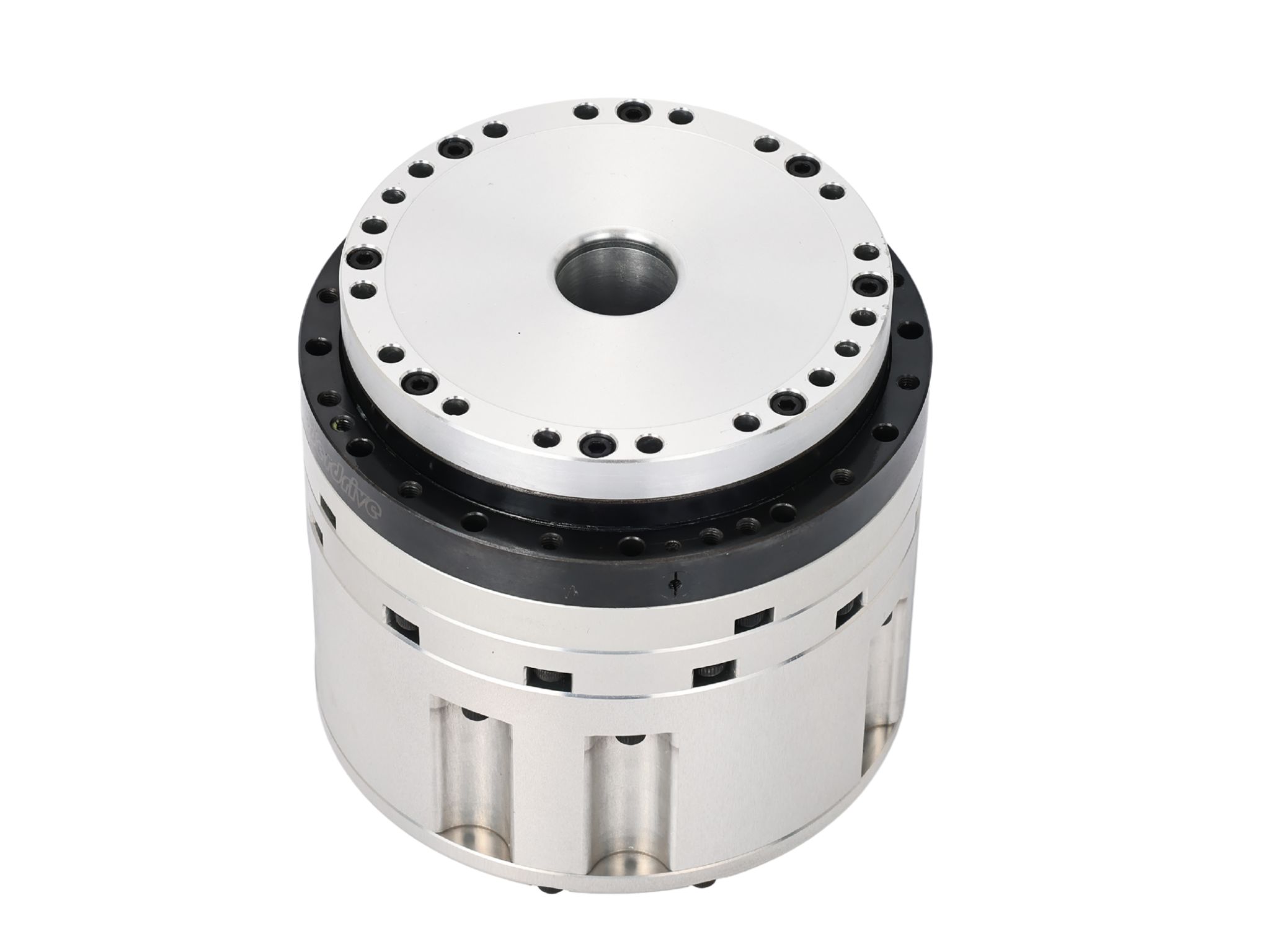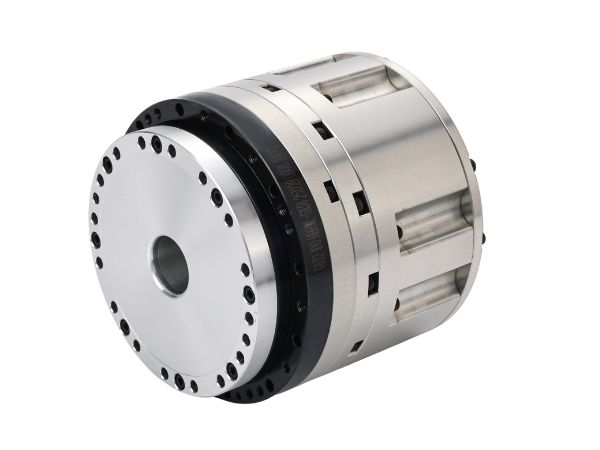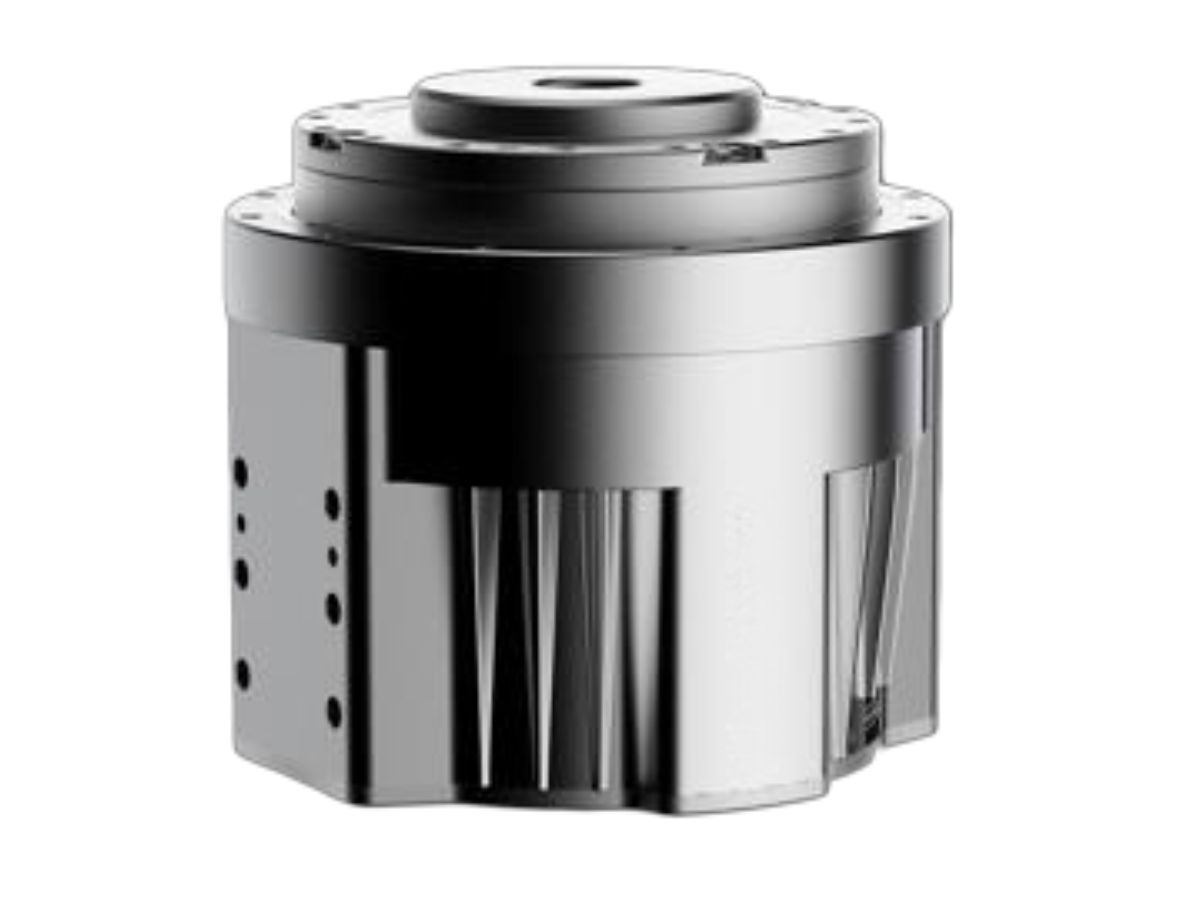









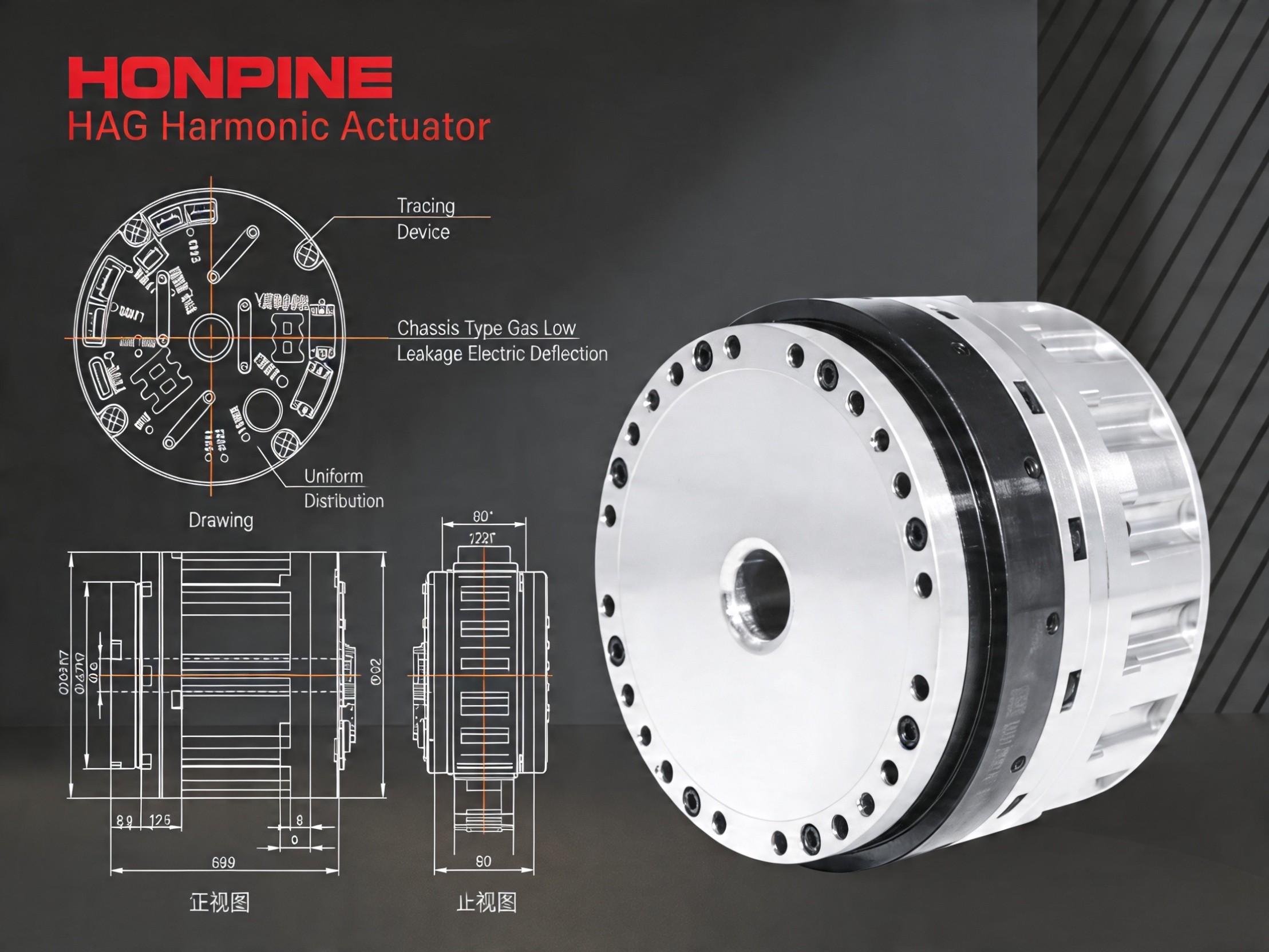
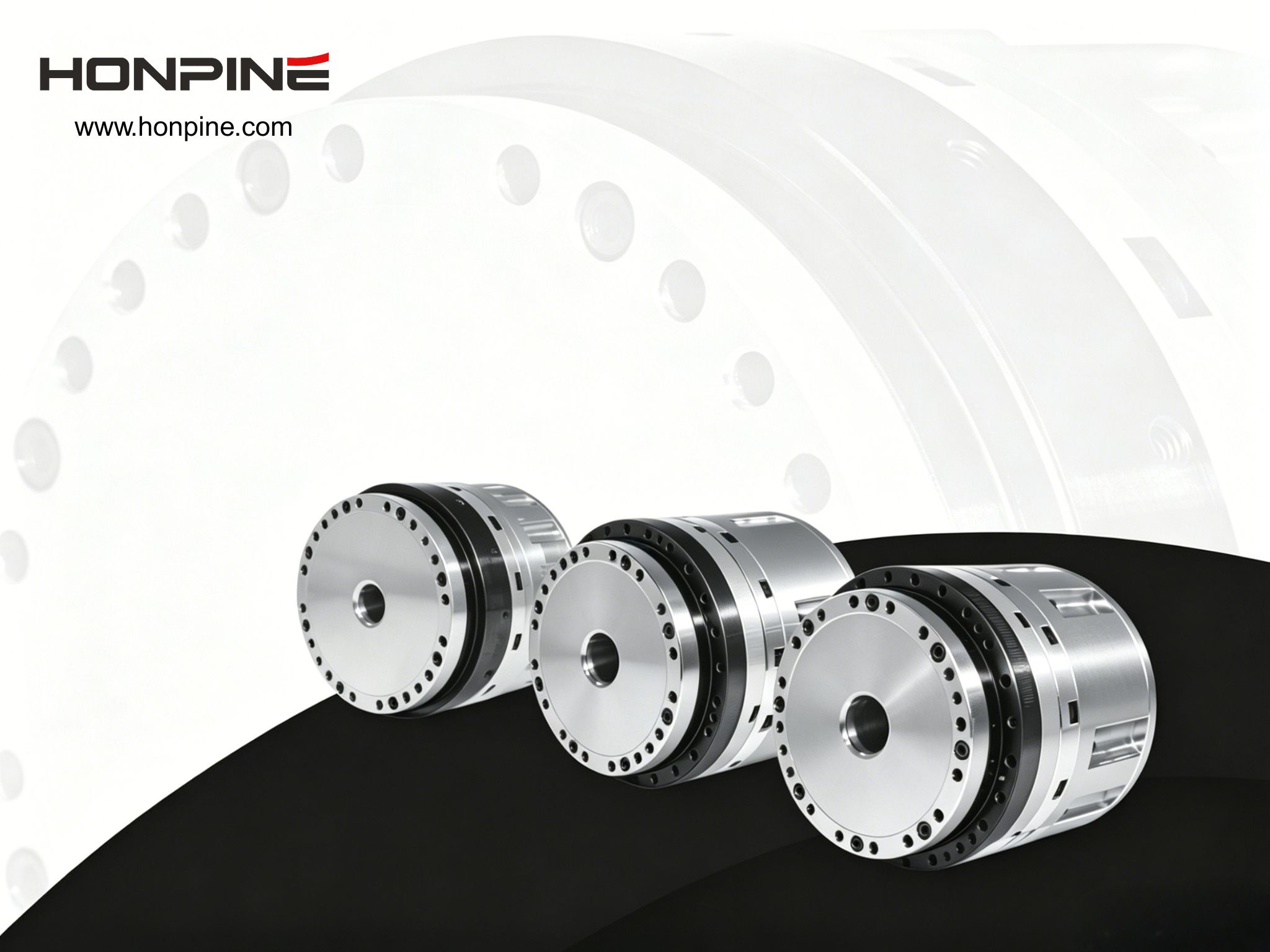
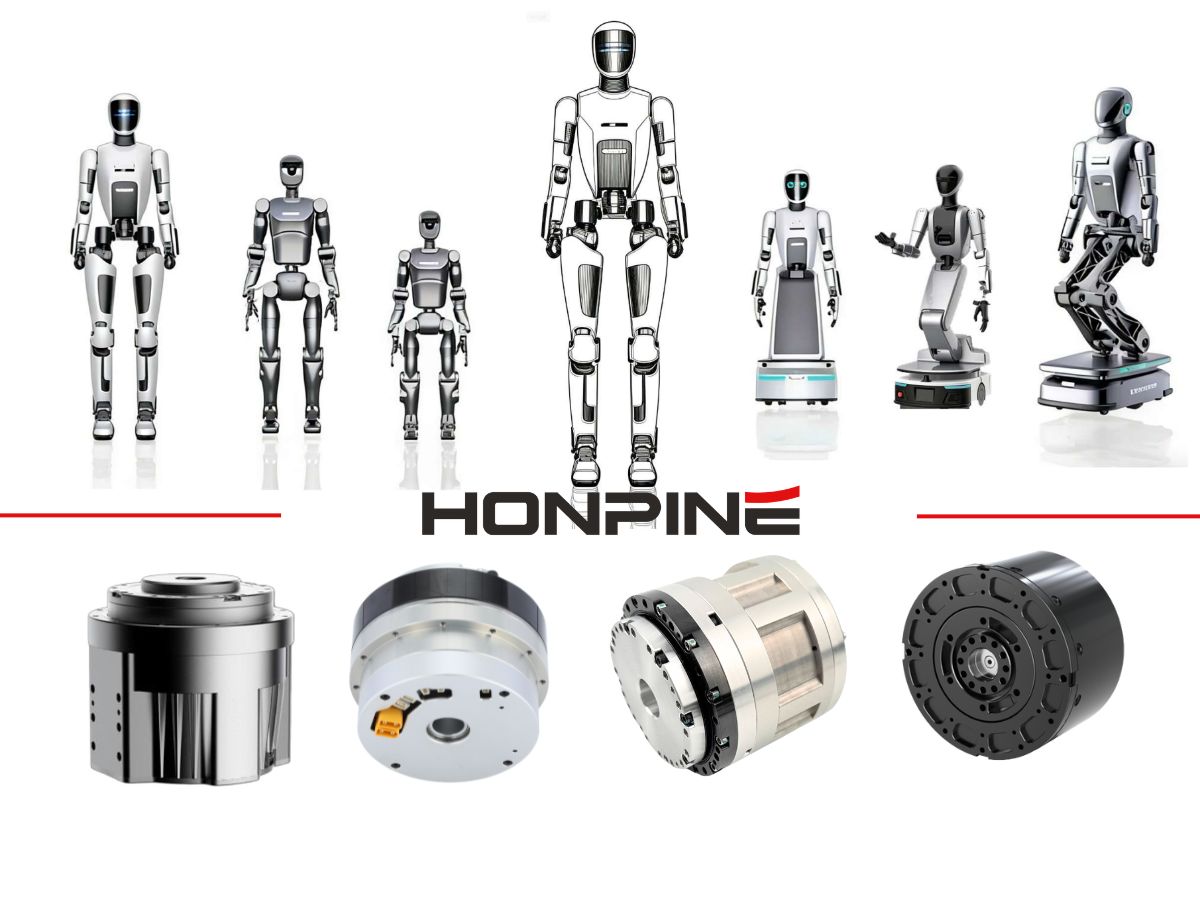
Robot joint design is a multi-objective trade-off problem. Within a limited space, it must simultaneously meet requirements for torque, precision, speed, reliability, and cost control. A mature robot joint module is an integrated electromechanical system that already considers high torque density, high integration, lightweight design, and thermal management.
Power Source of the Joint Module
To achieve maximum torque output and efficient heat dissipation within a compact volume, modern robot joints typically do not use traditional framed motors. Instead, frameless torque motors are widely adopted.
A frameless motor consists only of a stator and rotor, which are directly integrated into the mechanical housing of the joint. The reason for choosing this design is that it provides extremely high power density and excellent dynamic response.
Transmission System of the Joint Module
The motor usually operates at high speed but produces insufficient torque, so a reducer is required to amplify torque. The choice of reducer directly determines the joint’s impact resistance and backlash performance.
Common types include:
(1) Harmonic Reducer
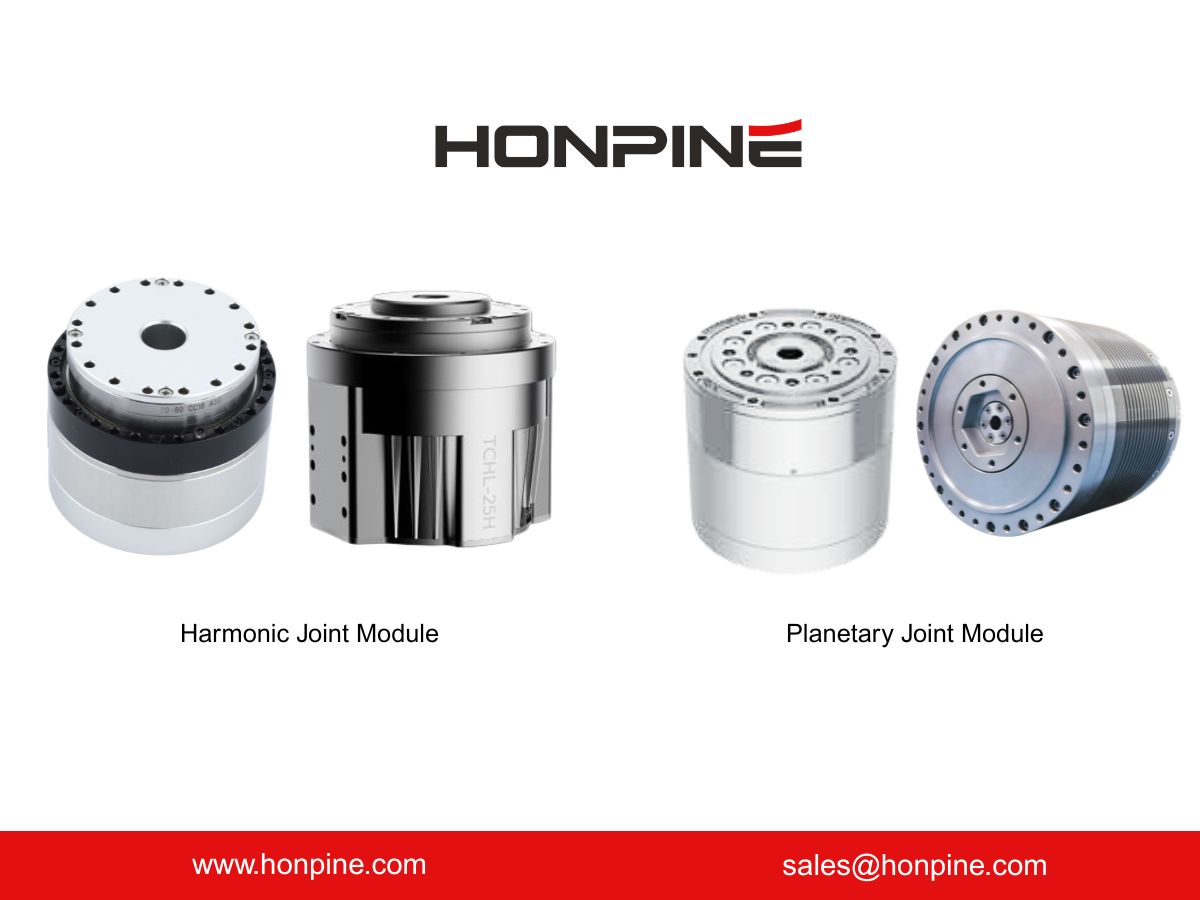
Harmonic reducers are characterized by zero backlash, compact size, and high reduction ratios (typically 50:1 to 160:1). They are currently the standard solution for high-precision robotic joints. However, their impact resistance is relatively limited.
(2) Planetary Gear Reducer / Cycloidal Reducer
For designs such as cheetah-inspired quasi-direct-drive robots, low-ratio planetary gear reducers are often used. These provide excellent impact resistance and high torque transparency.
Encoders and Sensors in Joint Modules
High-quality joint control relies on precise closed-loop feedback. Most mainstream designs adopt a dual-encoder architecture:
(1) Motor-Side Encoder
Mounted on the motor rotor side, usually a high-resolution optical or magnetic encoder. It is used for motor commutation and speed-loop control.
(2) Output-Side Absolute Encoder
Installed at the output of the reducer, it directly measures the true physical position of the joint, eliminating position errors caused by transmission flexibility.
(3) Joint Torque Sensor
Typically integrated between the reducer output and the robot link. It is essential for impedance control, force-position hybrid control, and ensuring safety in human-robot interaction.
Drive and Control System of the Joint Module
To reduce the complexity of wiring in the robot, most modern designs integrate the motor driver directly into the joint.
(1) Highly Integrated Drive / Motor Control Board
This board processes sensor signals and executes control algorithms such as current loop, velocity loop, and position loop control. It is often implemented as a ring-shaped PCB mounted around the motor shaft or rear housing.
(2) Communication Bus Interface
Protocols such as EtherCAT or CANopen are used for high-speed data exchange with the robot’s central controller.
Safety and Auxiliary Mechanisms
A key safety component commonly used is the brake (power-off holding brake). When the robot loses power or a fault occurs, the brake immediately locks the motor shaft to prevent the robot from collapsing under its own weight.
Mechanical Structure and Thermal Management of the Joint Module
(1) Crossed Roller Bearing
This component provides support and protection and is typically used as the main output bearing of the joint. It can simultaneously withstand radial loads, axial loads, and overturning moments, making it ideal for complex robotic joint forces.
(2) Lightweight Housing and Thermal Design
Humanoid robot housings are typically made of aerospace-grade aluminum alloys (such as 7075 aluminum). Since the frameless motor is directly coupled to the housing, the structure itself acts as a primary heat sink. Therefore, a well-designed structural topology is required to effectively guide heat dissipation.
- What is robot joint actuator?How to Choose the Best Robot Rotary Joint Actuator?Apr 14, 2026In core robot joint transmission solutions, planetary and harmonic rotary actuators each have their own strengths. Choosing the right type based on application requirements is essential to achieve the optimal balance between performance and cost.
- DD Motors VS Harmonic Rotary ActuatorsApr 01, 2026This article provides an in-depth comparison between Direct Drive (DD) motors and harmonic rotary actuators, covering their transmission principles, advantages and disadvantages, and typical application fields.
- OMG Ultra Compact Harmonic Drive Joint Module with Built-in Torque SensorJan 27, 2026HONPINE TCHL series harmonic drive joint module is a game-changing product that achieves disruptive improvements in multiple aspects such as lightweight design, integration level, and connection convenience. This article will analyze its revolutionary enhancements with you.
- DD Motor Servo System: How to Understand Mechanical Resonance and Solve Machine Vibration?Sep 18, 2026This article explains the relationship between DD motor servo tuning, mechanical resonance, and servo bandwidth in direct drive motion systems. It examines why vibration and instability can occur even after repeated servo parameter adjustments, and explains how mechanical stiffness, moving mass, bearing conditions, load distribution, and structural geometry affect resonance frequency. The article also compares approaches for high- and low-frequency resonance, explains when digital notch filtering can be effective, and provides a practical tuning strategy for engineers working with DD motors, direct drive torque motors, and linear motors.
- High Precision Harmonic Drive Robot Joint Actuator Solution for Robotic ElbowsSep 18, 2026The robotic elbow joint plays a critical role in arm flexion, posture adjustment, and end-effector positioning. As humanoid robots, collaborative robots, and robotic arms become more capable, elbow actuators need to deliver high torque and precise motion within increasingly limited installation spaces. A high precision harmonic drive robot joint actuator integrates the harmonic reducer, motor, encoder, brake, and drive system into a compact unit, providing low backlash, high stiffness, high torque density, and accurate motion control. In this article, HONPINE introduces three joint actuator series suitable for robotic elbow applications, covering different requirements for size, torque, speed, precision, and integration.