








How to Understand the Concept of a Robot Joint Actuator
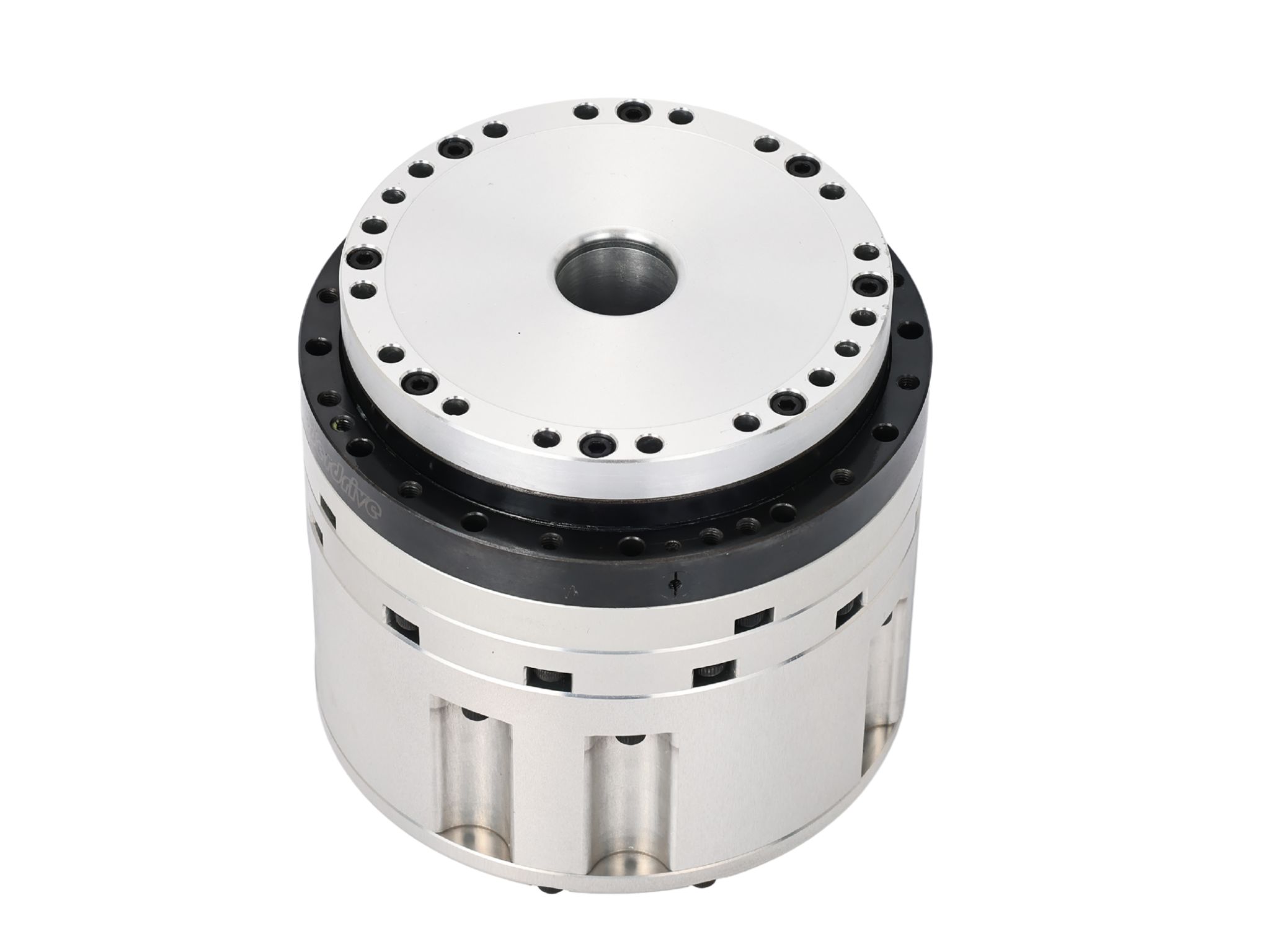
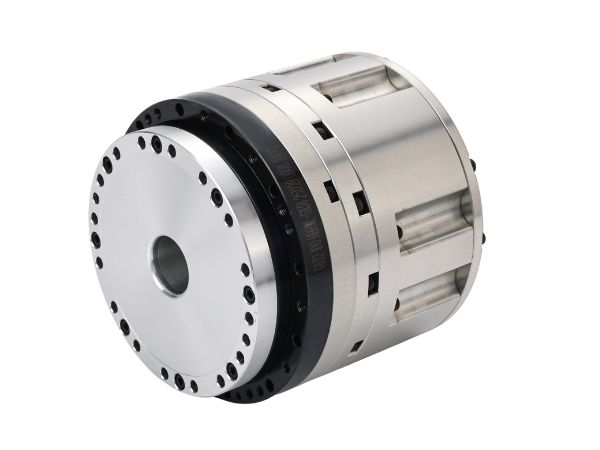
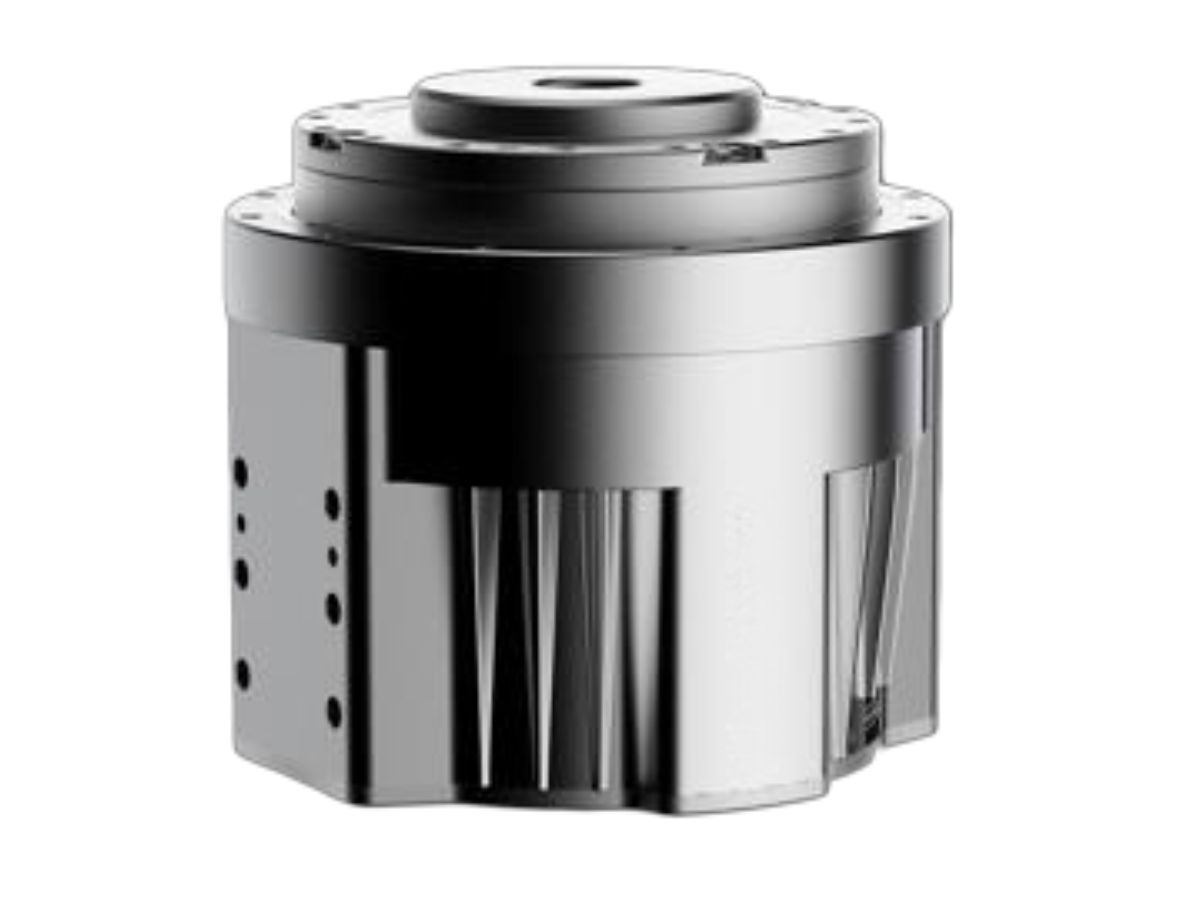
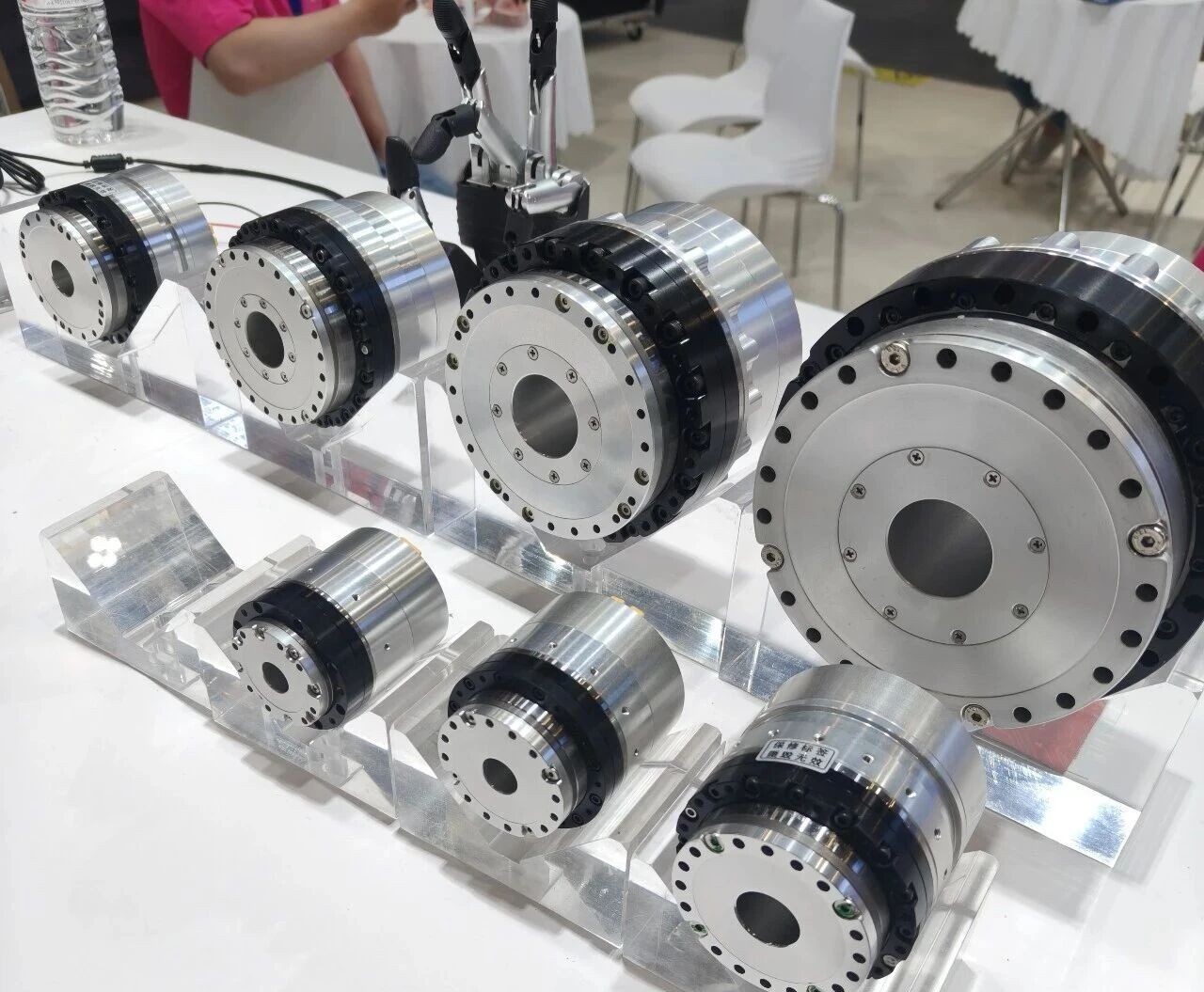
A robot joint actuator, also referred to as a robot joint module, or joint drive, is a key component that directly affects the hardware cost and motion performance of a robot.
Installed at the joints of a robot, where different links are connected, the actuator drives the robot's mechanisms, such as arms and legs, to produce controlled movement. In a typical rotary joint, the actuator converts the rotational motion generated by the motor into controlled motion of the connected link.
A robot joint actuator can consist of multiple functional components, including a motor as the driving element, a reducer as the transmission element, an encoder as the sensing element, and a control board and control software as the control system.
In modern robotic systems, these components are increasingly integrated into a compact actuator module, making the robot joint actuator an important part of the overall robot architecture.
Types of Robot Joint Actuator
There are different ways to classify robot joint actuators according to their motion type, power source, transmission architecture, and application.
Understanding the types of robot joint actuator helps engineers select an actuator according to the robot's required torque, speed, precision, stiffness, compliance, size, and operating environment.
Types of Robot Joint Actuator by Motion Type
Rotary Actuator
A rotary actuator produces rotary output motion and is commonly based on a motor combined with a reducer or transmission mechanism.
Rotary actuators are widely used for robot joints that require angular movement, including the shoulder, waist, hip, elbow, wrist, and other rotary joints.
Depending on the application, the transmission can use a harmonic drive reducer, RV reducer, planetary gearbox, or another precision transmission architecture.
Linear Actuator
A linear actuator produces linear output motion rather than rotary motion.
A typical electric linear actuator may combine a motor with a ball screw, roller screw, or other linear transmission mechanism.
Linear actuators are suitable for robotic mechanisms that require pushing, pulling, lifting, or other linear movements. They can also be used in robotic legs and other mechanisms where linear motion is converted into joint movement through a linkage.
Types of Robot Joint Actuator by Power Source
Robot actuators can also be classified according to the energy source used to generate mechanical motion. The main types include electric, hydraulic, and pneumatic actuators.
Electric Actuator
Electric actuators use an electric motor as the primary power source. Depending on the application, the motor can be a servo motor, stepper motor, frameless torque motor, or coreless motor.
Electric actuators provide accurate motion control, fast response, and relatively straightforward integration with electronic control systems. They are currently widely used in robots, particularly collaborative robots, industrial robots, mobile robots, and humanoid robots.
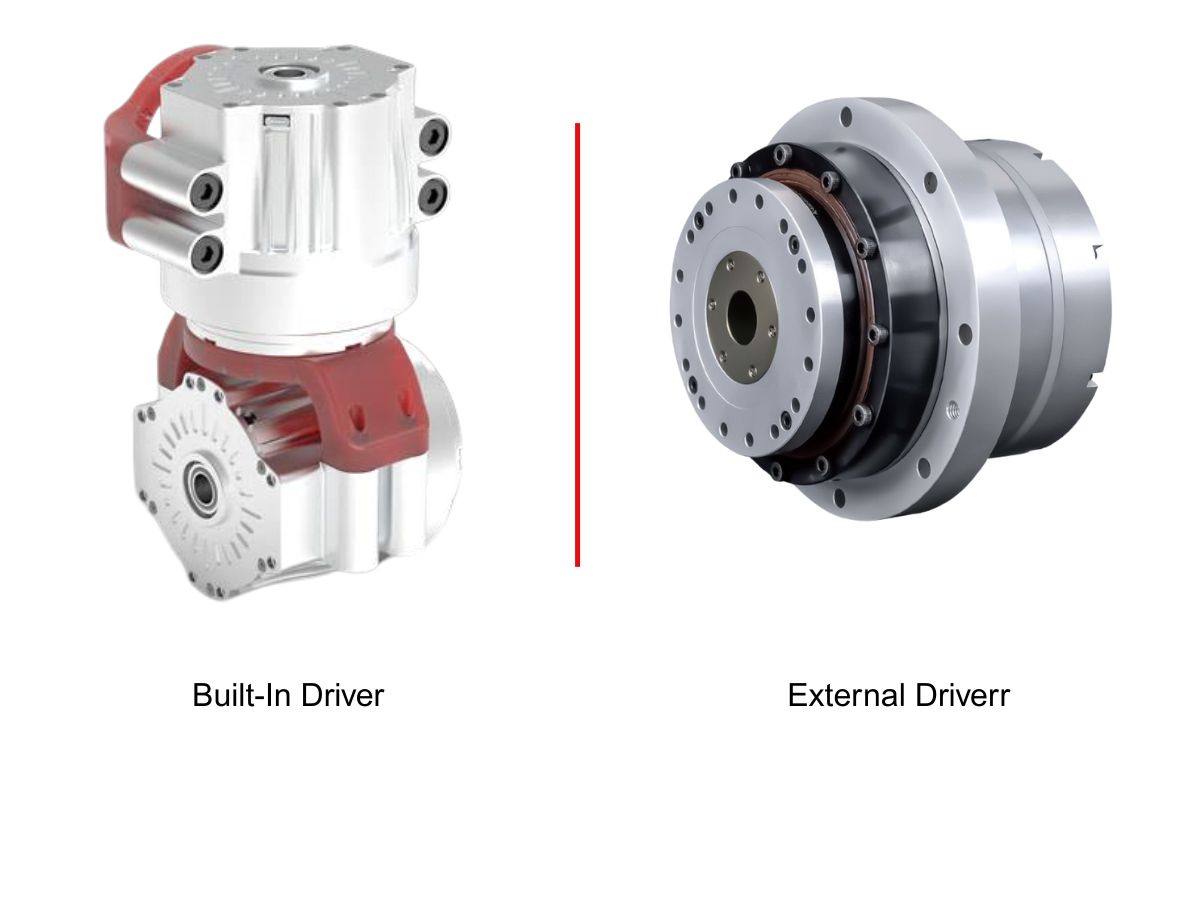
For compact robot joints, an electric actuator may integrate the motor, reducer, encoder, brake, and drive electronics into a single module.
Hydraulic Actuator
Hydraulic actuators generate mechanical force through pressurized hydraulic fluid.
Their main advantage is high force and power density, making them suitable for heavy-duty robotic systems and applications requiring very high output force.
Hydraulic actuation has been used in heavy industrial robots, construction robots, and some earlier humanoid robot development projects.
However, hydraulic systems generally require additional pumps, valves, piping, and fluid management. System complexity, maintenance requirements, leakage considerations, and control requirements can also increase the overall design complexity.
Pneumatic Actuator
Pneumatic actuators use compressed air to generate mechanical motion.
They can provide fast response and relatively simple mechanical structures, while the compressibility of air can also provide a degree of natural compliance.
Pneumatic actuators are commonly used for simple gripping, clamping, pick-and-place mechanisms, and lightweight automation.
However, compared with electric servo actuators, pneumatic systems can be more difficult to control precisely in applications requiring accurate continuous-position control.
Types of Robot Joint Actuator by Transmission and Mechanical Architecture
Another important way to classify robot joint actuators is according to their transmission architecture.
Traditional Stiff Actuator (TSA)
A traditional stiff actuator generally consists of a motor combined with a high-ratio reducer.
The high reduction ratio increases output torque while maintaining relatively precise motion control. This architecture is widely used in industrial and robotic joints because of its mature technology and established transmission solutions.
Harmonic drive and RV reducers are commonly used in this type of robot joint actuator.
However, a highly geared actuator can have limitations in terms of backdrivability, force transparency, and impact behavior compared with lower-ratio or direct-drive architectures.
Series Elastic Actuator (SEA) and Parallel Elastic Actuator (PEA)
A Series Elastic Actuator (SEA) introduces an elastic element, such as a spring, into the transmission path. A Parallel Elastic Actuator (PEA) uses an elastic element in parallel with the actuator.
Elastic elements can absorb mechanical shocks and provide controlled compliance, which can be valuable for human-robot interaction and dynamic movement.
These actuator architectures are therefore considered for collaborative robots, legged robots, rehabilitation robots, and other applications where compliance and interaction safety are important.
The additional elastic element also introduces more complex mechanical and control requirements.
Quasi-Direct Drive Actuator (QDD)
A Quasi-Direct Drive (QDD) actuator generally combines a high-torque-density motor with a low-ratio transmission.
Compared with high-ratio geared actuators, QDD systems can provide higher force transparency, greater backdrivability, and fast dynamic response.
This architecture is particularly relevant to legged robots, quadruped robots, and other robotic systems that require rapid changes in torque and motion.
The trade-off is that the lower reduction ratio requires the motor itself to provide significantly higher torque, which can increase motor size, current requirements, and thermal load.
Direct Drive Actuator (DD)
A Direct Drive (DD) actuator connects the motor directly to the joint output without a mechanical reducer.
Because there is no reduction gear between the motor and output, the system can eliminate gearbox backlash and provide very high force transparency and backdrivability.
Direct-drive actuators can be attractive for precision motion systems and applications requiring highly responsive torque control.
However, achieving high output torque at low speed requires a high-torque-density motor, which can result in larger motor dimensions, higher mass, and higher cost compared with geared actuators.
Robot End Effectors and Their Relationship With Actuators
Robot end effectors are sometimes discussed together with robot actuators, but they serve different functions.
A robot joint actuator drives the robot's joints and links, while an end effector interacts directly with the workpiece or environment.
Grippers
Robot grippers include mechanical grippers, such as parallel or rotary gripping mechanisms, as well as vacuum grippers and magnetic grippers.
They are used for picking, handling, positioning, and clamping workpieces.
Dedicated Robot Tools
Dedicated end-effectors include welding guns, grinding and polishing tools, spray guns, cutting tools, dispensing systems, and other application-specific equipment.
These tools perform the actual task at the robot's working end, while robot joint actuators provide the motion required to position and orient the end effector.
How to Select a Robot Joint Actuator?
The selection of a robot joint actuator should be based on the robot's mechanical structure, task requirements, load profile, required motion performance, and operating environment.
Different types of robot joint actuator architectures can have very different characteristics, so the actuator should be selected together with the complete robot system.
Degrees of Freedom
Degrees of freedom (DOF) refer to the number of independently controllable directions of motion in a robot.
A humanoid robot generally requires multiple degrees of freedom to reproduce complex human-like movements. Increasing the number of DOF can increase the robot's range of possible movements and flexibility, but it also increases the number of actuators, control channels, sensors, cables, and mechanical interfaces required.
Therefore, the required number of degrees of freedom should be determined by the robot's intended tasks and mechanical architecture.
Rated Payload
Rated payload, also referred to as effective payload, describes the maximum load that a robot can continuously handle under specified operating conditions.
Payload requirements directly affect the torque requirements of the robot joints.
When the required output torque is high, increasing motor power is not always the only solution. Within an appropriate speed range, a suitable reduction ratio can increase output torque while allowing a smaller motor to be used.
The complete load profile, including acceleration, deceleration, peak torque, and external forces, should be considered during actuator selection.
Workspace
Workspace, or working range, describes the three-dimensional region that the robot can reach.
The size and shape of the workspace depend on the robot's overall mechanical architecture, link dimensions, joint arrangement, and degrees of freedom.
Robot joint actuators directly influence the available joint rotation, output torque, actuator dimensions, and mechanical packaging, which in turn affect the overall robot workspace.
Motion Accuracy
Motion accuracy describes how accurately the robot can achieve a commanded position or trajectory.
Repeatability is influenced by the accuracy of the reducer and transmission system, encoder resolution, mechanical stiffness, and control system.
Absolute positioning accuracy depends on the combined performance of the encoder, reducer, mechanical transmission, calibration, and control algorithms.
For robots performing precision assembly, inspection, handling, or other fine-motion tasks, the actuator should therefore be evaluated as part of the complete motion-control system rather than by reducer accuracy alone.
Other Parameters to Consider When Selecting a Robot Joint Actuator
In addition to degrees of freedom, payload, workspace, and motion accuracy, engineers should consider other actuator parameters, including:
Operating speed
Continuous and peak torque
Control method
Drive architecture
Power source and voltage
Installation method
Actuator dimensions
Actuator mass
Encoder type and resolution
Brake requirements
Communication interface
Protection rating
Operating temperature
Duty cycle
Expected service life
These parameters collectively determine where a robot actuator can operate and what level of performance the robot can achieve.
For humanoid robots in particular, actuator selection involves balancing torque density, weight, size, stiffness, backdrivability, precision, thermal performance, and dynamic response.
How Different Robot Joint Actuators Meet Different Design Requirements?
There is no single actuator architecture that is suitable for every robot joint.
A high-ratio harmonic drive actuator can provide compact dimensions, high reduction ratio, and near-zero backlash, making it suitable for many precision robotic joints.
An RV-based actuator can provide high torque and torsional stiffness for larger and more heavily loaded robot axes.
A planetary actuator can provide high efficiency and flexible transmission ratios for various servo applications.
QDD and direct-drive architectures can provide higher backdrivability and dynamic response where these characteristics are prioritized.
Elastic actuator architectures can introduce compliance for applications requiring force interaction and impact absorption.
Therefore, actuator selection should follow the robot's design objectives and application requirements rather than relying on a single transmission architecture.
HONPINE Robot Joint Actuator Solutions
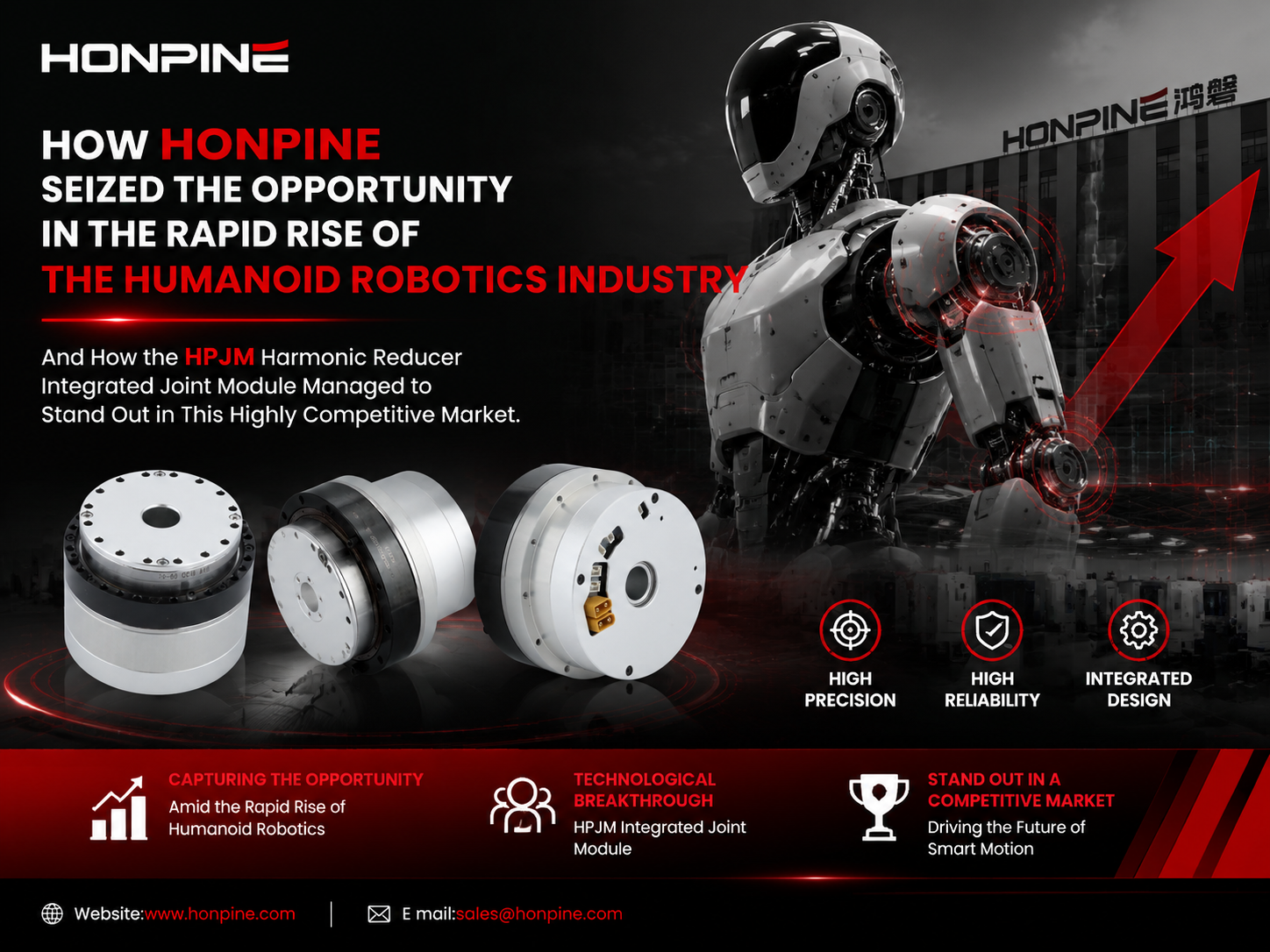
HONPINE focuses on electric rotary robot joint actuators and integrated motion solutions for robotic and automation applications.
A robot joint actuator can integrate the motor, precision reducer, encoder, brake, and control components into a compact mechanical system, reducing the complexity of integrating individual components into the robot.
HONPINE develops electric rotary actuator solutions based on different transmission technologies, including harmonic drive and other precision transmission architectures.
For applications requiring compact dimensions, high positioning accuracy, low backlash, and integrated motion control, the appropriate robot joint actuator can be selected according to the required torque, speed, precision, stiffness, installation space, and operating conditions.
Engineers looking for types of robot joint actuator, actuator specifications, or application-specific selection information can contact HONPINE for technical documentation and product information.
- What is robot joint actuator?How to Choose the Best Robot Rotary Joint Actuator?Apr 14, 2026In core robot joint transmission solutions, planetary and harmonic rotary actuators each have their own strengths. Choosing the right type based on application requirements is essential to achieve the optimal balance between performance and cost.
- DD Motors VS Harmonic Rotary ActuatorsApr 01, 2026This article provides an in-depth comparison between Direct Drive (DD) motors and harmonic rotary actuators, covering their transmission principles, advantages and disadvantages, and typical application fields.
- OMG Ultra Compact Harmonic Drive Joint Module with Built-in Torque SensorJan 27, 2026HONPINE TCHL series harmonic drive joint module is a game-changing product that achieves disruptive improvements in multiple aspects such as lightweight design, integration level, and connection convenience. This article will analyze its revolutionary enhancements with you.
- DD Motor Servo System: How to Understand Mechanical Resonance and Solve Machine Vibration?Sep 18, 2026This article explains the relationship between DD motor servo tuning, mechanical resonance, and servo bandwidth in direct drive motion systems. It examines why vibration and instability can occur even after repeated servo parameter adjustments, and explains how mechanical stiffness, moving mass, bearing conditions, load distribution, and structural geometry affect resonance frequency. The article also compares approaches for high- and low-frequency resonance, explains when digital notch filtering can be effective, and provides a practical tuning strategy for engineers working with DD motors, direct drive torque motors, and linear motors.
- High Precision Harmonic Drive Robot Joint Actuator Solution for Robotic ElbowsSep 18, 2026The robotic elbow joint plays a critical role in arm flexion, posture adjustment, and end-effector positioning. As humanoid robots, collaborative robots, and robotic arms become more capable, elbow actuators need to deliver high torque and precise motion within increasingly limited installation spaces. A high precision harmonic drive robot joint actuator integrates the harmonic reducer, motor, encoder, brake, and drive system into a compact unit, providing low backlash, high stiffness, high torque density, and accurate motion control. In this article, HONPINE introduces three joint actuator series suitable for robotic elbow applications, covering different requirements for size, torque, speed, precision, and integration.