

What Matters Most When Choosing a Mini Harmonic Drive for Medical Robots?
When selecting a mini harmonic drive for medical robots, precision, reliability, and compact design are the factors that matter most. In applications where smooth motion and exact positioning are critical, Precision reducer motors for heavy duty robots can offer valuable insight into torque stability, backlash control, and long-term performance. Understanding these key standards helps manufacturers choose solutions that support both advanced medical automation and consistent operational safety.
For buyers in machine tool equipment supply chains, this decision goes beyond component matching. A mini harmonic drive used in a surgical assistant, diagnostic arm, or laboratory handling unit must maintain motion accuracy over thousands of cycles while fitting into a tightly constrained mechanical envelope.
The challenge is that medical robots often require the compactness of miniature transmission systems, yet they are judged by the same performance logic used in industrial automation: backlash, torque density, thermal stability, service life, and integration risk. That is why lessons from Precision reducer motors for heavy duty robots remain relevant.
Key Performance Factors That Define a Suitable Mini Harmonic Drive
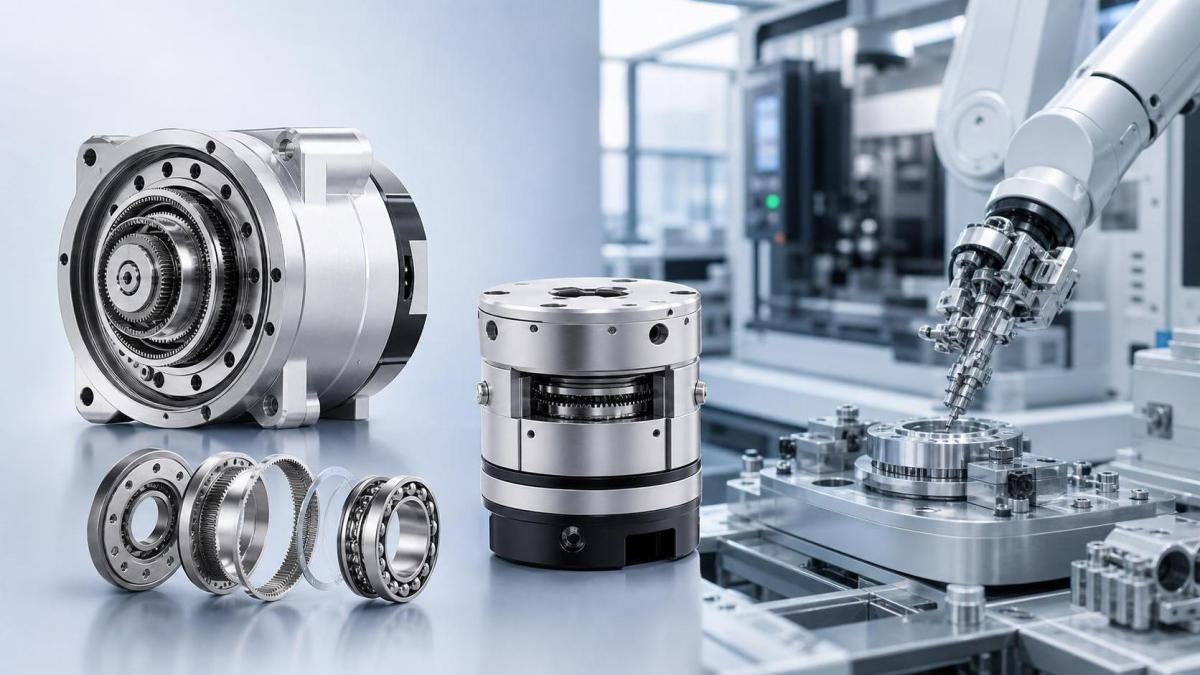
In medical robotics, a mini harmonic drive is rarely selected on size alone. Most engineers begin with 4 core checks: positioning accuracy, repeatability, torque capacity, and compact integration. If one metric is weak, the full motion system may lose stability during precision tasks.
Precision and Backlash Control
Backlash is one of the first values procurement and design teams review. In delicate robotic joints, many applications aim for backlash below 1 arc-min, while higher-end systems may target near-zero lost motion. This directly affects path accuracy, instrument alignment, and movement consistency.
A mini harmonic drive with weak backlash control may still rotate smoothly in a short test, but drift becomes visible after repeated starts, stops, and directional changes. In machine tool related assembly environments, even a 0.1 mm end-point deviation can become unacceptable for medical positioning tasks.
Torque Density in a Small Envelope
Medical robots often have narrow installation spaces, sometimes with joint diameters under 80 mm. At the same time, they must carry sensors, tooling, cable routing, and covers. This makes torque density more valuable than nominal torque alone.
Engineers frequently compare rated torque, peak torque, and reduction ratio together. A drive rated at 8 Nm to 25 Nm may fit small robotic wrists, while larger articulated modules may require 30 Nm to 80 Nm. The correct choice depends on duty cycle, acceleration profile, and shock loading.
Why heavy-duty reducer logic still matters
Although medical robots are not usually classified as heavy-duty systems, the evaluation logic from Precision reducer motors for heavy duty robots remains useful. Buyers still need to assess torque reserve, load fluctuation tolerance, and transmission rigidity under continuous operation.
The table below shows the most practical screening factors for choosing a mini harmonic drive in machine tool and medical robot production environments.
These ranges are not fixed standards, but they offer a practical first filter. In many sourcing projects, a drive that looks acceptable on catalog torque alone is rejected later because backlash, ratio matching, or repeatability does not align with the robot controller and joint structure.
Reliability Over Long Duty Cycles
Medical robots may run in repeated cycles for 8 to 16 hours per day, depending on the application. This means wear rate, bearing support, lubrication stability, and thermal growth must be part of the evaluation from day one.
A mini harmonic drive that performs well in a 2-hour bench test may show increasing friction or precision drift after 6 months of real operation. In machine tool equipment manufacturing, this is why accelerated life testing and load simulation are common before full deployment.
How to Match the Drive to Medical Robot Structure and Motion Demands
Choosing the right drive requires more than reading a datasheet. The reducer must match motor characteristics, controller response, robot arm geometry, and mounting constraints. In practice, selection becomes a system-level exercise with at least 5 linked variables.
Start With Joint Function, Not Product Size
Different joints have different priorities. A base axis may prioritize torque reserve and rigidity, while a wrist axis often values low inertia and smoother motion. Selecting all joints with the same ratio or torque class can increase cost and reduce control efficiency.
- Base or shoulder joints: often need higher torsional rigidity and stronger overload tolerance.
- Elbow joints: usually balance speed, torque, and compact mounting.
- Wrist or end-axis joints: prioritize low backlash, low vibration, and reduced weight.
Check Thermal and Vibration Behavior
In enclosed medical devices, heat dissipation can be limited. If the reducer and motor assembly operate beyond a stable temperature window, lubricant condition may degrade and motion accuracy may shift. Many teams use a practical review band of 10°C to 25°C ambient variation during testing.
Vibration should also be reviewed under both low-speed and high-acceleration conditions. Even small oscillations can affect imaging devices, dispensing tools, or instrument positioning. This is another area where experience with Precision reducer motors for heavy duty robots provides a useful engineering framework.
Three integration checks before final approval
- Confirm motor flange, shaft, and encoder space compatibility.
- Verify cable routing and housing clearance across full rotation.
- Test combined stiffness under real payload and speed conditions.
The following comparison helps procurement teams distinguish between a catalog-fit option and a drive that is truly suitable for medical robotic motion systems.
The difference between these two approaches is significant. A basic fit may reduce initial sourcing time, but an engineering-ready match lowers integration risk, improves commissioning speed, and reduces later redesign costs.
Consider the Manufacturing and Assembly Environment
Because this topic sits within the machine tool equipment industry, manufacturing quality is part of the buying decision. Machining accuracy of housings, alignment of bearing seats, and consistency of assembly preload all influence the final behavior of the harmonic drive.
Even a well-designed reducer can underperform if installation surfaces exceed flatness limits or if shaft concentricity is poor. In precision assembly lines, keeping installation error within common ranges such as 0.01 mm to 0.03 mm can help preserve intended transmission performance.
Procurement Risks, Maintenance Priorities, and Practical Buying Advice
A successful purchase is not defined only by technical compliance. Delivery reliability, replacement planning, support responsiveness, and documentation quality affect total project cost. For many OEM buyers, these commercial and service details become decisive in the final supplier shortlist.
Common Buying Mistakes
One common mistake is selecting the smallest available reducer to save space without leaving enough torque reserve. Another is relying on a single no-load test instead of checking behavior under real duty cycles. A third is ignoring maintenance access during robot housing design.
These issues often appear 3 to 9 months after deployment, when joint noise rises, positioning becomes inconsistent, or replacement work requires unexpected disassembly hours. Preventing this starts with better pre-purchase validation.
Four procurement questions to ask suppliers
- What is the tested backlash range after repeated load cycling?
- What safety factor is recommended for intermittent peak torque?
- What maintenance interval is typical under 8-hour, 12-hour, or 16-hour daily operation?
- What lead time applies for standard units versus customized interfaces, such as 2 to 4 weeks or longer?
Maintenance and Service Planning
For medical robotic assemblies, maintenance planning should be built in early. Teams should define inspection frequency, lubrication review points if applicable, replacement criteria, and spare unit availability. This reduces downtime and protects validation schedules.
A practical service plan often includes 3 levels: routine visual inspection, periodic accuracy verification, and scheduled replacement based on operating hours. Even where the reducer is marketed as low-maintenance, buyers should still verify service assumptions in their own operating environment.
For sourcing teams comparing options, the table below summarizes the most useful decision points beyond the initial performance specification.
This broader view helps buyers move from single-part purchasing to lifecycle-oriented sourcing. In many projects, the lowest upfront price loses value quickly if integration delays or replacement complexity add hidden costs.
Where Precision Reducer Knowledge Adds Long-Term Value
The reason Precision reducer motors for heavy duty robots remain relevant is simple: they teach engineers to evaluate drives under real load behavior, not ideal catalog conditions. That discipline improves decisions for medical robots, especially where compact size must coexist with stable output and low error accumulation.
Whether the robot is used for sample handling, assisted manipulation, or compact automated positioning, the best results usually come from balancing 6 practical factors: torque reserve, backlash, rigidity, thermal control, installation accuracy, and maintainability.
Choosing a mini harmonic drive for medical robots is ultimately a system decision shaped by precision targets, mechanical constraints, duty cycle, and service expectations. Buyers who apply the same careful review used for Precision reducer motors for heavy duty robots are more likely to secure stable motion, lower integration risk, and longer usable life in demanding medical automation environments.
If you are evaluating compact transmission components for robot joints, machine tool automation assemblies, or high-precision motion systems, now is the right time to compare specifications against real operating conditions. Contact us to discuss application details, request a tailored selection plan, or learn more about suitable reducer solutions for your project.
Read More
Learn more about the story of HONPINE and industry trends related to precision transmission.
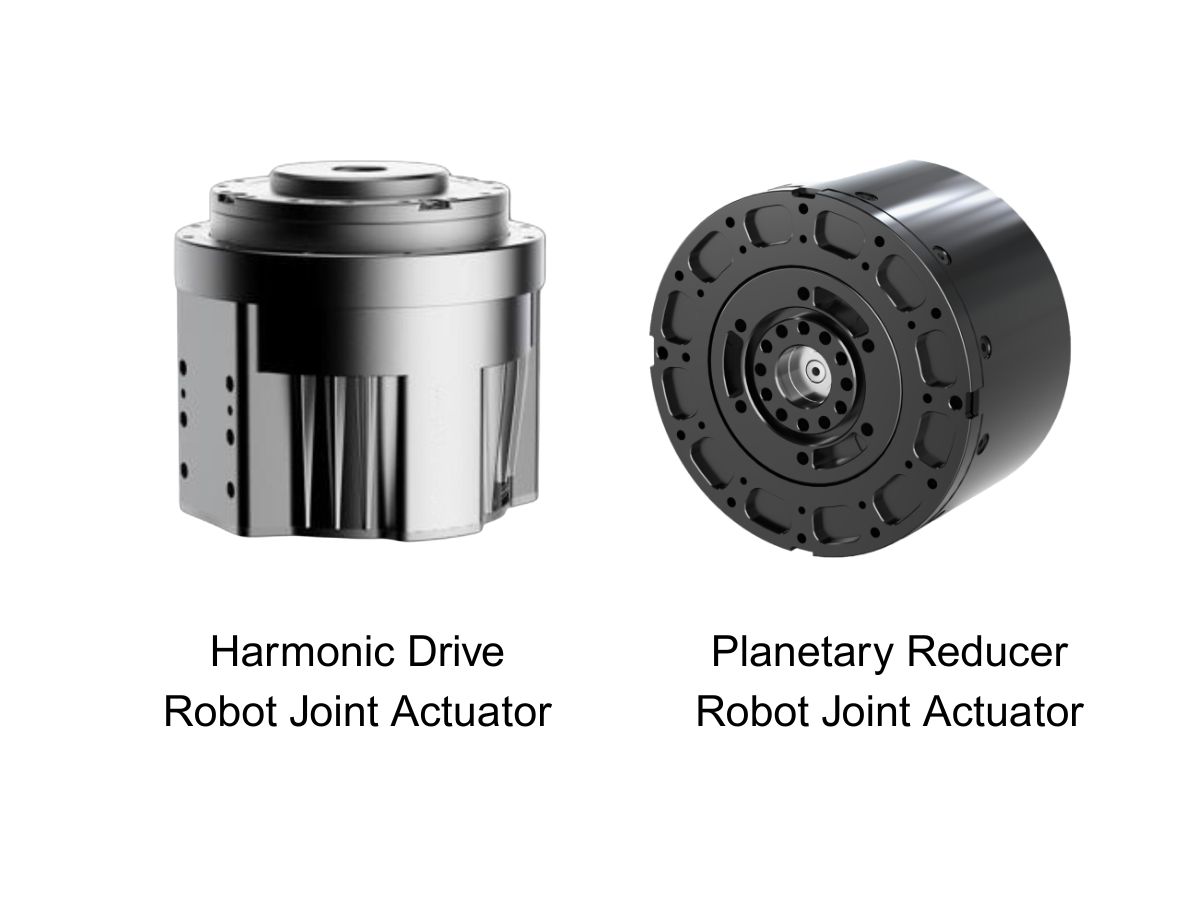
 What is robot joint actuator?How to Choose the Best Robot Rotary Joint Actuator?In core robot joint transmission solutions, planetary and harmonic rotary actuators each have their own strengths. Choosing the right type based on application requirements is essential to achieve the optimal balance between performance and cost.
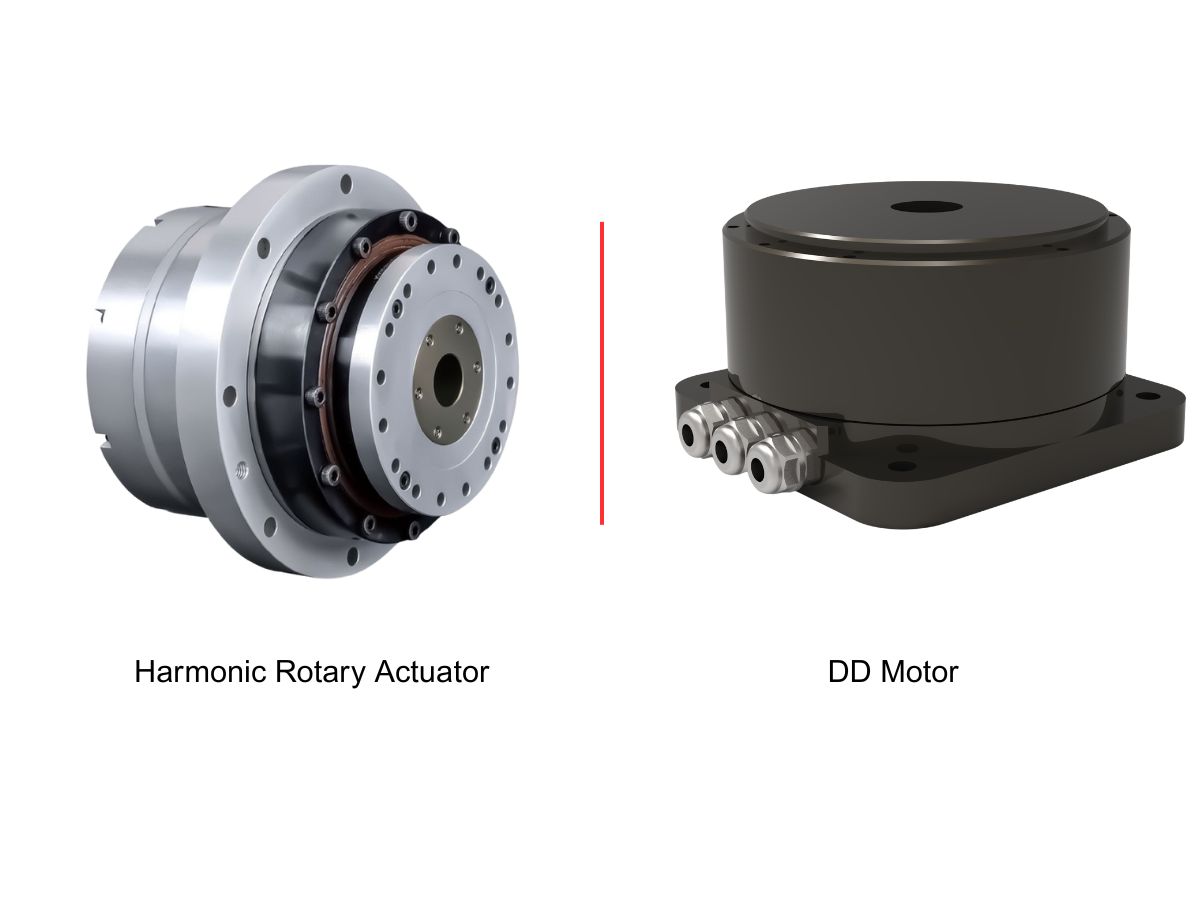
 DD Motors VS Harmonic Rotary ActuatorsThis article provides an in-depth comparison between Direct Drive (DD) motors and harmonic rotary actuators, covering their transmission principles, advantages and disadvantages, and typical application fields.
 OMG Ultra Compact Harmonic Drive Joint Module with Built-in Torque SensorHONPINE TCHL series harmonic drive joint module is a game-changing product that achieves disruptive improvements in multiple aspects such as lightweight design, integration level, and connection convenience. This article will analyze its revolutionary enhancements with you.
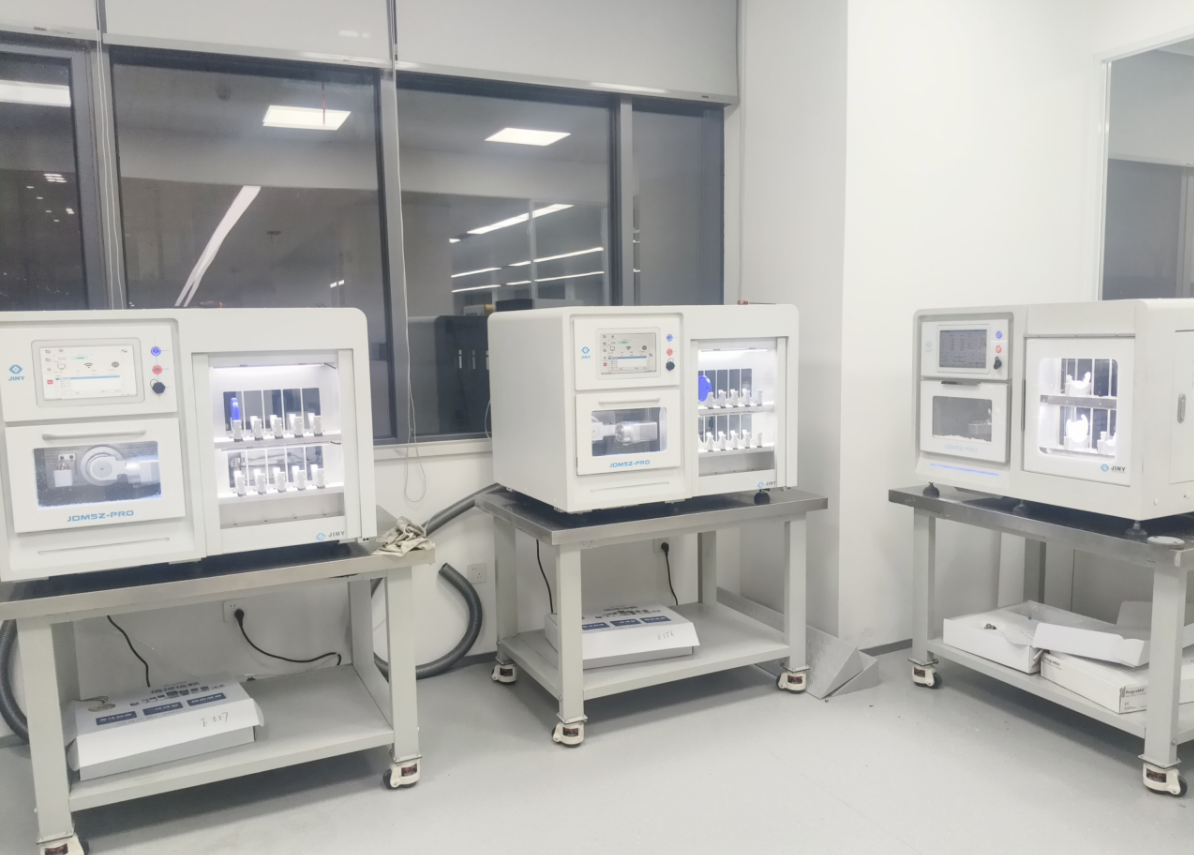
 The Role of Harmonic Drive Gears in Achieving 5–10 μm Accuracy in Dental Milling MachinesA dental milling machine is a CNC machining system used to directly process digital dental models into restorations such as crowns, bridges, veneers, inlays, and implant abutments. Dental milling machines require far higher operational accuracy and motion stability than ordinary equipment. This article explains how harmonic drive gear help dental milling machines achieve stable, continuous, and controllable operation.
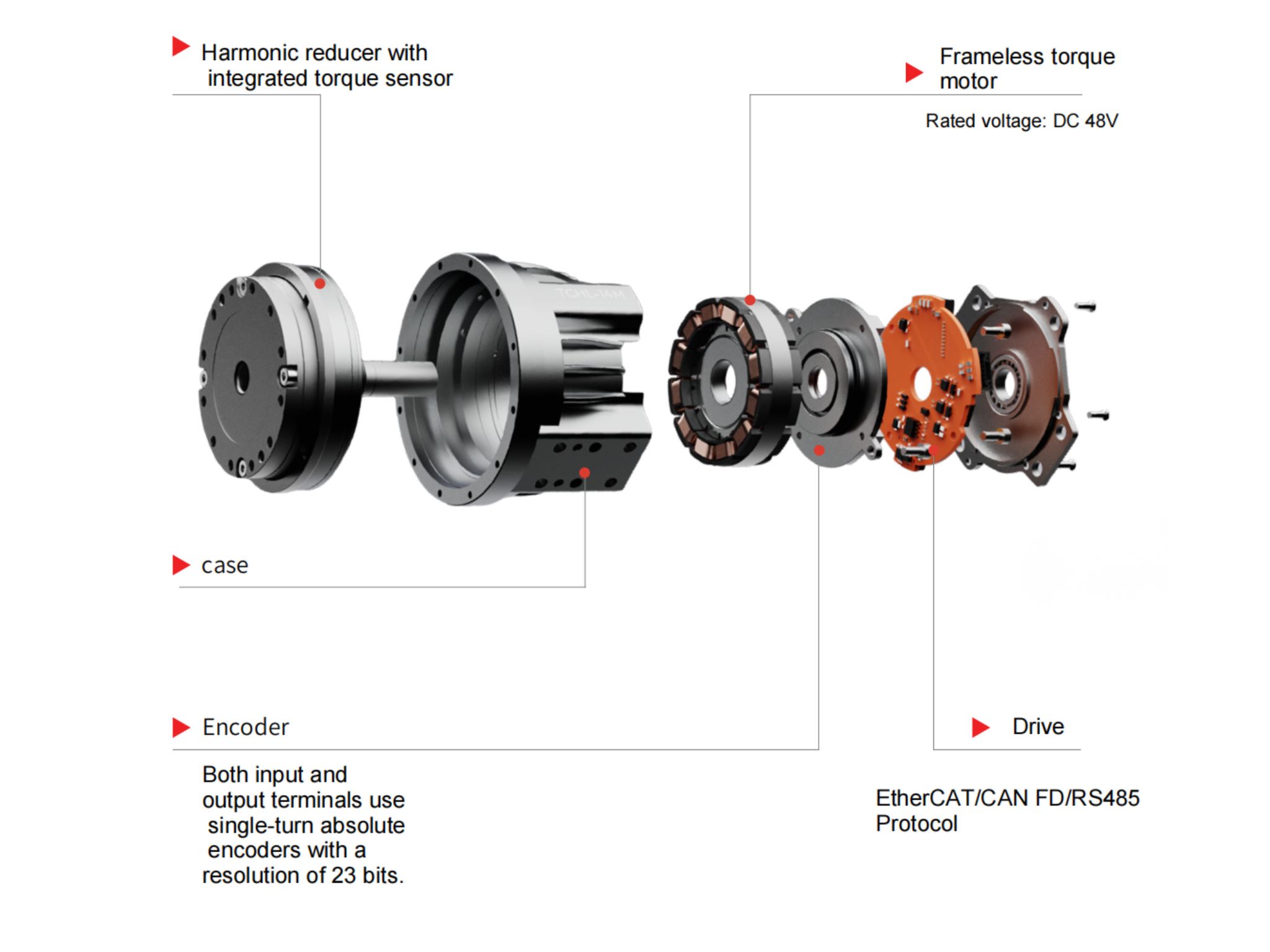
 Why Are Harmonic Rotary Actuators Perfect for Medical Equipment?Harmonic rotary actuators (typically integrated systems consisting of a harmonic drive reducer, frameless torque motor, encoder, and optional brake) are regarded as key components in medical equipment. The core reason is that they simultaneously meet the most stringent medical requirements for precision, compact size, safety, and controllability. The following explanation is structured from three perspectives: technical characteristics, application scenarios, and medical value.
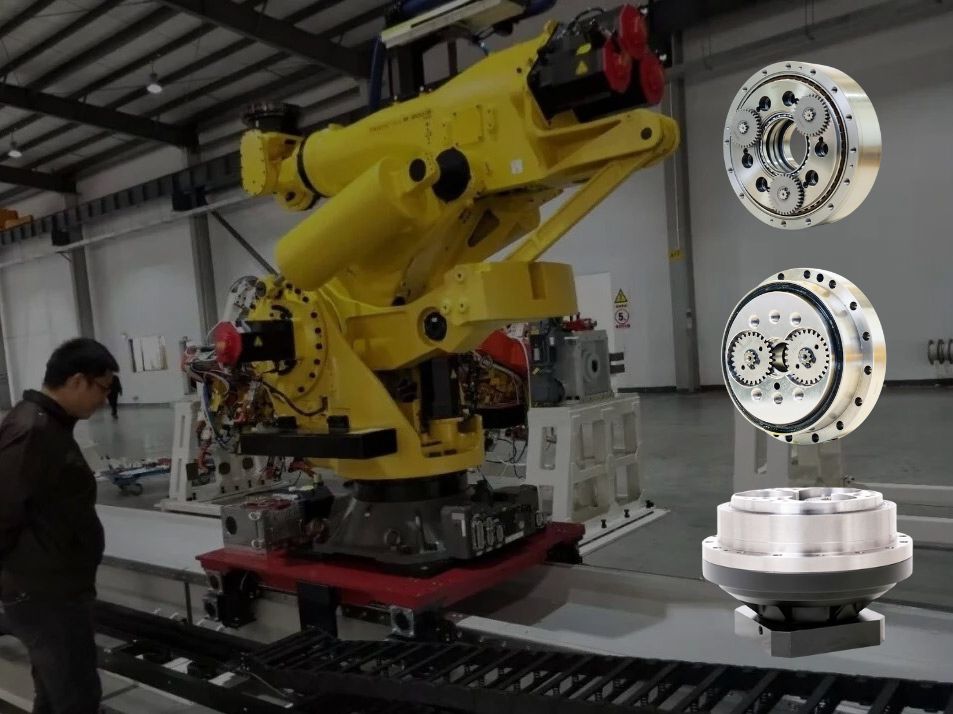
 High-Precision RV Reducers Perfectly Matched for Walking RobotsThe walking axis of a robot is a core component for power transmission and support. RV reducers provide extremely high rigidity, precision, and torque while maintaining a compact size and exceptional reliability, making them an ideal match for the demanding requirements of walking robot joints in terms of load capacity, impact resistance, and precision.
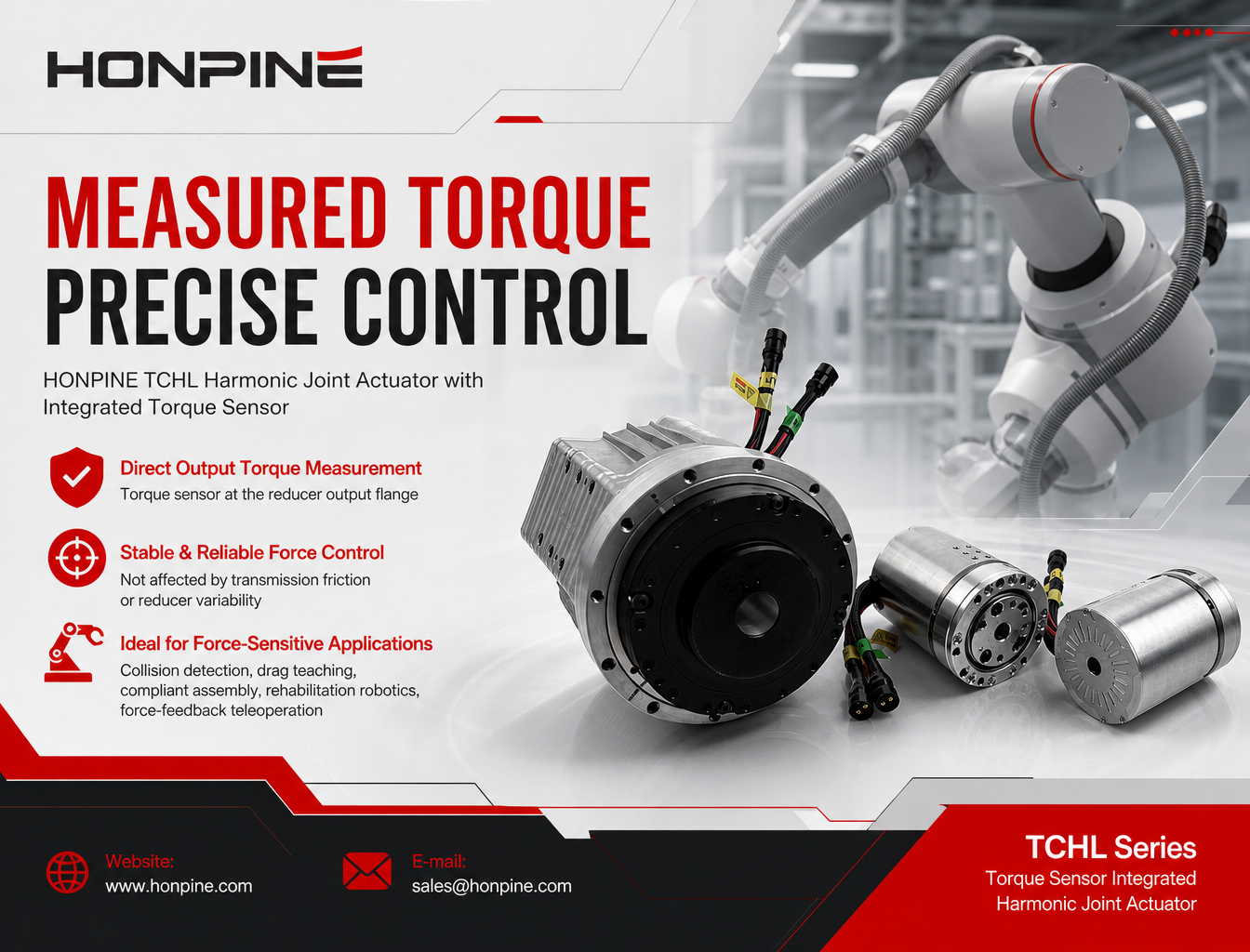
 How Does a Harmonic Joint Actuator with a Torque Sensor Improve Robot Force Control?Learn how the HONPINE TCHL harmonic joint actuator uses an integrated output torque sensor to support force feedback, collision detection, compliant assembly, rehabilitation robotics, and teleoperation.
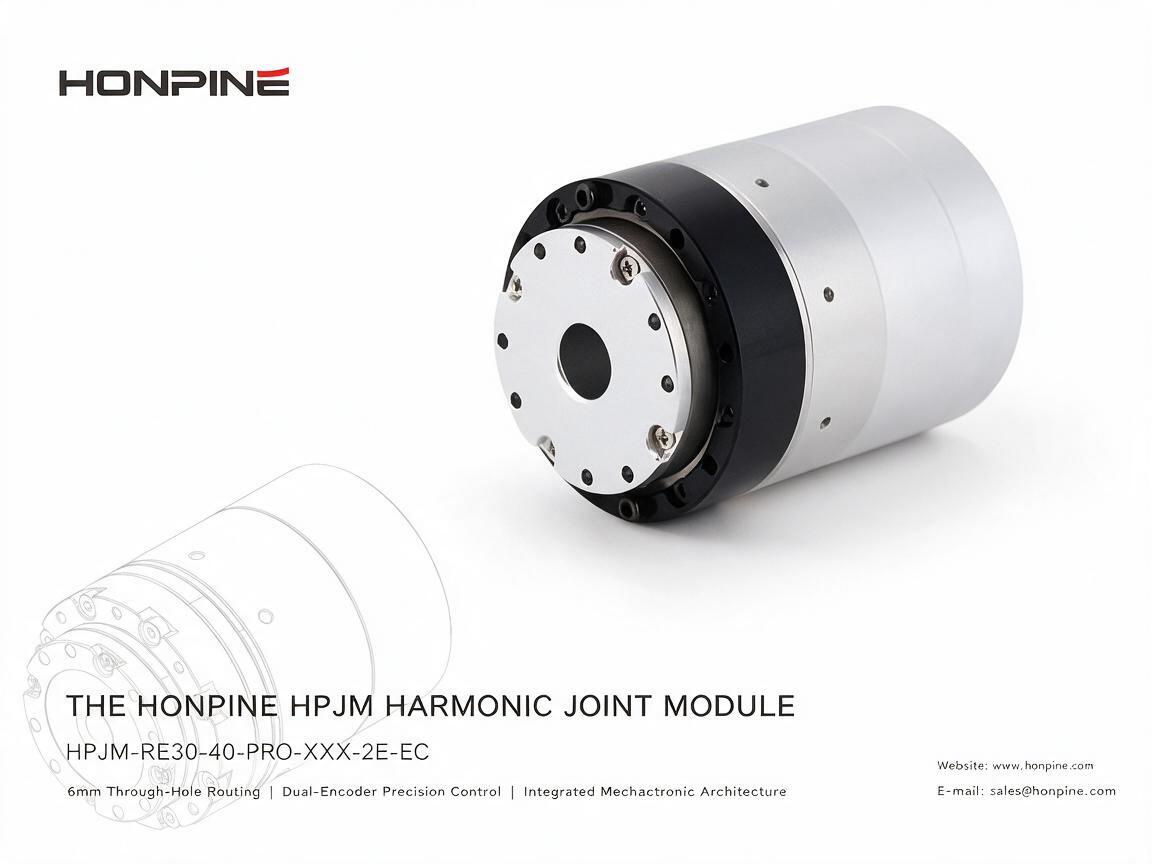
 Ultra-Compact Harmonic Joint Module with a 6 mm Hollow ShaftAs humanoid robots and compact robotic systems evolve, joint modules must deliver high torque density, precise motion control, and flexible cable routing within increasingly limited installation space. The HONPINE HPJM-RE30-40-PRO harmonic joint module addresses these challenges with a compact design, a 6 mm hollow shaft, dual-encoder feedback, and an integrated motor and FOC drive. In this article, we explore its key design features and explain how its hollow-shaft structure, EtherCAT connectivity, and flexible mounting options support the development of humanoid robots, drones, optical platforms, and precision automation equipment.
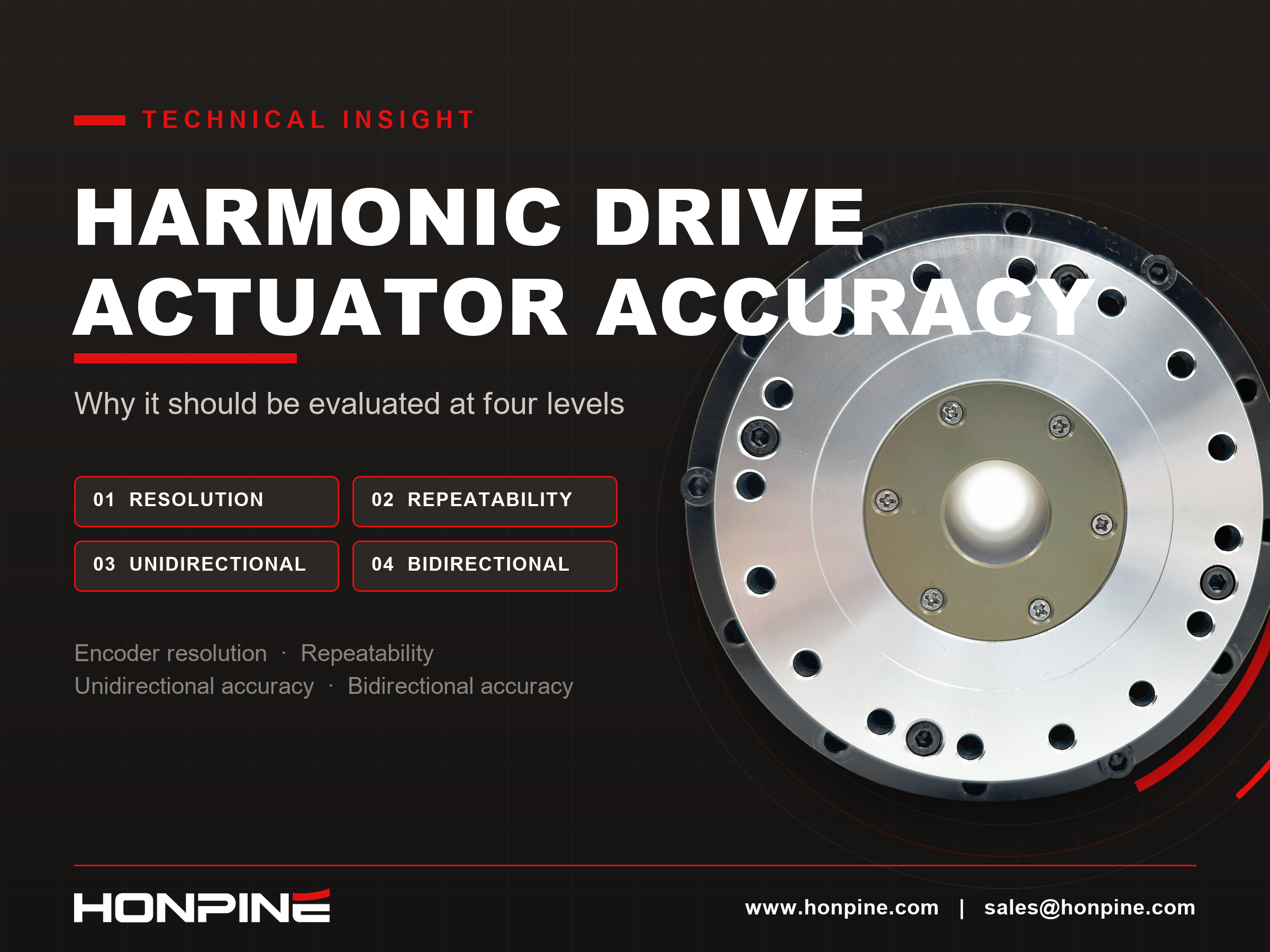
 Harmonic Drive Actuator Accuracy: Why It Should Be Evaluated at Four LevelsHarmonic drive actuator accuracy involves more than encoder resolution. Why should engineers evaluate it at four levels? Resolution, repeatability, unidirectional positioning accuracy, and bidirectional positioning accuracy describe different aspects of motion performance. Understanding these differences helps engineers select harmonic rotary actuators for semiconductor equipment, EFEM systems, and 3C automation without confusing theoretical encoder increments with actual positioning performance.
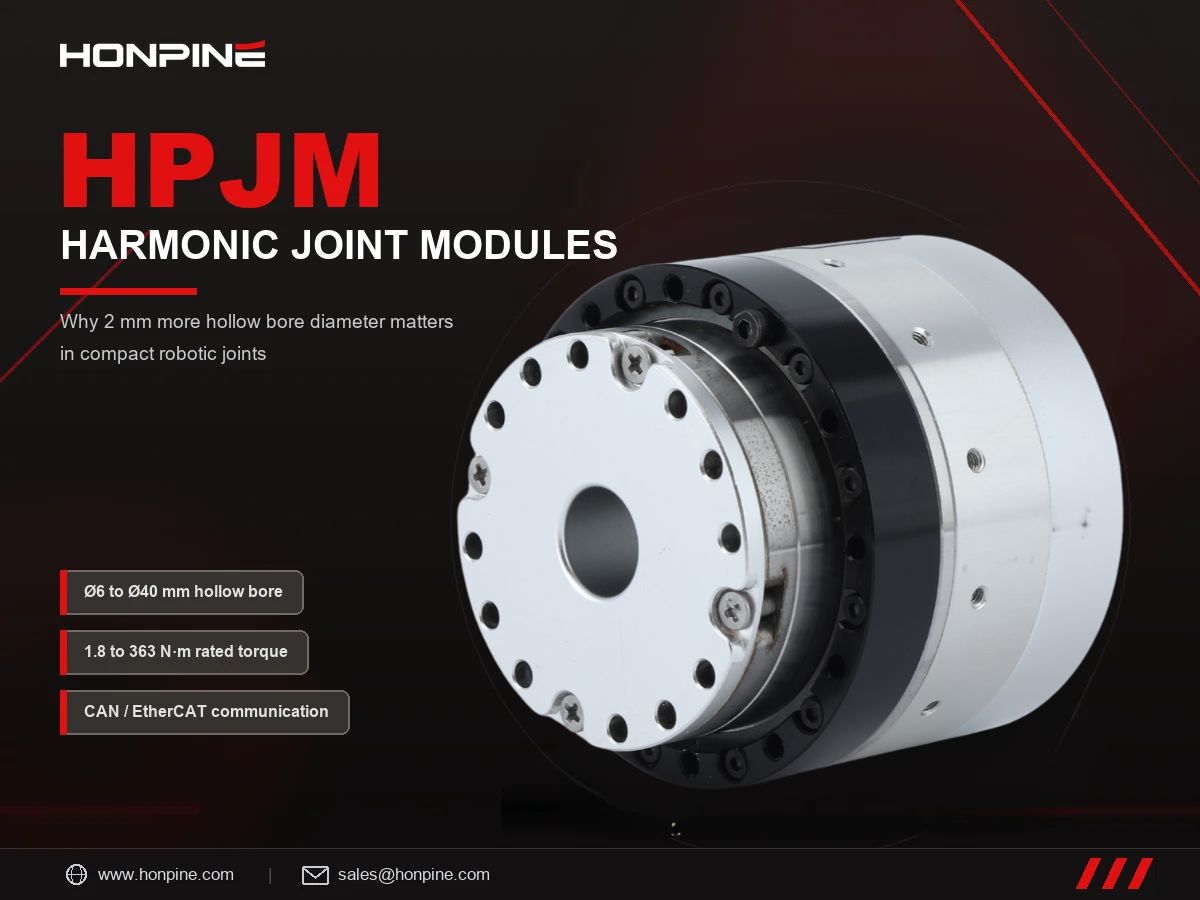
 Why Do Many Customers Choose HONPINE HPJM Harmonic Joint Modules for Just 2 mm More Hollow Bore Diameter?Why do many customers choose HONPINE HPJM harmonic joint modules for just 2 mm more hollow bore diameter? In compact robotic joints, this small dimensional difference can create a surprisingly large increase in available space. Because the cross-sectional area of a circular bore increases with the square of its diameter, an extra 2 mm can significantly improve internal cable routing and simplify system integration. This article examines the impact of hollow bore diameter, compares selected HONPINE HPJM models with comparable harmonic joint modules, and explains why bore size matters in humanoid robots, collaborative robots, and industrial automation.
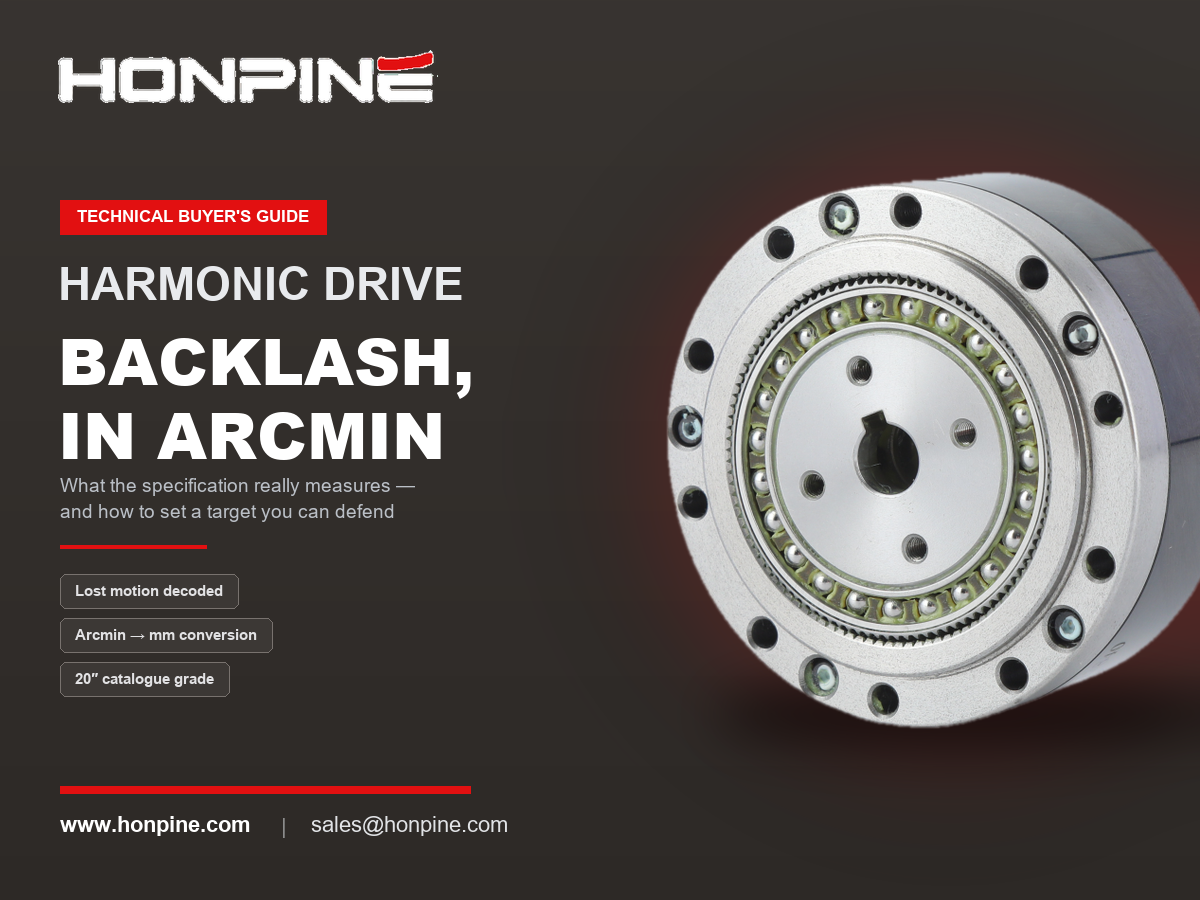
 Harmonic Drive Backlash in Arcmin: What the Specification Really Tells YouChoosing the right force control harmonic joint actuator involves more than comparing torque and dimensions. Torque sensor specifications, encoder feedback, communication protocols, functional safety, and hollow-shaft size can all affect system integration and control performance. In this guide, HONPINE Technical Director compares the TCHL and HAG harmonic joint actuator series, explaining their key differences and providing a practical selection framework for humanoid robots, collaborative manipulators, precision assembly, polishing, and other force-controlled applications.
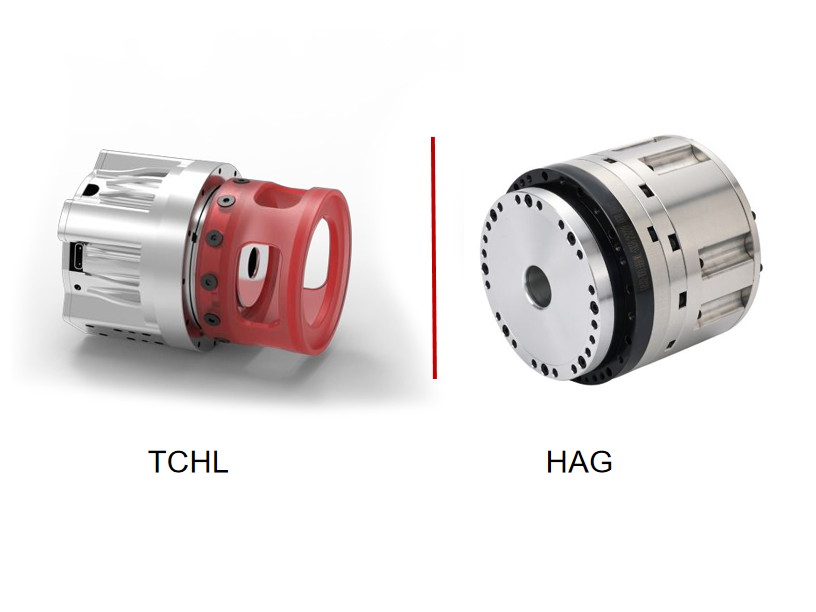
 How to Choose a Force Control Harmonic Joint Actuator? An In-Depth Comparison of HONPINE TCHL and HAGChoosing the right force control harmonic joint actuator involves more than comparing torque and dimensions. Torque sensor specifications, encoder feedback, communication protocols, functional safety, and hollow-shaft size can all affect system integration and control performance. In this guide, HONPINE Technical Director compares the TCHL and HAG harmonic joint actuator series, explaining their key differences and providing a practical selection framework for humanoid robots, collaborative manipulators, precision assembly, polishing, and other force-controlled applications.
Double Click
We provide harmonic drive reducer,planetary reducer,robot joint motor,robot rotary actuators,RV gear reducer,robot end effector,dexterous robot hand
 The Role of Harmonic Drive Gears in Achieving 5–10 μm Accuracy in Dental Milling MachinesA dental milling machine is a CNC machining system used to directly process digital dental models into restorations such as crowns, bridges, veneers, inlays, and implant abutments. Dental milling machines require far higher operational accuracy and motion stability than ordinary equipment. This article explains how harmonic drive gear help dental milling machines achieve stable, continuous, and controllable operation.
 Why Are Harmonic Rotary Actuators Perfect for Medical Equipment?Harmonic rotary actuators (typically integrated systems consisting of a harmonic drive reducer, frameless torque motor, encoder, and optional brake) are regarded as key components in medical equipment. The core reason is that they simultaneously meet the most stringent medical requirements for precision, compact size, safety, and controllability. The following explanation is structured from three perspectives: technical characteristics, application scenarios, and medical value.
 High-Precision RV Reducers Perfectly Matched for Walking RobotsThe walking axis of a robot is a core component for power transmission and support. RV reducers provide extremely high rigidity, precision, and torque while maintaining a compact size and exceptional reliability, making them an ideal match for the demanding requirements of walking robot joints in terms of load capacity, impact resistance, and precision.
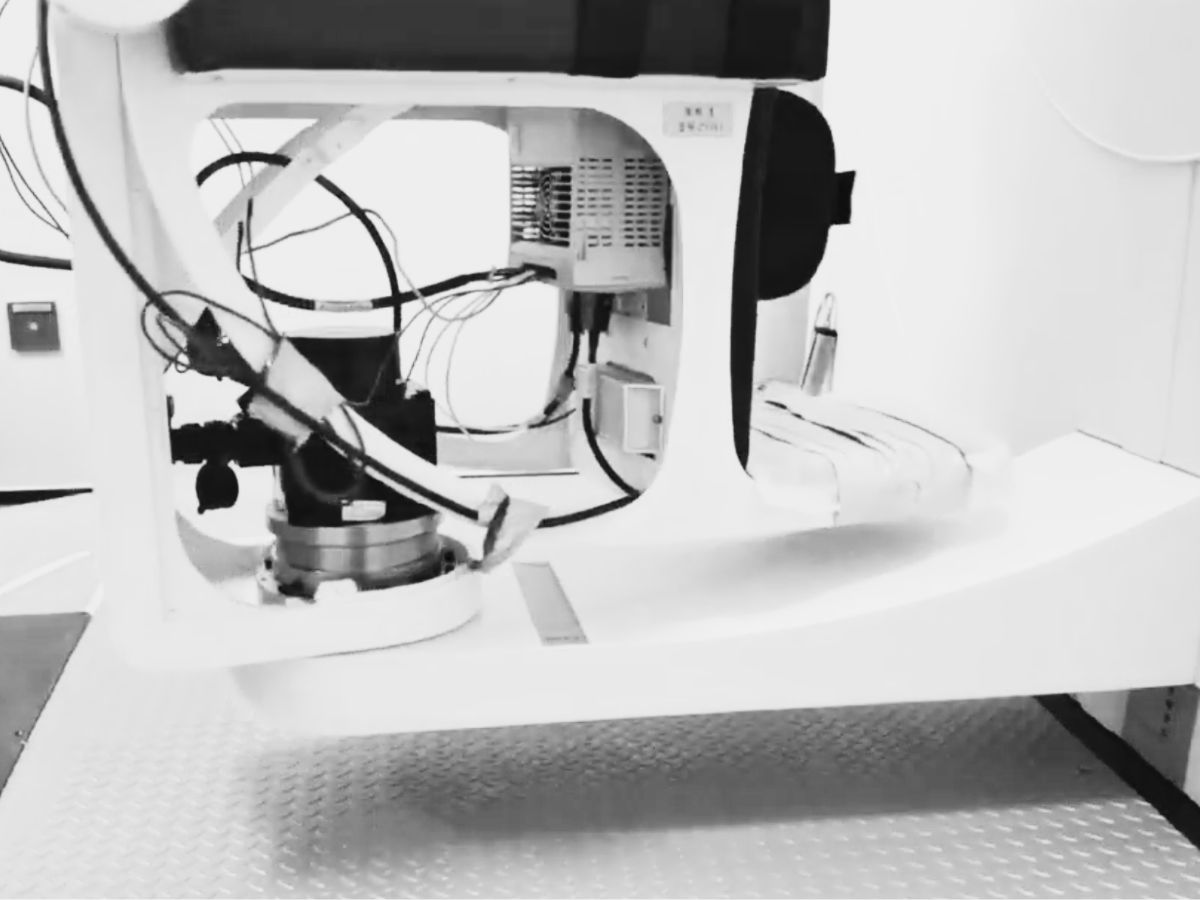
 Why Bedside Physical Therapy Robots Need Force-Controlled Joint Modules?A therapy robot does not sell a robot arm; it sells a force applied to a human body. Pressure, rhythm and depth are the prescription, and position control cannot deliver them: soft tissue is compliant and time-varying, so one position command yields contact forces that differ several-fold between muscle and bone. Force-controlled harmonic joint modules turn contact force into a closed-loop variable - the only way to make dose repeatable, human contact safe and a therapist's technique teachable. Starting from one site photo of a bedside therapy robot, this article reads the configuration, sets out five reasons force control is unavoidable, settles HONPINE's TCHL-versus-HAG choice criterion by criterion, and gives the torque sensor resolution budget that picks the frame sizes.
 Harmonic Rotary Actuator for Lithium Battery Roller Press EquipmentLithium battery manufacturing equipment requires higher precision, stability, and integration efficiency as production processes continue to evolve. In roller press equipment, accurate roller positioning, pressure control, and dynamic response are critical for ensuring electrode quality and consistency.
HONPINE harmonic rotary actuators provide high precision, high rigidity, fast response, and compact integration for lithium battery roller press equipment. With near-zero backlash, high torque density, and reliable motion control performance, they help improve equipment accuracy and production stability. Harmonic Robot Joint Actuators for Pipeline Robots and Other Special-Purpose EquipmentPipeline robots operate in narrow and complex environments where limited installation space, high load requirements, cable routing, and precise motion control are critical challenges. A reliable joint actuator must provide high torque output, compact dimensions, and stable performance while adapting to demanding operating conditions. Harmonic robot joint actuators integrate precision transmission, motor drive, and sensing capabilities into a compact motion unit, making them suitable for pipeline robots and other special-purpose robotic systems. This article explores the key design requirements of pipeline robots and explains how HONPINE HPJM harmonic robot joint modules help achieve compact, high-performance, and reliable robotic solutions.
 Harmonic Actuator for Lift Equipment: Precision, Torque Density and Compact Motion Control IntroductionModern lifting equipment requires more than simply moving a load vertically. Robotic lift axes, AGV and AMR lift modules, semiconductor equipment, inspection platforms, and specialized winches increasingly demand high torque density, precise positioning, low backlash, high rigidity, and compact motion control. A harmonic actuator integrates a harmonic drive with a motor and, depending on the configuration, encoders, brakes, servo drives, and communication interfaces into a compact motion module. This article explores how harmonic actuators can be applied to different lifting systems and why their combination of precision, torque density, rigidity, and integration makes them suitable for automated lifting and positioning applications.
 Harmonic Rotary Actuators for Semiconductor Equipment: Precision Motion, Hollow-Shaft Design and FOC ControlHello everyone, I’m Theodore Li, Technical Director at HONPINE. In semiconductor manufacturing equipment, rotary motion is not simply about making a mechanism rotate. Limited installation space, cable and tube routing, low-speed stability, precise positioning and continuously adjustable motion profiles can all influence the performance of the machine. This is why harmonic rotary actuators are becoming an important motion solution for semiconductor equipment. In this article, I will discuss how harmonic transmission, FOC-based motor control, encoder feedback, large hollow-shaft design and flexible mechanical interfaces work together to meet practical semiconductor motion requirements, based on our experience with developing equipment, overhead transport, wafer handling, cleaning and crystal-growth applications.
 Miniature Harmonic Drive for Minimally Invasive Surgical RobotsMinimally invasive surgical robots require highly compact transmission systems that can deliver precise motion within extremely limited mechanical spaces. As robotic instruments become smaller and more dexterous, conventional transmission architectures can face challenges related to size, tendon elasticity, friction, hysteresis, and mechanical integration. A miniature harmonic drive offers one potential approach by providing high-ratio precision transmission, low backlash, and compact dimensions in a small mechanical envelope. In this article, I will explain why miniature harmonic transmission is relevant to surgical robotics, compare external tendon-driven and distal transmission architectures, and discuss the key engineering considerations behind HONPINE’s CSF-mini miniature harmonic reducer for compact robotic joints, flexible robotic instruments, and other precision mechanisms.
 Why Laser Wobble Welding Systems Need a High-Precision Harmonic Rotary Actuator?Laser wobble welding is increasingly used in battery manufacturing, busbar welding, electronics, medical devices, robotic welding, and other precision manufacturing applications where beam movement must remain accurate and repeatable. In mechanical wobble welding systems, however, weld quality depends not only on laser parameters but also on the precision of the rotary motion mechanism driving the wobble head. Backlash, insufficient torsional rigidity, limited torque density, and positioning errors can directly affect the actual beam trajectory and molten pool stability. This is why a high-precision rotary motion solution is becoming an important part of modern laser wobble welding equipment. A Harmonic Rotary Actuator combines precision transmission, high rigidity, low backlash, and compact integration, making it well suited for mechanical wobble heads that require controlled rotary motion under dynamic loads.
 When Does Outboard Motor Steering Require a Harmonic Rotary Actuator?Electric outboard motor steering is evolving from a simple mechanical function into a precision motion-control application. This article explains when a Harmonic Rotary Actuator becomes a suitable solution and examines the role of precision transmission, low backlash, high torque density, encoder feedback, and compact mechanical integration. It also explores applications in electric boats, autonomous surface vessels, unmanned boats, marine robotics, and electric marine propulsion, helping engineers understand how to select the right rotary actuator according to steering torque, speed, positioning accuracy, operating conditions, and installation requirements.
 How to Choose the Right Robot Joint Actuator for Specialized Robotic Applications?Choosing the right robot joint actuator is no longer simply a matter of comparing torque specifications or selecting a motor and gearbox separately. As humanoid robots, collaborative robots, industrial robotic arms, medical robots, mobile manipulators, and specialized robotic systems become more diverse, robot manufacturers must balance torque, speed, precision, stiffness, weight, installation space, feedback, communication, and safety at the same time. This article explains how engineers can select the right harmonic joint actuator or robot joint motor by starting with the actual application problem and building a joint-level solution that matches the mechanical structure and control requirements of the complete robot.