

High Torque Zero-Backlash Planetary Rotary Actuator for Drilling Equipment
Manufacturers evaluating a high torque zero-backlash planetary rotary actuator for drilling equipment are usually trying to solve a practical problem: how to increase hole accuracy, repeatability, and cycle stability without adding mechanical play. In machine tool environments, that question is less about theory and more about whether the actuator can hold position under load, respond cleanly at speed, and keep performance consistent over long production runs.
The strongest value of this actuator design is that it addresses several production risks at once. It improves angular positioning, reduces backlash-related error, supports higher torque density in a compact package, and helps drilling systems maintain predictable motion in demanding applications. For engineers, production managers, and equipment buyers, the real decision is not whether zero-backlash sounds advanced, but whether it produces measurable gains in precision, uptime, and maintenance control.
Why Drilling Equipment Needs Zero-Backlash Rotary Motion
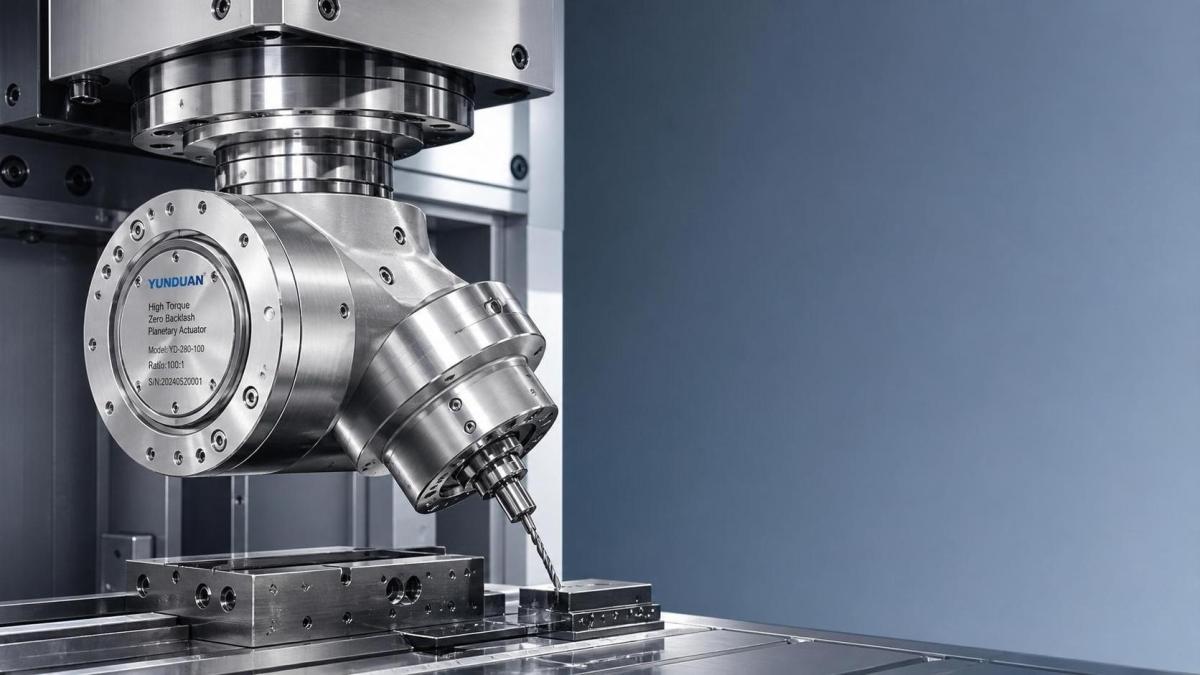
In drilling equipment, even a small amount of rotational play can create visible quality issues. Hole position drift, inconsistent entry angles, poor repeatability, and accelerated tool wear often start with motion transmission gaps that become worse under reversing loads or frequent indexing cycles.
A zero-backlash planetary rotary actuator is designed to remove that lost motion. When the drill head or indexed mechanism changes direction, the system responds immediately instead of absorbing movement through gear clearance. That direct response is critical in high-precision drilling, especially for multi-axis machine tools and automated drilling stations.
High torque matters just as much as zero backlash. Drilling operations often involve changing loads, intermittent impact, and resistance that rises quickly with material hardness, tool condition, or feed changes. An actuator that can deliver stable torque without positional looseness gives the machine a more controlled and repeatable operating window.
For manufacturers, this translates into fewer correction cycles, reduced scrap risk, and better process confidence. In production terms, the actuator is not just a motion component. It becomes a control point for drilling quality, machine consistency, and long-term operating reliability.
What Buyers and Engineers Usually Want to Know First
Most target readers searching for this type of actuator are not looking for a generic product description. They want to know whether the actuator will improve drilling accuracy in a measurable way, whether it can survive harsh use, and how to judge one design against another before purchase.
The first concern is positioning precision under real load, not under ideal laboratory conditions. A rotary actuator may look strong on a datasheet, but if torque output fluctuates or internal compliance increases during repeated cycles, actual drilling results can still suffer.
The second concern is durability. Drilling equipment is exposed to vibration, chips, coolant, thermal variation, and frequent start-stop motion. Buyers need to know whether the actuator can maintain zero-backlash performance over time instead of delivering tight motion only when new.
The third concern is integration. Engineers want to understand mounting compatibility, control response, inertia matching, and whether the actuator can fit within the machine’s available space. Compactness matters because many modern machine tools are designed around dense assemblies with limited room for oversized drive systems.
Cost is also part of the decision, but usually in a broader sense than unit price. Technical buyers increasingly assess total operating value, including downtime reduction, maintenance frequency, part quality improvement, and expected service life. A lower-cost actuator that introduces positioning errors can become more expensive very quickly.
How a Planetary Rotary Actuator Creates Better Drilling Performance
The planetary structure is widely valued because it can deliver high torque in a compact footprint while keeping load distribution balanced across multiple gear contact points. In drilling applications, this helps the actuator handle demanding torque requirements without becoming unnecessarily large or difficult to install.
When the actuator is engineered for zero backlash, the drivetrain is optimized to minimize clearance between meshing components. This improves command response during indexing, angular correction, and repeated directional changes. As a result, the machine can hold intended positions more reliably and react more predictably to control inputs.
Stable torque output is another major advantage. In drilling operations, sudden torque variation can affect spindle orientation, feed coordination, or hole quality when the system relies on synchronized movement. A high torque actuator with smooth transmission behavior reduces these disruptions and supports cleaner process control.
Reliable positioning also contributes to better tool life. When the motion system reaches and holds the intended angle accurately, the drill engages material more consistently. That reduces unwanted side loading, helps maintain proper cutting conditions, and can lower the chance of premature tool damage.
In automated or CNC-based machine tool systems, better actuator performance can improve throughput as well. Faster response with less mechanical settling time means less waiting between indexed positions. Over many cycles, that small gain becomes meaningful production capacity.
Where This Actuator Delivers the Most Value in Machine Tool Applications
Not every drilling setup requires the same level of rotary accuracy. The greatest value typically appears in applications where angular repeatability directly affects part quality, machine coordination, or process speed. These are the environments where backlash becomes a visible production problem rather than a minor design concern.
Examples include multi-face drilling, angled hole machining, turret indexing, rotary positioning units, automated transfer stations, and drilling systems that work with tight tolerance components. In these cases, the actuator supports accurate transitions between programmed positions and helps reduce cumulative error.
It is also highly relevant in equipment processing hard metals or complex parts where cutting loads are less forgiving. Under these conditions, loose transmission behavior can amplify quality variation. A high torque zero-backlash design gives the machine a better chance of maintaining stable motion throughout the cycle.
Manufacturers moving toward smarter automation may also find value here. Advanced drilling lines increasingly depend on repeatable motion from every subsystem. Components used elsewhere in high-precision mechanical assemblies, such as Custom Design Humanoid Robot Metal Components, reflect the same broader demand for accurate, durable, tightly controlled motion-ready engineering.
How to Evaluate Whether an Actuator Is Truly Suitable
When comparing actuator options, buyers should go beyond headline torque ratings. The right evaluation starts with application conditions: required positioning accuracy, duty cycle, load inertia, reversal frequency, installation orientation, ambient contamination, and expected maintenance intervals.
Backlash performance should be confirmed in terms that reflect actual use. Ask how backlash is defined, how it is measured, and whether the stated figure remains stable after wear testing or continuous cycling. A low initial value is useful, but retained performance over time is more important.
Torque capacity should be reviewed across peak and continuous conditions. Drilling equipment may experience short spikes, but prolonged thermal loading can be the real limitation. If continuous torque is undersized, temperature rise and wear can undermine precision even when peak capacity looks sufficient on paper.
Rigidity is another key specification. Torsional stiffness influences how firmly the actuator holds commanded position under changing load. In precision drilling, insufficient stiffness can create elastic displacement that behaves like hidden inaccuracy, even if nominal backlash is low.
Engineers should also examine sealing, lubrication strategy, bearing arrangement, and resistance to vibration. Machine tool environments punish weak mechanical details. A robust actuator is one that preserves precision not only through design geometry, but through materials, support structure, and serviceability.
Business Value Beyond the Component Itself
For management teams and procurement decision-makers, the strongest case for a high torque zero-backlash planetary rotary actuator is usually operational, not purely technical. Better motion control can reduce scrap, improve first-pass yield, shorten setup corrections, and support more stable output across shifts.
These gains become especially important where drilling errors create downstream costs. A poorly positioned hole may affect assembly fit, sealing performance, or dimensional compliance in later steps. In that context, a better actuator can protect overall production economics, not just one machine function.
Maintenance planning also improves when the motion system is more stable. Reduced play means fewer quality drifts caused by transmission wear, and more predictable behavior makes preventive maintenance easier to schedule. That supports uptime and lowers the risk of unplanned stoppage during critical production periods.
In competitive manufacturing environments, consistency often matters as much as speed. A machine that drills accurately all day with fewer corrections is more valuable than one that appears fast but demands frequent intervention. That is where actuator quality shows its real return.
Common Mistakes When Selecting Rotary Actuators for Drilling Equipment
One common mistake is choosing based on maximum torque alone. Without considering backlash stability, stiffness, thermal behavior, and control compatibility, a high-torque unit may still fail to deliver precise drilling performance in actual operation.
Another mistake is overlooking the effect of application dynamics. Rapid reversing motion, shock loads, and high-cycle indexing can expose weaknesses that are not obvious in basic sizing calculations. Selection should reflect real motion patterns, not only average load values.
Some buyers also underestimate the cost of positional looseness. What appears to be a small mechanical compromise can show up as larger quality variation, more tool wear, or more frequent process adjustment. Those costs are often harder to trace, but they are very real.
It is also worth considering supplier engineering support. A well-matched actuator often depends on application review, mounting adaptation, and design refinement. In broader precision manufacturing fields, including projects involving Custom Design Humanoid Robot Metal Components, tailored engineering support can make the difference between nominal compatibility and strong long-term performance.
Final Assessment: When This Actuator Makes Sense
A high torque zero-backlash planetary rotary actuator for drilling equipment makes the most sense when drilling precision, repeatability, and process stability have direct production consequences. If a machine must hold angle accurately, respond quickly, and resist performance drift under load, this type of actuator is a strong technical fit.
Its value is highest in environments where manufacturers are trying to reduce hole quality variation, minimize mechanical play, and improve machine efficiency over the long term. The combination of stable torque, precise positioning, and compact planetary design supports both engineering performance and operational reliability.
For readers making a buying or specification decision, the right approach is straightforward: focus on retained zero-backlash performance, stiffness, continuous torque capability, environmental durability, and integration suitability. Those factors reveal whether the actuator will simply meet a specification sheet or genuinely improve drilling results in the field.
In short, this actuator is not just a premium motion option. In the right drilling application, it is a practical investment in accuracy, consistency, and manufacturing control.
Read More
Learn more about the story of HONPINE and industry trends related to precision transmission.
 What is robot joint actuator?How to Choose the Best Robot Rotary Joint Actuator?In core robot joint transmission solutions, planetary and harmonic rotary actuators each have their own strengths. Choosing the right type based on application requirements is essential to achieve the optimal balance between performance and cost.
 DD Motors VS Harmonic Rotary ActuatorsThis article provides an in-depth comparison between Direct Drive (DD) motors and harmonic rotary actuators, covering their transmission principles, advantages and disadvantages, and typical application fields.
 OMG Ultra Compact Harmonic Drive Joint Module with Built-in Torque SensorHONPINE TCHL series harmonic drive joint module is a game-changing product that achieves disruptive improvements in multiple aspects such as lightweight design, integration level, and connection convenience. This article will analyze its revolutionary enhancements with you.
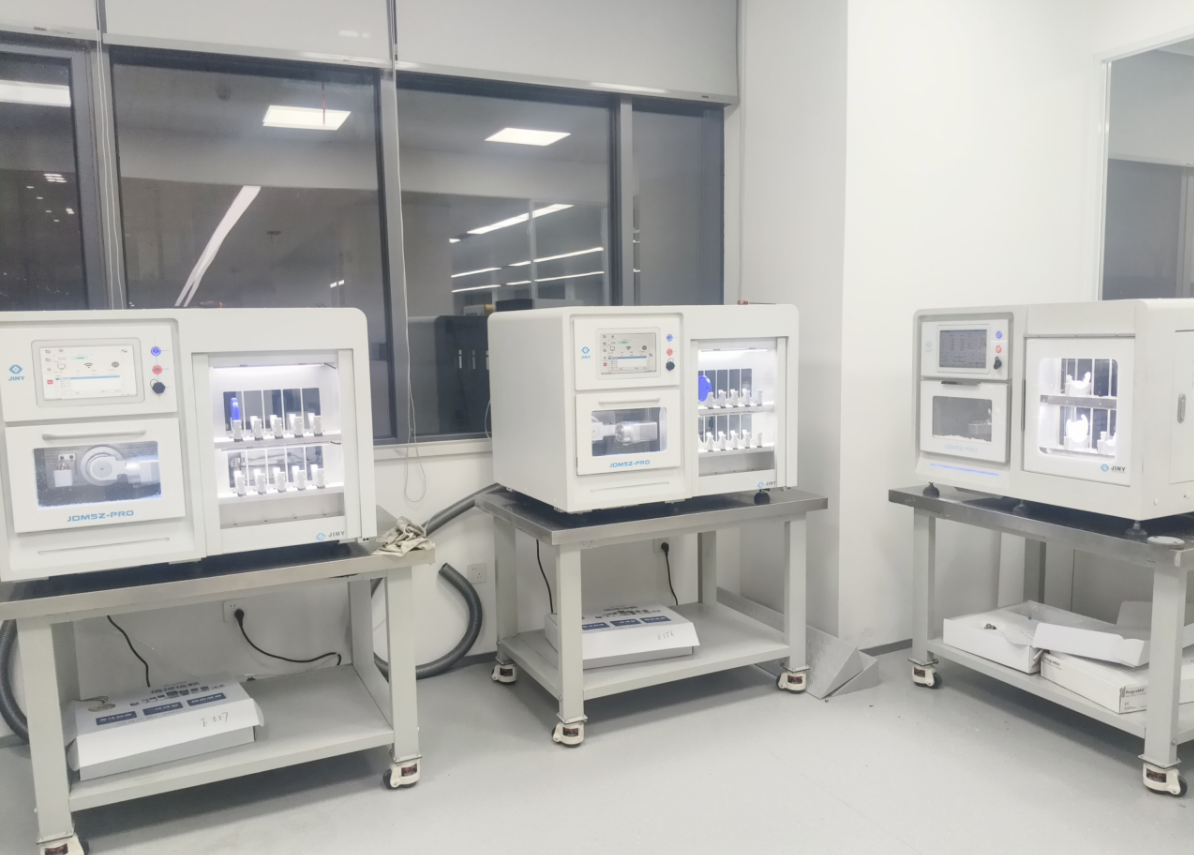
 The Role of Harmonic Drive Gears in Achieving 5–10 μm Accuracy in Dental Milling MachinesA dental milling machine is a CNC machining system used to directly process digital dental models into restorations such as crowns, bridges, veneers, inlays, and implant abutments. Dental milling machines require far higher operational accuracy and motion stability than ordinary equipment. This article explains how harmonic drive gear help dental milling machines achieve stable, continuous, and controllable operation.
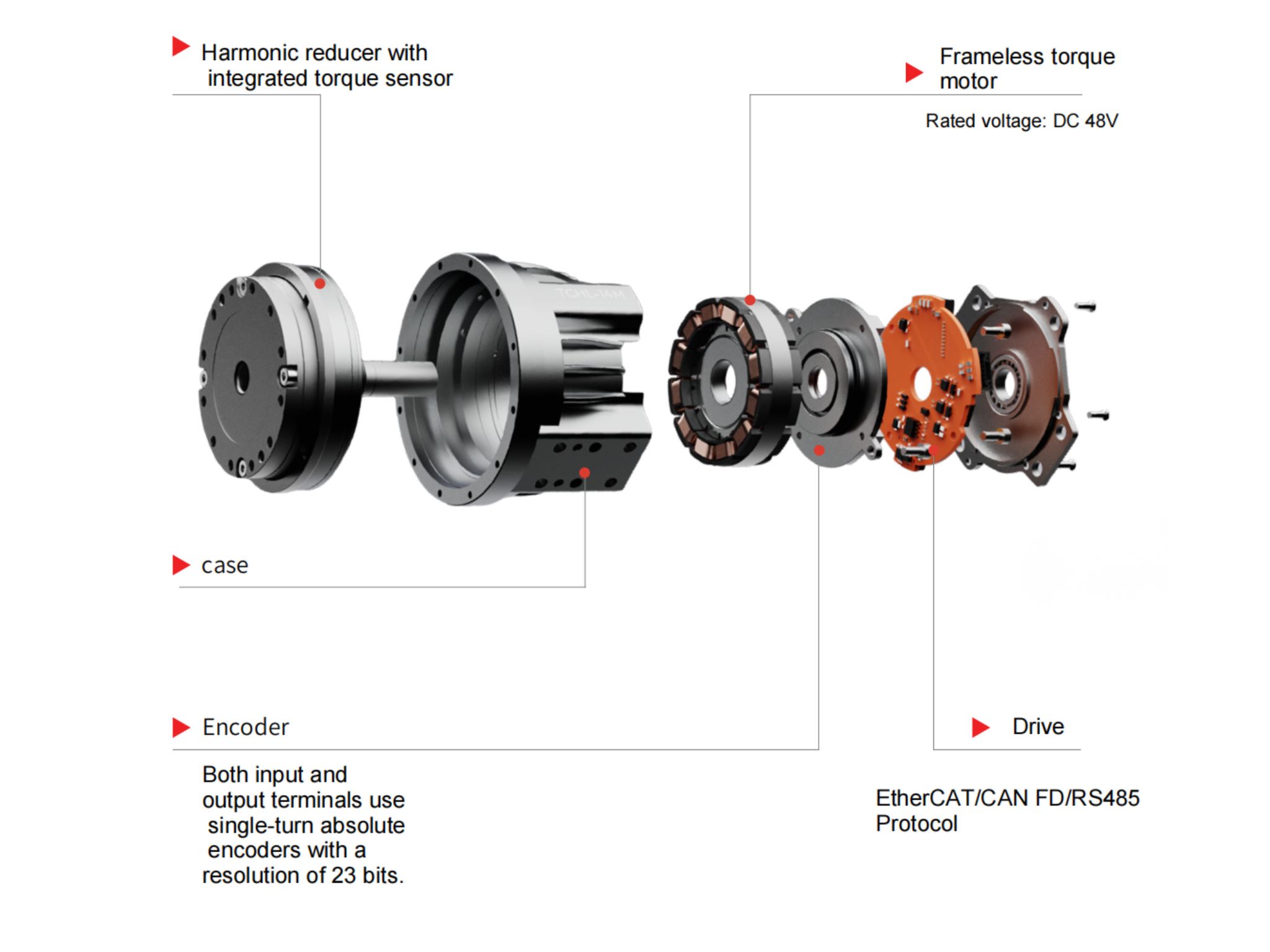
 Why Are Harmonic Rotary Actuators Perfect for Medical Equipment?Harmonic rotary actuators (typically integrated systems consisting of a harmonic drive reducer, frameless torque motor, encoder, and optional brake) are regarded as key components in medical equipment. The core reason is that they simultaneously meet the most stringent medical requirements for precision, compact size, safety, and controllability. The following explanation is structured from three perspectives: technical characteristics, application scenarios, and medical value.
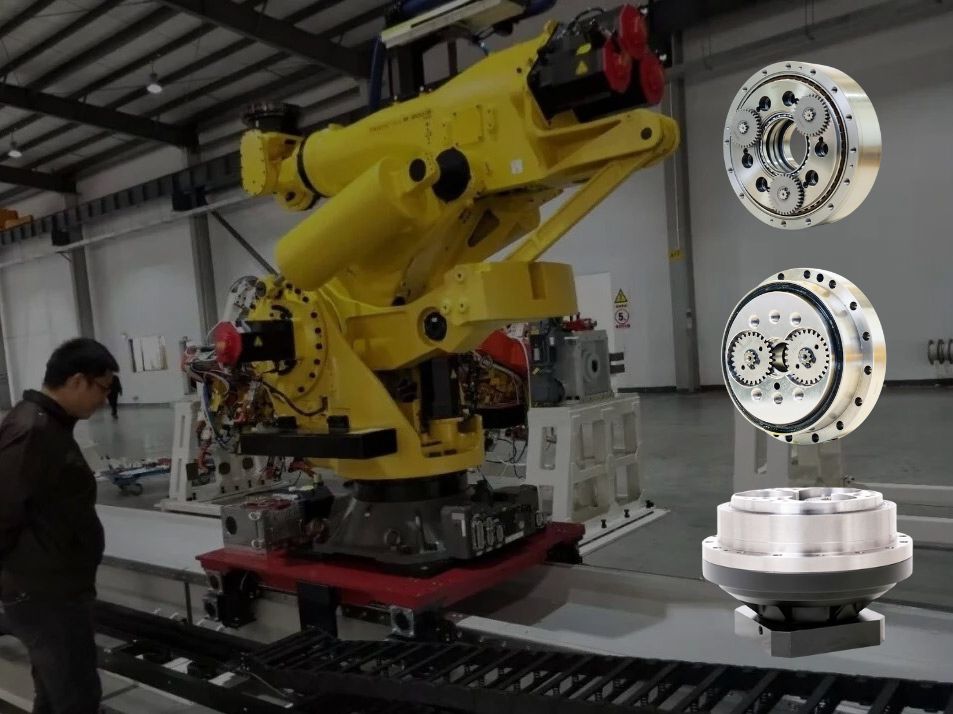
 High-Precision RV Reducers Perfectly Matched for Walking RobotsThe walking axis of a robot is a core component for power transmission and support. RV reducers provide extremely high rigidity, precision, and torque while maintaining a compact size and exceptional reliability, making them an ideal match for the demanding requirements of walking robot joints in terms of load capacity, impact resistance, and precision.
 Ningbo Dongli Hits Limit Up on Robot Reducer Business and Strong First-Half EarningsExplore Ningbo Dongli's reported limit-up rally, robot reducer business and strong first-half earnings, plus essential supplier checks for equipment buyers.
 CNC Maker 07688.HK Announces Deal to Acquire at Least 70% of Machine Tool FirmCNC maker 07688.HK announces a deal to acquire at least 70% of a machine tool firm. Explore its five-axis expansion plans and what buyers should verify before ordering.
 Nidec Machine Tool Launches MVR-5X Gantry-Type Five-Axis MachineDiscover Nidec Machine Tool's MVR-5X gantry-type five-axis machine, featuring a compact head with approximately 20 times its predecessor's spindle torque. Explore its machining potential.
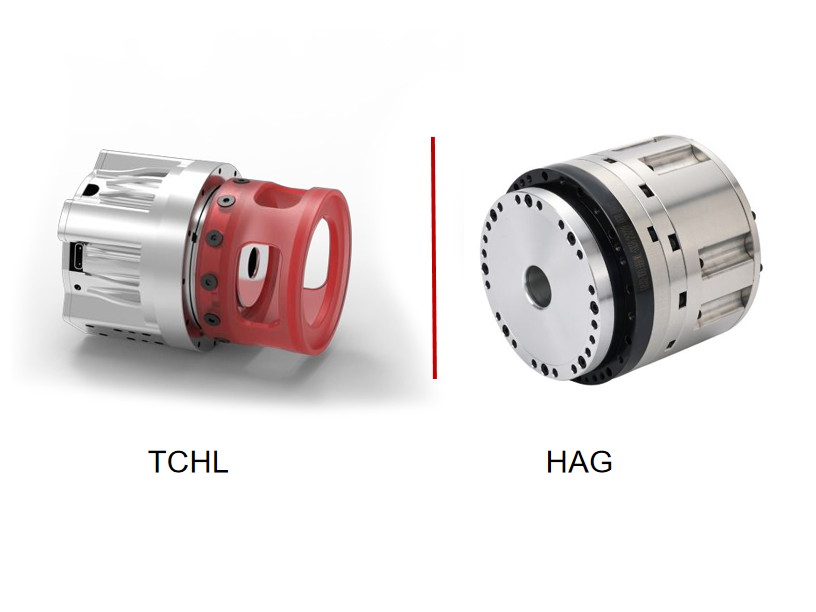
 Harmonic Drive Backlash in Arcmin: What the Specification Really Tells YouChoosing the right force control harmonic joint actuator involves more than comparing torque and dimensions. Torque sensor specifications, encoder feedback, communication protocols, functional safety, and hollow-shaft size can all affect system integration and control performance. In this guide, HONPINE Technical Director compares the TCHL and HAG harmonic joint actuator series, explaining their key differences and providing a practical selection framework for humanoid robots, collaborative manipulators, precision assembly, polishing, and other force-controlled applications.
 How to Choose a Force Control Harmonic Joint Actuator? An In-Depth Comparison of HONPINE TCHL and HAGChoosing the right force control harmonic joint actuator involves more than comparing torque and dimensions. Torque sensor specifications, encoder feedback, communication protocols, functional safety, and hollow-shaft size can all affect system integration and control performance. In this guide, HONPINE Technical Director compares the TCHL and HAG harmonic joint actuator series, explaining their key differences and providing a practical selection framework for humanoid robots, collaborative manipulators, precision assembly, polishing, and other force-controlled applications.
 HONPINE TCHL Harmonic Joint Modules: Robotic Force Control and Real-World ApplicationsHello everyone, I’m Theodore Li, Technical Director at HONPINE.
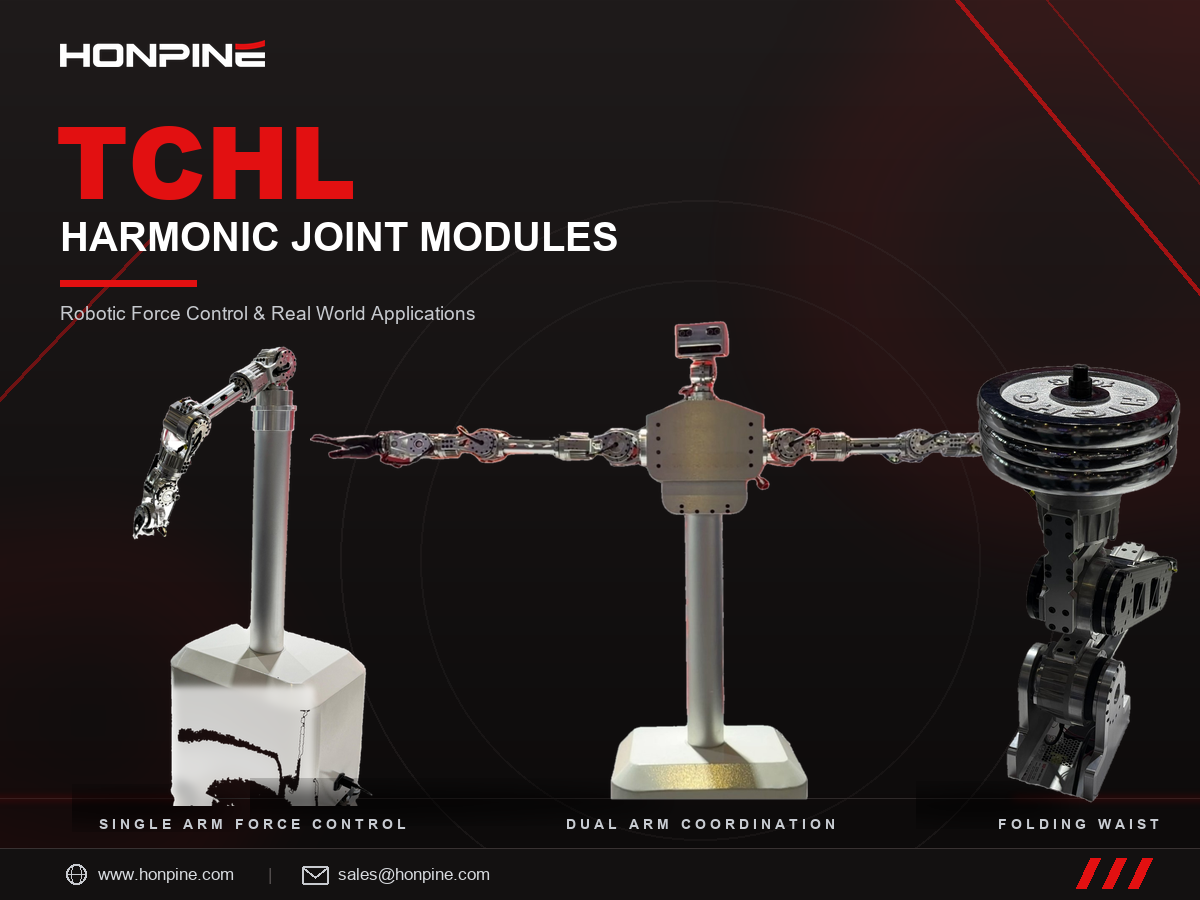
HONPINE TCHL harmonic joint modules have been deployed in a range of robotic motion-control applications, including dual-arm humanoid robots, single-arm compliant force control, and folding waist mechanisms for wheeled humanoid robots. As integrated motion components, they support a wide range of applications in robotics, intelligent manufacturing, and industrial automation.
From core components to integrated motion units, HONPINE showcases the possibilities of precision transmission technology across different robotic applications through a diverse product portfolio and practical motion demonstrations.
Double Click
We provide harmonic drive reducer,planetary reducer,robot joint motor,robot rotary actuators,RV gear reducer,robot end effector,dexterous robot hand
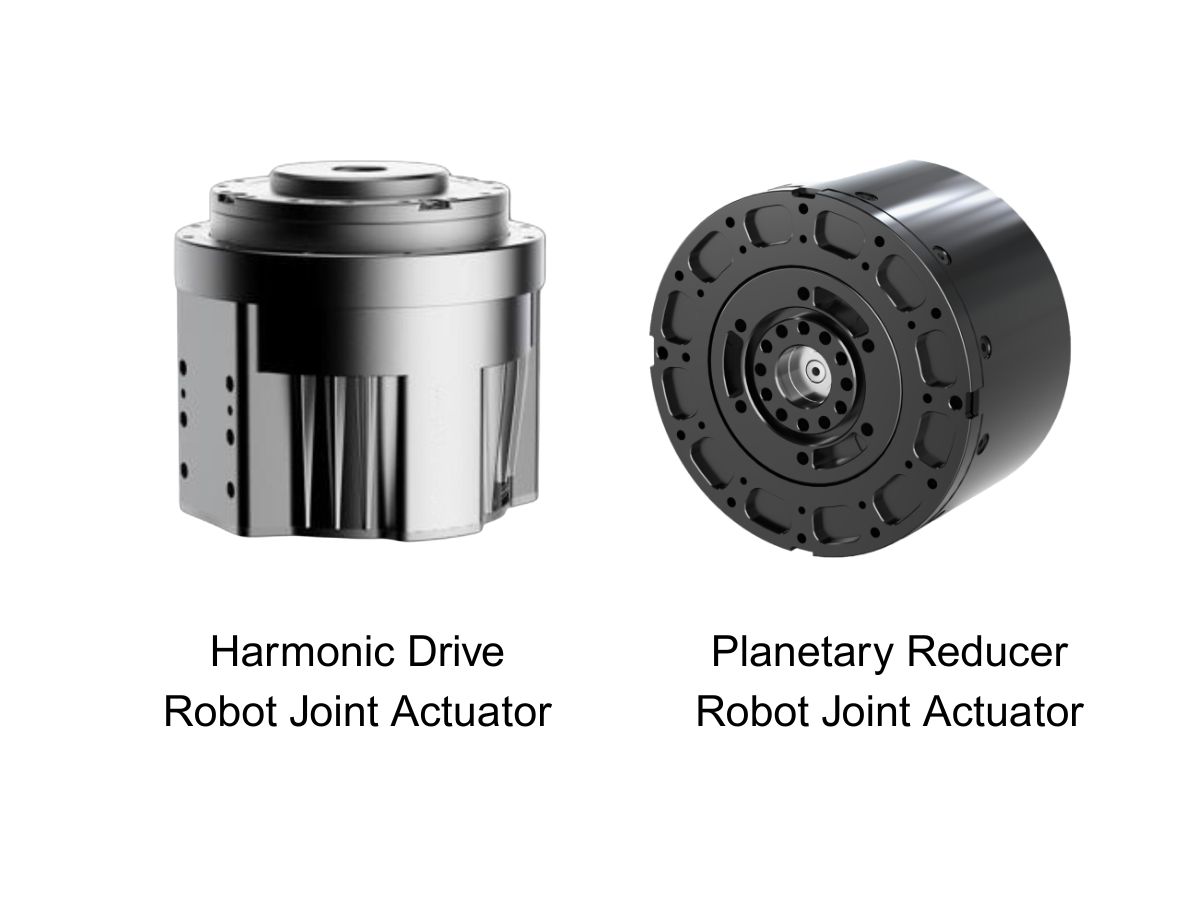
 What is robot joint actuator?How to Choose the Best Robot Rotary Joint Actuator?In core robot joint transmission solutions, planetary and harmonic rotary actuators each have their own strengths. Choosing the right type based on application requirements is essential to achieve the optimal balance between performance and cost.
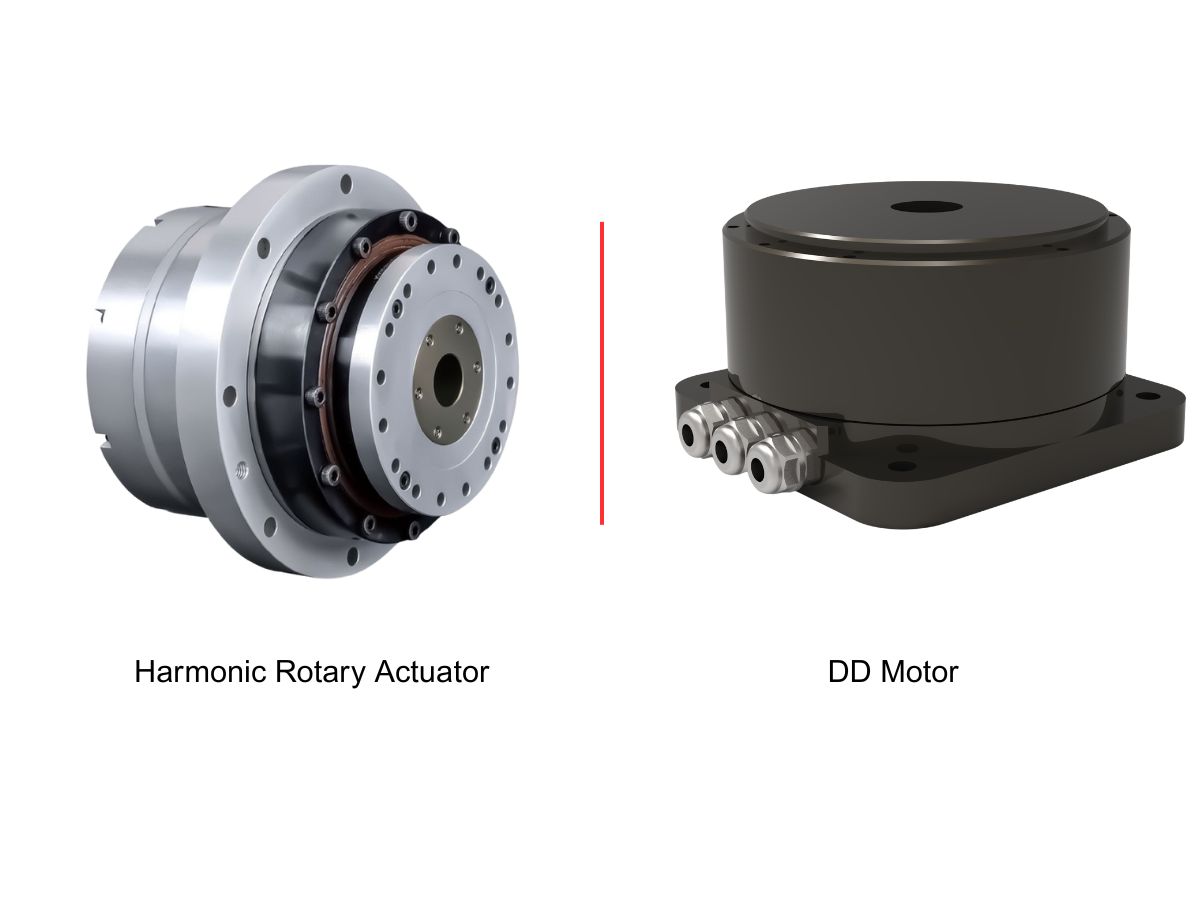
 DD Motors VS Harmonic Rotary ActuatorsThis article provides an in-depth comparison between Direct Drive (DD) motors and harmonic rotary actuators, covering their transmission principles, advantages and disadvantages, and typical application fields.
 OMG Ultra Compact Harmonic Drive Joint Module with Built-in Torque SensorHONPINE TCHL series harmonic drive joint module is a game-changing product that achieves disruptive improvements in multiple aspects such as lightweight design, integration level, and connection convenience. This article will analyze its revolutionary enhancements with you.
 Nidec Machine Tool Launches MVR-5X Gantry-Type Five-Axis MachineDiscover Nidec Machine Tool's MVR-5X gantry-type five-axis machine, featuring a compact head with approximately 20 times its predecessor's spindle torque. Explore its machining potential.
 Harmonic Drive Backlash in Arcmin: What the Specification Really Tells YouChoosing the right force control harmonic joint actuator involves more than comparing torque and dimensions. Torque sensor specifications, encoder feedback, communication protocols, functional safety, and hollow-shaft size can all affect system integration and control performance. In this guide, HONPINE Technical Director compares the TCHL and HAG harmonic joint actuator series, explaining their key differences and providing a practical selection framework for humanoid robots, collaborative manipulators, precision assembly, polishing, and other force-controlled applications.
 How to Choose a Force Control Harmonic Joint Actuator? An In-Depth Comparison of HONPINE TCHL and HAGChoosing the right force control harmonic joint actuator involves more than comparing torque and dimensions. Torque sensor specifications, encoder feedback, communication protocols, functional safety, and hollow-shaft size can all affect system integration and control performance. In this guide, HONPINE Technical Director compares the TCHL and HAG harmonic joint actuator series, explaining their key differences and providing a practical selection framework for humanoid robots, collaborative manipulators, precision assembly, polishing, and other force-controlled applications.
 HONPINE TCHL Harmonic Joint Modules: Robotic Force Control and Real-World ApplicationsHello everyone, I’m Theodore Li, Technical Director at HONPINE.
HONPINE TCHL harmonic joint modules have been deployed in a range of robotic motion-control applications, including dual-arm humanoid robots, single-arm compliant force control, and folding waist mechanisms for wheeled humanoid robots. As integrated motion components, they support a wide range of applications in robotics, intelligent manufacturing, and industrial automation.
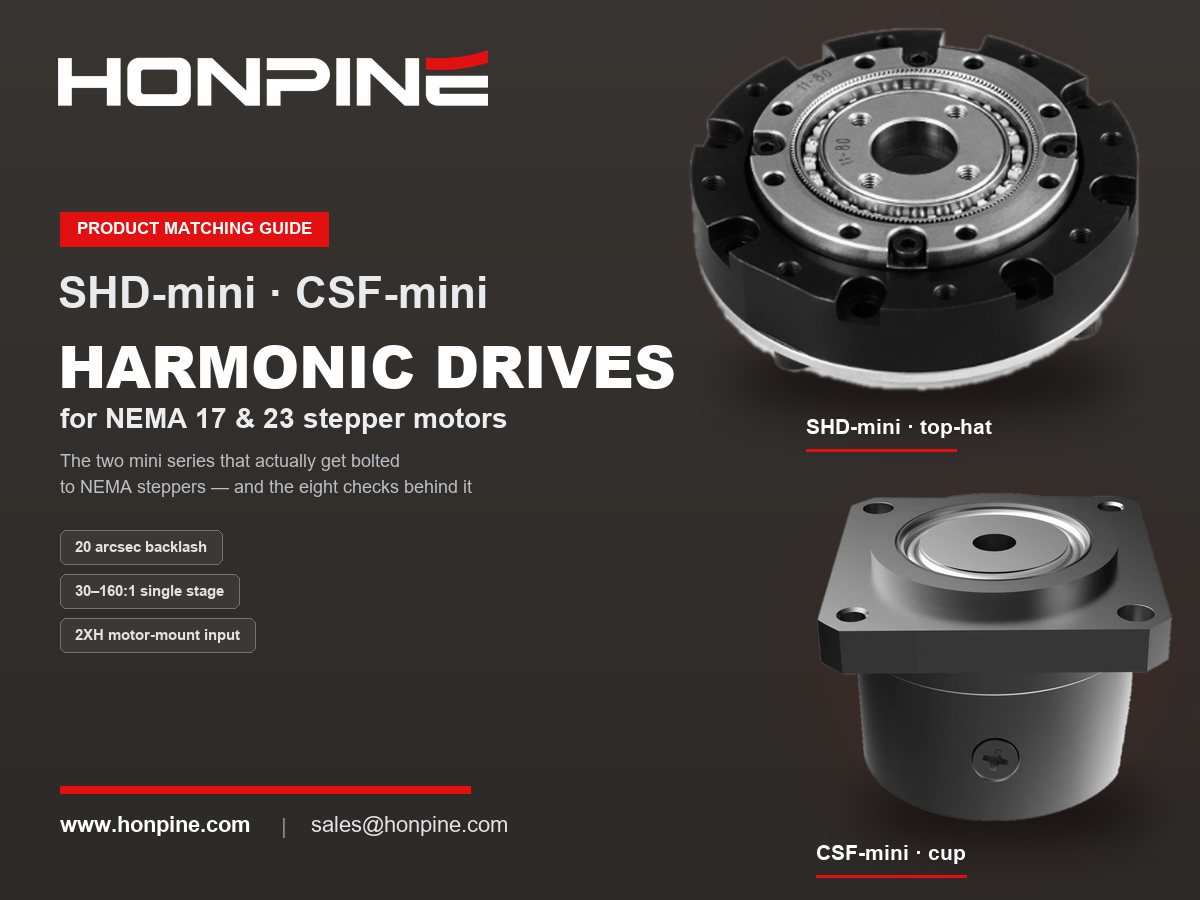
From core components to integrated motion units, HONPINE showcases the possibilities of precision transmission technology across different robotic applications through a diverse product portfolio and practical motion demonstrations. NEMA 17 & NEMA 23 Harmonic Drive Matching Guide: Pairing Stepper Motors with Harmonic ReducersPairing a stepper motor with a harmonic drive is not a budget compromise. A stepper's weak points — the coarse step angle, torque collapse above roughly 400 rpm, and the lack of a precision transmission — are exactly what a harmonic drive fixes: it pulls the operating point into the low-speed, high-torque sweet spot, refines a 1.8° step angle into arc-second resolution, and delivers near-zero backlash. This guide explains what NEMA frame sizes mean at the mounting interface, which harmonic frames match NEMA 17 and NEMA 23, the eight checks to run in order — including the input-side no-load starting torque most often missed — and the pairing's real weakness: silent failure. Includes HONPINE SHD and CSF specifications.
 Harmonic vs. RV Reducers for Lithium Battery Robotic Arms: A Joint-by-Joint Selection GuideIn lithium battery plants, reducer selection for a robotic arm is not about finding one "best" gearbox — it is about dividing work by joint. RV reducers take the shoulder and elbow (J1–J3), where stiffness, shock resistance, and long life matter most; harmonic reducers take the wrist (J4–J6), where near-zero backlash, high torque density, and low weight decide positioning accuracy. Planetary gearboxes cover long-travel Cartesian transfer at lower cost. Lithium battery production then adds three stricter filters: extreme repeatability (±0.02–0.05 mm), 24/7 high-duty cycles, and zero tolerance for metal particle contamination. This guide explains the logic behind joint-by-joint selection, compares the three reducer types, and maps typical configurations for every station.
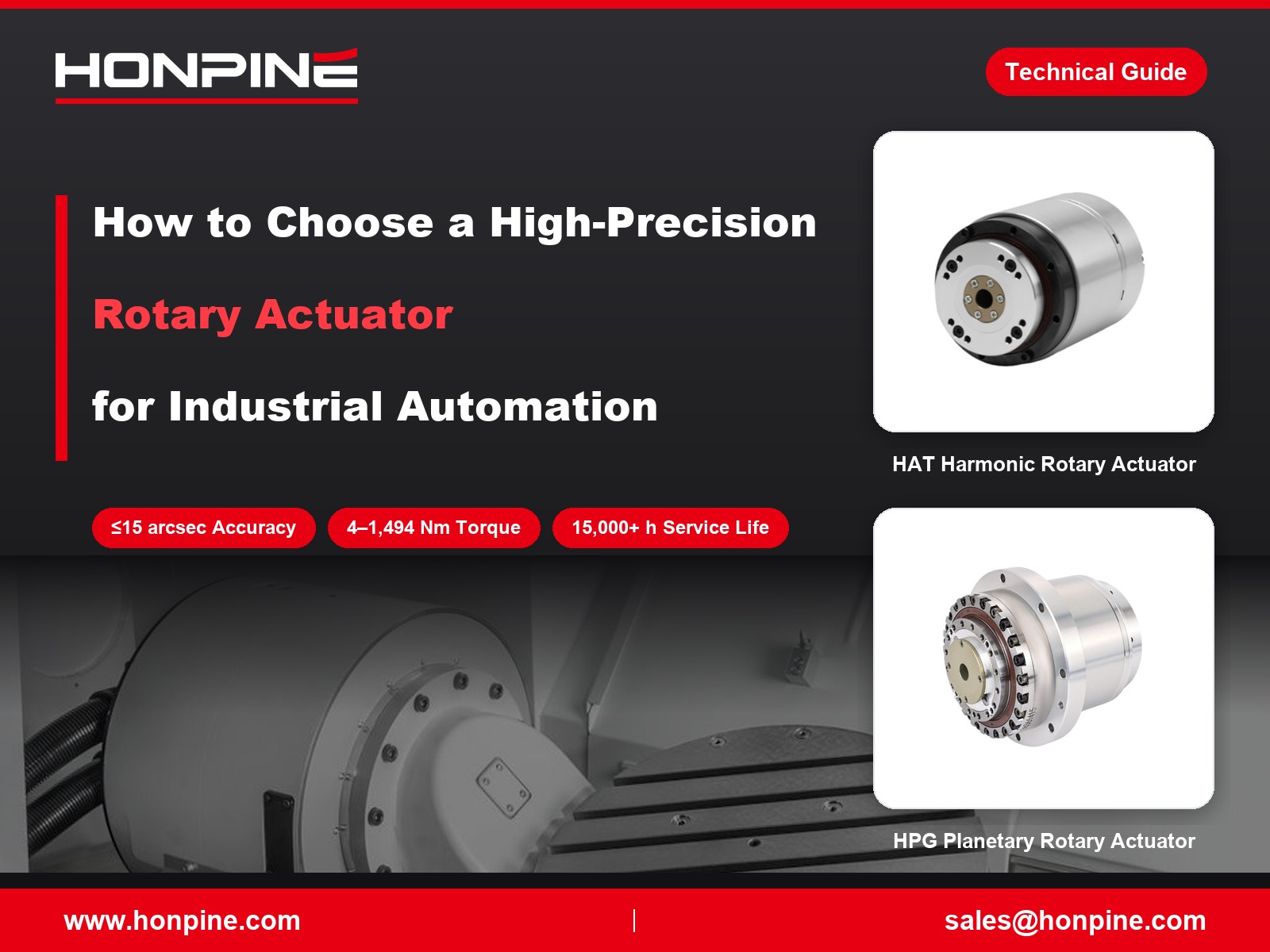
 How to Choose High-Precision Rotary Actuators for Industrial Automation?High-precision rotary actuators play an important role in industrial automation, where positioning accuracy, repeatability, durability and installation flexibility directly affect equipment performance. HONPINE offers four main series of precision rotary actuators, including HAT, HAM and HAS harmonic rotary actuators and HPG low-backlash planetary actuators. With torque ratings ranging from 4 to 1,494 Nm across the product range, these solutions are designed for applications in semiconductor manufacturing, 3C automation, laser processing and CNC machine tools. Learn how to identify the right rotary actuator based on operating conditions, precision requirements and mechanical integration needs.
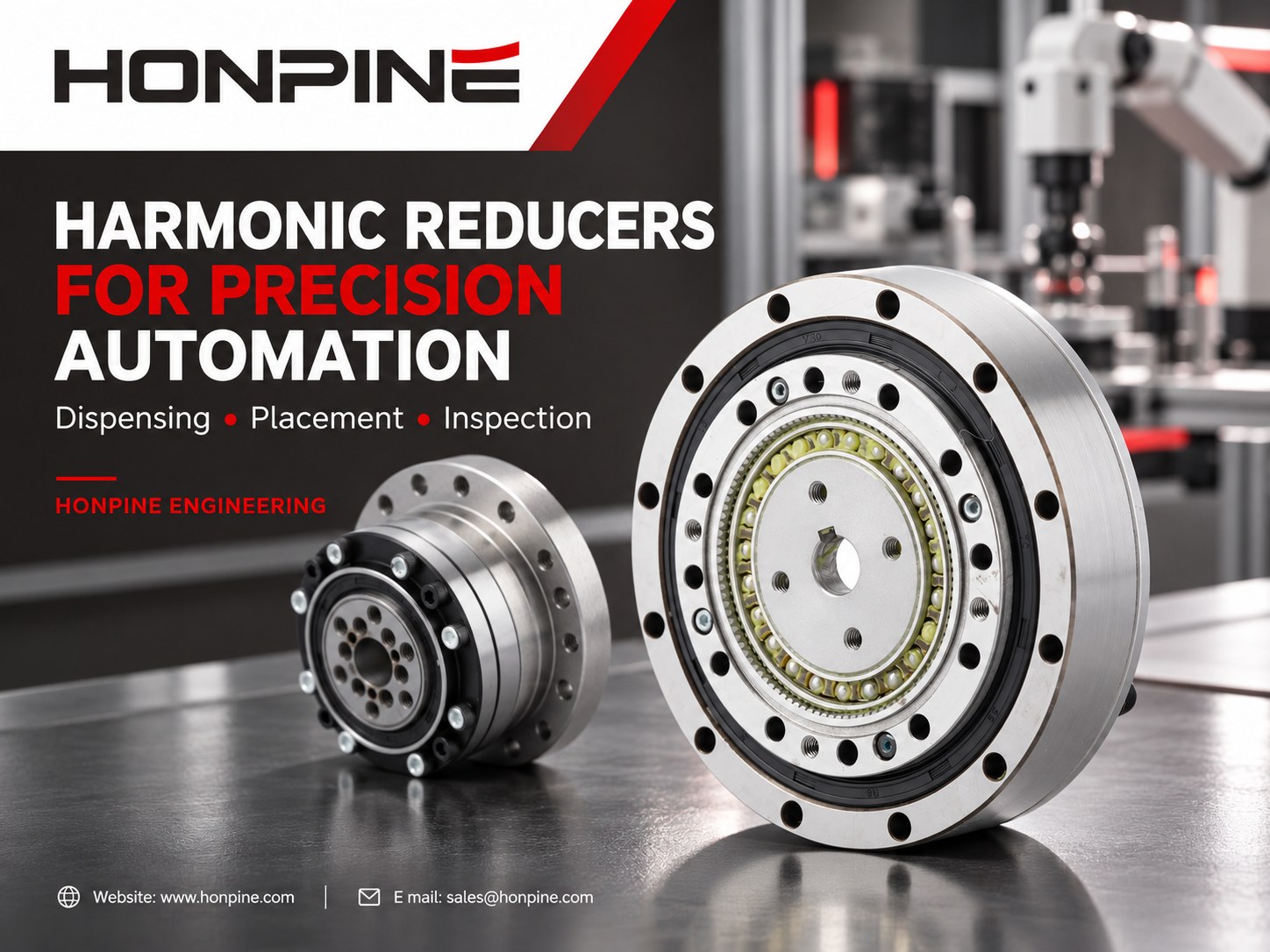
 Why Are Harmonic Reducers Suitable for High-Precision Automation Equipment?Precision automation equipment depends on consistent rotary motion, reliable positioning and compact transmission design. From dispensing head orientation and component angular alignment to automated inspection indexing, harmonic reducers offer a practical solution for applications requiring low backlash and high reduction ratios in limited installation space. This article explains how harmonic reducers support repeatable motion, compares key design configurations, and outlines how to select a suitable reduction ratio and reducer structure based on load, speed, accuracy and machine cycle-time requirements.
 Why Are Servo Motors and Gear Reducers an Ideal Match?Servo motors provide fast, precise motion control, while gear reducers adapt their speed and torque to the load. This guide explains how servo motors and gear reducers work together through torque multiplication, reflected inertia reduction and finer theoretical position resolution. Learn how inertia matching, backlash, torsional stiffness and reduction ratio influence performance in robotics and industrial automation.