

How Does the HONPINE HPG Backlash-Free Planetary Rotary Actuator Balance CNC Accuracy and Rigidity?
As high-end manufacturing moves toward higher precision, faster machining speeds, and heavier cutting loads, the drive systems at the heart of CNC machine tools and precision rotary tables are facing increasingly demanding requirements. For years, machine tool designers have had to balance two competing priorities: the high cost of direct-drive systems and the rigidity, accuracy, and dynamic performance limitations that can arise with conventional mechanical transmission solutions.
The HONPINE HPG Precision Backlash-Free Planetary Rotary Actuator is designed to address this challenge by combining high positioning accuracy, low backlash, and high torsional rigidity in a compact rotary drive. With reported test results indicating arcsecond-level positioning performance, the HPG offers an alternative for applications where both machining precision and resistance to cutting loads are essential.
Rather than relying exclusively on direct-drive motors or conventional reduction mechanisms, the HPG provides another option for CNC rotary tables, tilting axes, and precision positioning systems that demand a balance of accuracy, stiffness, and cost-effectiveness.
What Are the Main Challenges in CNC Rotary Drive Selection?
Selecting a rotary drive for a high-precision CNC machine tool involves more than comparing positioning accuracy. Engineers must also consider torsional stiffness, load capacity, reversal behavior, dynamic response, thermal stability, and total system cost.
The Cost and Application Trade-Offs of Direct-Drive Systems
For demanding applications such as tilting heads and precision rotary tables, direct-drive (DD) torque motors combined with high-resolution optical encoders are widely used to achieve high positioning accuracy and dynamic performance.
However, these systems can involve substantial motor, encoder, servo, cooling, and structural integration costs. Their ability to withstand heavy cutting loads depends on the complete mechanical structure, including bearings, clamping mechanisms, and load-supporting components. A direct-drive motor does not inherently lack rigidity or become overloaded under heavy cutting; rather, the entire axis must be engineered to handle the required torque and cutting forces.
For machine builders seeking high precision without the cost or integration complexity of a full direct-drive solution, a precision rotary actuator with high torsional rigidity may offer an attractive alternative.
The Accuracy Trade-Offs of Conventional Mechanical Drives
Worm gear drives and cam roller mechanisms are also used in CNC rotary tables. Depending on their design, they can provide useful load-bearing capability and mechanical rigidity, but their positioning performance, transmission errors, backlash, and reversal characteristics vary considerably.
Achieving high accuracy may require tighter manufacturing tolerances, precision assembly, compensation algorithms, encoder feedback, or additional clamping mechanisms. These measures can increase system complexity and manufacturing costs.
The challenge is therefore to find a rotary drive that provides both precise positioning and sufficient rigidity under actual machining loads, without introducing unnecessary mechanical complexity.
How Does the HONPINE HPG Backlash-Free Planetary Rotary Actuator Address These Challenges?
The HONPINE HPG is a precision planetary rotary actuator developed for applications that require accurate rotary positioning and strong resistance to mechanical deformation.
Its backlash-compensation design aims to minimize angular clearance during direction reversal while maintaining the rigidity required for demanding positioning tasks. This makes it relevant to multi-axis CNC machine tools, precision rotary tables, tilting mechanisms, and other industrial automation systems.
The HPG is positioned as an alternative to conventional worm gear drives and selected high-precision transmission solutions where low backlash, compact integration, and high stiffness are important.
HPG Positioning Accuracy: Arcsecond-Level Precision for CNC Applications
Positioning accuracy is a critical factor in rotary axes used for precision machining. Small angular errors can translate into measurable deviations at the cutting point, particularly when the workpiece is positioned far from the rotation axis.
According to the reported test results provided for the HONPINE HPG, its indexing accuracy reaches approximately 6.4–7.6 arcseconds. This level of angular precision can support demanding rotary positioning applications when the actuator is properly integrated with the machine structure, feedback system, and motion controller.
For comparison, the source data cites indexing accuracy of approximately 60–70 arcseconds for certain conventional high-end harmonic drive solutions. Actual values vary by product model, measurement method, operating conditions, and whether the specification refers to indexing accuracy, transmission accuracy, or repeatability.
Why Low Transmission Error Matters in Five-Axis Machining?
In simultaneous five-axis CNC machining, rotary-axis errors can affect tool orientation, contour accuracy, and the final surface finish. Errors may become particularly noticeable during coordinated motion, changes in rotation direction, and the machining of curved surfaces.
A precision planetary rotary actuator with low angular error can help reduce one contributor to the overall machine-tool error budget. However, final machining accuracy also depends on encoder performance, thermal effects, structural deformation, calibration, and CNC compensation.
For applications requiring high contour accuracy, engineers should therefore evaluate positioning accuracy alongside repeatability, backlash, lost motion, torsional stiffness, and performance under load.
HPG Torsional Rigidity: Maintaining Accuracy Under Cutting Loads
Precision alone is not enough for demanding CNC machining. The rotary drive must also resist deformation when subjected to cutting forces, workpiece loads, and rapid changes in torque.
The HONPINE HPG is designed to combine low backlash with high torsional rigidity, helping limit angular displacement under load. According to the supplied comparative test data, its rigidity is reported to be more than twice that of the referenced RV reducer under the specified test conditions.
The actual improvement depends on the compared models, measurement methods, loading conditions, and whether the comparison covers the actuator alone or the complete rotary-axis assembly.
Low Backlash and Improved Reversal Performance
The reported HPG test data indicates backlash of approximately 4.2 arcseconds, compared with 37.2 arcseconds for the cited competing product.
Lower backlash can improve directional consistency when the rotary axis reverses. However, backlash alone does not fully characterize reversal performance. Lost motion, hysteresis, elastic deformation, and load-dependent angular displacement should also be considered when evaluating the complete drive system.
For precision CNC applications, these characteristics can affect contour consistency, especially during small-angle movements, repeated indexing, and coordinated multi-axis machining.
Can the HONPINE HPG Planetary Rotary Actuator Replace a DD Torque Motor?
A DD torque motor and a precision planetary rotary actuator achieve rotary motion through different drive architectures. Neither is universally superior; the appropriate choice depends on the required accuracy, stiffness, speed, torque, integration constraints, and budget.
The HONPINE HPG provides an alternative for machine builders seeking high positioning accuracy and mechanical rigidity in a compact rotary actuator. In applications where the HPG meets the required torque, speed, accuracy, and dynamic-performance specifications, it may reduce the need for a more expensive direct-drive configuration.
When Is HPG Worth Considering Instead of Direct Drive?
The HPG may be worth evaluating when:
The rotary axis requires arcsecond-level positioning accuracy and low backlash.
High torsional rigidity is important under machining loads.
The machine design benefits from a compact integrated rotary actuator.
A conventional mechanical drive cannot meet the required accuracy or reversal performance.
The cost and integration requirements of a direct-drive motor and encoder system are difficult to justify.
A DD torque motor may remain preferable when the application demands very high rotational speeds, exceptionally smooth continuous motion, or the dynamic characteristics of a properly engineered direct-drive system.
The final selection should be based on comparative testing under representative operating conditions rather than positioning accuracy alone.
Why Consider the HONPINE HPG Instead of a Worm Gear Drive?
Worm gear drives remain a practical choice for cost-sensitive indexing applications and rotary tables with moderate precision requirements. However, their performance depends on gear geometry, manufacturing accuracy, preload or backlash adjustment, lubrication, temperature, and wear.
The HPG offers a different approach for applications where tighter angular accuracy and more consistent reversal behavior are priorities.
Potential Advantages for Precision Rotary Tables
The HONPINE HPG may offer the following advantages, depending on the selected model and system configuration:
Low backlash: Helps improve positioning consistency during direction reversal.
High torsional rigidity: Supports stable positioning under changing loads.
Compact rotary integration: Can simplify the design of precision rotary positioning assemblies.
Reduced dependence on backlash compensation: May help simplify system-level compensation requirements when its measured performance meets the application specification.
Precision-oriented performance: Suitable for evaluating in CNC rotary tables, tilting axes, and industrial automation equipment requiring accurate angular positioning.
Replacing a worm gear drive with a precision planetary rotary actuator is not simply a matter of exchanging components. Engineers should verify torque capacity, bearing loads, thermal behavior, mounting interfaces, servo compatibility, and clamping requirements before finalizing the design.
Applications of the HONPINE HPG Precision Planetary Rotary Actuator
The HPG is worth evaluating for applications that require both precise angular positioning and mechanical stability.
CNC Rotary Tables and Indexing Systems
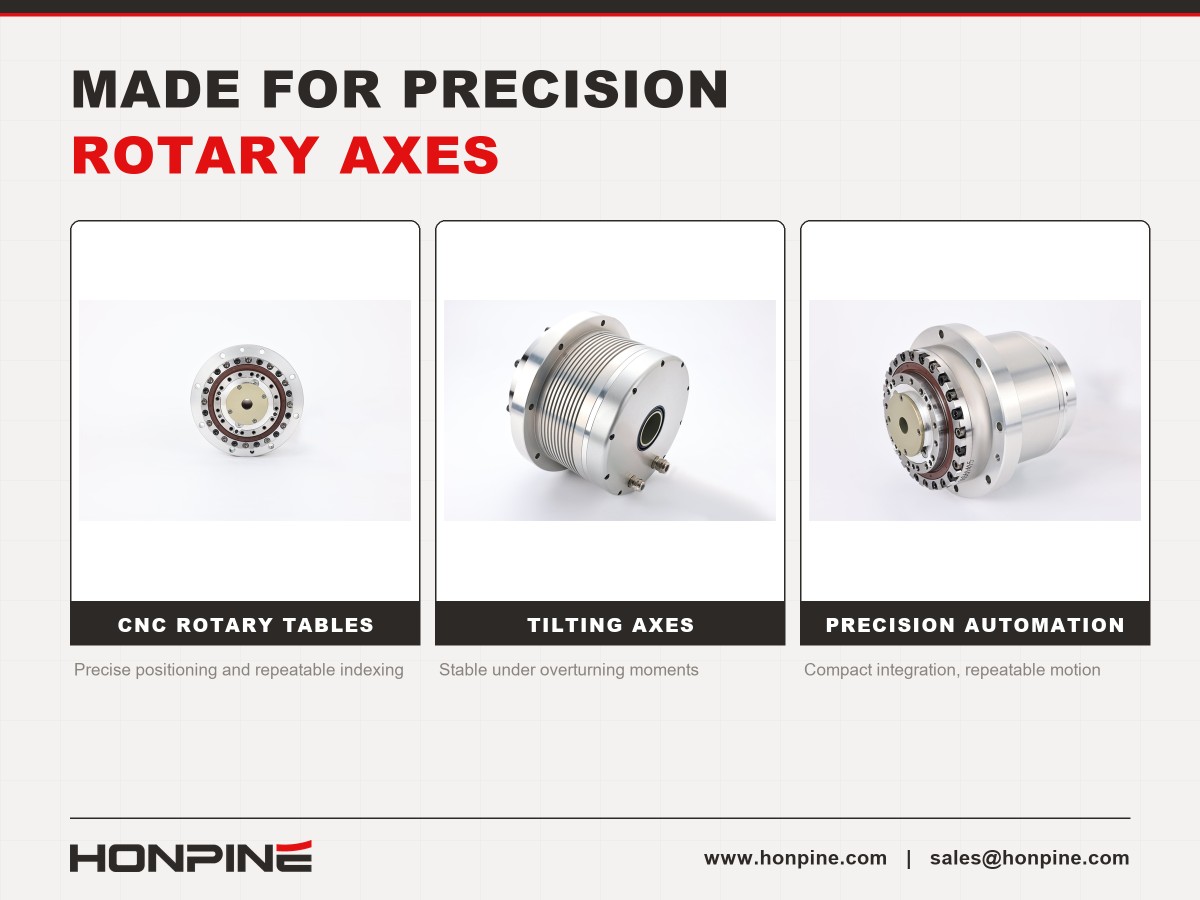
In CNC rotary tables, the actuator can support precise workpiece positioning and repeatable angular indexing. Suitability depends on the required torque, workpiece inertia, cutting forces, and positioning cycle.
Tilting Axes and Multi-Axis Machine Tools
Tilting axes can experience substantial overturning moments and angular deformation due to their structural arrangement and workpiece offset. A drive with low backlash and high torsional rigidity can help improve axis stability when paired with appropriately sized bearings and supporting structures.
Precision Industrial Automation
Beyond CNC machining, precision planetary rotary actuators can be considered for rotary positioning stations, automated inspection equipment, assembly systems, and other applications where compact integration and repeatable positioning are important.
How to Select a Precision Backlash-Free Planetary Rotary Actuator?
Before selecting the HPG for a specific application, engineers should review several key parameters:
Positioning accuracy and repeatability: Confirm the definitions, measurement methods, and actual test conditions behind the specifications.
Backlash and lost motion: Evaluate both angular clearance and total reversal-related positioning error.
Torsional rigidity: Check deformation under the expected operating torque and cutting loads.
Rated and peak torque: Verify continuous operating requirements, transient loads, and acceleration torque.
Speed and duty cycle: Confirm that the actuator meets the required rotational speed and operating cycle.
Feedback and control: Check encoder compatibility, servo-drive requirements, and CNC control integration.
Installation and maintenance: Evaluate mounting dimensions, bearing loads, lubrication requirements, thermal management, and service-life data.
A comprehensive evaluation helps ensure that the actuator delivers the required performance within the complete machine system, rather than relying on a single headline specification.
HONPINE HPG: Balancing Precision, Rigidity, and Cost
The HONPINE HPG Precision Backlash-Free Planetary Rotary Actuator is designed for machine builders who need high positioning accuracy, low backlash, and high torsional rigidity in a compact rotary drive.
By combining precision-oriented transmission performance with a rigid mechanical design, the HPG offers an additional option for CNC rotary tables, tilting axes, and industrial automation systems that must balance machining quality, load capacity, and system cost.
If you are developing a precision rotary table or evaluating alternatives to worm gear drives, harmonic reducers, RV reducers, or direct-drive motors, contact HONPINE to discuss the HPG actuator's specifications and suitability for your application.
Read More
Learn more about the story of HONPINE and industry trends related to precision transmission.
 What is robot joint actuator?How to Choose the Best Robot Rotary Joint Actuator?In core robot joint transmission solutions, planetary and harmonic rotary actuators each have their own strengths. Choosing the right type based on application requirements is essential to achieve the optimal balance between performance and cost.
 DD Motors VS Harmonic Rotary ActuatorsThis article provides an in-depth comparison between Direct Drive (DD) motors and harmonic rotary actuators, covering their transmission principles, advantages and disadvantages, and typical application fields.
 OMG Ultra Compact Harmonic Drive Joint Module with Built-in Torque SensorHONPINE TCHL series harmonic drive joint module is a game-changing product that achieves disruptive improvements in multiple aspects such as lightweight design, integration level, and connection convenience. This article will analyze its revolutionary enhancements with you.
 The Role of Harmonic Drive Gears in Achieving 5–10 μm Accuracy in Dental Milling MachinesA dental milling machine is a CNC machining system used to directly process digital dental models into restorations such as crowns, bridges, veneers, inlays, and implant abutments. Dental milling machines require far higher operational accuracy and motion stability than ordinary equipment. This article explains how harmonic drive gear help dental milling machines achieve stable, continuous, and controllable operation.
 Why Are Harmonic Rotary Actuators Perfect for Medical Equipment?Harmonic rotary actuators (typically integrated systems consisting of a harmonic drive reducer, frameless torque motor, encoder, and optional brake) are regarded as key components in medical equipment. The core reason is that they simultaneously meet the most stringent medical requirements for precision, compact size, safety, and controllability. The following explanation is structured from three perspectives: technical characteristics, application scenarios, and medical value.
 High-Precision RV Reducers Perfectly Matched for Walking RobotsThe walking axis of a robot is a core component for power transmission and support. RV reducers provide extremely high rigidity, precision, and torque while maintaining a compact size and exceptional reliability, making them an ideal match for the demanding requirements of walking robot joints in terms of load capacity, impact resistance, and precision.
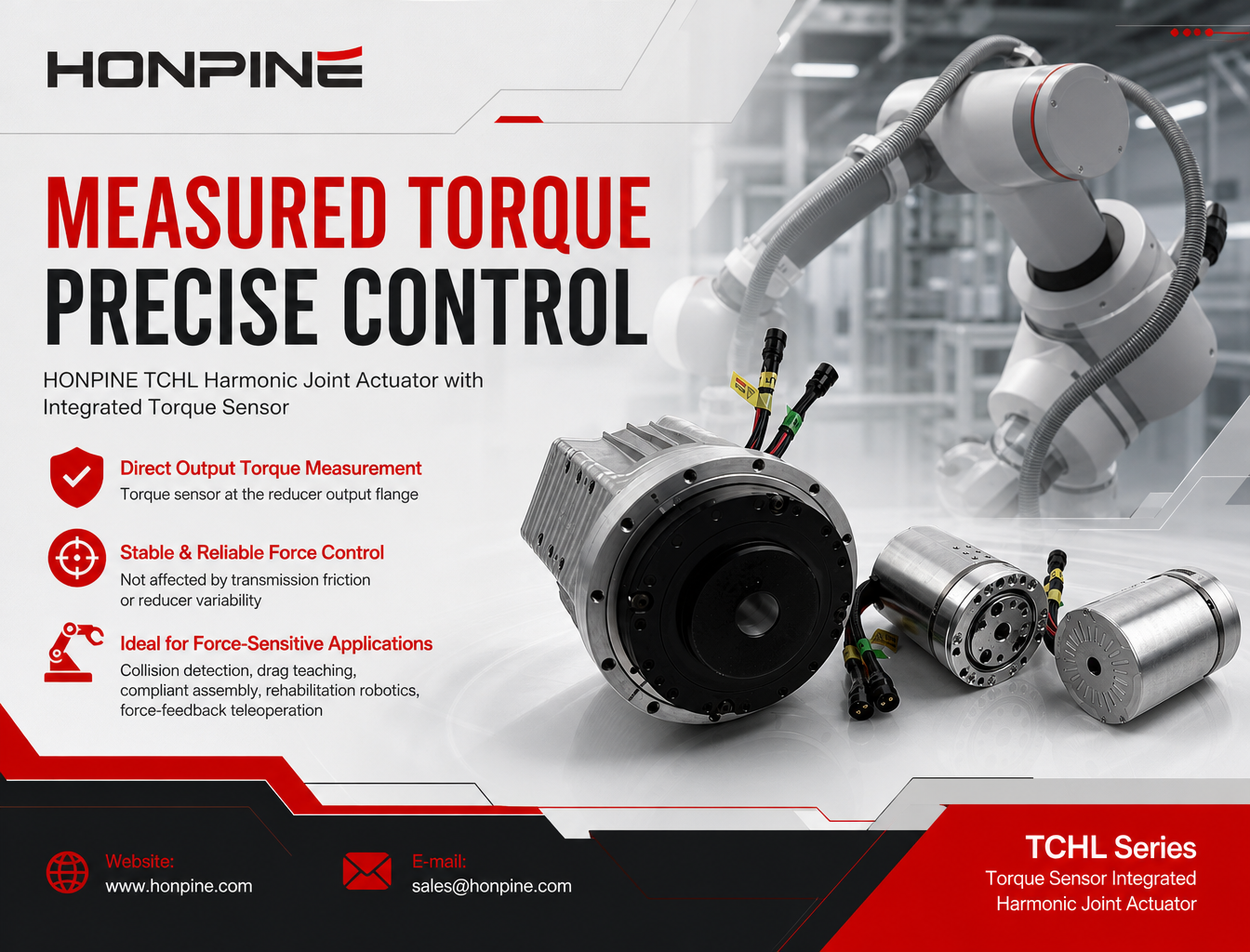
 How Does a Harmonic Joint Actuator with a Torque Sensor Improve Robot Force Control?Learn how the HONPINE TCHL harmonic joint actuator uses an integrated output torque sensor to support force feedback, collision detection, compliant assembly, rehabilitation robotics, and teleoperation.
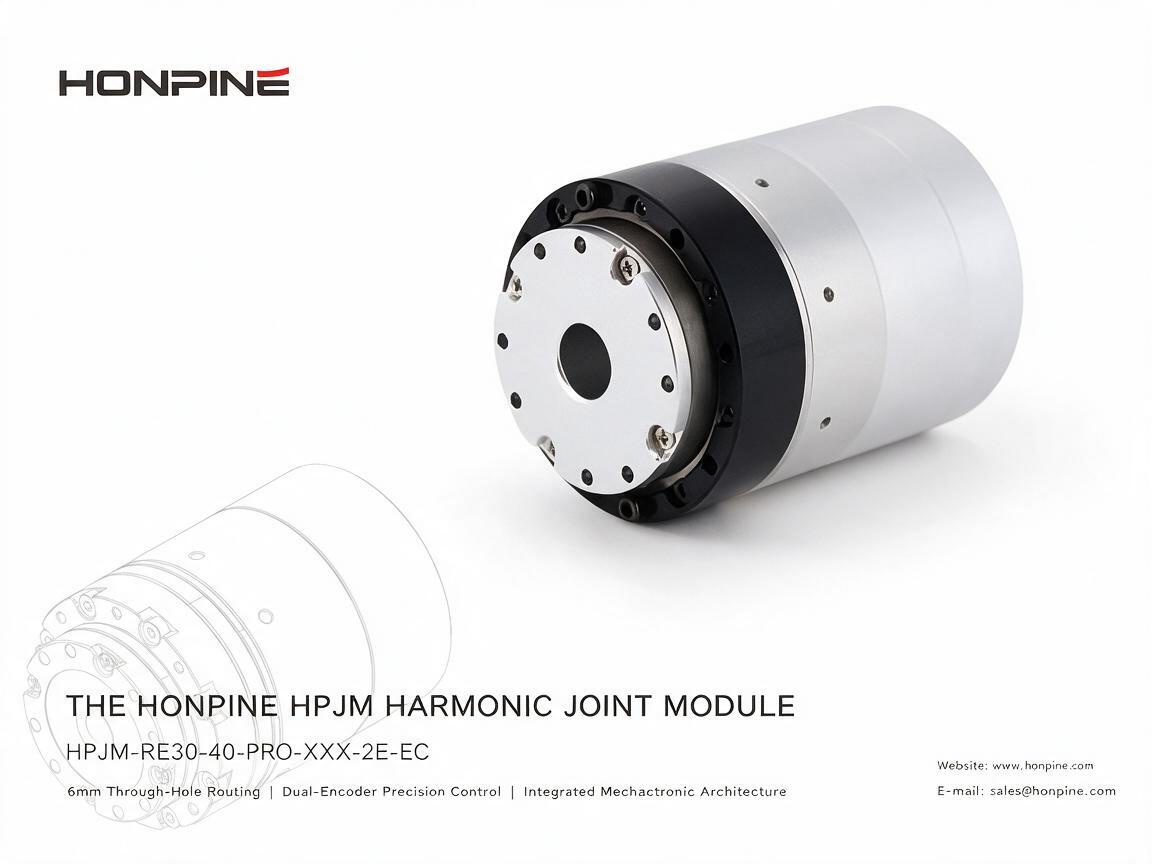
 Ultra-Compact Harmonic Joint Module with a 6 mm Hollow ShaftAs humanoid robots and compact robotic systems evolve, joint modules must deliver high torque density, precise motion control, and flexible cable routing within increasingly limited installation space. The HONPINE HPJM-RE30-40-PRO harmonic joint module addresses these challenges with a compact design, a 6 mm hollow shaft, dual-encoder feedback, and an integrated motor and FOC drive. In this article, we explore its key design features and explain how its hollow-shaft structure, EtherCAT connectivity, and flexible mounting options support the development of humanoid robots, drones, optical platforms, and precision automation equipment.
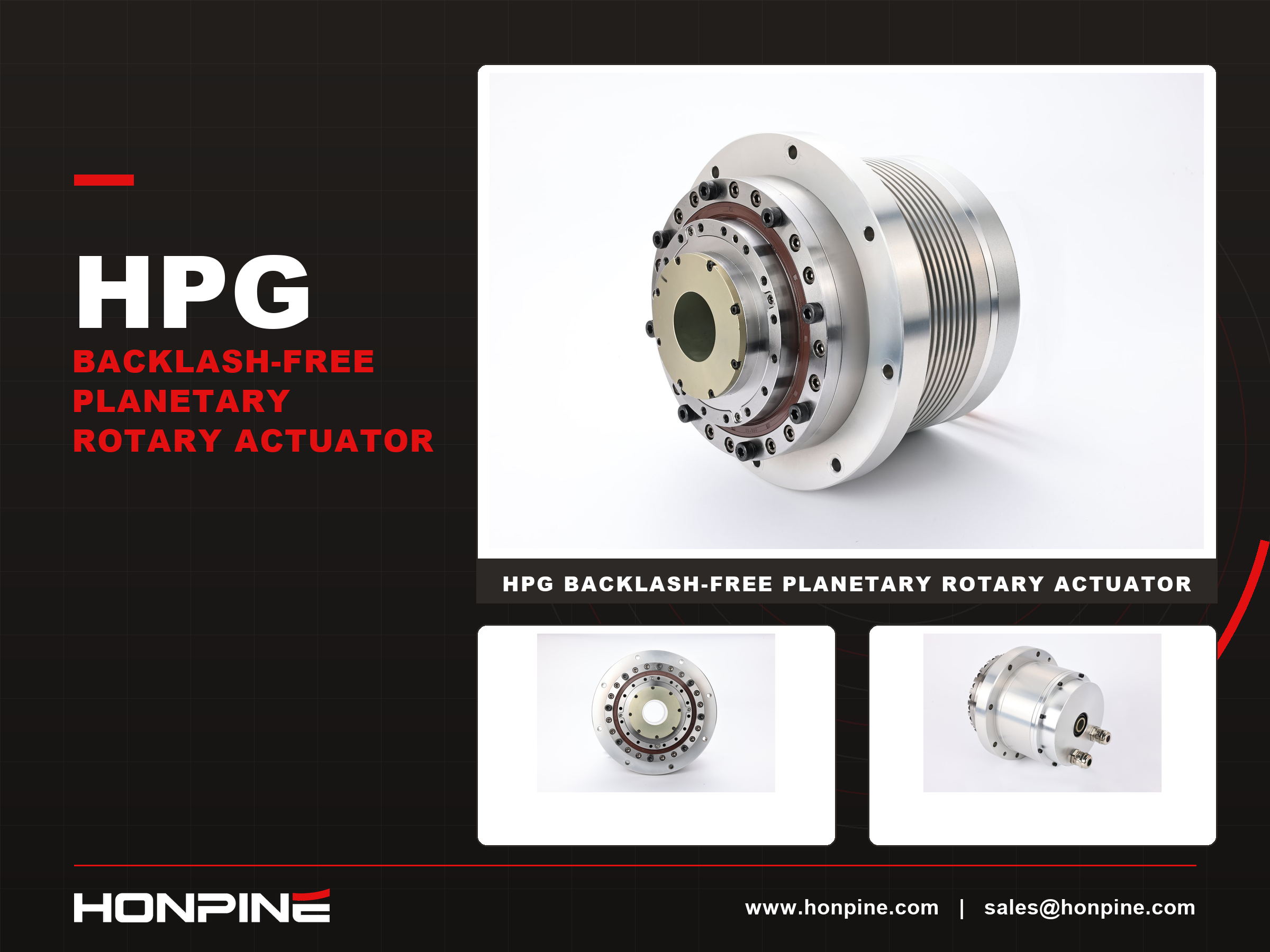
 How Does the HONPINE HPG Backlash-Free Planetary Rotary Actuator Balance CNC Accuracy and Rigidity?Discover the HONPINE HPG precision backlash-free planetary rotary actuator for CNC rotary tables. Explore positioning accuracy, torsional rigidity, low backlash, and drive selection.
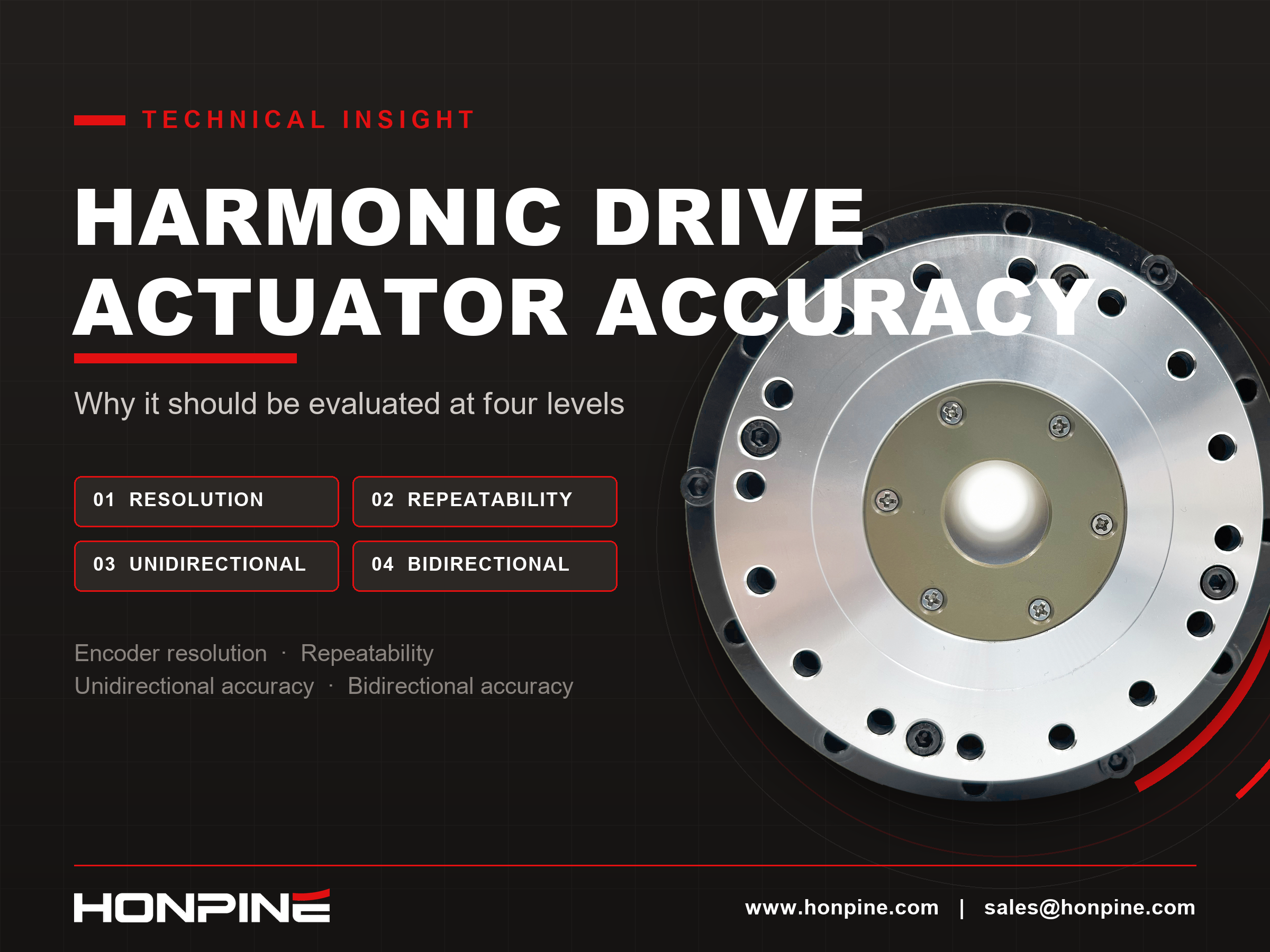
 Harmonic Drive Actuator Accuracy: Why It Should Be Evaluated at Four LevelsHarmonic drive actuator accuracy involves more than encoder resolution. Why should engineers evaluate it at four levels? Resolution, repeatability, unidirectional positioning accuracy, and bidirectional positioning accuracy describe different aspects of motion performance. Understanding these differences helps engineers select harmonic rotary actuators for semiconductor equipment, EFEM systems, and 3C automation without confusing theoretical encoder increments with actual positioning performance.
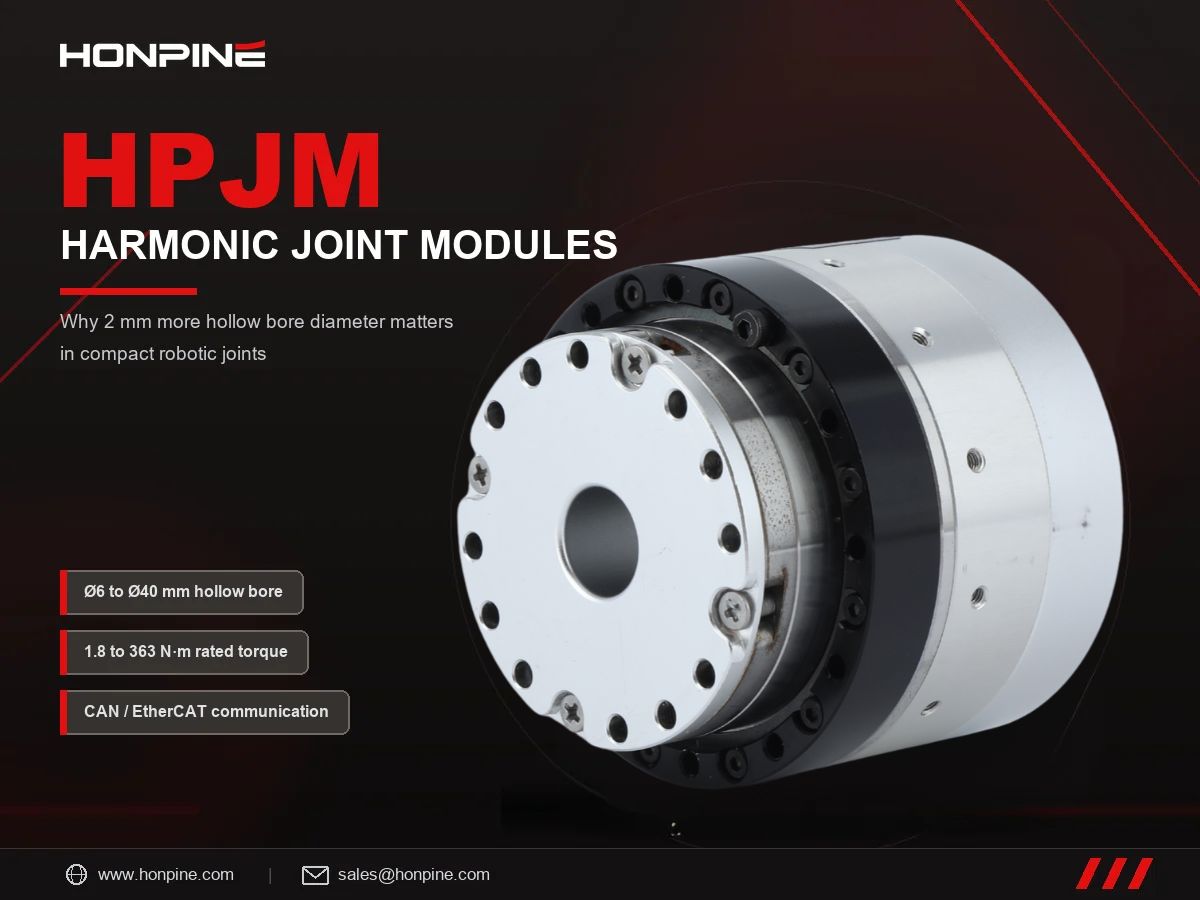
 Why Do Many Customers Choose HONPINE HPJM Harmonic Joint Modules for Just 2 mm More Hollow Bore Diameter?Why do many customers choose HONPINE HPJM harmonic joint modules for just 2 mm more hollow bore diameter? In compact robotic joints, this small dimensional difference can create a surprisingly large increase in available space. Because the cross-sectional area of a circular bore increases with the square of its diameter, an extra 2 mm can significantly improve internal cable routing and simplify system integration. This article examines the impact of hollow bore diameter, compares selected HONPINE HPJM models with comparable harmonic joint modules, and explains why bore size matters in humanoid robots, collaborative robots, and industrial automation.
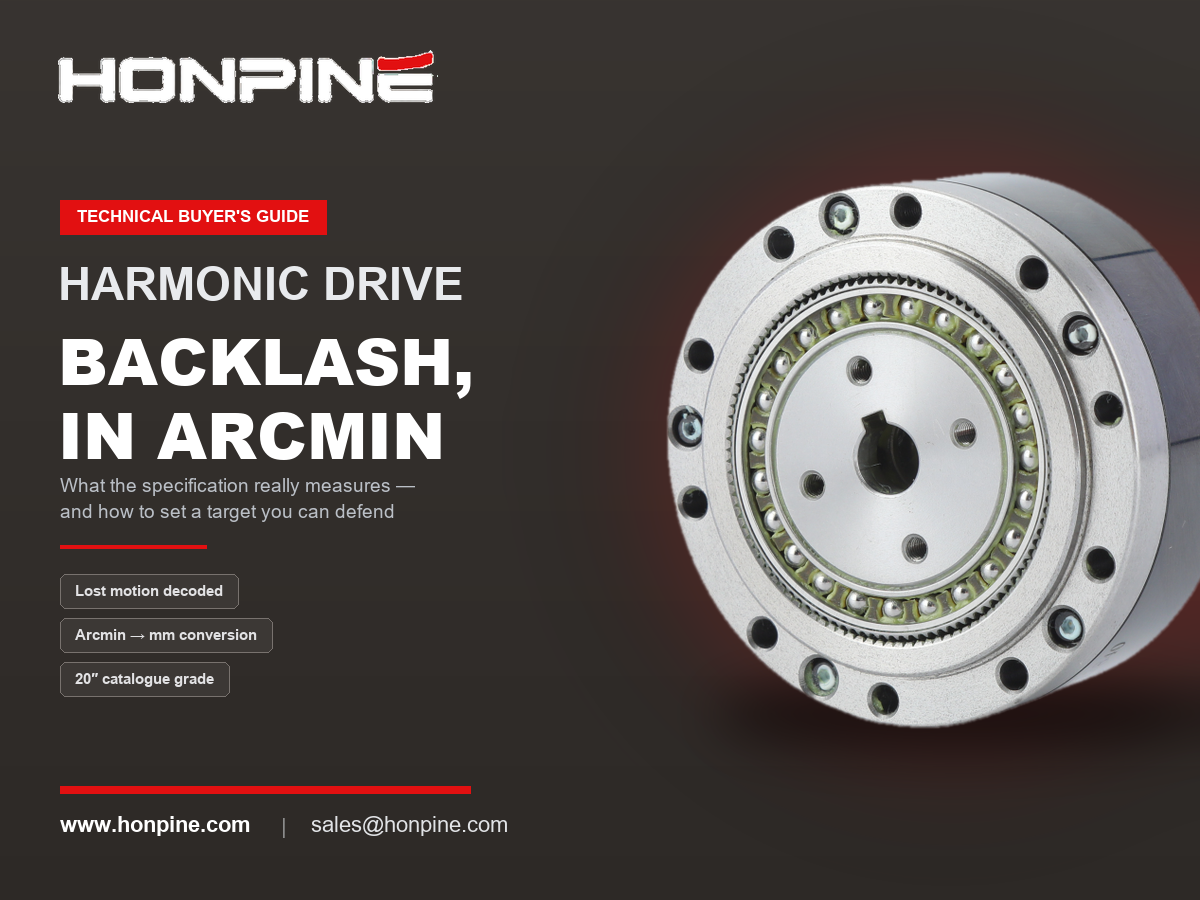
 Harmonic Drive Backlash in Arcmin: What the Specification Really Tells YouChoosing the right force control harmonic joint actuator involves more than comparing torque and dimensions. Torque sensor specifications, encoder feedback, communication protocols, functional safety, and hollow-shaft size can all affect system integration and control performance. In this guide, HONPINE Technical Director compares the TCHL and HAG harmonic joint actuator series, explaining their key differences and providing a practical selection framework for humanoid robots, collaborative manipulators, precision assembly, polishing, and other force-controlled applications.
Double Click
We provide harmonic drive reducer,planetary reducer,robot joint motor,robot rotary actuators,RV gear reducer,robot end effector,dexterous robot hand
 What is robot joint actuator?How to Choose the Best Robot Rotary Joint Actuator?In core robot joint transmission solutions, planetary and harmonic rotary actuators each have their own strengths. Choosing the right type based on application requirements is essential to achieve the optimal balance between performance and cost.
 DD Motors VS Harmonic Rotary ActuatorsThis article provides an in-depth comparison between Direct Drive (DD) motors and harmonic rotary actuators, covering their transmission principles, advantages and disadvantages, and typical application fields.
 OMG Ultra Compact Harmonic Drive Joint Module with Built-in Torque SensorHONPINE TCHL series harmonic drive joint module is a game-changing product that achieves disruptive improvements in multiple aspects such as lightweight design, integration level, and connection convenience. This article will analyze its revolutionary enhancements with you.
 How Does a Harmonic Joint Actuator with a Torque Sensor Improve Robot Force Control?Learn how the HONPINE TCHL harmonic joint actuator uses an integrated output torque sensor to support force feedback, collision detection, compliant assembly, rehabilitation robotics, and teleoperation.
 Ultra-Compact Harmonic Joint Module with a 6 mm Hollow ShaftAs humanoid robots and compact robotic systems evolve, joint modules must deliver high torque density, precise motion control, and flexible cable routing within increasingly limited installation space. The HONPINE HPJM-RE30-40-PRO harmonic joint module addresses these challenges with a compact design, a 6 mm hollow shaft, dual-encoder feedback, and an integrated motor and FOC drive. In this article, we explore its key design features and explain how its hollow-shaft structure, EtherCAT connectivity, and flexible mounting options support the development of humanoid robots, drones, optical platforms, and precision automation equipment.
 How Does the HONPINE HPG Backlash-Free Planetary Rotary Actuator Balance CNC Accuracy and Rigidity?Discover the HONPINE HPG precision backlash-free planetary rotary actuator for CNC rotary tables. Explore positioning accuracy, torsional rigidity, low backlash, and drive selection.
 Harmonic Drive Actuator Accuracy: Why It Should Be Evaluated at Four LevelsHarmonic drive actuator accuracy involves more than encoder resolution. Why should engineers evaluate it at four levels? Resolution, repeatability, unidirectional positioning accuracy, and bidirectional positioning accuracy describe different aspects of motion performance. Understanding these differences helps engineers select harmonic rotary actuators for semiconductor equipment, EFEM systems, and 3C automation without confusing theoretical encoder increments with actual positioning performance.
 Why Do Many Customers Choose HONPINE HPJM Harmonic Joint Modules for Just 2 mm More Hollow Bore Diameter?Why do many customers choose HONPINE HPJM harmonic joint modules for just 2 mm more hollow bore diameter? In compact robotic joints, this small dimensional difference can create a surprisingly large increase in available space. Because the cross-sectional area of a circular bore increases with the square of its diameter, an extra 2 mm can significantly improve internal cable routing and simplify system integration. This article examines the impact of hollow bore diameter, compares selected HONPINE HPJM models with comparable harmonic joint modules, and explains why bore size matters in humanoid robots, collaborative robots, and industrial automation.
 Harmonic Drive Backlash in Arcmin: What the Specification Really Tells YouChoosing the right force control harmonic joint actuator involves more than comparing torque and dimensions. Torque sensor specifications, encoder feedback, communication protocols, functional safety, and hollow-shaft size can all affect system integration and control performance. In this guide, HONPINE Technical Director compares the TCHL and HAG harmonic joint actuator series, explaining their key differences and providing a practical selection framework for humanoid robots, collaborative manipulators, precision assembly, polishing, and other force-controlled applications.
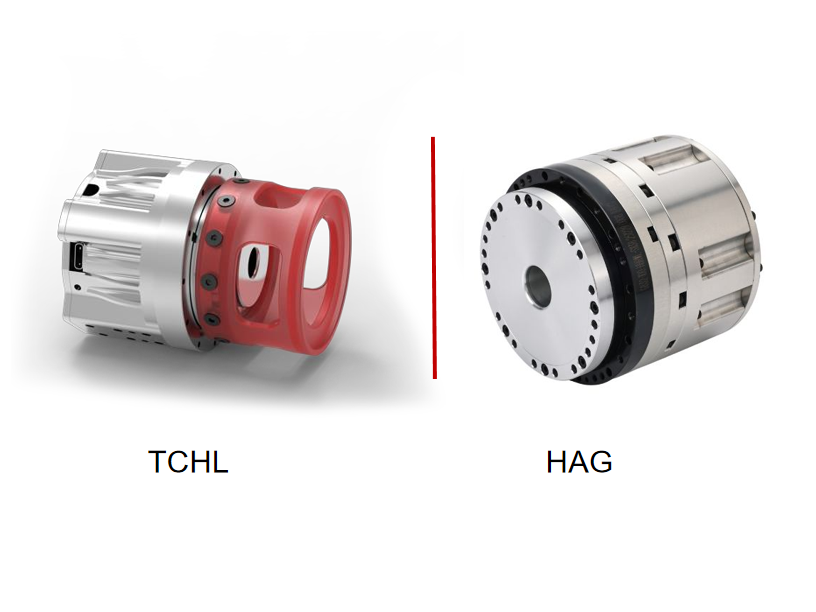
 How to Choose a Force Control Harmonic Joint Actuator? An In-Depth Comparison of HONPINE TCHL and HAGChoosing the right force control harmonic joint actuator involves more than comparing torque and dimensions. Torque sensor specifications, encoder feedback, communication protocols, functional safety, and hollow-shaft size can all affect system integration and control performance. In this guide, HONPINE Technical Director compares the TCHL and HAG harmonic joint actuator series, explaining their key differences and providing a practical selection framework for humanoid robots, collaborative manipulators, precision assembly, polishing, and other force-controlled applications.
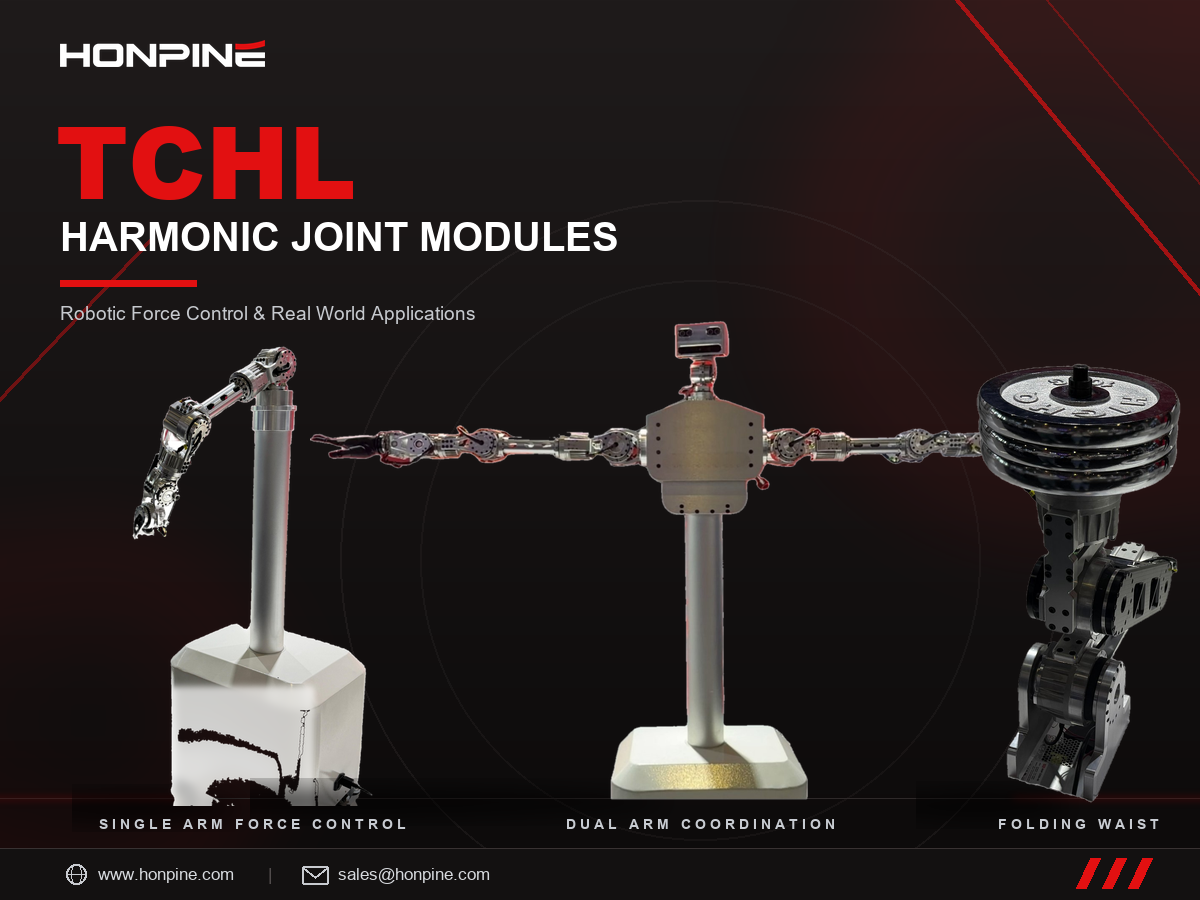
 HONPINE TCHL Harmonic Joint Modules: Robotic Force Control and Real-World ApplicationsHello everyone, I’m Theodore Li, Technical Director at HONPINE.
HONPINE TCHL harmonic joint modules have been deployed in a range of robotic motion-control applications, including dual-arm humanoid robots, single-arm compliant force control, and folding waist mechanisms for wheeled humanoid robots. As integrated motion components, they support a wide range of applications in robotics, intelligent manufacturing, and industrial automation.
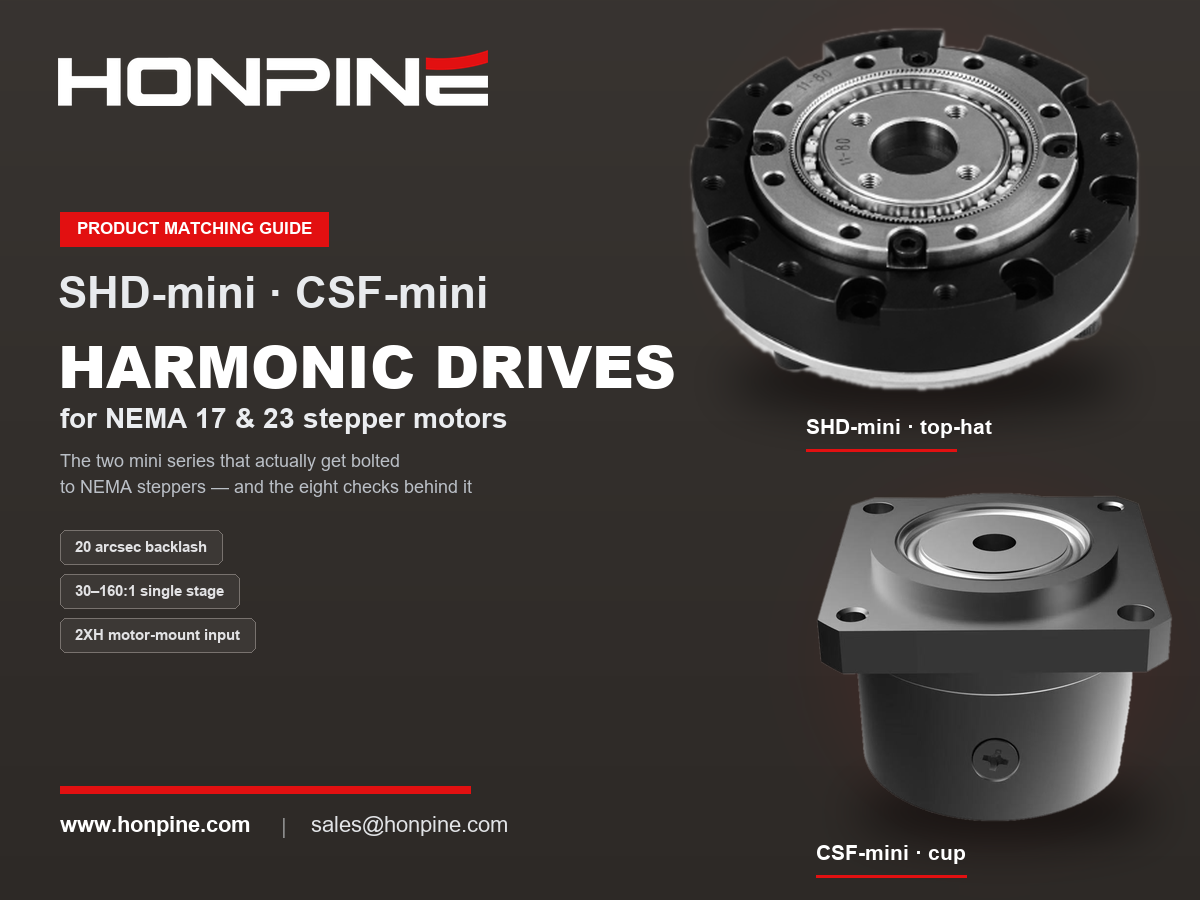
From core components to integrated motion units, HONPINE showcases the possibilities of precision transmission technology across different robotic applications through a diverse product portfolio and practical motion demonstrations. NEMA 17 & NEMA 23 Harmonic Drive Matching Guide: Pairing Stepper Motors with Harmonic ReducersPairing a stepper motor with a harmonic drive is not a budget compromise. A stepper's weak points — the coarse step angle, torque collapse above roughly 400 rpm, and the lack of a precision transmission — are exactly what a harmonic drive fixes: it pulls the operating point into the low-speed, high-torque sweet spot, refines a 1.8° step angle into arc-second resolution, and delivers near-zero backlash. This guide explains what NEMA frame sizes mean at the mounting interface, which harmonic frames match NEMA 17 and NEMA 23, the eight checks to run in order — including the input-side no-load starting torque most often missed — and the pairing's real weakness: silent failure. Includes HONPINE SHD and CSF specifications.