








How to Choose a Torque Motor? An In-Depth Guide
Torque motors can be divided into frameless torque motors and framed torque motors (DD motors). This article will explain the fundamental differences between frameless and framed torque motors, and how to select the right motor for your specific application.
What is a Torque Motor?
A torque motor is a motor designed primarily to control output torque. Its control process focuses more on precise torque output rather than speed or position control. Due to its high torque output and precise control capabilities, torque motors are commonly used in applications requiring high dynamic performance, precise positioning, and stable torque output, such as machine tools, automated production lines, and robotic joints. Torque motors can be categorized into frameless and framed types.
Core Design and Development of Torque Motors
Essentially, torque motors are multi-pole permanent magnet synchronous direct-drive motors. Their core design revolves around three objectives: low-speed constant torque, high torque density, and minimal torque ripple, achieved through breakthroughs in electromagnetics, structure, and materials.
Electromagnetic Design: High Pole Count + Fractional Slots for Smooth Low-Speed Operation
Over the past five years, the main stream torque motors have increased their pole pairs from 12 to 32 or even 64. A higher pole count allows the motor to output rated torque at zero or very low speeds (as low as 0.1°/s), eliminating low-speed crawling or jitter common in traditional motors. Combined with optimized fractional slot concentrated windings (e.g., 48 poles / 324 slots, q=2.25), torque ripple can be reduced to less than 1% of rated torque, achieving ultra-smooth, stall-free operation.
Structural Form: Frameless / Framed Options for All Scenarios
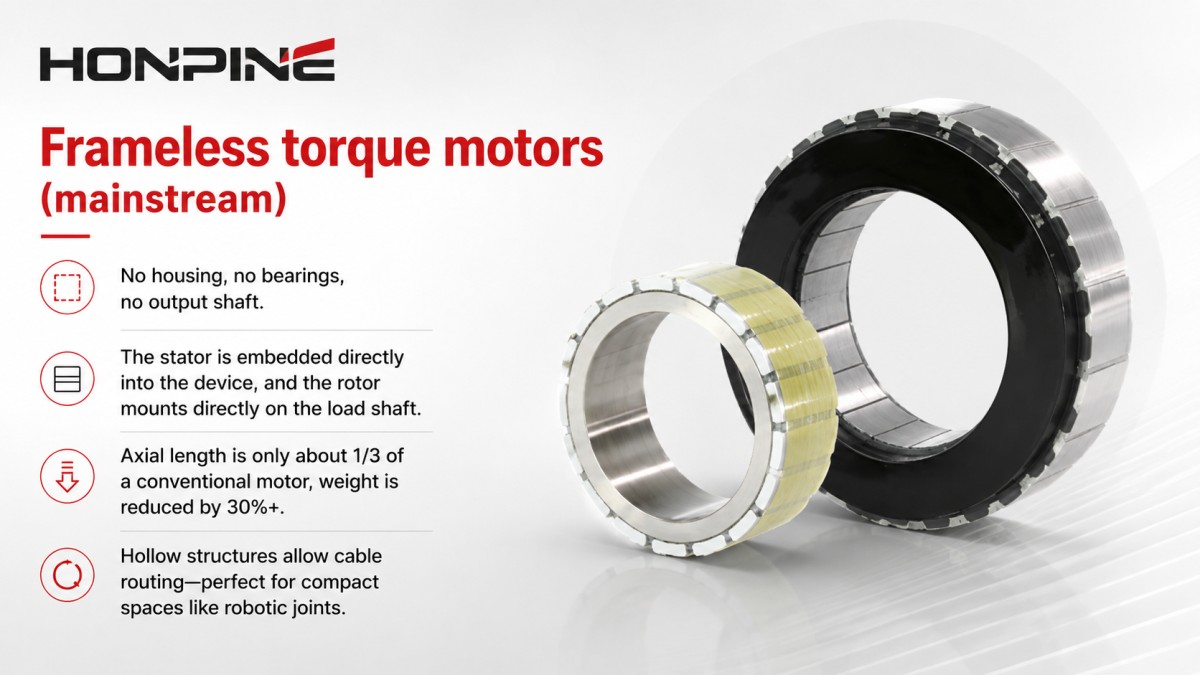
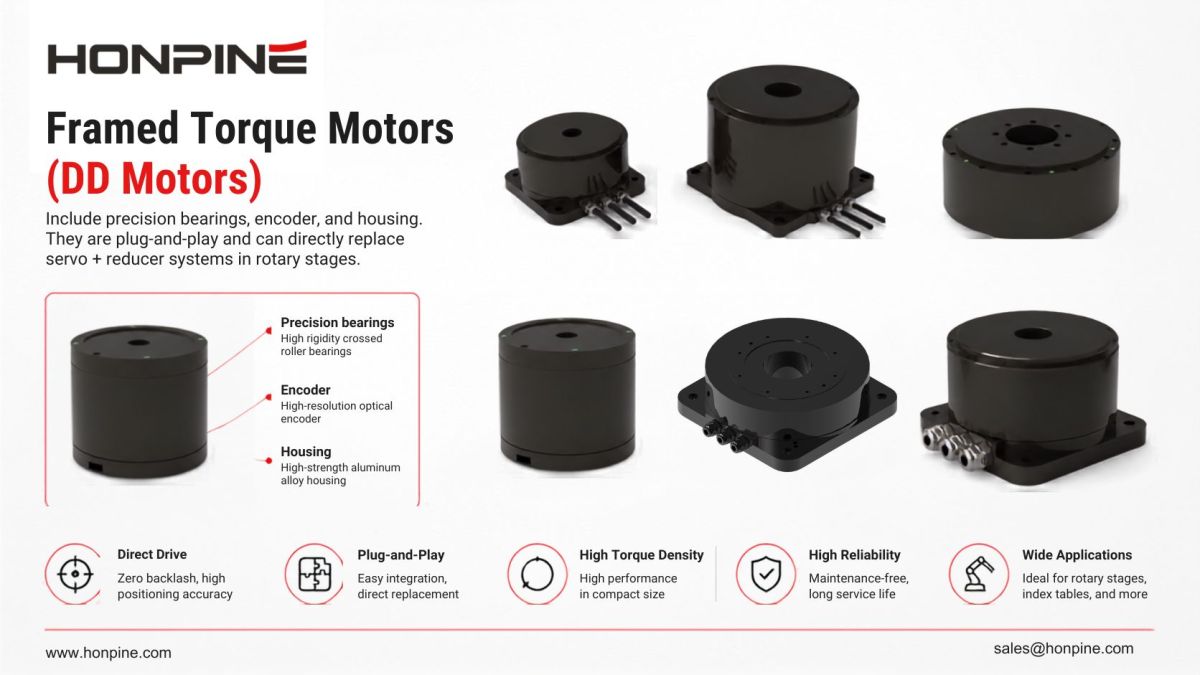
Frameless torque motors (mainstream): No housing, no bearings, no output shaft. The stator is embedded directly into the device, and the rotor mounts directly on the load shaft. Axial length is only about 1/3 of a conventional motor, weight is reduced by 30%+, and hollow structures allow cable routing—perfect for compact spaces like robotic joints.
Framed torque motors (DD motors): Include precision bearings, encoder, and housing. They are plug-and-play and can directly replace servo + reducer systems in rotary stages.
Material Revolution: Rare Earth Magnets + High Conductivity Copper
High-grade NdFeB magnets (e.g., N52H, residual flux ≥1.45T) combined with high-conductivity copper alloys ensure reliable high torque output under wide temperature ranges (-40°C to 125°C) and long-term stable performance.
How to Select a Torque Motor?
In practice, taking a torque motor from datasheet to deployment often encounters the “beautiful specs, failed tuning” dilemma. Here are core guidelines and pitfalls from real-world experience:
Golden Rules for Selection
Torque First, Speed Second: Continuous torque should be ≥1.2–1.5× the steady-state load torque; peak torque should be ≥2× the load impact torque, especially for robot joints with frequent starts/stops.
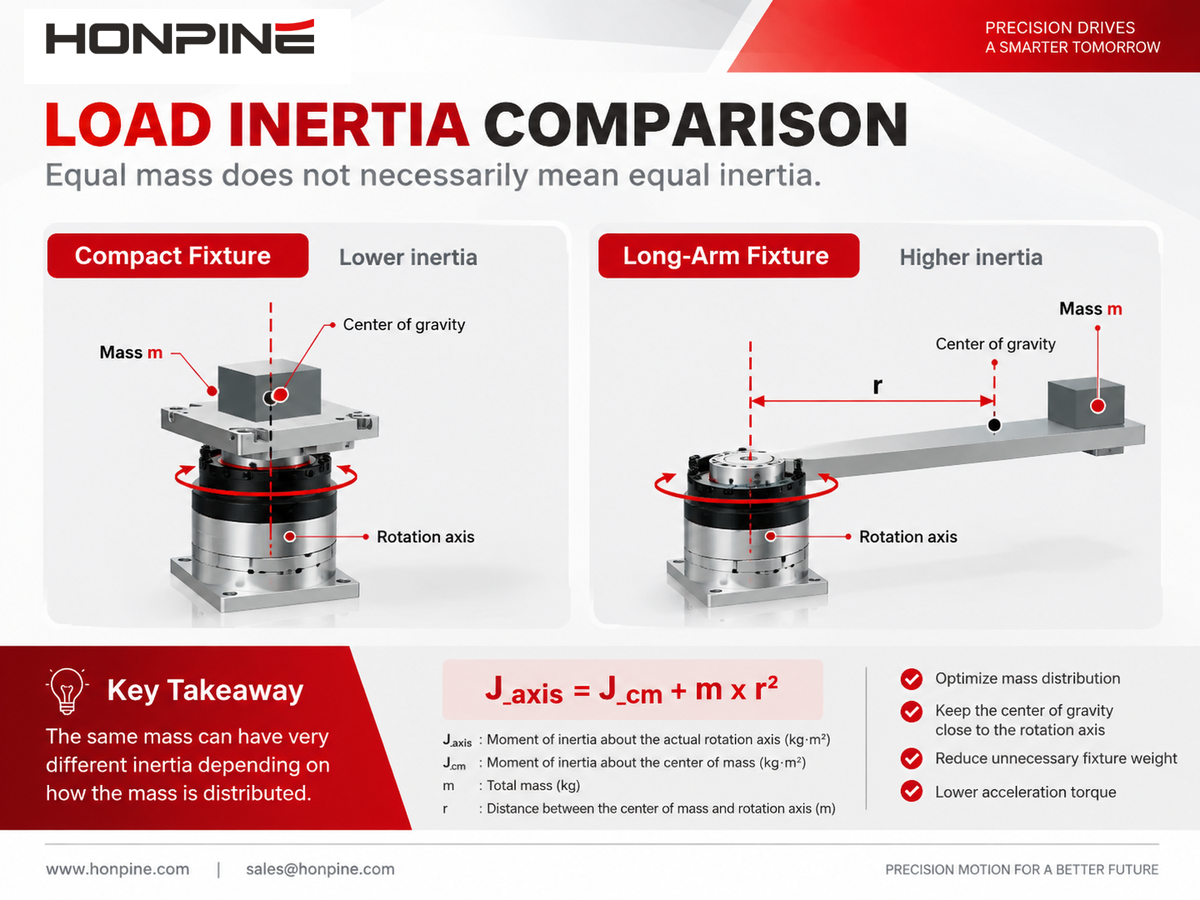
Inertia Matching: For robot joints, the load-to-motor inertia ratio should be ≤5:1 to avoid vibration or oscillation.
Encoder Accuracy: Standard applications: 23-bit absolute encoder (resolution ≈0.0001°); ultra-precision (semiconductor/medical) may require 29-bit encoders.
Three Critical Pitfalls to Avoid
Misalignment (Fatal): For frameless motors, stator/rotor coaxiality must be ≤0.02mm. Larger deviations cause torque ripple spikes and bearing overheating. Use a dial gauge during installation to ensure strict alignment.
Ignoring Cooling: Torque motors generate high currents at low speed, producing significant heat. For maximum power density or continuous stall operation, design forced liquid cooling or efficient air cooling. In one photovoltaic cleaning robot project, the joint housing acted as a heat pipe evaporator with dielectric coolant circulation, increasing continuous torque density by 4×.
Insufficient Load Rigidity: Direct drive has no reducer buffer; low rigidity can cause resonance. Use integrated hollow structures for robot joints and reinforced cast-iron bases for rotary stages.
Key Tuning Tips & EMI Considerations
Tuning: Enable cogging torque compensation, harmonic suppression, and friction feedforward. Current loop bandwidth should exceed 2kHz (ideally ≥5kHz) to suppress torque ripple. In a surgical robot project, tuning PI parameters to Kp=0.35, Ki=1200 achieved a 0.5ms current response.
EMI: Use a spectrum analyzer to detect EMI.
If noise concentrates at specific frequencies (e.g., 1.2MHz), solutions include three-layer shielding (copper foil + nanocrystalline + conductive fabric) on stator windings and magnetic rings on power lines. Interestingly, increasing PWM frequency from 15kHz to 18kHz can reduce peak EMI by 8dB while increasing switching loss by 5%, avoiding mechanical resonance.
For more information and quotes on frameless and framed torque motors, contact us.
Read More
Learn more about the story of HONPINE and industry trends related to precision transmission.
 What is robot joint actuator?How to Choose the Best Robot Rotary Joint Actuator?In core robot joint transmission solutions, planetary and harmonic rotary actuators each have their own strengths. Choosing the right type based on application requirements is essential to achieve the optimal balance between performance and cost.
 DD Motors VS Harmonic Rotary ActuatorsThis article provides an in-depth comparison between Direct Drive (DD) motors and harmonic rotary actuators, covering their transmission principles, advantages and disadvantages, and typical application fields.
 OMG Ultra Compact Harmonic Drive Joint Module with Built-in Torque SensorHONPINE TCHL series harmonic drive joint module is a game-changing product that achieves disruptive improvements in multiple aspects such as lightweight design, integration level, and connection convenience. This article will analyze its revolutionary enhancements with you.
 The Role of Harmonic Drive Gears in Achieving 5–10 μm Accuracy in Dental Milling MachinesA dental milling machine is a CNC machining system used to directly process digital dental models into restorations such as crowns, bridges, veneers, inlays, and implant abutments. Dental milling machines require far higher operational accuracy and motion stability than ordinary equipment. This article explains how harmonic drive gear help dental milling machines achieve stable, continuous, and controllable operation.
 Why Are Harmonic Rotary Actuators Perfect for Medical Equipment?Harmonic rotary actuators (typically integrated systems consisting of a harmonic drive reducer, frameless torque motor, encoder, and optional brake) are regarded as key components in medical equipment. The core reason is that they simultaneously meet the most stringent medical requirements for precision, compact size, safety, and controllability. The following explanation is structured from three perspectives: technical characteristics, application scenarios, and medical value.
 High-Precision RV Reducers Perfectly Matched for Walking RobotsThe walking axis of a robot is a core component for power transmission and support. RV reducers provide extremely high rigidity, precision, and torque while maintaining a compact size and exceptional reliability, making them an ideal match for the demanding requirements of walking robot joints in terms of load capacity, impact resistance, and precision.
 Why Are Harmonic Reducers Suitable for High-Precision Automation Equipment?Precision automation equipment depends on consistent rotary motion, reliable positioning and compact transmission design. From dispensing head orientation and component angular alignment to automated inspection indexing, harmonic reducers offer a practical solution for applications requiring low backlash and high reduction ratios in limited installation space. This article explains how harmonic reducers support repeatable motion, compares key design configurations, and outlines how to select a suitable reduction ratio and reducer structure based on load, speed, accuracy and machine cycle-time requirements.
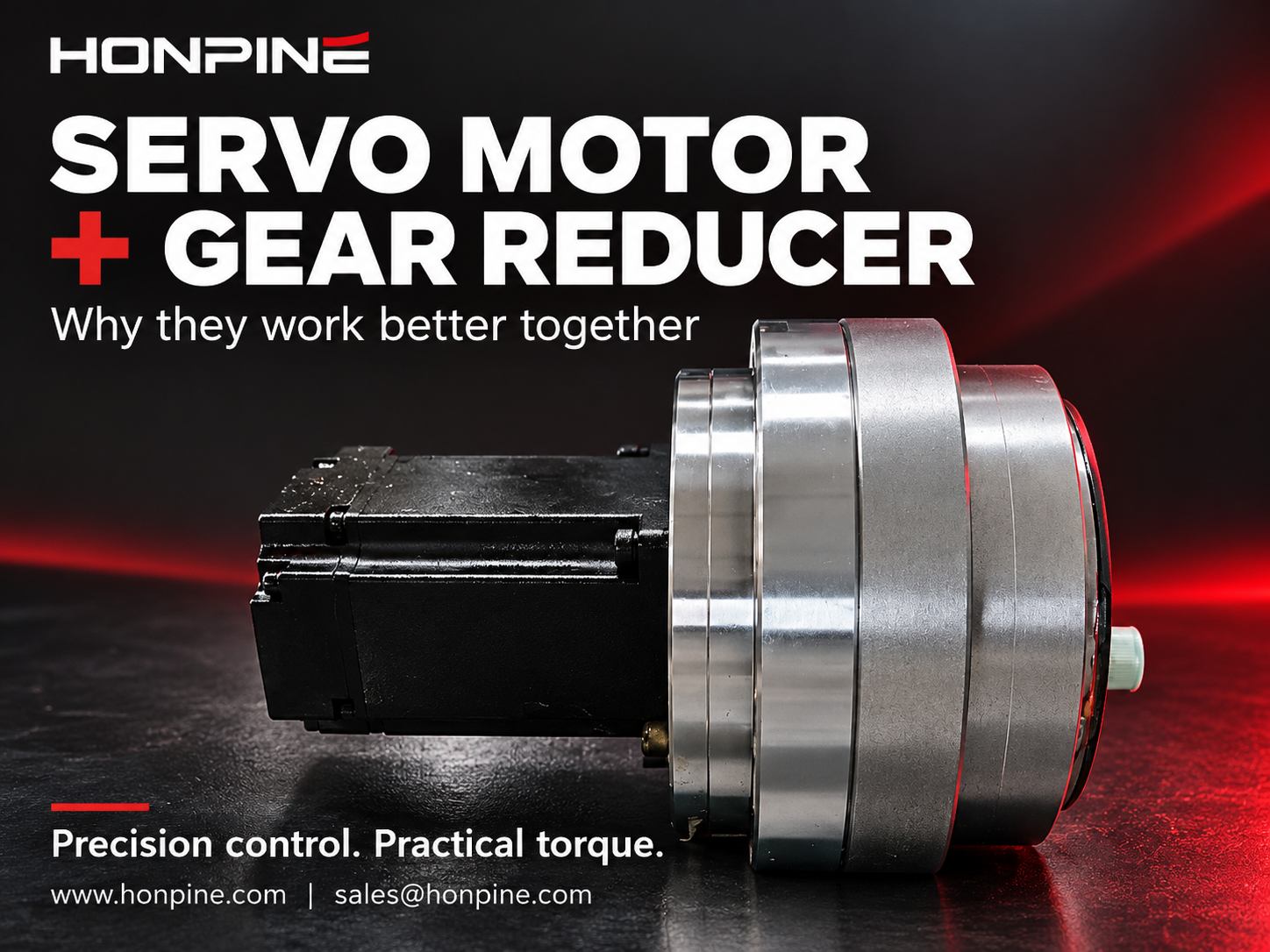
 Why Are Servo Motors and Gear Reducers an Ideal Match?Servo motors provide fast, precise motion control, while gear reducers adapt their speed and torque to the load. This guide explains how servo motors and gear reducers work together through torque multiplication, reflected inertia reduction and finer theoretical position resolution. Learn how inertia matching, backlash, torsional stiffness and reduction ratio influence performance in robotics and industrial automation.
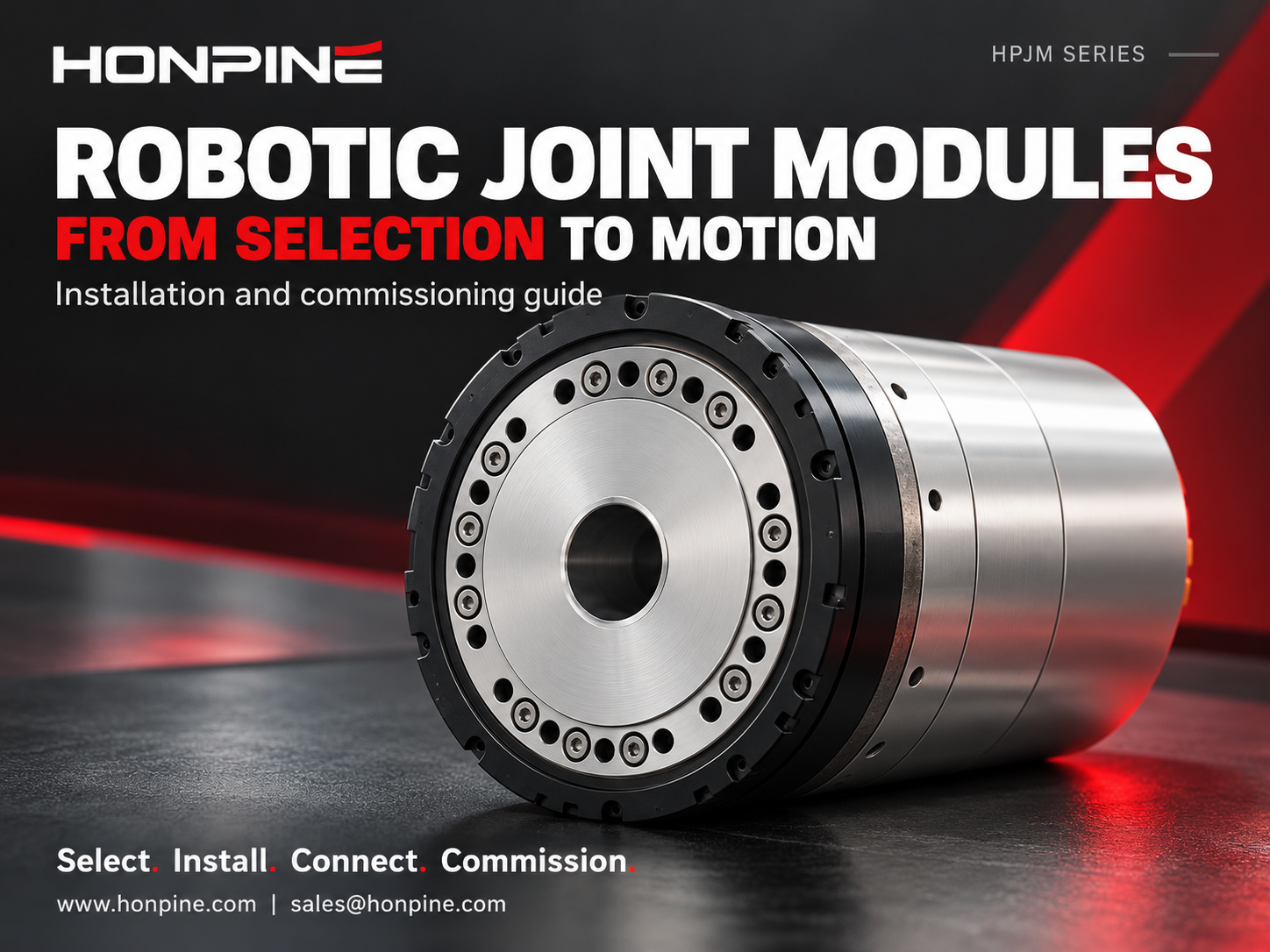
 How to Select and Use Robotic Joint Modules?How do you take robotic joint modules from selection to controlled motion? Using the HONPINE HPJM harmonic joint module as an example, Technical Director Theodore Li explains the key steps in mechanical installation, electrical wiring, CAN and EtherCAT configuration, and control commissioning. Learn what to confirm before integration and how to approach setup so each joint can respond correctly to your controller.
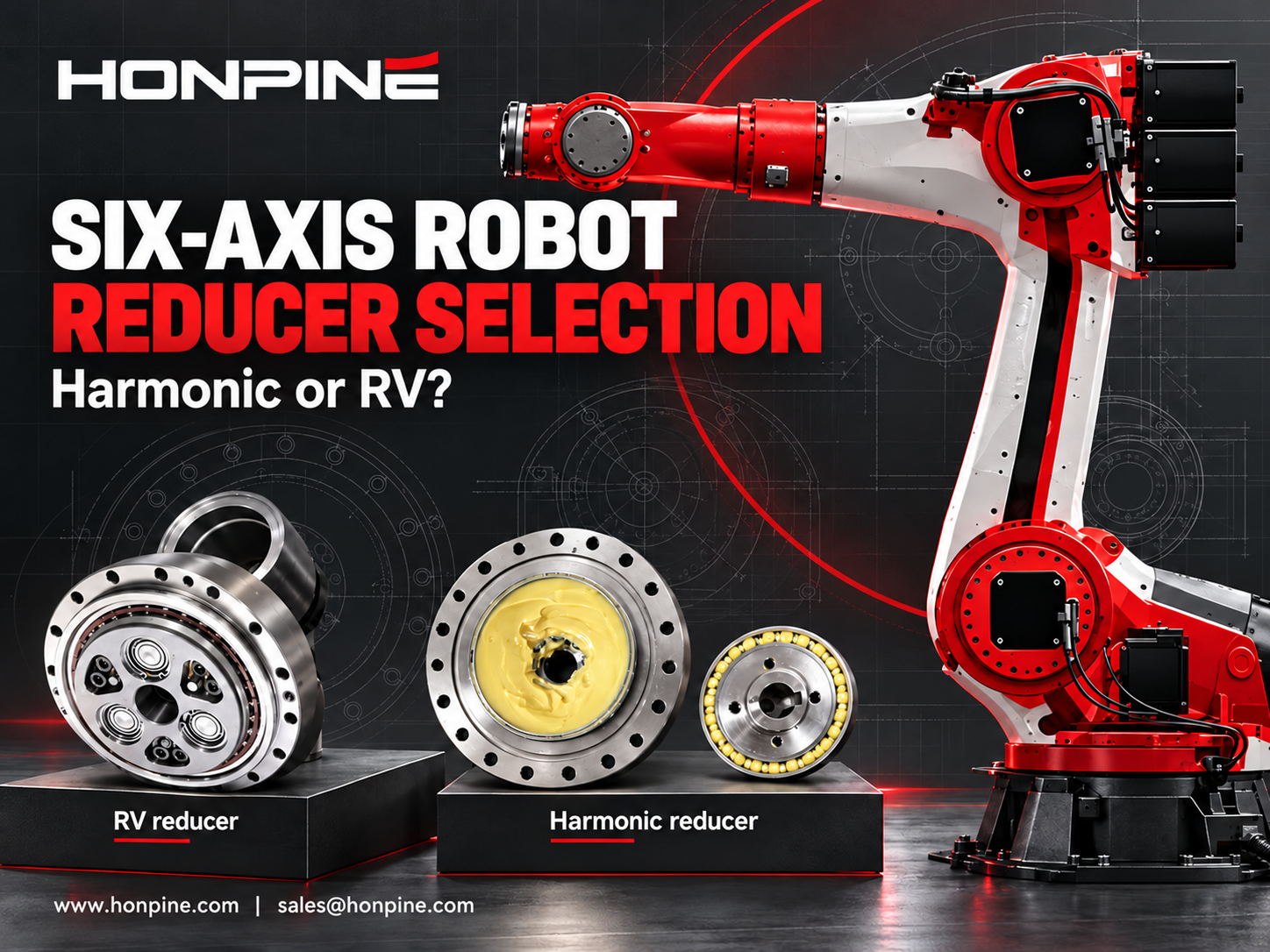
 How to Select Harmonic and RV Reducers for Each Axis of a Six-Axis Robot?What determines whether a six-axis robot joint needs a harmonic reducer or an RV reducer? The answer depends on torque, inertia, impact loads, bearing loads and installation space. This guide explains how to evaluate harmonic and RV reducers for the base, shoulder, elbow and wrist, with practical checks for stiffness, backlash and service life. Use the requirements of each axis to select a suitable reducer configuration.
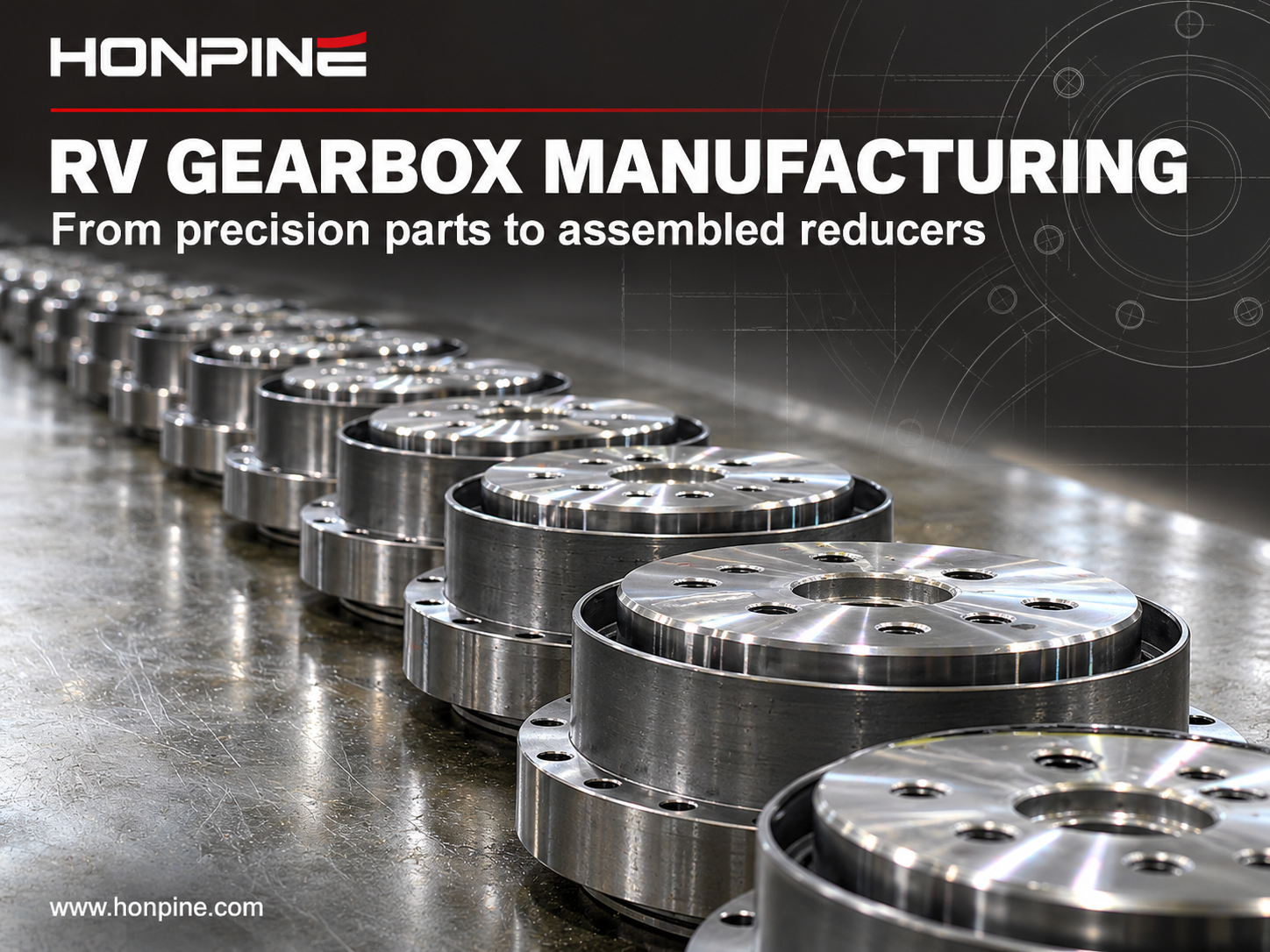
 Top 7 RV Reducer Gearbox Manufacturers: Why Does Nabtesco Still Dominate?What sets RV reducer gearbox manufacturers apart, and why does Nabtesco remain a benchmark in this market? RV reducer production demands precise component machining, careful assembly and extensive engineering know-how. This article introduces seven manufacturers across RV reducers and related transmission technologies, examines the strengths behind Nabtesco's position, and explores HONPINE's development capabilities to help you understand the supplier landscape.
 How to Calculate Torque for a Harmonic Rotary Actuator in a Flipping Mechanism?How much torque does a harmonic rotary actuator need to flip a 10 kg load through 180 degrees? The answer depends on more than weight. Center-of-gravity offset, load inertia, acceleration and operating frequency all affect actuator selection. In this guide, Theodore Li, Technical Director at HONPINE, explains the calculation process using a horizontal-axis flipping example and outlines the checks needed for peak torque, continuous operation, output speed and bearing loads.
Double Click
We provide harmonic drive reducer,planetary reducer,robot joint motor,robot rotary actuators,RV gear reducer,robot end effector,dexterous robot hand
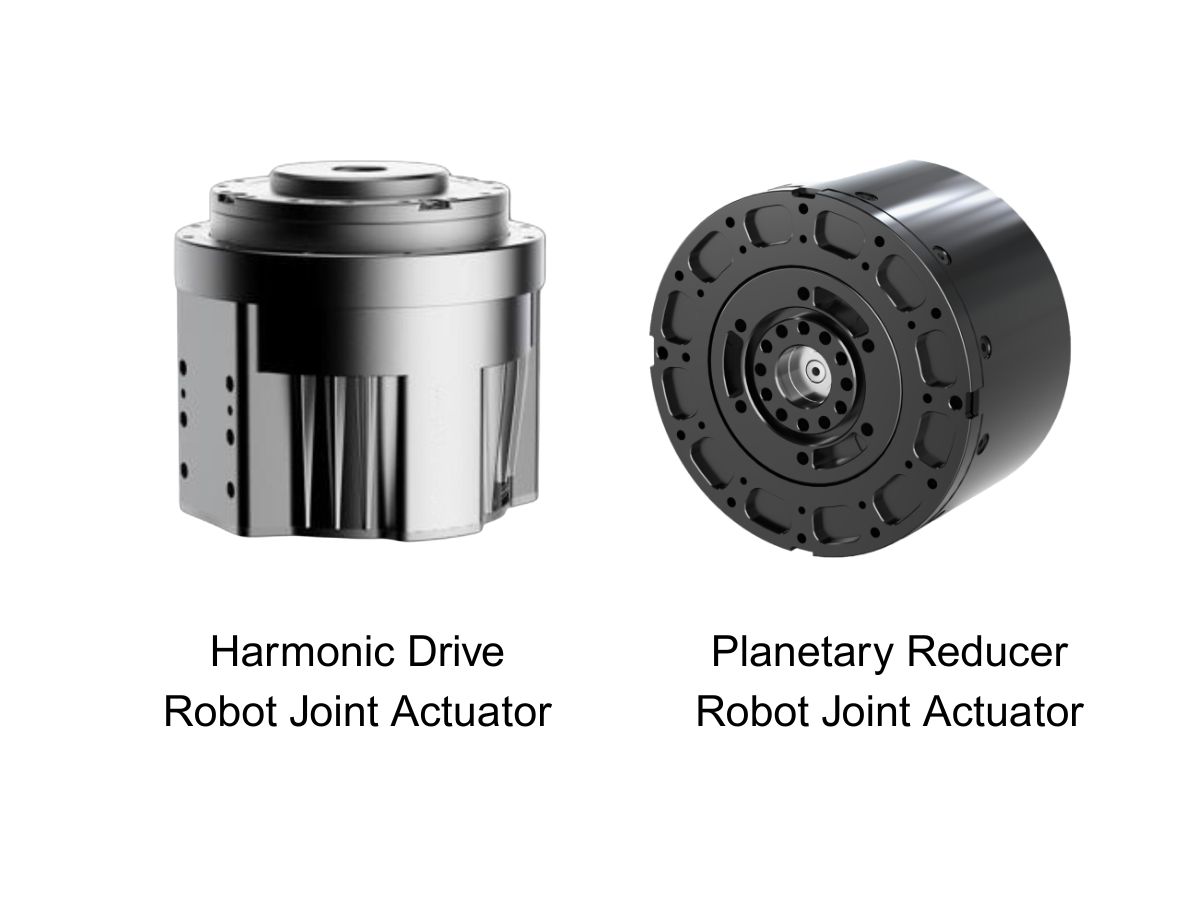
 What is robot joint actuator?How to Choose the Best Robot Rotary Joint Actuator?In core robot joint transmission solutions, planetary and harmonic rotary actuators each have their own strengths. Choosing the right type based on application requirements is essential to achieve the optimal balance between performance and cost.
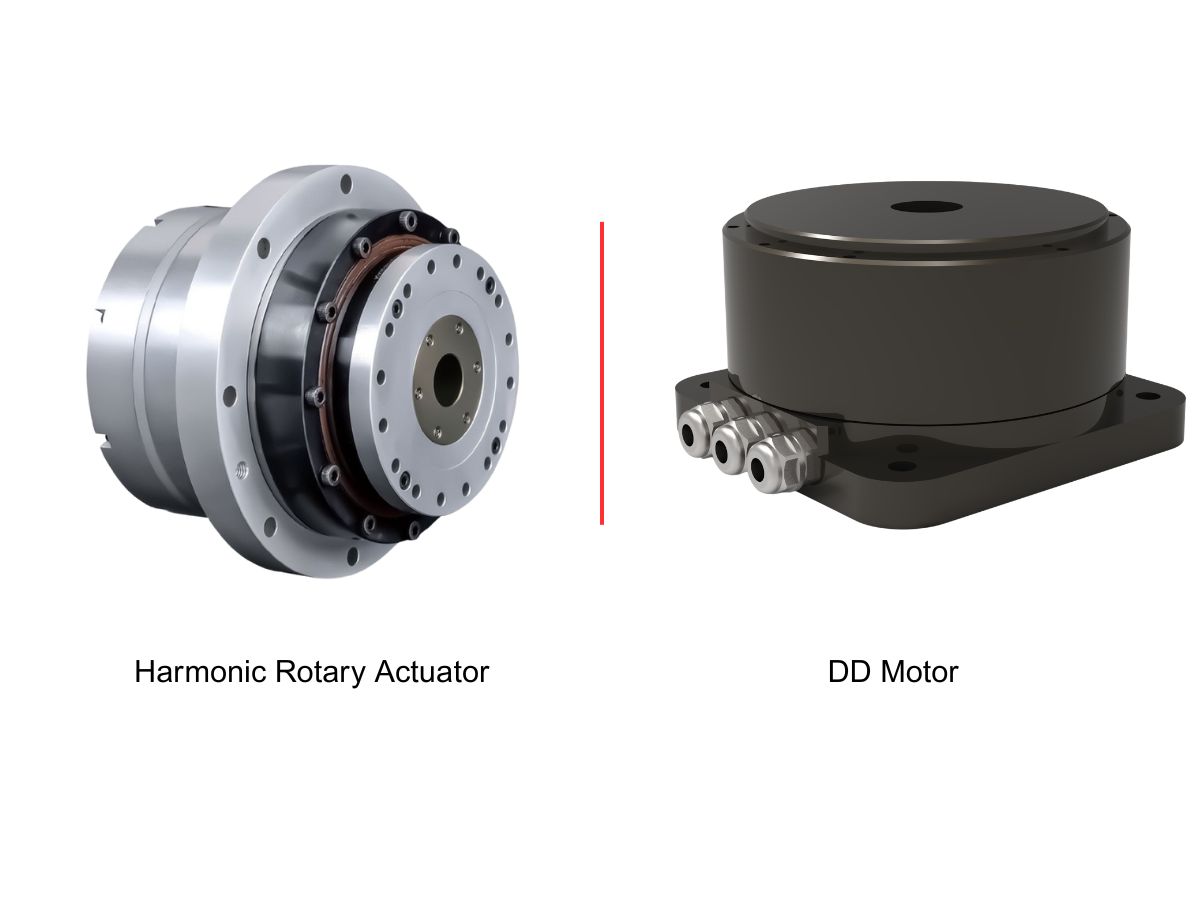
 DD Motors VS Harmonic Rotary ActuatorsThis article provides an in-depth comparison between Direct Drive (DD) motors and harmonic rotary actuators, covering their transmission principles, advantages and disadvantages, and typical application fields.
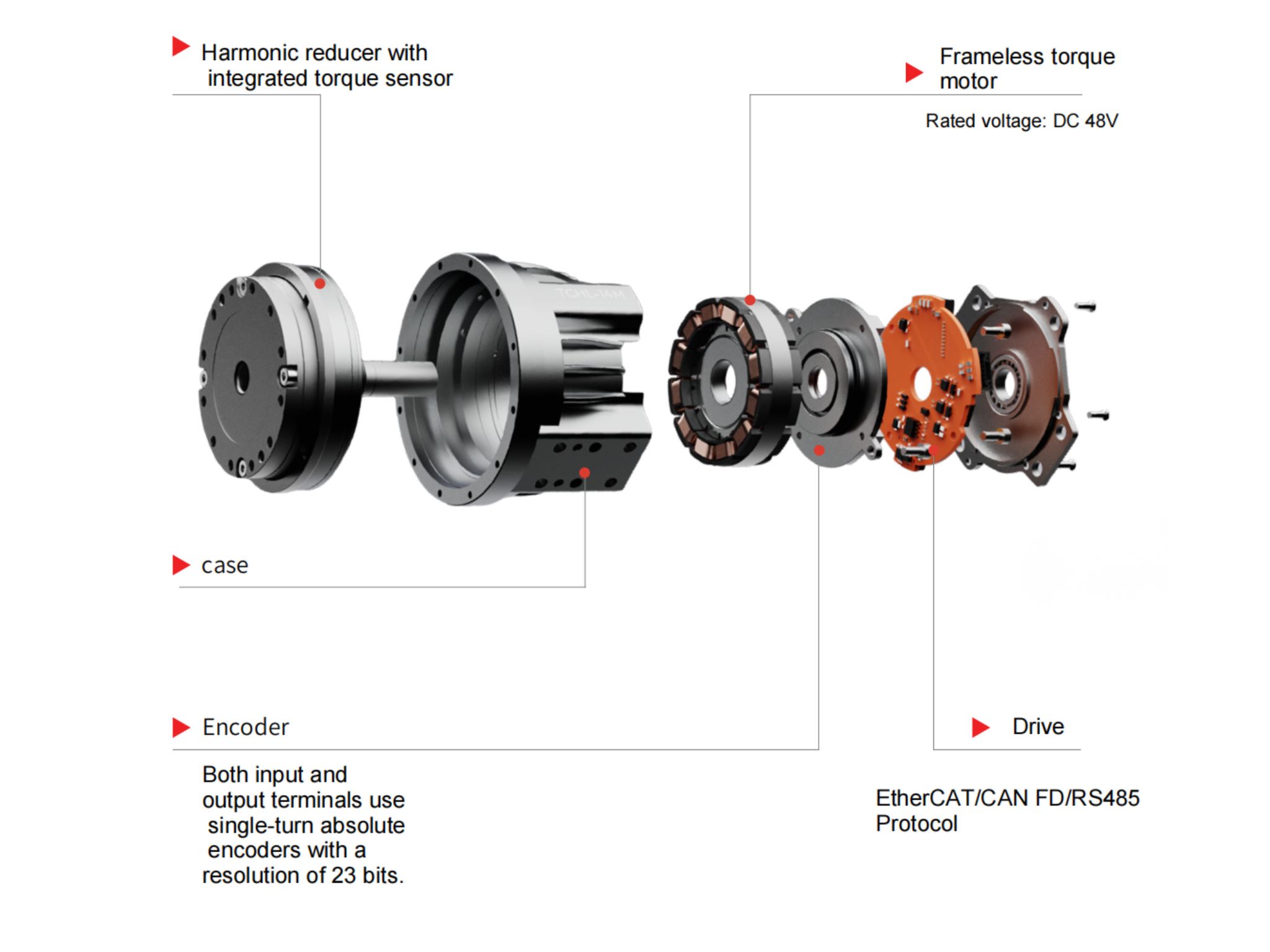
 OMG Ultra Compact Harmonic Drive Joint Module with Built-in Torque SensorHONPINE TCHL series harmonic drive joint module is a game-changing product that achieves disruptive improvements in multiple aspects such as lightweight design, integration level, and connection convenience. This article will analyze its revolutionary enhancements with you.
 Why Are Harmonic Reducers Suitable for High-Precision Automation Equipment?Precision automation equipment depends on consistent rotary motion, reliable positioning and compact transmission design. From dispensing head orientation and component angular alignment to automated inspection indexing, harmonic reducers offer a practical solution for applications requiring low backlash and high reduction ratios in limited installation space. This article explains how harmonic reducers support repeatable motion, compares key design configurations, and outlines how to select a suitable reduction ratio and reducer structure based on load, speed, accuracy and machine cycle-time requirements.
 Why Are Servo Motors and Gear Reducers an Ideal Match?Servo motors provide fast, precise motion control, while gear reducers adapt their speed and torque to the load. This guide explains how servo motors and gear reducers work together through torque multiplication, reflected inertia reduction and finer theoretical position resolution. Learn how inertia matching, backlash, torsional stiffness and reduction ratio influence performance in robotics and industrial automation.
 How to Select and Use Robotic Joint Modules?How do you take robotic joint modules from selection to controlled motion? Using the HONPINE HPJM harmonic joint module as an example, Technical Director Theodore Li explains the key steps in mechanical installation, electrical wiring, CAN and EtherCAT configuration, and control commissioning. Learn what to confirm before integration and how to approach setup so each joint can respond correctly to your controller.
 How to Select Harmonic and RV Reducers for Each Axis of a Six-Axis Robot?What determines whether a six-axis robot joint needs a harmonic reducer or an RV reducer? The answer depends on torque, inertia, impact loads, bearing loads and installation space. This guide explains how to evaluate harmonic and RV reducers for the base, shoulder, elbow and wrist, with practical checks for stiffness, backlash and service life. Use the requirements of each axis to select a suitable reducer configuration.
 Top 7 RV Reducer Gearbox Manufacturers: Why Does Nabtesco Still Dominate?What sets RV reducer gearbox manufacturers apart, and why does Nabtesco remain a benchmark in this market? RV reducer production demands precise component machining, careful assembly and extensive engineering know-how. This article introduces seven manufacturers across RV reducers and related transmission technologies, examines the strengths behind Nabtesco's position, and explores HONPINE's development capabilities to help you understand the supplier landscape.
 How to Calculate Torque for a Harmonic Rotary Actuator in a Flipping Mechanism?How much torque does a harmonic rotary actuator need to flip a 10 kg load through 180 degrees? The answer depends on more than weight. Center-of-gravity offset, load inertia, acceleration and operating frequency all affect actuator selection. In this guide, Theodore Li, Technical Director at HONPINE, explains the calculation process using a horizontal-axis flipping example and outlines the checks needed for peak torque, continuous operation, output speed and bearing loads.
 Why Are Harmonic Reducers Suitable for CNC Machine Tool Rotary Tables?Why choose harmonic reducers for CNC rotary tables? Accurate indexing depends on more than the motor: backlash, torsional stiffness and torque capacity all affect how reliably a rotary table holds its position during machining. This guide explains the key transmission requirements of fourth and fifth axis rotary tables, explores common machine tool applications, and introduces HONPINE harmonic reducer configurations for different installation and load requirements.
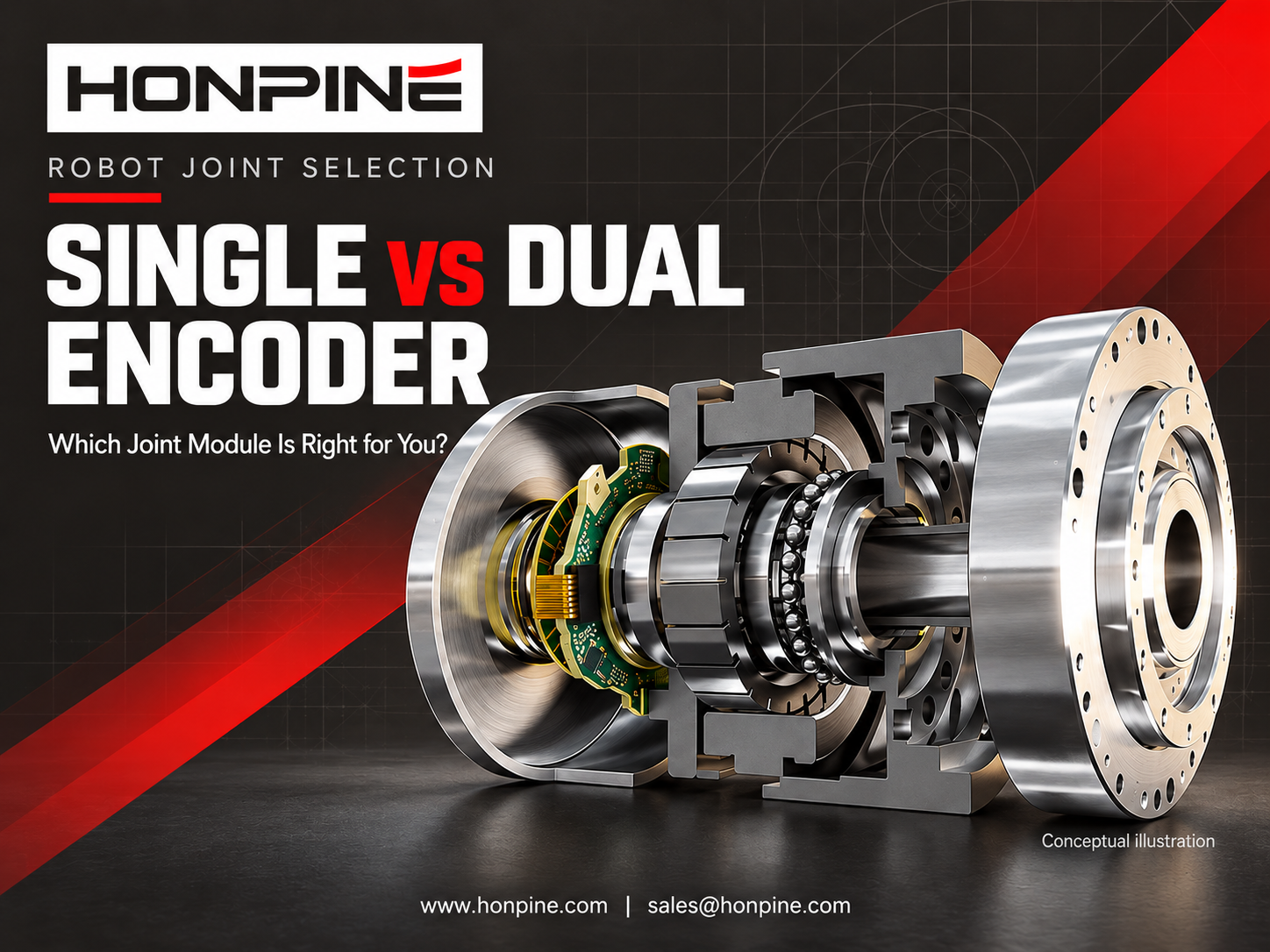
 What’s the Difference Between Single and Dual Encoder Robot Joint Modules?Does your robot need a dual encoder joint module, or is a single encoder enough? The answer depends on positioning requirements, transmission behavior, force control strategy and budget. This guide compares motor-side and output-side feedback, explains where dual encoders can improve control, and examines their costs and limitations. Learn when a single encoder can meet your needs and when additional output feedback is worth considering.
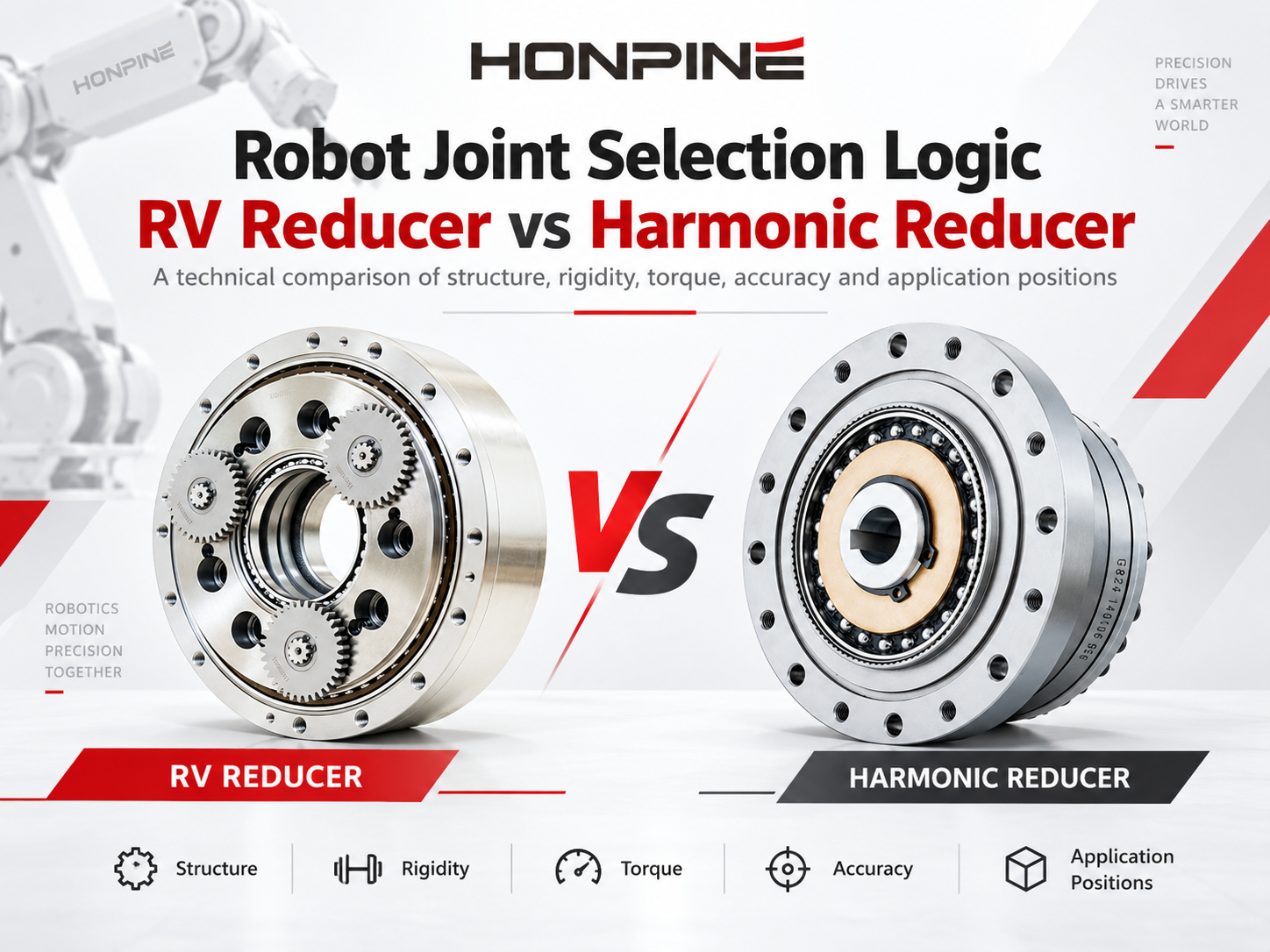
 RV vs Harmonic Reducer: How to Choose the Right Gearbox for Robot Joints?RV vs harmonic reducer: which gearbox is right for your robot joint? The answer depends on torque, rigidity, accuracy, installation space and operating conditions. This guide compares their working principles and five key performance factors, then explains how to evaluate joint loads, reducer life, temperature and lubrication. Whether you are designing a robot base, shoulder, elbow or wrist, use these considerations to match the reducer to the requirements of each joint.