

How to Select Electric Grippers for Robots and Industrial Automation Production Lines?
How should you select electric grippers for robot end effectors and industrial automation production lines? Different applications require different gripping force control accuracy, stroke, payload capacity, protection ratings, and allowable torque.
How can engineers choose the right electric gripper based on actual operating conditions?
Hello everyone, I'm Theodore Li, Technical Director at HONPINE. Today, I'll introduce several electric gripper solutions for different industrial applications and explain how to select the right model based on specific application requirements.
1. Electric Grippers for 3C Electronics and Precision Manufacturing
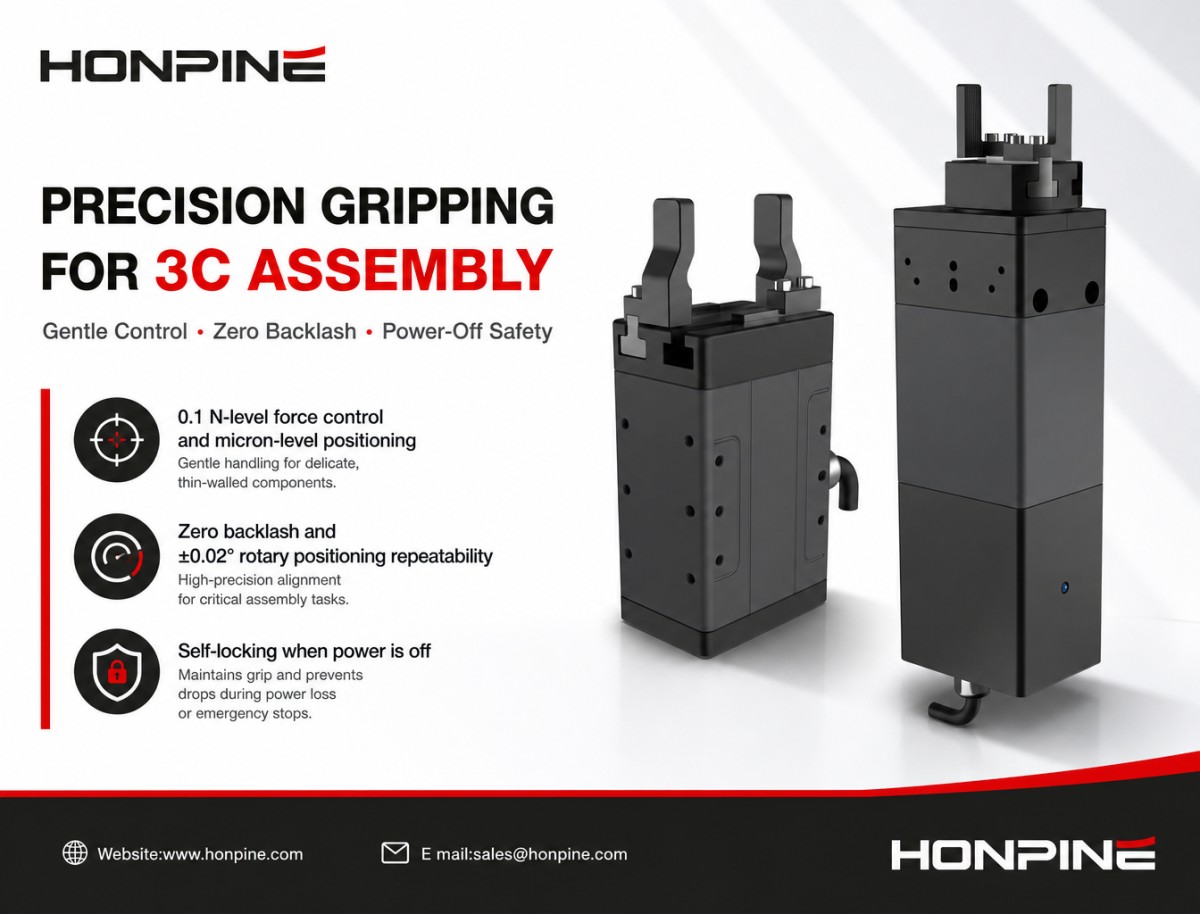
Application requirements: Small components, high positioning accuracy, and damage-sensitive workpieces.
Recommended Models: EPG-HP Series and ERG-HP Series
EPG-HP Series: High-precision parallel electric grippers.
ERG-HP Series: High-precision rotary electric grippers.
Why Choose These Electric Grippers?
1. 0.1 N-level force control and micron-level positioning
3C electronic components, such as connectors, miniature motors, and camera modules, are often small, thin-walled, and sensitive to clamping forces.
Excessive gripping force can deform components or leave visible marks on their surfaces. Force control with 0.1 N-level resolution allows the gripper to handle delicate workpieces more gently and accurately, rather than relying on rigid mechanical stops.
2. Zero backlash and ±0.02° rotary positioning repeatability
Some precision assembly processes require workpieces to be rotated and accurately aligned, such as bonding smartphone frames and displays.
Even a small angular deviation can result in alignment errors. The ±0.02° rotary positioning repeatability of the ERG-HP series helps meet these demanding positioning requirements.
3. Self-locking when power is off
Emergency stops and unexpected power interruptions can occur on 3C production lines. The power-off self-locking function helps maintain the gripping state and prevents precision components from falling.
Why Not Choose the Standard EPG Series?
Standard EPG electric grippers offer single-finger gripping forces of 2–6 N and repeatability of ±0.02 mm. Although these specifications are suitable for many general-purpose applications, the EPG-HP series offers more advanced force control and higher structural rigidity for handling extremely thin and delicate components.
2. Electric Grippers for Lithium Battery and New Energy Manufacturing
Application requirements: Heavy loads, long strokes, and simultaneous multi-position gripping.
Recommended Models: EPG-L Series and LEIS Series
EPG-L Series: Industrial-grade electric grippers with long strokes and high gripping forces.
LEIS Series: Integrated multi-gripper solutions for simultaneous workpiece handling.
Why Choose These Electric Grippers?
1. High gripping force and long stroke
The EPG-L180-800 and EPG-L220-800 models offer a maximum single-finger gripping force of 800 N and strokes of up to 180 mm and 220 mm, respectively.
Lithium battery modules and PACK assembly processes involve relatively heavy cells and modules with different dimensions. Conventional electric grippers with gripping forces of 50–100 N and strokes of 40–50 mm may not provide sufficient capacity for these applications.
An 800 N gripping force provides greater gripping capacity, particularly when handling workpieces with relatively low-friction surfaces, such as aluminum housings.
2. Maximum recommended payload of 12 kg
The EPG-L180-800 supports a maximum recommended payload of 12 kg, making it suitable for handling battery modules and other relatively heavy workpieces.
3. Power-off holding and mechanical self-locking
Battery manufacturing lines require reliable workpiece retention, even during unexpected power interruptions.
The EPG-L series features power-off holding and mechanical self-locking functions to help prevent workpieces from dropping when power is lost.
4. LEIS multi-gripper integration for higher production efficiency
The LEIS series integrates multiple EPG22-300 electric grippers, each offering 300 N of single-finger gripping force and a 4 kg payload capacity.
Multiple grippers can be arranged in parallel to handle 8 or 12 battery cells in a single operation, depending on the configuration.
This solution is particularly suitable for lithium battery production lines where multiple cells need to be picked up simultaneously. Compared with handling individual cells one at a time, an integrated multi-gripper solution can significantly improve handling efficiency and production cycle times.
Why Not Choose the EPG-T Series?
Although the EPG-T series also offers a maximum gripping force of 800 N, its primary design focus is an ultra-thin structure.
Lithium battery module handling often involves substantial overturning moments during lifting, rotation, and transfer. The EPG-L series is more suitable for these heavy-duty and eccentric-load conditions, with allowable static moments of up to 320 N·m for My/Mz, depending on the model.
3. Electric Grippers for Medical, Pharmaceutical, and Food Packaging Applications
Application requirements: Non-damaging handling, hygienic operation, and process data acquisition.
Recommended Models: WEPG Series and RG Series
WEPG Series: Electric grippers with integrated weighing functionality.
RG Series: Industrial electric grippers with IP65 protection.
Why Choose These Electric Grippers?
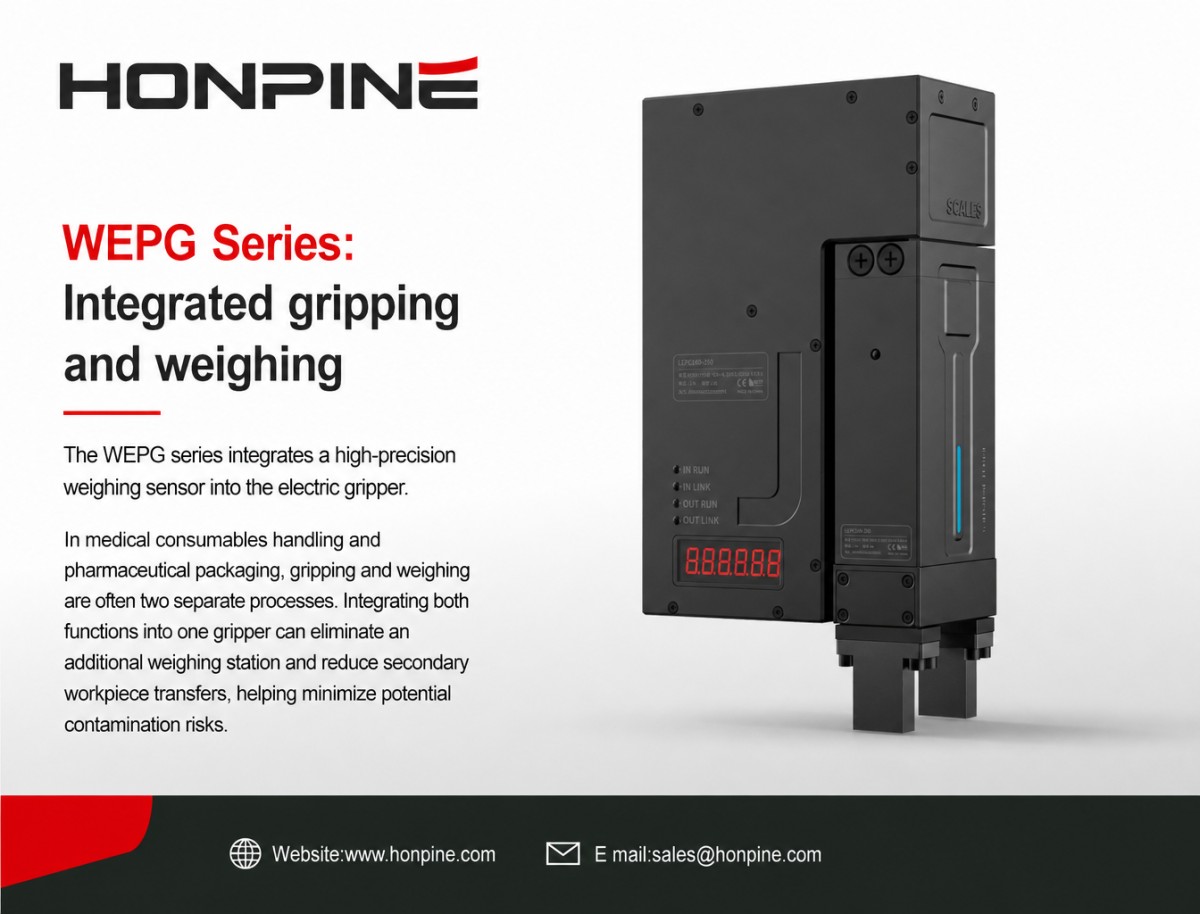
1. WEPG Series: Integrated gripping and weighing
The WEPG series integrates a high-precision weighing sensor into the electric gripper.
For example, the WEPG-T-15 offers a maximum weighing capacity of 15 kg, with a verification scale interval of ±0.2 g and a display resolution of 0.2 g.
In medical consumables handling and pharmaceutical packaging, gripping and weighing are often two separate processes. Integrating both functions into one gripper can eliminate an additional weighing station and reduce secondary workpiece transfers, helping minimize potential contamination risks.
2. RG Series: IP65 protection for demanding environments
Food and pharmaceutical production lines often require regular cleaning and disinfection.
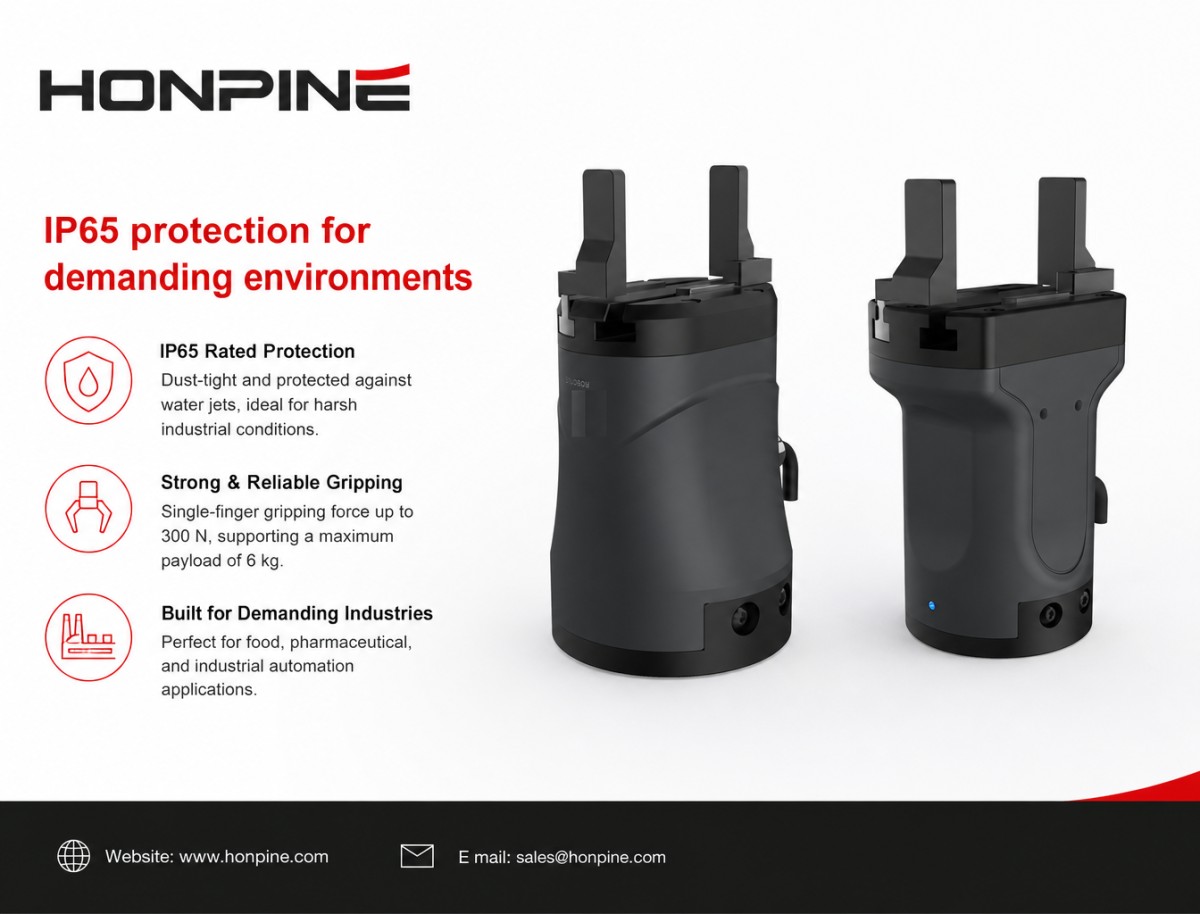
The RG75-300 features IP65 protection, providing dust-tight protection and protection against water jets. This makes it suitable for industrial environments with demanding dust and water protection requirements.
With a single-finger gripping force of 300 N and a maximum payload of 6 kg, the RG75-300 can handle medium-weight packaging boxes, containers, and trays.
3. Optional IP65 configurations for the EPG Series
Certain EPG models, such as the EPG40-050 and EPG50-060 with the P65 suffix, offer IP65 protection options.
These configurations can be considered for electronic manufacturing and medical production lines where additional protection against dust and water is required.
Why Not Use the WEPG Series for Heavy-Duty Applications?
The WEPG05 has a maximum weighing capacity of 5 kg and a gripping force of 300 N, while the WEPG-T-15 supports weighing capacities of up to 15 kg.
For applications exceeding their rated weighing capacities, or requiring higher gripping forces and structural rigidity, the EPG-L series is a more appropriate solution.
4. Electric Grippers and Linear Rotary Actuators for Semiconductor and Precision Component Placement
Application requirements: Soft landing, closed-loop force control, and combined linear and rotary motion.
Recommended Models: LRA Series and LA Series
LRA Series: Linear rotary actuators integrating linear and rotary motion.
LA Series: Voice coil linear actuators designed for high-speed and precise linear movement.
Why Choose These Actuators?
1. Soft landing and precise force control
Semiconductor chips, optical lenses, and other precision components are highly sensitive to mechanical contact. Excessive impact or contact force can cause microcracks, scratches, or other surface damage.
The LRA series offers force control deviation of ±3 G during repeated positioning, while the LA10-35V provides force control repeatability of 10%.
Combined with soft-landing algorithms, these actuators can control the contact force during the final stage of placement, helping reduce impact and protect delicate components.
2. Integrated linear and rotary motion with the LRA series
The LRA series integrates Z-axis linear movement and R-axis rotary movement into one unit.
Z-axis linear stroke: 15–60 mm
R-axis: Continuous rotation
Rotary positioning accuracy: ±0.01°
In semiconductor chip placement, the equipment may need to perform downward pressing and rotary alignment simultaneously.
A conventional solution using a separate linear actuator and rotary gripper requires additional installation space and may introduce cumulative positioning errors.
The integrated Z+R architecture of the LRA series simplifies the mechanical structure and helps reduce the positioning error chain.
3. High-frequency operation with the LA voice coil actuator
The LA series uses voice coil motor technology for fast linear response.
For example, the LA10-35V can achieve a no-load operating frequency of 30 Hz.
High-speed Pick-and-Place applications, such as LED chip sorting, often require multiple pick-and-place operations per second. The fast response of voice coil actuators makes them suitable for these high-frequency motion requirements.
Why Not Choose the ERG Series?
Although both the ERG and LRA series provide rotary motion, they serve different application requirements.
The ERG series combines gripping and rotary positioning, making it suitable for applications that require gripping a workpiece and then rotating or flipping it.
The LRA series combines linear pushing and rotary motion, making it more suitable for direct-contact placement, pressing, and precision alignment.
For semiconductor die placement and precision component mounting, the primary requirement is often controlled pressing and rotation rather than gripping and flipping. Therefore, the LRA series may be a more suitable solution.
5. Electric Grippers for General Industrial Handling and Palletizing
Application requirements: Standard robot flange interfaces, medium payloads, and dust protection.
Recommended Models: RG52-050 and RG75-300
Why Choose These Electric Grippers?
1. Standard robot flange interfaces
The RG series features standard robot flange mounting interfaces, allowing direct integration with compatible collaborative and industrial robot end effectors.
This helps reduce the need for additional adapter plates and simplifies installation and deployment.
2. RG75-300 for medium-duty industrial handling
Key specifications include:
Single-finger gripping force: 300 N
Maximum payload: 6 kg
Protection rating: IP65
The RG75-300 is suitable for handling cardboard boxes, plastic containers, metal components, and other common industrial workpieces. Its IP65 protection also makes it suitable for dusty factory environments.
3. RG52-050 for lightweight collaborative robots
Key specifications include:
Single-finger gripping force: 50 N
Maximum payload: 1 kg
Protection rating: IP54
Gripper weight: 0.75 kg
Its lightweight and compact design makes the RG52-050 suitable for lightweight collaborative robots, including applications with payload requirements comparable to the UR3 class.
The low gripper weight also helps preserve the robot's available payload capacity.
4. Power-off self-locking and workpiece drop detection
During palletizing, workpieces may remain suspended for extended periods.
Power-off protection helps prevent workpieces from falling during unexpected power interruptions, while drop detection provides an additional layer of operational safety.
Why Not Choose the Standard EPG Series?
Many standard EPG electric grippers feature a square housing and multi-side mounting structure, making them suitable for fixed-position automation equipment.
The RG series adopts a cylindrical design with standard robot flange mounting, making it more suitable for robot-mounted applications where the gripper moves together with the robot arm.
Its structural design also facilitates integration with robot end-effectors and helps simplify installation.
How to Select the Right Electric Gripper for Your Application?
Different industrial applications require different gripping and motion control capabilities. Before selecting an electric gripper, engineers should evaluate the following parameters:
Gripping force and force control accuracy: Determine the required gripping force and whether delicate workpieces require high-precision force control.
Stroke: Check the maximum opening and closing distance required for the workpiece dimensions.
Payload capacity: Consider the workpiece weight, gripping configuration, and safety margin.
Allowable static moments: Evaluate the Mx, My, and Mz limits, especially when handling eccentric loads or performing rotary movements.
Positioning accuracy and repeatability: Match the gripper's positioning performance to the assembly, alignment, and inspection requirements.
Protection rating: Select the appropriate IP rating according to dust, water, cleaning, and operating environment requirements.
Power-off protection: Consider mechanical self-locking and workpiece retention requirements during emergency stops or power interruptions.
Robot compatibility: Check the mounting interface, overall dimensions, weight, communication interface, and controller compatibility.
If you are looking for electric grippers or linear rotary actuators for robot end effectors and industrial automation production lines, contact HONPINE for the latest product catalogs and technical specifications. Our engineering team can help you select a suitable solution based on your workpiece characteristics, gripping requirements, and automation system configuration.

About Author
Theodore Li serves as the Technical Director at HONPINE, overseeing the R&D strategy for replication products, guiding team selection, and managing both pre-sales and after-sales operations.

Read More
Learn more about the story of HONPINE and industry trends related to precision transmission.
 What is robot joint actuator?How to Choose the Best Robot Rotary Joint Actuator?In core robot joint transmission solutions, planetary and harmonic rotary actuators each have their own strengths. Choosing the right type based on application requirements is essential to achieve the optimal balance between performance and cost.
 DD Motors VS Harmonic Rotary ActuatorsThis article provides an in-depth comparison between Direct Drive (DD) motors and harmonic rotary actuators, covering their transmission principles, advantages and disadvantages, and typical application fields.
 OMG Ultra Compact Harmonic Drive Joint Module with Built-in Torque SensorHONPINE TCHL series harmonic drive joint module is a game-changing product that achieves disruptive improvements in multiple aspects such as lightweight design, integration level, and connection convenience. This article will analyze its revolutionary enhancements with you.
 The Role of Harmonic Drive Gears in Achieving 5–10 μm Accuracy in Dental Milling MachinesA dental milling machine is a CNC machining system used to directly process digital dental models into restorations such as crowns, bridges, veneers, inlays, and implant abutments. Dental milling machines require far higher operational accuracy and motion stability than ordinary equipment. This article explains how harmonic drive gear help dental milling machines achieve stable, continuous, and controllable operation.
 Why Are Harmonic Rotary Actuators Perfect for Medical Equipment?Harmonic rotary actuators (typically integrated systems consisting of a harmonic drive reducer, frameless torque motor, encoder, and optional brake) are regarded as key components in medical equipment. The core reason is that they simultaneously meet the most stringent medical requirements for precision, compact size, safety, and controllability. The following explanation is structured from three perspectives: technical characteristics, application scenarios, and medical value.
 High-Precision RV Reducers Perfectly Matched for Walking RobotsThe walking axis of a robot is a core component for power transmission and support. RV reducers provide extremely high rigidity, precision, and torque while maintaining a compact size and exceptional reliability, making them an ideal match for the demanding requirements of walking robot joints in terms of load capacity, impact resistance, and precision.
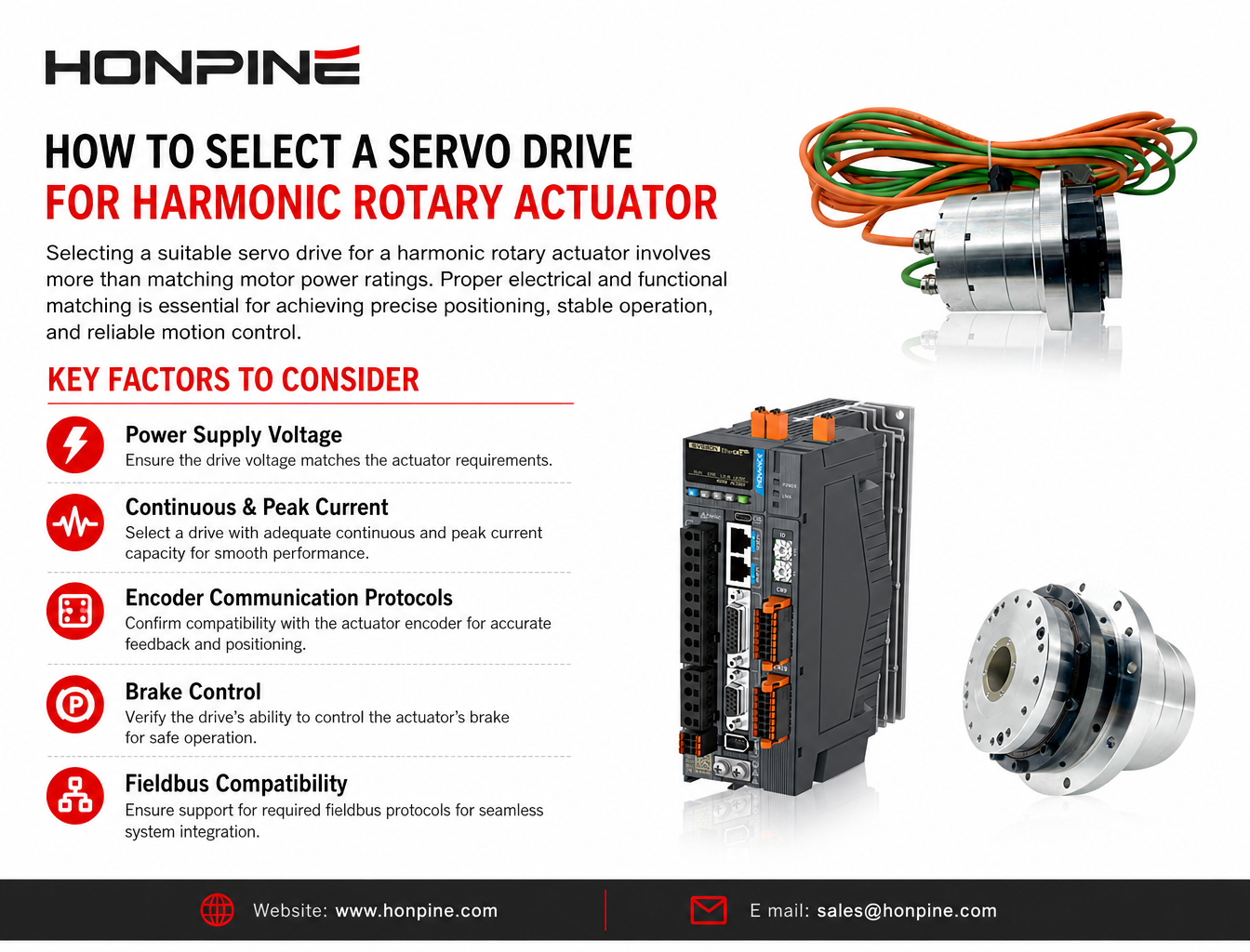
 How to Select a Servo Drive for HONPINE Harmonic Rotary Actuators with External Drives?Selecting a suitable servo drive for a harmonic rotary actuator involves more than matching motor power ratings. Power supply voltage, continuous and peak current, encoder communication protocols, brake control, and fieldbus compatibility all affect system performance. For HONPINE harmonic rotary actuators with external servo drives, proper electrical and functional matching is essential for achieving precise positioning, stable operation, and reliable motion control. In this guide, Theodore Li, Technical Director at HONPINE, explains the key factors engineers should consider when selecting and integrating an external servo drive.
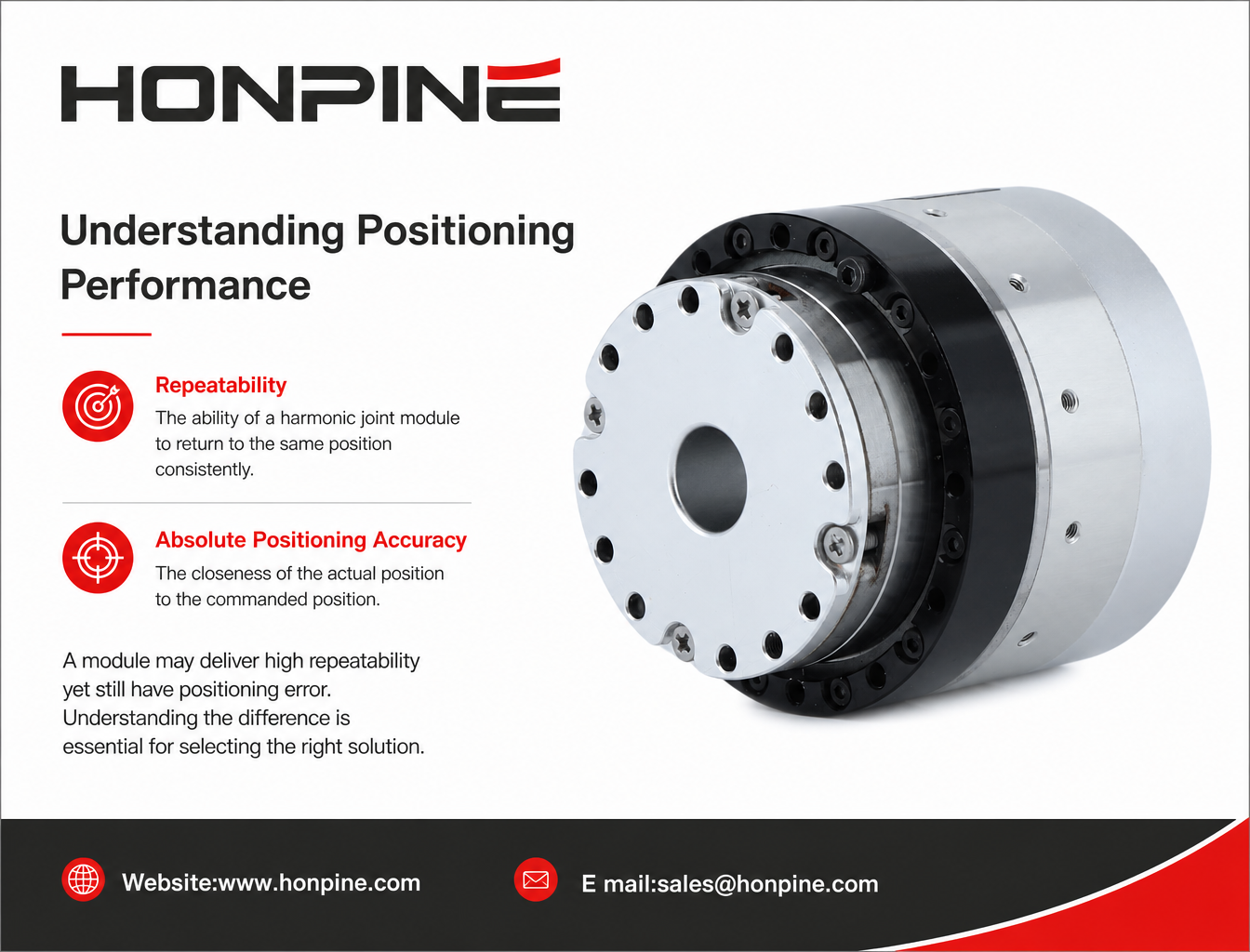
 Repeatability vs. Absolute Positioning Accuracy in Harmonic Joint Modules: Differences and Industrial ApplicationsWhen evaluating the positioning performance of a harmonic joint module, repeatability and absolute positioning accuracy are two important but often misunderstood specifications. A module may repeatedly reach the same position with high consistency while still having a noticeable deviation from the commanded position. Understanding this distinction is essential when selecting motion components for robotics, semiconductor equipment, precision machining, and medical devices. This article explains how the two specifications differ, what factors affect them, and which positioning performance should take priority in different industrial applications.
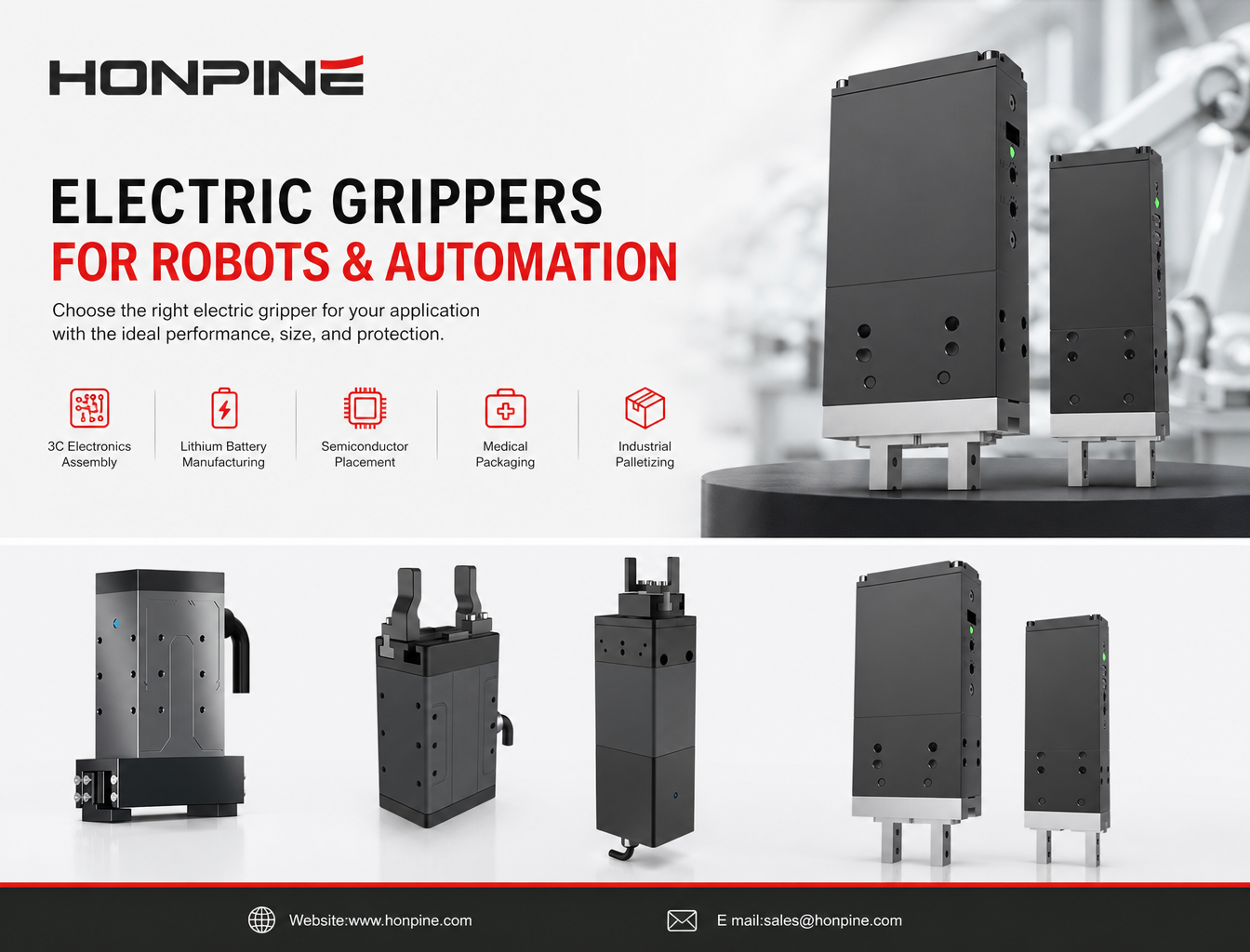
 How to Select Electric Grippers for Robots and Industrial Automation Production Lines?Electric grippers are essential robot end-effectors in modern industrial automation, enabling precise workpiece handling, assembly, positioning, and packaging. However, different applications require different gripping forces, stroke lengths, payload capacities, force control accuracy, and protection ratings. How should engineers select the right electric gripper for delicate 3C components, heavy lithium battery modules, semiconductor placement, medical packaging, or general industrial handling? In this article, Theodore Li, Technical Director at HONPINE, explains how to choose suitable electric grippers and linear rotary actuators based on actual application requirements.
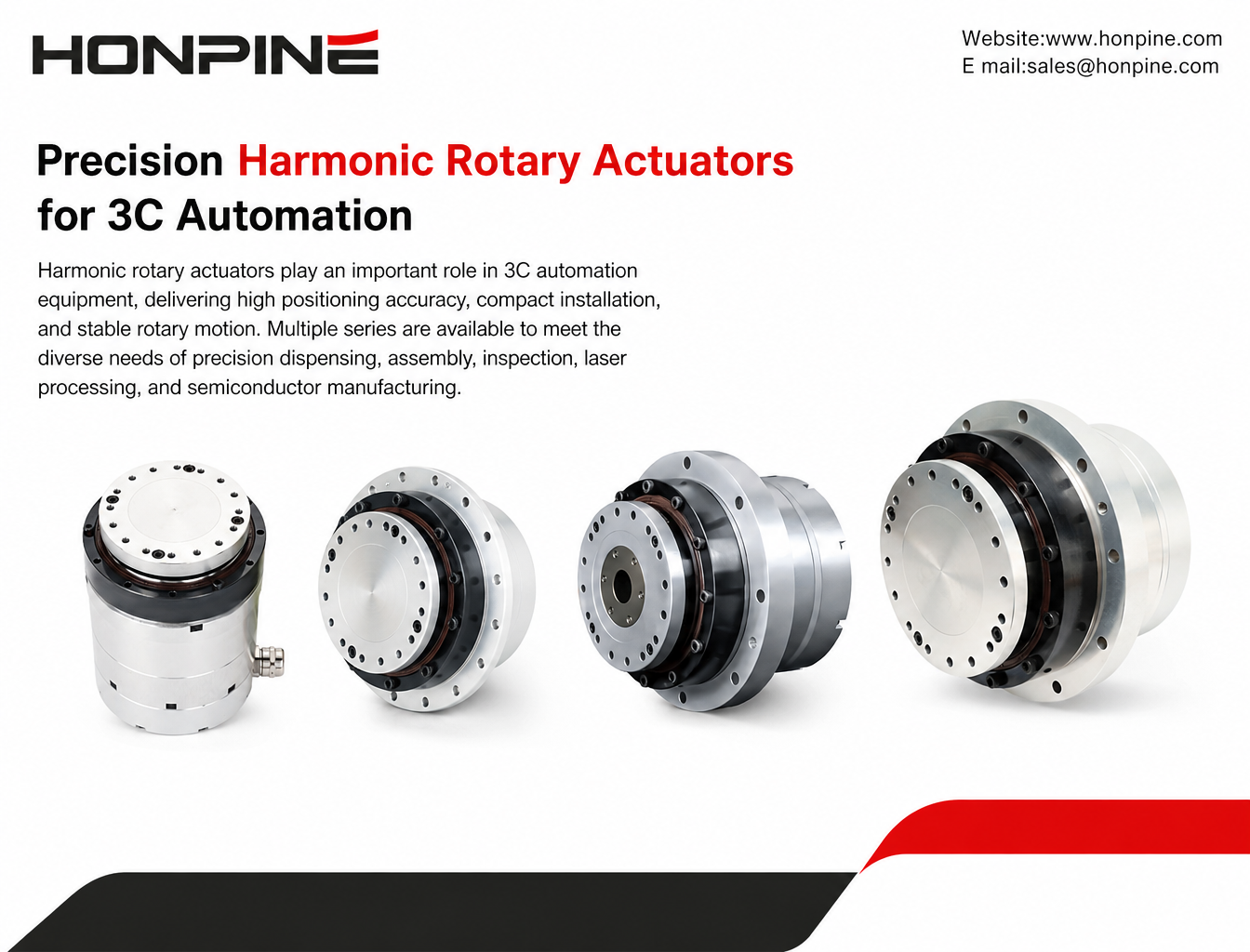
 How to Select Harmonic Rotary Actuators for Precision Assembly, Dispensing, and Inspection in 3C Automation Equipment?Harmonic rotary actuators play an important role in modern 3C automation equipment, particularly in applications requiring high positioning accuracy, compact installation, and stable rotary motion. From precision dispensing machines and smartphone assembly lines to machine vision inspection, laser processing, and semiconductor manufacturing equipment, different applications have different requirements for torque, rigidity, rotational speed, and shaft configuration. In this article, Theodore Li, Technical Director at HONPINE, introduces the HAT, HAS, HATF, and HAM series harmonic rotary actuators and explains how to select suitable models for different 3C automation applications.
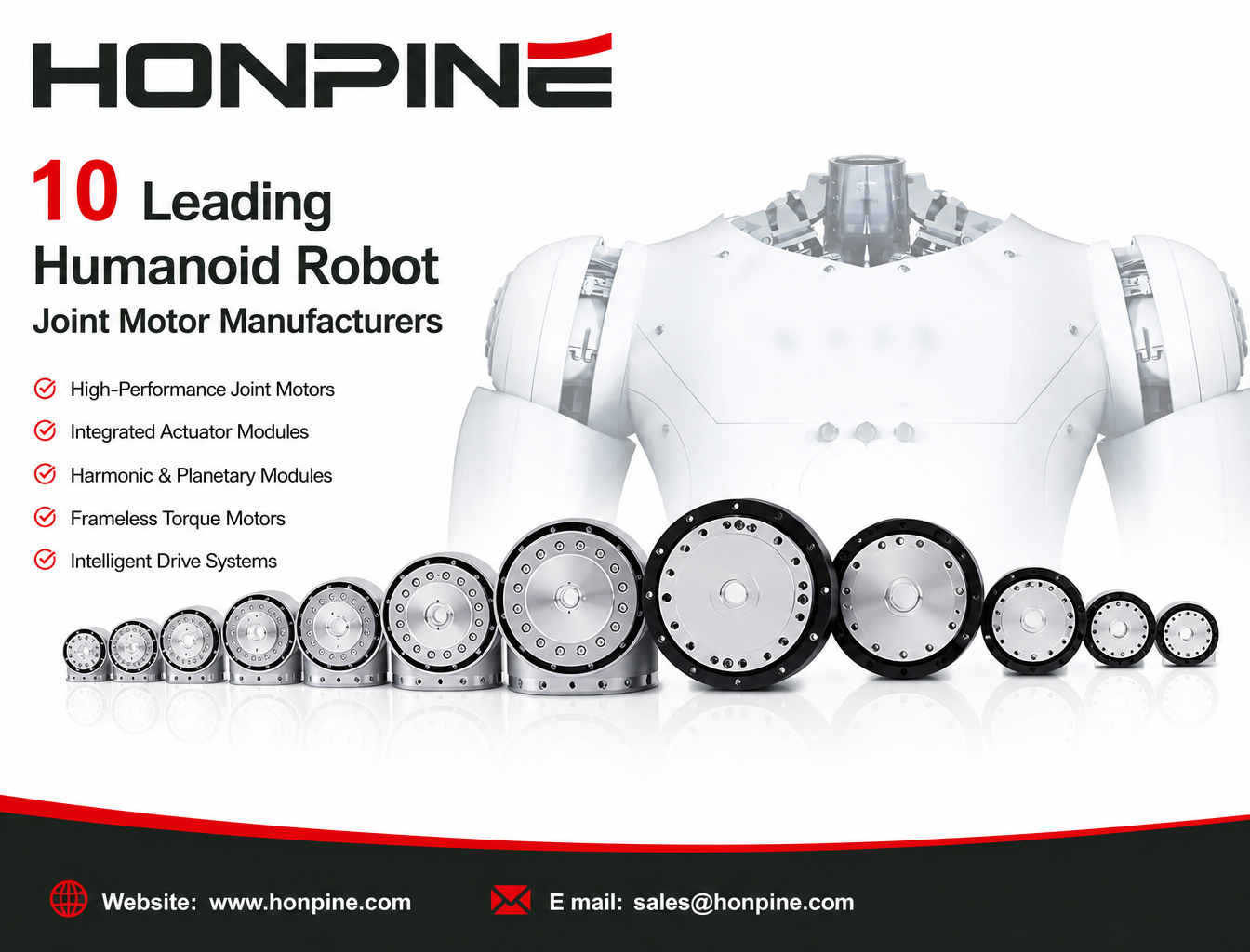
 Top 10 Humanoid Robot Joint Motor ManufacturersThe rapid development of humanoid robotics is driving demand for high-performance joint motors and integrated actuator modules. From harmonic and planetary joint modules to frameless torque motors and intelligent drive systems, manufacturers are developing different solutions to meet the requirements of humanoid robot joints. But which supplier should you choose? In this article, we introduce 10 humanoid robot joint motor manufacturers from China and Japan, comparing their product portfolios, technical features, torque capabilities, and application areas to help robotics developers and manufacturers make more informed sourcing decisions.
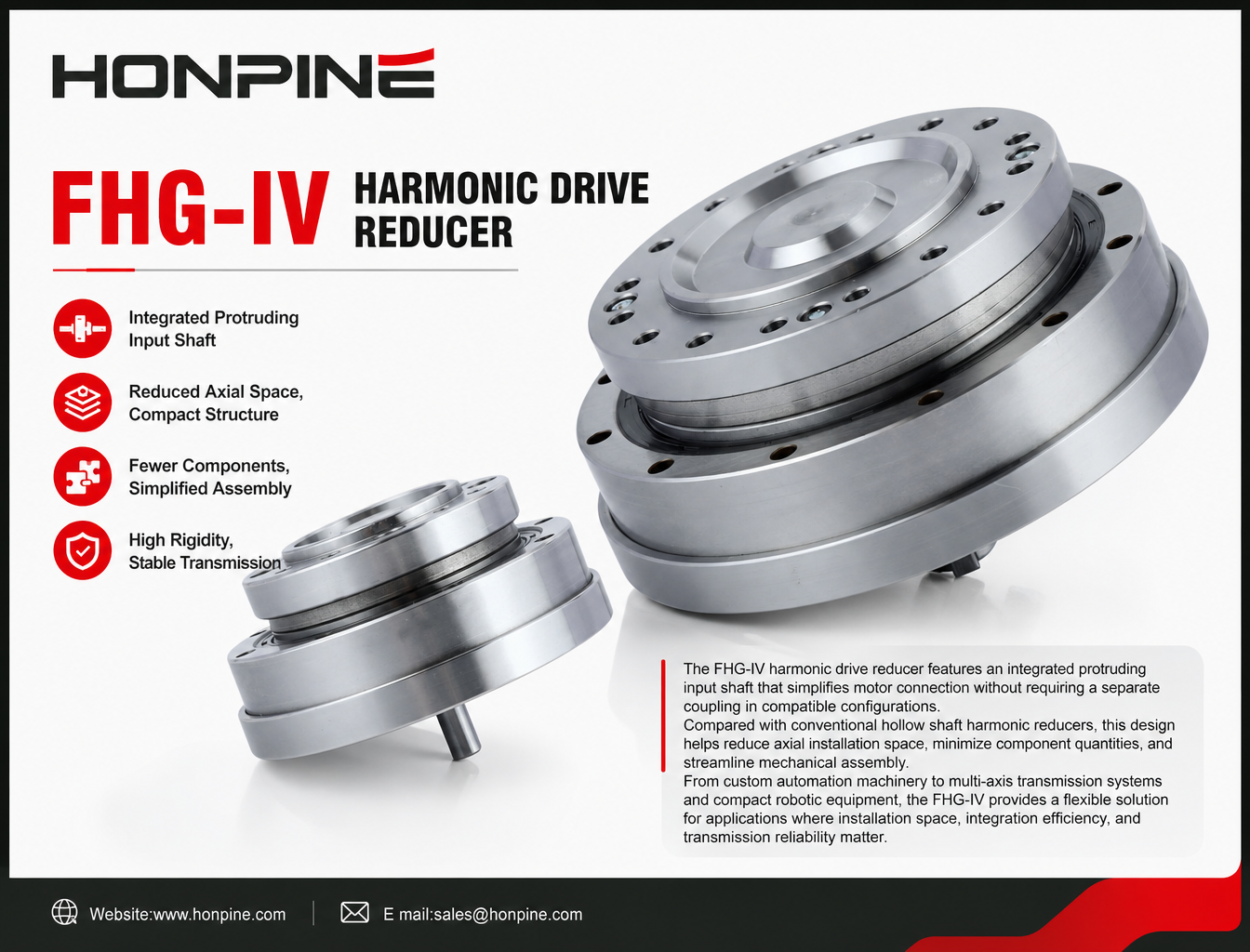
 FHG-IV Harmonic Drive Reducer: Eliminate the Coupling for a More Compact DesignThe FHG-IV harmonic drive reducer features an integrated protruding input shaft that simplifies motor connection without requiring a separate coupling in compatible configurations. Compared with conventional hollow shaft harmonic reducers, this design helps reduce axial installation space, minimize component quantities, and streamline mechanical assembly. From custom automation machinery to multi-axis transmission systems and compact robotic equipment, the FHG-IV provides a flexible solution for applications where installation space, integration efficiency, and transmission reliability matter.
Double Click
We provide harmonic drive reducer,planetary reducer,robot joint motor,robot rotary actuators,RV gear reducer,robot end effector,dexterous robot hand
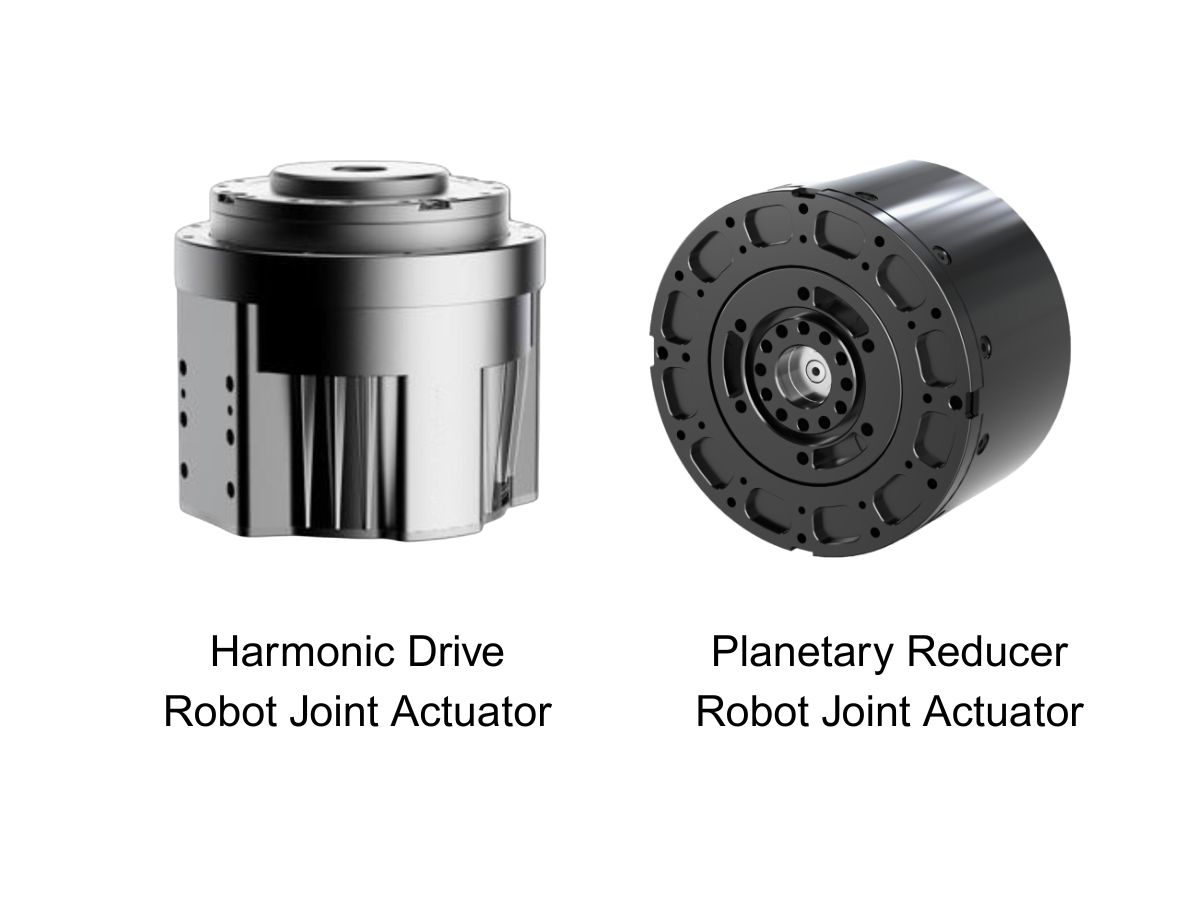
 What is robot joint actuator?How to Choose the Best Robot Rotary Joint Actuator?In core robot joint transmission solutions, planetary and harmonic rotary actuators each have their own strengths. Choosing the right type based on application requirements is essential to achieve the optimal balance between performance and cost.
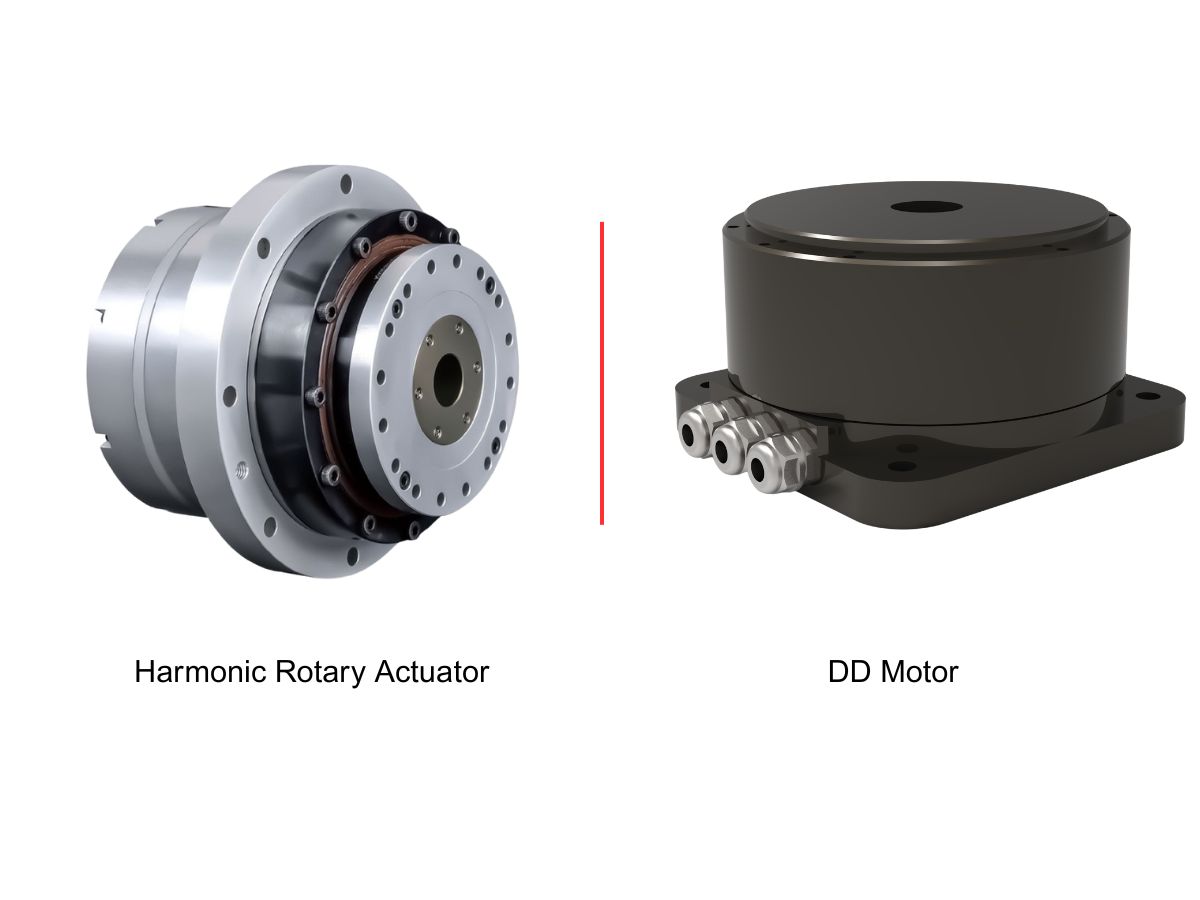
 DD Motors VS Harmonic Rotary ActuatorsThis article provides an in-depth comparison between Direct Drive (DD) motors and harmonic rotary actuators, covering their transmission principles, advantages and disadvantages, and typical application fields.
 OMG Ultra Compact Harmonic Drive Joint Module with Built-in Torque SensorHONPINE TCHL series harmonic drive joint module is a game-changing product that achieves disruptive improvements in multiple aspects such as lightweight design, integration level, and connection convenience. This article will analyze its revolutionary enhancements with you.
 How to Select a Servo Drive for HONPINE Harmonic Rotary Actuators with External Drives?Selecting a suitable servo drive for a harmonic rotary actuator involves more than matching motor power ratings. Power supply voltage, continuous and peak current, encoder communication protocols, brake control, and fieldbus compatibility all affect system performance. For HONPINE harmonic rotary actuators with external servo drives, proper electrical and functional matching is essential for achieving precise positioning, stable operation, and reliable motion control. In this guide, Theodore Li, Technical Director at HONPINE, explains the key factors engineers should consider when selecting and integrating an external servo drive.
 Repeatability vs. Absolute Positioning Accuracy in Harmonic Joint Modules: Differences and Industrial ApplicationsWhen evaluating the positioning performance of a harmonic joint module, repeatability and absolute positioning accuracy are two important but often misunderstood specifications. A module may repeatedly reach the same position with high consistency while still having a noticeable deviation from the commanded position. Understanding this distinction is essential when selecting motion components for robotics, semiconductor equipment, precision machining, and medical devices. This article explains how the two specifications differ, what factors affect them, and which positioning performance should take priority in different industrial applications.
 How to Select Electric Grippers for Robots and Industrial Automation Production Lines?Electric grippers are essential robot end-effectors in modern industrial automation, enabling precise workpiece handling, assembly, positioning, and packaging. However, different applications require different gripping forces, stroke lengths, payload capacities, force control accuracy, and protection ratings. How should engineers select the right electric gripper for delicate 3C components, heavy lithium battery modules, semiconductor placement, medical packaging, or general industrial handling? In this article, Theodore Li, Technical Director at HONPINE, explains how to choose suitable electric grippers and linear rotary actuators based on actual application requirements.
 How to Select Harmonic Rotary Actuators for Precision Assembly, Dispensing, and Inspection in 3C Automation Equipment?Harmonic rotary actuators play an important role in modern 3C automation equipment, particularly in applications requiring high positioning accuracy, compact installation, and stable rotary motion. From precision dispensing machines and smartphone assembly lines to machine vision inspection, laser processing, and semiconductor manufacturing equipment, different applications have different requirements for torque, rigidity, rotational speed, and shaft configuration. In this article, Theodore Li, Technical Director at HONPINE, introduces the HAT, HAS, HATF, and HAM series harmonic rotary actuators and explains how to select suitable models for different 3C automation applications.
 Top 10 Humanoid Robot Joint Motor ManufacturersThe rapid development of humanoid robotics is driving demand for high-performance joint motors and integrated actuator modules. From harmonic and planetary joint modules to frameless torque motors and intelligent drive systems, manufacturers are developing different solutions to meet the requirements of humanoid robot joints. But which supplier should you choose? In this article, we introduce 10 humanoid robot joint motor manufacturers from China and Japan, comparing their product portfolios, technical features, torque capabilities, and application areas to help robotics developers and manufacturers make more informed sourcing decisions.
 FHG-IV Harmonic Drive Reducer: Eliminate the Coupling for a More Compact DesignThe FHG-IV harmonic drive reducer features an integrated protruding input shaft that simplifies motor connection without requiring a separate coupling in compatible configurations. Compared with conventional hollow shaft harmonic reducers, this design helps reduce axial installation space, minimize component quantities, and streamline mechanical assembly. From custom automation machinery to multi-axis transmission systems and compact robotic equipment, the FHG-IV provides a flexible solution for applications where installation space, integration efficiency, and transmission reliability matter.
 Why Is EtherCAT Becoming the Mainstream Communication Bus for Robotic Joint Modules?Why is EtherCAT becoming the mainstream communication solution for intelligent robotic joint modules? This article explores seven key advantages, including microsecond-level real-time communication, Distributed Clock synchronization, CiA 402 standardization, high-bandwidth PDO transmission, multi-axis networking, fault diagnosis, and a mature development ecosystem. Learn how EtherCAT supports the advanced control requirements of humanoid robots, collaborative robots, and high-precision automation equipment.
 How to Select Planetary Joint Motors for Quadruped Robots?Selecting the right planetary joint motors is essential for quadruped robot performance, load capacity, and mobility. This guide explores motor selection for traditional legged robots, wheel-legged robots, lightweight agile robots, and heavy-duty or explosion-proof quadruped robots. Learn how to match HONPINE JRM planetary joint modules to different joint positions based on rated torque, peak torque, rotational speed, voltage, and weight requirements.
 Why Are End Effectors in 3C Automation Shifting from Pneumatic Grippers to Electric Grippers?As 3C manufacturing evolves toward thinner components, higher assembly precision, and more flexible production lines, traditional pneumatic grippers are facing increasing limitations. Fluctuating gripping force, complex pneumatic piping, high energy consumption, and limited communication capabilities make them less suitable for modern precision assembly. Electric grippers offer programmable force control, flexible motion, and industrial communication capabilities, making them an increasingly attractive alternative. In this article, we explore five major limitations of pneumatic grippers and explain how HONPINE electric end effectors support precision assembly, flexible automation, and digital manufacturing in the 3C industry.