








Robot Dexterous Hand VS Robot Electric Gripper
A gripper and a five-finger dexterous hand are not a matter of “higher” or “lower” level. They represent different assumptions about task distribution and data interfaces. The gripper approach is more suitable for externalizing dexterity through the environment, multi-arm cooperation, tools, and task design; the five-finger hand approach attempts to internalize dexterity into fingers, palm surfaces, multi-point contact, and tactile feedback loops.
Is a Robot Dexterous Hand simply a more advanced Robot Electric Gripper?
A gripper’s task is to “hold” something.
A dexterous hand’s task is about how to grasp, how to manipulate after grasping, how to play with objects in the hand, and how to use tools. These are fundamentally different problems.
What is the essential difference between a Robot Dexterous Hand and a Robot Electric Gripper?
Simply put:
A gripper is a two-state system: open–close.
A dexterous hand is a continuously adjustable system.
A more rigorous academic definition is:
A dexterous hand can perform in-hand manipulation without relying on external support. It uses coordinated movements of multiple fingers and continuously adjusts contact forces to manipulate objects — such as rotating a pen in the palm, repositioning an object, or transferring an object between fingers.
Current research can be divided into several layers:
Hardware (actuators, transmission systems, mechanical structures)
Perception (tactile sensing, vision, proprioception)
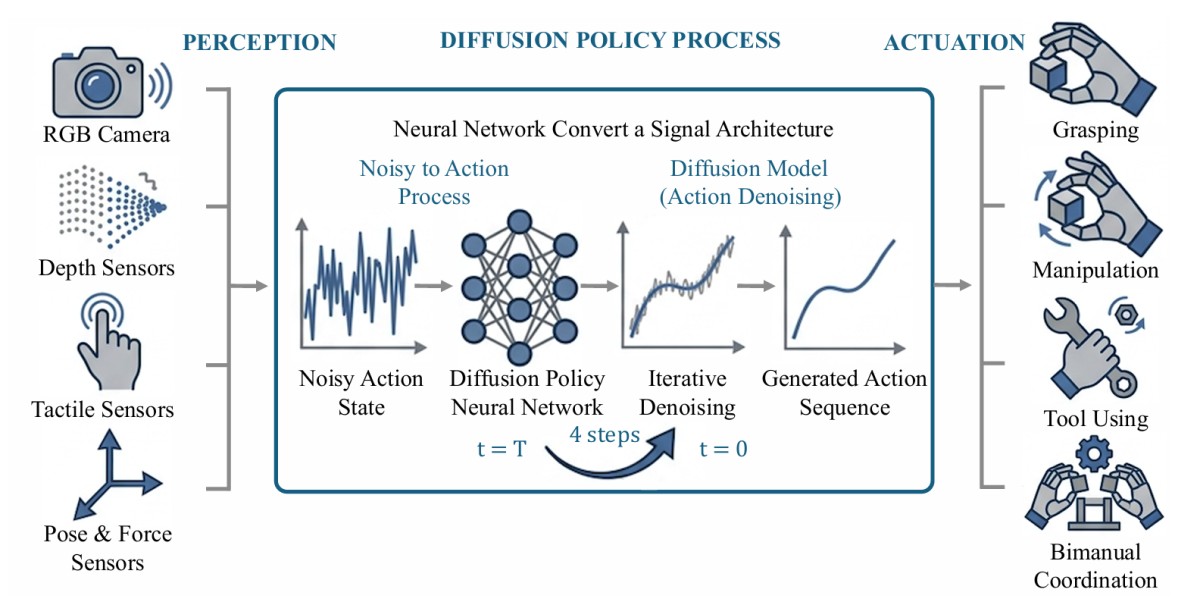
Control (reinforcement learning, imitation learning, diffusion policies, VLA foundation models)
Data and evaluation
However, looking at any single layer alone is not enough.
High degrees of freedom + poor sensing = disaster.
Large models + no low-level force control = theoretical talk only.
A policy that performs well in simulation can still fail on a real robot once contact dynamics, friction, and noise appear. The real world remains extremely challenging.
The tasks a dexterous hand needs to perform are very different from those of a gripper
In-hand manipulation
For example:
Rotating an object inside the palm
Reorienting an object
Passing an object from one finger to another
Why is it difficult?
Because it requires:
Continuous contact
Frequent switching between contact points
Occlusion from the hand itself
Uncertain friction forces
Once the manipulation fails, recovery is often difficult.
Current mainstream approaches include:
Reinforcement Learning (RL)
Suitable for learning through interaction and reducing dependence on accurate physical models.
Diffusion Policies
Good at generating smooth, diverse action trajectories.
Imitation Learning
Allows robots to learn from human demonstrations and is suitable for high-dimensional coordinated movements.
VLA (Vision-Language-Action) Models
More suitable for high-level understanding — for example, understanding “rotate this object,” rather than directly controlling every tiny force adjustment.
Grasping is not simply “holding something”
A robot also needs to:
Select contact points based on object geometry
Prevent objects from slipping during transportation
Apply appropriate force when placing objects
The key bottleneck is generalization:
Can the robot grasp an object it has never seen before?
Reinforcement learning, diffusion policies, imitation learning, and representation learning are all exploring this direction.
VLA models help robots understand commands such as:
“Pick up that red cup.”
Tool use: understanding “what it is for”
A hammer is not meant to be hugged.
A pair of scissors is not meant to be poked.
Tool operation requires understanding affordances — the functional purpose of an object.
Reinforcement learning helps robots learn complex contact dynamics.
Imitation learning extracts important human manipulation skills.
VLA models help robots understand that “a hammer is for hitting, not just for holding.”
Human–robot interaction: the object moves, changes, and has preferences
Interacting with humans is much harder than interacting with objects.
Humans may:
Suddenly reach out
Change intentions
React to the robot’s actions
The system must not only complete tasks, but also remain:
Safe
Compliant
Comfortable for humans
Human-in-the-loop reinforcement learning is one approach, allowing human preferences and corrections to directly optimize robot policies.
Bimanual manipulation: the coordination of two high-dimensional systems
Two hands must coordinate:
Which hand takes the main role
Which hand assists
How forces are distributed
How timing is synchronized
The difficulty increases dramatically.
Reinforcement learning, diffusion policies, imitation learning, VLA models, and representation learning all have their roles — but none of them can solve the entire problem alone.
Is a dexterous hand always better for every task?
Do not assume that because humans have five fingers, robots should automatically have five fingers as well.
The multi-arm + gripper approach is not a lower-level solution. It is a powerful engineering strategy.
Its advantages are very clear:
Simple structure
Lower cost
Easier maintenance
Lower control dimensionality
It is highly suitable for tasks that can be completed through:
Environmental constraints
External support
Multi-arm cooperation
Task redesign
In other words, it externalizes dexterity.
For example, in structured tasks such as:
Pick-and-place
Packaging
Sorting
Folding
Organization
the task itself can often be redesigned to be gripper-friendly.
Objects can be positioned using:
Conveyor belts
Fixtures
Tooling systems
Vision-based localization
Multi-arm coordination
Operations can be decomposed into relatively stable stages:
Grasp
Move
Place
In these scenarios, forcing a high-DOF five-finger hand may not provide enough marginal benefit. Instead, it may increase:
Hardware complexity
Control difficulty
Maintenance cost
The real question is not:
“Should the robot end-effector be a five-finger hand or a gripper?”
The more important question is:
Which tasks truly justify a complex robotic body, and which tasks can be simplified through task engineering and environmental constraints?
If a task can be completed reliably by a gripper, then using a gripper is the right engineering choice.
However, if a task fundamentally depends on:
In-hand manipulation
Continuous contact
Multi-point stability
Tactile feedback
then a five-finger dexterous hand has a much higher potential ceiling.
Read More
Learn more about the story of HONPINE and industry trends related to precision transmission.
 What is robot joint actuator?How to Choose the Best Robot Rotary Joint Actuator?In core robot joint transmission solutions, planetary and harmonic rotary actuators each have their own strengths. Choosing the right type based on application requirements is essential to achieve the optimal balance between performance and cost.
 DD Motors VS Harmonic Rotary ActuatorsThis article provides an in-depth comparison between Direct Drive (DD) motors and harmonic rotary actuators, covering their transmission principles, advantages and disadvantages, and typical application fields.
 OMG Ultra Compact Harmonic Drive Joint Module with Built-in Torque SensorHONPINE TCHL series harmonic drive joint module is a game-changing product that achieves disruptive improvements in multiple aspects such as lightweight design, integration level, and connection convenience. This article will analyze its revolutionary enhancements with you.
 The Role of Harmonic Drive Gears in Achieving 5–10 μm Accuracy in Dental Milling MachinesA dental milling machine is a CNC machining system used to directly process digital dental models into restorations such as crowns, bridges, veneers, inlays, and implant abutments. Dental milling machines require far higher operational accuracy and motion stability than ordinary equipment. This article explains how harmonic drive gear help dental milling machines achieve stable, continuous, and controllable operation.
 Why Are Harmonic Rotary Actuators Perfect for Medical Equipment?Harmonic rotary actuators (typically integrated systems consisting of a harmonic drive reducer, frameless torque motor, encoder, and optional brake) are regarded as key components in medical equipment. The core reason is that they simultaneously meet the most stringent medical requirements for precision, compact size, safety, and controllability. The following explanation is structured from three perspectives: technical characteristics, application scenarios, and medical value.
 High-Precision RV Reducers Perfectly Matched for Walking RobotsThe walking axis of a robot is a core component for power transmission and support. RV reducers provide extremely high rigidity, precision, and torque while maintaining a compact size and exceptional reliability, making them an ideal match for the demanding requirements of walking robot joints in terms of load capacity, impact resistance, and precision.
 Why Are Harmonic Reducers Suitable for High-Precision Automation Equipment?Precision automation equipment depends on consistent rotary motion, reliable positioning and compact transmission design. From dispensing head orientation and component angular alignment to automated inspection indexing, harmonic reducers offer a practical solution for applications requiring low backlash and high reduction ratios in limited installation space. This article explains how harmonic reducers support repeatable motion, compares key design configurations, and outlines how to select a suitable reduction ratio and reducer structure based on load, speed, accuracy and machine cycle-time requirements.
 Why Are Servo Motors and Gear Reducers an Ideal Match?Servo motors provide fast, precise motion control, while gear reducers adapt their speed and torque to the load. This guide explains how servo motors and gear reducers work together through torque multiplication, reflected inertia reduction and finer theoretical position resolution. Learn how inertia matching, backlash, torsional stiffness and reduction ratio influence performance in robotics and industrial automation.
 How to Select and Use Robotic Joint Modules?How do you take robotic joint modules from selection to controlled motion? Using the HONPINE HPJM harmonic joint module as an example, Technical Director Theodore Li explains the key steps in mechanical installation, electrical wiring, CAN and EtherCAT configuration, and control commissioning. Learn what to confirm before integration and how to approach setup so each joint can respond correctly to your controller.
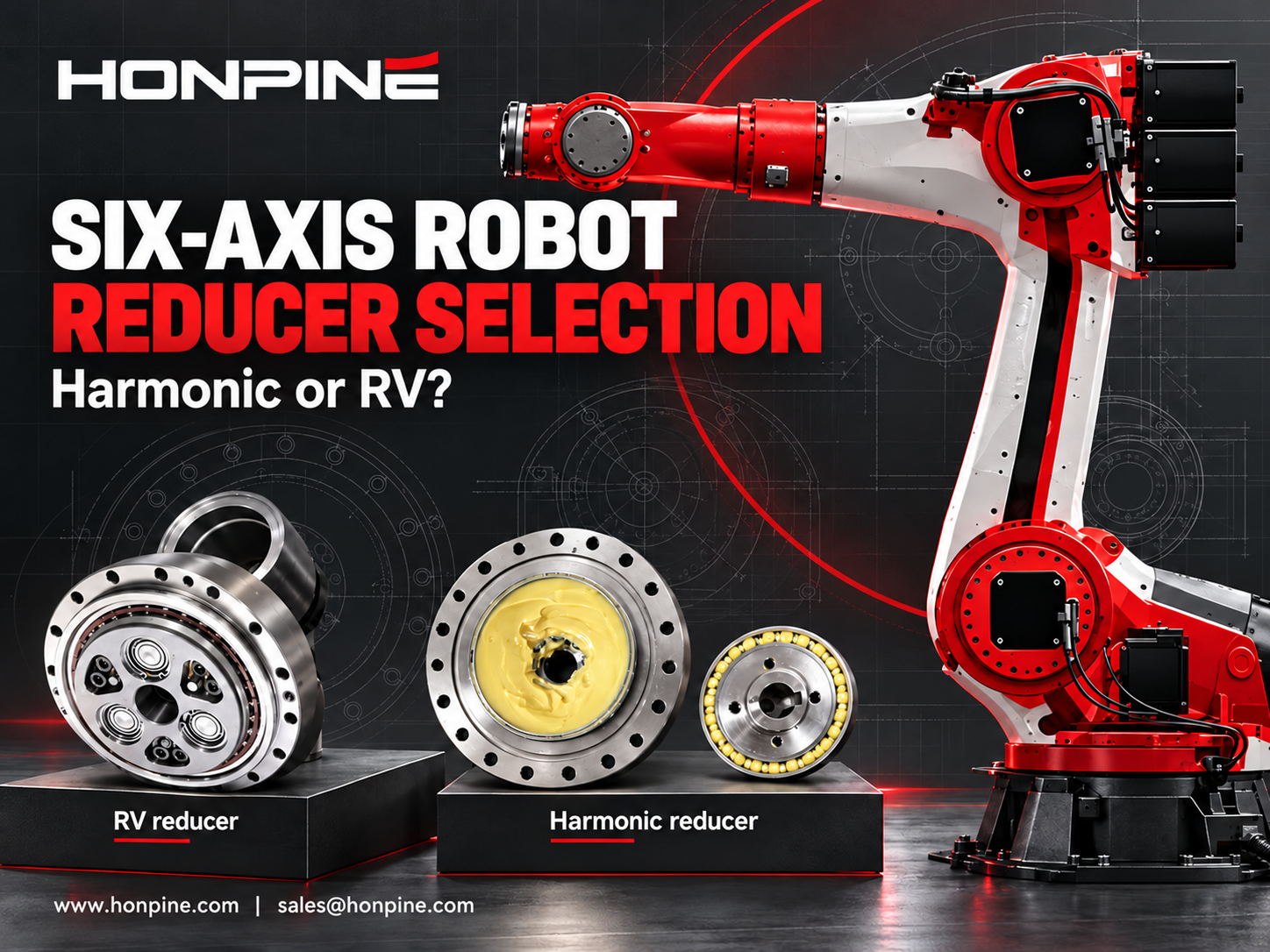
 How to Select Harmonic and RV Reducers for Each Axis of a Six-Axis Robot?What determines whether a six-axis robot joint needs a harmonic reducer or an RV reducer? The answer depends on torque, inertia, impact loads, bearing loads and installation space. This guide explains how to evaluate harmonic and RV reducers for the base, shoulder, elbow and wrist, with practical checks for stiffness, backlash and service life. Use the requirements of each axis to select a suitable reducer configuration.
 Top 7 RV Reducer Gearbox Manufacturers: Why Does Nabtesco Still Dominate?What sets RV reducer gearbox manufacturers apart, and why does Nabtesco remain a benchmark in this market? RV reducer production demands precise component machining, careful assembly and extensive engineering know-how. This article introduces seven manufacturers across RV reducers and related transmission technologies, examines the strengths behind Nabtesco's position, and explores HONPINE's development capabilities to help you understand the supplier landscape.
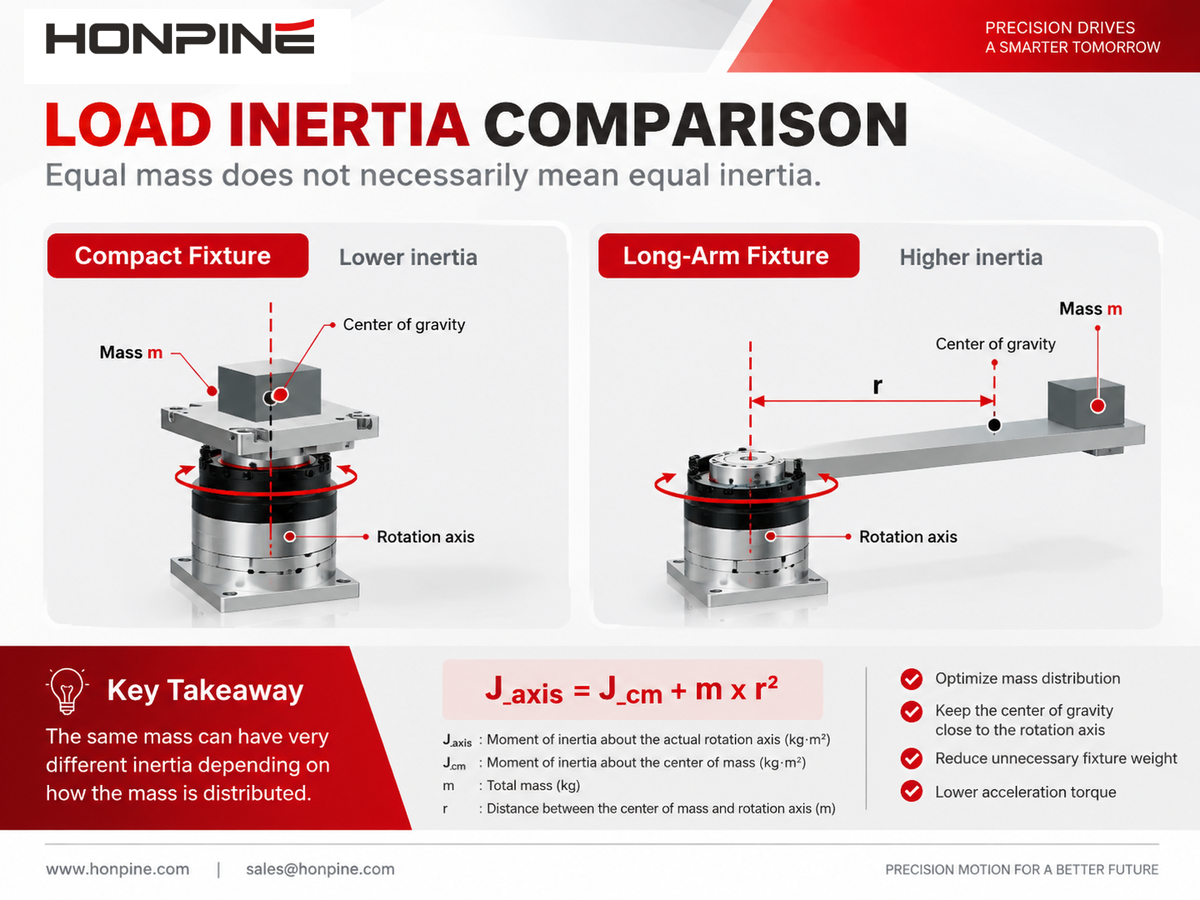
 How to Calculate Torque for a Harmonic Rotary Actuator in a Flipping Mechanism?How much torque does a harmonic rotary actuator need to flip a 10 kg load through 180 degrees? The answer depends on more than weight. Center-of-gravity offset, load inertia, acceleration and operating frequency all affect actuator selection. In this guide, Theodore Li, Technical Director at HONPINE, explains the calculation process using a horizontal-axis flipping example and outlines the checks needed for peak torque, continuous operation, output speed and bearing loads.
Double Click
We provide harmonic drive reducer,planetary reducer,robot joint motor,robot rotary actuators,RV gear reducer,robot end effector,dexterous robot hand
 What is robot joint actuator?How to Choose the Best Robot Rotary Joint Actuator?In core robot joint transmission solutions, planetary and harmonic rotary actuators each have their own strengths. Choosing the right type based on application requirements is essential to achieve the optimal balance between performance and cost.
 DD Motors VS Harmonic Rotary ActuatorsThis article provides an in-depth comparison between Direct Drive (DD) motors and harmonic rotary actuators, covering their transmission principles, advantages and disadvantages, and typical application fields.
 OMG Ultra Compact Harmonic Drive Joint Module with Built-in Torque SensorHONPINE TCHL series harmonic drive joint module is a game-changing product that achieves disruptive improvements in multiple aspects such as lightweight design, integration level, and connection convenience. This article will analyze its revolutionary enhancements with you.
 Why Are Harmonic Reducers Suitable for High-Precision Automation Equipment?Precision automation equipment depends on consistent rotary motion, reliable positioning and compact transmission design. From dispensing head orientation and component angular alignment to automated inspection indexing, harmonic reducers offer a practical solution for applications requiring low backlash and high reduction ratios in limited installation space. This article explains how harmonic reducers support repeatable motion, compares key design configurations, and outlines how to select a suitable reduction ratio and reducer structure based on load, speed, accuracy and machine cycle-time requirements.
 Why Are Servo Motors and Gear Reducers an Ideal Match?Servo motors provide fast, precise motion control, while gear reducers adapt their speed and torque to the load. This guide explains how servo motors and gear reducers work together through torque multiplication, reflected inertia reduction and finer theoretical position resolution. Learn how inertia matching, backlash, torsional stiffness and reduction ratio influence performance in robotics and industrial automation.
 How to Select and Use Robotic Joint Modules?How do you take robotic joint modules from selection to controlled motion? Using the HONPINE HPJM harmonic joint module as an example, Technical Director Theodore Li explains the key steps in mechanical installation, electrical wiring, CAN and EtherCAT configuration, and control commissioning. Learn what to confirm before integration and how to approach setup so each joint can respond correctly to your controller.
 How to Select Harmonic and RV Reducers for Each Axis of a Six-Axis Robot?What determines whether a six-axis robot joint needs a harmonic reducer or an RV reducer? The answer depends on torque, inertia, impact loads, bearing loads and installation space. This guide explains how to evaluate harmonic and RV reducers for the base, shoulder, elbow and wrist, with practical checks for stiffness, backlash and service life. Use the requirements of each axis to select a suitable reducer configuration.
 Top 7 RV Reducer Gearbox Manufacturers: Why Does Nabtesco Still Dominate?What sets RV reducer gearbox manufacturers apart, and why does Nabtesco remain a benchmark in this market? RV reducer production demands precise component machining, careful assembly and extensive engineering know-how. This article introduces seven manufacturers across RV reducers and related transmission technologies, examines the strengths behind Nabtesco's position, and explores HONPINE's development capabilities to help you understand the supplier landscape.
 How to Calculate Torque for a Harmonic Rotary Actuator in a Flipping Mechanism?How much torque does a harmonic rotary actuator need to flip a 10 kg load through 180 degrees? The answer depends on more than weight. Center-of-gravity offset, load inertia, acceleration and operating frequency all affect actuator selection. In this guide, Theodore Li, Technical Director at HONPINE, explains the calculation process using a horizontal-axis flipping example and outlines the checks needed for peak torque, continuous operation, output speed and bearing loads.
 Why Are Harmonic Reducers Suitable for CNC Machine Tool Rotary Tables?Why choose harmonic reducers for CNC rotary tables? Accurate indexing depends on more than the motor: backlash, torsional stiffness and torque capacity all affect how reliably a rotary table holds its position during machining. This guide explains the key transmission requirements of fourth and fifth axis rotary tables, explores common machine tool applications, and introduces HONPINE harmonic reducer configurations for different installation and load requirements.
 What’s the Difference Between Single and Dual Encoder Robot Joint Modules?Does your robot need a dual encoder joint module, or is a single encoder enough? The answer depends on positioning requirements, transmission behavior, force control strategy and budget. This guide compares motor-side and output-side feedback, explains where dual encoders can improve control, and examines their costs and limitations. Learn when a single encoder can meet your needs and when additional output feedback is worth considering.
 RV vs Harmonic Reducer: How to Choose the Right Gearbox for Robot Joints?RV vs harmonic reducer: which gearbox is right for your robot joint? The answer depends on torque, rigidity, accuracy, installation space and operating conditions. This guide compares their working principles and five key performance factors, then explains how to evaluate joint loads, reducer life, temperature and lubrication. Whether you are designing a robot base, shoulder, elbow or wrist, use these considerations to match the reducer to the requirements of each joint.