





Torque Density in Harmonic Joint Modules: A Key Parameter for Lightweight and Space-Constrained Robotic Arms
Introduction
When selecting a robotic joint, engineers often start with rated torque, peak torque, reduction ratio, backlash, or positional accuracy. These parameters are essential, but they do not always explain whether a joint actuator is truly suitable for a compact or lightweight robotic arm.
For many robotic systems, the real engineering challenge is to generate sufficient output torque within a limited mechanical envelope and with as little added mass as possible.
This is where torque density becomes an important parameter.
Torque density describes how much output torque a joint actuator can generate relative to its mass or physical volume. A harmonic joint module with high torque density can deliver substantial output torque without requiring a proportionally larger actuator.
This characteristic is particularly valuable in applications where the robot has strict constraints on joint size, overall weight, arm length, payload, or installation space.
Humanoid robots and collaborative robots are well-known examples, but they are not the only applications where torque density matters. Medical robotic arms, inspection manipulators, aerospace mechanisms, underwater robots, mobile manipulators, climbing robots, and other specialized robotic arms can place even stronger demands on the torque-to-weight and torque-to-volume ratio of their joints.
For these systems, the question is not simply:
“How much torque can the actuator produce?”
It is:
“How much useful output torque can the actuator provide within the available size and weight budget?”
What Is Torque Density in a Robotic Joint?
Torque density is generally used to describe the relationship between the output torque of an actuator and one of its physical characteristics, most commonly mass or volume.
Two common ways of evaluating it are:
Mass-based torque density
Torque Density = Output Torque / Actuator Mass
Volume-based torque density
Torque Density = Output Torque / Actuator Volume
The appropriate definition depends on the application.
For a mobile robot or aerospace manipulator, torque per kilogram may be particularly important because actuator mass directly affects the overall system.
For a robotic wrist, compact inspection mechanism, or medical robotic arm, torque per unit volume can be equally important because the available installation space may be highly constrained.
It is therefore important to distinguish torque density from rated torque.
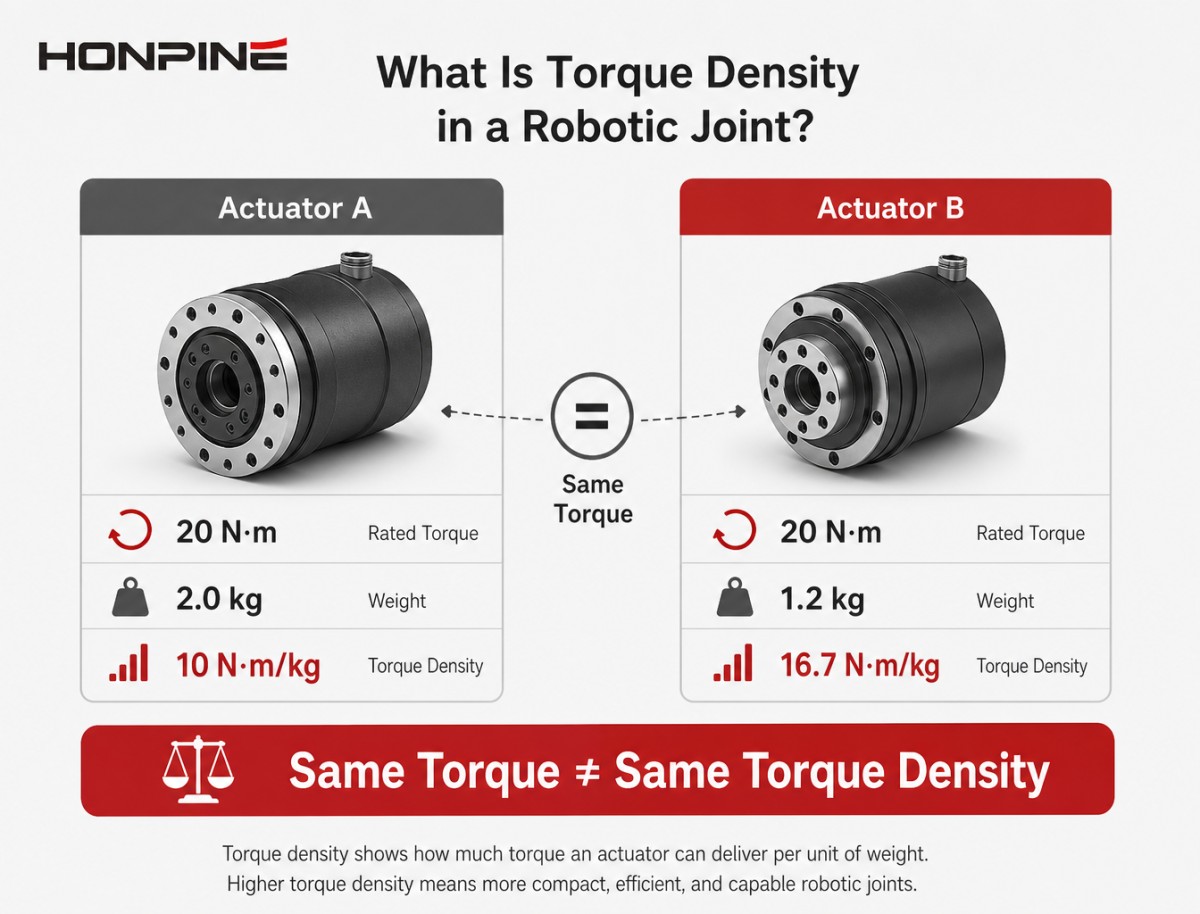
Two joint modules may provide the same 20 N·m output torque, but if one weighs considerably less or occupies a much smaller volume, the two solutions have very different engineering value.
Why Torque Density Matters More Than Rated Torque in Some Robotic Arms?
A robotic joint does not operate independently.
The mass and dimensions of one joint influence the requirements of the joints supporting it. This becomes increasingly important as the robotic arm becomes longer or lighter.
Imagine a multi-axis robotic arm carrying a payload at its end effector. The proximal joints must support not only the payload but also the distal links, distal joint actuators, cables, sensors, structural components, and dynamic loads generated during acceleration and deceleration.
As actuator mass increases, the torque requirement of the upstream joints can also increase.
This creates a cascading effect:
Higher actuator mass → higher proximal joint torque requirement → larger actuators → higher arm mass → further increase in required torque
A high-torque-density harmonic joint module can help reduce this effect.
The goal is not simply to maximize the torque of every joint. Instead, the objective is to achieve the required joint performance while controlling the mass and size of the complete robotic arm.
The Relationship Between Joint Mass and Robotic Arm Performance
The importance of torque density becomes particularly obvious in articulated robotic arms.
The torque generated by a load can be approximated by:
T = F × L
where T is torque, F is applied force, and L is the moment arm.
As the distance between the load and the joint increases, the required torque increases.
However, payload is only part of the equation. The arm itself has mass, and that mass also produces gravitational torque.
For a long-reach robotic arm, even relatively small increases in the mass of distal components can create a substantial additional torque requirement at the proximal joints.
This is why lightweight actuator design is not merely a question of reducing robot weight. It can influence the torque requirements of the entire kinematic chain.
Why Harmonic Joint Modules Can Support High Torque Density?
A harmonic joint module typically combines multiple functions into a compact assembly, such as the servo motor, harmonic reducer, encoder, brake, drive electronics, bearings, housing, and feedback or communication components.
Compared with a conventional architecture consisting of separate components, an integrated harmonic joint module can reduce duplicated housings, couplings, mounting interfaces, and unnecessary structural components.
The harmonic transmission itself is also well suited to applications requiring high reduction ratios within a compact package.
A harmonic reducer can provide high reduction ratios, high positioning accuracy, low backlash, compact dimensions, and high torque capacity relative to its package size.
When these characteristics are combined with an appropriately designed motor and integrated control architecture, the resulting harmonic actuator can provide a compact solution for robotic joints where space and mass are important design constraints.
However, torque density should not be evaluated from the reducer alone.
For a complete joint, engineers should consider the torque density of the entire actuator assembly, including the motor, reducer, encoder, housing, bearings, brake, driver, and other integrated components.
Torque Density vs. Torque Capacity: Why the Difference Matters
A common mistake in actuator selection is to compare only rated torque.
Consider two joint modules that both provide 20 N·m of output torque. If one actuator weighs 2 kg while another weighs 1.2 kg, they have the same nominal torque but significantly different torque-to-weight ratios.
For a stationary industrial robot mounted on a rigid base, this difference may not always be critical.
For a lightweight mobile manipulator, however, reducing the mass of each joint can have a much larger system-level impact.
Therefore, actuator selection should consider:
Required torque + actuator mass + actuator volume + duty cycle + dynamic performance + thermal capability
rather than rated torque alone.
Applications Where High Torque Density Becomes Especially Important
Lightweight Robotic Arms
Lightweight robotic arms are designed to reduce structural mass while maintaining sufficient payload and stiffness.
Because the actuators are part of the moving structure, joint mass directly affects the dynamic requirements of the arm.
A high-torque-density harmonic actuator can help designers maintain sufficient joint output while controlling the weight of the moving assembly.
This is especially relevant for lightweight 6-axis robotic arms and compact industrial manipulators.
Humanoid Robots
Humanoid robots place severe constraints on joint size and weight.
Shoulder, elbow, wrist, hip, knee, and ankle joints all have to fit within a human-like body structure.
Increasing actuator size may provide more torque, but it can also increase the weight and inertia of the limb.
High torque density therefore becomes important when designers attempt to achieve compact joint dimensions, lightweight limbs, high payload-to-weight ratios, and fast dynamic motion.
Collaborative Robots
Collaborative robots often prioritize lightweight mechanical structures and compact joint architectures.
Reducing joint mass can contribute to lower inertia and make it easier to achieve responsive motion and compliant behavior.
For cobots with long arms, the effect becomes more pronounced because the mass of distal joints contributes to the load experienced by proximal joints.
Medical Robotic Arms
Medical robotic systems can operate in highly constrained environments.
A surgical or medical robotic arm may need to position multiple joints around a patient while maintaining a compact structure and precise motion.
In some systems, reducing joint dimensions is more important than simply increasing maximum torque.
The actuator may need to provide sufficient torque within a very small installation envelope while maintaining high positioning accuracy, low backlash, smooth motion, and low vibration.
Inspection Robots and Inspection Manipulators
Inspection robots frequently need to enter spaces that conventional industrial robots cannot reach.
Examples include industrial pipelines, aircraft structures, engines, pressure vessels, narrow equipment chambers, and complex mechanical assemblies.
In these applications, a large actuator may physically prevent the robot from reaching the target area.
The engineering requirement becomes:
Maximum joint capability within minimum available space.
This is where volume-based torque density becomes particularly meaningful.
A compact harmonic actuator can provide the required reduction and output torque while helping maintain a small joint envelope.
Aerospace Robotic Arms
Aerospace applications place an exceptional emphasis on mass.
Every additional kilogram carried by a spacecraft can affect launch cost, structural design, energy consumption, or payload capacity.
At the same time, robotic manipulators still need sufficient torque for deployment, positioning, docking, inspection, and maintenance tasks.
This creates a strong requirement for high torque-to-weight ratios.
For aerospace manipulators, actuator mass should therefore be evaluated together with torque capability, reliability, thermal characteristics, and mechanical lifetime.
Mobile Manipulators
A mobile manipulator combines a mobile platform with a robotic arm.
This creates a unique relationship between actuator weight and vehicle performance.
A heavier arm can increase payload requirements, shift the center of gravity, increase energy consumption, and affect dynamic stability during movement.
A high-torque-density joint module can help reduce the mass of the robotic arm while preserving the required payload capability.
Climbing and Wall-Mounted Robots
Climbing robots and wall-mounted inspection systems have a direct relationship between actuator mass and robot performance.
The robot may need to carry its own weight while generating sufficient joint torque to maintain posture and perform manipulation.
Reducing unnecessary actuator mass can reduce the load placed on the climbing mechanism.
In these applications, high torque density can contribute to a more compact and efficient overall mechanical architecture.
Underwater Robotic Arms
Underwater manipulators face different constraints from terrestrial robots.
They may need to operate within limited vehicle envelopes while carrying tools or interacting with objects underwater.
The actuator must provide adequate output torque while maintaining compact packaging and suitable environmental protection.
In remotely operated vehicles and autonomous underwater systems, reducing actuator size and weight can also simplify mechanical integration.
For underwater robotic joints, however, torque density should always be evaluated together with sealing, corrosion resistance, pressure tolerance, thermal management, and long-term reliability.
Special-Purpose and Hazardous-Environment Robotic Arms
Some robotic arms are designed for environments where conventional robot architectures are difficult to use.
These can include nuclear inspection robots, explosion-protected robotic systems, high-temperature inspection systems, hazardous-area manipulators, and remote maintenance robots.
The common characteristic is that the mechanical architecture may have very limited installation space.
The actuator therefore needs to deliver sufficient torque without becoming a dominant part of the robot's physical envelope.
For these applications, a compact harmonic actuator can be considered as part of a highly integrated joint architecture.
Why Torque Density Becomes More Important as the Arm Gets Longer?
The importance of torque density is not the same across all joints.
In a typical articulated arm, distal joints and proximal joints have different requirements.
A wrist joint may primarily need to overcome the load associated with the end effector and payload.
A shoulder or base joint, however, may need to support almost the entire downstream structure.
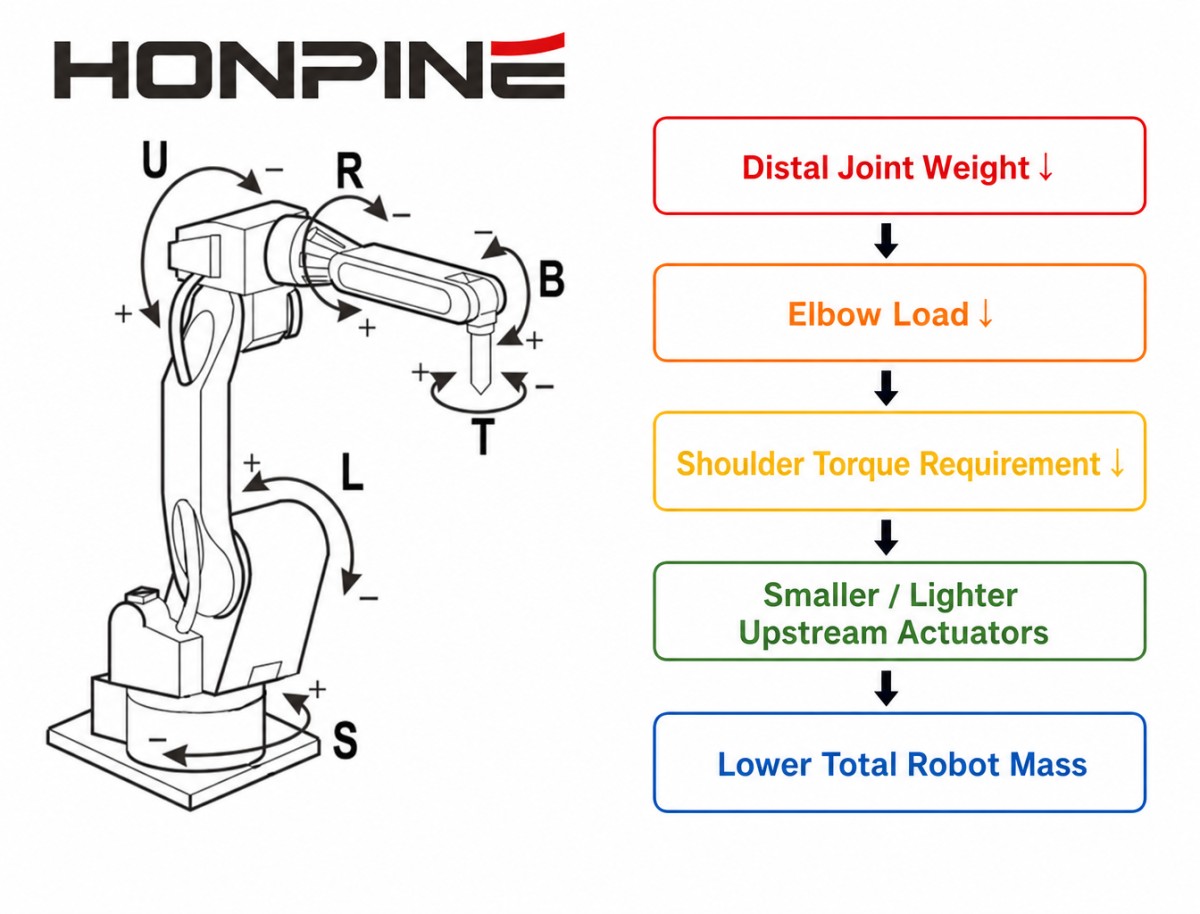
This means that reducing the mass of distal components can have a multiplying effect.
Lower wrist actuator mass → lower elbow load → lower shoulder load → potentially smaller upstream actuators → lower total arm mass
This is one of the most important reasons why torque density should be evaluated at the system level, rather than only at the individual joint level.
The actuator with the highest torque density is not automatically the best choice for every axis.
But in a weight-sensitive robotic architecture, improving torque density at distal joints can have significant downstream benefits.
Torque Density Is Also Related to Mechanical Packaging
Mass is only one constraint.
In many specialized robotic arms, the physical dimensions of the joint are equally important.
A robotic joint may need to fit inside a cylindrical link, around a cable routing channel, inside a hollow structural member, within a human-like limb, inside a medical instrument, or within a narrow inspection mechanism.
This makes torque per unit volume a useful engineering metric.
A high-torque-density harmonic actuator can help designers avoid simply scaling up the entire joint to obtain higher torque.
Instead, the designer can optimize the available envelope around the actual mechanical requirements.
This is particularly valuable when the robot must maintain a small outer diameter while still providing sufficient joint output.
Why Integrated Harmonic Actuators Can Be More Valuable Than Separate Components?
A conventional robotic joint may use a servo motor, harmonic reducer, encoder, brake, driver, bearings, and housing as separate components.
An integrated harmonic joint module combines many of these functions into one engineered assembly.
This can simplify mechanical integration, electrical wiring, encoder installation, motor-reducer alignment, joint packaging, and system commissioning.
More importantly, integration gives the actuator designer greater control over the overall package.
Instead of selecting independent components and connecting them together, the motor, reducer, feedback system, bearings, housing, and electronics can be designed around a common joint architecture.
This can help optimize the relationship between:
Output torque ↔ mass ↔ volume ↔ control capability
That relationship is particularly important for modern robotic arms where the actuator itself becomes a structural part of the joint.
How Should Engineers Evaluate Torque Density When Selecting a Harmonic Joint Module?
Torque density should not be considered in isolation.
Rated and Peak Torque
The actuator must first satisfy the actual continuous and peak torque requirements of the joint.
A high torque density is meaningless if the actuator cannot meet the required duty cycle.
Actuator Mass
For lightweight and mobile robotic systems, total joint mass can strongly influence the performance of the entire arm.
Package Volume
For compact or specialized robotic arms, the outer dimensions of the joint may be a harder constraint than mass.
Reduction Ratio
A suitable reduction ratio can help match motor speed and torque to the requirements of the robotic joint.
Backlash and Positioning Accuracy
High torque density should not come at the expense of the precision required by the application.
Thermal Performance
A compact actuator has limited surface area for heat dissipation.
Therefore, torque density should be evaluated together with continuous torque capability and thermal behavior.
Dynamic Performance
For robots that accelerate rapidly, peak torque, reflected inertia, speed, and response characteristics become important.
Integration Level
An actuator integrating the motor, harmonic reducer, encoder, brake, and driver may offer packaging advantages compared with separate components.
Installation Constraints
The available diameter, axial length, hollow shaft requirements, cable routing, and mounting structure should all be considered.
Real Operating Conditions
The correct actuator is determined by the actual load profile, cycle time, acceleration, operating temperature, duty cycle, and expected service life—not by a single catalog torque value.
High Torque Density Does Not Mean the Smallest Possible Actuator
It is important to avoid a common misunderstanding.
The goal of torque density optimization is not simply to make the actuator as small as possible.
An actuator that is extremely compact but cannot dissipate heat, withstand the required continuous load, or provide sufficient lifetime is not a successful high-performance solution.
For robotic joint design, the more meaningful objective is:
Maximum useful torque capability within an acceptable mass, volume, thermal, and reliability envelope.
This distinction is especially important for industrial robotic systems.
A joint may need to operate continuously for thousands of hours. Therefore, engineers must balance torque density with bearing capacity, gear strength, thermal management, motor performance, lubrication, structural rigidity, and durability.
Torque Density Should Be Considered at the Robot-System Level
The most useful way to evaluate a harmonic joint module is not to ask:
“Does this actuator have a high torque density?”
Instead, ask:
“How does this actuator affect the complete robotic arm?”
A lighter and more compact joint can potentially enable lighter links, smaller upstream actuators, lower structural loads, higher payload-to-weight ratios, lower moving inertia, smaller robot envelopes, greater mechanical flexibility, and easier integration into constrained spaces.
Therefore, actuator torque density can influence the mechanical architecture of the entire robot.
This is why the parameter becomes increasingly important as robots become lighter, longer, more compact, and more application-specific.
From Humanoid Robots to Specialized Robotic Arms
Torque density is often discussed in the context of humanoid robots, but its engineering significance extends much further.
The same design logic applies whenever a robotic arm must generate substantial joint torque without allowing actuator size or mass to grow excessively.
This includes humanoid robots, collaborative robots, lightweight industrial arms, medical manipulators, inspection robots, aerospace manipulators, mobile manipulators, underwater robots, climbing robots, and specialized robotic arms.
Although these robots have very different structures and operating environments, they share a common design challenge:
The joint actuator must provide sufficient mechanical capability within a constrained system envelope.
For some robots, the dominant constraint is mass.
For others, it is diameter.
For others, it is heat dissipation, payload, reach, or mechanical integration.
Torque density provides a useful way to evaluate how effectively the actuator converts its available physical envelope into usable output torque.
Conclusion
For robotic joint design, rated torque alone does not tell the complete story.
When a robotic arm must be lightweight, compact, long-reach, mobile, or capable of operating in confined environments, the relationship between output torque, actuator mass, and actuator volume becomes increasingly important.
This is why torque density is a key parameter when evaluating a harmonic joint module or harmonic actuator.
High torque density can help robotic designers achieve sufficient joint output without unnecessarily increasing actuator size or mass. The benefit becomes particularly significant in lightweight robotic arms, mobile manipulators, medical robots, inspection systems, aerospace mechanisms, underwater robots, climbing robots, and other specialized robotic platforms.
For these applications, the right question is not simply:
“How much torque does the joint provide?”
It is:
“How much torque can the joint provide within the size, weight, thermal, and mechanical constraints of the complete robotic system?”
That is where torque density becomes a meaningful engineering parameter—and where a compact, integrated harmonic joint module can provide a significant design advantage.
Read More
Learn more about the story of HONPINE and industry trends related to precision transmission.
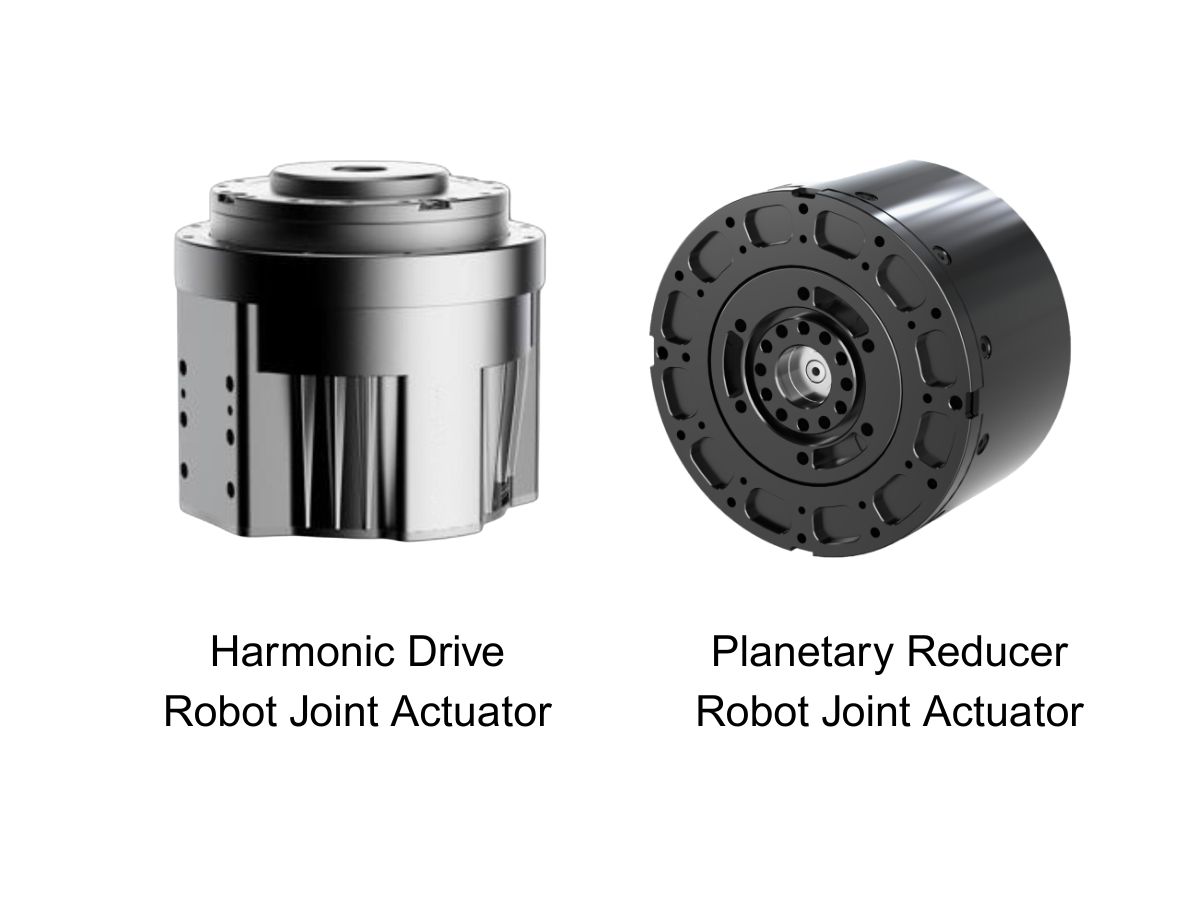
 What is robot joint actuator?How to Choose the Best Robot Rotary Joint Actuator?In core robot joint transmission solutions, planetary and harmonic rotary actuators each have their own strengths. Choosing the right type based on application requirements is essential to achieve the optimal balance between performance and cost.
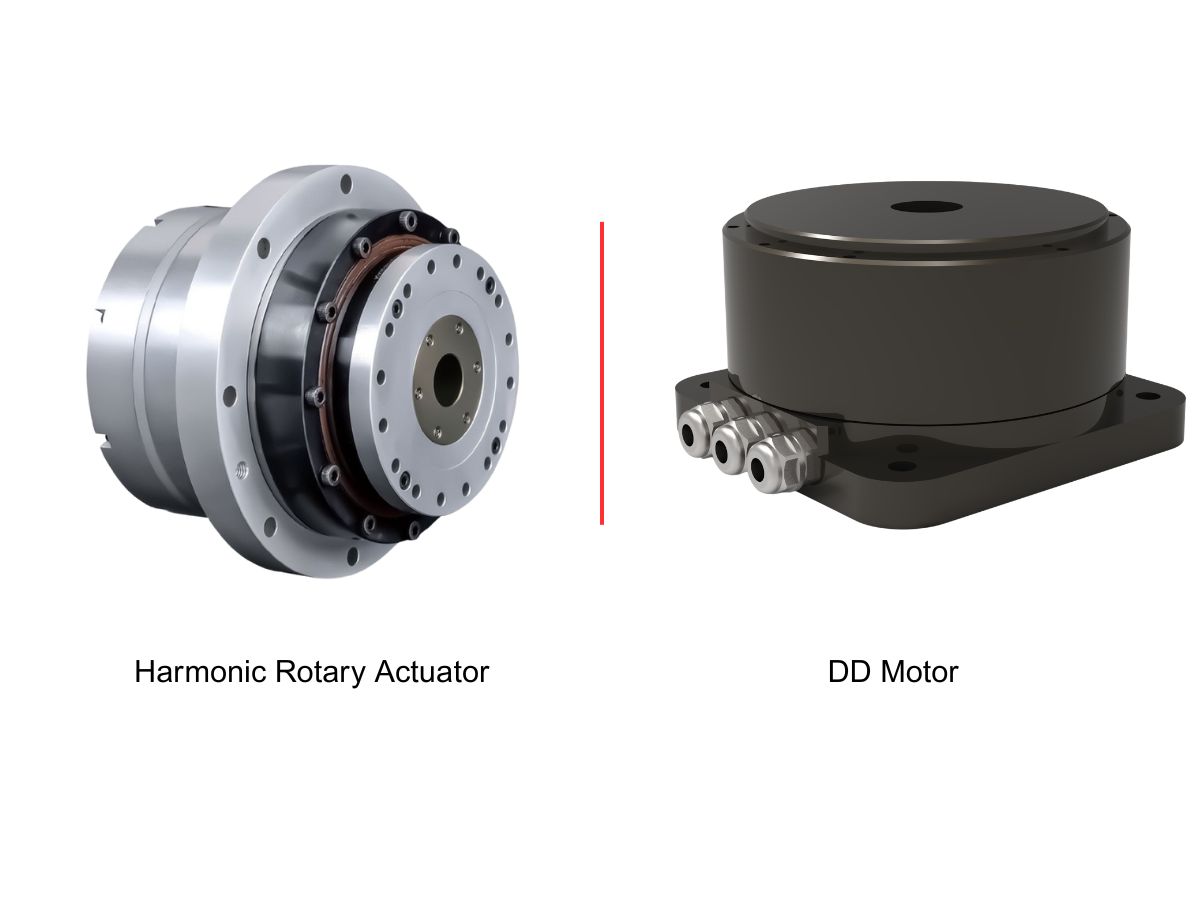
 DD Motors VS Harmonic Rotary ActuatorsThis article provides an in-depth comparison between Direct Drive (DD) motors and harmonic rotary actuators, covering their transmission principles, advantages and disadvantages, and typical application fields.
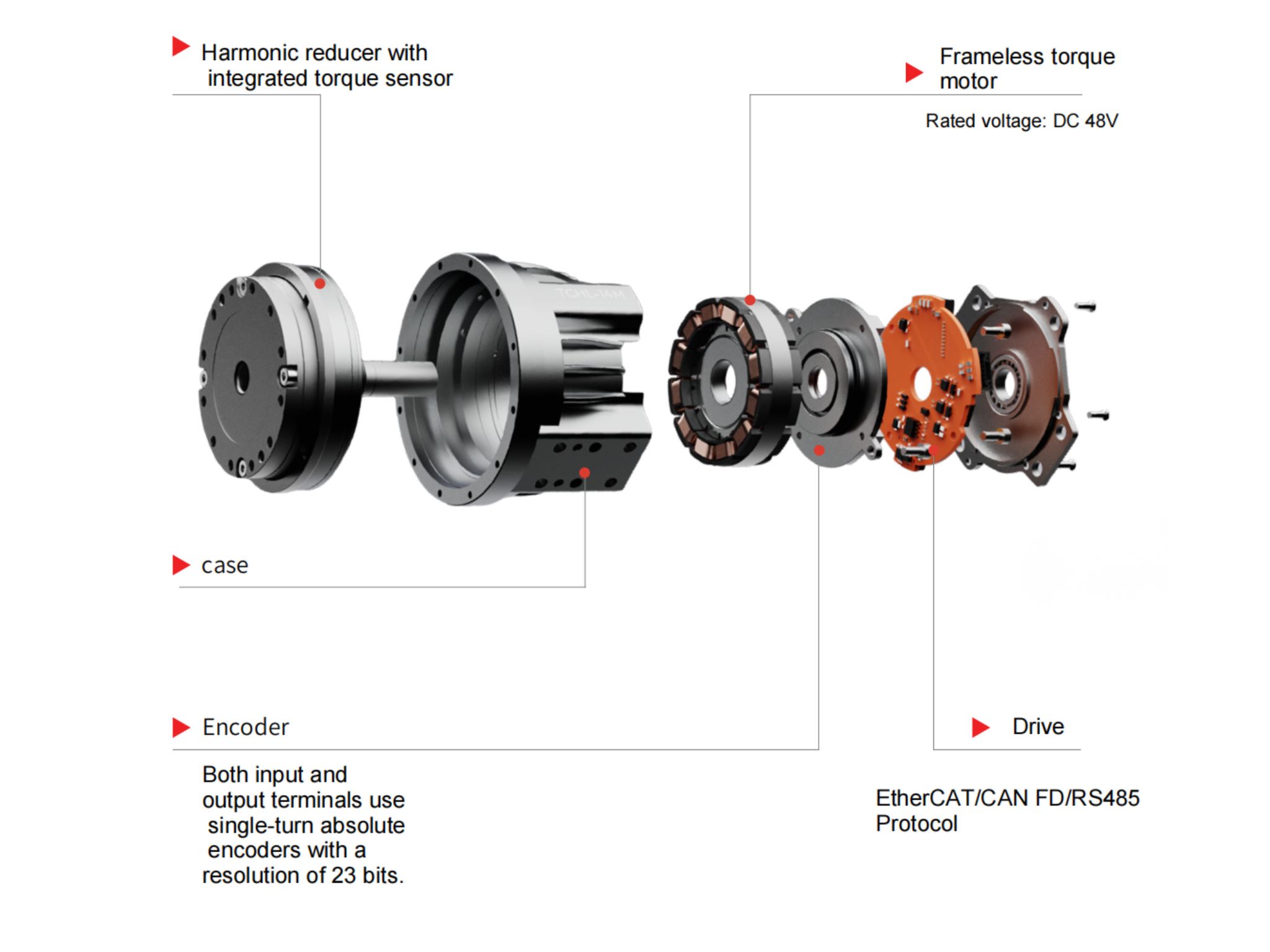
 OMG Ultra Compact Harmonic Drive Joint Module with Built-in Torque SensorHONPINE TCHL series harmonic drive joint module is a game-changing product that achieves disruptive improvements in multiple aspects such as lightweight design, integration level, and connection convenience. This article will analyze its revolutionary enhancements with you.
 The Role of Harmonic Drive Gears in Achieving 5–10 μm Accuracy in Dental Milling MachinesA dental milling machine is a CNC machining system used to directly process digital dental models into restorations such as crowns, bridges, veneers, inlays, and implant abutments. Dental milling machines require far higher operational accuracy and motion stability than ordinary equipment. This article explains how harmonic drive gear help dental milling machines achieve stable, continuous, and controllable operation.
 Why Are Harmonic Rotary Actuators Perfect for Medical Equipment?Harmonic rotary actuators (typically integrated systems consisting of a harmonic drive reducer, frameless torque motor, encoder, and optional brake) are regarded as key components in medical equipment. The core reason is that they simultaneously meet the most stringent medical requirements for precision, compact size, safety, and controllability. The following explanation is structured from three perspectives: technical characteristics, application scenarios, and medical value.
 High-Precision RV Reducers Perfectly Matched for Walking RobotsThe walking axis of a robot is a core component for power transmission and support. RV reducers provide extremely high rigidity, precision, and torque while maintaining a compact size and exceptional reliability, making them an ideal match for the demanding requirements of walking robot joints in terms of load capacity, impact resistance, and precision.
 Why Are Harmonic Reducers Suitable for High-Precision Automation Equipment?Precision automation equipment depends on consistent rotary motion, reliable positioning and compact transmission design. From dispensing head orientation and component angular alignment to automated inspection indexing, harmonic reducers offer a practical solution for applications requiring low backlash and high reduction ratios in limited installation space. This article explains how harmonic reducers support repeatable motion, compares key design configurations, and outlines how to select a suitable reduction ratio and reducer structure based on load, speed, accuracy and machine cycle-time requirements.
 Why Are Servo Motors and Gear Reducers an Ideal Match?Servo motors provide fast, precise motion control, while gear reducers adapt their speed and torque to the load. This guide explains how servo motors and gear reducers work together through torque multiplication, reflected inertia reduction and finer theoretical position resolution. Learn how inertia matching, backlash, torsional stiffness and reduction ratio influence performance in robotics and industrial automation.
 How to Select and Use Robotic Joint Modules?How do you take robotic joint modules from selection to controlled motion? Using the HONPINE HPJM harmonic joint module as an example, Technical Director Theodore Li explains the key steps in mechanical installation, electrical wiring, CAN and EtherCAT configuration, and control commissioning. Learn what to confirm before integration and how to approach setup so each joint can respond correctly to your controller.
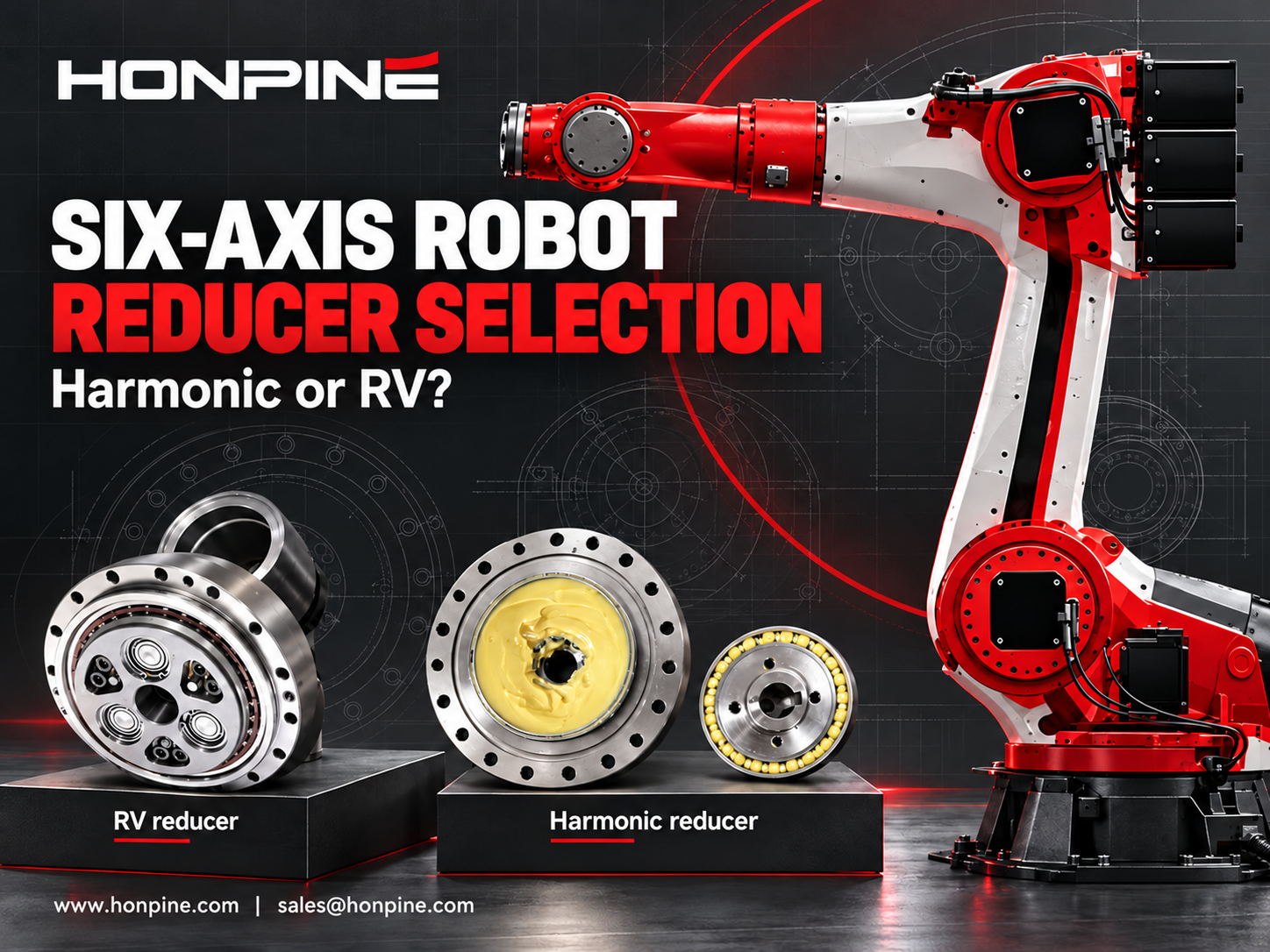
 How to Select Harmonic and RV Reducers for Each Axis of a Six-Axis Robot?What determines whether a six-axis robot joint needs a harmonic reducer or an RV reducer? The answer depends on torque, inertia, impact loads, bearing loads and installation space. This guide explains how to evaluate harmonic and RV reducers for the base, shoulder, elbow and wrist, with practical checks for stiffness, backlash and service life. Use the requirements of each axis to select a suitable reducer configuration.
 Top 7 RV Reducer Gearbox Manufacturers: Why Does Nabtesco Still Dominate?What sets RV reducer gearbox manufacturers apart, and why does Nabtesco remain a benchmark in this market? RV reducer production demands precise component machining, careful assembly and extensive engineering know-how. This article introduces seven manufacturers across RV reducers and related transmission technologies, examines the strengths behind Nabtesco's position, and explores HONPINE's development capabilities to help you understand the supplier landscape.
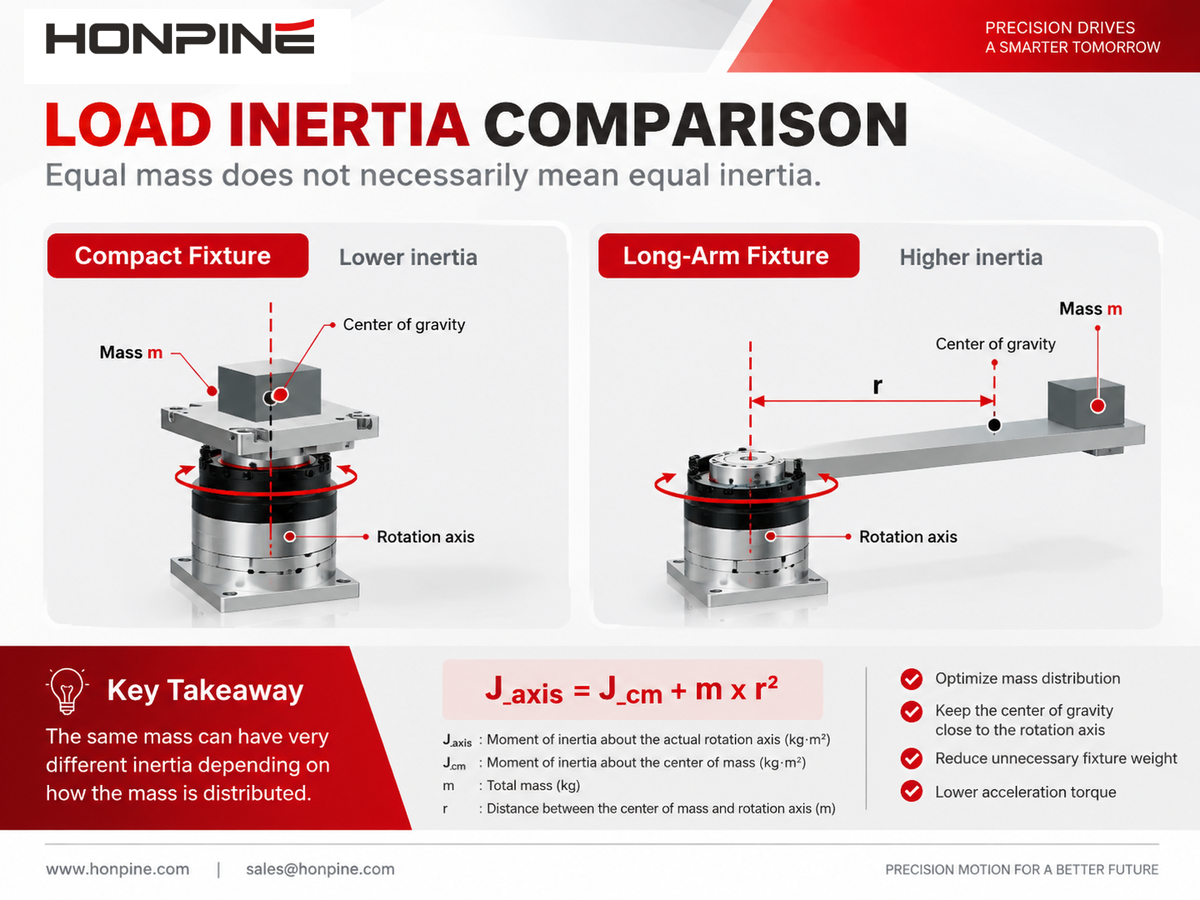
 How to Calculate Torque for a Harmonic Rotary Actuator in a Flipping Mechanism?How much torque does a harmonic rotary actuator need to flip a 10 kg load through 180 degrees? The answer depends on more than weight. Center-of-gravity offset, load inertia, acceleration and operating frequency all affect actuator selection. In this guide, Theodore Li, Technical Director at HONPINE, explains the calculation process using a horizontal-axis flipping example and outlines the checks needed for peak torque, continuous operation, output speed and bearing loads.

Double Click
We provide harmonic drive reducer,planetary reducer,robot joint motor,robot rotary actuators,RV gear reducer,robot end effector,dexterous robot hand
 What is robot joint actuator?How to Choose the Best Robot Rotary Joint Actuator?In core robot joint transmission solutions, planetary and harmonic rotary actuators each have their own strengths. Choosing the right type based on application requirements is essential to achieve the optimal balance between performance and cost.
 DD Motors VS Harmonic Rotary ActuatorsThis article provides an in-depth comparison between Direct Drive (DD) motors and harmonic rotary actuators, covering their transmission principles, advantages and disadvantages, and typical application fields.
 OMG Ultra Compact Harmonic Drive Joint Module with Built-in Torque SensorHONPINE TCHL series harmonic drive joint module is a game-changing product that achieves disruptive improvements in multiple aspects such as lightweight design, integration level, and connection convenience. This article will analyze its revolutionary enhancements with you.
 Why Are Harmonic Reducers Suitable for High-Precision Automation Equipment?Precision automation equipment depends on consistent rotary motion, reliable positioning and compact transmission design. From dispensing head orientation and component angular alignment to automated inspection indexing, harmonic reducers offer a practical solution for applications requiring low backlash and high reduction ratios in limited installation space. This article explains how harmonic reducers support repeatable motion, compares key design configurations, and outlines how to select a suitable reduction ratio and reducer structure based on load, speed, accuracy and machine cycle-time requirements.
 Why Are Servo Motors and Gear Reducers an Ideal Match?Servo motors provide fast, precise motion control, while gear reducers adapt their speed and torque to the load. This guide explains how servo motors and gear reducers work together through torque multiplication, reflected inertia reduction and finer theoretical position resolution. Learn how inertia matching, backlash, torsional stiffness and reduction ratio influence performance in robotics and industrial automation.
 How to Select and Use Robotic Joint Modules?How do you take robotic joint modules from selection to controlled motion? Using the HONPINE HPJM harmonic joint module as an example, Technical Director Theodore Li explains the key steps in mechanical installation, electrical wiring, CAN and EtherCAT configuration, and control commissioning. Learn what to confirm before integration and how to approach setup so each joint can respond correctly to your controller.
 How to Select Harmonic and RV Reducers for Each Axis of a Six-Axis Robot?What determines whether a six-axis robot joint needs a harmonic reducer or an RV reducer? The answer depends on torque, inertia, impact loads, bearing loads and installation space. This guide explains how to evaluate harmonic and RV reducers for the base, shoulder, elbow and wrist, with practical checks for stiffness, backlash and service life. Use the requirements of each axis to select a suitable reducer configuration.
 Top 7 RV Reducer Gearbox Manufacturers: Why Does Nabtesco Still Dominate?What sets RV reducer gearbox manufacturers apart, and why does Nabtesco remain a benchmark in this market? RV reducer production demands precise component machining, careful assembly and extensive engineering know-how. This article introduces seven manufacturers across RV reducers and related transmission technologies, examines the strengths behind Nabtesco's position, and explores HONPINE's development capabilities to help you understand the supplier landscape.
 How to Calculate Torque for a Harmonic Rotary Actuator in a Flipping Mechanism?How much torque does a harmonic rotary actuator need to flip a 10 kg load through 180 degrees? The answer depends on more than weight. Center-of-gravity offset, load inertia, acceleration and operating frequency all affect actuator selection. In this guide, Theodore Li, Technical Director at HONPINE, explains the calculation process using a horizontal-axis flipping example and outlines the checks needed for peak torque, continuous operation, output speed and bearing loads.
 Why Are Harmonic Reducers Suitable for CNC Machine Tool Rotary Tables?Why choose harmonic reducers for CNC rotary tables? Accurate indexing depends on more than the motor: backlash, torsional stiffness and torque capacity all affect how reliably a rotary table holds its position during machining. This guide explains the key transmission requirements of fourth and fifth axis rotary tables, explores common machine tool applications, and introduces HONPINE harmonic reducer configurations for different installation and load requirements.
 What’s the Difference Between Single and Dual Encoder Robot Joint Modules?Does your robot need a dual encoder joint module, or is a single encoder enough? The answer depends on positioning requirements, transmission behavior, force control strategy and budget. This guide compares motor-side and output-side feedback, explains where dual encoders can improve control, and examines their costs and limitations. Learn when a single encoder can meet your needs and when additional output feedback is worth considering.
 RV vs Harmonic Reducer: How to Choose the Right Gearbox for Robot Joints?RV vs harmonic reducer: which gearbox is right for your robot joint? The answer depends on torque, rigidity, accuracy, installation space and operating conditions. This guide compares their working principles and five key performance factors, then explains how to evaluate joint loads, reducer life, temperature and lubrication. Whether you are designing a robot base, shoulder, elbow or wrist, use these considerations to match the reducer to the requirements of each joint.