


What Is a Harmonic Drive Reducer and Where Is It Used in Precision Motion Systems?
A harmonic drive reducer is often chosen when a motion system must stay compact without giving up precision.
In machine tool equipment, that balance matters because positioning error, backlash, and vibration directly affect surface finish, cycle stability, and repeatability.
The component appears in robotics as well, yet its value in precision feed systems, rotary axes, and automated handling around machine tools is equally important.
What makes the harmonic drive reducer stand out is not just high reduction ratio.
It combines low backlash, smooth transmission, and compact size in a way that suits space-limited precision assemblies.
Why this reducer keeps attracting attention
Machine tools are under pressure to cut more complex parts with tighter tolerances and less setup time.
That raises the importance of every drive component between the motor and the load.
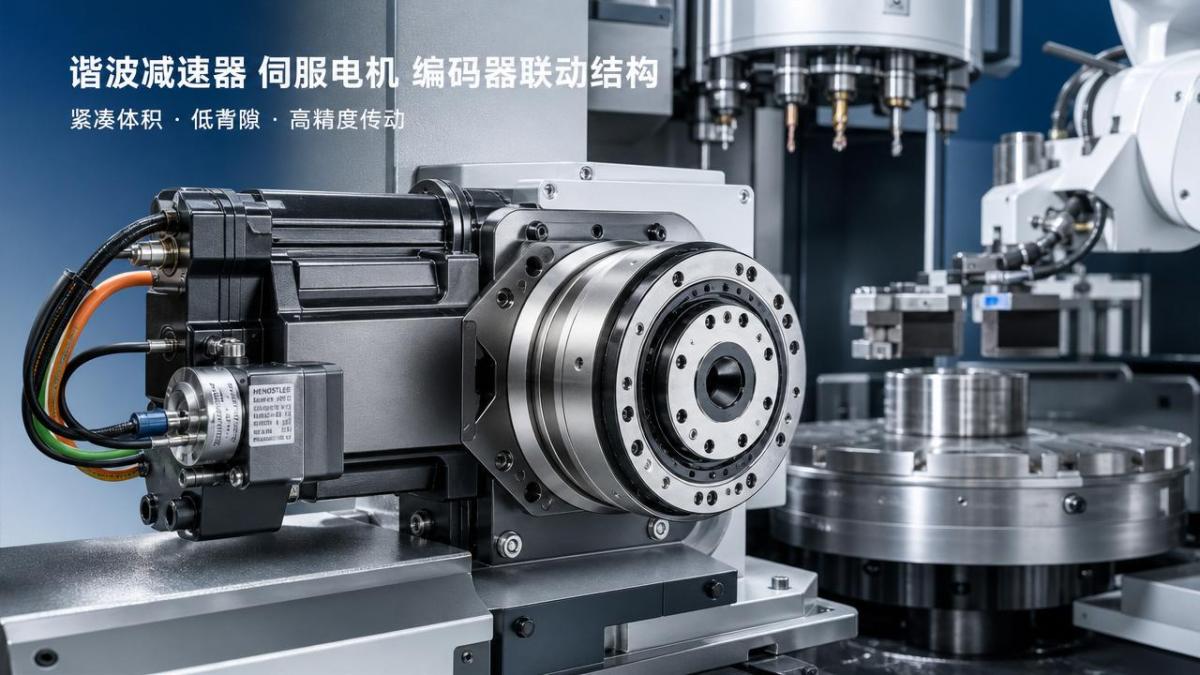
A small transmission error can become visible at the tool tip or rotary table.
For that reason, the harmonic drive reducer is often reviewed alongside servo motors, encoders, ball screws, and direct-drive alternatives.
It is also relevant in auxiliary systems.
Tool changers, robotic loading cells, inspection stations, and compact positioning modules need controlled motion in limited installation space.
A reducer that saves space while preserving repeatability becomes easier to justify in these layouts.
What a harmonic drive reducer is in practical terms
A harmonic drive reducer is a precision gear reduction mechanism built around elastic deformation rather than only rigid gear meshing.
Its basic structure usually includes three core parts: a wave generator, a flexspline, and a circular spline.
The wave generator deforms the thin flexspline into an elliptical shape.
That shape engages the circular spline at two opposite regions.
Because the two splines have slightly different tooth counts, each input rotation creates a small relative movement.
This difference produces a large reduction ratio in a compact package.
Simple descriptions often stop there, but the practical takeaway is more useful.
A harmonic drive reducer can deliver precise angular motion, high repeatability, and very low backlash where ordinary gear trains may need more space.
Why low backlash matters so much
Backlash becomes noticeable when an axis reverses direction and the output lags before responding.
In contouring, indexing, or fine alignment, that delay reduces positional confidence.
A harmonic drive reducer is valued because it can keep that lost motion extremely small.
That supports smoother interpolation, steadier orientation, and more predictable servo behavior.
How it differs from other reducer types
Not every precision system needs the same transmission design.
Planetary reducers, worm gears, cycloidal reducers, and direct drives each fit different priorities.
The harmonic drive reducer stands out in a narrower but very demanding range of tasks.
In other words, the harmonic drive reducer is rarely the default choice for every axis.
It becomes attractive when compactness and precision have to coexist, especially in rotary or articulated motion.
Where it is used in precision motion systems
The best way to understand the value of a harmonic drive reducer is to look at actual motion tasks.
In machine tool environments, several application patterns appear repeatedly.
Rotary tables and indexing units
Precision indexing needs exact angular positioning and stable repeatability over many cycles.
A harmonic drive reducer helps reduce backlash during reversal and supports accurate table orientation.
Tool changers and auxiliary axis modules
Compact mechanisms around the spindle area often have strict packaging limits.
This is where a harmonic drive reducer can fit more easily than bulkier alternatives.
The smoother transmission also helps reduce shock during indexing or arm rotation.
Robotic loading and unloading cells
Machine tools are increasingly paired with robots for part transfer and flexible tending.
Many articulated joints use a harmonic drive reducer because precise joint motion improves path control and placement accuracy.
Inspection and alignment equipment
Optical or probe-based inspection systems need precise orientation with minimal motion error.
A harmonic drive reducer can support fine angular correction without adding much installation volume.
What users should evaluate before choosing one
The harmonic drive reducer is precise, but it is not immune to application mismatch.
Selection should go beyond ratio and nominal torque.
- Check peak torque, not only continuous torque, especially under acceleration and stopping.
- Review torsional rigidity because servo performance depends on system stiffness.
- Look at duty cycle, reversal frequency, and shock loading in real operation.
- Confirm allowed radial and axial loads if the output supports external structures.
- Match encoder resolution and servo tuning to the reducer’s actual precision level.
- Consider maintenance access, sealing, lubrication life, and thermal conditions.
In machine tools, these details affect more than motion quality.
They also influence long-term calibration stability, service intervals, and downtime risk.
A note on stiffness and accuracy
Low backlash does not automatically mean perfect rigidity under every load condition.
When cutting forces or inertial loads rise, torsional compliance must still be considered.
That is why the harmonic drive reducer works best when its precision advantage is balanced against actual structural demand.
How to judge fit in a machine tool project
A useful starting point is to define what the axis must do, not what reducer looks advanced on paper.
If the motion is compact, rotational, repetitive, and accuracy-sensitive, the harmonic drive reducer deserves close attention.
If the axis mainly carries heavy cutting loads, another transmission concept may be more suitable.
Usually, the comparison should include these questions:
- Is installation space limited around the axis or joint?
- Does the application need near-zero backlash during reversal?
- Will the axis perform indexing, orientation, or fine angular correction?
- Are load peaks controlled well enough for long service life?
- Would a direct drive or planetary system create a better cost-performance balance?
That approach keeps the discussion practical.
It avoids choosing a harmonic drive reducer only because it sounds like the highest-precision option.
A clear next step for evaluation
The harmonic drive reducer is best understood as a precision tool for specific motion problems.
Its strongest value appears when space is tight, backlash must stay minimal, and motion repeatability directly affects performance.
For machine tool equipment, that can mean better indexing, cleaner axis response, and more stable automation around the cutting process.
The most useful next move is to map actual load, speed, rigidity, and positioning requirements for each axis.
Once those conditions are clear, comparing a harmonic drive reducer with planetary or direct-drive options becomes much more reliable.
That kind of structured evaluation usually reveals whether the reducer is a precision advantage, a packaging solution, or both.
Read More
Learn more about the story of HONPINE and industry trends related to precision transmission.
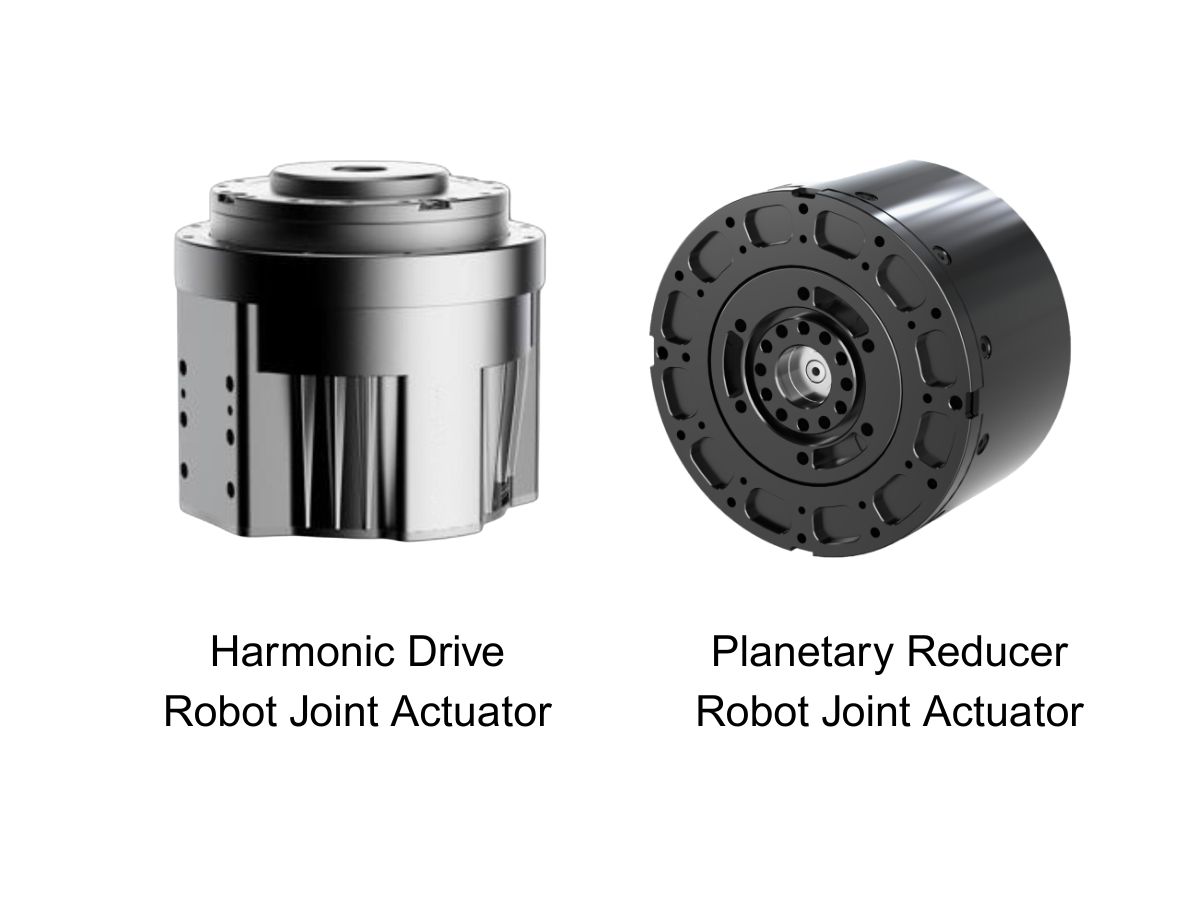
 What is robot joint actuator?How to Choose the Best Robot Rotary Joint Actuator?In core robot joint transmission solutions, planetary and harmonic rotary actuators each have their own strengths. Choosing the right type based on application requirements is essential to achieve the optimal balance between performance and cost.
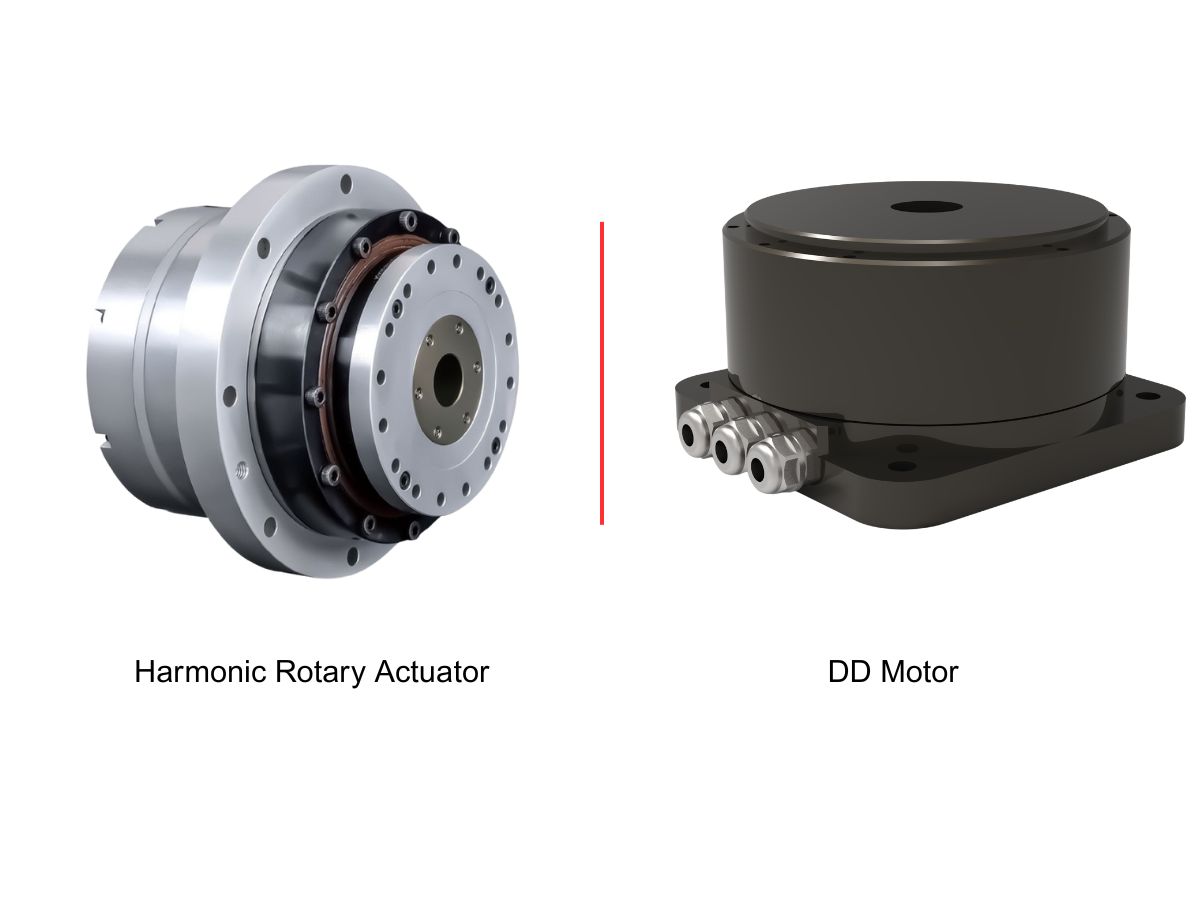
 DD Motors VS Harmonic Rotary ActuatorsThis article provides an in-depth comparison between Direct Drive (DD) motors and harmonic rotary actuators, covering their transmission principles, advantages and disadvantages, and typical application fields.
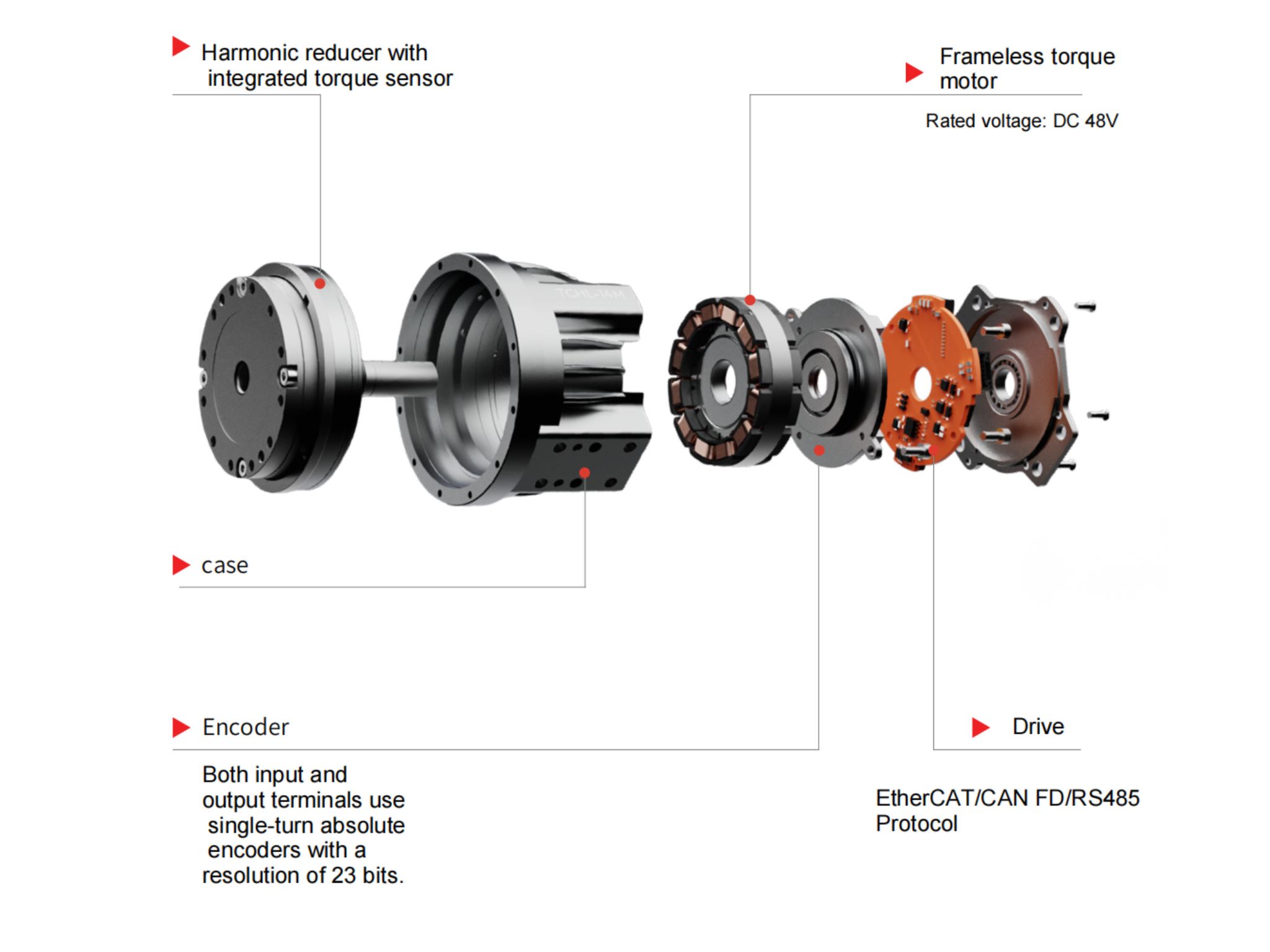
 OMG Ultra Compact Harmonic Drive Joint Module with Built-in Torque SensorHONPINE TCHL series harmonic drive joint module is a game-changing product that achieves disruptive improvements in multiple aspects such as lightweight design, integration level, and connection convenience. This article will analyze its revolutionary enhancements with you.
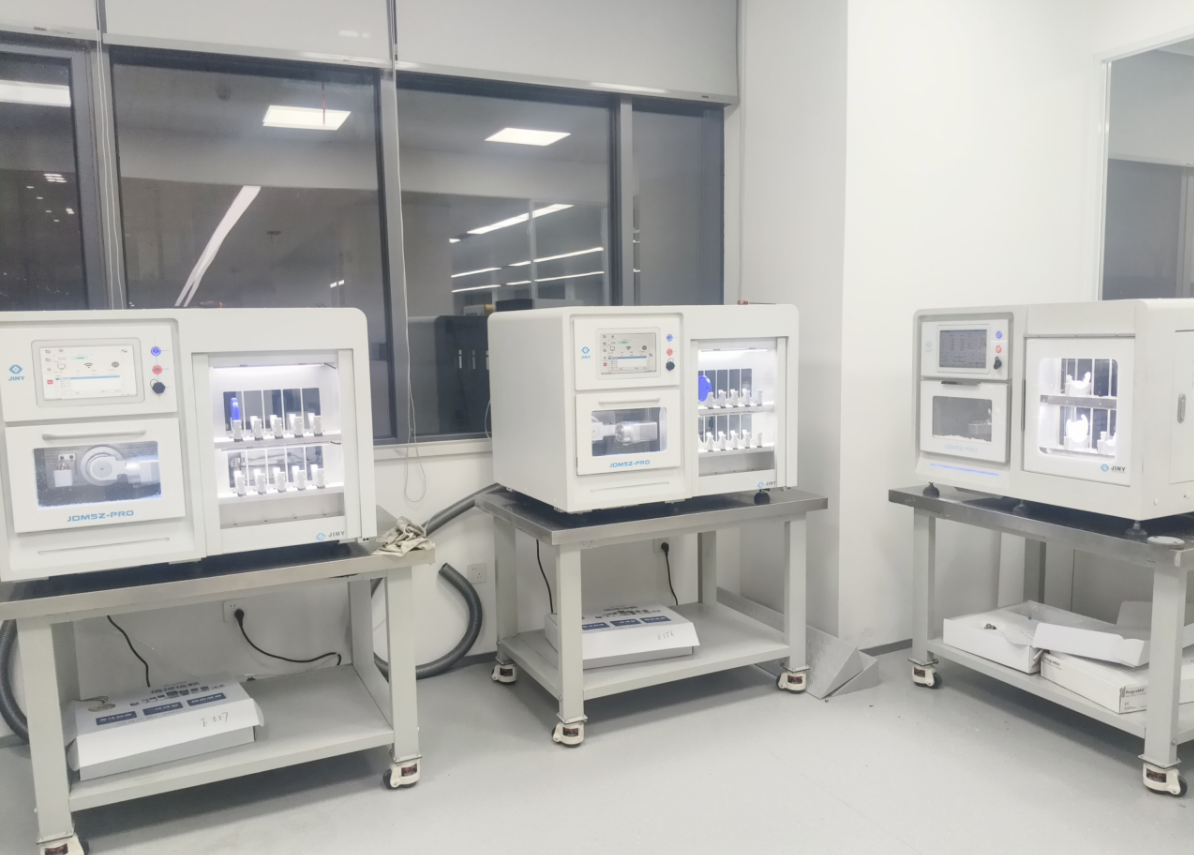
 The Role of Harmonic Drive Gears in Achieving 5–10 μm Accuracy in Dental Milling MachinesA dental milling machine is a CNC machining system used to directly process digital dental models into restorations such as crowns, bridges, veneers, inlays, and implant abutments. Dental milling machines require far higher operational accuracy and motion stability than ordinary equipment. This article explains how harmonic drive gear help dental milling machines achieve stable, continuous, and controllable operation.
 Why Are Harmonic Rotary Actuators Perfect for Medical Equipment?Harmonic rotary actuators (typically integrated systems consisting of a harmonic drive reducer, frameless torque motor, encoder, and optional brake) are regarded as key components in medical equipment. The core reason is that they simultaneously meet the most stringent medical requirements for precision, compact size, safety, and controllability. The following explanation is structured from three perspectives: technical characteristics, application scenarios, and medical value.
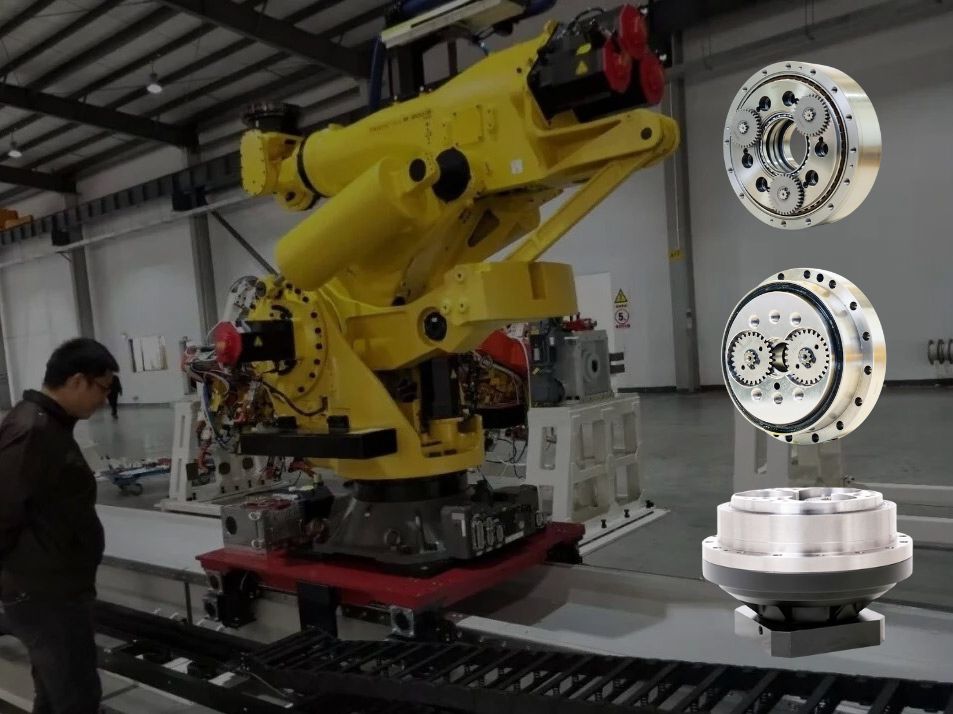
 High-Precision RV Reducers Perfectly Matched for Walking RobotsThe walking axis of a robot is a core component for power transmission and support. RV reducers provide extremely high rigidity, precision, and torque while maintaining a compact size and exceptional reliability, making them an ideal match for the demanding requirements of walking robot joints in terms of load capacity, impact resistance, and precision.
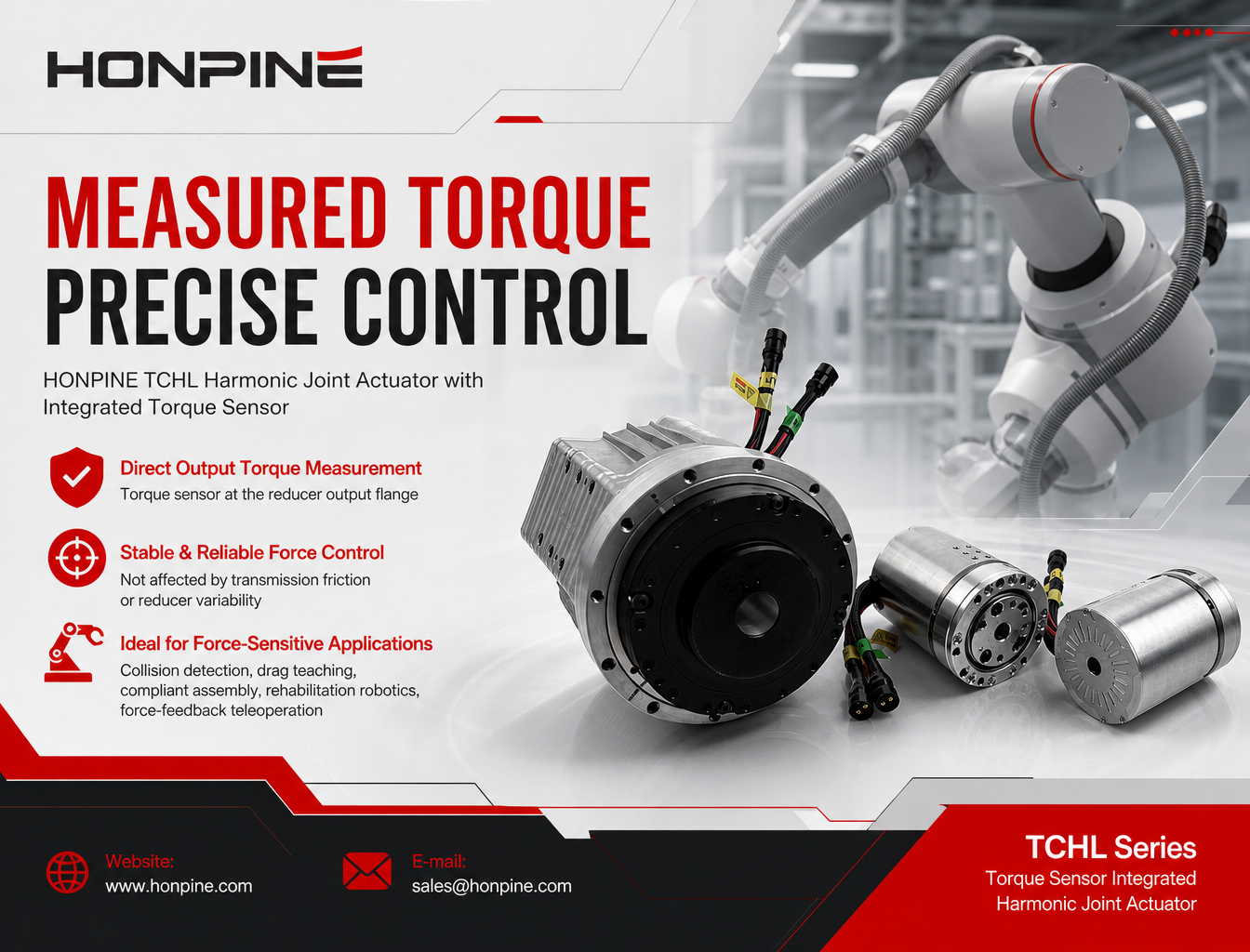
 How Does a Harmonic Joint Actuator with a Torque Sensor Improve Robot Force Control?Learn how the HONPINE TCHL harmonic joint actuator uses an integrated output torque sensor to support force feedback, collision detection, compliant assembly, rehabilitation robotics, and teleoperation.
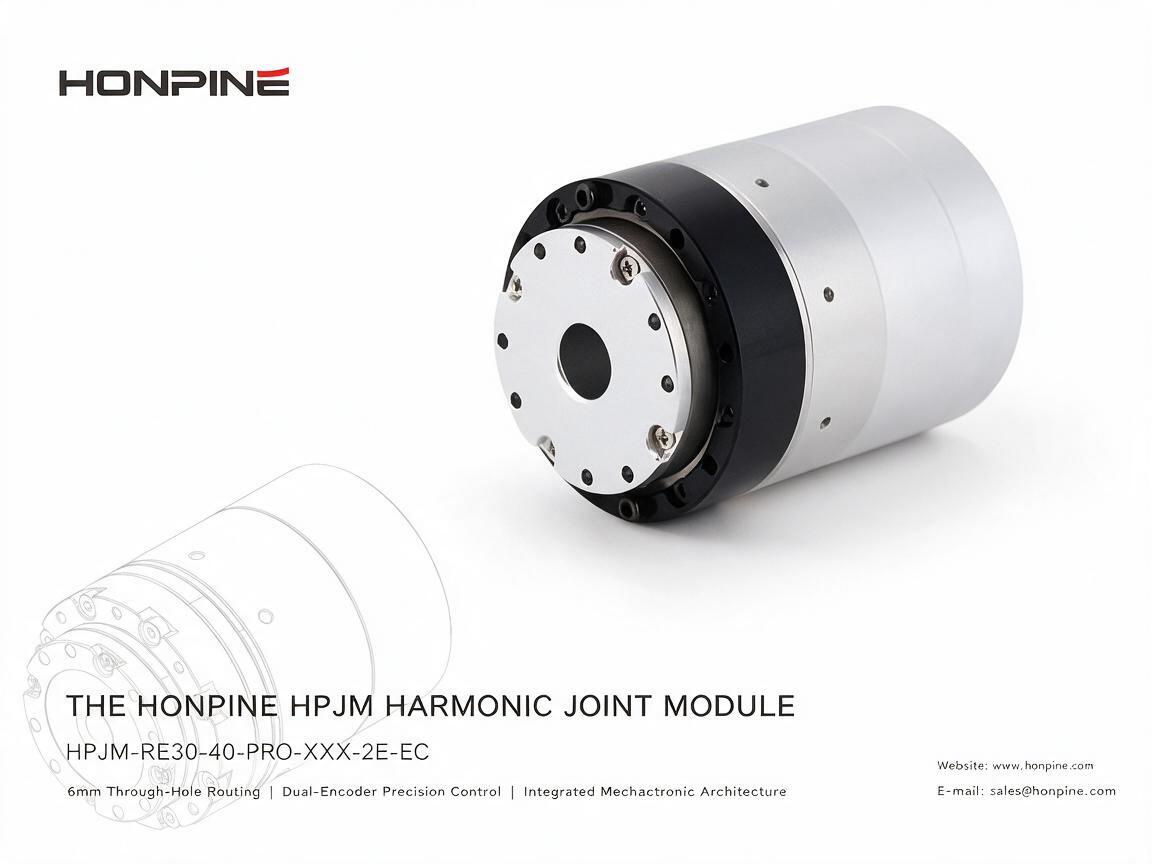
 Ultra-Compact Harmonic Joint Module with a 6 mm Hollow ShaftAs humanoid robots and compact robotic systems evolve, joint modules must deliver high torque density, precise motion control, and flexible cable routing within increasingly limited installation space. The HONPINE HPJM-RE30-40-PRO harmonic joint module addresses these challenges with a compact design, a 6 mm hollow shaft, dual-encoder feedback, and an integrated motor and FOC drive. In this article, we explore its key design features and explain how its hollow-shaft structure, EtherCAT connectivity, and flexible mounting options support the development of humanoid robots, drones, optical platforms, and precision automation equipment.
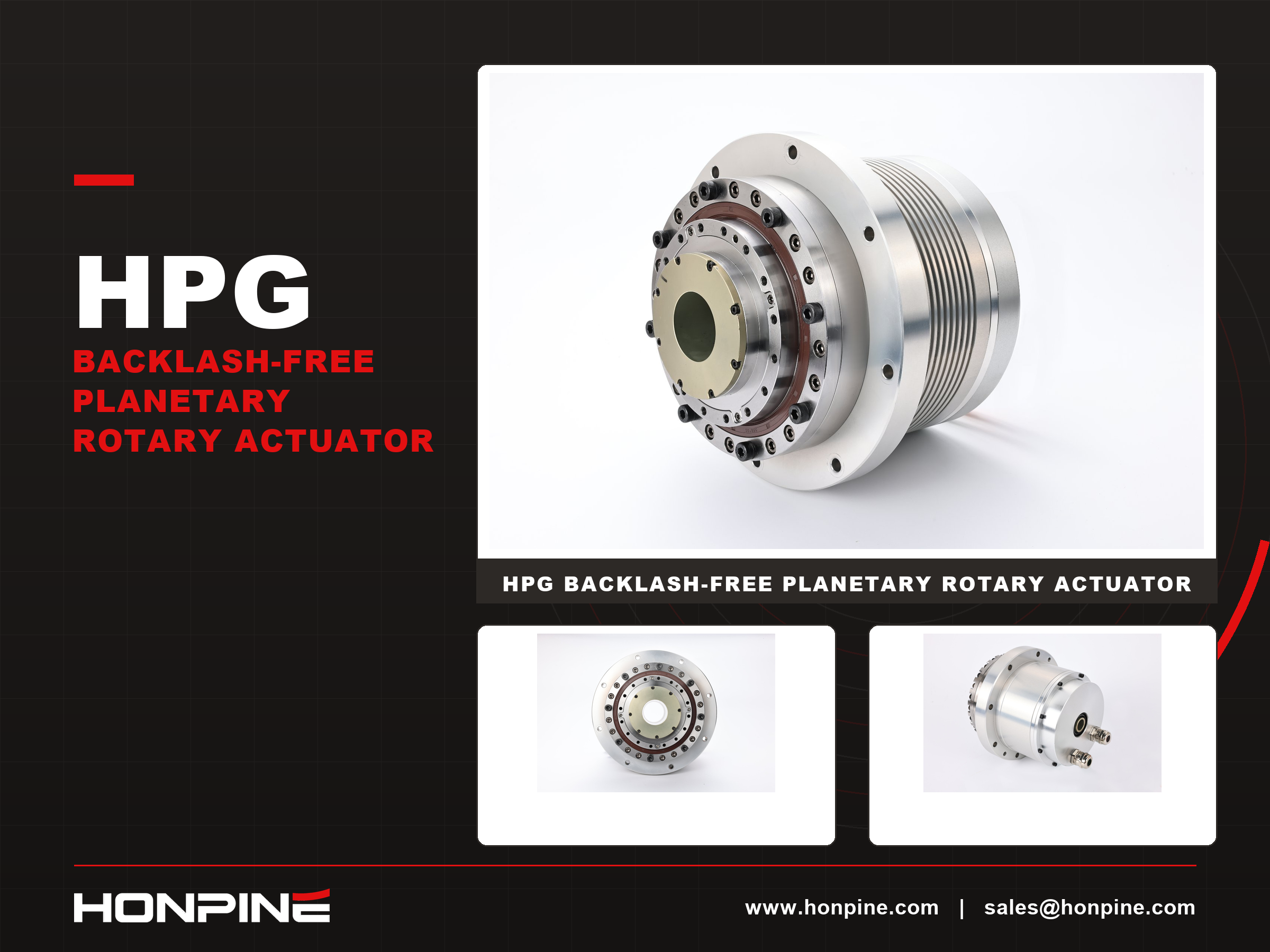
 How Does the HONPINE HPG Backlash-Free Planetary Rotary Actuator Balance CNC Accuracy and Rigidity?Discover the HONPINE HPG precision backlash-free planetary rotary actuator for CNC rotary tables. Explore positioning accuracy, torsional rigidity, low backlash, and drive selection.
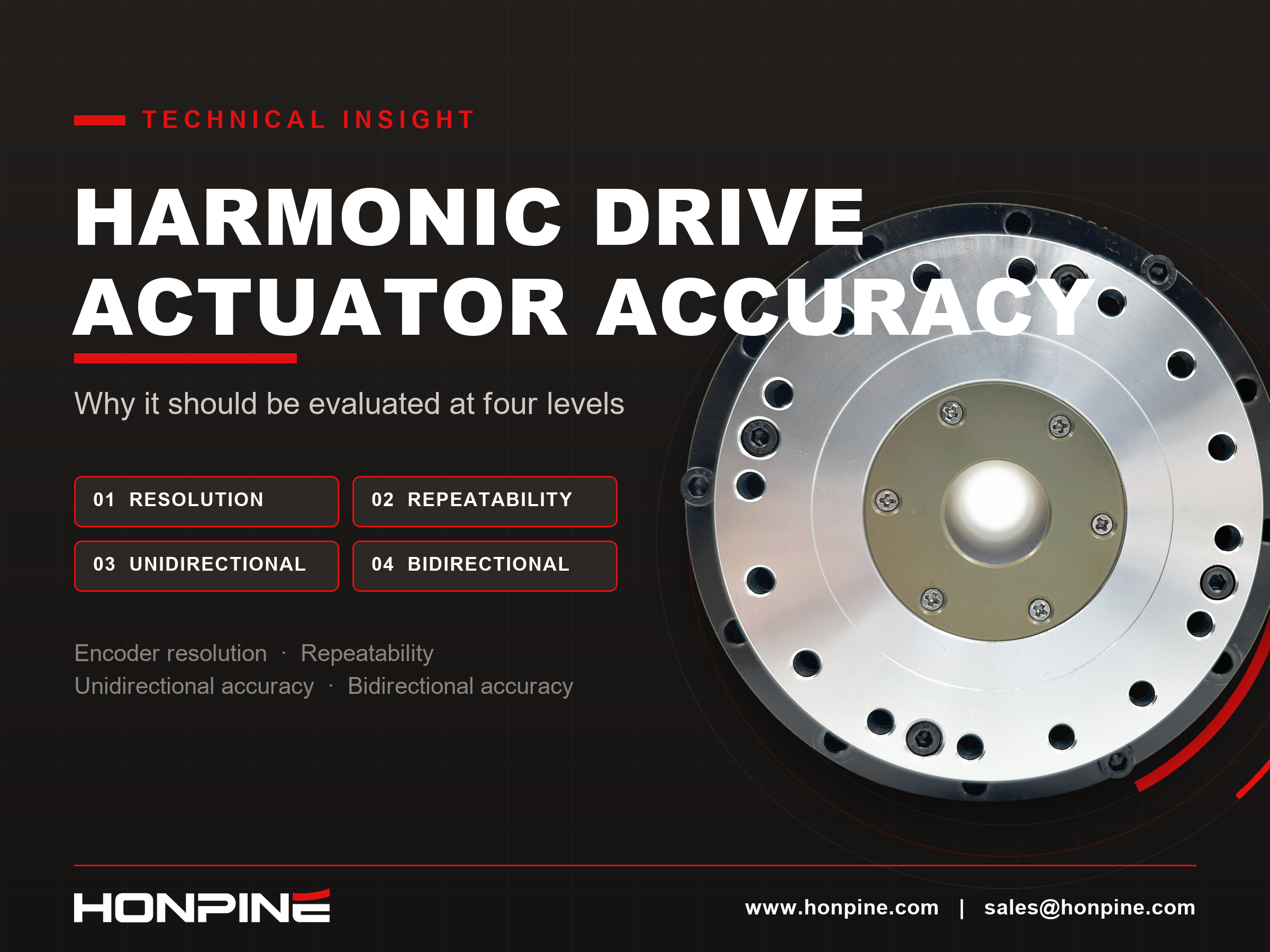
 Harmonic Drive Actuator Accuracy: Why It Should Be Evaluated at Four LevelsHarmonic drive actuator accuracy involves more than encoder resolution. Why should engineers evaluate it at four levels? Resolution, repeatability, unidirectional positioning accuracy, and bidirectional positioning accuracy describe different aspects of motion performance. Understanding these differences helps engineers select harmonic rotary actuators for semiconductor equipment, EFEM systems, and 3C automation without confusing theoretical encoder increments with actual positioning performance.
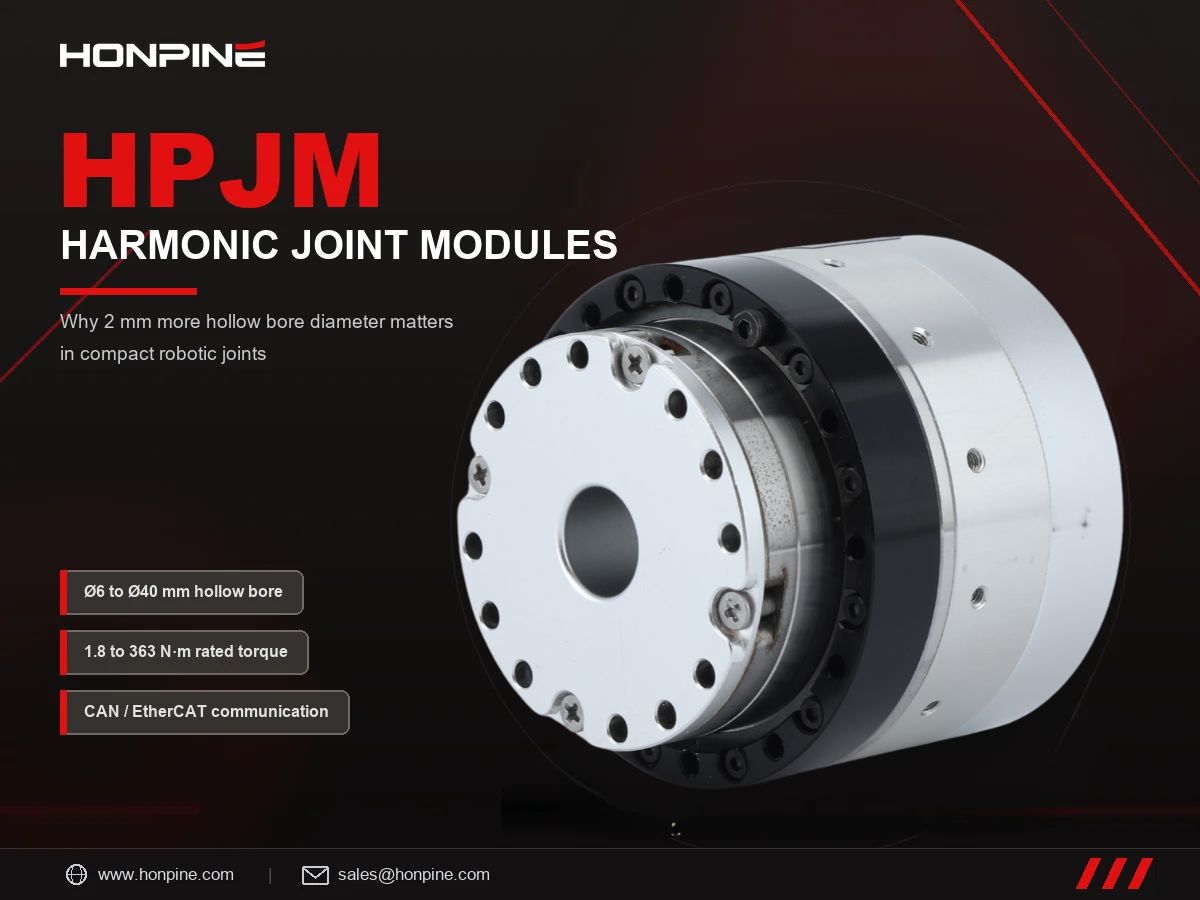
 Why Do Many Customers Choose HONPINE HPJM Harmonic Joint Modules for Just 2 mm More Hollow Bore Diameter?Why do many customers choose HONPINE HPJM harmonic joint modules for just 2 mm more hollow bore diameter? In compact robotic joints, this small dimensional difference can create a surprisingly large increase in available space. Because the cross-sectional area of a circular bore increases with the square of its diameter, an extra 2 mm can significantly improve internal cable routing and simplify system integration. This article examines the impact of hollow bore diameter, compares selected HONPINE HPJM models with comparable harmonic joint modules, and explains why bore size matters in humanoid robots, collaborative robots, and industrial automation.
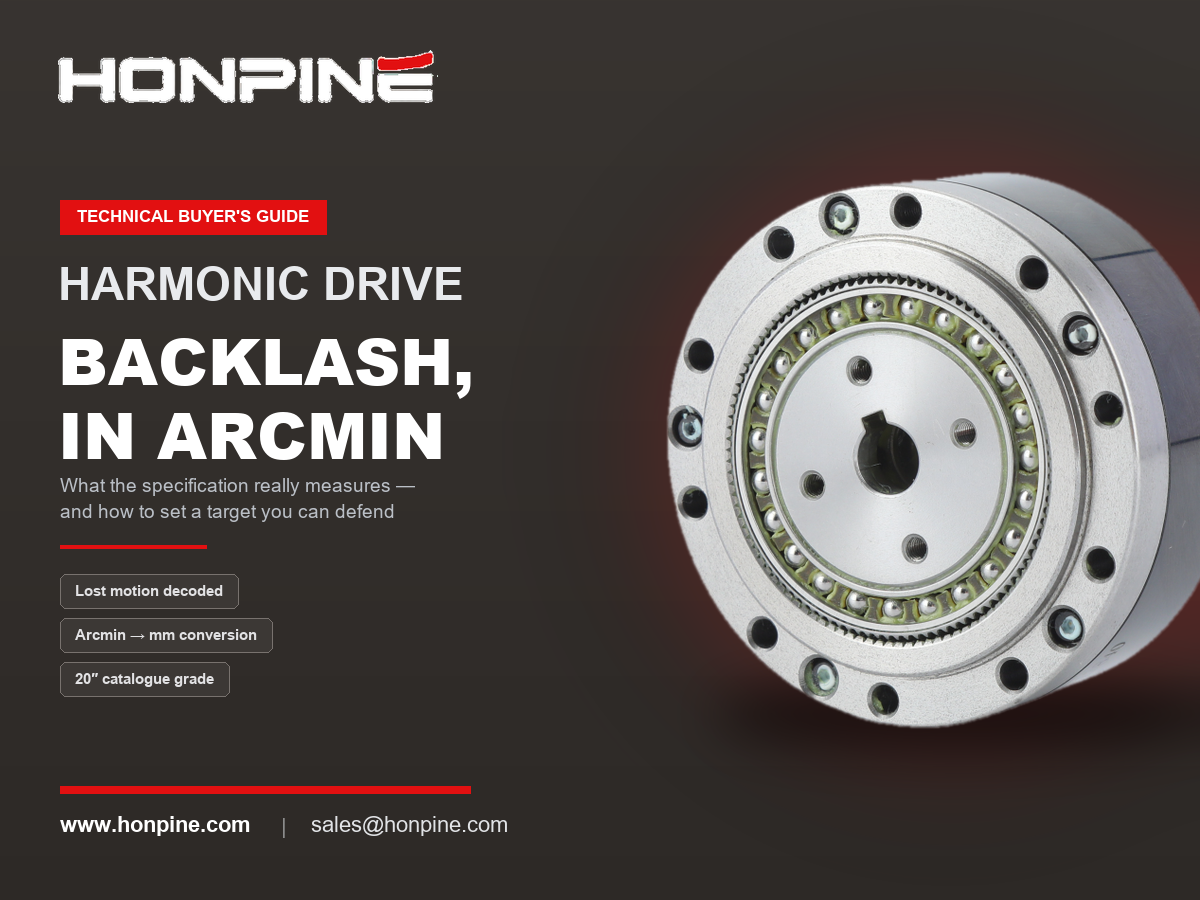
 Harmonic Drive Backlash in Arcmin: What the Specification Really Tells YouChoosing the right force control harmonic joint actuator involves more than comparing torque and dimensions. Torque sensor specifications, encoder feedback, communication protocols, functional safety, and hollow-shaft size can all affect system integration and control performance. In this guide, HONPINE Technical Director compares the TCHL and HAG harmonic joint actuator series, explaining their key differences and providing a practical selection framework for humanoid robots, collaborative manipulators, precision assembly, polishing, and other force-controlled applications.
Double Click
We provide harmonic drive reducer,planetary reducer,robot joint motor,robot rotary actuators,RV gear reducer,robot end effector,dexterous robot hand
![]() NexFabric Debuts NexCut AI Laser Cutting Diagnostics at EuroBLECH 2026NexCut AI laser cutting diagnostics debuts at EuroBLECH 2026. Discover how NexFabric aims to help workshops distinguish parameter issues from machine faults and streamline troubleshooting.
NexFabric Debuts NexCut AI Laser Cutting Diagnostics at EuroBLECH 2026NexCut AI laser cutting diagnostics debuts at EuroBLECH 2026. Discover how NexFabric aims to help workshops distinguish parameter issues from machine faults and streamline troubleshooting.![]() Bodor Laser Debuts Two Tube Laser Cutting Machines in Europe at EuroBLECH 2026Explore Bodor Laser’s two new tube laser cutting machines at EuroBLECH 2026 in Europe, including a four-chuck series with fully floating chuck technology. Discover the details.
Bodor Laser Debuts Two Tube Laser Cutting Machines in Europe at EuroBLECH 2026Explore Bodor Laser’s two new tube laser cutting machines at EuroBLECH 2026 in Europe, including a four-chuck series with fully floating chuck technology. Discover the details.![]() Japan’s WinTest Enters AMR Sales Business with China’s Youibot RoboticsWinTest’s entry into AMR sales with Youibot Robotics targets Japan’s industrial automation market. Explore what semiconductor factory buyers should verify before placing orders.
Japan’s WinTest Enters AMR Sales Business with China’s Youibot RoboticsWinTest’s entry into AMR sales with Youibot Robotics targets Japan’s industrial automation market. Explore what semiconductor factory buyers should verify before placing orders.![]() Chinese Forklift Leaders Expand into Smart Logistics and Robotics, Donghai SaysChinese forklift leaders Hangcha and Anhui Heli are expanding into smart logistics and robotics. Explore Donghai’s insights on investment plans and their potential impact on logistics automation.
Chinese Forklift Leaders Expand into Smart Logistics and Robotics, Donghai SaysChinese forklift leaders Hangcha and Anhui Heli are expanding into smart logistics and robotics. Explore Donghai’s insights on investment plans and their potential impact on logistics automation.![]() Ningbo Dongli Hits Limit Up on Robot Reducer Business and Strong First-Half EarningsExplore Ningbo Dongli's reported limit-up rally, robot reducer business and strong first-half earnings, plus essential supplier checks for equipment buyers.
Ningbo Dongli Hits Limit Up on Robot Reducer Business and Strong First-Half EarningsExplore Ningbo Dongli's reported limit-up rally, robot reducer business and strong first-half earnings, plus essential supplier checks for equipment buyers.![]() Humanoid Robot Stocks Surge as Demand for Harmonic Reducers and Other Key Parts AcceleratesHumanoid robot stocks surge as harmonic reducer demand gains momentum. Explore sourcing risks, supplier readiness and procurement insights to plan your next move.
Humanoid Robot Stocks Surge as Demand for Harmonic Reducers and Other Key Parts AcceleratesHumanoid robot stocks surge as harmonic reducer demand gains momentum. Explore sourcing risks, supplier readiness and procurement insights to plan your next move.![]() CNC Maker 07688.HK Announces Deal to Acquire at Least 70% of Machine Tool FirmCNC maker 07688.HK announces a deal to acquire at least 70% of a machine tool firm. Explore its five-axis expansion plans and what buyers should verify before ordering.
CNC Maker 07688.HK Announces Deal to Acquire at Least 70% of Machine Tool FirmCNC maker 07688.HK announces a deal to acquire at least 70% of a machine tool firm. Explore its five-axis expansion plans and what buyers should verify before ordering.![]() Nidec Machine Tool Launches MVR-5X Gantry-Type Five-Axis MachineDiscover Nidec Machine Tool's MVR-5X gantry-type five-axis machine, featuring a compact head with approximately 20 times its predecessor's spindle torque. Explore its machining potential.
Nidec Machine Tool Launches MVR-5X Gantry-Type Five-Axis MachineDiscover Nidec Machine Tool's MVR-5X gantry-type five-axis machine, featuring a compact head with approximately 20 times its predecessor's spindle torque. Explore its machining potential.![]() Wuhan’s Taiyi Servo Drive Chip Applied in Robot Joints in ShenzhenTaiyi servo drive chip powers robot joints in Shenzhen with over 4 kW instantaneous output and over 30% lower switching losses. Discover what this means for robot joint design.
Wuhan’s Taiyi Servo Drive Chip Applied in Robot Joints in ShenzhenTaiyi servo drive chip powers robot joints in Shenzhen with over 4 kW instantaneous output and over 30% lower switching losses. Discover what this means for robot joint design.![]() FAIRINO Raises Nearly RMB 1bn; Harmonic Reducer Materials Patent Application PublishedFAIRINO Robotics raises nearly RMB 1bn as a harmonic reducer materials patent application is published. Explore what buyers should verify on durability, IP and supplier qualification.
FAIRINO Raises Nearly RMB 1bn; Harmonic Reducer Materials Patent Application PublishedFAIRINO Robotics raises nearly RMB 1bn as a harmonic reducer materials patent application is published. Explore what buyers should verify on durability, IP and supplier qualification.![]() 23rd China (Yuhuan) International Machine Tool Exhibition Opens October 23Explore the 23rd China (Yuhuan) International Machine Tool Exhibition, October 23–26, 2026. Discover CNC machine tools and automation solutions to match your production needs.
23rd China (Yuhuan) International Machine Tool Exhibition Opens October 23Explore the 23rd China (Yuhuan) International Machine Tool Exhibition, October 23–26, 2026. Discover CNC machine tools and automation solutions to match your production needs.![]() 140th Canton Fair First Phase Closes After Showcasing CNC Machine ToolsExplore CNC machine tools at the 140th Canton Fair, from precision cutting to robotic arms and industrial 3D printing. Discover capabilities to assess for your production needs.
140th Canton Fair First Phase Closes After Showcasing CNC Machine ToolsExplore CNC machine tools at the 140th Canton Fair, from precision cutting to robotic arms and industrial 3D printing. Discover capabilities to assess for your production needs.