








DD Motor vs Harmonic Reducer for Collaborative Robot Joints: Which Is Better?
Introduction
Collaborative robots are designed to work in environments where humans and robots share the same workspace. This creates different requirements for robot joint design compared with conventional industrial robots.
A collaborative robot joint needs to provide sufficient torque and positioning accuracy while also maintaining compact dimensions, low weight, smooth motion, responsive control and appropriate force interaction.
This makes the choice of robot joint transmission particularly important.
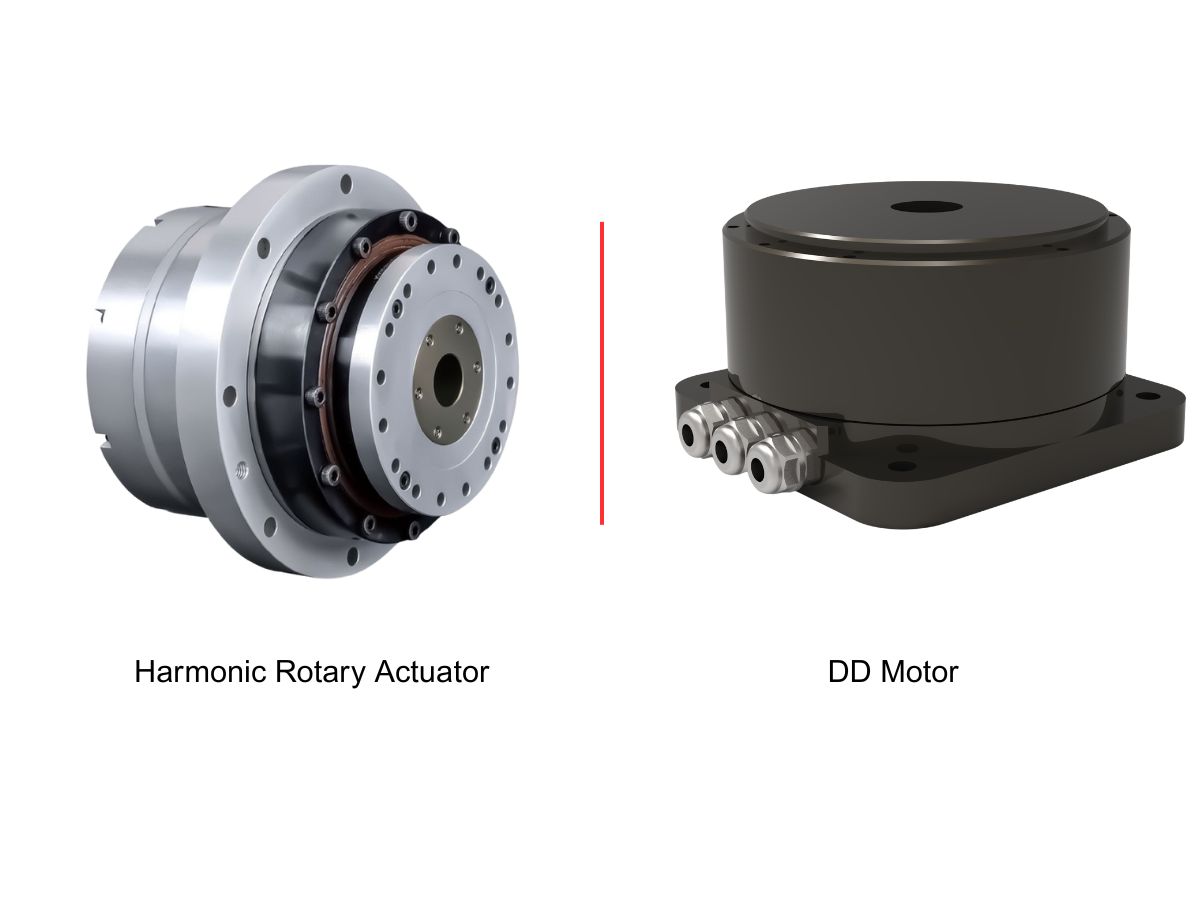
Two technologies that can be considered for collaborative robot joints are the DD motor (direct-drive motor) and the harmonic reducer. A DD motor drives the joint directly without a mechanical reduction stage, while a harmonic reducer combines a high-speed servo motor with a high-ratio precision transmission.
Neither technology is universally better. The more practical question is which solution provides the right balance of torque density, backdrivability, dynamic response, joint size, rigidity, thermal performance and control requirements for a particular collaborative robot.
This article compares DD motors and harmonic reducers for collaborative robot joints and explains when each technology may be a better choice.
What Does a Collaborative Robot Joint Need?
Before comparing DD motors and harmonic reducers, it is important to understand the requirements of a collaborative robot joint.
Unlike a simple rotary mechanism, a robot joint must repeatedly accelerate, decelerate, reverse direction and maintain precise position while carrying a moving link and payload.
The joint therefore needs to handle several requirements simultaneously.
Torque density is important because the actuator needs to generate sufficient torque without making the robot arm excessively heavy.
Low backlash is valuable for maintaining positioning accuracy and predictable motion.
Backdrivability becomes important when the robot needs to respond naturally to external forces.
Dynamic response affects how quickly the robot can accelerate, decelerate and react to changes in motion.
Rigidity influences the robot's ability to maintain its commanded position under load.
Thermal performance also matters because collaborative robots often operate for long periods in compact joint housings.
These requirements can lead to different transmission choices depending on the robot architecture.
How Does a Harmonic Reducer Work in a Collaborative Robot Joint?
A harmonic reducer is normally combined with a servo motor to form a high-performance robot joint drive.
The motor operates at relatively high speed, while the harmonic transmission provides a high reduction ratio and converts the motor output into the lower-speed, higher-torque motion required by the robot joint.
The compact transmission structure allows a relatively small motor to generate a much higher output torque at the joint.
This is one of the main reasons harmonic reducers are widely considered for robotic joints.
A harmonic reducer can also provide very low backlash, which is valuable for applications requiring precise positioning and coordinated multi-axis motion.
For collaborative robots, this combination of high reduction ratio, compact size, low backlash and high torque density can be particularly useful for shoulder, elbow and other load-bearing joints.
However, a harmonic reducer is still a mechanical transmission.
Its dynamic behavior, efficiency, torsional characteristics and backdrivability depend on the specific reducer design, reduction ratio, load and operating conditions.
Therefore, engineers should evaluate the complete joint rather than assuming that every harmonic reducer provides the same performance.
How Does a DD Motor Work in a Collaborative Robot Joint?
A DD motor takes a different approach.
Instead of placing a reduction mechanism between the motor and the robot joint, the motor directly drives the output.
Because there is no conventional mechanical reduction stage, the system can have fewer transmission components.
This can provide several benefits.
The absence of a mechanical reduction stage eliminates gear backlash associated with the transmission and can provide a direct relationship between motor torque and joint movement.
DD motors can also provide excellent dynamic response.
When the joint needs rapid acceleration, deceleration or frequent changes in direction, direct drive can be attractive because there are fewer mechanical transmission elements between the motor and the load.
Another important characteristic is backdrivability.
A direct-drive joint can generally be easier to backdrive than a highly geared joint, making DD motors interesting for applications where force interaction and compliant motion are important.
The limitation is torque.
Because there is no reduction mechanism multiplying the motor torque, the DD motor itself must generate the required joint torque.
For a high-torque collaborative robot joint, this can require a larger motor with a larger active diameter and greater thermal capacity.
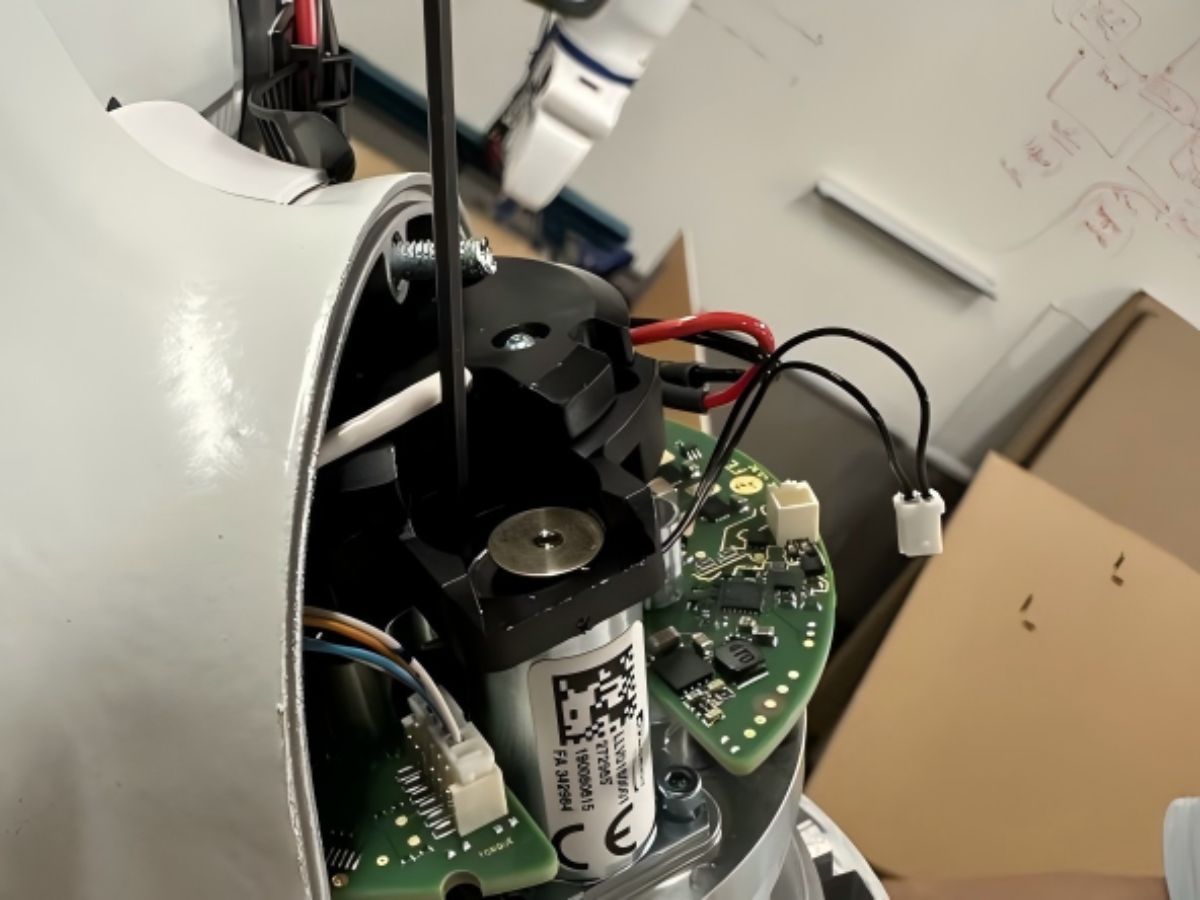
Harmonic Reducer vs DD Motor for Collaborative Robot Joint Torque
Torque density is one of the most important differences between the two approaches.
With a harmonic reducer, the motor does not need to directly generate the final joint torque. The reduction mechanism increases output torque while reducing rotational speed.
This makes it easier to create a compact high-torque joint.
A DD motor must produce the required output torque directly.
For low-torque joints, this may not be a significant limitation.
However, as the required joint torque increases, the motor size, current and thermal requirements can increase significantly.
For this reason, harmonic transmission can be attractive for collaborative robot joints that need high torque within a limited mechanical envelope.
DD motors become more interesting when the required torque is moderate and the design places greater emphasis on direct drive, high dynamic response and backdrivability.
Which Provides Better Backdrivability: DD Motor or Harmonic Reducer?
Backdrivability is particularly important in collaborative robotics.
A robot may need to detect external forces, react to contact and operate safely around people.
A highly geared transmission can resist external movement because the load must drive the motor through the transmission.
A DD motor does not have this same reduction mechanism.
The load is directly connected to the motor, which can make the joint naturally responsive to external forces.
This is one of the strongest arguments for DD motors in force-sensitive robotic applications.
However, this does not mean that harmonic robot joints cannot support force control.
A harmonic joint can use high-resolution encoder feedback, motor current information or an integrated torque sensor to support force and torque control.
The actual performance therefore depends on the complete joint architecture.
For applications requiring highly sensitive force interaction, engineers should evaluate not only the transmission type but also the encoder configuration, torque sensing, control algorithm and mechanical friction.
Which Is More Compact for Collaborative Robot Joints?
Compactness is another area where harmonic reducers can have an advantage.
A harmonic reducer can provide a high reduction ratio in a relatively small package
This allows the motor and transmission to be integrated into a compact joint housing.
For a six-axis collaborative robot, this can be important because every joint contributes to the overall size and weight of the robot.
Reducing the mass of the upstream joints can also reduce the torque required from the joints further down the robot arm.
A DD motor can eliminate the reducer, but this does not necessarily mean the complete joint will be smaller.
The motor needs to produce the required torque directly, so a high-torque DD motor may require a relatively large diameter.
Therefore, removing the reducer does not automatically result in a smaller robot joint.
The correct comparison should be based on the complete actuator envelope, including the motor, bearings, housing, encoder and cooling structure.
Harmonic Reducer vs DD Motor for Robot Joint Accuracy
Both technologies can support high-precision robot joints, but they achieve it differently.
Harmonic reducers are attractive because they can provide extremely low backlash and a high reduction ratio.
This makes them suitable for applications where precise angular positioning is important.
DD motors eliminate mechanical reduction backlash altogether.
However, the absence of gearbox backlash does not guarantee higher system accuracy.
The final robot joint accuracy is also affected by:
Encoder resolution
Bearing accuracy
Motor control
Structural deformation
Thermal expansion
Mechanical stiffness
For a collaborative robot, these factors need to be evaluated together.
A DD motor with excellent encoder feedback but insufficient structural rigidity may not outperform a well-designed harmonic joint.
Similarly, a harmonic reducer with low backlash cannot compensate for poor encoder feedback or excessive structural deformation.
Which Is Better for High-Speed Collaborative Robot Motion?
DD motors have a natural advantage when high-speed continuous rotary motion and rapid dynamic response are important.
Because the motor directly drives the load, there is no reduction stage that needs to transmit the motion.
This can be valuable in applications requiring frequent acceleration and deceleration.
Harmonic reducers can also support fast robot motion, but the maximum output speed is constrained by the transmission and selected reduction ratio.
For collaborative robot joints that need high output speed but relatively low torque, DD motors can therefore be an attractive option.
For joints that require high torque at relatively low output speed, harmonic transmission may provide a more practical solution.
Harmonic Reducer vs DD Motor for Collaborative Robot Force Control
Force control is becoming increasingly important in collaborative robotics.
Applications such as assembly, polishing, insertion, inspection and human-robot interaction require the robot to respond to contact forces rather than simply follow a predefined position trajectory.
DD motors are naturally attractive for these applications because the motor is directly connected to the output.
The mechanical relationship between motor torque and joint torque is relatively direct.
However, a harmonic joint can also be designed for force-controlled applications.
For example, an integrated robot joint can use an output-side encoder or torque sensor to obtain more direct information about joint movement or torque.
This can significantly improve the ability of the control system to distinguish between motor-side motion and actual output motion.
For high-performance collaborative robot joints, the question should therefore not simply be:
DD motor or harmonic reducer?
A better question is:
How accurately can the complete joint measure and control output torque?
Harmonic Joint Modules Can Integrate More Than the Reducer
A modern robot joint module is not simply a harmonic reducer.
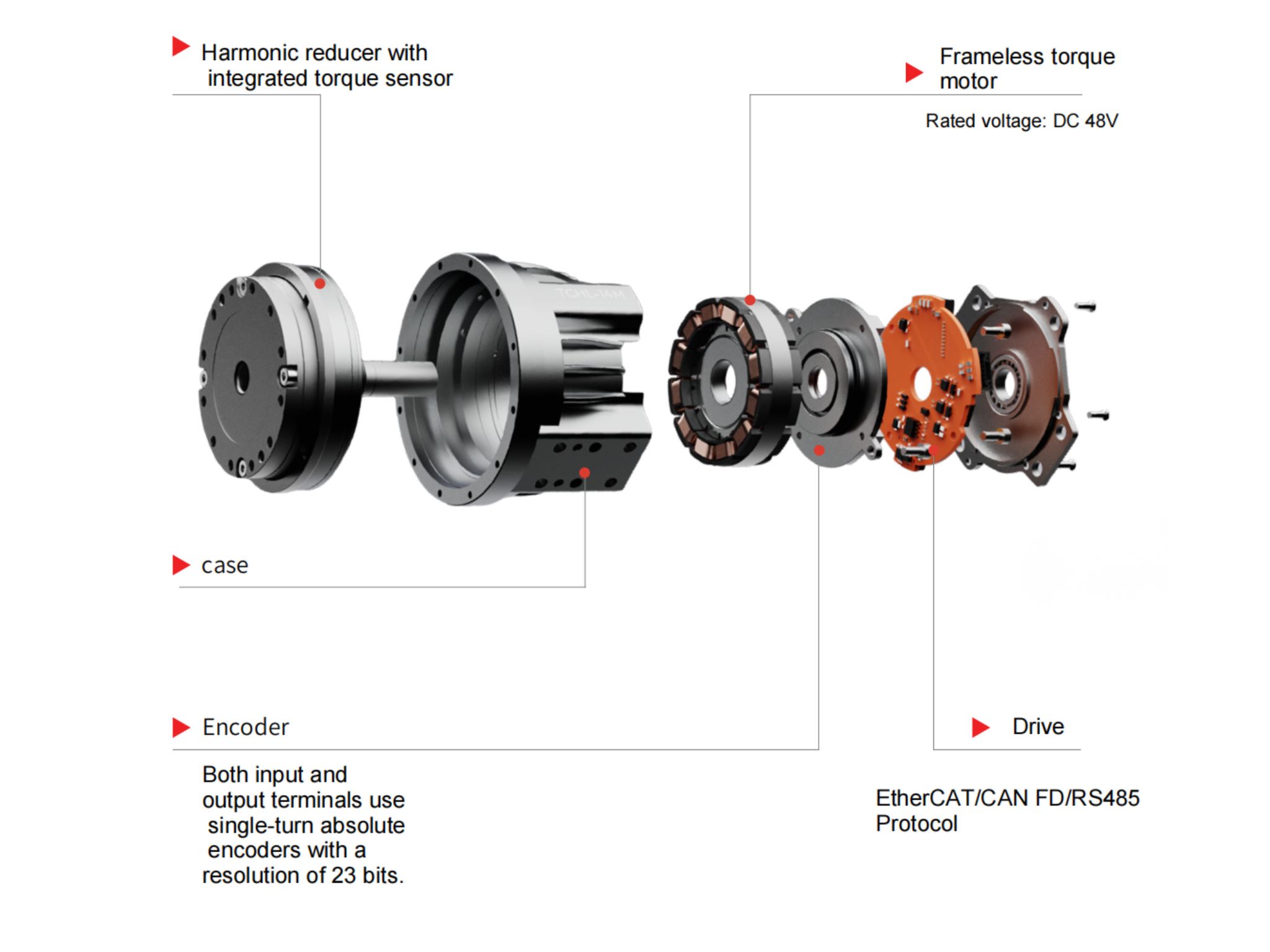
A complete joint module may integrate:
Servo Motor
Harmonic Reducer
Encoder
Driver
Brake
Torque Sensor
Housing
Bearings
This level of integration can reduce the engineering work required to build a robotic joint.
For collaborative robot manufacturers, an integrated harmonic joint module can also provide a more standardized mechanical and electrical interface.
This can be useful when developing multiple robot models with different payload capacities.
The main advantage is not simply the harmonic reducer itself, but the ability to integrate the transmission, motor, sensing and control components into a compact actuator.
When Should You Choose a Harmonic Reducer for a Collaborative Robot?
A harmonic reducer is worth considering when the collaborative robot joint requires a combination of high torque, compact dimensions and low backlash.
It can be particularly suitable for joints where the actuator needs to support significant load while remaining relatively lightweight.
Typical applications may include:
Collaborative robot arms
Six-axis collaborative robots
Humanoid robot joints
Mobile manipulators
Precision robotic arms
For these applications, the harmonic transmission can provide a practical balance between torque density, precision and package size.
However, the reducer should be selected according to actual torque, speed, load inertia, duty cycle and thermal conditions rather than simply choosing the highest reduction ratio available.
When Should You Choose a DD Motor for a Collaborative Robot?
A DD motor may be more suitable when direct drive and high dynamic response are the primary design requirements.
Typical considerations include:
High backdrivability
Fast acceleration and deceleration
Continuous rotation
Direct torque control
Low mechanical transmission complexity
DD motors can be especially attractive for selected wrist joints, force-sensitive mechanisms and specialized collaborative robot architectures.
They may be less attractive when the joint needs very high torque within an extremely compact housing.
In those cases, the additional motor size required to generate the torque directly can become a significant design constraint.
DD Motor vs Harmonic Reducer: Which Is Better for Different Robot Joints?
The best technology may also vary between different axes of the same robot.
A shoulder or base joint generally needs high torque because it supports a large portion of the robot structure and payload.
A harmonic joint module can therefore be attractive for these positions.
An elbow joint also needs significant torque and compactness, making harmonic transmission a practical option in many designs.
Wrist joints often have different requirements.
Lower weight, high speed and dynamic response can become more important, so a DD motor may be worth evaluating depending on the robot architecture.
This means that a robot manufacturer does not necessarily need to use exactly the same actuator architecture for every joint.
Different joint positions can have different torque, speed, inertia and force-control requirements.
How to Choose Between a DD Motor and Harmonic Reducer for a Cobot
The selection can be simplified by evaluating the actual design priorities.
If the joint requires high torque density, compact dimensions, high reduction ratio and very low backlash, a harmonic reducer is often a strong candidate.
If the joint prioritizes direct drive, backdrivability, high dynamic response and low mechanical transmission complexity, a DD motor may be more attractive.
If the application requires highly responsive force control, both technologies should be evaluated together with the sensing architecture.
A torque sensor, dual encoder configuration and suitable servo control can have a significant influence on the final performance of the robot joint.
Conclusion: DD Motor or Harmonic Reducer for Collaborative Robots?
There is no universal winner between a DD motor and a harmonic reducer.
A harmonic reducer is generally more attractive when a collaborative robot joint requires high torque density, compact dimensions, low backlash and a high reduction ratio.
A DD motor becomes more attractive when direct drive, backdrivability, high dynamic response and continuous rotary motion are the primary requirements.
For many compact collaborative robot arms, harmonic joint modules offer a practical combination of torque, precision and integration. For specialized joints that emphasize direct force interaction and dynamic response, DD motors can provide important advantages.
The most important point is to evaluate the complete robot joint, not just the motor or reducer.
Motor torque, reduction ratio, encoder feedback, bearing capacity, structural rigidity, thermal performance, force sensing and control architecture all contribute to the final performance.
For robot manufacturers developing collaborative robots, the right solution may therefore be a harmonic joint module for high-torque axes and a direct-drive architecture for selected high-speed or force-sensitive joints, depending on the robot's mechanical and control requirements.
HONPINE provides harmonic reducers, harmonic rotary actuators, robot joint modules and DD motor solutions for different robotic motion requirements, allowing engineers to select the appropriate transmission architecture according to the actual application.
Read More
Learn more about the story of HONPINE and industry trends related to precision transmission.
 What is robot joint actuator?How to Choose the Best Robot Rotary Joint Actuator?In core robot joint transmission solutions, planetary and harmonic rotary actuators each have their own strengths. Choosing the right type based on application requirements is essential to achieve the optimal balance between performance and cost.
 DD Motors VS Harmonic Rotary ActuatorsThis article provides an in-depth comparison between Direct Drive (DD) motors and harmonic rotary actuators, covering their transmission principles, advantages and disadvantages, and typical application fields.
 OMG Ultra Compact Harmonic Drive Joint Module with Built-in Torque SensorHONPINE TCHL series harmonic drive joint module is a game-changing product that achieves disruptive improvements in multiple aspects such as lightweight design, integration level, and connection convenience. This article will analyze its revolutionary enhancements with you.
 The Role of Harmonic Drive Gears in Achieving 5–10 μm Accuracy in Dental Milling MachinesA dental milling machine is a CNC machining system used to directly process digital dental models into restorations such as crowns, bridges, veneers, inlays, and implant abutments. Dental milling machines require far higher operational accuracy and motion stability than ordinary equipment. This article explains how harmonic drive gear help dental milling machines achieve stable, continuous, and controllable operation.
 Why Are Harmonic Rotary Actuators Perfect for Medical Equipment?Harmonic rotary actuators (typically integrated systems consisting of a harmonic drive reducer, frameless torque motor, encoder, and optional brake) are regarded as key components in medical equipment. The core reason is that they simultaneously meet the most stringent medical requirements for precision, compact size, safety, and controllability. The following explanation is structured from three perspectives: technical characteristics, application scenarios, and medical value.
 High-Precision RV Reducers Perfectly Matched for Walking RobotsThe walking axis of a robot is a core component for power transmission and support. RV reducers provide extremely high rigidity, precision, and torque while maintaining a compact size and exceptional reliability, making them an ideal match for the demanding requirements of walking robot joints in terms of load capacity, impact resistance, and precision.
 Why Are Harmonic Reducers Suitable for High-Precision Automation Equipment?Precision automation equipment depends on consistent rotary motion, reliable positioning and compact transmission design. From dispensing head orientation and component angular alignment to automated inspection indexing, harmonic reducers offer a practical solution for applications requiring low backlash and high reduction ratios in limited installation space. This article explains how harmonic reducers support repeatable motion, compares key design configurations, and outlines how to select a suitable reduction ratio and reducer structure based on load, speed, accuracy and machine cycle-time requirements.
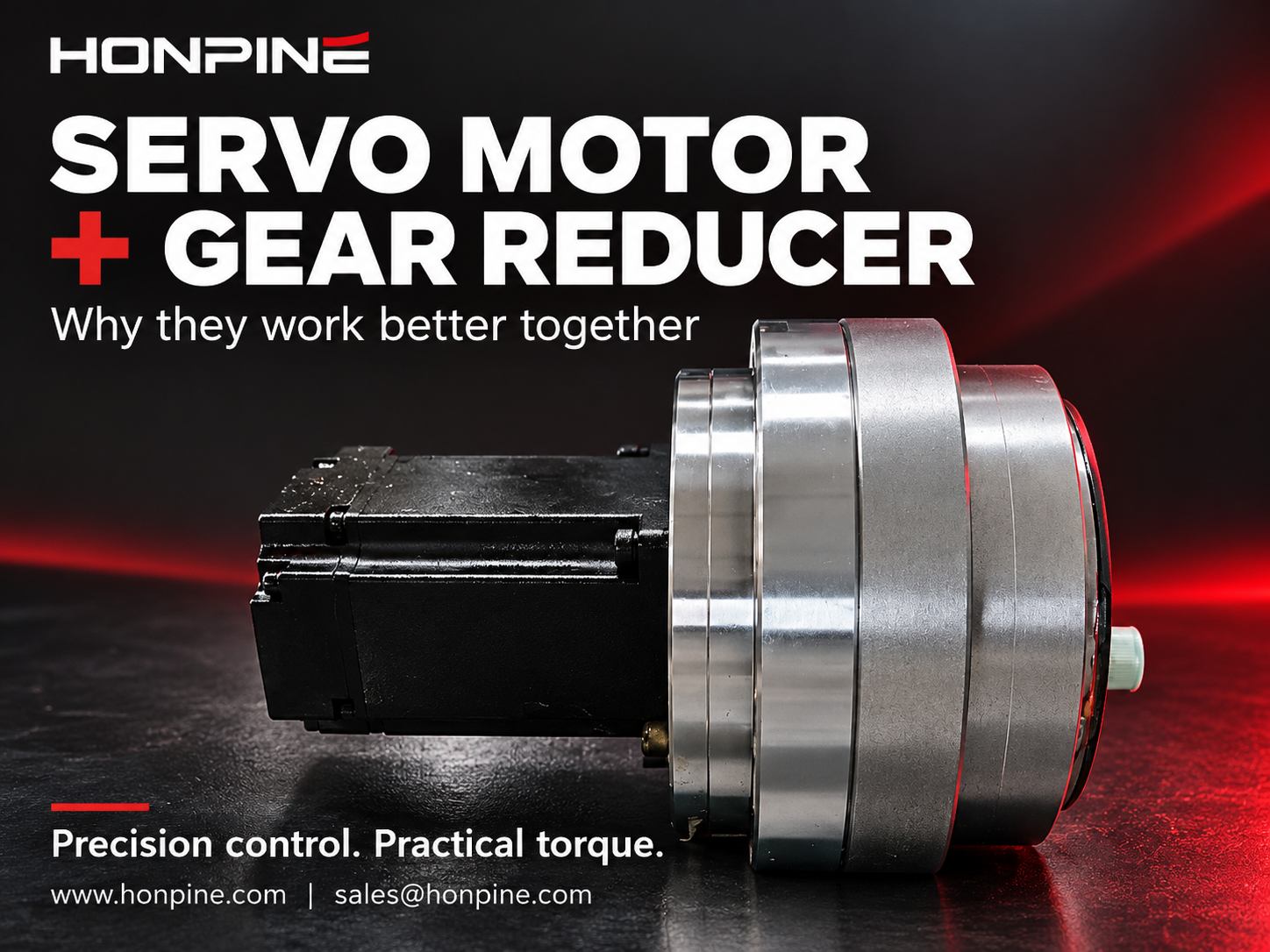
 Why Are Servo Motors and Gear Reducers an Ideal Match?Servo motors provide fast, precise motion control, while gear reducers adapt their speed and torque to the load. This guide explains how servo motors and gear reducers work together through torque multiplication, reflected inertia reduction and finer theoretical position resolution. Learn how inertia matching, backlash, torsional stiffness and reduction ratio influence performance in robotics and industrial automation.
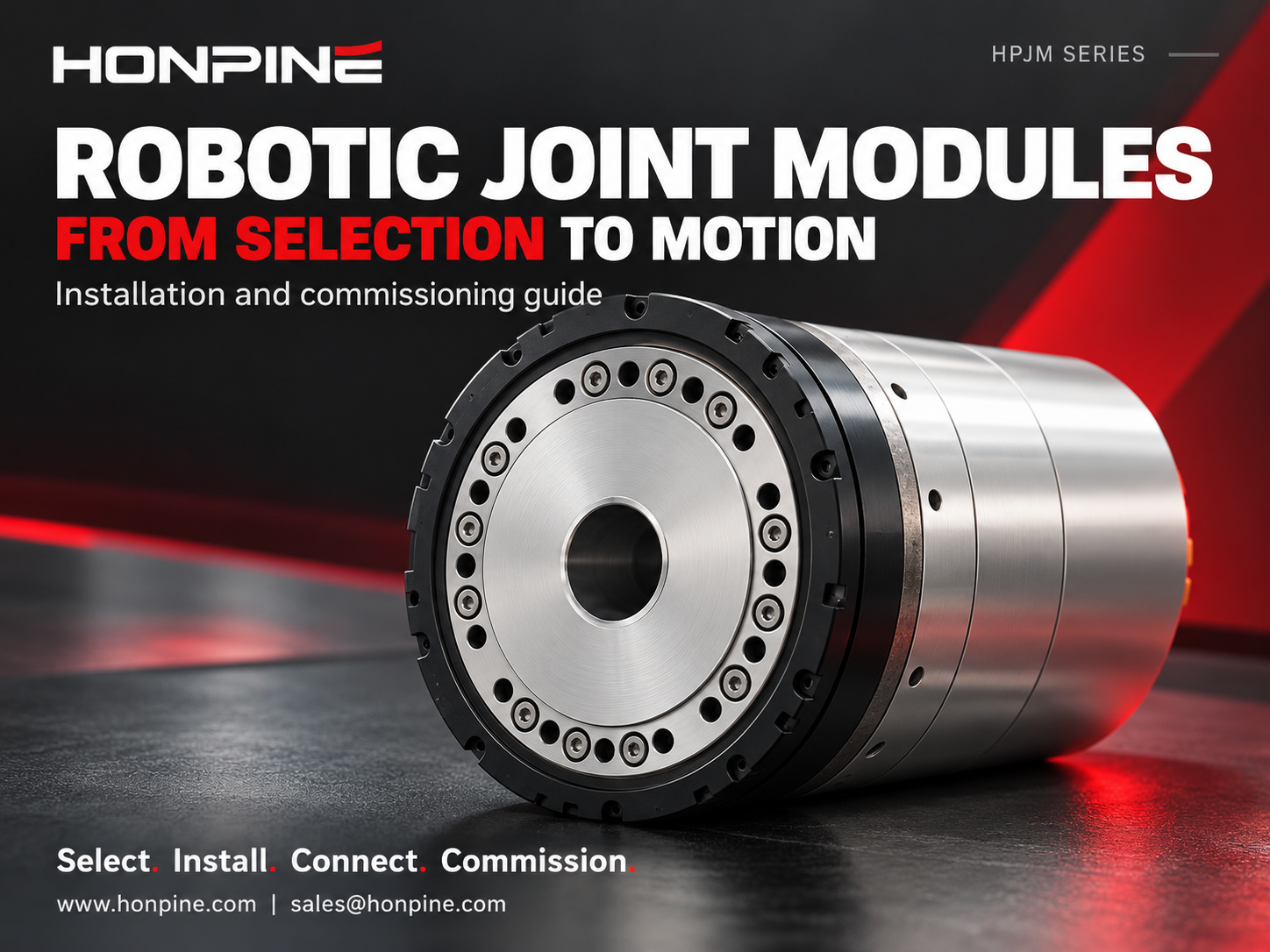
 How to Select and Use Robotic Joint Modules?How do you take robotic joint modules from selection to controlled motion? Using the HONPINE HPJM harmonic joint module as an example, Technical Director Theodore Li explains the key steps in mechanical installation, electrical wiring, CAN and EtherCAT configuration, and control commissioning. Learn what to confirm before integration and how to approach setup so each joint can respond correctly to your controller.
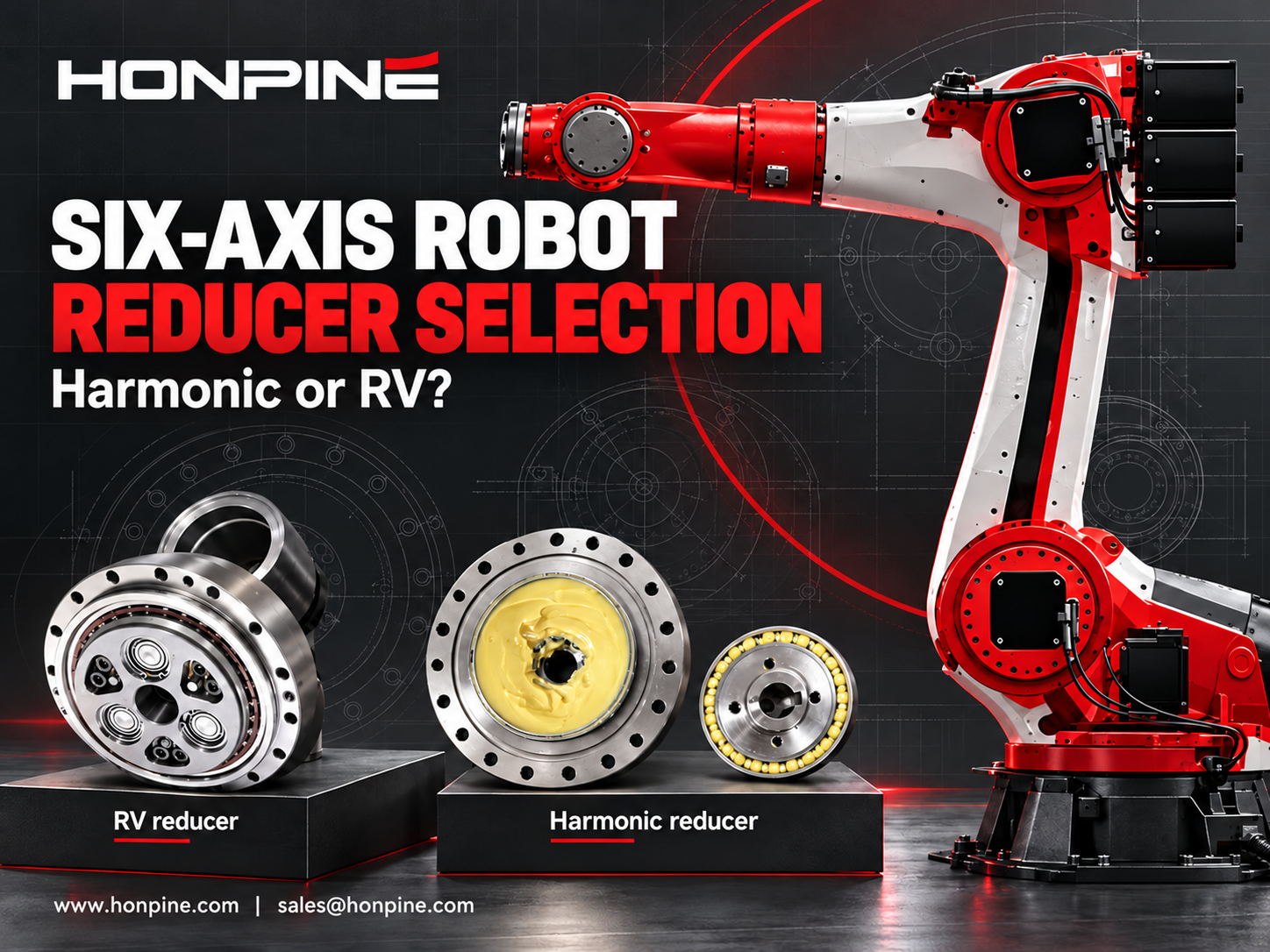
 How to Select Harmonic and RV Reducers for Each Axis of a Six-Axis Robot?What determines whether a six-axis robot joint needs a harmonic reducer or an RV reducer? The answer depends on torque, inertia, impact loads, bearing loads and installation space. This guide explains how to evaluate harmonic and RV reducers for the base, shoulder, elbow and wrist, with practical checks for stiffness, backlash and service life. Use the requirements of each axis to select a suitable reducer configuration.
 Top 7 RV Reducer Gearbox Manufacturers: Why Does Nabtesco Still Dominate?What sets RV reducer gearbox manufacturers apart, and why does Nabtesco remain a benchmark in this market? RV reducer production demands precise component machining, careful assembly and extensive engineering know-how. This article introduces seven manufacturers across RV reducers and related transmission technologies, examines the strengths behind Nabtesco's position, and explores HONPINE's development capabilities to help you understand the supplier landscape.
 How to Calculate Torque for a Harmonic Rotary Actuator in a Flipping Mechanism?How much torque does a harmonic rotary actuator need to flip a 10 kg load through 180 degrees? The answer depends on more than weight. Center-of-gravity offset, load inertia, acceleration and operating frequency all affect actuator selection. In this guide, Theodore Li, Technical Director at HONPINE, explains the calculation process using a horizontal-axis flipping example and outlines the checks needed for peak torque, continuous operation, output speed and bearing loads.
Double Click
We provide harmonic drive reducer,planetary reducer,robot joint motor,robot rotary actuators,RV gear reducer,robot end effector,dexterous robot hand
 What is robot joint actuator?How to Choose the Best Robot Rotary Joint Actuator?In core robot joint transmission solutions, planetary and harmonic rotary actuators each have their own strengths. Choosing the right type based on application requirements is essential to achieve the optimal balance between performance and cost.
 DD Motors VS Harmonic Rotary ActuatorsThis article provides an in-depth comparison between Direct Drive (DD) motors and harmonic rotary actuators, covering their transmission principles, advantages and disadvantages, and typical application fields.
 OMG Ultra Compact Harmonic Drive Joint Module with Built-in Torque SensorHONPINE TCHL series harmonic drive joint module is a game-changing product that achieves disruptive improvements in multiple aspects such as lightweight design, integration level, and connection convenience. This article will analyze its revolutionary enhancements with you.
 Why Are Harmonic Reducers Suitable for High-Precision Automation Equipment?Precision automation equipment depends on consistent rotary motion, reliable positioning and compact transmission design. From dispensing head orientation and component angular alignment to automated inspection indexing, harmonic reducers offer a practical solution for applications requiring low backlash and high reduction ratios in limited installation space. This article explains how harmonic reducers support repeatable motion, compares key design configurations, and outlines how to select a suitable reduction ratio and reducer structure based on load, speed, accuracy and machine cycle-time requirements.
 Why Are Servo Motors and Gear Reducers an Ideal Match?Servo motors provide fast, precise motion control, while gear reducers adapt their speed and torque to the load. This guide explains how servo motors and gear reducers work together through torque multiplication, reflected inertia reduction and finer theoretical position resolution. Learn how inertia matching, backlash, torsional stiffness and reduction ratio influence performance in robotics and industrial automation.
 How to Select and Use Robotic Joint Modules?How do you take robotic joint modules from selection to controlled motion? Using the HONPINE HPJM harmonic joint module as an example, Technical Director Theodore Li explains the key steps in mechanical installation, electrical wiring, CAN and EtherCAT configuration, and control commissioning. Learn what to confirm before integration and how to approach setup so each joint can respond correctly to your controller.
 How to Select Harmonic and RV Reducers for Each Axis of a Six-Axis Robot?What determines whether a six-axis robot joint needs a harmonic reducer or an RV reducer? The answer depends on torque, inertia, impact loads, bearing loads and installation space. This guide explains how to evaluate harmonic and RV reducers for the base, shoulder, elbow and wrist, with practical checks for stiffness, backlash and service life. Use the requirements of each axis to select a suitable reducer configuration.
 Top 7 RV Reducer Gearbox Manufacturers: Why Does Nabtesco Still Dominate?What sets RV reducer gearbox manufacturers apart, and why does Nabtesco remain a benchmark in this market? RV reducer production demands precise component machining, careful assembly and extensive engineering know-how. This article introduces seven manufacturers across RV reducers and related transmission technologies, examines the strengths behind Nabtesco's position, and explores HONPINE's development capabilities to help you understand the supplier landscape.
 How to Calculate Torque for a Harmonic Rotary Actuator in a Flipping Mechanism?How much torque does a harmonic rotary actuator need to flip a 10 kg load through 180 degrees? The answer depends on more than weight. Center-of-gravity offset, load inertia, acceleration and operating frequency all affect actuator selection. In this guide, Theodore Li, Technical Director at HONPINE, explains the calculation process using a horizontal-axis flipping example and outlines the checks needed for peak torque, continuous operation, output speed and bearing loads.
 Why Are Harmonic Reducers Suitable for CNC Machine Tool Rotary Tables?Why choose harmonic reducers for CNC rotary tables? Accurate indexing depends on more than the motor: backlash, torsional stiffness and torque capacity all affect how reliably a rotary table holds its position during machining. This guide explains the key transmission requirements of fourth and fifth axis rotary tables, explores common machine tool applications, and introduces HONPINE harmonic reducer configurations for different installation and load requirements.
 What’s the Difference Between Single and Dual Encoder Robot Joint Modules?Does your robot need a dual encoder joint module, or is a single encoder enough? The answer depends on positioning requirements, transmission behavior, force control strategy and budget. This guide compares motor-side and output-side feedback, explains where dual encoders can improve control, and examines their costs and limitations. Learn when a single encoder can meet your needs and when additional output feedback is worth considering.
 RV vs Harmonic Reducer: How to Choose the Right Gearbox for Robot Joints?RV vs harmonic reducer: which gearbox is right for your robot joint? The answer depends on torque, rigidity, accuracy, installation space and operating conditions. This guide compares their working principles and five key performance factors, then explains how to evaluate joint loads, reducer life, temperature and lubrication. Whether you are designing a robot base, shoulder, elbow or wrist, use these considerations to match the reducer to the requirements of each joint.