

HONPINE JM Fourth-Generation Frameless Torque Motor: 30% Higher Torque Density and 10% Lower Operating Temperature
Recently, the HONPINE frameless torque motor successfully completed trial applications in a surgical robot, demonstrating excellent electromagnetic performance and motion stability. During testing, the motor achieved torque ripple of less than 1%, significantly below the commonly referenced 2% target for surgical robotic motors, where excessive torque fluctuations can cause vibration and affect precise surgical operations.
Low torque ripple is essential for surgical robots, as it helps minimize unwanted vibration, improve motion smoothness, and ensure consistent reproduction of precise surgical movements.
So, how does the HONPINE JM fourth-generation frameless torque motor achieve smoother low-speed operation, lower iron losses at high speeds, and improved overall thermal performance?
In this article, we explore its key technological improvements in electromagnetic design, material selection, and winding processes.
1. What Are the Key Technological Improvements in the HONPINE JM Fourth-Generation Frameless Torque Motor?
The HONPINE JM fourth-generation frameless torque motor incorporates comprehensive improvements across four key areas: magnetic circuit design, pole-slot combination, material selection, and winding technology.
These optimizations improve electromagnetic energy conversion efficiency, increase torque density, reduce power losses, and control temperature rise, enabling stable and efficient operation across a wide range of working conditions.
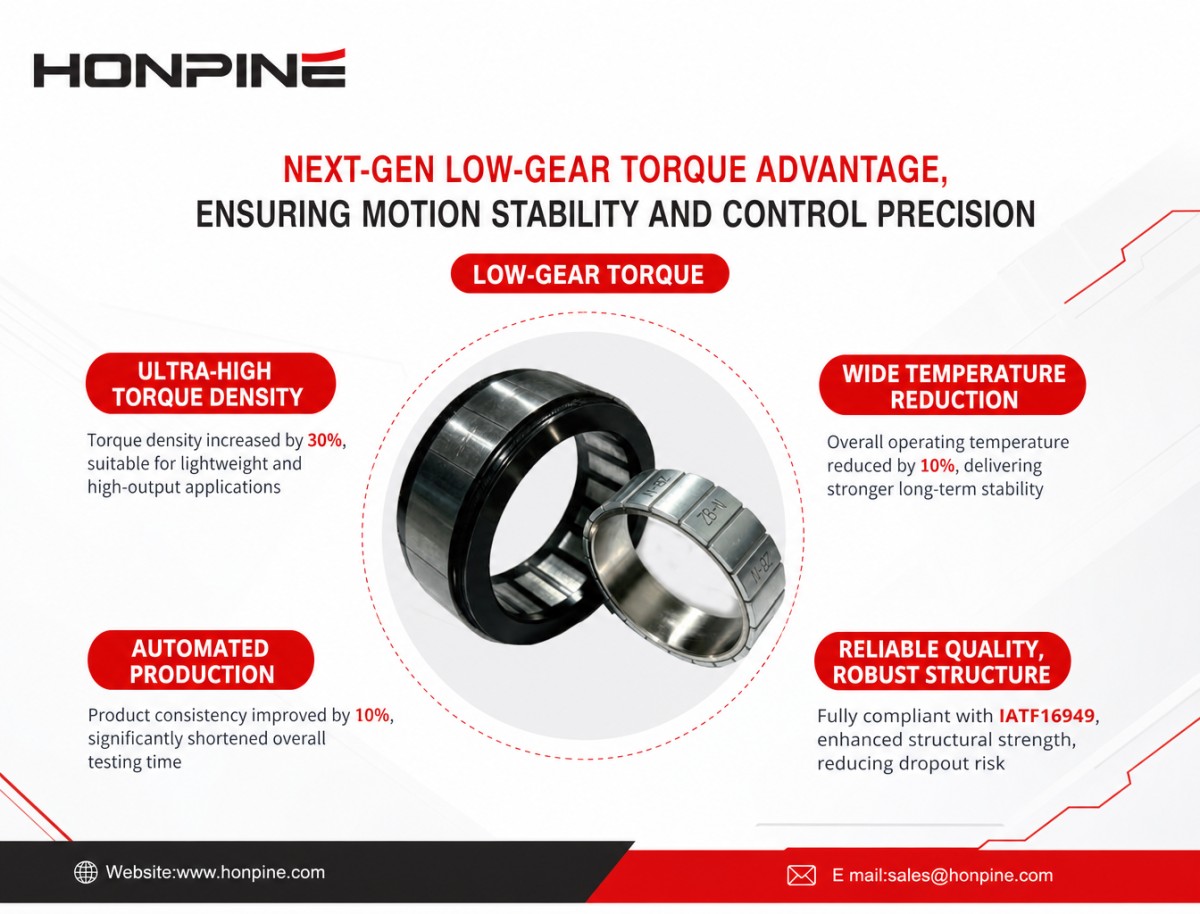
Optimized Electromagnetic Design
Through an optimized pole-slot combination, the motor achieves a higher winding factor, improving electromagnetic utilization and torque output.
The motor also adopts a large-stator-bore and large-inner-diameter rotor configuration, balancing high torque density with lightweight construction while providing greater flexibility for compact equipment integration.
In addition, HONPINE has optimized the magnetic air gap and the topological geometry of the stator and rotor. These improvements reduce cogging torque to approximately 1% of rated torque, helping minimize torque fluctuations during low-speed operation.
The back EMF harmonic distortion rate is also controlled to within 1%, further improving electromagnetic consistency and motion smoothness.
2. How Does the Motor Achieve a 10% Reduction in Operating Temperature?
Thermal management is a critical consideration for frameless torque motors, particularly in compact robotic joints and precision equipment where installation space is limited and heat dissipation can be challenging.
The HONPINE JM fourth-generation motor reduces operating temperature by optimizing core materials, permanent magnets, insulation systems, and winding processes.
High-Grade Electrical Steel for Lower Iron Losses
Both the stator and rotor use 0.2 mm high-grade non-oriented electrical steel. The thinner laminations help reduce eddy current losses, while the material's magnetic properties support higher magnetic flux density under comparable operating conditions.
This allows the motor to deliver greater electromagnetic output while reducing iron losses, particularly during high-speed operation.
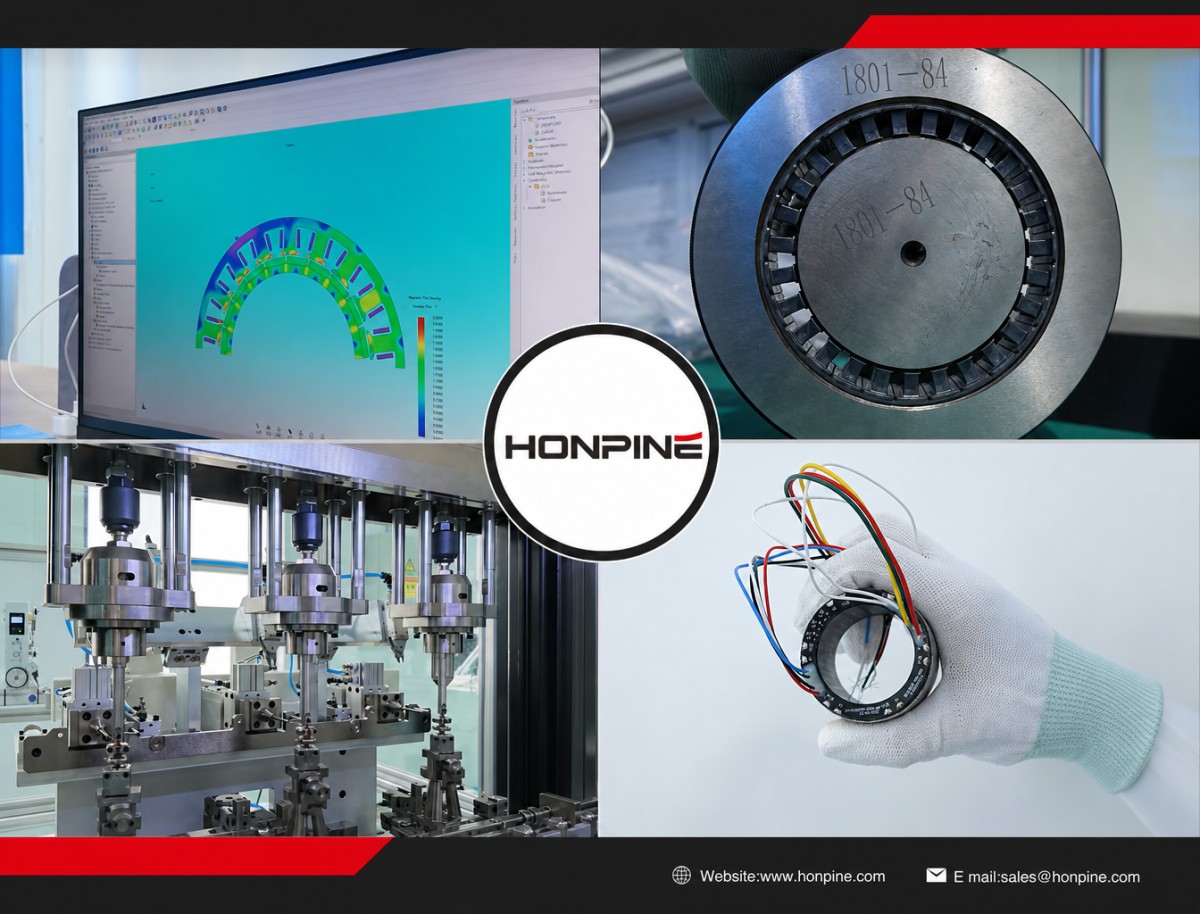
High-Performance Permanent Magnets for Demanding Operating Conditions
The motor uses high-grade UH-series permanent magnets featuring high remanence, high coercivity, and excellent temperature resistance.
These properties help maintain magnetic performance under high-temperature conditions and reduce the risk of irreversible demagnetization.
To address the limited installation space of frameless motors, HONPINE has also optimized the magnet dimensions and magnetic circuit layout. This compact design maintains efficient output under high-speed, high-torque, and high-overload operating conditions.
High-Temperature Insulation Materials for Long-Term Reliability
The insulation system meets Class F or higher temperature-resistance requirements, with a thermal rating above 150°C.
Key components, including permanent magnets, electromagnetic wires, insulation bobbins, and impregnation materials, are selected for temperature resistance of up to 180°C.
These material specifications support long-term operation in demanding thermal environments and help meet the continuous operating requirements of robotic systems.
Advanced Winding Technology for Lower Copper Losses
The HONPINE JM fourth-generation motor adopts an automated multi-slot continuous winding process, achieving a slot fill factor of up to 80%.
A higher slot fill factor reduces winding resistance and copper losses under comparable torque conditions, helping control temperature rise while improving overload capability.
The automated winding process also reduces the number of solder joints, contributing to improved electrical connection reliability and overall motor consistency.
By combining electromagnetic optimization, advanced materials, and automated manufacturing processes, HONPINE delivers a frameless torque motor designed for high-performance robotic applications, including humanoid robots, surgical robots, and precision automation equipment.
3. Multiple Models and Flexible Configuration Options
To meet the different torque and speed requirements of robotic joints and precision motion systems, HONPINE offers a range of frameless torque motor models with multiple speed configurations.
The standard product range covers motor outer diameters from 38 mm to 140 mm, with high-, medium-, and low-speed configurations available.
The torque range is approximately 3 Nm to 13 Nm, depending on the model and operating conditions.
Optional configurations include Hall sensors and temperature sensors, allowing customers to select suitable feedback and temperature-monitoring solutions according to their application requirements.
These configuration options make the HONPINE JM frameless torque motor suitable for integration into robotic joints, surgical robotic systems, precision positioning equipment, and other compact direct-drive applications.
4. JM Second-Generation vs. Fourth-Generation Frameless Torque Motor: What Has Changed?
To better understand the performance improvements, let's compare the HONPINE JM second-generation and fourth-generation frameless torque motors using a motor with an outer diameter of 38 mm and an iron core length of 6 mm as an example.
Performance Comparison of JM Second-Generation and Fourth-Generation Motors
The comparison highlights the improvements achieved through electromagnetic design, material upgrades, and manufacturing process optimization.
Note: Insert verified test data for both generations in the comparison table. Ensure that torque, speed, temperature rise, and other performance parameters are measured under equivalent test conditions.
5. Automated Manufacturing for Consistent Motor Quality
The HONPINE frameless torque motor series has entered automated mass production.
Automated manufacturing helps ensure stable production capacity while maintaining strict control over dimensional tolerances and manufacturing precision.
Combined with optimized production processes and quality inspection procedures, this supports consistent product performance and manufacturing reliability, helping reduce component selection and integration risks for customers.
As demand for high-performance motion control continues to grow in robotics, medical equipment, and precision automation, HONPINE remains committed to improving frameless torque motor technology.
Looking for a High-Torque-Density Frameless Motor for Your Application?
Contact HONPINE to request the latest technical specifications and product information for the JM fourth-generation frameless torque motor.
Read More
Learn more about the story of HONPINE and industry trends related to precision transmission.
 What is robot joint actuator?How to Choose the Best Robot Rotary Joint Actuator?In core robot joint transmission solutions, planetary and harmonic rotary actuators each have their own strengths. Choosing the right type based on application requirements is essential to achieve the optimal balance between performance and cost.
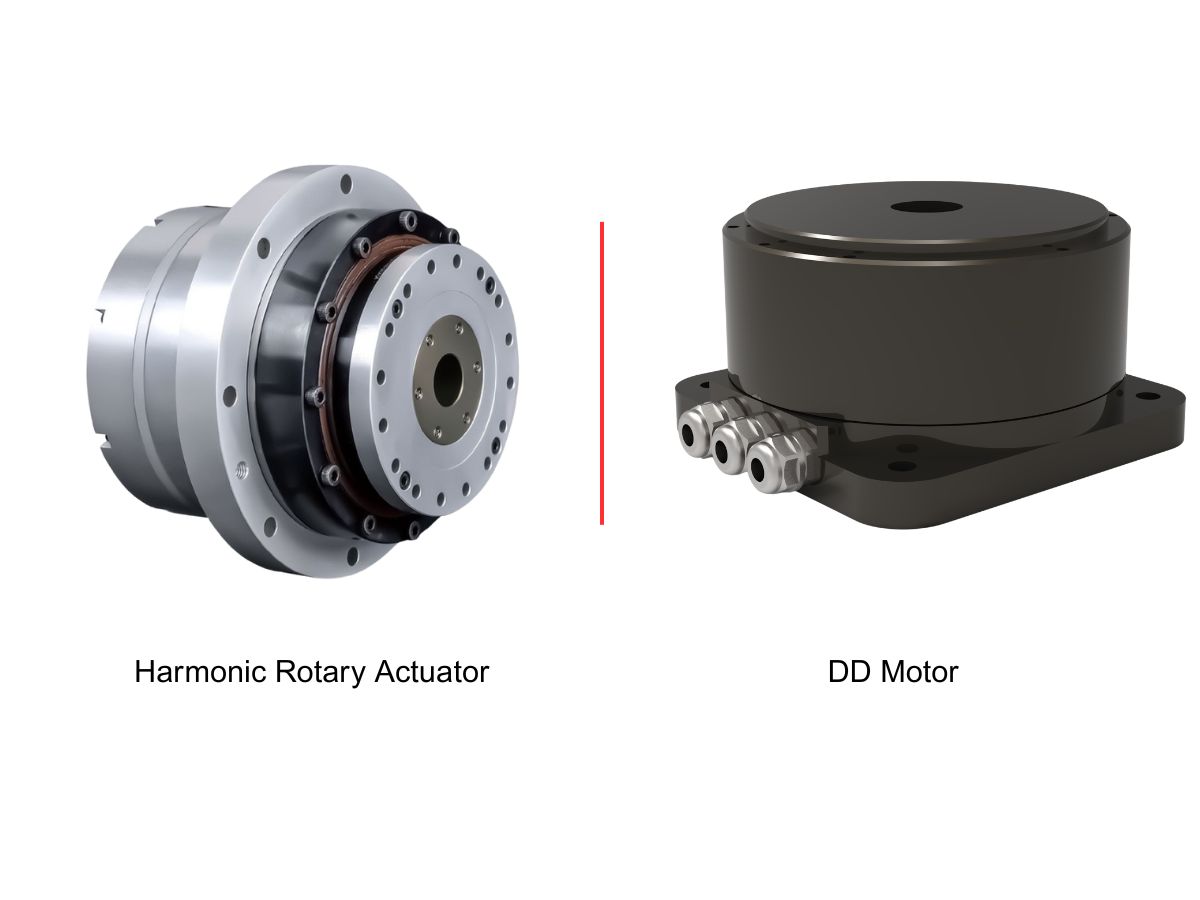
 DD Motors VS Harmonic Rotary ActuatorsThis article provides an in-depth comparison between Direct Drive (DD) motors and harmonic rotary actuators, covering their transmission principles, advantages and disadvantages, and typical application fields.
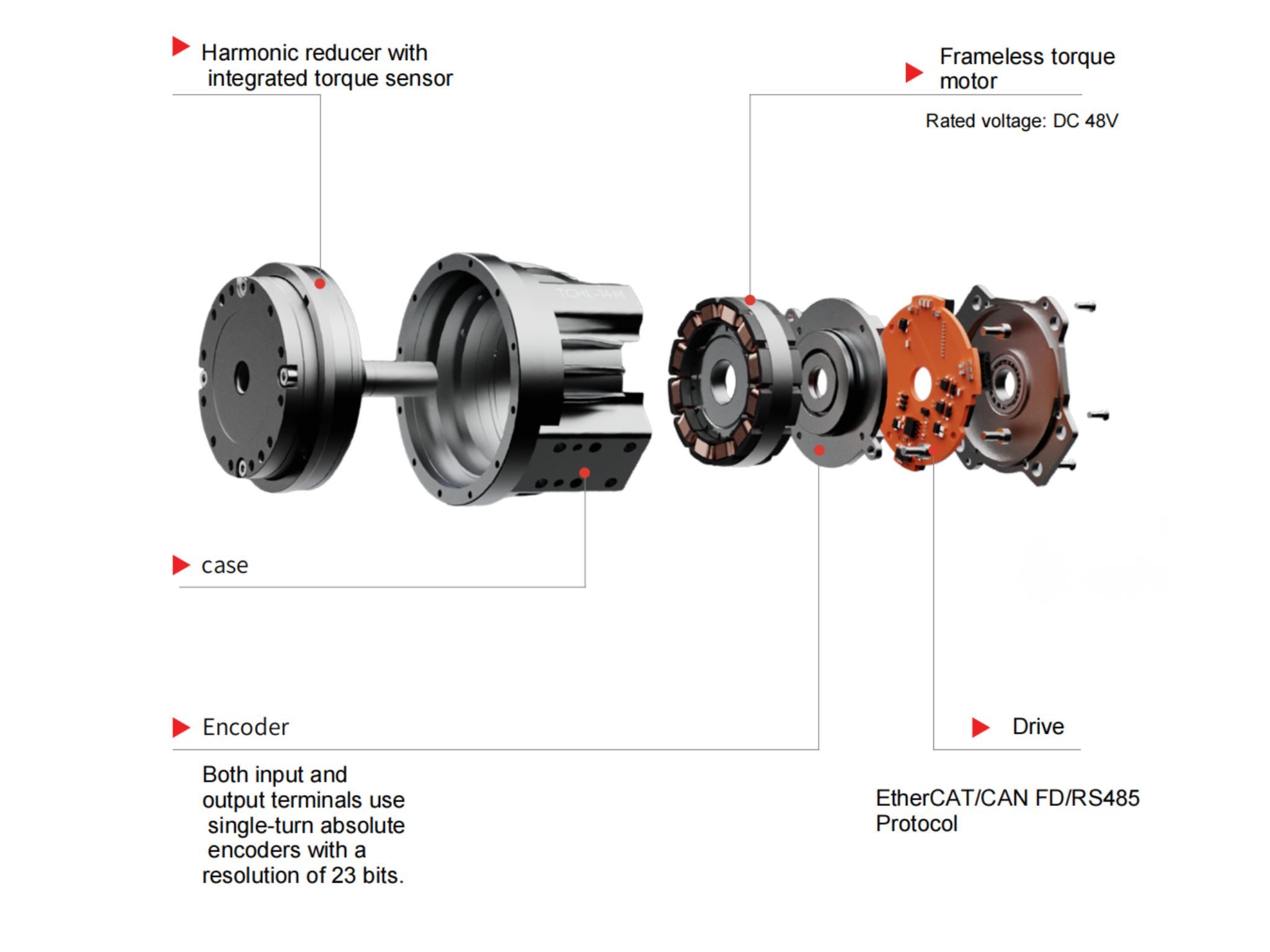
 OMG Ultra Compact Harmonic Drive Joint Module with Built-in Torque SensorHONPINE TCHL series harmonic drive joint module is a game-changing product that achieves disruptive improvements in multiple aspects such as lightweight design, integration level, and connection convenience. This article will analyze its revolutionary enhancements with you.
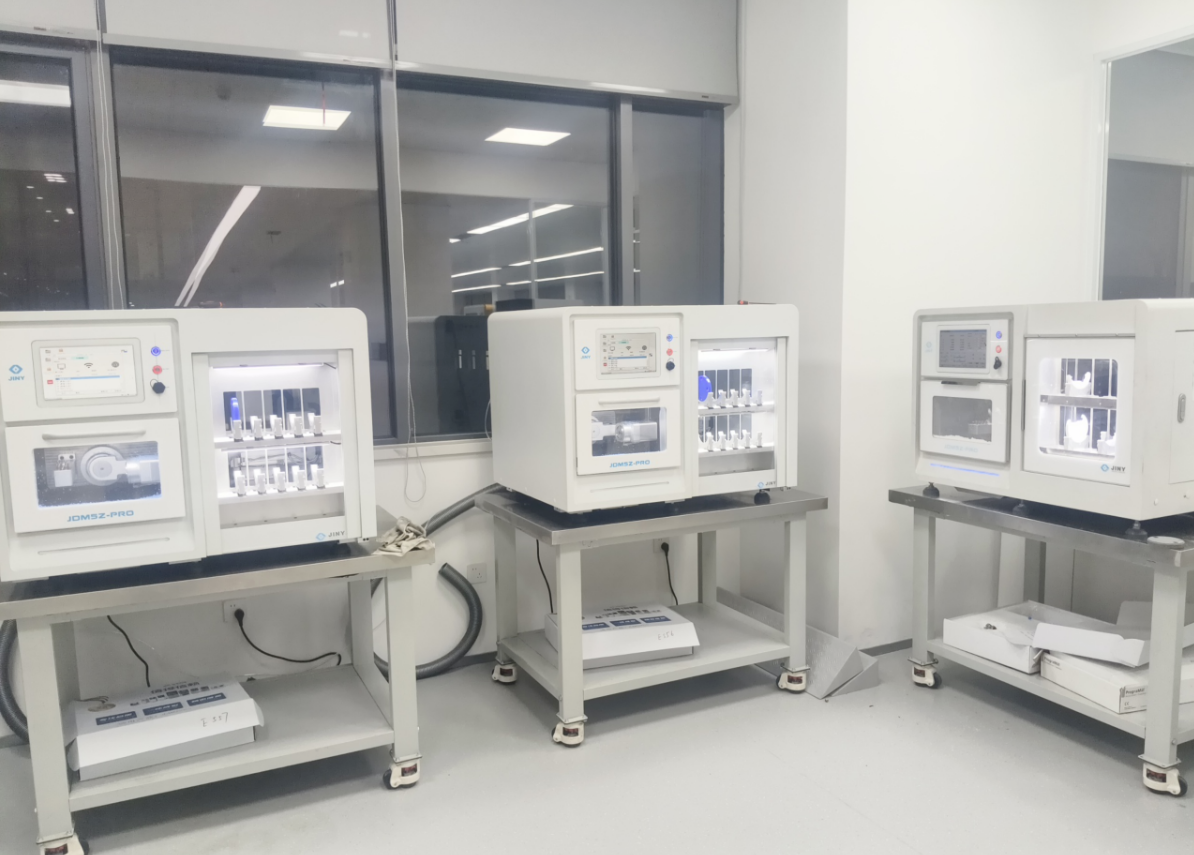
 The Role of Harmonic Drive Gears in Achieving 5–10 μm Accuracy in Dental Milling MachinesA dental milling machine is a CNC machining system used to directly process digital dental models into restorations such as crowns, bridges, veneers, inlays, and implant abutments. Dental milling machines require far higher operational accuracy and motion stability than ordinary equipment. This article explains how harmonic drive gear help dental milling machines achieve stable, continuous, and controllable operation.
 Why Are Harmonic Rotary Actuators Perfect for Medical Equipment?Harmonic rotary actuators (typically integrated systems consisting of a harmonic drive reducer, frameless torque motor, encoder, and optional brake) are regarded as key components in medical equipment. The core reason is that they simultaneously meet the most stringent medical requirements for precision, compact size, safety, and controllability. The following explanation is structured from three perspectives: technical characteristics, application scenarios, and medical value.
 High-Precision RV Reducers Perfectly Matched for Walking RobotsThe walking axis of a robot is a core component for power transmission and support. RV reducers provide extremely high rigidity, precision, and torque while maintaining a compact size and exceptional reliability, making them an ideal match for the demanding requirements of walking robot joints in terms of load capacity, impact resistance, and precision.
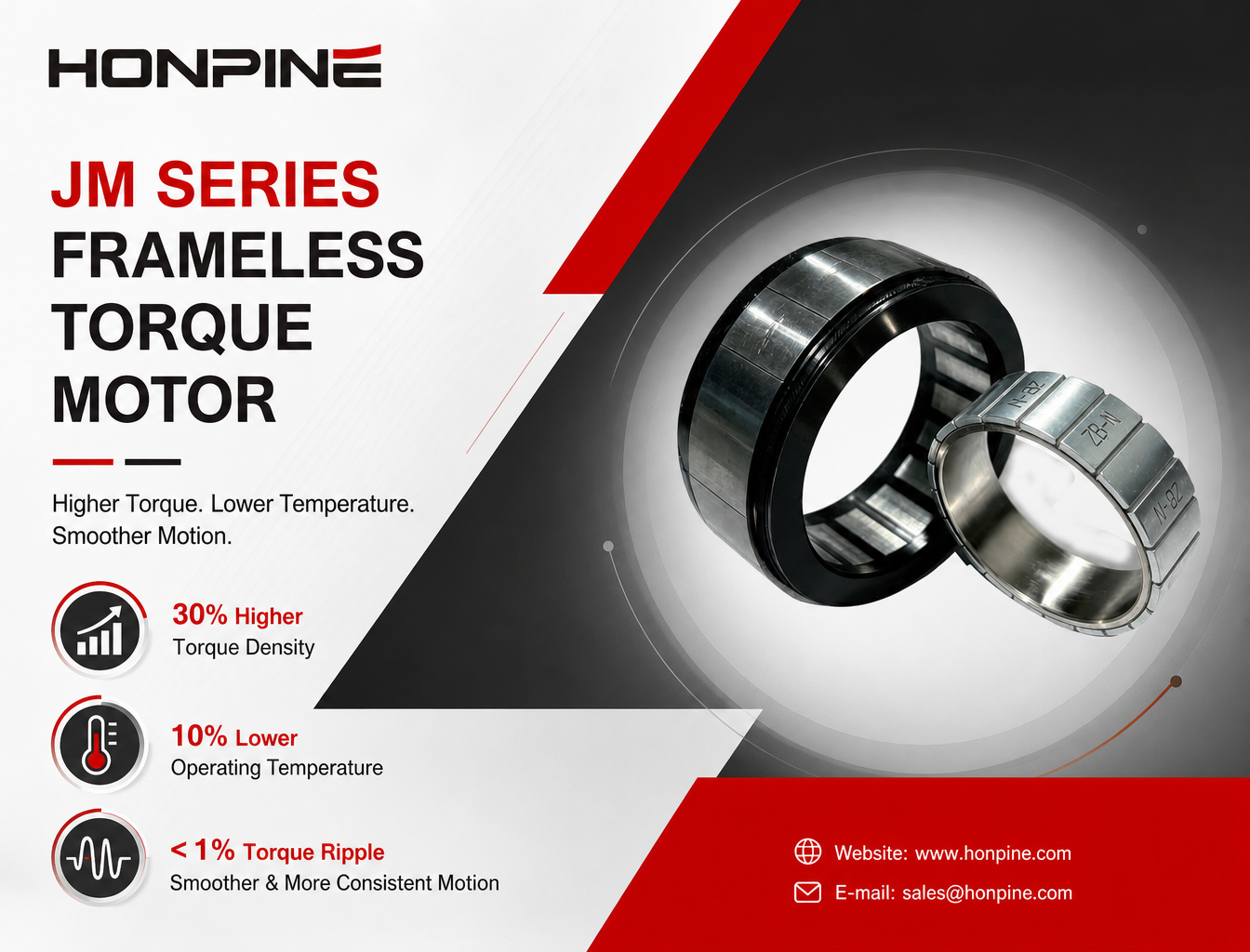
 HONPINE JM Fourth-Generation Frameless Torque Motor: 30% Higher Torque Density and 10% Lower Operating TemperatureAs robotics technology advances, frameless torque motors are facing increasingly demanding requirements for torque density, motion stability, and thermal management. The HONPINE JM fourth-generation frameless torque motor achieves 30% higher torque density and 10% lower operating temperature through improvements in electromagnetic design, core materials, and winding technology. With torque ripple controlled below 1%, it delivers smoother low-speed operation and improved motion consistency, making it suitable for demanding applications such as surgical robots, humanoid robots, and precision automation equipment. How does HONPINE achieve these performance improvements? Let's take a closer look.
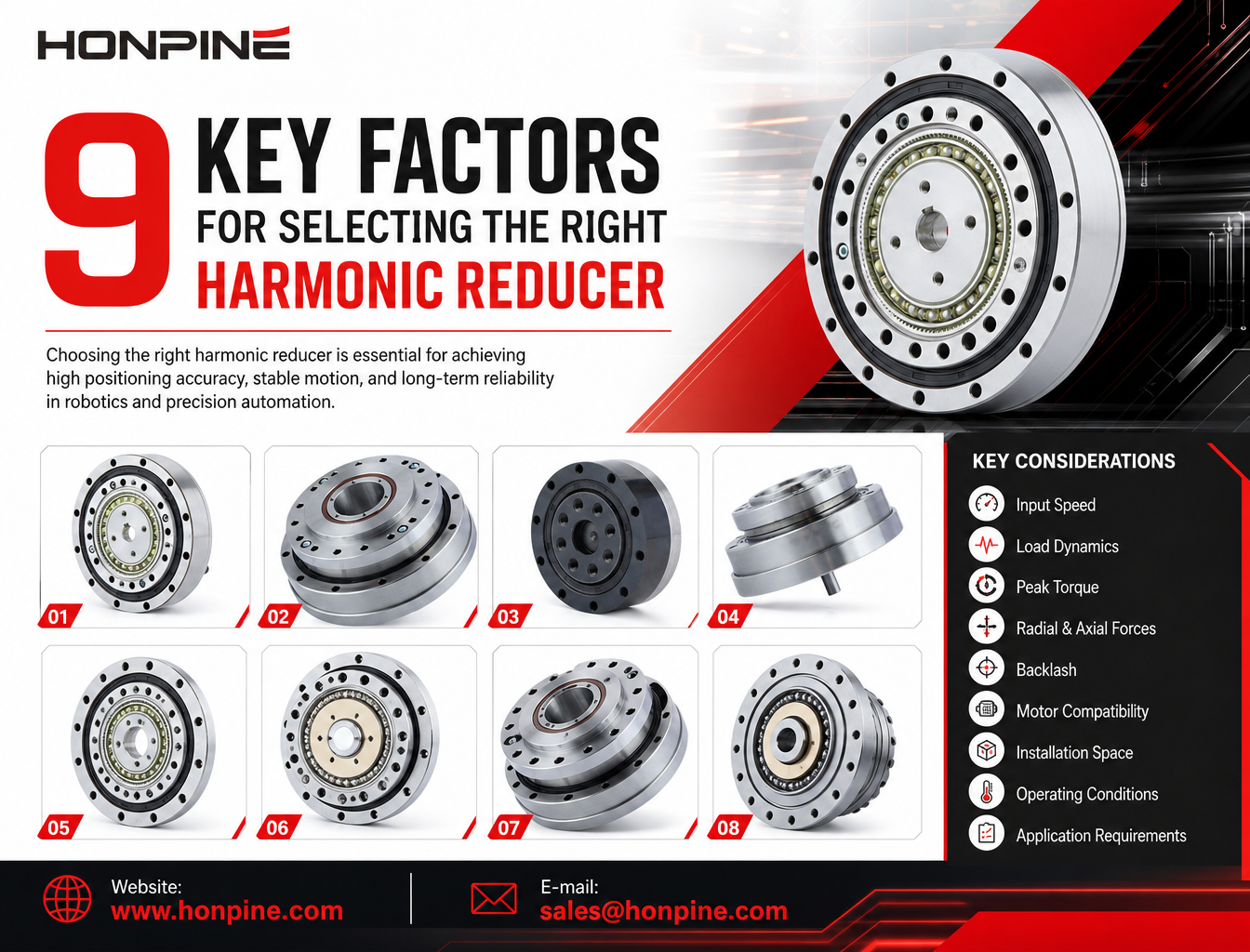
 How to Select a Harmonic Reducer: 9 Key Factors You Need to KnowWhy are more robotics companies choosing integrated robot joint modules instead of traditional distributed drive systems? As humanoid robots, collaborative robots, and rehabilitation exoskeletons continue to evolve, manufacturers are looking for more compact, lightweight, and easier-to-integrate motion solutions. An integrated robot joint module combines essential components such as a frameless torque motor, harmonic reducer, servo drive, encoders, and output bearing into a single assembly. This architecture can reduce mechanical complexity, simplify wiring, improve motion control integration, and shorten robot development cycles. In this article, Theodore Li, Technical Director at HONPINE, explains six key advantages of integrated robot joint modules and compares them with conventional distributed drive configurations.
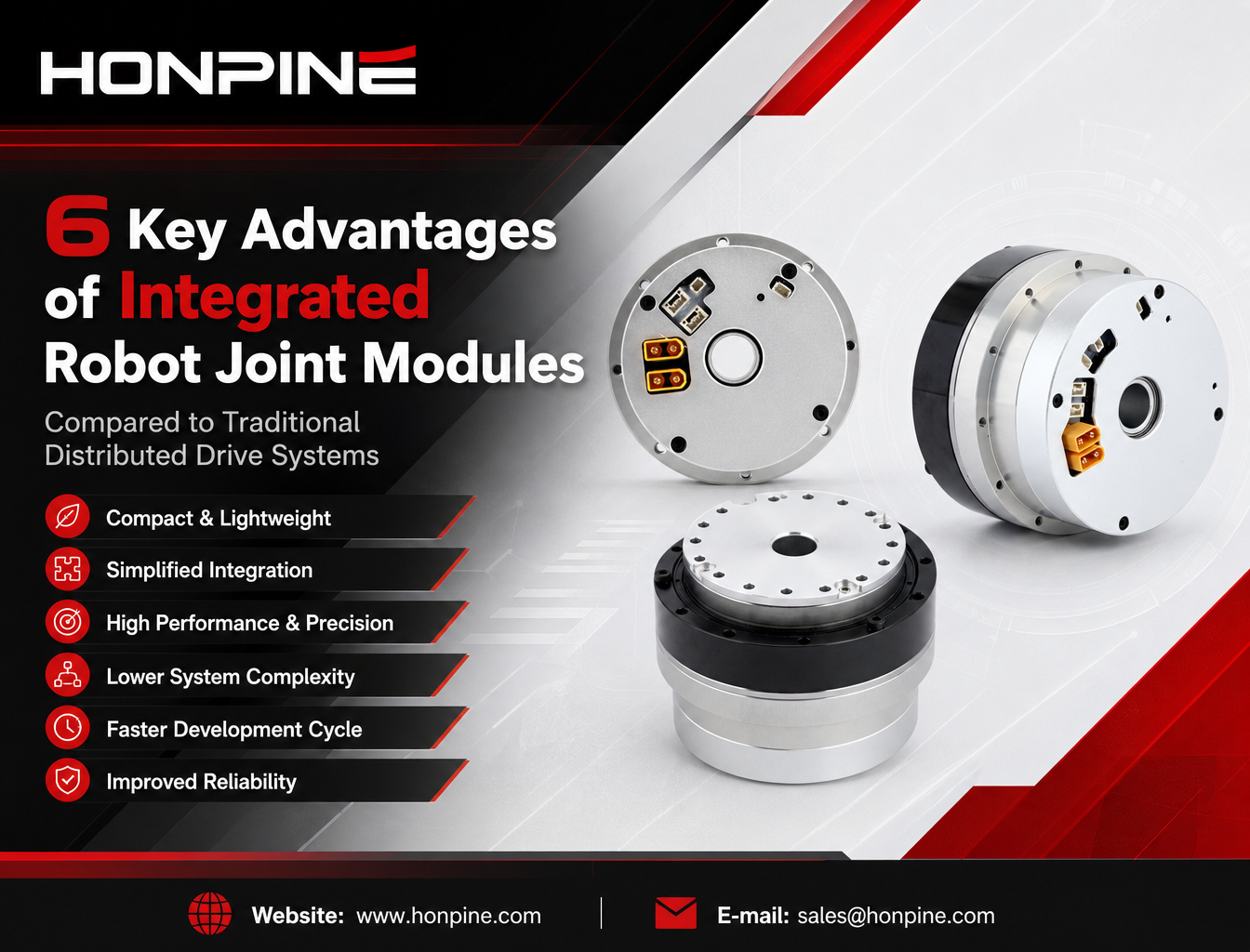
 Why Are More Companies Choosing Integrated Robot Joint Modules?Integrated robot joint modules combine motors, harmonic reducers, servo drives, encoders, and output bearings into compact units. This article compares integrated and distributed drive architectures, exploring their differences in torque density, mechanical reliability, motion control, development efficiency, and practical robotic applications.
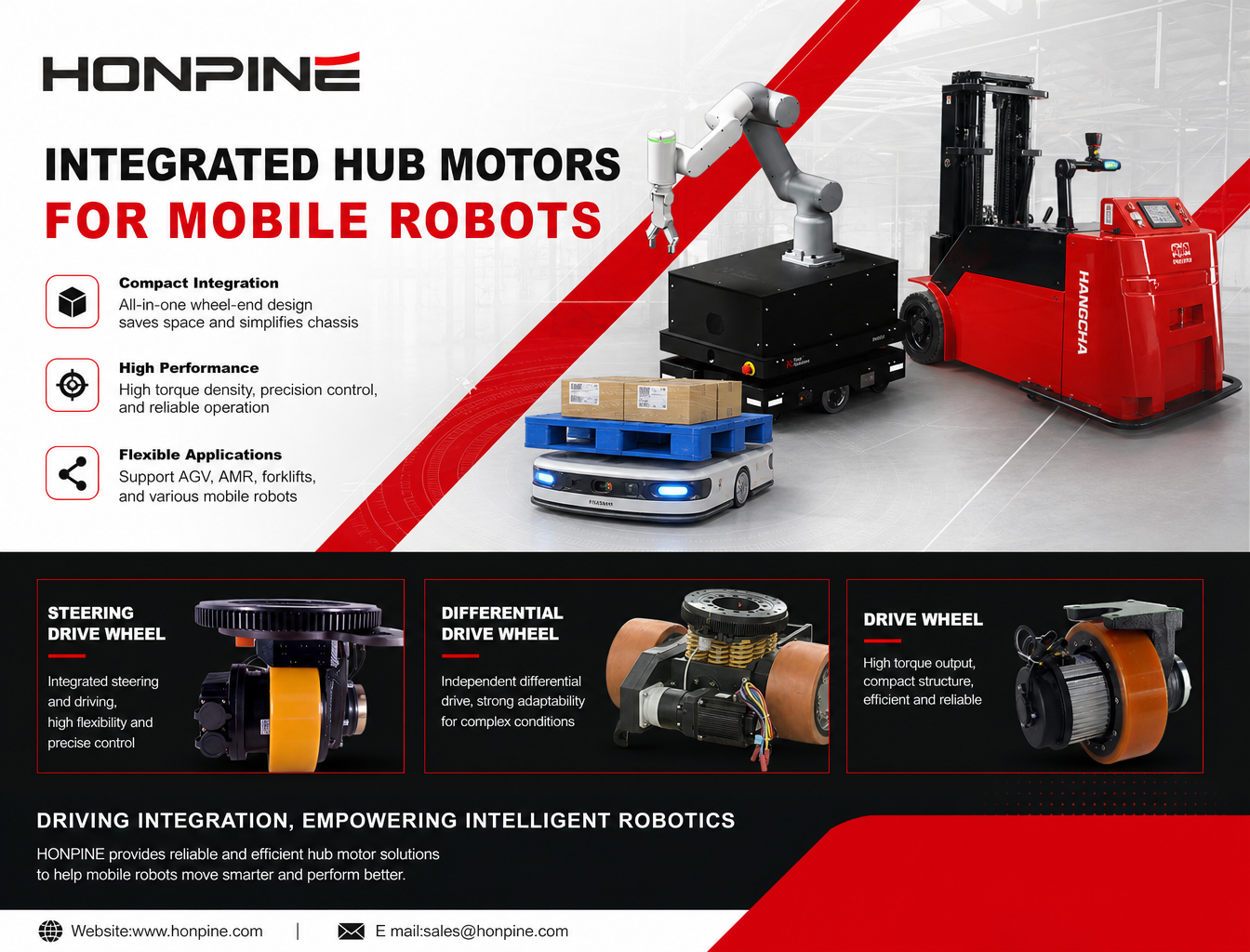
 Why Are More Robots Moving Away from Traditional Drive Systems to Integrated Hub Servo Motors?As mobile robots evolve toward autonomous navigation, flexible operation, and increasingly complex working environments, traditional distributed drive systems are facing new challenges. Separate motors, gearboxes, couplings, and transmission components can increase chassis complexity and limit available installation space. This is why more robot manufacturers are turning to integrated hub servo motors. By combining key drive components within a compact wheel-end unit, hub motors offer new possibilities for improving drive integration, motion control, and chassis design. In this article, we explore the key performance requirements of mobile robots, explain the advantages of integrated hub motors, and examine how HONPINE's Drive Wheels, Steering Drive Wheels, and Differential Drive Wheels support different AGV and AMR applications.
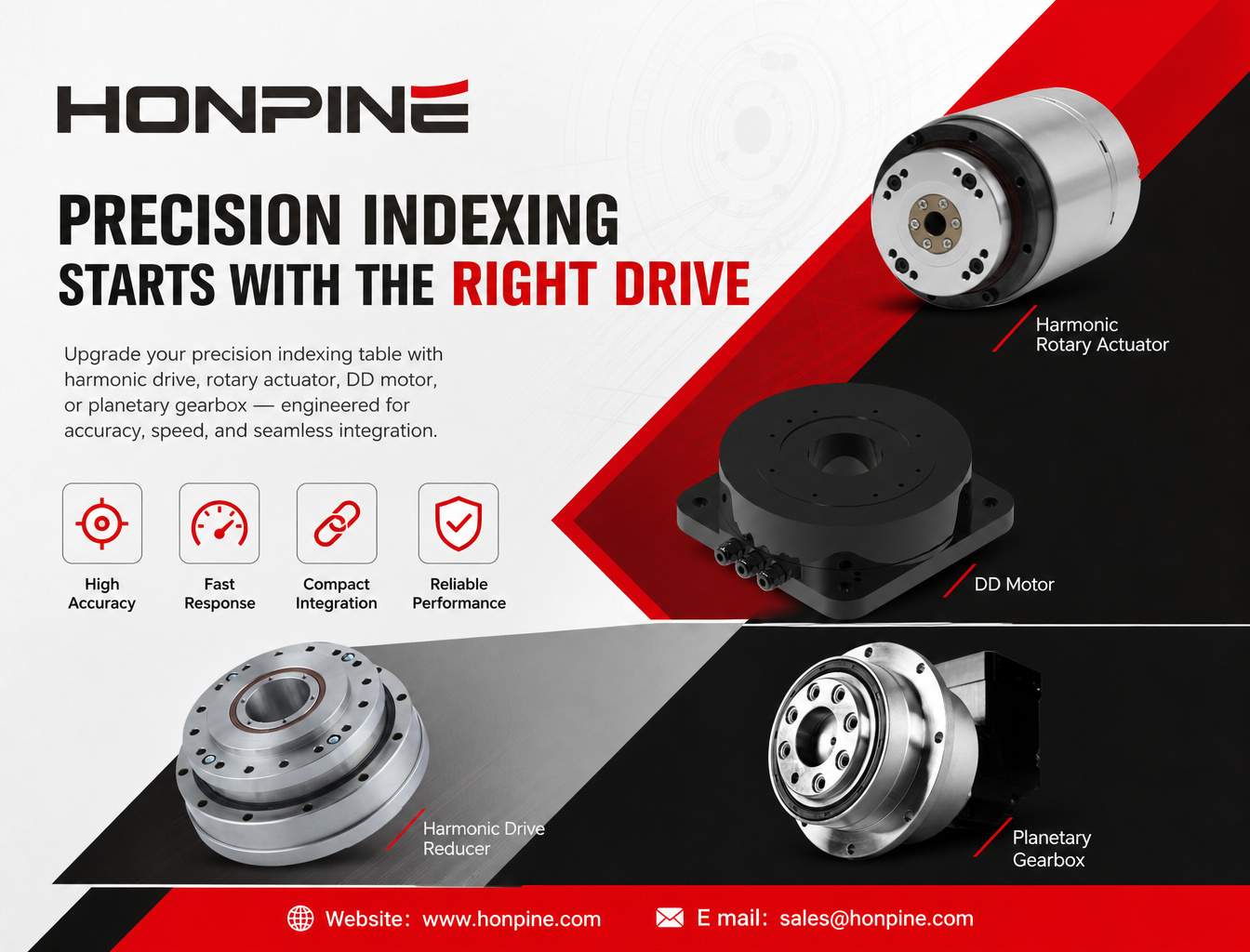
 How Can Precision Reducers, Harmonic Rotary Actuators, and Direct-Drive Motors Upgrade Precision Indexing Tables?How can manufacturers improve the accuracy, dynamic response, and integration of precision indexing tables? As flexible manufacturing continues to evolve, traditional transmission systems may face challenges such as backlash, long settling times, and complex mechanical integration. This article explores how harmonic drive reducers, harmonic rotary actuators, direct-drive (DD) torque motors, and planetary gearboxes provide practical upgrade solutions for different operating conditions. By matching the transmission architecture to positioning accuracy, indexing cycle time, load inertia, and installation constraints, manufacturers can develop more efficient and reliable precision indexing systems.
 Should Robot Manufacturers Develop Their Own Joint Modules or Buy Integrated Joint Modules?Should robot manufacturers develop joint modules in-house or purchase integrated joint modules? This article compares the advantages and disadvantages of both approaches, including development costs, technical ownership, supply chain stability, production efficiency, and long-term scalability. Learn why a hybrid sourcing strategy that combines in-house development with external procurement is becoming a practical option for humanoid robots, robotic arms, and embodied AI systems.
Double Click
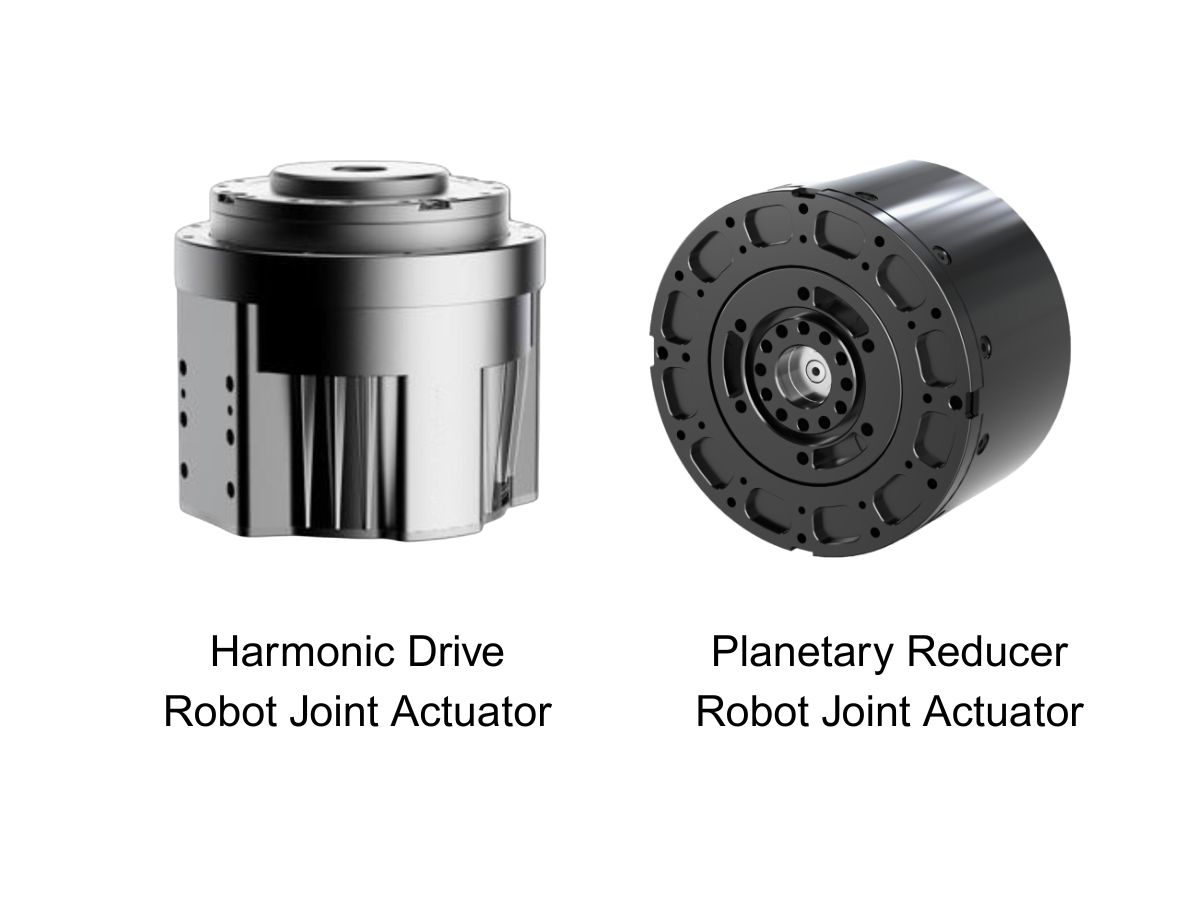
We provide harmonic drive reducer,planetary reducer,robot joint motor,robot rotary actuators,RV gear reducer,robot end effector,dexterous robot hand
 What is robot joint actuator?How to Choose the Best Robot Rotary Joint Actuator?In core robot joint transmission solutions, planetary and harmonic rotary actuators each have their own strengths. Choosing the right type based on application requirements is essential to achieve the optimal balance between performance and cost.
 DD Motors VS Harmonic Rotary ActuatorsThis article provides an in-depth comparison between Direct Drive (DD) motors and harmonic rotary actuators, covering their transmission principles, advantages and disadvantages, and typical application fields.
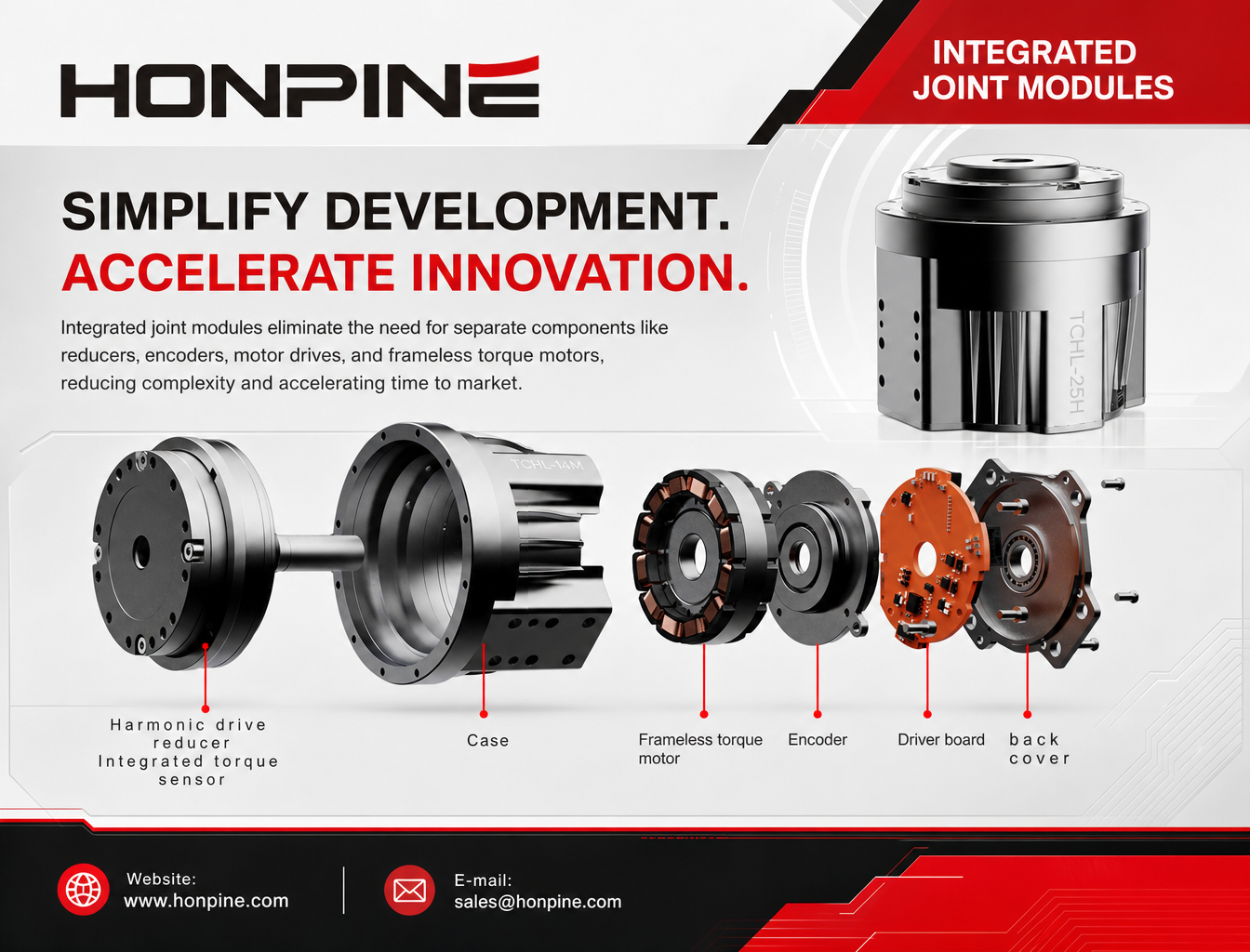
 OMG Ultra Compact Harmonic Drive Joint Module with Built-in Torque SensorHONPINE TCHL series harmonic drive joint module is a game-changing product that achieves disruptive improvements in multiple aspects such as lightweight design, integration level, and connection convenience. This article will analyze its revolutionary enhancements with you.
 HONPINE JM Fourth-Generation Frameless Torque Motor: 30% Higher Torque Density and 10% Lower Operating TemperatureAs robotics technology advances, frameless torque motors are facing increasingly demanding requirements for torque density, motion stability, and thermal management. The HONPINE JM fourth-generation frameless torque motor achieves 30% higher torque density and 10% lower operating temperature through improvements in electromagnetic design, core materials, and winding technology. With torque ripple controlled below 1%, it delivers smoother low-speed operation and improved motion consistency, making it suitable for demanding applications such as surgical robots, humanoid robots, and precision automation equipment. How does HONPINE achieve these performance improvements? Let's take a closer look.
 How to Select a Harmonic Reducer: 9 Key Factors You Need to KnowWhy are more robotics companies choosing integrated robot joint modules instead of traditional distributed drive systems? As humanoid robots, collaborative robots, and rehabilitation exoskeletons continue to evolve, manufacturers are looking for more compact, lightweight, and easier-to-integrate motion solutions. An integrated robot joint module combines essential components such as a frameless torque motor, harmonic reducer, servo drive, encoders, and output bearing into a single assembly. This architecture can reduce mechanical complexity, simplify wiring, improve motion control integration, and shorten robot development cycles. In this article, Theodore Li, Technical Director at HONPINE, explains six key advantages of integrated robot joint modules and compares them with conventional distributed drive configurations.
 Why Are More Companies Choosing Integrated Robot Joint Modules?Integrated robot joint modules combine motors, harmonic reducers, servo drives, encoders, and output bearings into compact units. This article compares integrated and distributed drive architectures, exploring their differences in torque density, mechanical reliability, motion control, development efficiency, and practical robotic applications.
 Why Are More Robots Moving Away from Traditional Drive Systems to Integrated Hub Servo Motors?As mobile robots evolve toward autonomous navigation, flexible operation, and increasingly complex working environments, traditional distributed drive systems are facing new challenges. Separate motors, gearboxes, couplings, and transmission components can increase chassis complexity and limit available installation space. This is why more robot manufacturers are turning to integrated hub servo motors. By combining key drive components within a compact wheel-end unit, hub motors offer new possibilities for improving drive integration, motion control, and chassis design. In this article, we explore the key performance requirements of mobile robots, explain the advantages of integrated hub motors, and examine how HONPINE's Drive Wheels, Steering Drive Wheels, and Differential Drive Wheels support different AGV and AMR applications.
 Why Are Flanges on Harmonic and RV Reducers More Than Just Mechanical Mounting Components?A flange on a harmonic reducer or RV reducer is more than a mounting interface. It plays a critical role in alignment accuracy, load transmission, structural stiffness, and sealing performance. Even minor errors in flange design or installation can affect gear meshing, bearing life, and the overall reliability of a precision motion system. In this article, Theodore Li, Technical Director at HONPINE, explains the key engineering functions of reducer flanges and why they deserve careful consideration when designing and installing precision transmission systems.
 How Should Manufacturers Upgrade Harmonic Joint Modules for Robotic Arms and Embodied AI in 2026?For engineers planning a robotic system upgrade, the right joint module depends on more than a single specification. EtherCAT synchronization, output-side position feedback, real-time torque measurement, continuous torque capability, and integrated safety functions must work together to meet the demands of the application. By evaluating these factors as a complete electromechanical system, manufacturers can make more informed decisions about joint module selection, integration, and long-term performance.
 How Do Planetary Gearboxes Reduce Speed and Increase Torque in High-Precision Automation Equipment?How does a planetary gearbox reduce speed while increasing torque in high-precision automation equipment? By combining a sun gear, multiple planet gears, and an internal ring gear, a planetary gearbox delivers compact, efficient power transmission for applications that require controlled motion and reliable torque output. From industrial robots and CNC machinery to automated assembly systems, selecting the right gearbox involves more than choosing a reduction ratio. This guide explains how planetary gearboxes work, their key advantages, common applications, and practical selection considerations to help engineers identify a suitable transmission solution.
 Should You Choose a T-Type or Straight-Type Harmonic Joint Module for a Collaborative Robot?Choosing the right harmonic joint module is essential when designing a compact, high-performance collaborative robot. Should you use a TCHL straight-type or an HTS T-type harmonic joint module? Although both configurations can support precise robotic motion, their different output flange geometries affect installation space, link connections, cable routing, and mechanical integration. In this guide, Theodore Li, Technical Director at HONPINE, explains the key differences between the two designs, their advantages and limitations, and how to select the most suitable configuration for your collaborative robotic arm.
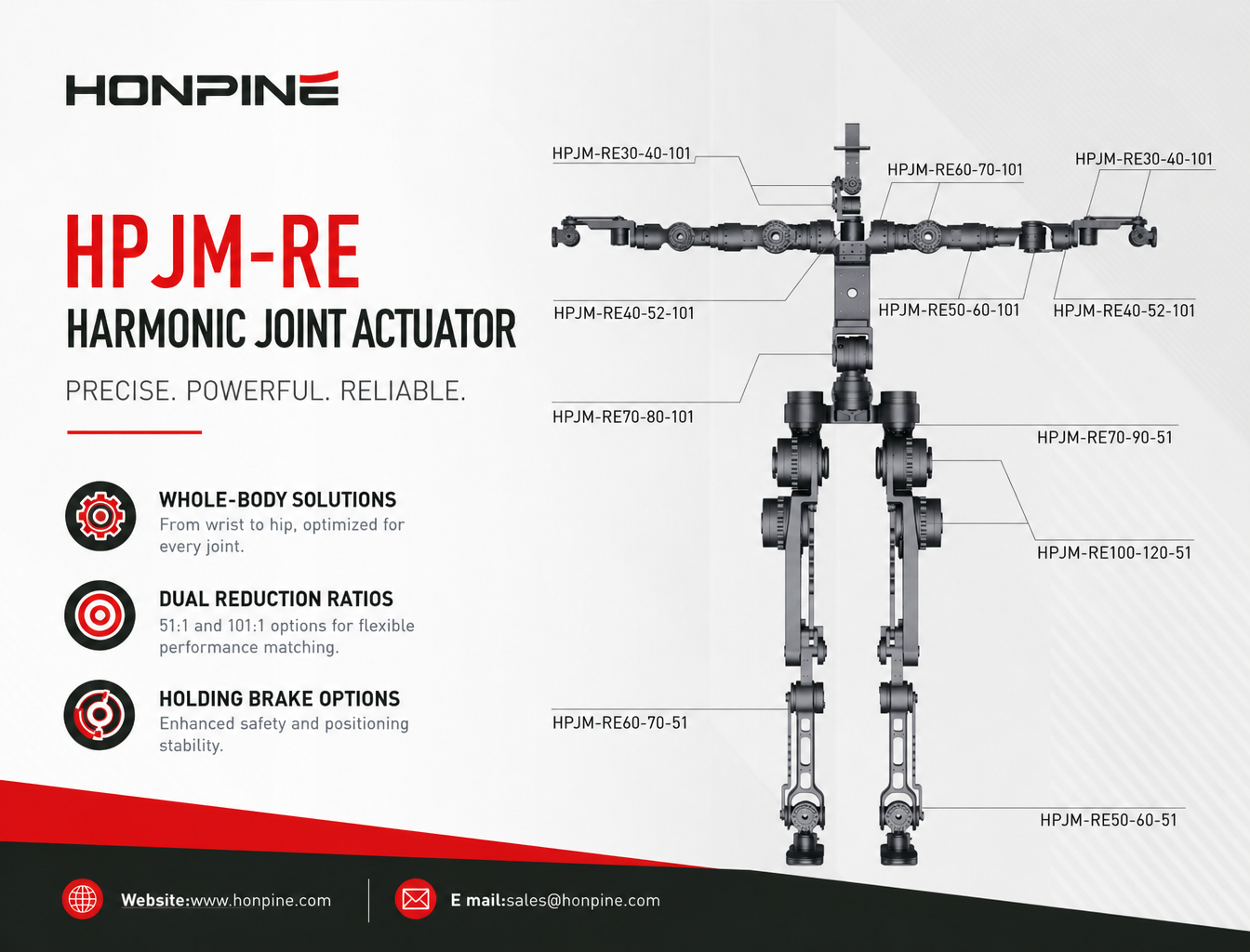
 The Complete Harmonic Joint Actuator Solution for Humanoid Robots: HPJM Series Selection GuideA complete guide to selecting harmonic joint actuators for humanoid robots. Explore HONPINE HPJM models for wrist, elbow, shoulder, waist, hip, knee, and ankle joints, with practical considerations for torque capacity, reduction ratios, dynamic response, and holding brake configurations.