









Harmonic Rotary Actuator vs Direct Drive Rotary Actuator vs Hollow Rotary Table: Which Rotary Motion Solution Is Right for Automation?
Rotary motion is everywhere in modern automation.
From semiconductor inspection and wafer handling to 3C assembly, electronic component testing, dispensing, laser processing and precision positioning, machines often need to rotate a fixture, workpiece, tool or process station with high repeatability.
At first glance, three solutions may appear to serve the same purpose: the Harmonic Rotary Actuator, Direct Drive Rotary Actuator, and Hollow Rotary Table.
All three can provide controlled rotary motion. All three can be integrated into automated equipment. And all three can be designed around high positioning accuracy, compact mechanical layouts and continuous or indexed rotation.
However, they are not interchangeable.
The fundamental difference is how each solution handles torque, speed, transmission, load support, positioning accuracy, mechanical integration and installation space.
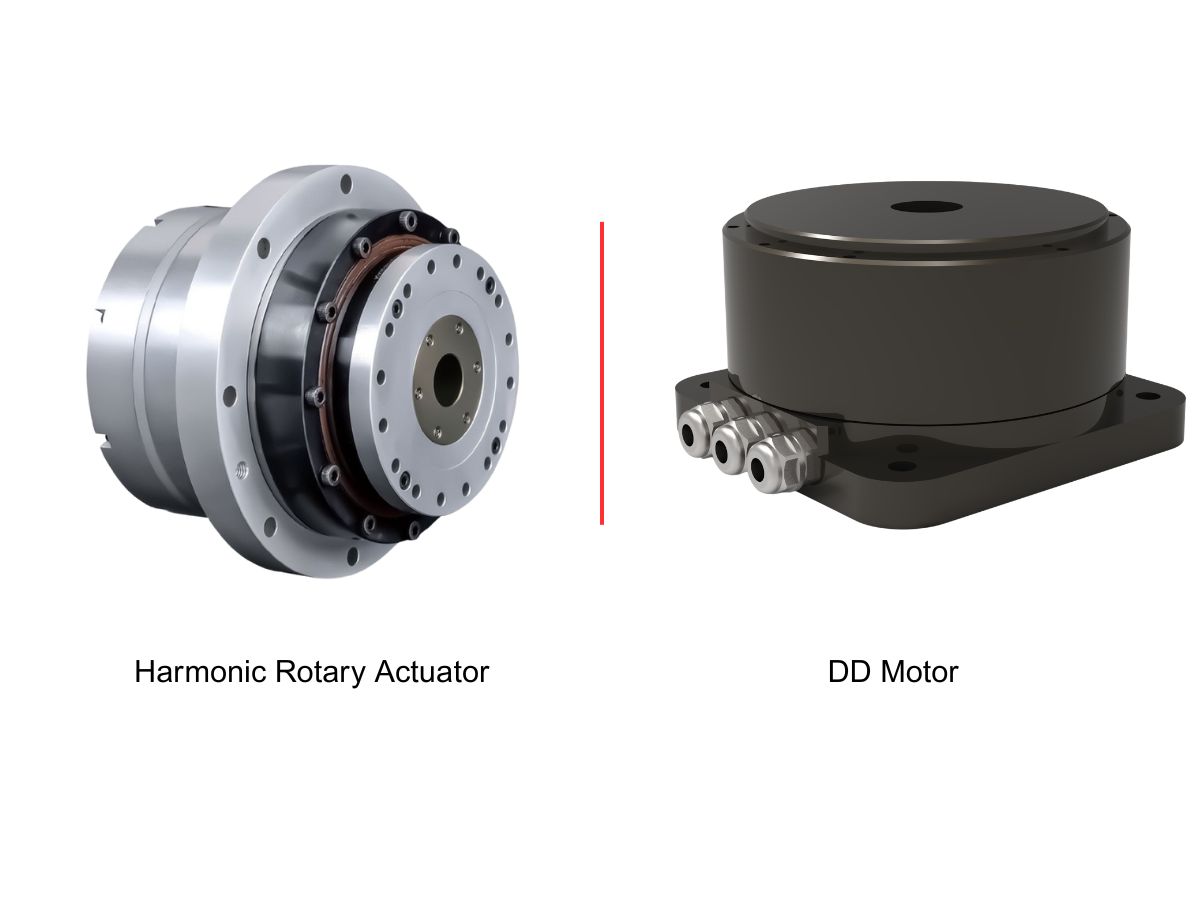
A Harmonic Rotary Actuator uses a precision reduction mechanism to convert motor speed into high output torque and controlled rotary motion. A Direct Drive Rotary Actuator removes the conventional reduction stage and drives the load directly with a torque motor. A Hollow Rotary Table focuses more on providing an integrated rotary positioning platform with a large central opening, bearing support and mounting surface.
For engineers designing 3C automation, semiconductor equipment, inspection machines, assembly systems and precision rotary stages, choosing the right architecture can have a major impact on machine size, cycle time, positioning performance, cable routing and overall system cost.
This guide explains the differences between these three rotary motion solutions and how to select the right one for your application.
The Three Rotary Motion Solutions at a Glance
Before comparing their internal mechanisms, it is useful to understand what each product is designed to accomplish.
The most important point is that the three solutions optimize different parts of the motion system.
Harmonic Rotary Actuator → torque density and precision
Direct Drive Rotary Actuator → dynamic response and transmission simplicity
Hollow Rotary Table → integrated rotary positioning and mechanical accessibility
This distinction becomes particularly important in semiconductor and 3C automation.
What Is a Harmonic Rotary Actuator?
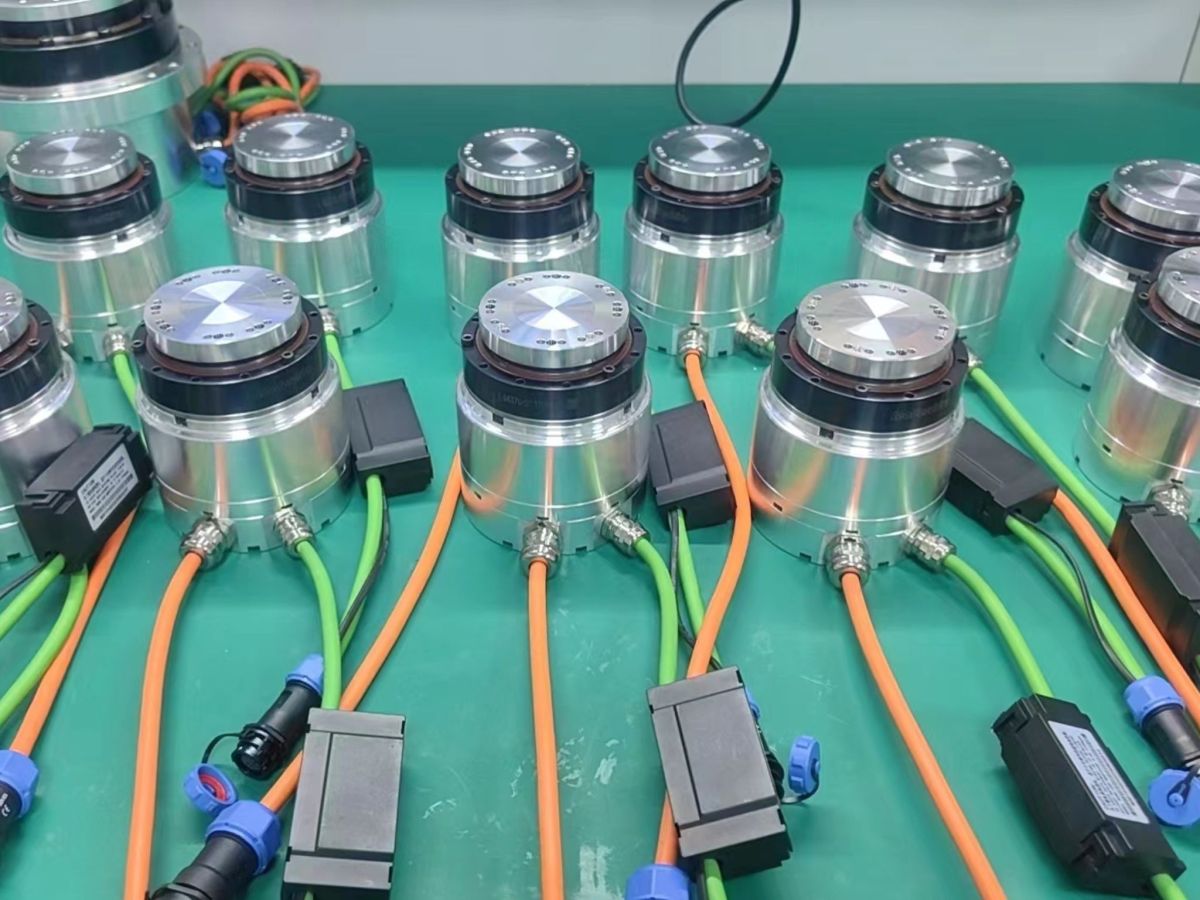
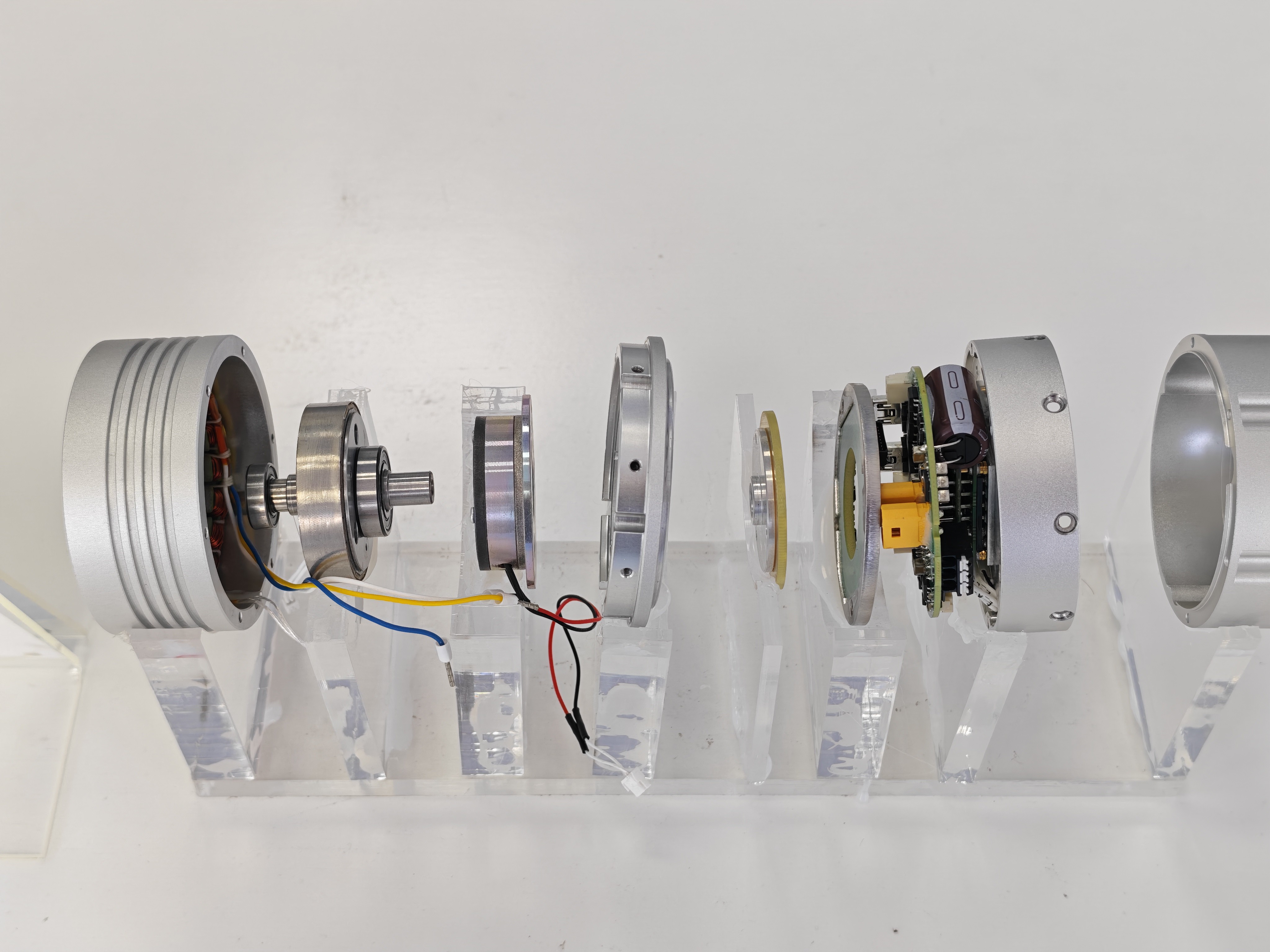
A Harmonic Rotary Actuator is an integrated rotary motion unit that combines a motor with a precision harmonic or strain-wave reduction mechanism.
The basic architecture can be simplified as:
Servo Motor → Harmonic Reduction Mechanism → Output Bearing / Flange → Load
The reduction mechanism allows a relatively high-speed motor to produce substantially higher output torque at a lower output speed.
A harmonic transmission uses components such as a wave generator, flexspline and circular spline to achieve high reduction ratios in a compact package.
This architecture is particularly useful when the machine requires:
High output torque
High reduction ratio
Compact dimensions
Low backlash
High positioning repeatability
High torsional stiffness
Integrated motor and encoder
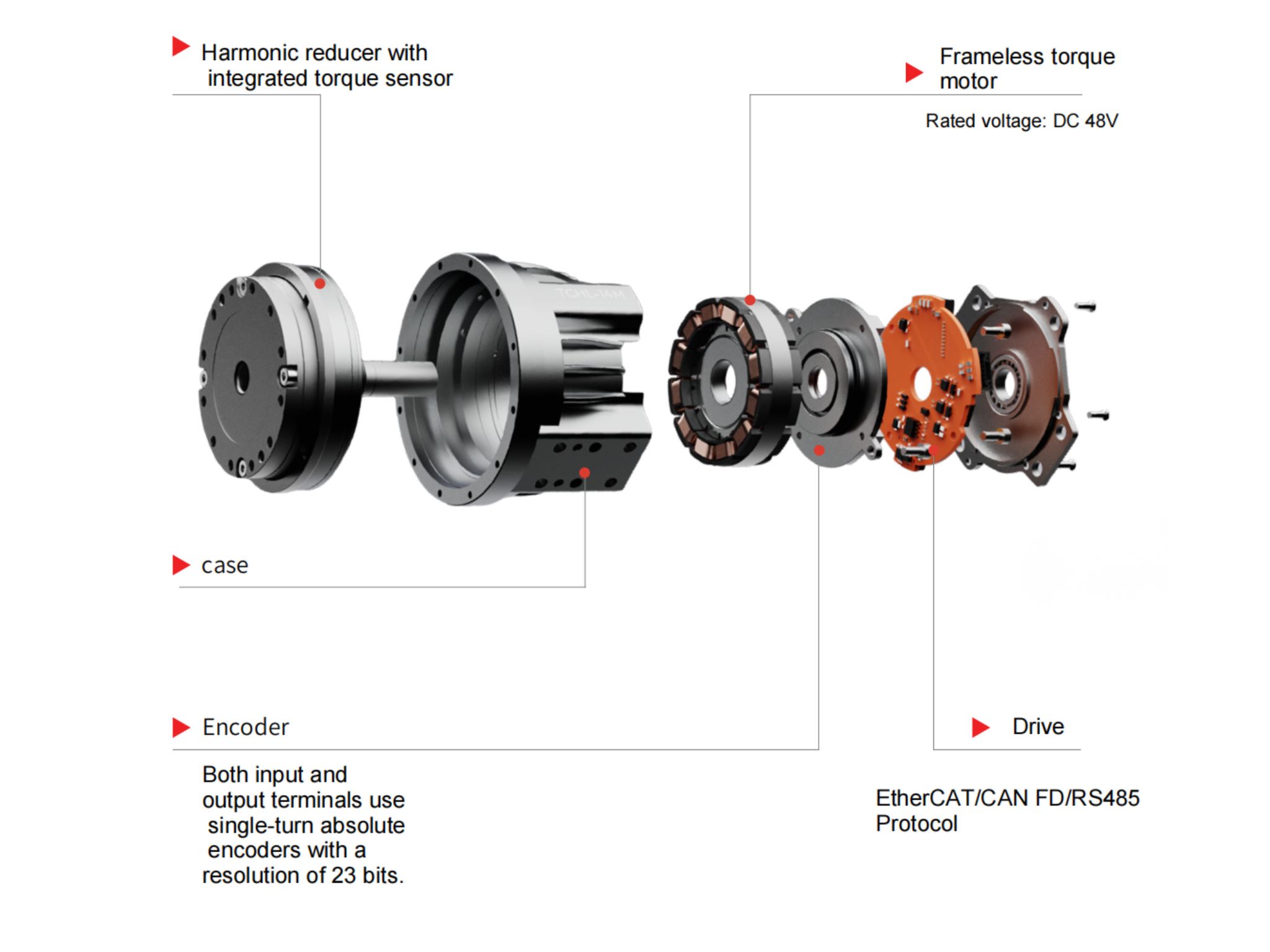
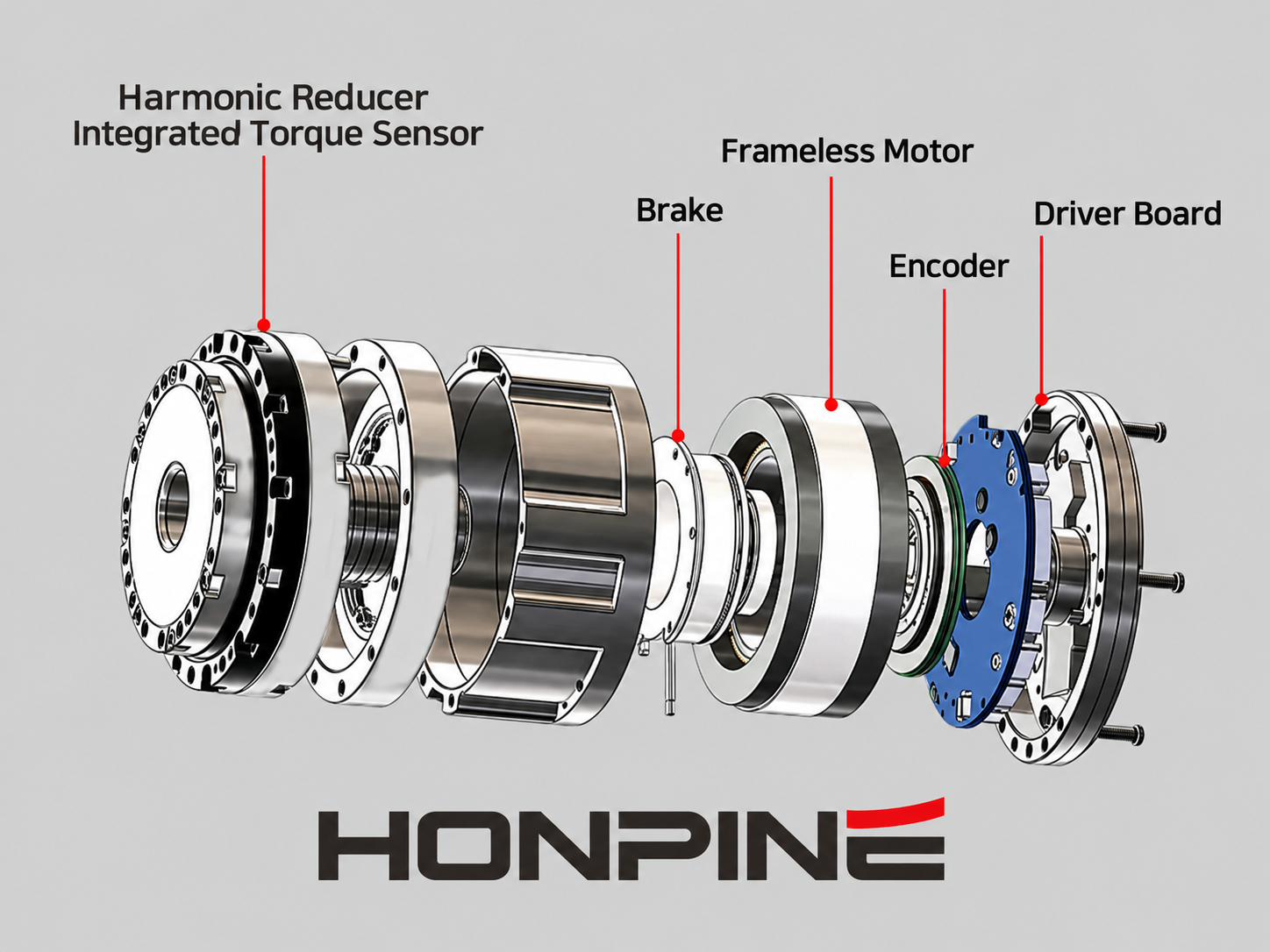
Modern harmonic rotary actuators can also incorporate hollow shafts, encoders, brakes and output bearings into a single compact assembly. Harmonic Drive, for example, offers hollow-shaft rotary actuators that combine precision gearing with brushless servo motors and encoder feedback, with the hollow center allowing cables, tubing or other components to pass through the rotation axis.
Why Use a Harmonic Rotary Actuator?
The major advantage is torque density.
Instead of using a large direct-drive motor to generate high torque at low speed, the harmonic reduction mechanism allows the designer to use a smaller high-speed motor and mechanically multiply its torque.
This can significantly reduce the overall actuator diameter for applications where installation space is limited.
For example, a rotary positioning axis in a compact semiconductor inspection system may need high holding torque but only a relatively low output speed.
In such a situation, a Harmonic Rotary Actuator can be a highly efficient architecture.
What Is a Direct Drive Rotary Actuator?
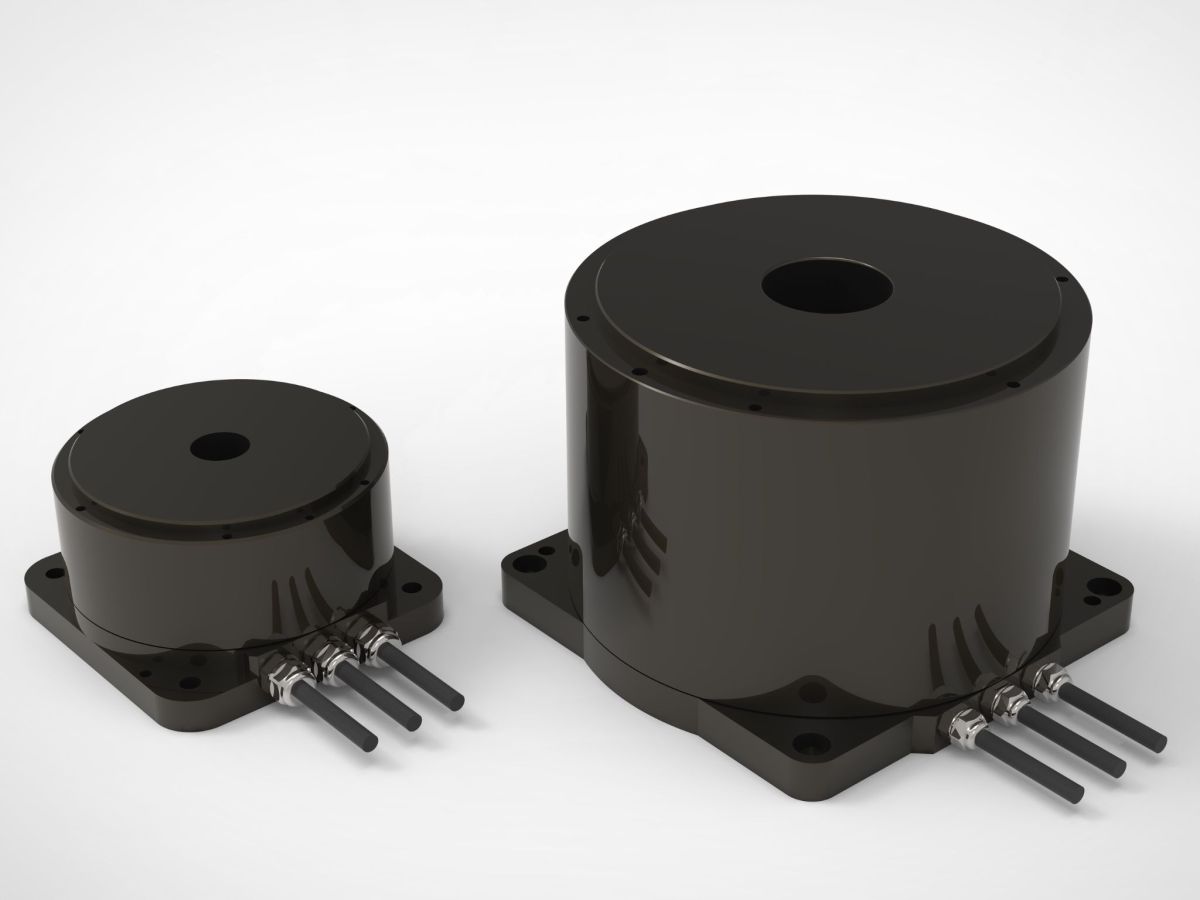
A Direct Drive Rotary Actuator takes a fundamentally different approach.
Instead of placing a reduction gearbox between the motor and the load, the actuator uses a high-torque rotary motor to drive the load directly.
The basic architecture is:
Servo Drive → Torque Motor → Load
There is no conventional gearbox between the motor rotor and the rotating load.
This means the system eliminates gearbox backlash and reduces the number of mechanical transmission components.
A Direct Drive Rotary Actuator is therefore particularly attractive when the application requires:
Fast acceleration and deceleration
High rotational speed
Short settling time
High repeatability
Smooth rotation
Frequent indexing
Low mechanical transmission error
High dynamic response
The Direct Drive approach is especially interesting for high-speed rotary motion.
Instead of increasing the motor speed and using a reduction ratio, the motor itself is designed with a large torque-producing diameter and appropriate electromagnetic characteristics to generate the required output torque at the required speed.
What Is a Hollow Rotary Table?
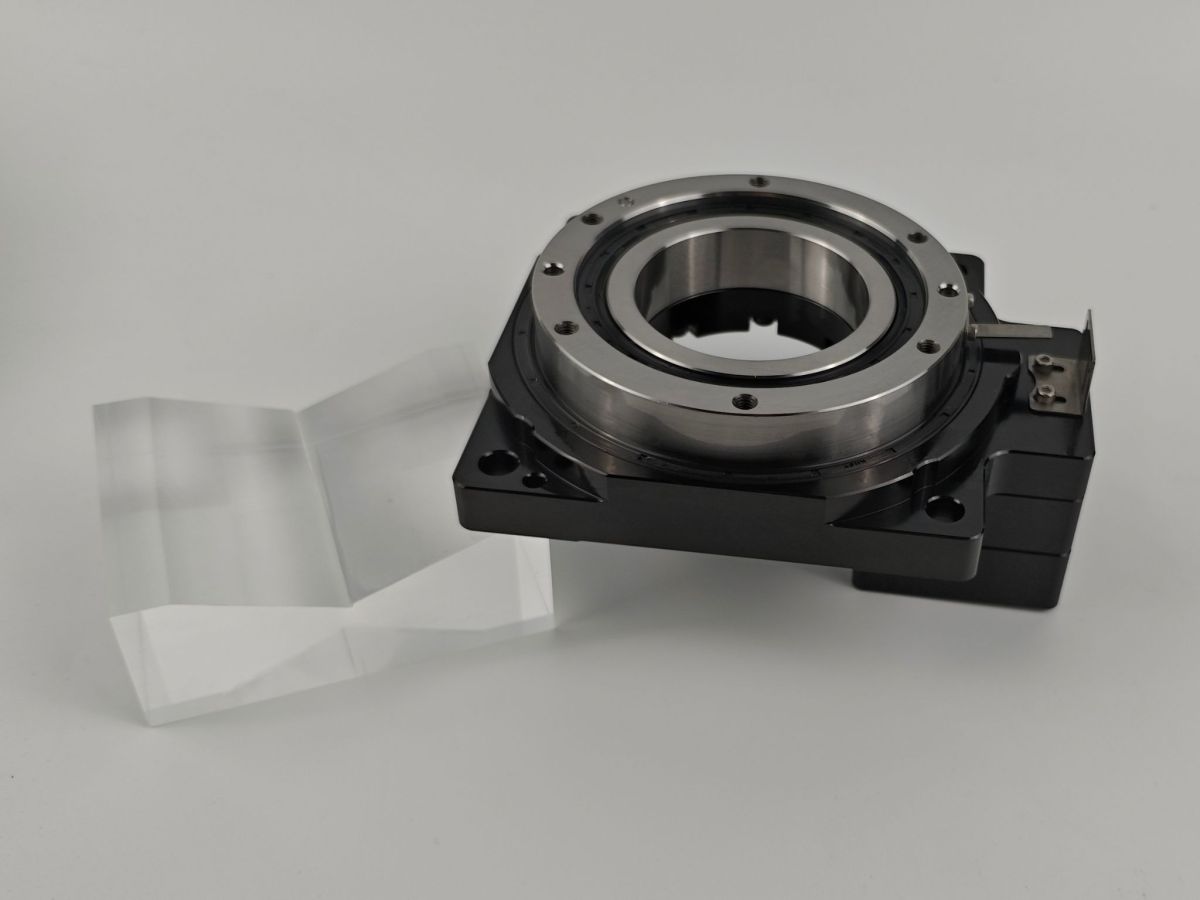
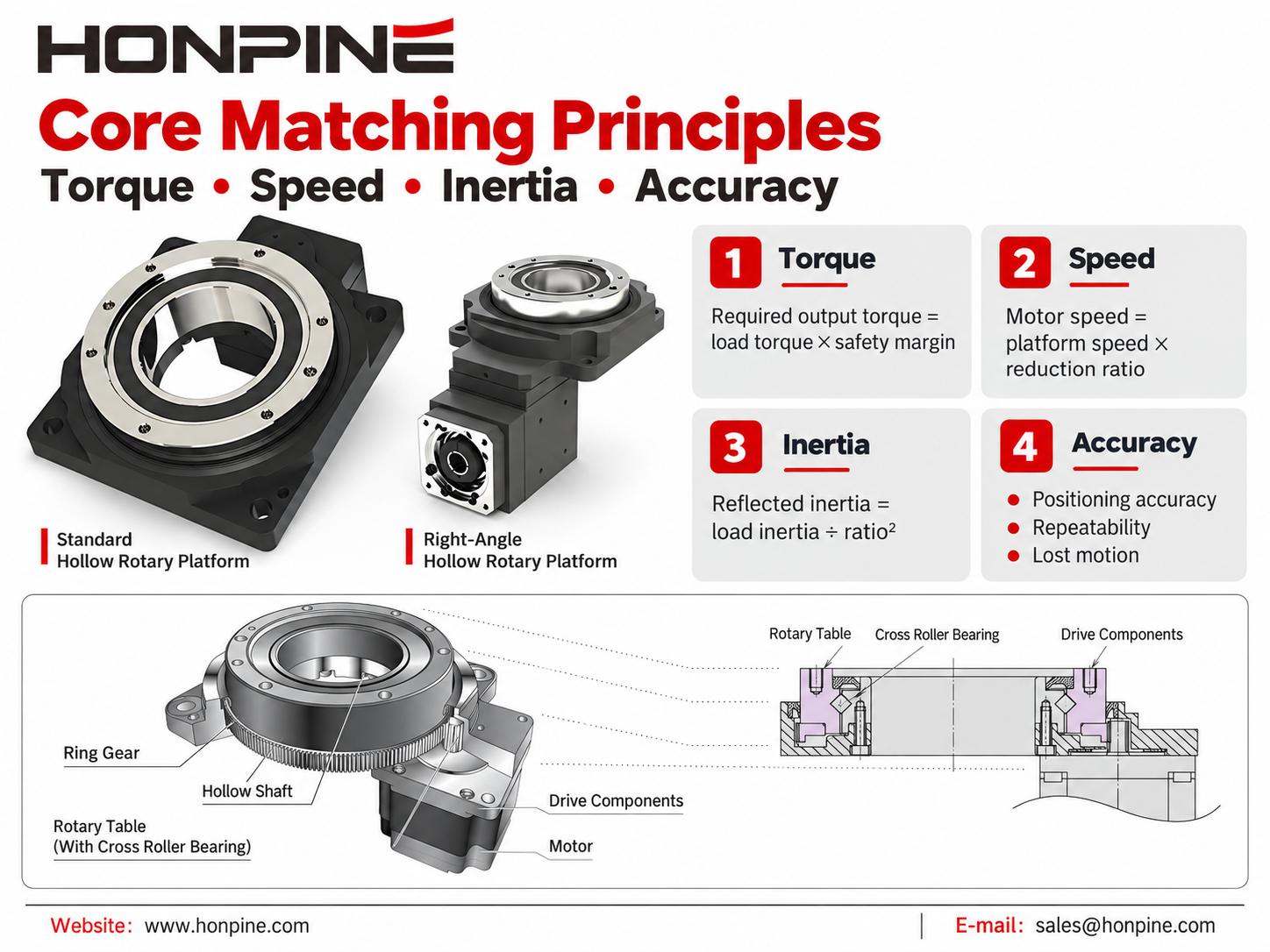
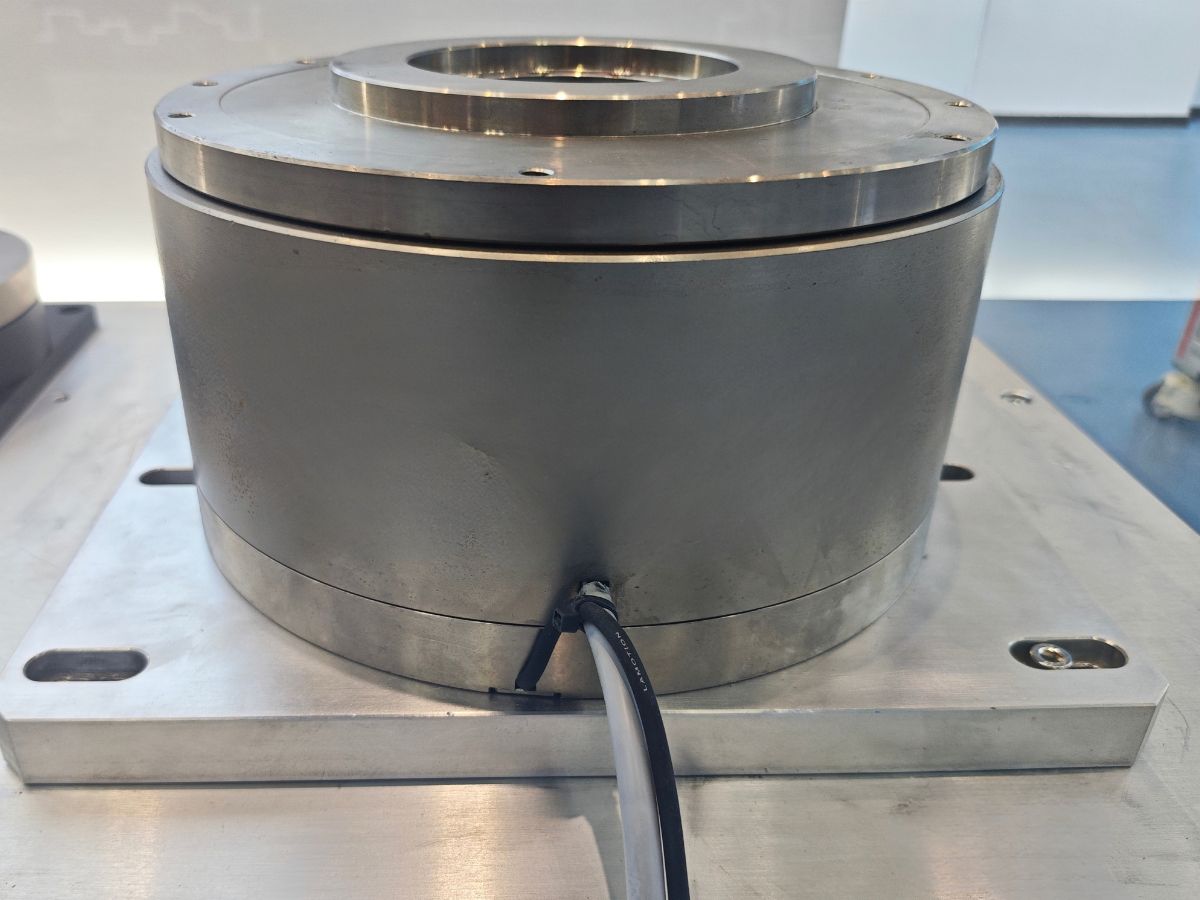
A Hollow Rotary Table is an integrated rotary positioning platform designed around a rotating table, bearing structure and central through-hole.
Its typical architecture is:
Motor / Drive → Transmission → Rotary Table → Fixture or Workpiece
The exact transmission may vary.
Depending on the product architecture, a hollow rotary table may use:
Harmonic gearing
Planetary gearing
Other precision reduction mechanisms
Servo motor
Stepper motor
Integrated bearing system
Therefore, Hollow Rotary Table is not necessarily a completely separate transmission principle from harmonic or direct drive technology.
This is an important distinction.
“Hollow” describes the physical architecture of the rotary unit, particularly the central through-hole. It does not by itself define whether the rotary motion is generated through harmonic gearing, planetary gearing or direct drive.
The hollow bore can be extremely valuable in automation because it provides a path for:
Cables
Pneumatic tubing
Vacuum lines
Fiber optics
Sensors
Laser beams
Mechanical shafts
Tooling
Hollow-shaft rotary actuators are similarly used in semiconductor equipment because cables and tubing can pass through the axis of rotation.
The Most Important Difference: How the Torque Is Generated
The biggest difference between these three solutions is their torque architecture.
Harmonic Rotary Actuator
The motor generates torque at relatively high speed.
The harmonic transmission then:
Reduces Speed → Increases Output Torque
This allows a compact motor to drive a high-load rotary mechanism.
Direct Drive Rotary Actuator
The motor itself generates the required output torque.
There is no conventional reduction gearbox.
The system becomes:
Motor Torque → Direct Load Motion
This provides a very short mechanical transmission path.
Hollow Rotary Table
The hollow rotary table is primarily an integrated mechanical platform.
Its internal torque architecture depends on the specific product.
It can therefore use a reduction mechanism while still providing a large hollow center and integrated output bearing.
This is why engineers should not automatically classify every hollow rotary table as either a harmonic actuator or a direct drive system.
Harmonic Rotary Actuator vs Direct Drive Rotary Actuator
The most important comparison is between the two actuator architectures.
Harmonic Rotary Actuator
A Harmonic Rotary Actuator is generally stronger when the application prioritizes:
High torque + compact size + high reduction ratio + precision
The reduction mechanism provides a mechanical torque multiplication effect.
This makes it suitable for:
Robot joints
Rotary positioning axes
Semiconductor handling
Inspection equipment
Wafer handling systems
Compact automation modules
Precision assembly equipment
Direct Drive Rotary Actuator
A Direct Drive Rotary Actuator becomes attractive when the priority shifts toward:
High speed + high acceleration + short settling time + smooth motion
The absence of a gearbox reduces mechanical transmission elements.
This can be especially valuable for:
High-speed indexing
Rotary inspection
Semiconductor sorting
High-speed turret systems
Electronic component handling
Pick-and-place mechanisms
Precision rotary stages
The choice therefore depends on the machine's motion profile.
Harmonic Rotary Actuator vs Hollow Rotary Table
These two solutions can sometimes look similar because both can provide:
High precision + compact installation + hollow structure + rotary positioning
But their design emphasis is different.
A Harmonic Rotary Actuator emphasizes the drive and torque-generation system.
A Hollow Rotary Table emphasizes the rotating platform and mechanical integration.
For example, if an engineer is asking:
“I need a compact servo-driven rotary actuator with high output torque.”
A Harmonic Rotary Actuator may be the more natural starting point.
If the engineer is asking:
“I need a rotary platform with a large through-hole and a rigid table for mounting a fixture.”
A Hollow Rotary Table may be more appropriate.
The distinction becomes particularly useful when designing inspection stations, indexing platforms and assembly machines.
Direct Drive Rotary Actuator vs Hollow Rotary Table
A Direct Drive Rotary Actuator can also be designed with a hollow center.
Therefore, the terms are not necessarily mutually exclusive.
A rotary system could theoretically combine:
Direct Drive + Hollow Shaft + Integrated Rotary Table
In this architecture, the motor directly drives the rotary table while the hollow center allows cables, tubing or optical components to pass through the axis.
The key difference is therefore:
Direct Drive describes the drive architecture.
Hollow describes the mechanical structure.
This distinction is useful when evaluating supplier specifications.
A product described as a “hollow rotary table” may contain a reduction mechanism.
A product described as a “direct drive rotary actuator” may also have a hollow bore.
The engineer should therefore examine the actual internal architecture rather than selecting a product based only on terminology.
Which Solution Provides the Highest Precision?
There is no universal winner.
Positioning accuracy depends on the entire motion system:
Motor + Transmission + Encoder + Bearing + Structure + Controller + Calibration
A Harmonic Rotary Actuator can achieve high positioning precision because precision harmonic gearing provides a low-backlash transmission and high reduction ratio.
A Direct Drive Rotary Actuator can achieve high positioning precision because the load is directly connected to the motor and there is no conventional gearbox transmission error.
A Hollow Rotary Table can also provide high precision when its internal transmission, bearing structure and encoder system are properly designed.
Therefore, comparing only “harmonic vs direct drive” based on nominal encoder resolution is not sufficient.
Engineers should evaluate:
Absolute positioning accuracy
Repeatability
Backlash
Transmission error
Bearing runout
Encoder accuracy
Thermal drift
Structural rigidity
Servo tuning
Which One Is Faster?
For high-speed rotary motion, Direct Drive Rotary Actuators generally have a strong advantage because there is no reduction gearbox limiting output speed.
A harmonic actuator is optimized around reduction.
The output speed is therefore typically much lower than the motor speed.
This makes harmonic actuators excellent for high-torque, lower-speed rotary motion but less naturally suited to extremely high-speed continuous rotation.
A Direct Drive Rotary Actuator can operate at substantially higher rotary speeds when the motor, bearing and thermal design support it.
This is why direct drive technology is often considered for:
High-speed turret indexing
Rotary inspection
Semiconductor handling
High-speed test equipment
However, speed must always be evaluated together with torque and inertia.
A motor capable of high rpm may still be unsuitable if the load inertia is too high or the required acceleration torque exceeds the motor's peak capability.
Which One Has Better Torque Density?
For compact high-torque applications, a Harmonic Rotary Actuator can offer excellent torque density because the reduction mechanism multiplies motor torque.
A Direct Drive Rotary Actuator must generate output torque directly.
This generally requires a larger motor diameter or more active magnetic material for the same low-speed output torque.
Therefore:
High torque at compact dimensions → Harmonic Rotary Actuator
High speed and direct load control → Direct Drive Rotary Actuator
This is one of the most important engineering trade-offs.
Which Rotary Solution Is Better for Semiconductor Equipment?
Semiconductor equipment has unusually demanding motion requirements.
Machines may need:
High positioning accuracy
Short cycle times
High repeatability
Compact installation
Clean cable routing
Low vibration
Stable thermal performance
High reliability
All three architectures can be used, but different machine functions favor different solutions.
Wafer Handling
A Harmonic Rotary Actuator can be attractive when the robot or handling mechanism requires compact dimensions and high output torque.
Its hollow version can also simplify cable and pneumatic routing.
Hollow-shaft actuators are specifically used in semiconductor applications where wiring and tubing must pass through the rotary axis.
High-Speed Inspection
A Direct Drive Rotary Actuator is attractive when rapid acceleration, smooth rotation and short settling time are more important than mechanical torque multiplication.
Indexing and Fixture Positioning
A Hollow Rotary Table is often a practical choice when the machine needs:
A rigid rotating platform
Direct fixture mounting
Large center opening
Compact installation
Repeatable indexing
This architecture can simplify the mechanical design of inspection and assembly stations.
Which Solution Is Better for 3C Automation?
3C manufacturing includes products such as:
Smartphones
Tablets
Laptops
Wearable electronics
Camera modules
Connectors
Electronic components
These machines often require compact, fast and highly repeatable rotary motion.
Camera Module Assembly
A Direct Drive Rotary Actuator can provide smooth, programmable rotation for alignment and inspection.
Connector Assembly
A Hollow Rotary Table can provide a compact indexing platform for fixtures and multiple assembly stations.
Precision Component Orientation
A Harmonic Rotary Actuator can provide high torque and precise angular positioning when the rotary load is relatively heavy or the available installation space is limited.
Backlash and Transmission Error
Backlash is one of the most important parameters in precision rotary motion.
A conventional gearbox may introduce backlash between the input and output.
A precision Harmonic Rotary Actuator can be designed with extremely low backlash or zero-backlash specifications depending on the mechanism and product.
A Direct Drive Rotary Actuator does not contain a conventional reduction gearbox, so gearbox backlash is not part of the drive chain.
However, this does not mean the complete system has zero mechanical error.
Bearing clearance, structural deformation, encoder installation and load-induced deflection can still affect positioning.
For a Hollow Rotary Table, backlash depends primarily on its internal transmission architecture.
Therefore, when comparing products, engineers should ask:
What is the actual output-side backlash or transmission error?
rather than assuming that “hollow” automatically means low backlash.
Load Capacity and Bearing Design
The output bearing is often overlooked during rotary actuator selection.
A rotary motion unit must not only generate torque.
It must also support:
Radial load
Axial load
Moment load
Rotating fixture inertia
External mechanical forces
Integrated cross-roller bearings are commonly used in precision rotary actuators because they can support loads directly at the output.
For example, Harmonic Drive's FHA Mini combines a harmonic gear component, servo motor, encoder and large cross-roller output bearing so that loads can be mounted directly to the actuator.
This type of integration can significantly simplify machine design.
For a Hollow Rotary Table, bearing capacity is even more important because the table itself often supports the fixture and workpiece.
Why Hollow Bore Size Matters in Automation?
The hollow center is more than a convenience.
In compact automation equipment, the center of rotation is often the most difficult area for routing cables and pneumatic lines.
A sufficiently large hollow bore can allow:
Power Cable
Encoder Cable
Ethernet / EtherCAT Cable
Vacuum Tube
Pneumatic Tube
Fiber Optic Cable
Laser Beam
to pass through the center of rotation.
This can reduce cable bending and external cable loops.
Hollow-shaft actuator designs are specifically promoted for applications involving cables, tubing and optical paths through the rotation axis.
For semiconductor equipment, this can be particularly valuable because the machine layout is often extremely compact.
Continuous Rotation vs Indexing Motion
Another important selection factor is the motion pattern.
Continuous Rotation
If the load needs to rotate continuously at relatively high speed, a Direct Drive Rotary Actuator is often a strong candidate.
Typical applications include:
Rotary inspection
Scanning
Optical systems
High-speed processing
Continuous indexing mechanisms
Repeated Indexing
If the machine repeatedly moves:
0° → 30° → 60° → 90° → Stop
then the selection should focus on:
Peak torque
Acceleration
Settling time
Repeatability
Load inertia
A Direct Drive Rotary Actuator can provide excellent dynamic performance.
A Harmonic Rotary Actuator can provide high torque and stable positioning.
A Hollow Rotary Table can provide a highly integrated indexing platform.
The correct solution depends on the complete motion profile.
Motion Profile Is More Important Than Rated Speed
One common mistake is selecting a rotary actuator based only on its maximum rpm.
For automation equipment, the more useful question is:
How quickly can the actuator move the actual load from one position to another and settle within the required accuracy?
For an indexing system:
Cycle Time = Acceleration + Motion + Deceleration + Settling
A rotary actuator with an extremely high rated speed may still produce poor machine throughput if it requires a long settling time.
Conversely, a lower-speed harmonic actuator may be ideal if the required indexing angle is small and the machine prioritizes high torque and compact dimensions.
How to Select Between Harmonic Rotary Actuator, Direct Drive Rotary Actuator and Hollow Rotary Table
The selection process can be simplified into several questions.
Question 1 — Do You Need High Torque at Low Output Speed?
If yes, start with a:
Harmonic Rotary Actuator
The reduction mechanism provides torque multiplication while maintaining a compact form factor.
Question 2 — Do You Need High-Speed Rotation and Fast Acceleration?
If yes, consider:
Direct Drive Rotary Actuator
Direct drive removes the conventional reduction stage and can provide excellent dynamic response.
Question 3 — Do You Need a Large Hollow Center and Direct Fixture Mounting?
If yes, consider:
Hollow Rotary Table
The integrated table structure can simplify installation and provide a rigid platform for the load.
Question 4 — Do You Need Cables or Tubing Through the Rotation Axis?
Then prioritize:
Hollow Shaft / Hollow Rotary Architecture
The hollow structure can be combined with different drive technologies.
Question 5 — Is Machine Footprint Extremely Limited?
Consider:
Harmonic Rotary Actuator
or
Compact Hollow Rotary Table
depending on torque and platform requirements.
Question 6 — Is Cycle Time the Main Constraint?
Consider:
Direct Drive Rotary Actuator
especially when the machine requires rapid acceleration, deceleration and short settling time.
A Practical Selection Matrix
This table should be used as a starting point rather than a substitute for detailed motor sizing.
Can These Three Technologies Be Combined?
Yes.
This is an important point for engineers.
The three terms describe different aspects of rotary motion systems.
For example, a rotary module can be:
Hollow + Harmonic + Servo
or:
Hollow + Direct Drive + Servo
or:
Hollow Rotary Table + Planetary Reduction + Servo Motor
Therefore, “Harmonic Rotary Actuator,” “Direct Drive Rotary Actuator” and “Hollow Rotary Table” should not always be treated as three completely isolated product categories.
Instead, they represent different design choices:
Transmission Technology
Drive Technology
Mechanical Integration
A machine designer can combine these technologies according to the application.
Why Integrated Rotary Motion Control Is Becoming More Important?
Modern automation equipment is becoming smaller while simultaneously demanding higher throughput and precision.
Instead of assembling:
Motor + Gearbox + Coupling + Bearing + Encoder + Rotary Plate
machine builders increasingly prefer integrated rotary motion units.
An integrated actuator can reduce the number of mechanical interfaces and simplify installation.
A harmonic rotary actuator can integrate:
Servo Motor + Harmonic Gear + Encoder + Bearing + Brake
A direct drive rotary actuator can integrate:
Torque Motor + Encoder + Bearing + Housing
A hollow rotary table can integrate:
Rotary Table + Bearing + Transmission + Motor Interface + Hollow Bore
This integration can shorten development time and reduce potential sources of mechanical error.
The Future of Rotary Motion Control in 3C and Semiconductor Automation
The demand for rotary motion control is likely to continue growing as semiconductor and 3C equipment moves toward:
Smaller components
Higher UPH
Higher positioning accuracy
More compact machine layouts
Greater automation
Flexible production
The next generation of rotary systems will increasingly combine:
High-resolution absolute encoders
Servo drives
Advanced motion control
Vibration suppression
Thermal compensation
Online calibration
Integrated bearings
Hollow-axis cable routing
Compact actuator structures
The goal is not simply to rotate a load.
The goal is to achieve:
Fast Motion + Precise Positioning + Stable Operation + Compact Integration
This is why Harmonic Rotary Actuators, Direct Drive Rotary Actuators and Hollow Rotary Tables will continue to play different but complementary roles in modern rotary motion control.
FAQ About Harmonic Rotary Actuator, Direct Drive Rotary Actuator and Hollow Rotary Table
What is the difference between a Harmonic Rotary Actuator and a Direct Drive Rotary Actuator?
A Harmonic Rotary Actuator uses a precision reduction mechanism to increase output torque and reduce output speed. A Direct Drive Rotary Actuator uses a torque motor to drive the load directly without a conventional reduction gearbox.
Is a Direct Drive Rotary Actuator more accurate than a Harmonic Rotary Actuator?
Not necessarily.
Both can achieve high positioning accuracy when properly designed.
Direct drive eliminates gearbox transmission errors, while harmonic actuators provide high reduction, low backlash and compact high-torque transmission.
Final accuracy depends on the motor, encoder, bearing, mechanical structure, controller and calibration.
Is a Hollow Rotary Table the same as a Hollow Rotary Actuator?
Not exactly.
A Hollow Rotary Table usually emphasizes the integrated rotary platform and central through-hole, while a Hollow Rotary Actuator emphasizes the complete driven rotary motion unit.
In some products, the two terms may overlap.
Can a Harmonic Rotary Actuator have a hollow shaft?
Yes.
Hollow-shaft harmonic rotary actuators are available and can route cables, tubing and other components through the center of rotation.
Can a Direct Drive Rotary Actuator have a hollow bore?
Yes.
A direct-drive rotary actuator can be designed with a hollow shaft or hollow rotor structure when the application requires through-axis cable routing, pneumatic lines or optical paths.
Which is better for semiconductor equipment?
It depends on the motion requirement.
A Harmonic Rotary Actuator is attractive for compact, high-torque precision axes and wafer handling mechanisms.
A Direct Drive Rotary Actuator is attractive for high-speed rotary motion, rapid indexing and short settling times.
A Hollow Rotary Table is attractive for inspection, assembly and indexing stations that require a rigid rotary platform and large center opening.
Which is better for 3C automation?
For compact high-torque rotary axes, a Harmonic Rotary Actuator can be a strong choice.
For fast rotary motion and rapid indexing, a Direct Drive Rotary Actuator is attractive.
For fixture-based indexing and inspection platforms, a Hollow Rotary Table can simplify the machine structure.
How should I choose a rotary motion control solution?
Start with the actual motion requirements:
Load → Inertia → Speed → Acceleration → Torque → Indexing Angle → Accuracy → Repeatability → Hollow Bore → Duty Cycle → Installation Space
Then select the appropriate rotary architecture.
Conclusion: Choose the Rotary Architecture, Not Just the Product Name
Harmonic Rotary Actuators, Direct Drive Rotary Actuators and Hollow Rotary Tables can all provide precise rotary motion, but they solve different engineering problems.
Choose a Harmonic Rotary Actuator when compact dimensions, high output torque, high reduction ratio and precision are the primary requirements.
Choose a Direct Drive Rotary Actuator when high speed, rapid acceleration, smooth motion and short settling time are more important.
Choose a Hollow Rotary Table when the machine needs an integrated rotary positioning platform, rigid load support, fixture mounting and a large central through-hole.
For advanced 3C automation, semiconductor equipment and precision rotary motion control, the best solution is not necessarily the one with the highest torque, highest speed or highest encoder resolution.
The right solution is the one that matches the complete motion profile and mechanical architecture.
Harmonic reduction optimizes torque.
Direct drive optimizes dynamic response.
Hollow rotary integration optimizes machine layout and rotary accessibility.
Understanding these differences allows machine builders to select a rotary motion solution that delivers the right balance of speed, precision, torque, rigidity, integration and cost.
Read More
Learn more about the story of HONPINE and industry trends related to precision transmission.
 What is robot joint actuator?How to Choose the Best Robot Rotary Joint Actuator?In core robot joint transmission solutions, planetary and harmonic rotary actuators each have their own strengths. Choosing the right type based on application requirements is essential to achieve the optimal balance between performance and cost.
 DD Motors VS Harmonic Rotary ActuatorsThis article provides an in-depth comparison between Direct Drive (DD) motors and harmonic rotary actuators, covering their transmission principles, advantages and disadvantages, and typical application fields.
 OMG Ultra Compact Harmonic Drive Joint Module with Built-in Torque SensorHONPINE TCHL series harmonic drive joint module is a game-changing product that achieves disruptive improvements in multiple aspects such as lightweight design, integration level, and connection convenience. This article will analyze its revolutionary enhancements with you.
 The Role of Harmonic Drive Gears in Achieving 5–10 μm Accuracy in Dental Milling MachinesA dental milling machine is a CNC machining system used to directly process digital dental models into restorations such as crowns, bridges, veneers, inlays, and implant abutments. Dental milling machines require far higher operational accuracy and motion stability than ordinary equipment. This article explains how harmonic drive gear help dental milling machines achieve stable, continuous, and controllable operation.
 Why Are Harmonic Rotary Actuators Perfect for Medical Equipment?Harmonic rotary actuators (typically integrated systems consisting of a harmonic drive reducer, frameless torque motor, encoder, and optional brake) are regarded as key components in medical equipment. The core reason is that they simultaneously meet the most stringent medical requirements for precision, compact size, safety, and controllability. The following explanation is structured from three perspectives: technical characteristics, application scenarios, and medical value.
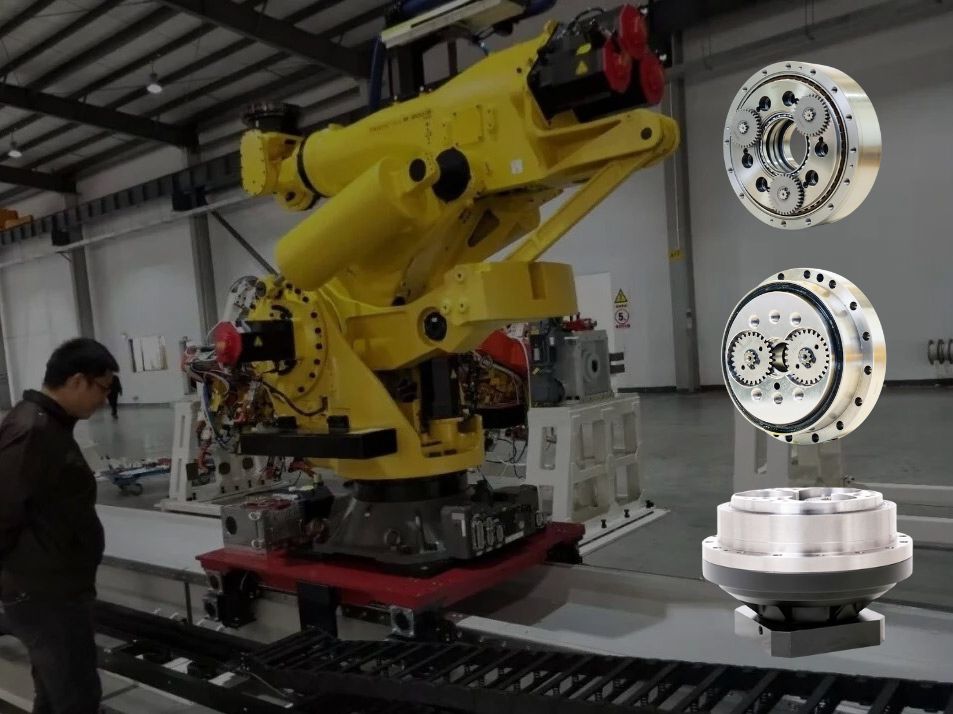
 High-Precision RV Reducers Perfectly Matched for Walking RobotsThe walking axis of a robot is a core component for power transmission and support. RV reducers provide extremely high rigidity, precision, and torque while maintaining a compact size and exceptional reliability, making them an ideal match for the demanding requirements of walking robot joints in terms of load capacity, impact resistance, and precision.
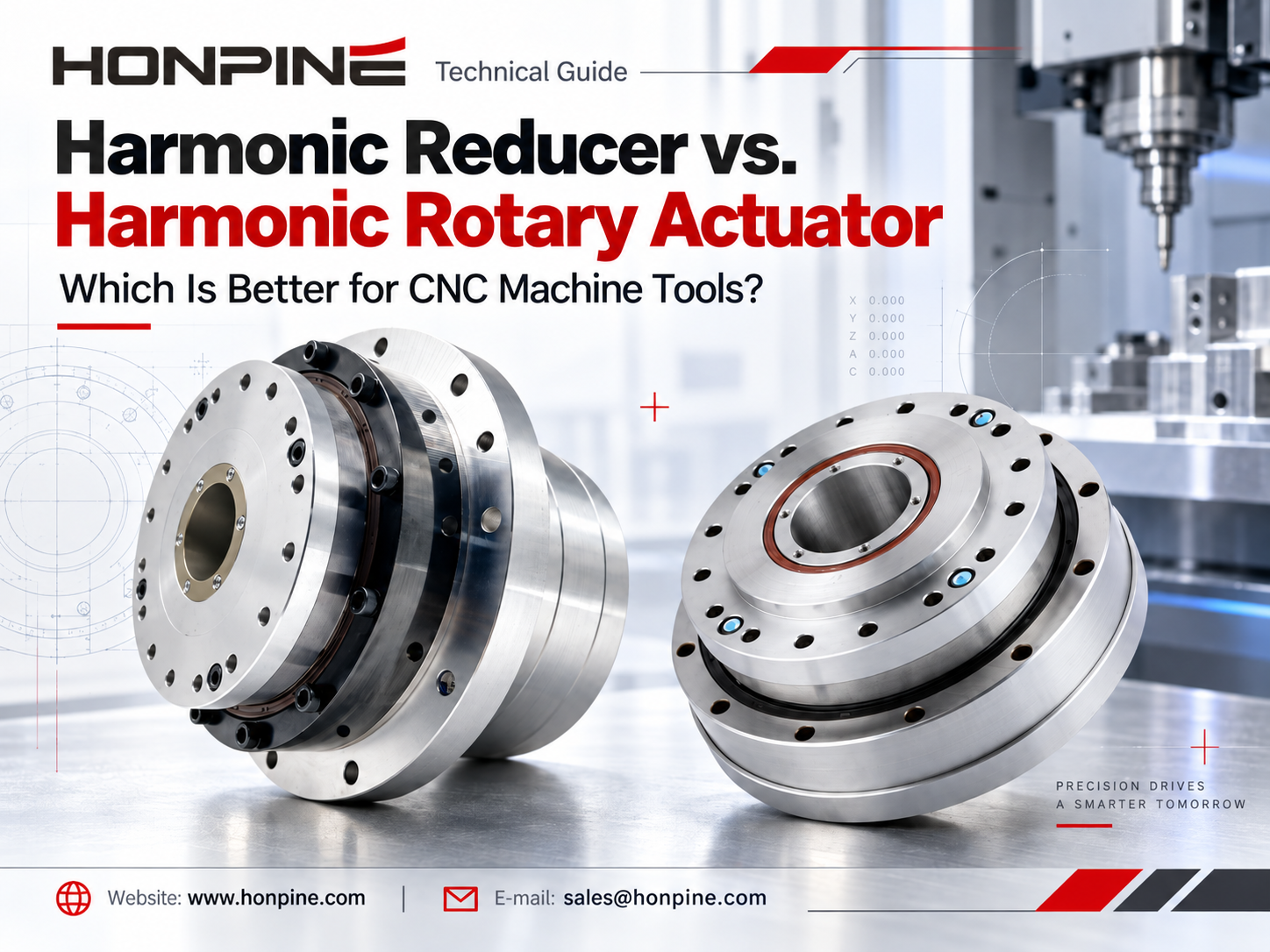
 Harmonic Reducer vs. Harmonic Rotary Actuator: Which Is Better for CNC Machine Tools?Choosing between a harmonic reducer and a harmonic rotary actuator is an important decision in CNC machine tool design. Both solutions offer high-precision motion control, but they differ in integration, installation requirements, rigidity, and system flexibility. For CNC fourth-axis rotary tables and compact five-axis machining systems, selecting the right harmonic drive can significantly influence machine performance. In this article, HONPINE Technical Director Theodore Li compares harmonic reducers and harmonic rotary actuators to help engineers identify the most suitable solution for their CNC applications.
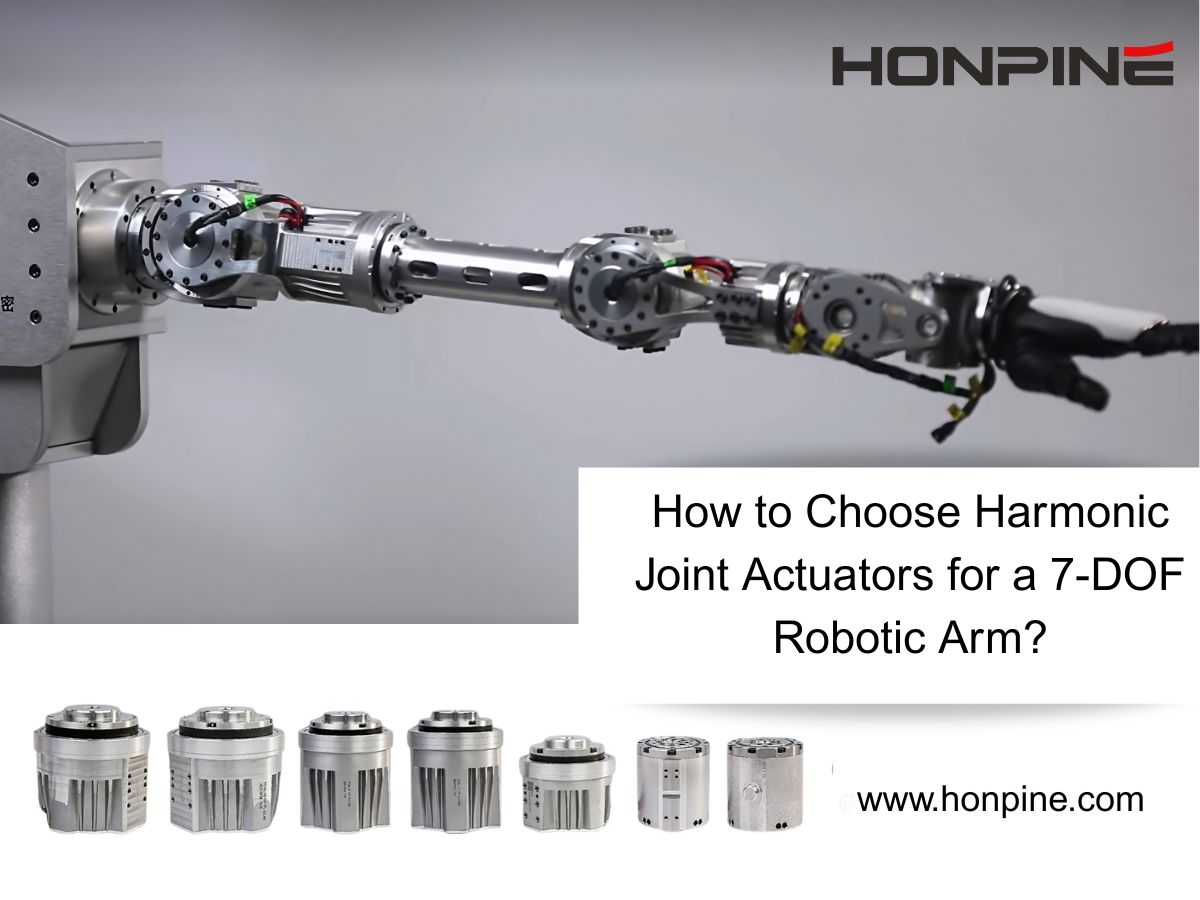
 How to Choose Harmonic Joint Actuators for a 7-DOF Robotic Arm?I'm Theodore Li, Technical Director at HONPINE. Choosing harmonic joint actuators for a 7-DOF robotic arm starts with the torque, weight, and installation needs of each joint. This guide uses a TCHL 20 shoulder and TCHL 14 wrist configuration as an example, then explores torque sensing, compliant control, and HAG Series considerations for demanding robotic applications.
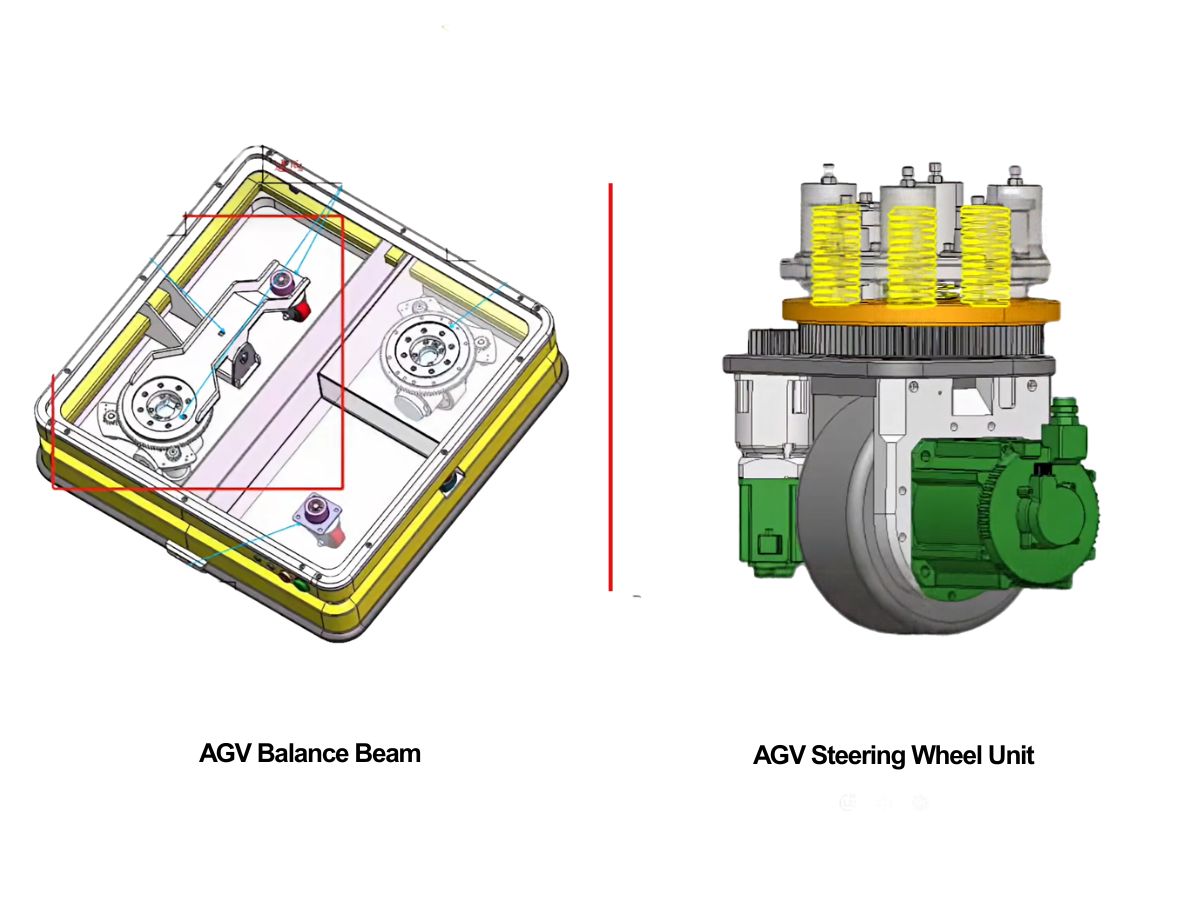
 AGV Suspension: Should You Choose a Balance Beam or a Spring-Loaded Steering Drive Unit?Choosing an AGV suspension system starts with the vehicle’s load range and floor conditions. Balance beams and spring-loaded steering drive units offer different approaches to maintaining wheel contact and managing wheel loads. This HONPINE guide compares both options and explains how to evaluate traction, suspension travel, installation space, and maintenance before choosing a configuration.
 Hollow Rotary Platform Motor Matching: A Complete GuideSelecting the right motor for a hollow rotary platform is essential for achieving precise positioning, stable operation, and efficient automation. This guide explains how to match servo motors, stepper motors, and brushless DC motors with hollow rotary platforms based on torque, speed, inertia, accuracy, and installation requirements. Explore practical motor selection guidelines, typical application combinations, and space-saving mounting solutions to find the right configuration for your automation project.
 Can Robots Feel Touch? HONPINE HAG Force-Controlled Harmonic Robot Joint MotorsCan robots respond to a gentle touch? The HONPINE HAG robot joint motor with torque sensor combines a harmonic reducer, integrated torque sensing, and closed-loop control to detect external forces and support smooth, compliant motion. In this article, HONPINE founder Allen Li demonstrates the module's response to light contact and hand-guided movement, explains its key force-control technologies, and shares the vision behind joint modules designed for practical industrial robotics.
 Does a Higher Gearbox Ratio Mean More Torque? Planetary, Harmonic, and RV Gearboxes ExplainedDoes a higher gearbox ratio mean more torque? This engineering guide explains the relationship between gearbox ratio, output torque, and output speed, and compares planetary gearboxes, harmonic gearboxes, and RV gearboxes. Learn why reduction ratio alone cannot determine gearbox torque capacity, efficiency, dynamic response, precision, or service life, and what engineers should consider when selecting a gearbox for robotics, CNC machines, servo systems, and industrial motion control.
Double Click
We provide harmonic drive reducer,planetary reducer,robot joint motor,robot rotary actuators,RV gear reducer,robot end effector,dexterous robot hand
 What is robot joint actuator?How to Choose the Best Robot Rotary Joint Actuator?In core robot joint transmission solutions, planetary and harmonic rotary actuators each have their own strengths. Choosing the right type based on application requirements is essential to achieve the optimal balance between performance and cost.
 DD Motors VS Harmonic Rotary ActuatorsThis article provides an in-depth comparison between Direct Drive (DD) motors and harmonic rotary actuators, covering their transmission principles, advantages and disadvantages, and typical application fields.
 OMG Ultra Compact Harmonic Drive Joint Module with Built-in Torque SensorHONPINE TCHL series harmonic drive joint module is a game-changing product that achieves disruptive improvements in multiple aspects such as lightweight design, integration level, and connection convenience. This article will analyze its revolutionary enhancements with you.
 Harmonic Reducer vs. Harmonic Rotary Actuator: Which Is Better for CNC Machine Tools?Choosing between a harmonic reducer and a harmonic rotary actuator is an important decision in CNC machine tool design. Both solutions offer high-precision motion control, but they differ in integration, installation requirements, rigidity, and system flexibility. For CNC fourth-axis rotary tables and compact five-axis machining systems, selecting the right harmonic drive can significantly influence machine performance. In this article, HONPINE Technical Director Theodore Li compares harmonic reducers and harmonic rotary actuators to help engineers identify the most suitable solution for their CNC applications.
 How to Choose Harmonic Joint Actuators for a 7-DOF Robotic Arm?I'm Theodore Li, Technical Director at HONPINE. Choosing harmonic joint actuators for a 7-DOF robotic arm starts with the torque, weight, and installation needs of each joint. This guide uses a TCHL 20 shoulder and TCHL 14 wrist configuration as an example, then explores torque sensing, compliant control, and HAG Series considerations for demanding robotic applications.
 AGV Suspension: Should You Choose a Balance Beam or a Spring-Loaded Steering Drive Unit?Choosing an AGV suspension system starts with the vehicle’s load range and floor conditions. Balance beams and spring-loaded steering drive units offer different approaches to maintaining wheel contact and managing wheel loads. This HONPINE guide compares both options and explains how to evaluate traction, suspension travel, installation space, and maintenance before choosing a configuration.
 Hollow Rotary Platform Motor Matching: A Complete GuideSelecting the right motor for a hollow rotary platform is essential for achieving precise positioning, stable operation, and efficient automation. This guide explains how to match servo motors, stepper motors, and brushless DC motors with hollow rotary platforms based on torque, speed, inertia, accuracy, and installation requirements. Explore practical motor selection guidelines, typical application combinations, and space-saving mounting solutions to find the right configuration for your automation project.
 Can Robots Feel Touch? HONPINE HAG Force-Controlled Harmonic Robot Joint MotorsCan robots respond to a gentle touch? The HONPINE HAG robot joint motor with torque sensor combines a harmonic reducer, integrated torque sensing, and closed-loop control to detect external forces and support smooth, compliant motion. In this article, HONPINE founder Allen Li demonstrates the module's response to light contact and hand-guided movement, explains its key force-control technologies, and shares the vision behind joint modules designed for practical industrial robotics.
 Does a Higher Gearbox Ratio Mean More Torque? Planetary, Harmonic, and RV Gearboxes ExplainedDoes a higher gearbox ratio mean more torque? This engineering guide explains the relationship between gearbox ratio, output torque, and output speed, and compares planetary gearboxes, harmonic gearboxes, and RV gearboxes. Learn why reduction ratio alone cannot determine gearbox torque capacity, efficiency, dynamic response, precision, or service life, and what engineers should consider when selecting a gearbox for robotics, CNC machines, servo systems, and industrial motion control.
 High-Precision Hollow Harmonic Rotary Actuator for CNC Machines and Heavy-Duty Rotary AxesHONPINE 58 Series Hollow Harmonic Rotary Actuator is designed for CNC rotary tables, precision rotary axes, laser processing equipment, and heavy-duty rotary positioning applications. With a 50 mm hollow bore, up to 2,722 N·m peak torque, integrated crossed roller bearing, multi-turn absolute encoder options, positioning accuracy below 30 arcsec, and repeat positioning accuracy below 5 arcsec, it combines high torque capacity with precision rotary motion and flexible mechanical integration.
 How Does the HONPINE JRM Planetary Robot Joint Module Address Temperature Rise in Continuous Operation?HONPINE JRM planetary robot joint modules are designed for long-duration and high-load robotic operation. This article examines how motor electromagnetic optimization, high-efficiency planetary transmission, GaN-based drive technology, and system-level low-loss design help control temperature rise. Using the C6345 planetary robot joint module as a test example, HONPINE also presents full-load thermal validation under continuous operation, including motor efficiency up to 92%, planetary gearbox efficiency up to 97%, and a final equilibrium temperature of 61.42°C at a 25°C ambient temperature.
 Direct Drive Motor Sizing: A Complete Guide to Torque Calculation and SelectionSelecting a direct drive motor for a precision rotary system requires more than matching motor torque to the equipment weight. Engineers need to evaluate gravity torque, inertial torque, wind torque, friction, rotational inertia, speed, acceleration, duty cycle, and positioning requirements. In this guide, Theodore Li, Technical Director at HONPINE, explains a practical approach to direct drive motor sizing and torque calculation using an azimuth and elevation turntable as an engineering example. The article covers continuous and peak torque calculation, motor selection criteria, and the application of frameless direct drive motors in integrated rotary systems.
- harmonic reduction
- harmonic drive
- harmonic gear
- harmonic transmission
- hollow rotary table
- hollow rotary actuator
- harmonic actuator
- harmonic rotary actuator
- rotary actuator
- harmonic
- small
- precision
- planetary
- 90
- torque motor
- servo
- actuator
- harmonic rotary actuators
- ethercat communication
- direct drive motor
- Integrated Motor
- harmonic actuators
- direct drive rotary actuator