






Nabtesco RV vs Harmonic Drive vs WITTENSTEIN: Why Backlash-Free Planetary Actuators Are Emerging
For decades, precision transmission systems from Nabtesco, Harmonic Drive, and WITTENSTEIN have defined important performance standards in robotics, machine tools, automation, aerospace equipment, and precision motion systems.
Nabtesco RV reducers are known for high rigidity, high torque capacity, and strong resistance to external loads. Harmonic Drive reducers are widely recognized for compact dimensions, high reduction ratios, low backlash, and excellent repeatability. WITTENSTEIN precision planetary gearboxes provide high efficiency, torque density, rigidity, and flexible transmission configurations.
However, high-end motion systems are increasingly asking for something more difficult: arc-second-level transmission accuracy together with high torsional rigidity and high load capacity.
This is where conventional transmission architectures can face a difficult performance trade-off.
A new generation of backlash-free planetary actuators is emerging to address this gap by combining planetary transmission architecture with advanced backlash compensation and precision actuator integration.
What Are the Performance Challenges of Today's Precision Reducers?
The issue is not that conventional precision reducers are incapable of high-performance motion control. Each architecture has been optimized for a particular combination of mechanical requirements.
The challenge appears when one application simultaneously requires very low backlash, high torsional stiffness, high torque density, low transmission error, high load capacity, compact dimensions, and long-term stability.
For example, a five-axis machine-tool rotary axis may need to resist substantial cutting forces while maintaining arc-second-level angular positioning. An aerospace assembly mechanism may require high stiffness and low transmission error at the same time. A surgical robotic joint may need compact dimensions, low backlash, high repeatability, and predictable motion.
In these applications, comparing gearboxes only by nominal reduction ratio or rated torque is no longer sufficient.
The more important question is:
How much precision, rigidity, and load capacity can the complete transmission maintain at the same time?
Nabtesco RV Reducer: High Rigidity and High Load Capacity
Where Nabtesco RV Performs Well?
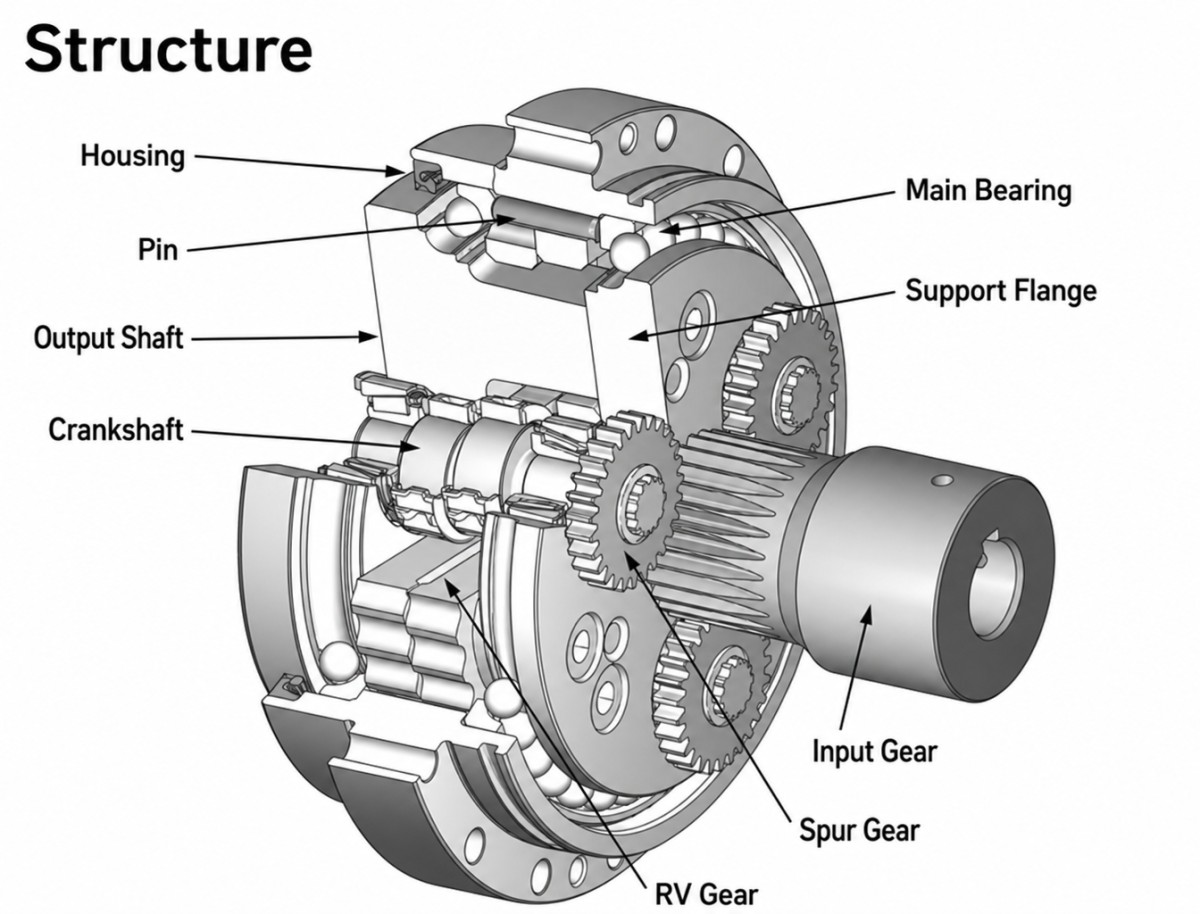
The Nabtesco RV reducer uses a multi-stage transmission architecture combining planetary gearing with a cycloidal mechanism. This architecture has become widely used in industrial robots because it provides high rigidity, high torque capacity, and strong resistance to external loads.
Nabtesco's current RV product information specifies backlash or lost motion below 1 arc.min. for several major RV product families.
For many industrial robot applications, this performance provides a practical balance between precision, rigidity, load capacity, and durability.
The challenge appears when the application moves from conventional robot positioning requirements toward arc-second-level angular positioning and extremely low transmission error.
Where the RV Architecture Faces a Precision Trade-Off?
An RV reducer is not simply a large harmonic reducer. Its cycloidal and planetary transmission architecture has its own characteristics in terms of tooth engagement, load distribution, transmission error, manufacturing tolerances, bearing arrangement, and preload.
Reducing nominal backlash is therefore only one part of the problem.
For applications such as high-precision rotary tables, five-axis machine tools, optical positioning systems, and selected medical robotic mechanisms, the required angular accuracy can become substantially tighter than the conventional arc-minute-level gearbox specification.
This creates an opportunity for a transmission architecture specifically designed around low backlash and arc-second-level angular transmission accuracy.
Harmonic Drive: Extremely Low Backlash and High Repeatability
Why Harmonic Drive Is Widely Used in Precision Robotics?
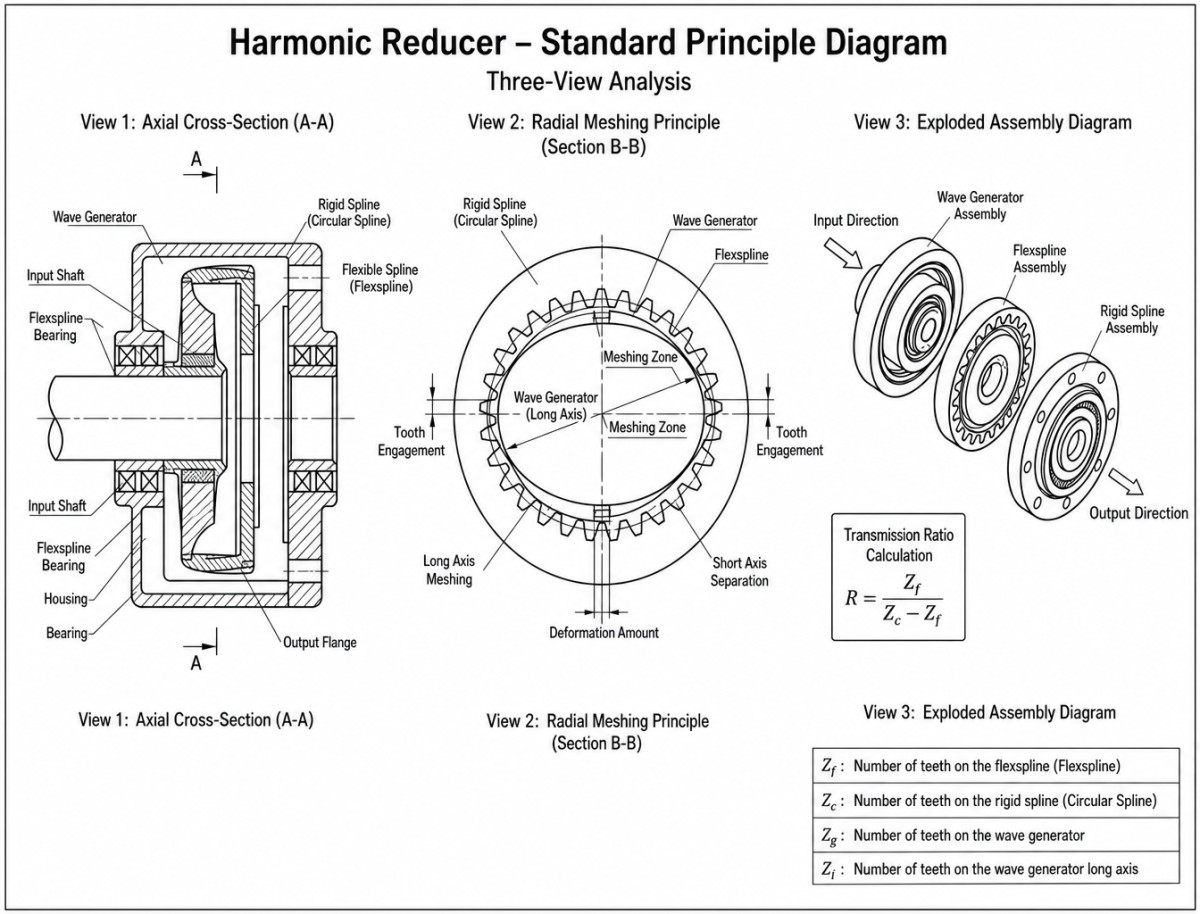
Harmonic Drive technology uses controlled elastic deformation of a flexspline to transmit motion. This allows a very high reduction ratio to be achieved within a compact package while maintaining extremely low backlash and excellent repeatability.
Harmonic Drive's published specifications for products such as the CSG-GH and CSF-GH families include zero backlash, accuracy below 1 arc-min, and repeatability in the ±4 to ±10 arc-sec range depending on the configuration.
This makes harmonic transmission particularly attractive for robot joints, collaborative robots, humanoid robots, precision positioning mechanisms, and other applications where compactness and repeatable motion are critical.
The Trade-Off Between Precision and Mechanical Rigidity
However, a harmonic transmission relies on elastic deformation as part of its operating principle. Therefore, torsional stiffness, elastic compliance, external load, thermal conditions, and dynamic response must all be considered when designing the complete mechanical system.
For applications that require extremely low backlash together with high external load capacity and high torsional rigidity, engineers may need to evaluate whether the complete harmonic transmission provides sufficient stiffness margin.
This does not make harmonic transmission unsuitable. Instead, it highlights a fundamental engineering trade-off:
Extremely low backlash and high repeatability do not automatically mean maximum mechanical rigidity.
This is one reason why some high-load precision applications continue to evaluate planetary, RV, and other transmission architectures.
WITTENSTEIN Precision Planetary Gearboxes: High Efficiency and Rigidity
The Strength of Precision Planetary Transmission
WITTENSTEIN precision planetary gearboxes occupy another important position in high-performance motion control.
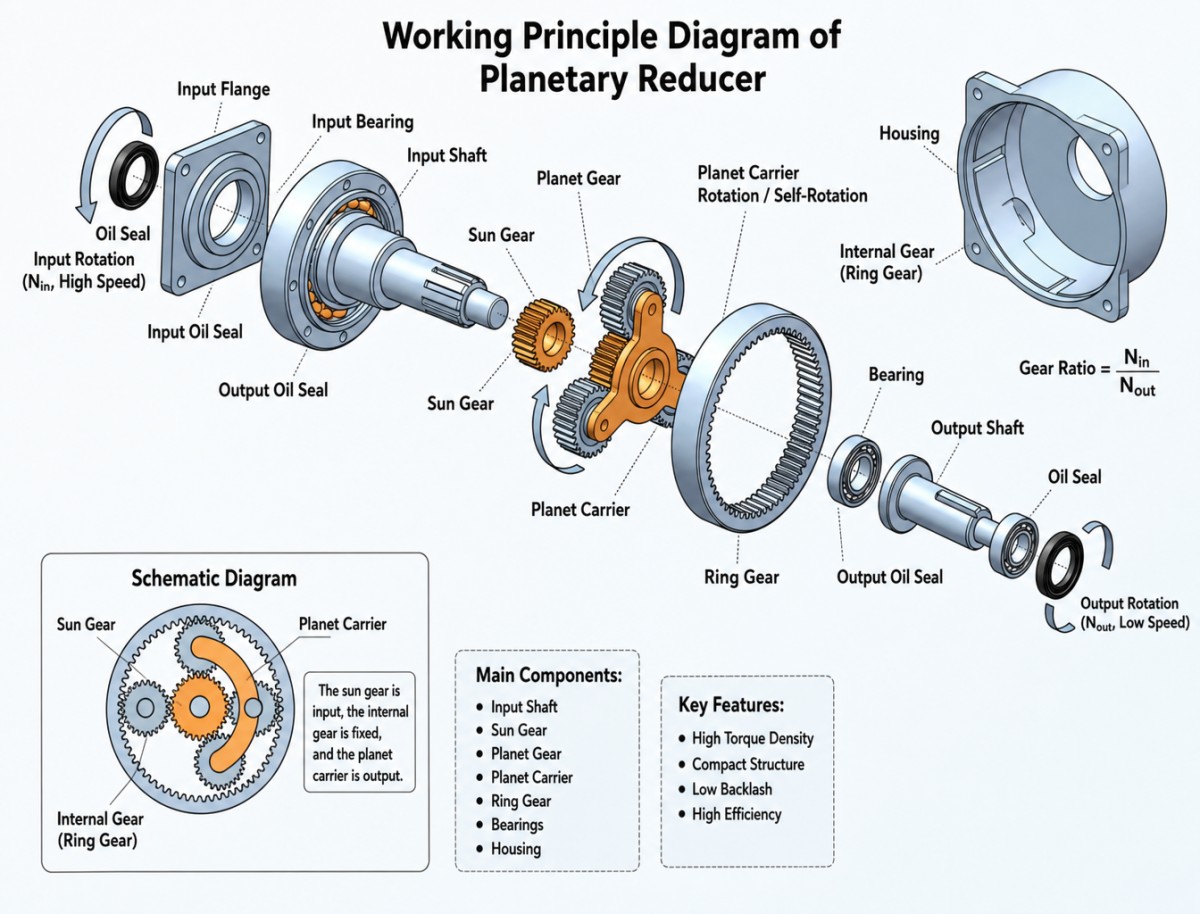
Planetary transmission provides several inherent advantages, including high efficiency, high torque density, compact dimensions, high mechanical rigidity, and flexible transmission ratios.
WITTENSTEIN's alpha product portfolio includes different backlash specifications and configurations, including reduced-backlash versions designed for demanding positioning applications.
This makes precision planetary gearboxes attractive for machine tools, automation equipment, servo systems, robotics, and other applications requiring high dynamic performance.
The Remaining Gap at the Arc-Second Level
The challenge is that conventional precision planetary transmission generally requires extremely accurate gears, controlled assembly tolerances, preload, bearing arrangements, and other compensation methods to push backlash substantially lower.
As the target moves from arc-minute-level backlash toward single-digit arc-second performance, the transmission architecture itself becomes increasingly important.
This creates a potential performance space for a planetary transmission that is specifically designed around advanced backlash compensation rather than relying only on conventional gear manufacturing accuracy.
The Missing Combination: Arc-Second Precision + High Rigidity
The three transmission architectures demonstrate three different engineering approaches.
Nabtesco RV technology emphasizes rigidity, load capacity, and durability.
Harmonic Drive emphasizes compactness, high reduction ratios, low backlash, and repeatability.
WITTENSTEIN precision planetary technology emphasizes efficiency, torque density, rigidity, and precision servo transmission.
But some applications require a combination of characteristics that is difficult to optimize simultaneously:
Very low backlash + high torsional rigidity + high load capacity + compact actuator integration.
This is where the concept of a backlash-free planetary actuator becomes particularly interesting.
What Is a Backlash-Free Planetary Actuator?
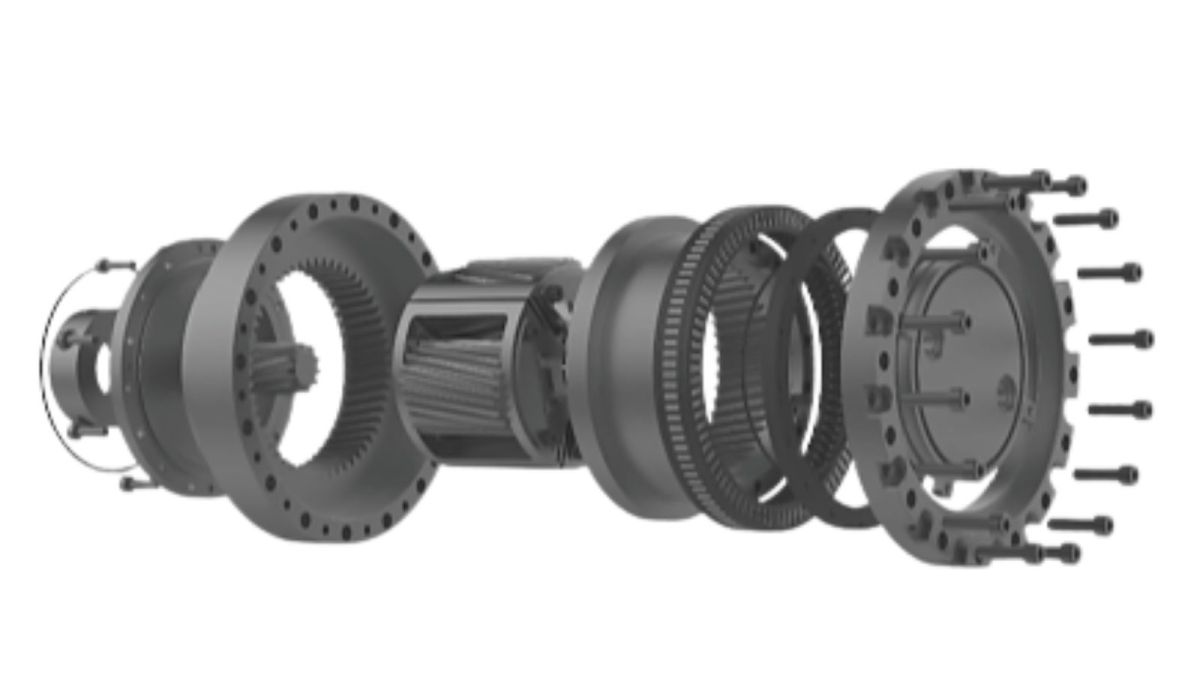
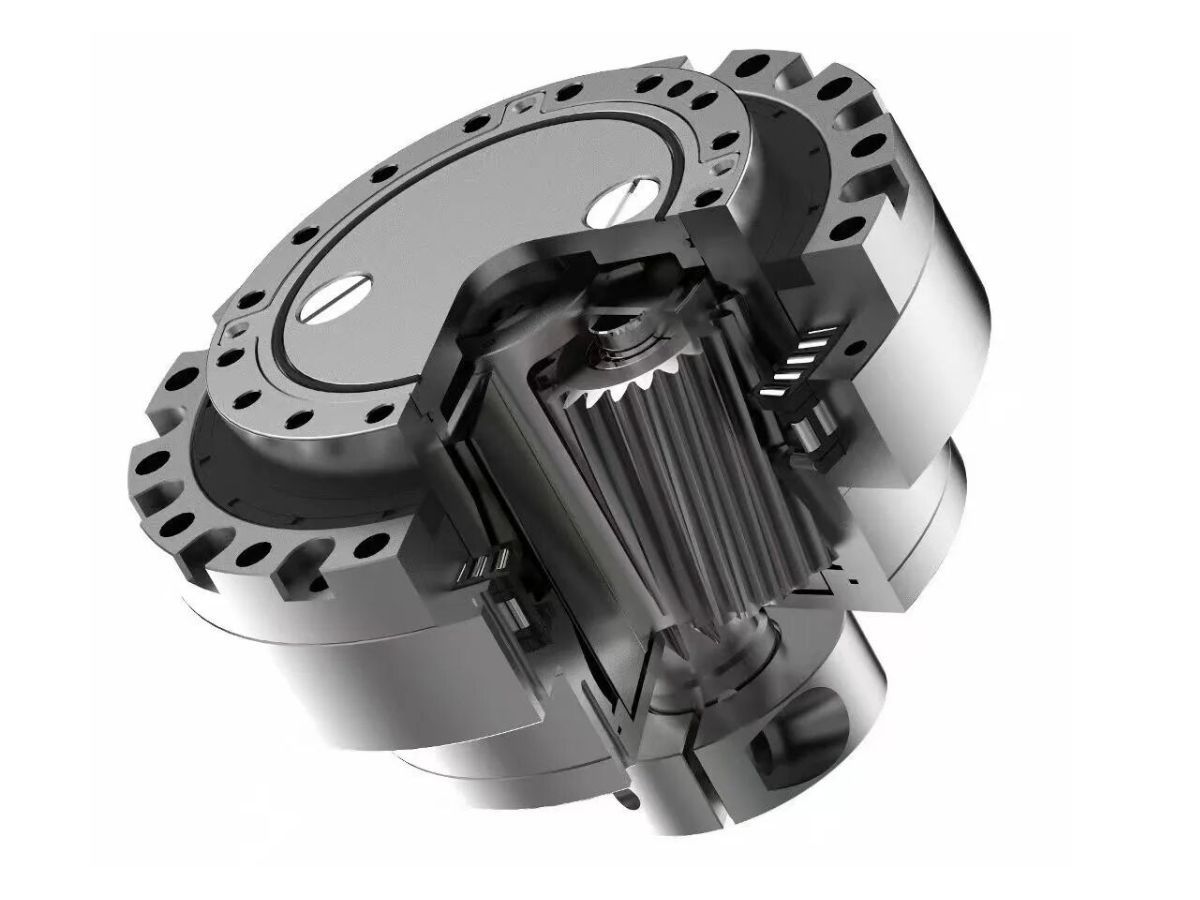
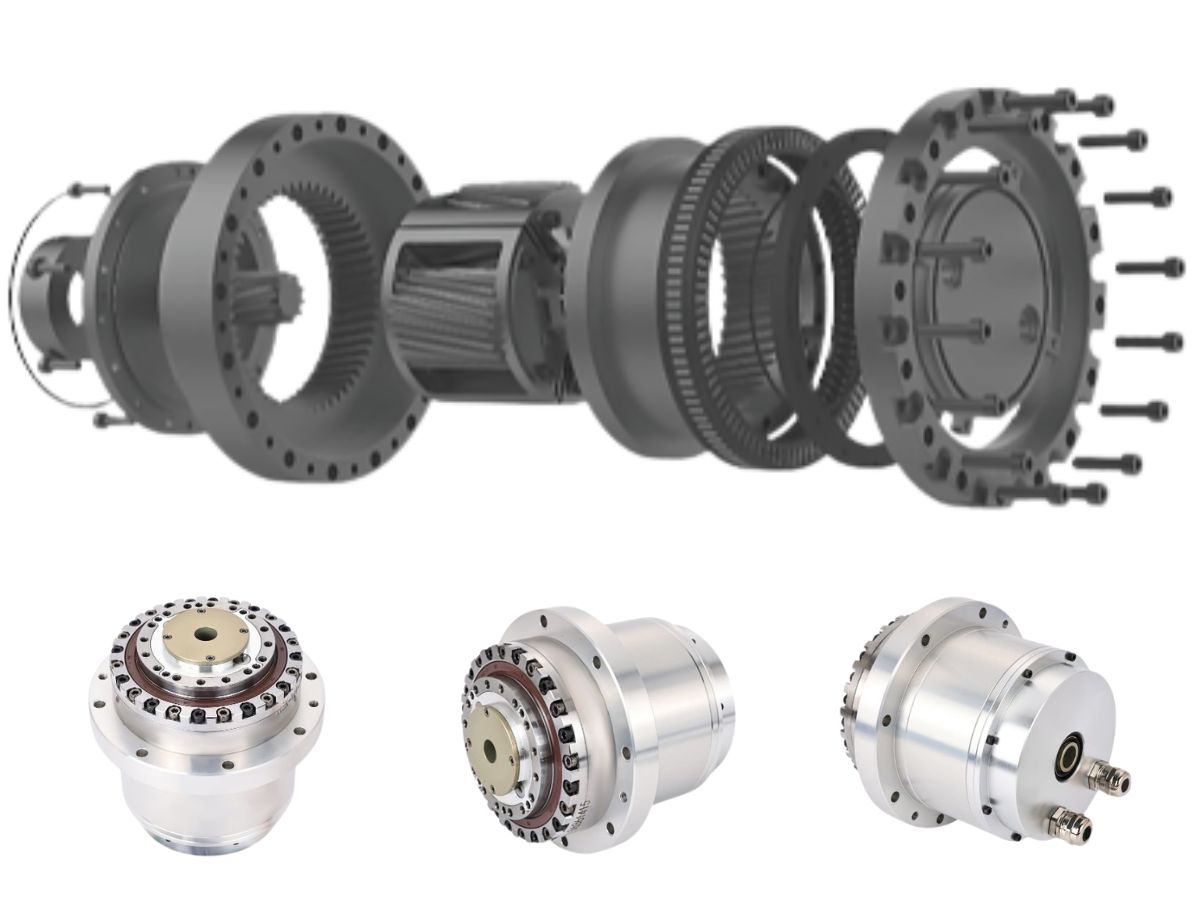
A backlash-free planetary actuator combines a precision planetary transmission with a mechanism designed to minimize or compensate for gear backlash.
The objective is not simply to manufacture conventional planetary gears with tighter tolerances.
Instead, the transmission architecture can use controlled preload, phase-shifted gear elements, differential positioning, or other mechanical compensation methods to reduce effective backlash and improve angular transmission accuracy.
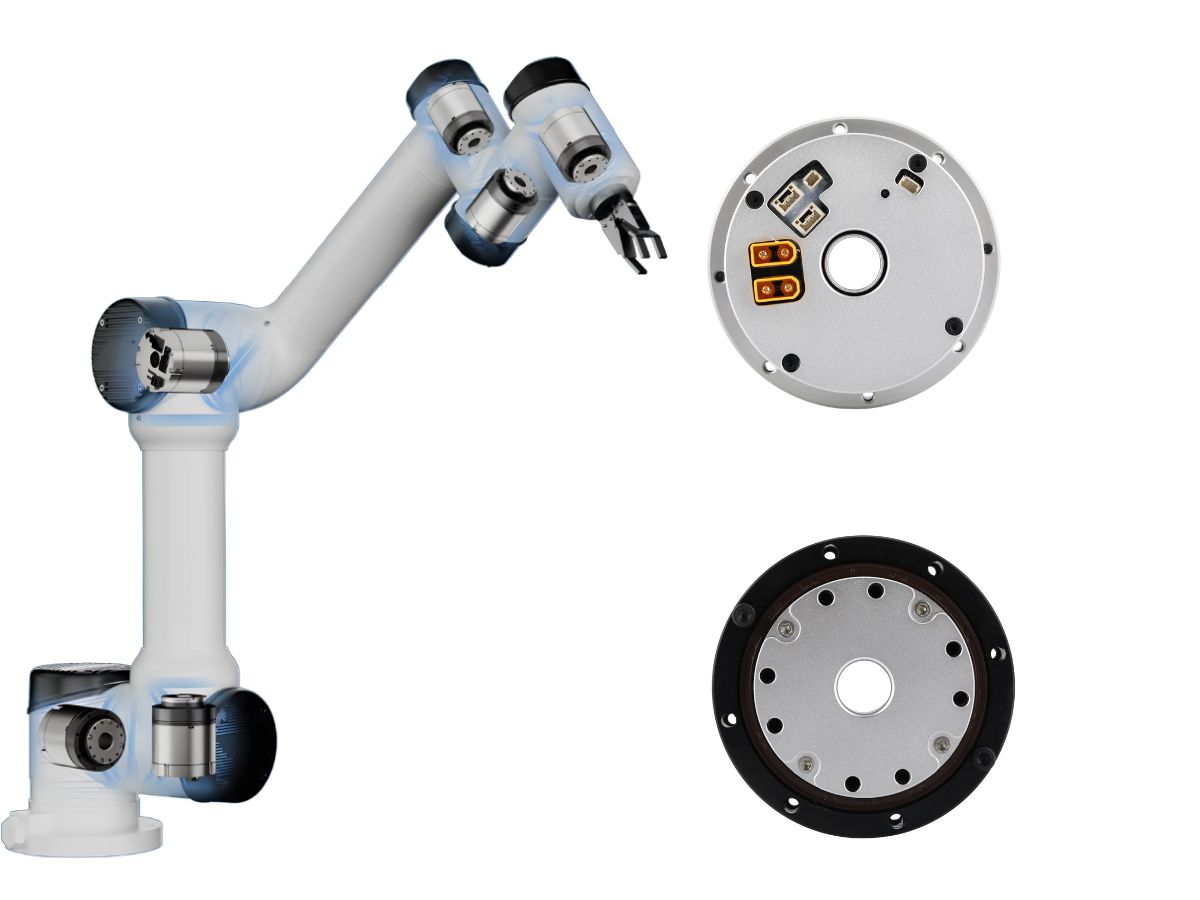
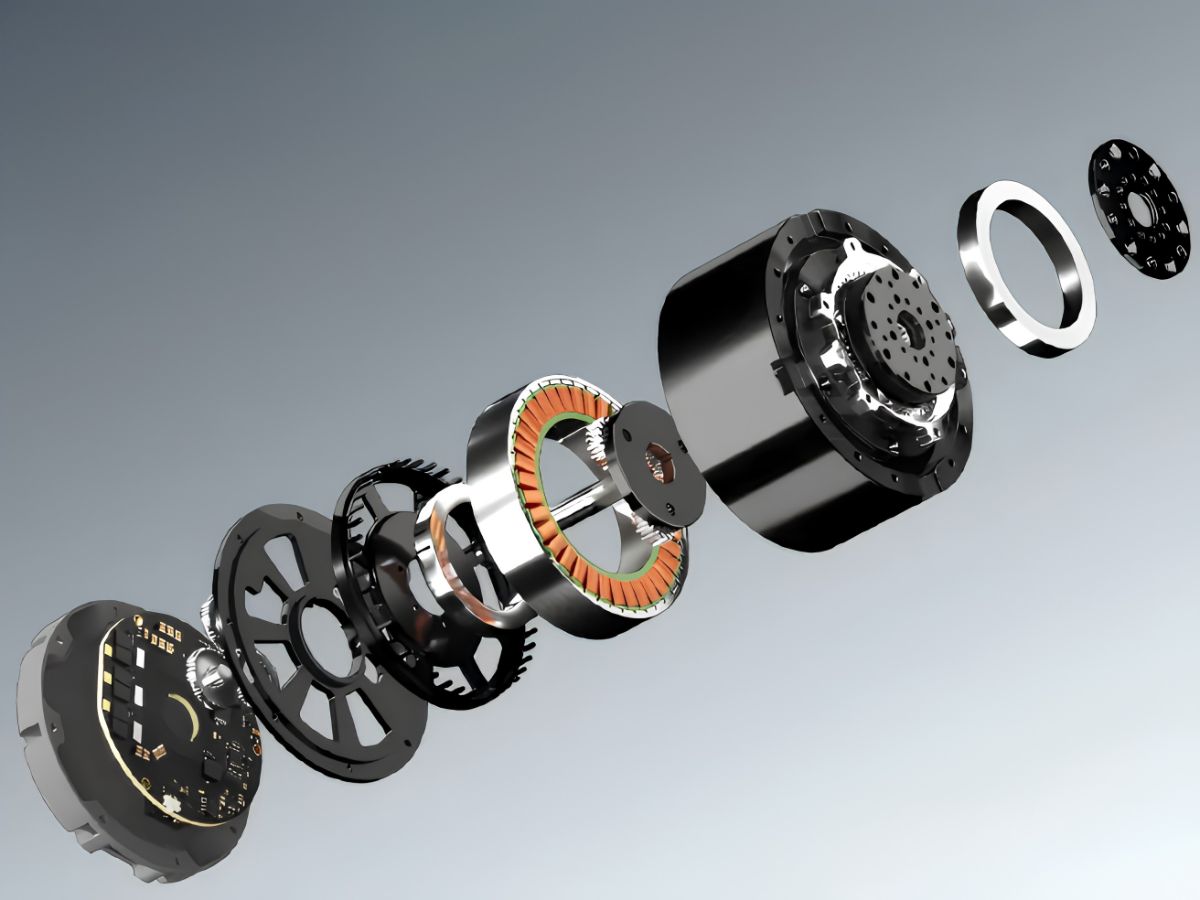
When the actuator integrates the planetary reducer with a servo motor, encoder, bearing system, brake, housing, and control interface, the result becomes a complete robotic or industrial precision actuator rather than simply a standalone gearbox.
How Does a Backlash-Free Planetary Actuator Reduce Backlash?
Phase-Shifted Gear Architecture
One established approach to reducing backlash is to use multiple gear elements with a controlled phase relationship.
By introducing a small angular offset between mating transmission elements, the effective clearance between tooth flanks can be reduced. This can substantially lower backlash compared with a conventional single-path planetary transmission.
However, the final performance still depends on gear accuracy, preload, bearing stiffness, assembly tolerance, thermal deformation, lubrication, and the complete transmission structure.
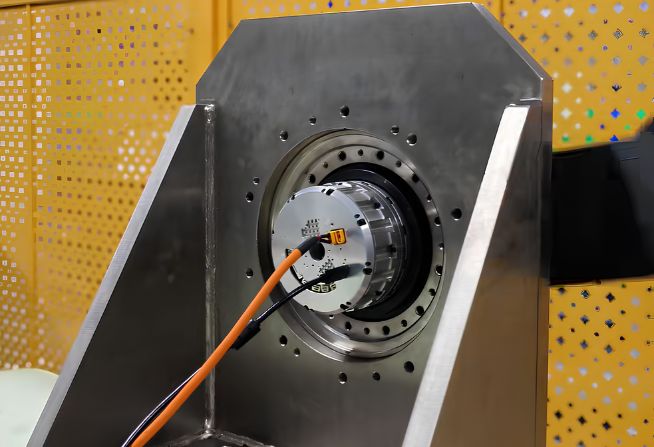
Therefore, a low-backlash design should always be evaluated through measured transmission performance rather than by the gear concept alone.
Self-Adjusting Backlash Compensation
A more advanced approach is a self-adjusting backlash compensation mechanism.
In the strict engineering sense, self-adjusting means that the mechanism can automatically maintain the required engagement condition as operating conditions change.
Depending on the architecture, this may compensate for factors such as manufacturing variation, thermal expansion, wear, or changes in gear engagement.
For HONPINE, the value of this approach is not simply achieving a low initial backlash value. The objective is to maintain predictable transmission behavior while combining low backlash with the inherent stiffness and load capability of planetary transmission.
How Backlash-Free Planetary Actuators Compare With Nabtesco RV?
A backlash-free planetary actuator should not be viewed simply as a universal replacement for the Nabtesco RV reducer.
RV technology remains highly effective when high torque, high rigidity, shock resistance, and long service life are primary requirements.
The opportunity appears when the required angular transmission accuracy moves significantly beyond the conventional RV performance envelope.
For example, if a machine requires both:
High structural stiffness and
single-digit arc-second-level transmission accuracy
then a precision planetary actuator with an advanced backlash-compensation mechanism may offer a different solution path.
In this scenario, the objective is not merely to make an RV reducer smaller or faster. It is to use a different transmission architecture optimized around the combined requirement of precision and rigidity.
How Backlash-Free Planetary Actuators Compare With Harmonic Drive?
Harmonic Drive remains a strong choice when compact dimensions, high reduction ratios, low backlash, and repeatability are the primary requirements.
However, certain high-load rotary applications place greater emphasis on torsional stiffness, external load capacity, moment stiffness, and resistance to deformation.
This creates a potential application space for a precision planetary actuator.
The design objective is therefore not:
Planetary is better than harmonic.
The more meaningful engineering question is:
Can a planetary architecture achieve sufficiently low backlash while retaining the mechanical rigidity associated with planetary transmission?
When the answer is yes, the planetary actuator becomes a potential Harmonic Drive alternative for high-rigidity precision applications.
How Backlash-Free Planetary Actuators Compare With WITTENSTEIN Planetary Gearboxes?
WITTENSTEIN already offers highly precise planetary gearboxes and reduced-backlash configurations.
The distinction for a backlash-free planetary actuator is therefore not simply “planetary versus planetary.”
The real difference lies in the backlash compensation architecture and the level of integrated actuator performance.
A conventional precision planetary gearbox may achieve low backlash through high-precision gears, manufacturing tolerances, assembly control, and preload.
A more advanced backlash-free planetary actuator can take this further by integrating a dedicated compensation mechanism with the planetary transmission and servo system.
For applications targeting arc-second-level transmission accuracy, this difference in architecture can become significant.
What Problems Can a Backlash-Free Planetary Actuator Solve?
Upgrading Phase-Shifted Planetary Transmission
Phase-shifted or preloaded planetary mechanisms already provide a route toward low-backlash transmission.
However, applications with increasingly strict angular accuracy requirements may eventually require a more advanced compensation architecture.
A backlash-free planetary actuator can provide a pathway for upgrading from conventional low-backlash planetary transmission toward tighter angular transmission performance.
Providing a High-Rigidity Alternative to Harmonic Transmission
In applications where harmonic transmission provides the required precision but the mechanical system requires a greater stiffness margin, a backlash-free planetary actuator provides another transmission option.
This can be relevant to high-load robot axes, five-axis machine tools, precision rotary tables, aerospace assembly equipment, and other mechanisms requiring both precision and rigidity.
Providing a Precision Alternative to RV Transmission
For applications that currently use RV reducers because of their rigidity and load capacity but require substantially tighter angular transmission accuracy, a backlash-free planetary actuator can provide another design route.
The goal is not to replace every RV application. It is to address the subset of applications where the precision requirement has become the limiting factor.
Applications for Backlash-Free Planetary Actuators
Five-Axis Machine Tools
Five-axis rotary tables and tilting axes require a difficult combination of angular accuracy, rigidity, dynamic response, and resistance to machining forces.
For these systems, reducing backlash alone is not enough. The transmission must also maintain sufficient stiffness under external loads.
A backlash-free planetary actuator can therefore be considered when both arc-second-level positioning and high mechanical rigidity are required.
Aerospace Assembly Equipment
Aerospace assembly systems often combine large payloads with demanding positioning accuracy.
The transmission system must maintain precise angular positioning while resisting external moments and maintaining long-term mechanical stability.
This makes high-rigidity, low-backlash planetary actuation an attractive architecture for selected aerospace applications.
Surgical Robotics
Surgical robotic mechanisms require compact, precise, repeatable motion within a highly constrained mechanical envelope.
Depending on the joint structure and load requirements, a backlash-free planetary actuator can provide an alternative to harmonic transmission where greater mechanical stiffness is required.
Precision Rotary Tables and Automation
Precision rotary tables, indexing systems, inspection equipment, semiconductor automation, and other rotary mechanisms can benefit from low transmission backlash and high mechanical stiffness.
For these applications, actuator-level integration can also simplify the mechanical design by combining the motor, reducer, encoder, bearing, brake, and housing into one assembly.
Why Backlash-Free Planetary Actuators Can Create a New Precision Transmission Category?
The value of a backlash-free planetary actuator is not simply a lower backlash number.
Its potential advantage comes from optimizing several parameters simultaneously:
Backlash + torsional rigidity + torque density + transmission accuracy + load capacity + dynamic response + service life.
This is important because a gearbox with extremely low backlash may still fail to deliver the expected system-level accuracy if its stiffness is insufficient.
Likewise, a highly rigid gearbox may require additional compensation if its transmission error is too large for the application.
The next generation of precision actuators therefore needs to be evaluated as a complete mechanical system rather than by one specification alone.
From Precision Gearbox to Backlash-Free Planetary Actuator
The evolution from a precision gearbox to a precision actuator is an important step in modern motion control.
Instead of evaluating only the reducer, engineers increasingly need to consider the complete motion chain:
Servo motor + planetary transmission + backlash compensation + encoder + bearing + brake + housing + control system
This integrated architecture can reduce mechanical integration work while allowing the actuator manufacturer to optimize the transmission and control components as one system.
For robot manufacturers, machine-tool builders, aerospace equipment manufacturers, and precision automation companies, this can simplify system development and improve consistency between different machine axes.
HONPINE Backlash-Free Planetary Actuator
HONPINE is developing precision planetary actuator solutions for applications where conventional transmission architectures face a difficult balance between backlash, rigidity, torque density, and angular accuracy.
The objective is not simply to replace Nabtesco RV reducers, Harmonic Drive gearboxes, or WITTENSTEIN planetary gearboxes in every application.
Instead, HONPINE's approach focuses on a specific performance requirement:
Can a planetary actuator achieve arc-second-level transmission accuracy while retaining the high rigidity and load capability expected from a precision planetary architecture?
This is the engineering direction behind HONPINE's backlash-free planetary actuator.
For applications where conventional RV transmission does not provide sufficient angular accuracy, where harmonic transmission does not provide the desired stiffness margin, or where conventional planetary transmission cannot achieve the required backlash level, a backlash-free planetary actuator provides another option.
Nabtesco RV Alternative for High-Precision Applications
For engineers searching for a Nabtesco RV alternative, the key comparison should not be limited to rated torque or reduction ratio.
Evaluate:
Backlash and lost motion
Angular transmission error
Torsional stiffness
Radial and axial load capacity
Moment stiffness
Continuous and peak torque
Positioning accuracy
Repeatability
Thermal performance
Service life
When arc-second-level angular accuracy becomes a critical requirement, the transmission architecture itself becomes an important part of the solution.
Harmonic Drive Alternative for High-Rigidity Applications
For engineers evaluating a Harmonic Drive alternative, the central question is whether the application requires a different balance between precision and mechanical stiffness.
A backlash-free planetary actuator can be considered when the system requires:
Low backlash + high torsional rigidity + high load capacity + precision rotary positioning.
This makes it particularly relevant to high-load rotary axes, machine tools, aerospace equipment, and selected robotic applications.
WITTENSTEIN Planetary Gearbox Alternative
For applications currently using precision planetary gearboxes, the next performance step may involve pushing backlash substantially lower while maintaining the advantages of planetary transmission.
A backlash-free planetary actuator addresses this requirement through its compensation architecture rather than relying solely on increasingly tight manufacturing tolerances.
This creates a potential WITTENSTEIN planetary gearbox alternative for applications where conventional reduced-backlash planetary transmission does not provide the required angular accuracy.
Conclusion: A New Balance Between Precision and Rigidity
Nabtesco RV, Harmonic Drive, and WITTENSTEIN have each established important transmission technologies for demanding motion-control applications.
The engineering question is not which technology is universally better.
The more important question is whether the transmission can provide the required combination of:
Precision + rigidity + load capacity + torque density + dynamic response + long-term stability.
For applications where conventional RV transmission reaches its precision limit, harmonic transmission does not provide the required stiffness margin, or conventional planetary transmission cannot achieve sufficiently low backlash, backlash-free planetary actuators provide another transmission architecture to consider.
HONPINE's goal is to push this architecture toward a new performance range: arc-second-level precision with high planetary transmission rigidity and integrated actuator design.
If your application requires extremely low backlash, high rigidity, and precision rotary positioning, contact HONPINE for technical information and application evaluation.
Read More
Learn more about the story of HONPINE and industry trends related to precision transmission.
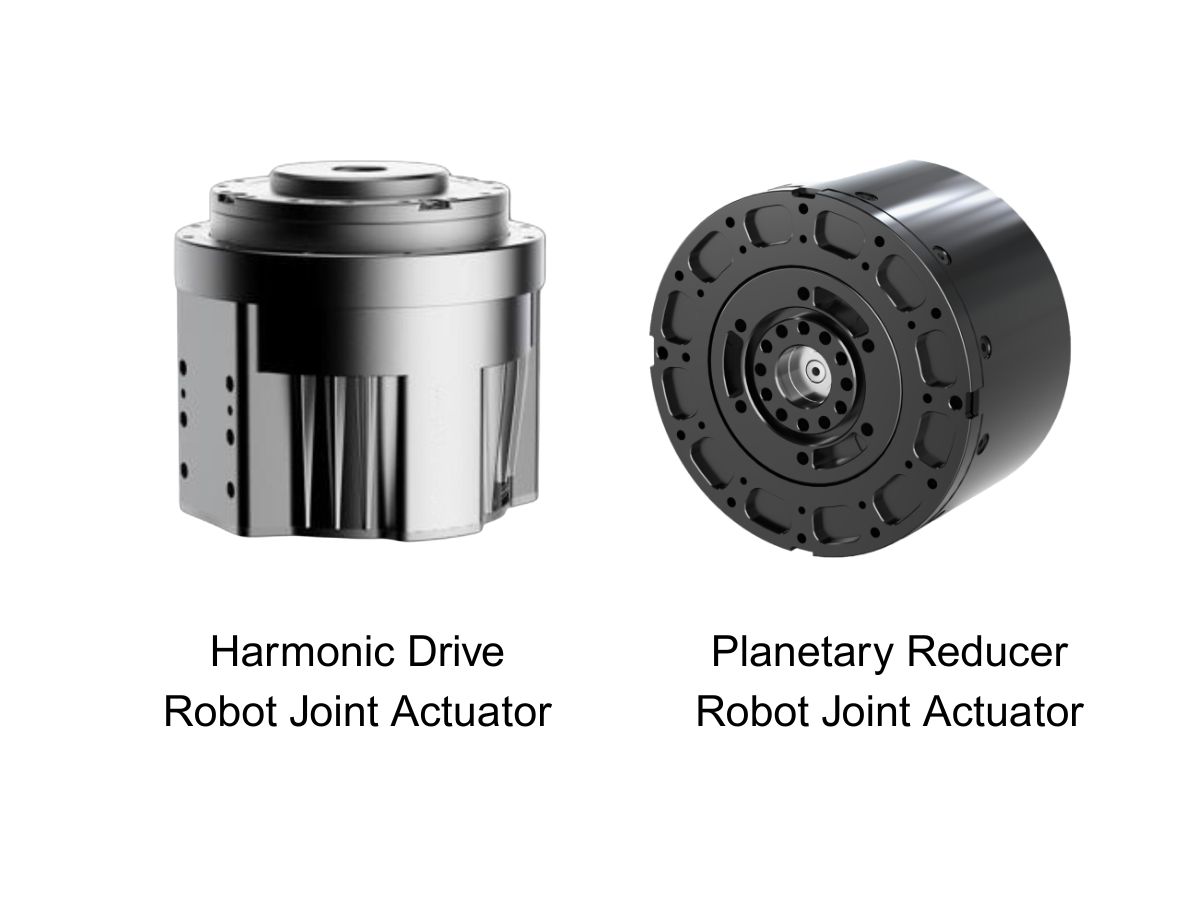
 What is robot joint actuator?How to Choose the Best Robot Rotary Joint Actuator?In core robot joint transmission solutions, planetary and harmonic rotary actuators each have their own strengths. Choosing the right type based on application requirements is essential to achieve the optimal balance between performance and cost.
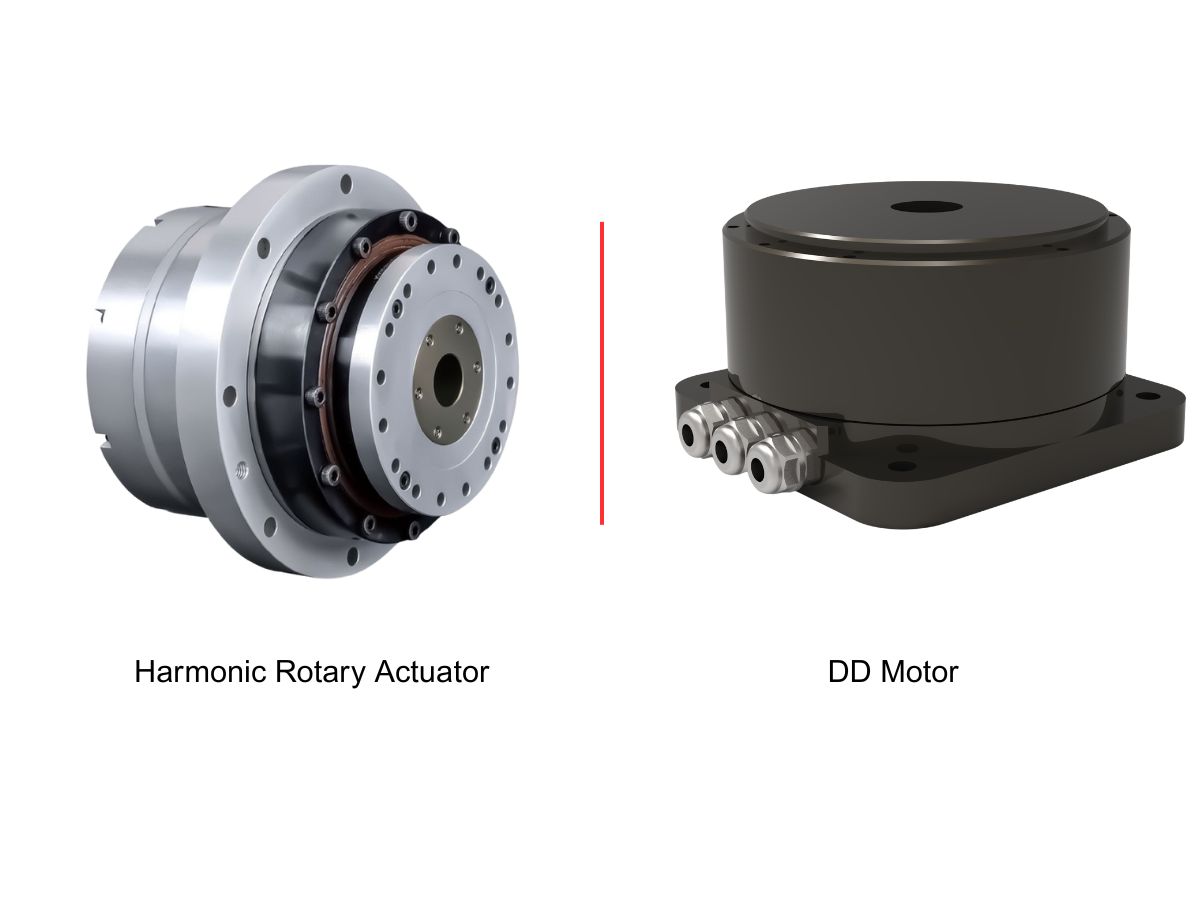
 DD Motors VS Harmonic Rotary ActuatorsThis article provides an in-depth comparison between Direct Drive (DD) motors and harmonic rotary actuators, covering their transmission principles, advantages and disadvantages, and typical application fields.
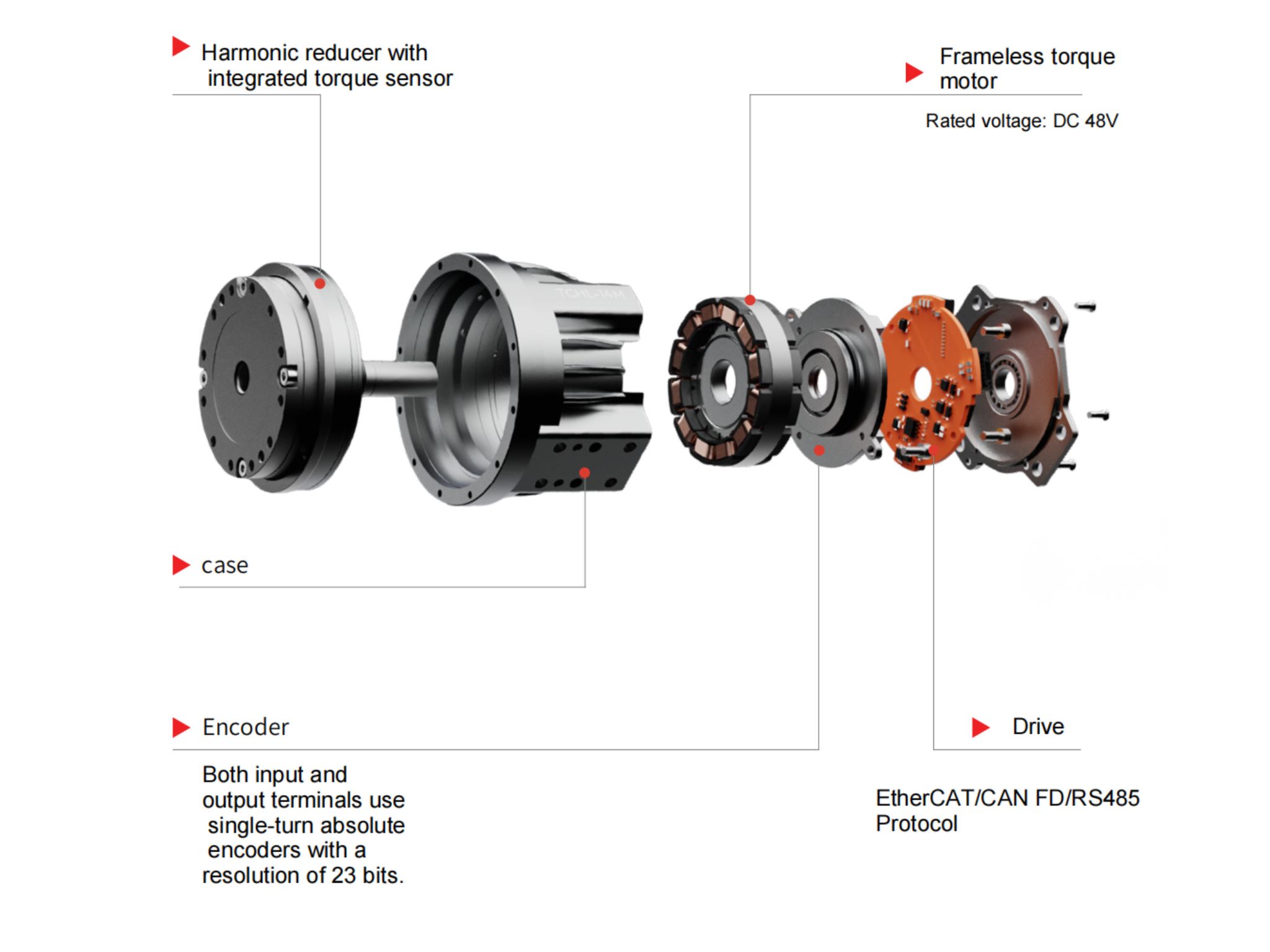
 OMG Ultra Compact Harmonic Drive Joint Module with Built-in Torque SensorHONPINE TCHL series harmonic drive joint module is a game-changing product that achieves disruptive improvements in multiple aspects such as lightweight design, integration level, and connection convenience. This article will analyze its revolutionary enhancements with you.
 The Role of Harmonic Drive Gears in Achieving 5–10 μm Accuracy in Dental Milling MachinesA dental milling machine is a CNC machining system used to directly process digital dental models into restorations such as crowns, bridges, veneers, inlays, and implant abutments. Dental milling machines require far higher operational accuracy and motion stability than ordinary equipment. This article explains how harmonic drive gear help dental milling machines achieve stable, continuous, and controllable operation.
 Why Are Harmonic Rotary Actuators Perfect for Medical Equipment?Harmonic rotary actuators (typically integrated systems consisting of a harmonic drive reducer, frameless torque motor, encoder, and optional brake) are regarded as key components in medical equipment. The core reason is that they simultaneously meet the most stringent medical requirements for precision, compact size, safety, and controllability. The following explanation is structured from three perspectives: technical characteristics, application scenarios, and medical value.
 High-Precision RV Reducers Perfectly Matched for Walking RobotsThe walking axis of a robot is a core component for power transmission and support. RV reducers provide extremely high rigidity, precision, and torque while maintaining a compact size and exceptional reliability, making them an ideal match for the demanding requirements of walking robot joints in terms of load capacity, impact resistance, and precision.
 Why Does an RV Reducer Need Profile Modification? How to Further Reduce Backlash and Transmission Error?An RV Reducer is designed to deliver high torque, high stiffness, and precise motion for demanding applications such as robotic joints, industrial rotary tables, and precision machinery. However, achieving low backlash and stable transmission accuracy requires more than high-precision machining. Cycloidal profile modification must also account for manufacturing tolerances, assembly errors, load-induced deformation, thermal expansion, and lubrication conditions. In this article, we examine why RV reducers require profile modification, how different modification methods affect meshing, and how engineers can further control backlash and transmission error through profile design, error budgeting, structural analysis, precision manufacturing, and validation testing.
 Hollow Robot Joint Module: Why Cable Routing Matters in Robotic Joints?A hollow robot joint module provides an internal passage for power cables, signal lines, pneumatic tubes, and other end-effector connections. Compared with external cable routing, a hollow joint module can help reduce cable exposure, improve system integration, and create a cleaner motion path for robotic arms. This article explains why internal cable routing matters in robotic joints and what to consider when selecting a hollow joint module for robotic applications.
 Nabtesco RV vs Harmonic Drive vs WITTENSTEIN: Why Backlash-Free Planetary Actuators Are EmergingNabtesco RV, Harmonic Drive, and WITTENSTEIN have each established proven transmission solutions for robotics, machine tools, automation, and precision motion control. However, applications requiring both arc-second-level positioning and high mechanical rigidity can expose different trade-offs between backlash, torsional stiffness, load capacity, and transmission accuracy. This has created growing interest in a backlash-free planetary actuator that combines the rigidity and torque density of planetary transmission with advanced backlash compensation. In this article, we compare the characteristics of Nabtesco RV, Harmonic Drive, and WITTENSTEIN precision planetary gearboxes, and examine where a backlash-free planetary actuator can provide an alternative solution.
 Robot Joint Actuator Selection: From Inertia Matching to System-Level OptimizationSelecting a robot joint actuator is not simply a matter of matching motor torque or achieving a suitable inertia ratio. In a real robotic system, reduction ratio, load spectrum, thermal performance, mechanical stiffness, transmission nonlinearity, encoder architecture, control bandwidth, and service life all interact to determine the final result. A joint may meet its peak torque requirement and still experience vibration, overheating, positioning errors, or premature wear in real operation. This article examines the engineering logic behind robot joint actuator selection and explains why moving from single-parameter matching to system-level optimization can lead to more reliable and predictable robotic joint performance.
 HONPINE HAG Robot Joint Module Undergoing Pre-Shipment InspectionThe HONPINE HAG Robot Joint Module is currently undergoing pre-shipment inspection before delivery.
 How to Choose a Small Harmonic Actuator?HONPINE Series 11 small harmonic actuators provide a compact, high-performance rotary motion solution for precision automation applications. Available with hollow or solid shafts, 48V or 220V options, optional brakes, absolute encoders, and different reduction ratios, the Series 11 is designed for applications requiring compact dimensions, controlled torque, and precise positioning.
Double Click
We provide harmonic drive reducer,planetary reducer,robot joint motor,robot rotary actuators,RV gear reducer,robot end effector,dexterous robot hand
 What is robot joint actuator?How to Choose the Best Robot Rotary Joint Actuator?In core robot joint transmission solutions, planetary and harmonic rotary actuators each have their own strengths. Choosing the right type based on application requirements is essential to achieve the optimal balance between performance and cost.
 DD Motors VS Harmonic Rotary ActuatorsThis article provides an in-depth comparison between Direct Drive (DD) motors and harmonic rotary actuators, covering their transmission principles, advantages and disadvantages, and typical application fields.
 OMG Ultra Compact Harmonic Drive Joint Module with Built-in Torque SensorHONPINE TCHL series harmonic drive joint module is a game-changing product that achieves disruptive improvements in multiple aspects such as lightweight design, integration level, and connection convenience. This article will analyze its revolutionary enhancements with you.
 Why Does an RV Reducer Need Profile Modification? How to Further Reduce Backlash and Transmission Error?An RV Reducer is designed to deliver high torque, high stiffness, and precise motion for demanding applications such as robotic joints, industrial rotary tables, and precision machinery. However, achieving low backlash and stable transmission accuracy requires more than high-precision machining. Cycloidal profile modification must also account for manufacturing tolerances, assembly errors, load-induced deformation, thermal expansion, and lubrication conditions. In this article, we examine why RV reducers require profile modification, how different modification methods affect meshing, and how engineers can further control backlash and transmission error through profile design, error budgeting, structural analysis, precision manufacturing, and validation testing.
 Hollow Robot Joint Module: Why Cable Routing Matters in Robotic Joints?A hollow robot joint module provides an internal passage for power cables, signal lines, pneumatic tubes, and other end-effector connections. Compared with external cable routing, a hollow joint module can help reduce cable exposure, improve system integration, and create a cleaner motion path for robotic arms. This article explains why internal cable routing matters in robotic joints and what to consider when selecting a hollow joint module for robotic applications.
 Nabtesco RV vs Harmonic Drive vs WITTENSTEIN: Why Backlash-Free Planetary Actuators Are EmergingNabtesco RV, Harmonic Drive, and WITTENSTEIN have each established proven transmission solutions for robotics, machine tools, automation, and precision motion control. However, applications requiring both arc-second-level positioning and high mechanical rigidity can expose different trade-offs between backlash, torsional stiffness, load capacity, and transmission accuracy. This has created growing interest in a backlash-free planetary actuator that combines the rigidity and torque density of planetary transmission with advanced backlash compensation. In this article, we compare the characteristics of Nabtesco RV, Harmonic Drive, and WITTENSTEIN precision planetary gearboxes, and examine where a backlash-free planetary actuator can provide an alternative solution.
 Robot Joint Actuator Selection: From Inertia Matching to System-Level OptimizationSelecting a robot joint actuator is not simply a matter of matching motor torque or achieving a suitable inertia ratio. In a real robotic system, reduction ratio, load spectrum, thermal performance, mechanical stiffness, transmission nonlinearity, encoder architecture, control bandwidth, and service life all interact to determine the final result. A joint may meet its peak torque requirement and still experience vibration, overheating, positioning errors, or premature wear in real operation. This article examines the engineering logic behind robot joint actuator selection and explains why moving from single-parameter matching to system-level optimization can lead to more reliable and predictable robotic joint performance.
 How to Choose a Small Harmonic Actuator?HONPINE Series 11 small harmonic actuators provide a compact, high-performance rotary motion solution for precision automation applications. Available with hollow or solid shafts, 48V or 220V options, optional brakes, absolute encoders, and different reduction ratios, the Series 11 is designed for applications requiring compact dimensions, controlled torque, and precise positioning.
 How to Choose a Wheel Motor for a Heavy-Duty AGV? Key Challenges from Dynamic Loads to 120-Ton AGV Drive Wheel SystemsSelecting a Heavy-Duty AGV Wheel Motor is more than matching motor power or rated torque to the vehicle's payload. As AGVs move from conventional material handling to multi-ton and even 120-ton-class applications, the drive wheel system must handle dynamic loads, acceleration, braking, turning forces, traction, and long-term mechanical stress. The actual challenge lies in matching wheel load capacity, wheel-end torque, gearbox performance, steering architecture, suspension, and chassis design under real operating conditions. This article examines the key challenges of Heavy-Duty AGV Wheel Motor selection and explains how Steering Drive Wheels and Differential Drive Wheels can be evaluated for different heavy-duty AGV applications.
 DD Motor Servo System: How to Understand Mechanical Resonance and Solve Machine Vibration?This article explains the relationship between DD motor servo tuning, mechanical resonance, and servo bandwidth in direct drive motion systems. It examines why vibration and instability can occur even after repeated servo parameter adjustments, and explains how mechanical stiffness, moving mass, bearing conditions, load distribution, and structural geometry affect resonance frequency. The article also compares approaches for high- and low-frequency resonance, explains when digital notch filtering can be effective, and provides a practical tuning strategy for engineers working with DD motors, direct drive torque motors, and linear motors.
 Why Do Industrial Robots and Heavy-Duty Equipment Prefer Dual-Disc RV Reducers?Many engineers have the same question when they first look inside an RV reducer: if a single cycloidal disc can already achieve speed reduction, why do industrial robot RV reducers almost always use two discs? The additional disc increases the number of components, assembly complexity, and manufacturing cost, so its purpose deserves a closer look. The answer is not simply a higher reduction ratio. A dual-disc RV reducer is designed to improve the overall mechanical behavior of the transmission through better force balance, load sharing, backlash control, torsional stiffness, and long-term reliability. In this article, we use an RV reducer assembly model and motion simulation to examine these mechanisms and explain why the dual-disc architecture is widely used in industrial robots, machine tools, rotary tables, and other heavy-duty precision transmission systems.
 Small Size Harmonic Drive Reducer: Advantages, Applications and Selection GuideSmall size harmonic drive reducer for compact precision motion systems, offering high reduction ratio, near-zero backlash, low weight and accurate transmission.
- harmonic reducer
- harmonic drive
- harmonic transmission
- planetary gearbox
- precision planetary gearbox
- planetary reducer
- planetary gearboxes
- honpine
- RV reducer
- precision transmission
- harmonic drive reducers
- precision gearbox
- harmonic drive technology
- harmonic
- small
- precision
- planetary
- robotic joint
- servo
- actuator
- rv reducers
- harmonic drive gearboxes
- wittenstein planetary gearbox
- planetary actuator
- precision gears
- precision actuator