

Why Do Strain Wave Gear Manufacturers Produce Products with Such Different Levels of Quality and Precision?
Although strain wave gears share the same fundamental operating principle, their quality, precision, and service life can vary significantly from one manufacturer to another.
A strain wave gear works by using a wave generator to create controlled elastic deformation in a thin-walled flexspline. This deformation allows the flexspline teeth to engage with the circular spline teeth at different positions, resulting in speed reduction and torque multiplication.
If the operating principle is essentially the same, why do products from different manufacturers perform so differently?
Hello everyone, I'm Allen Li, Founder of HONPINE. HONPINE has been manufacturing and supplying strain wave gears since 2018. Based on our years of manufacturing experience, I'd like to explain the key factors that determine the quality and precision of strain wave gears.
1. Where Does the Difficulty Lie in Strain Wave Gear Manufacturing?
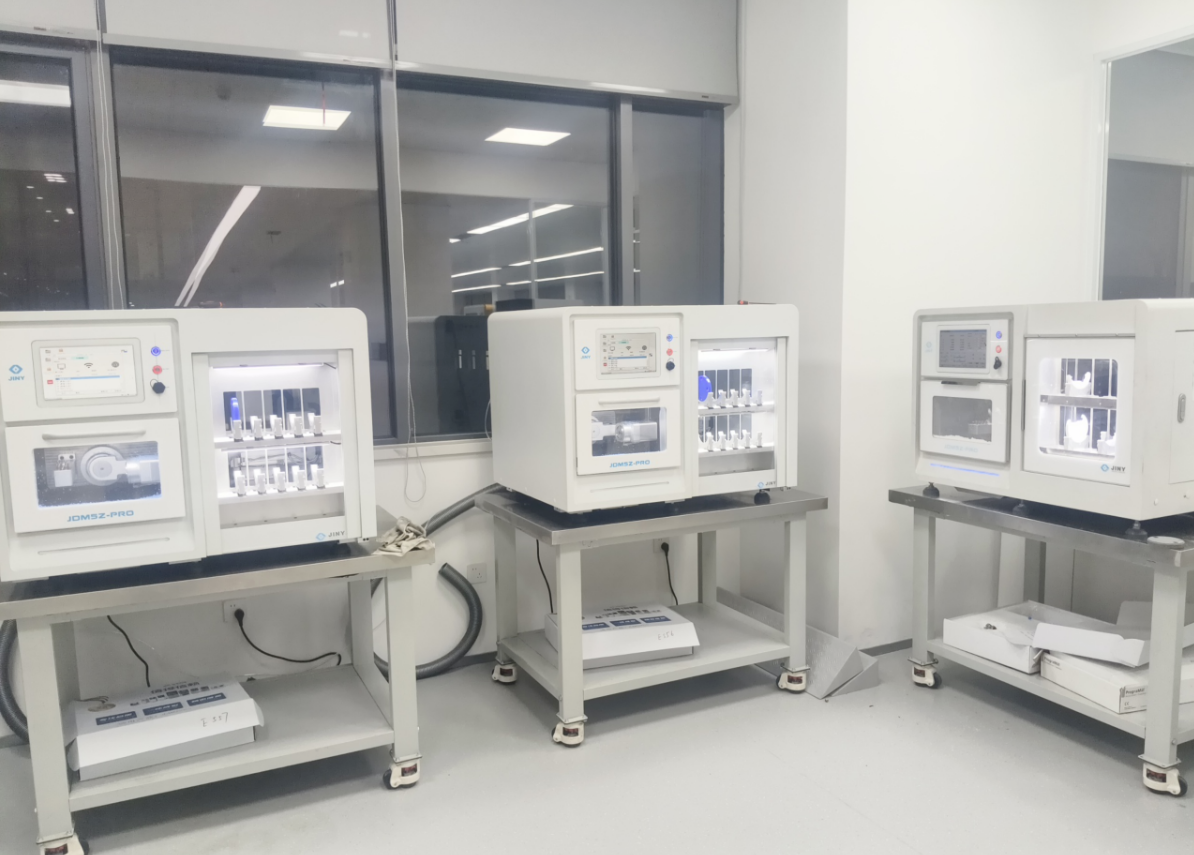
Manufacturing a high-precision strain wave gear is far more complicated than simply producing three mechanical components and assembling them together. Its performance depends on extremely tight manufacturing tolerances, specialized assembly techniques, and consistent quality control throughout the entire production process.
There are four major manufacturing challenges:
1. Extremely demanding precision requirements
Critical machining and assembly tolerances may need to be controlled within a few micrometers. Even extremely small dimensional deviations can affect tooth engagement, transmission accuracy, and operational stability, potentially causing the finished product to fail inspection.
2. Key assembly processes cannot be fully automated
Certain critical assembly operations still require experienced technicians to perform manual adjustments and precision calibration. Automated equipment can improve production efficiency, but it cannot completely replace the experience and judgment required for these specialized processes.
3. Maintaining batch-to-batch consistency is difficult
Small variations in temperature, humidity, and workshop cleanliness can influence dimensional stability and assembly accuracy. Maintaining consistent performance across large production batches is therefore a significant challenge for strain wave gear manufacturers.
4. Every manufacturing process affects the final result
Heat treatment, precision machining, component assembly, lubrication, and final inspection are closely interconnected. An error at any stage can accumulate and affect the overall performance, accuracy, and service life of the finished product.
2. Micron-Level Quality Control: Every Manufacturing Process Matters
The final performance of a strain wave gear is determined not only by the design of its individual components but also by the precision of machining and the quality of the assembly process.
From incoming component inspection to final product testing, every stage requires clearly defined quality control standards.
The following table highlights several critical control points in strain wave gear manufacturing.
A high-precision strain wave gear is the result of systematic manufacturing control. Even if two manufacturers use similar materials and adopt comparable gear designs, differences in machining accuracy, assembly experience, and inspection standards can lead to significantly different product performance.
3. What Are the Differences Between Chinese and Japanese Strain Wave Gear Manufacturers?
Japanese manufacturers, particularly Harmonic Drive Systems, have established a strong reputation in high-precision transmission technology through decades of research, material development, manufacturing experience, and process optimization.
One important area of differentiation is material technology.
Harmonic Drive Systems has developed specialized material technologies for its flexsplines, with a focus on fatigue resistance, material purity, and long-term operational reliability. Advanced alloy design and strict control of material composition and inclusions help improve resistance to fatigue cracking under repeated elastic deformation.
These material and manufacturing technologies contribute to the long service life and stable performance required in demanding applications such as high-end CNC equipment, medical devices, and semiconductor manufacturing systems.
However, the gap between Chinese and Japanese manufacturers is gradually narrowing.
As key foundational patents associated with Harmonic Drive technology expire, Chinese manufacturers have accelerated their investment in independent tooth profile development, material research, precision machining, and manufacturing processes.
For example, HONPINE has developed its proprietary δ tooth profile design to optimize tooth engagement and transmission performance.
Through continuous improvements in tooth profile design and manufacturing processes, Chinese manufacturers are making progress in transmission efficiency, service life, and overall product reliability.
The differences are no longer simply about manufacturing location. They increasingly depend on a manufacturer's ability to develop independent technologies, control critical manufacturing processes, and maintain consistent product quality.
4. Why Are More Customers Considering Chinese Strain Wave Gear Manufacturers?
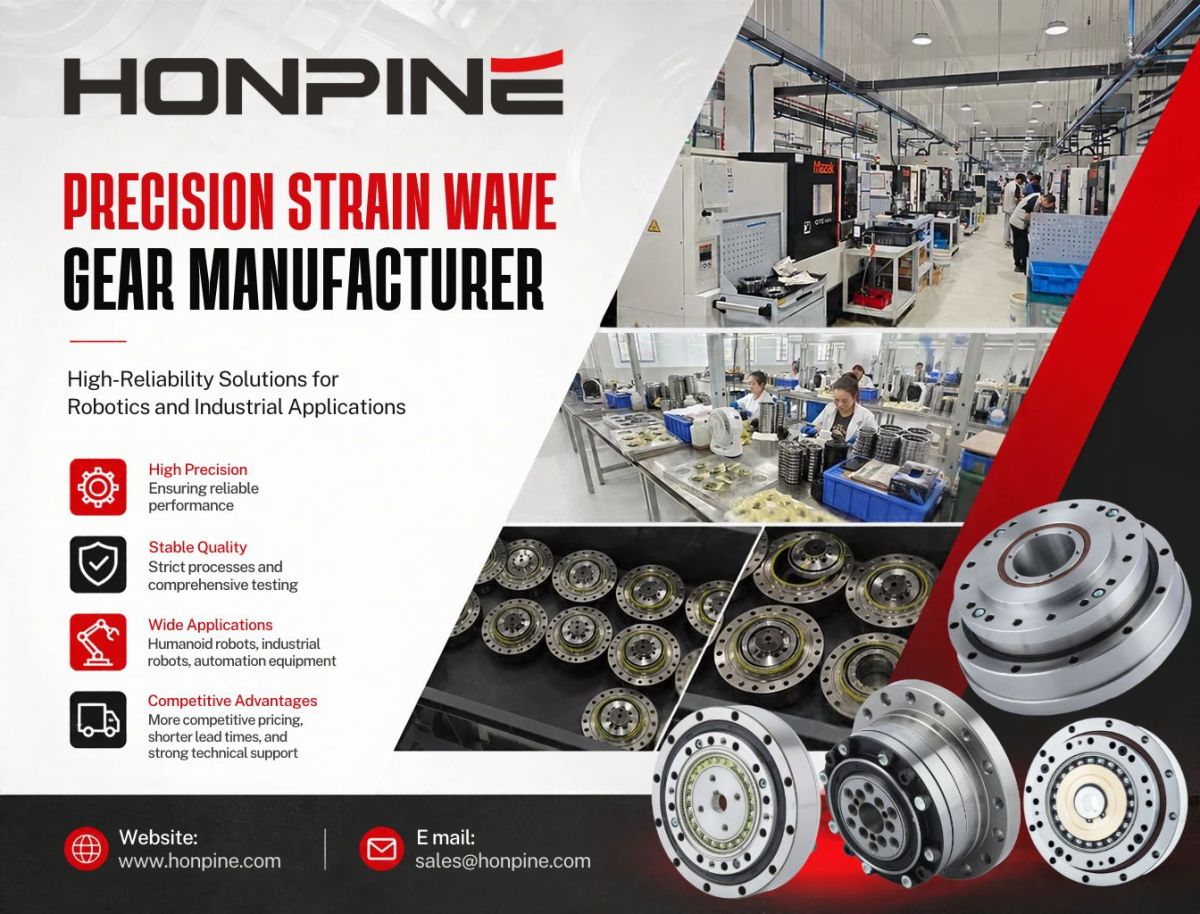
Chinese manufacturers, including HONPINE and Leaderdrive, are becoming increasingly competitive in the global precision transmission market.
Compared with many established Japanese suppliers, Chinese manufacturers can offer several practical advantages:
1. More competitive pricing
With improvements in domestic supply chains, precision machining capabilities, and production efficiency, Chinese manufacturers can provide cost-effective strain wave gear solutions without relying solely on low-cost manufacturing.
2. Shorter delivery lead times
A well-established domestic supply chain and flexible production arrangements allow manufacturers to respond more quickly to customer requirements, particularly for customized products and small-to-medium production batches.
3. Stronger support for emerging robotics applications
The rapid development of humanoid robots, collaborative robots, and industrial automation has created growing demand for precision transmission components.
Chinese manufacturers are increasingly investing in production capacity, product development, and engineering support to meet the requirements of these rapidly evolving industries.
For equipment manufacturers and robotics developers, choosing a strain wave gear supplier is no longer just about comparing specifications or purchase prices. Manufacturing consistency, technical support, customization capabilities, delivery reliability, and long-term product performance are equally important considerations.
5. Looking for a Reliable Strain Wave Gear Manufacturer?
At HONPINE, we believe that a high-quality strain wave gear is built through continuous improvements in material selection, tooth profile design, precision machining, assembly techniques, and quality inspection.
Since 2018, HONPINE has been committed to the development and manufacturing of precision transmission products, providing strain wave gears and rotary actuator solutions for robotics, industrial automation, CNC machinery, medical equipment, and semiconductor manufacturing applications.
If you are looking for a reliable strain wave gear manufacturer, contact HONPINE to obtain our complete product catalog, technical specifications, and customized transmission solutions.
Contact HONPINE: sales@honpine.com
Website: https://www.honpine.com/
Read More
Learn more about the story of HONPINE and industry trends related to precision transmission.
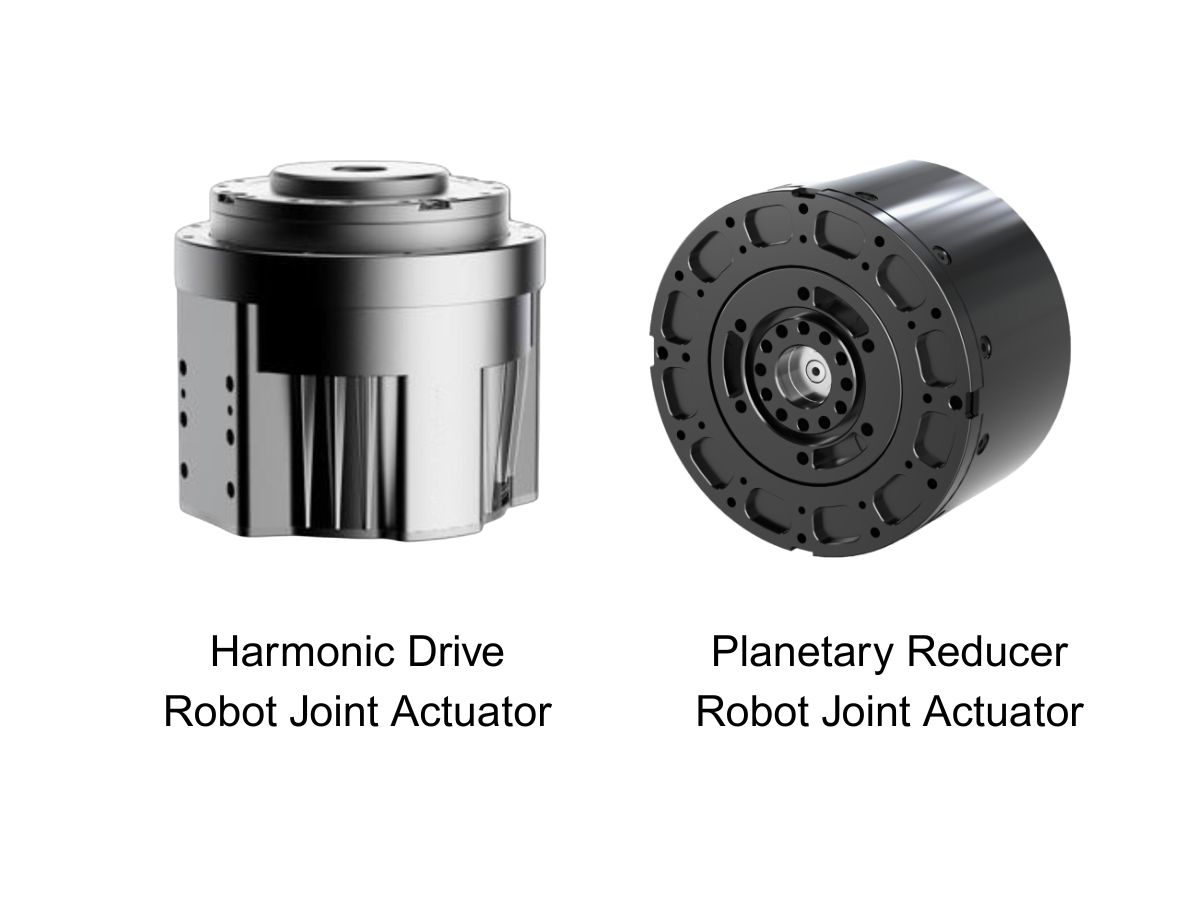
 What is robot joint actuator?How to Choose the Best Robot Rotary Joint Actuator?In core robot joint transmission solutions, planetary and harmonic rotary actuators each have their own strengths. Choosing the right type based on application requirements is essential to achieve the optimal balance between performance and cost.
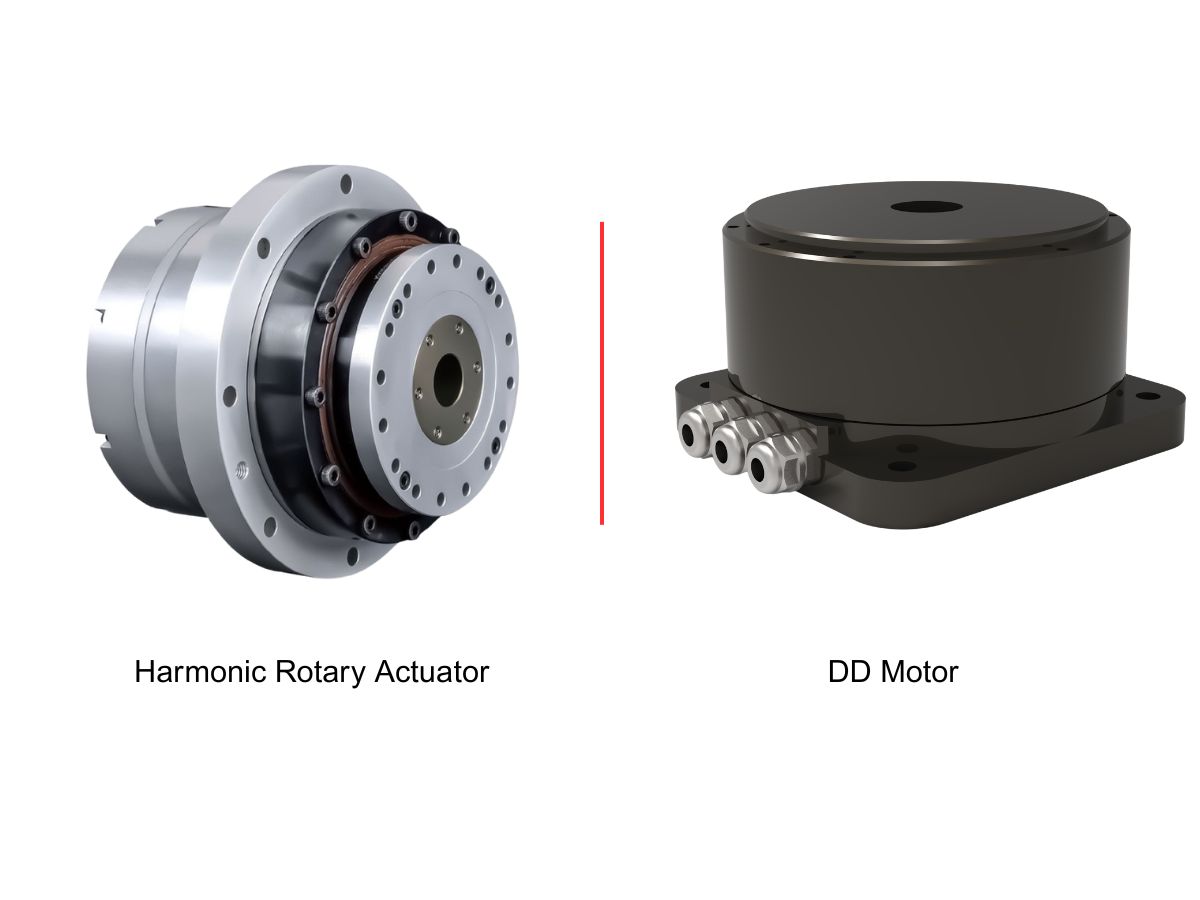
 DD Motors VS Harmonic Rotary ActuatorsThis article provides an in-depth comparison between Direct Drive (DD) motors and harmonic rotary actuators, covering their transmission principles, advantages and disadvantages, and typical application fields.
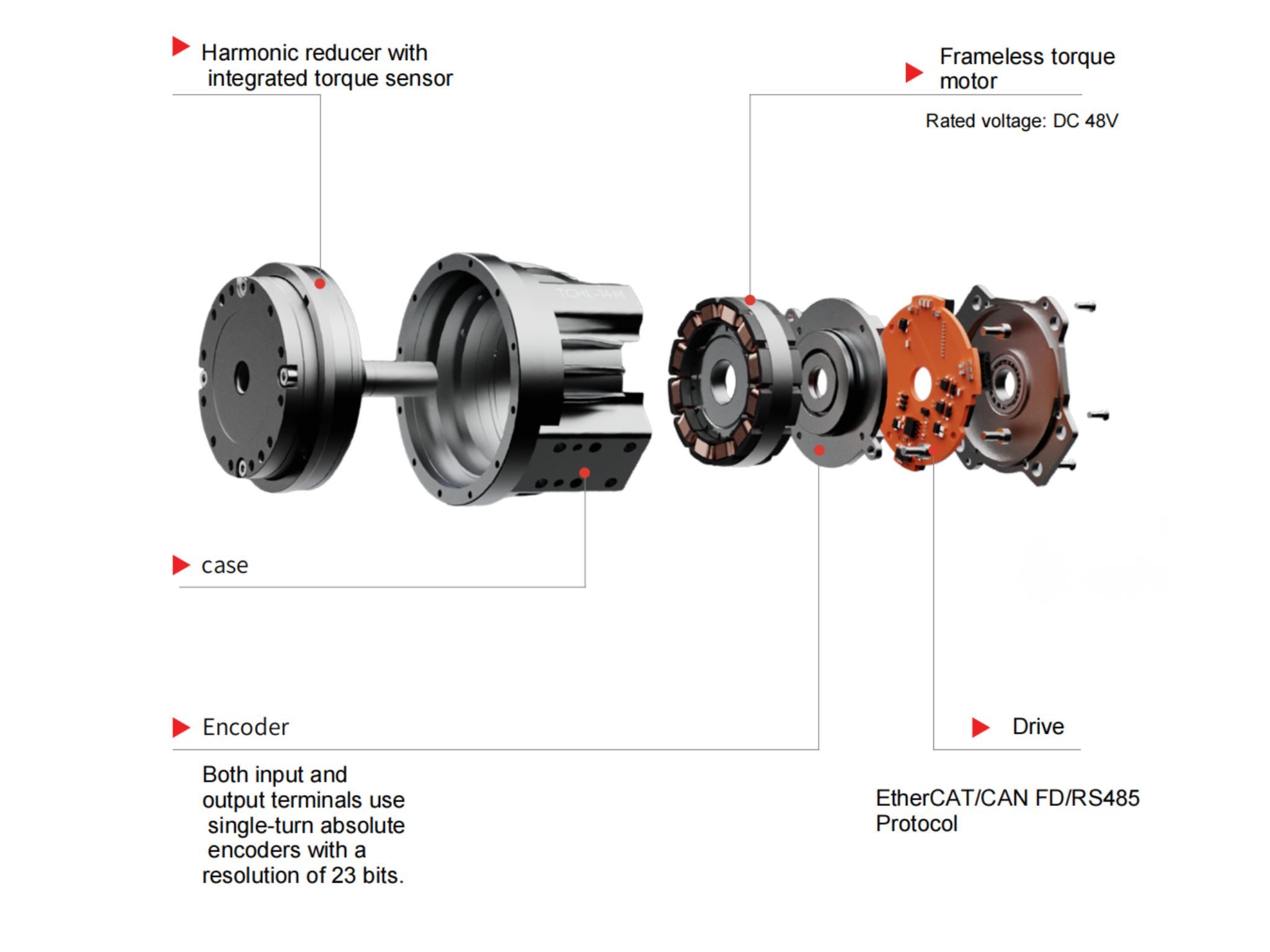
 OMG Ultra Compact Harmonic Drive Joint Module with Built-in Torque SensorHONPINE TCHL series harmonic drive joint module is a game-changing product that achieves disruptive improvements in multiple aspects such as lightweight design, integration level, and connection convenience. This article will analyze its revolutionary enhancements with you.
 The Role of Harmonic Drive Gears in Achieving 5–10 μm Accuracy in Dental Milling MachinesA dental milling machine is a CNC machining system used to directly process digital dental models into restorations such as crowns, bridges, veneers, inlays, and implant abutments. Dental milling machines require far higher operational accuracy and motion stability than ordinary equipment. This article explains how harmonic drive gear help dental milling machines achieve stable, continuous, and controllable operation.
 Why Are Harmonic Rotary Actuators Perfect for Medical Equipment?Harmonic rotary actuators (typically integrated systems consisting of a harmonic drive reducer, frameless torque motor, encoder, and optional brake) are regarded as key components in medical equipment. The core reason is that they simultaneously meet the most stringent medical requirements for precision, compact size, safety, and controllability. The following explanation is structured from three perspectives: technical characteristics, application scenarios, and medical value.
 High-Precision RV Reducers Perfectly Matched for Walking RobotsThe walking axis of a robot is a core component for power transmission and support. RV reducers provide extremely high rigidity, precision, and torque while maintaining a compact size and exceptional reliability, making them an ideal match for the demanding requirements of walking robot joints in terms of load capacity, impact resistance, and precision.
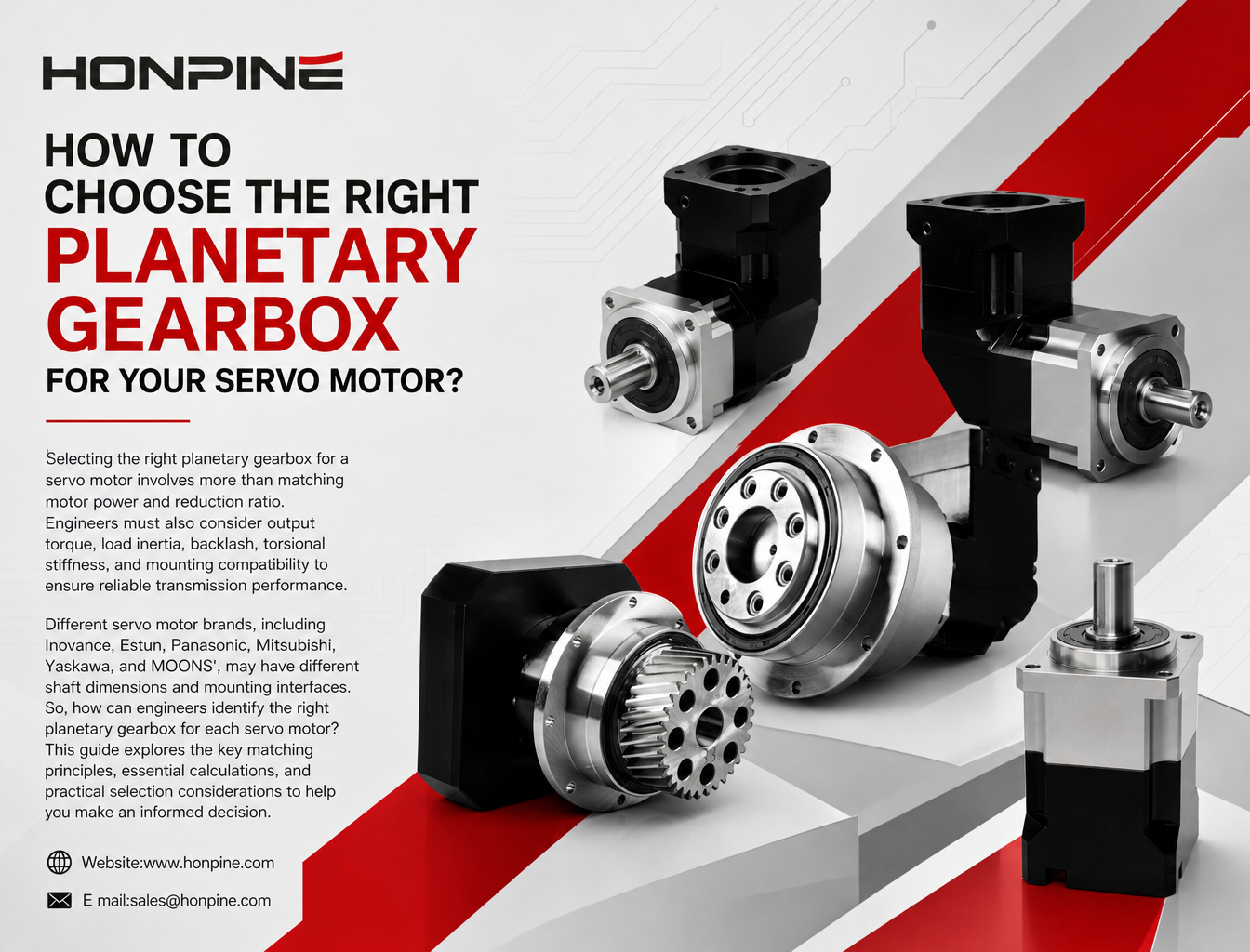
 How to Match Planetary Gearboxes with Servo Motors from 6 Major Brands?Selecting the right planetary gearbox for a servo motor involves more than matching motor power and reduction ratio. Engineers must also consider output torque, load inertia, backlash, torsional stiffness, and mounting compatibility to ensure reliable transmission performance. Different servo motor brands, including Inovance, Estun, Panasonic, Mitsubishi, Yaskawa, and MOONS', may have different shaft dimensions and mounting interfaces. So, how can engineers identify the right planetary gearbox for each servo motor? This guide explores the key matching principles, essential calculations, and practical selection considerations to help you make an informed decision.
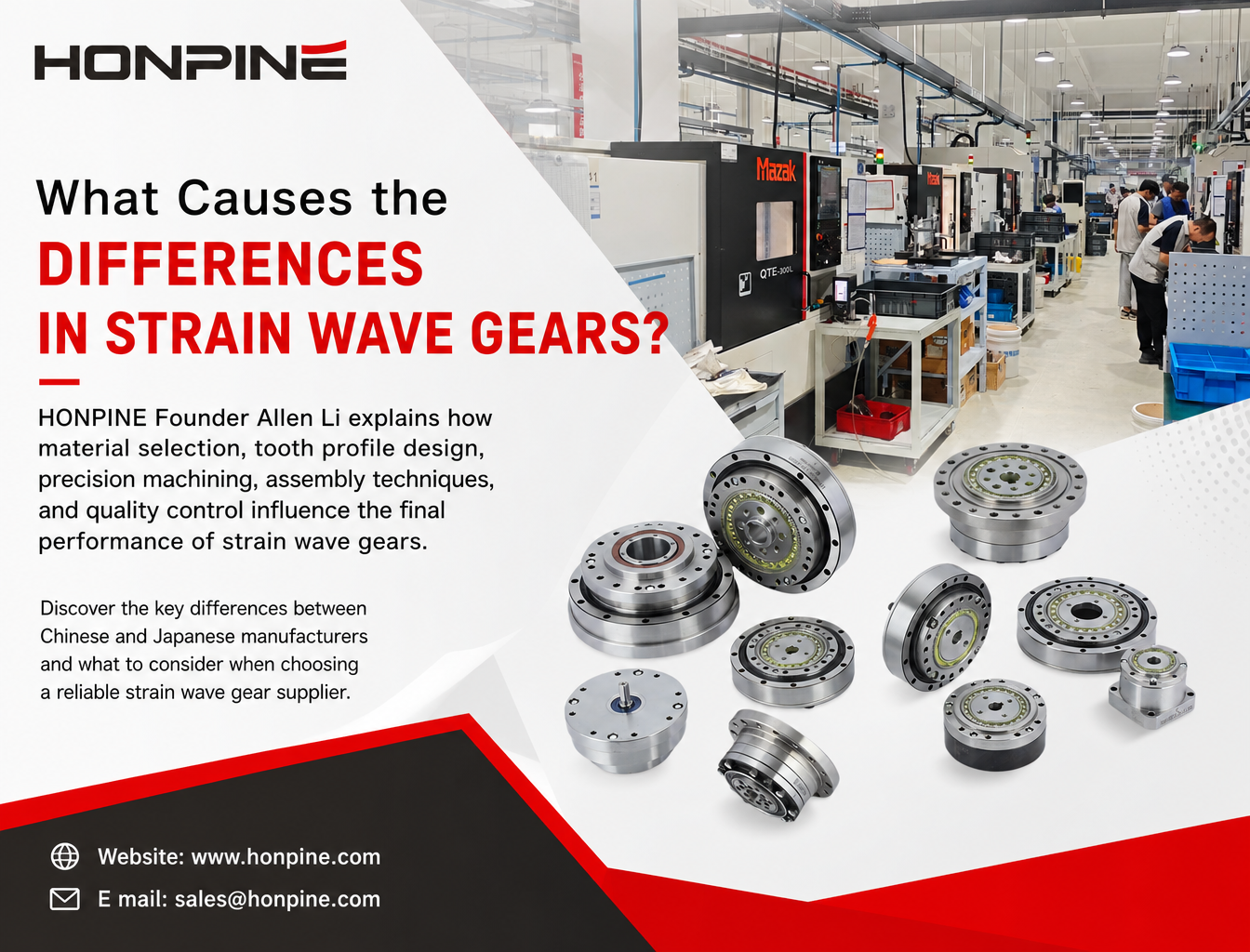
 Why Do Strain Wave Gear Manufacturers Produce Products with Such Different Levels of Quality and Precision?Strain wave gears share the same operating principle, but their quality, precision, and service life can vary significantly between manufacturers. What causes these differences? HONPINE Founder Allen Li explains how material selection, tooth profile design, precision machining, assembly techniques, and quality control influence the final performance of strain wave gears. Discover the key differences between Chinese and Japanese manufacturers and what to consider when choosing a reliable strain wave gear supplier.
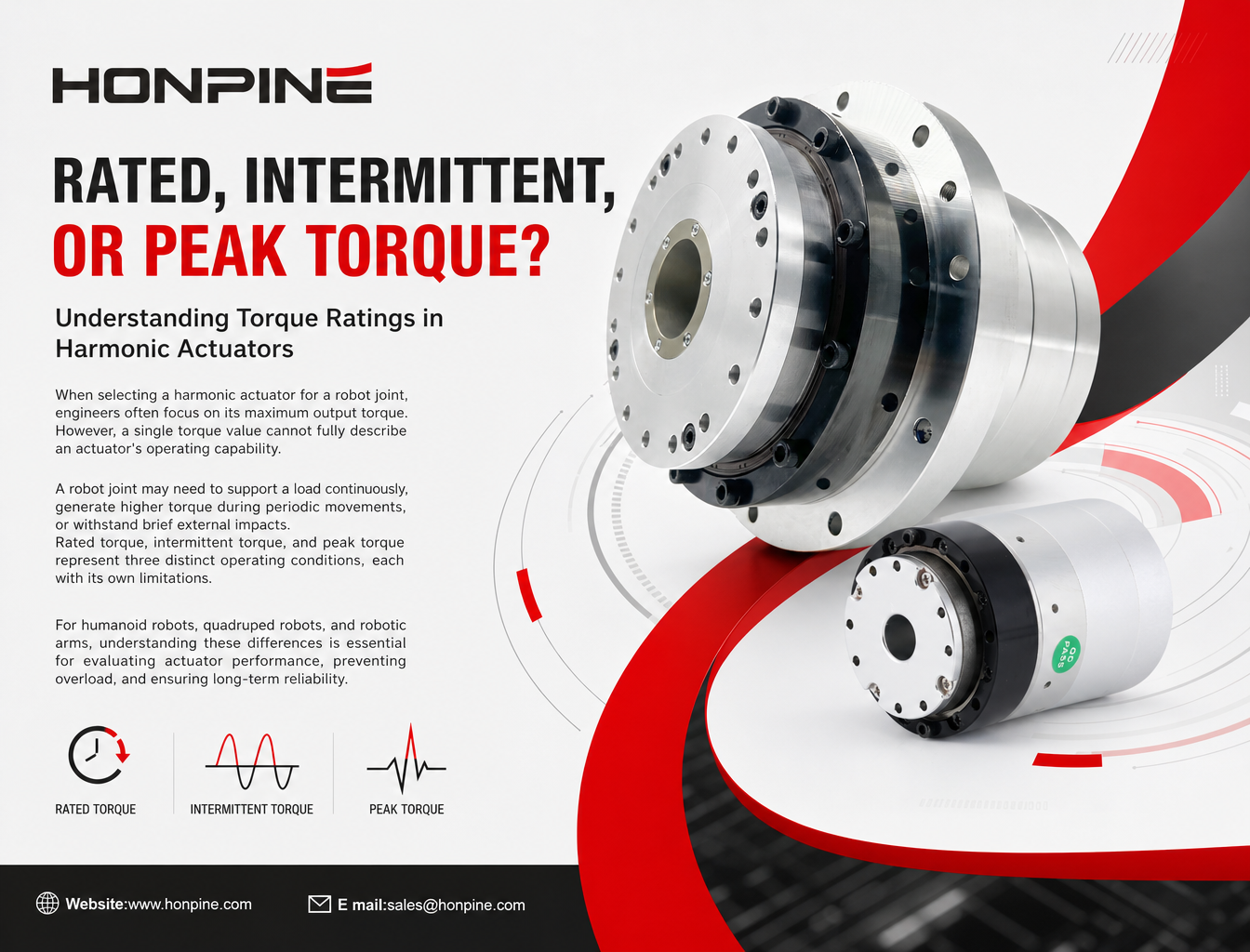
 What Are Rated, Intermittent, and Peak Torque in a Harmonic Actuator?When selecting a harmonic actuator for a robot joint, engineers often focus on its maximum output torque. However, a single torque value cannot fully describe an actuator's operating capability. A robot joint may need to support a load continuously, generate higher torque during periodic movements, or withstand brief external impacts. Rated torque, intermittent torque, and peak torque represent three distinct operating conditions, each with its own limitations. For humanoid robots, quadruped robots, and robotic arms, understanding these differences is essential for evaluating actuator performance, preventing overload, and ensuring long-term reliability.
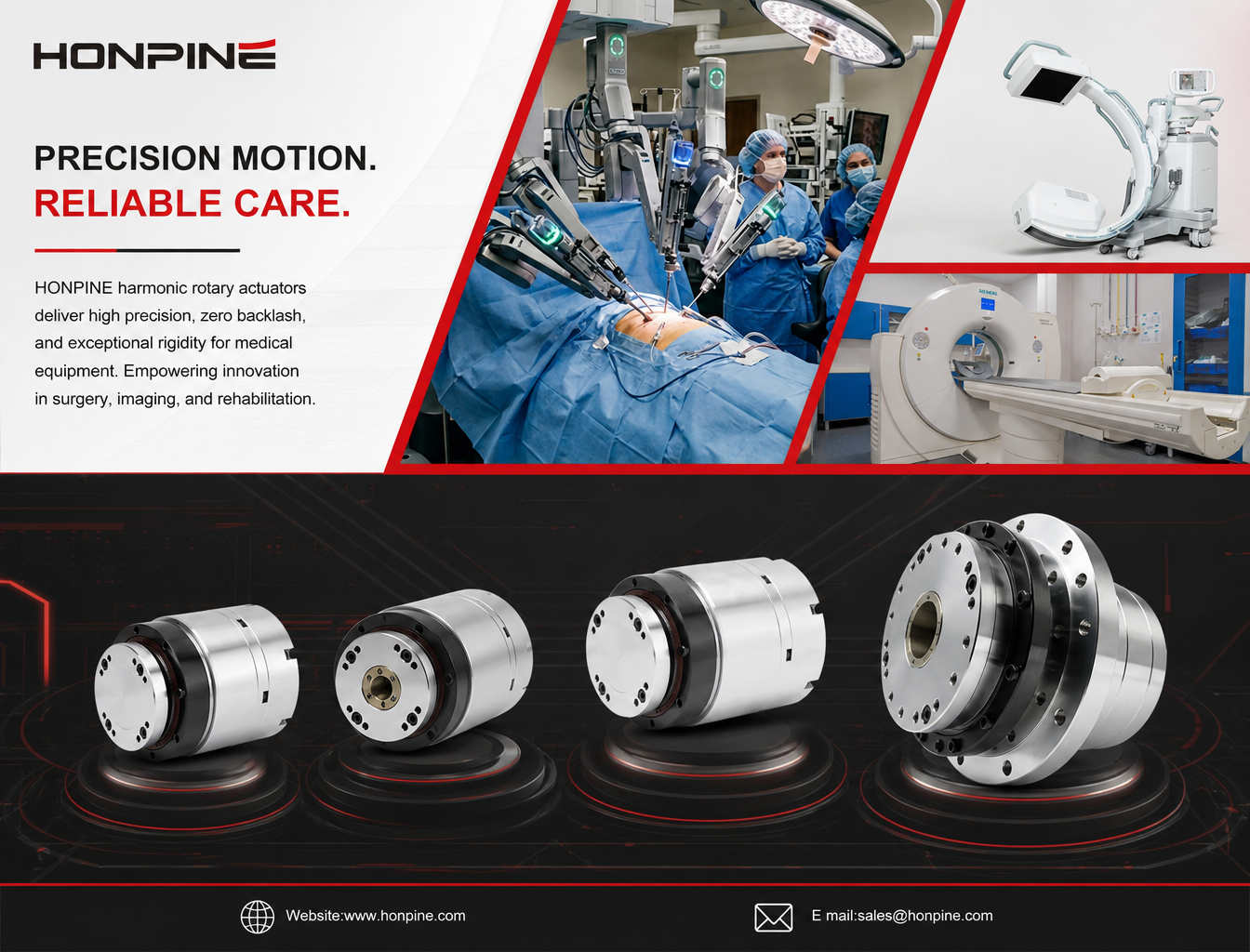
 Harmonic Rotary Actuator for Medical Equipment: ≤10 Arcsec Repeatability and High Overturning StiffnessMedical equipment demands exceptional precision, structural stability, and operational safety from its motion transmission systems. From surgical robots and CT imaging systems to rehabilitation equipment, actuators must deliver consistent positioning accuracy while supporting complex mechanical loads. How can manufacturers achieve both high repeatability and structural rigidity in medical applications? HONPINE harmonic rotary actuators offer repeatability of up to ≤10 arcsec, zero-backlash transmission, high overturning stiffness, and hollow-shaft configurations, providing reliable motion control solutions for next-generation medical equipment.
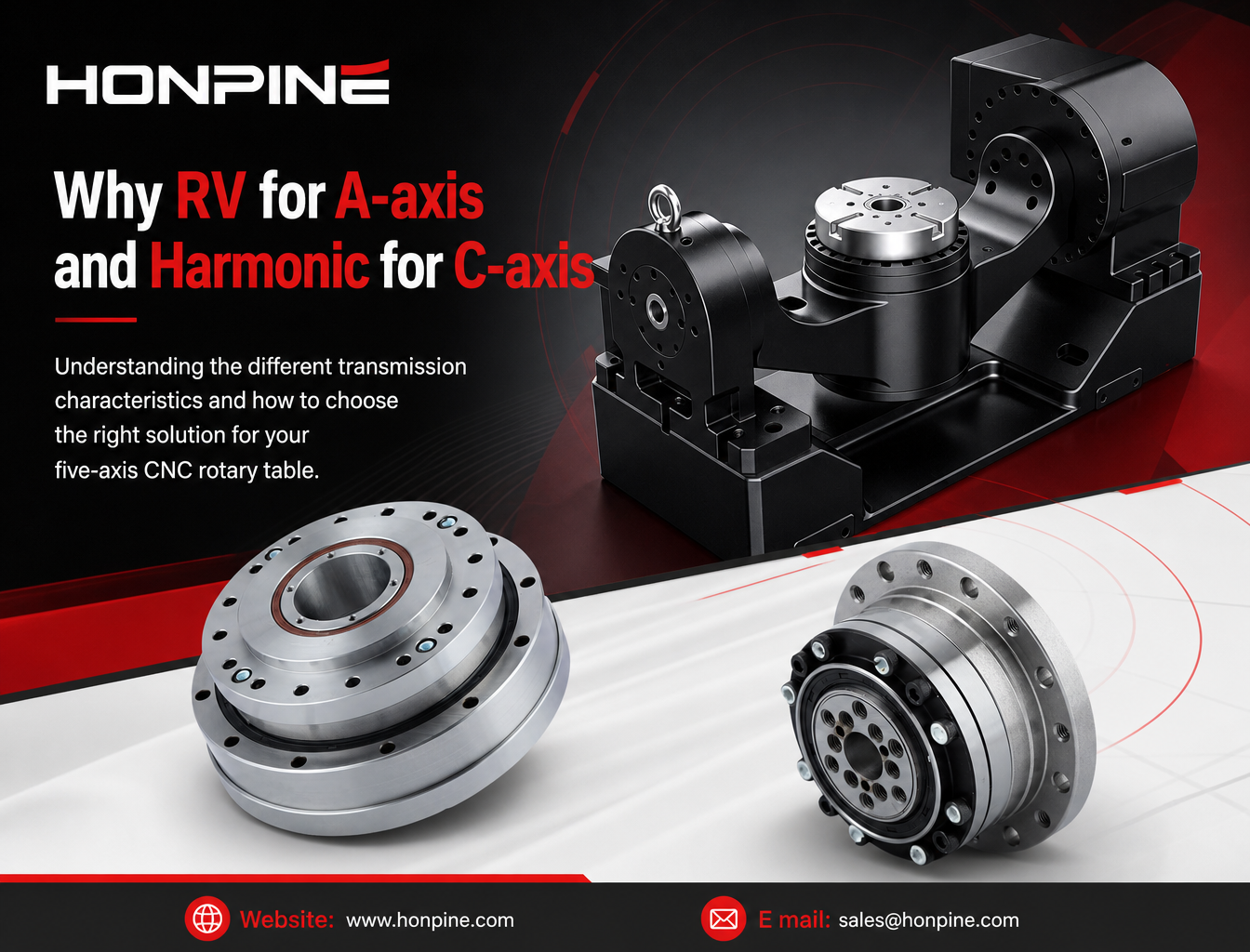
 Why Do Five-Axis CNC Rotary Tables Use Different Reducers for the A-Axis and C-Axis?Five-axis CNC rotary tables require different transmission characteristics for the A-axis and C-axis. While the A-axis often needs high torsional stiffness and load-bearing capacity to support the cradle assembly and workpiece, the C-axis places greater emphasis on low backlash, angular positioning accuracy, and dynamic response. This article explains why RV reducers are often considered for A-axis applications and harmonic reducers for C-axis applications, covering their working principles, mechanical advantages, output-side feedback, and key selection criteria for CNC machine tool manufacturers.
 How Does the HONPINE HPJM Integrated Robot Joint Module Deliver High Torque in a Compact Space?Learn how to optimize installation space while achieving high torque density in robotic joints. This article explores how the HONPINE HPJM integrated robot joint module uses integrated components, hollow-shaft cable routing, compact electrical connectors, and optimized mechanical mounting structures to reduce unnecessary space in humanoid robots and robotic arms.
Double Click
We provide harmonic drive reducer,planetary reducer,robot joint motor,robot rotary actuators,RV gear reducer,robot end effector,dexterous robot hand
 What is robot joint actuator?How to Choose the Best Robot Rotary Joint Actuator?In core robot joint transmission solutions, planetary and harmonic rotary actuators each have their own strengths. Choosing the right type based on application requirements is essential to achieve the optimal balance between performance and cost.
 DD Motors VS Harmonic Rotary ActuatorsThis article provides an in-depth comparison between Direct Drive (DD) motors and harmonic rotary actuators, covering their transmission principles, advantages and disadvantages, and typical application fields.
 OMG Ultra Compact Harmonic Drive Joint Module with Built-in Torque SensorHONPINE TCHL series harmonic drive joint module is a game-changing product that achieves disruptive improvements in multiple aspects such as lightweight design, integration level, and connection convenience. This article will analyze its revolutionary enhancements with you.
 How to Match Planetary Gearboxes with Servo Motors from 6 Major Brands?Selecting the right planetary gearbox for a servo motor involves more than matching motor power and reduction ratio. Engineers must also consider output torque, load inertia, backlash, torsional stiffness, and mounting compatibility to ensure reliable transmission performance. Different servo motor brands, including Inovance, Estun, Panasonic, Mitsubishi, Yaskawa, and MOONS', may have different shaft dimensions and mounting interfaces. So, how can engineers identify the right planetary gearbox for each servo motor? This guide explores the key matching principles, essential calculations, and practical selection considerations to help you make an informed decision.
 Why Do Strain Wave Gear Manufacturers Produce Products with Such Different Levels of Quality and Precision?Strain wave gears share the same operating principle, but their quality, precision, and service life can vary significantly between manufacturers. What causes these differences? HONPINE Founder Allen Li explains how material selection, tooth profile design, precision machining, assembly techniques, and quality control influence the final performance of strain wave gears. Discover the key differences between Chinese and Japanese manufacturers and what to consider when choosing a reliable strain wave gear supplier.
 What Are Rated, Intermittent, and Peak Torque in a Harmonic Actuator?When selecting a harmonic actuator for a robot joint, engineers often focus on its maximum output torque. However, a single torque value cannot fully describe an actuator's operating capability. A robot joint may need to support a load continuously, generate higher torque during periodic movements, or withstand brief external impacts. Rated torque, intermittent torque, and peak torque represent three distinct operating conditions, each with its own limitations. For humanoid robots, quadruped robots, and robotic arms, understanding these differences is essential for evaluating actuator performance, preventing overload, and ensuring long-term reliability.
 Why Do Five-Axis CNC Rotary Tables Use Different Reducers for the A-Axis and C-Axis?Five-axis CNC rotary tables require different transmission characteristics for the A-axis and C-axis. While the A-axis often needs high torsional stiffness and load-bearing capacity to support the cradle assembly and workpiece, the C-axis places greater emphasis on low backlash, angular positioning accuracy, and dynamic response. This article explains why RV reducers are often considered for A-axis applications and harmonic reducers for C-axis applications, covering their working principles, mechanical advantages, output-side feedback, and key selection criteria for CNC machine tool manufacturers.
 How Does the HONPINE HPJM Integrated Robot Joint Module Deliver High Torque in a Compact Space?Learn how to optimize installation space while achieving high torque density in robotic joints. This article explores how the HONPINE HPJM integrated robot joint module uses integrated components, hollow-shaft cable routing, compact electrical connectors, and optimized mechanical mounting structures to reduce unnecessary space in humanoid robots and robotic arms.
 Harmonic Gear Motor vs. Harmonic Actuator: What Are the Differences?This article explains the differences between harmonic gear motors and harmonic actuators from the perspectives of product design, system integration, feedback and control functions, installation, and application requirements. Since manufacturers may use these product names differently, it also explores how to evaluate their actual configurations and select the right precision motion solution for robotics and industrial automation.
 HONPINE JM Fourth-Generation Frameless Torque Motor: 30% Higher Torque Density and 10% Lower Operating TemperatureAs robotics technology advances, frameless torque motors are facing increasingly demanding requirements for torque density, motion stability, and thermal management. The HONPINE JM fourth-generation frameless torque motor achieves 30% higher torque density and 10% lower operating temperature through improvements in electromagnetic design, core materials, and winding technology. With torque ripple controlled below 1%, it delivers smoother low-speed operation and improved motion consistency, making it suitable for demanding applications such as surgical robots, humanoid robots, and precision automation equipment. How does HONPINE achieve these performance improvements? Let's take a closer look.
 How to Select a Harmonic Reducer: 9 Key Factors You Need to KnowWhy are more robotics companies choosing integrated robot joint modules instead of traditional distributed drive systems? As humanoid robots, collaborative robots, and rehabilitation exoskeletons continue to evolve, manufacturers are looking for more compact, lightweight, and easier-to-integrate motion solutions. An integrated robot joint module combines essential components such as a frameless torque motor, harmonic reducer, servo drive, encoders, and output bearing into a single assembly. This architecture can reduce mechanical complexity, simplify wiring, improve motion control integration, and shorten robot development cycles. In this article, Theodore Li, Technical Director at HONPINE, explains six key advantages of integrated robot joint modules and compares them with conventional distributed drive configurations.
 Why Are More Companies Choosing Integrated Robot Joint Modules?Integrated robot joint modules combine motors, harmonic reducers, servo drives, encoders, and output bearings into compact units. This article compares integrated and distributed drive architectures, exploring their differences in torque density, mechanical reliability, motion control, development efficiency, and practical robotic applications.