


Harmonic Gear Motor vs. Harmonic Actuator: What Are the Differences?
In robotics and industrial automation, Harmonic Gear Motors and Harmonic Actuators are widely used precision motion products. Both commonly incorporate harmonic drive technology and offer advantages such as compact structures, high reduction ratios, low backlash, and precise motion transmission. They are widely applied in robot joints, precision rotary mechanisms, and automated equipment.
However, there is no universally standardized distinction between these two product names in the market. Different manufacturers may use Harmonic Gear Motor and Harmonic Actuator to describe products with similar or even overlapping configurations. Some Harmonic Gear Motors integrate encoders, brakes, sensors, and even servo drives, while certain Harmonic Actuators may use relatively basic motor-and-reducer configurations.
Therefore, these terms should not be regarded as two completely separate product categories.
So, what are the differences between a Harmonic Gear Motor and a Harmonic Actuator? To better understand their respective characteristics, this article compares them from the perspectives of product design, integration level, control functions, installation, commissioning, and application requirements, helping equipment manufacturers select the right motion solution.
1. What Is a Harmonic Gear Motor?
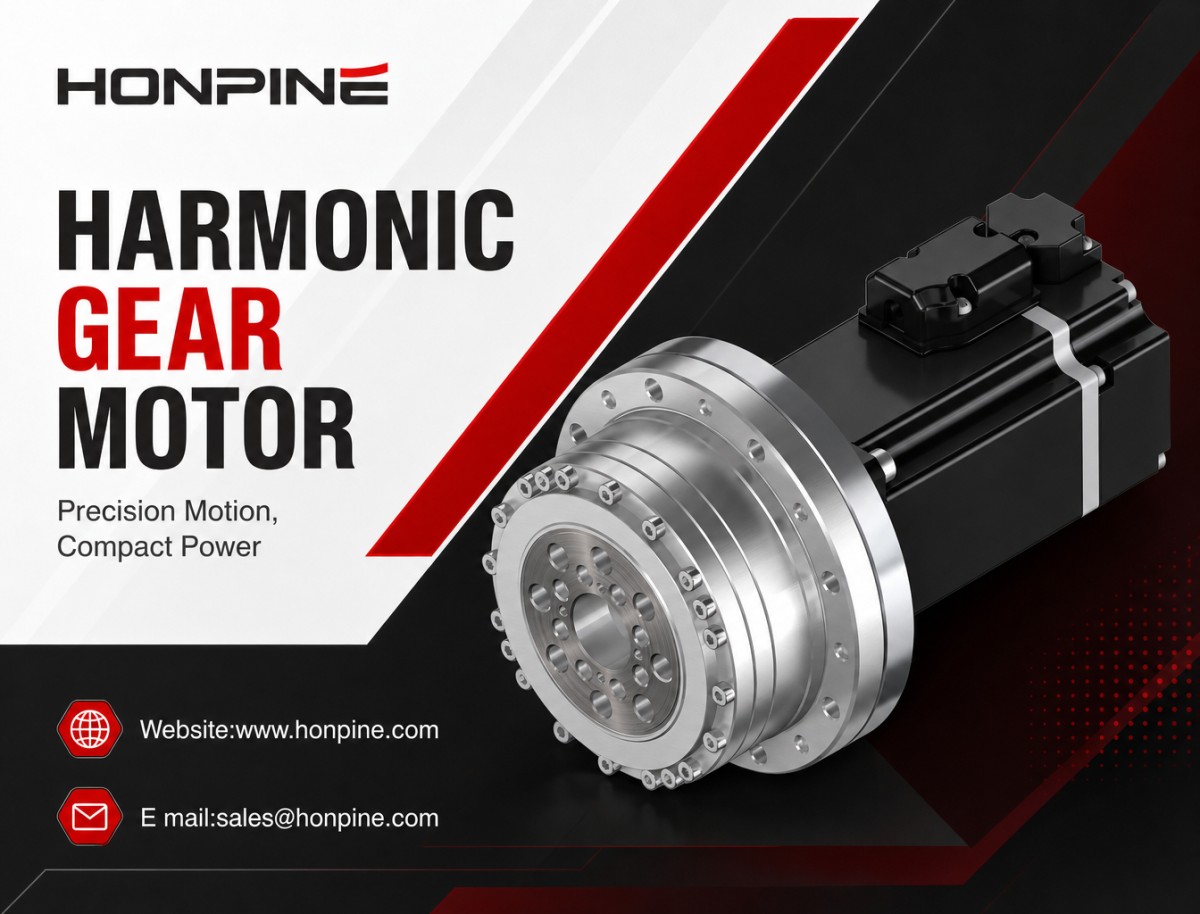
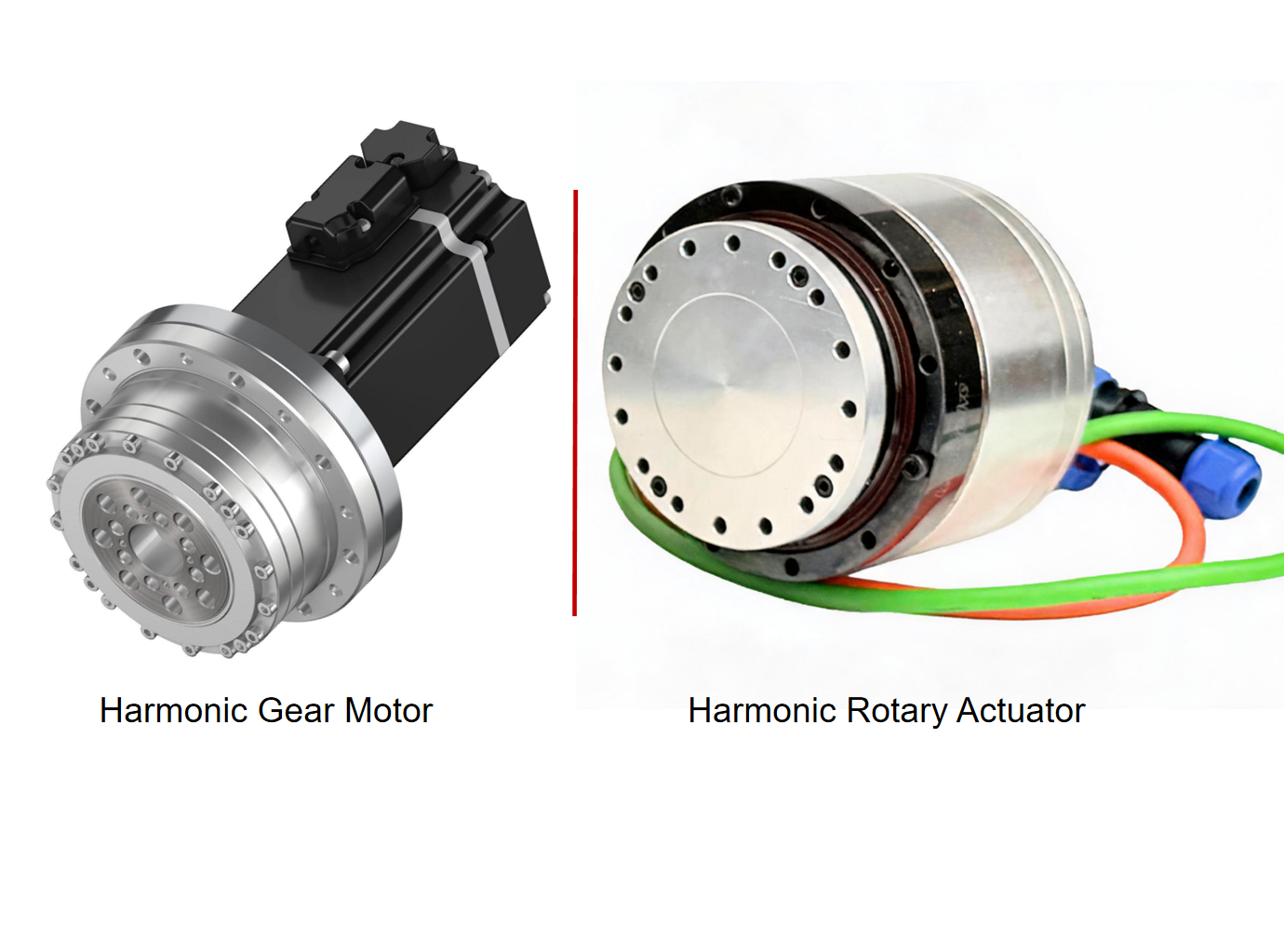
A Harmonic Gear Motor is a precision drive product that uses harmonic drive technology to achieve speed reduction and torque transmission. Its basic operating principle involves a motor providing input power while a harmonic reducer reduces rotational speed and increases output torque to meet the motion requirements of precision machinery.
From a product design perspective, a Harmonic Gear Motor focuses primarily on the coordination between the motor and harmonic transmission system. Depending on the manufacturer's design, it may be a relatively basic motor-and-reducer drive assembly or a highly integrated unit equipped with encoders, brakes, sensors, and drive electronics.
1.1 Main Components of a Harmonic Gear Motor
A typical Harmonic Gear Motor may include several components. The motor, which can be a servo motor, brushless DC motor, or frameless torque motor, provides the rotational power. The harmonic reducer uses a flexspline, circular spline, and wave generator to achieve a high reduction ratio and precise motion transmission. The output shaft or flange transfers the reduced-speed torque to the driven equipment, while the housing provides structural support and mechanical protection.
Depending on the product configuration, additional components such as encoders, brakes, sensors, and servo drives may also be integrated into the system.
1.2 How Does a Harmonic Gear Motor Work?
The core transmission principle of a Harmonic Gear Motor is based on harmonic drive technology. When the motor rotates the wave generator, the flexspline undergoes controlled elastic deformation and engages with the circular spline. Because the flexspline and circular spline have different tooth counts, their relative motion produces a reduction in rotational speed.
Through this mechanism, a Harmonic Gear Motor can achieve a high reduction ratio and increased output torque within a compact structure. When additional components such as encoders, brakes, and servo drives are integrated, the product can also provide more comprehensive position feedback, motion control, and braking functions.
1.3 Typical Applications of Harmonic Gear Motors
Harmonic Gear Motors are commonly used in applications requiring precise rotary motion and compact transmission structures, including industrial robots, collaborative robots, automated assembly equipment, CNC machinery, optical inspection systems, medical equipment, and semiconductor automation systems. Depending on their mechanical configuration and control capabilities, they can be adapted to different motion requirements in industrial machinery and robotic systems.
2. What Is a Harmonic Actuator?
A Harmonic Actuator is an integrated motion execution unit built around harmonic transmission technology. Rather than focusing only on power transmission, it is designed to perform specific motion tasks through the coordinated operation of mechanical, electrical, and feedback components.
In addition to a motor and harmonic reducer, a Harmonic Actuator may integrate an output bearing, encoder, brake, torque sensor, and servo drive, depending on the intended application. Its design focuses on providing the required output motion, positioning feedback, braking capability, and system integration within a compact unit.
2.1 Main Components of a Harmonic Actuator
A typical Harmonic Actuator may incorporate several functional components. A frameless torque motor provides driving power and allows compact integration with the harmonic reducer. The harmonic reducer delivers high reduction ratios and precise torque transmission, while encoders monitor motor-side or output-side position and speed. A brake can provide mechanical holding or braking when required by the application, and an output bearing supports the load while accommodating the specified axial, radial, and moment loads.
For applications requiring more advanced feedback, a torque sensor can measure output torque and support force-control or compliant-motion strategies. A servo drive may be installed externally or integrated into the actuator, depending on the product design.
Not every Harmonic Actuator includes all these components. Its actual configuration depends on the manufacturer's design and the functional requirements of the application.
2.2 How Does a Harmonic Actuator Work?
A Harmonic Actuator uses the motor to drive the harmonic reducer, reducing rotational speed and increasing output torque. However, its design places greater emphasis on the coordinated operation of the entire execution system.
For example, an actuator equipped with dual encoders can monitor the motor-side and output-side positions independently. The control system can use these feedback signals to monitor actual output motion and support position-error detection and compensation strategies.
If a torque sensor is also integrated, the actuator can measure changes in output torque and provide feedback for force control, impedance control, and compliant motion. Therefore, the value of a Harmonic Actuator extends beyond power transmission to include integrated motion execution and feedback functions.
2.3 Typical Applications of Harmonic Actuators
Harmonic Actuators are suitable for equipment that requires compact structures, precise positioning, and integrated motion control. Typical applications include industrial robots, collaborative robots, humanoid robots, exoskeleton robots, medical robots, precision rotary tables, semiconductor automation equipment, and high-precision positioning and assembly systems.
3. Harmonic Gear Motor vs. Harmonic Actuator: Six Key Differences
Since the two product names overlap in the market, it is not accurate to assume that a Harmonic Gear Motor cannot include encoders, brakes, or servo drives, or that every Harmonic Actuator must integrate all these components. However, when comparing their design approaches and functional priorities, several key differences can be identified.
3.1 Product Design Focus
A Harmonic Gear Motor primarily emphasizes the combination of a motor and harmonic transmission system. Its main purpose is to provide power transmission, speed reduction, and torque amplification through harmonic drive technology.
A Harmonic Actuator places greater emphasis on complete motion execution. In addition to power transmission, its design may address position feedback, braking, load support, sensing, and motion control.
The key distinction lies in the product's design priorities rather than the presence or absence of any individual component.
3.2 System Integration Level
Harmonic Gear Motors are available in different integration configurations. Some products mainly consist of a motor and harmonic reducer, allowing equipment manufacturers to select additional components according to their system requirements. Other models may integrate encoders, brakes, sensors, and servo drives into a compact unit.
Harmonic Actuators generally place greater emphasis on overall system integration, combining more of the components required for motion execution within a single assembly. This approach can reduce the number of external components and simplify mechanical and electrical integration for equipment manufacturers.
3.3 Feedback and Control Functions
Position feedback and motion control are important for precision equipment. A Harmonic Gear Motor can be configured with different types of encoders and servo drives according to the application, with its feedback capabilities depending on the actual product configuration.
A Harmonic Actuator generally places greater emphasis on comprehensive feedback capabilities. For example, dual encoders can independently monitor motor-side and output-side positions, while an integrated torque sensor can measure actual output torque and provide feedback for force-control and compliant-motion applications.
For applications requiring more advanced motion control and multiple feedback signals, an actuator equipped with the appropriate sensing components may be a more suitable solution.
3.4 Installation and Commissioning
When building a drive system around a Harmonic Gear Motor, equipment manufacturers may need to select and configure external components, complete mechanical connections, arrange electrical wiring, configure encoder interfaces, and tune servo parameters according to the product design.
A highly integrated Harmonic Actuator can reduce some of these tasks because multiple mechanical and electrical components are already assembled within the unit. This can simplify installation and reduce the amount of external wiring and mechanical assembly.
However, an integrated actuator still requires system-level commissioning, including communication configuration, control parameter tuning, mechanical installation, and motion testing.
3.5 System Design Flexibility
Harmonic Gear Motors can offer flexibility in system configuration. Manufacturers with established servo control platforms may prefer to select their own drives, encoders, and sensors to match their existing equipment architecture.
Harmonic Actuators place greater emphasis on an integrated design approach. For equipment manufacturers looking to reduce external component selection and integration work, a highly integrated actuator can provide a more convenient solution.
The choice depends on whether the project prioritizes configuration flexibility or a more integrated motion execution unit.
3.6 Cost and Maintenance Considerations
The overall cost of these two solutions should not be evaluated solely by comparing the purchase price of individual products.
When using a Harmonic Gear Motor, equipment manufacturers may also need to account for external servo drives, encoders, brakes, connectors, mounting components, and the labor required for mechanical and electrical integration.
A Harmonic Actuator may have a higher initial purchase price due to its integrated design, but it can reduce the number of external components and simplify assembly and commissioning. The actual cost advantage depends on the product configuration, project volume, and system architecture.
For maintenance, manufacturers should also consider component serviceability, fault diagnosis, spare parts availability, and the technical support provided by the supplier.
4. How to Choose Between a Harmonic Gear Motor and a Harmonic Actuator?
In practical equipment development, selecting the right solution requires evaluating the mechanical load, motion requirements, control architecture, and installation constraints rather than relying solely on the product name.
4.1 Select According to Output Torque and Load Requirements
The first step is to determine the required rated output torque, peak output torque, and actual duty cycle. For equipment operating continuously over extended periods, rated torque and thermal performance are particularly important. Selection should not be based solely on peak torque.
Manufacturers should also consider dynamic loads during startup, acceleration, deceleration, and emergency stops to ensure that the selected drive system can meet the actual operating conditions.
4.2 Consider Positioning Accuracy and Feedback Requirements
For applications requiring basic position and speed control, the motor, encoder, and drive configuration can be selected according to the existing control architecture.
For applications requiring more accurate output-side feedback, position monitoring, or torque-based compliant control, an integrated actuator equipped with dual encoders or a torque sensor may be more appropriate.
It is important to note that encoder resolution is not equivalent to the actual positioning accuracy of the entire transmission system. Reducer errors, mechanical rigidity, load conditions, temperature variations, and control algorithms can all affect final positioning performance.
4.3 Evaluate Installation Space and Integration Requirements
In robotics and precision automation equipment, installation space is often limited. Therefore, the outer diameter, axial length, weight, hollow bore, and mounting interfaces should all be considered during product selection.
If the equipment requires a compact structure with fewer external connections and integrated motor, reducer, and feedback components, a highly integrated Harmonic Actuator may be a suitable option.
4.4 Check Control Systems and Communication Protocols
Compatibility with the existing control architecture is another important consideration. Manufacturers should verify whether the product supports the required communication interfaces, such as CAN, CANopen, EtherCAT, or other protocols.
For systems using external servo drives, motor parameters and encoder interfaces must be compatible with the selected drive. For integrated actuators, engineers should confirm the available control modes, communication protocols, drive configuration, and parameter accessibility before finalizing the selection.
5. HONPINE Harmonic Drive and Integrated Actuator Solutions
For manufacturers developing robotic systems and automated equipment, selecting a suitable harmonic drive solution requires more than checking the reduction ratio and output torque. The compatibility of the motor, harmonic reducer, encoders, brake, sensors, and control system must also be evaluated.
HONPINE specializes in precision transmission and motion control products, offering harmonic reducers, harmonic rotary actuators, planetary gearboxes, and robot joint modules for various industrial applications.
To meet different integration and motion-control requirements, HONPINE provides multiple harmonic drive solutions.
For example, the HONPINE HAG harmonic joint moduleintegrates a motor, harmonic reducer, encoders, brake, and relevant drive and sensing components according to its configuration. It is designed to meet the precision motion requirements of robotic joints.
The HPJM series harmonic joint modules adopt a compact integrated design, combining a frameless torque motor, harmonic reducer, brake, encoders, and related sensing and drive components. These modules are suitable for humanoid robots, collaborative robots, and other robotic joint applications.
For robotic applications requiring output torque sensing and compliant motion control, the HONPINE TCHL series harmonic joint modules provide an additional solution with an integrated torque sensor.
Through different product series, HONPINE can provide precision transmission solutions based on the required output torque, reduction ratio, installation dimensions, feedback configuration, and control requirements.
6. Conclusion
Harmonic Gear Motors and Harmonic Actuators are both precision drive products based on harmonic transmission technology. Their structures and functions may overlap, and different manufacturers may use different naming conventions to describe similar product configurations. Therefore, their actual integration levels cannot be determined solely by their product names.
From a design perspective, Harmonic Gear Motors place greater emphasis on the motor and harmonic transmission system, while Harmonic Actuators focus more on integrated motion execution and system functionality.
For equipment manufacturers, the most important consideration is not simply which product name to choose, but whether the selected solution meets the application's requirements for torque, speed, positioning accuracy, feedback, braking, installation space, and control compatibility.
By evaluating these factors, manufacturers can identify the most suitable harmonic drive solution for their robotic and industrial automation systems.
Read More
Learn more about the story of HONPINE and industry trends related to precision transmission.
 What is robot joint actuator?How to Choose the Best Robot Rotary Joint Actuator?In core robot joint transmission solutions, planetary and harmonic rotary actuators each have their own strengths. Choosing the right type based on application requirements is essential to achieve the optimal balance between performance and cost.
 DD Motors VS Harmonic Rotary ActuatorsThis article provides an in-depth comparison between Direct Drive (DD) motors and harmonic rotary actuators, covering their transmission principles, advantages and disadvantages, and typical application fields.
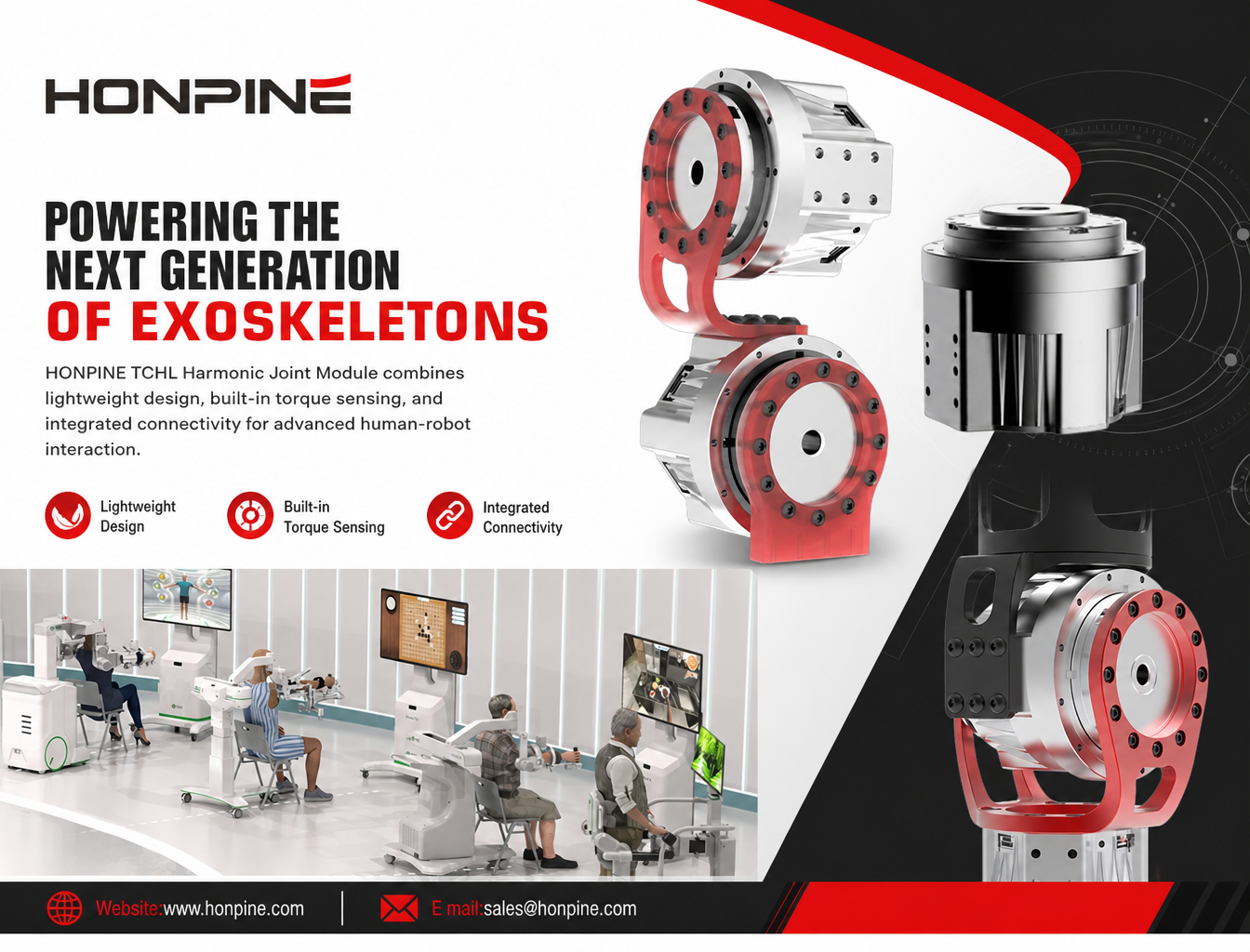
 OMG Ultra Compact Harmonic Drive Joint Module with Built-in Torque SensorHONPINE TCHL series harmonic drive joint module is a game-changing product that achieves disruptive improvements in multiple aspects such as lightweight design, integration level, and connection convenience. This article will analyze its revolutionary enhancements with you.
 The Role of Harmonic Drive Gears in Achieving 5–10 μm Accuracy in Dental Milling MachinesA dental milling machine is a CNC machining system used to directly process digital dental models into restorations such as crowns, bridges, veneers, inlays, and implant abutments. Dental milling machines require far higher operational accuracy and motion stability than ordinary equipment. This article explains how harmonic drive gear help dental milling machines achieve stable, continuous, and controllable operation.
 Why Are Harmonic Rotary Actuators Perfect for Medical Equipment?Harmonic rotary actuators (typically integrated systems consisting of a harmonic drive reducer, frameless torque motor, encoder, and optional brake) are regarded as key components in medical equipment. The core reason is that they simultaneously meet the most stringent medical requirements for precision, compact size, safety, and controllability. The following explanation is structured from three perspectives: technical characteristics, application scenarios, and medical value.
 High-Precision RV Reducers Perfectly Matched for Walking RobotsThe walking axis of a robot is a core component for power transmission and support. RV reducers provide extremely high rigidity, precision, and torque while maintaining a compact size and exceptional reliability, making them an ideal match for the demanding requirements of walking robot joints in terms of load capacity, impact resistance, and precision.
 Harmonic Gear Motor vs. Harmonic Actuator: What Are the Differences?This article explains the differences between harmonic gear motors and harmonic actuators from the perspectives of product design, system integration, feedback and control functions, installation, and application requirements. Since manufacturers may use these product names differently, it also explores how to evaluate their actual configurations and select the right precision motion solution for robotics and industrial automation.
 Why Is the HONPINE TCHL Harmonic Joint Module Suitable for Exoskeleton Robots?The HONPINE TCHL Harmonic Joint Module is designed for exoskeleton robots that require lightweight construction, compact mechanical integration, and responsive human-robot interaction. Featuring a built-in output-side torque sensor, a highly integrated structure, and flexible connection configurations, the TCHL provides a joint drive solution for lower-limb exoskeletons, upper-limb assistive robots, rehabilitation equipment, and industrial wearable robots.
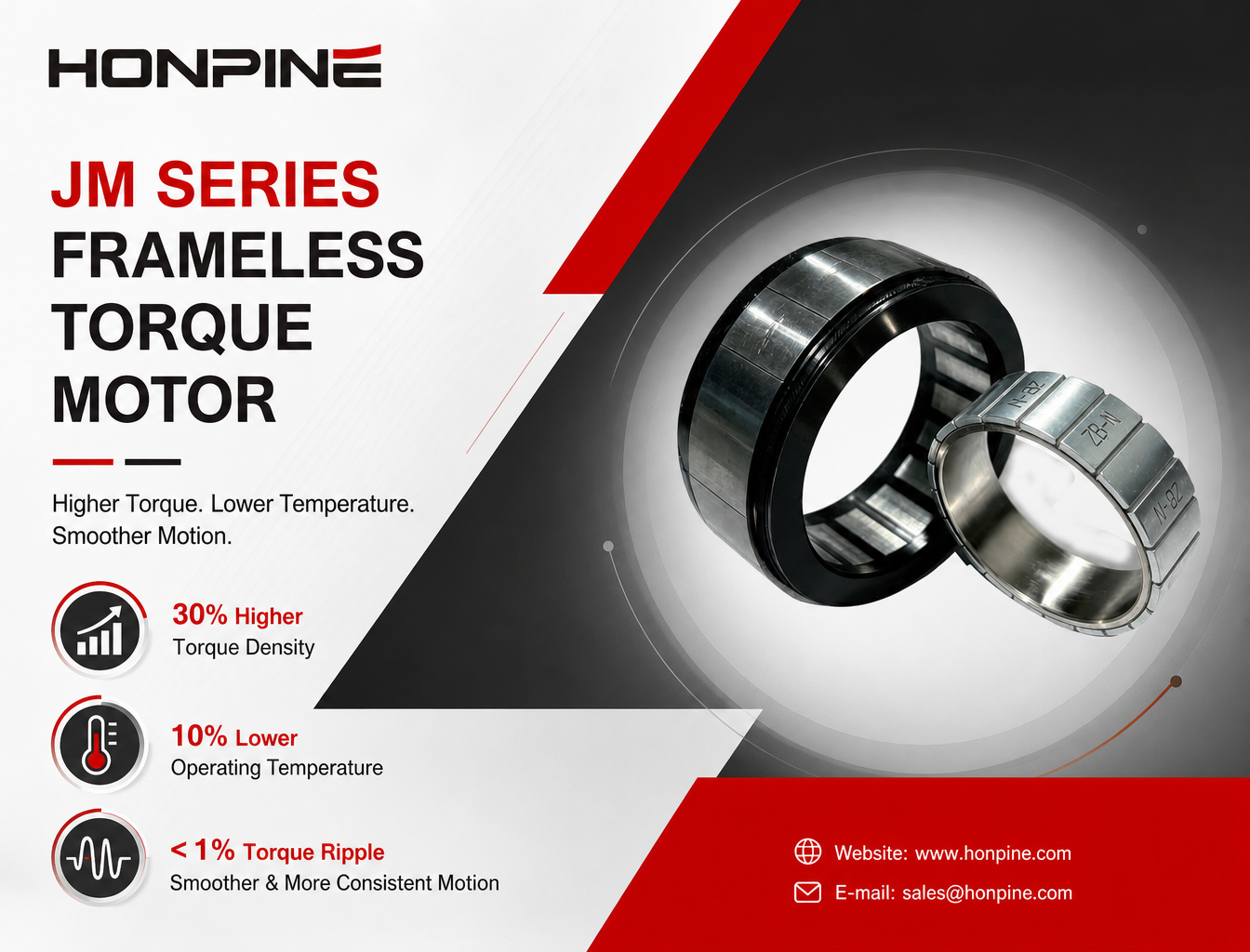
 HONPINE JM Fourth-Generation Frameless Torque Motor: 30% Higher Torque Density and 10% Lower Operating TemperatureAs robotics technology advances, frameless torque motors are facing increasingly demanding requirements for torque density, motion stability, and thermal management. The HONPINE JM fourth-generation frameless torque motor achieves 30% higher torque density and 10% lower operating temperature through improvements in electromagnetic design, core materials, and winding technology. With torque ripple controlled below 1%, it delivers smoother low-speed operation and improved motion consistency, making it suitable for demanding applications such as surgical robots, humanoid robots, and precision automation equipment. How does HONPINE achieve these performance improvements? Let's take a closer look.
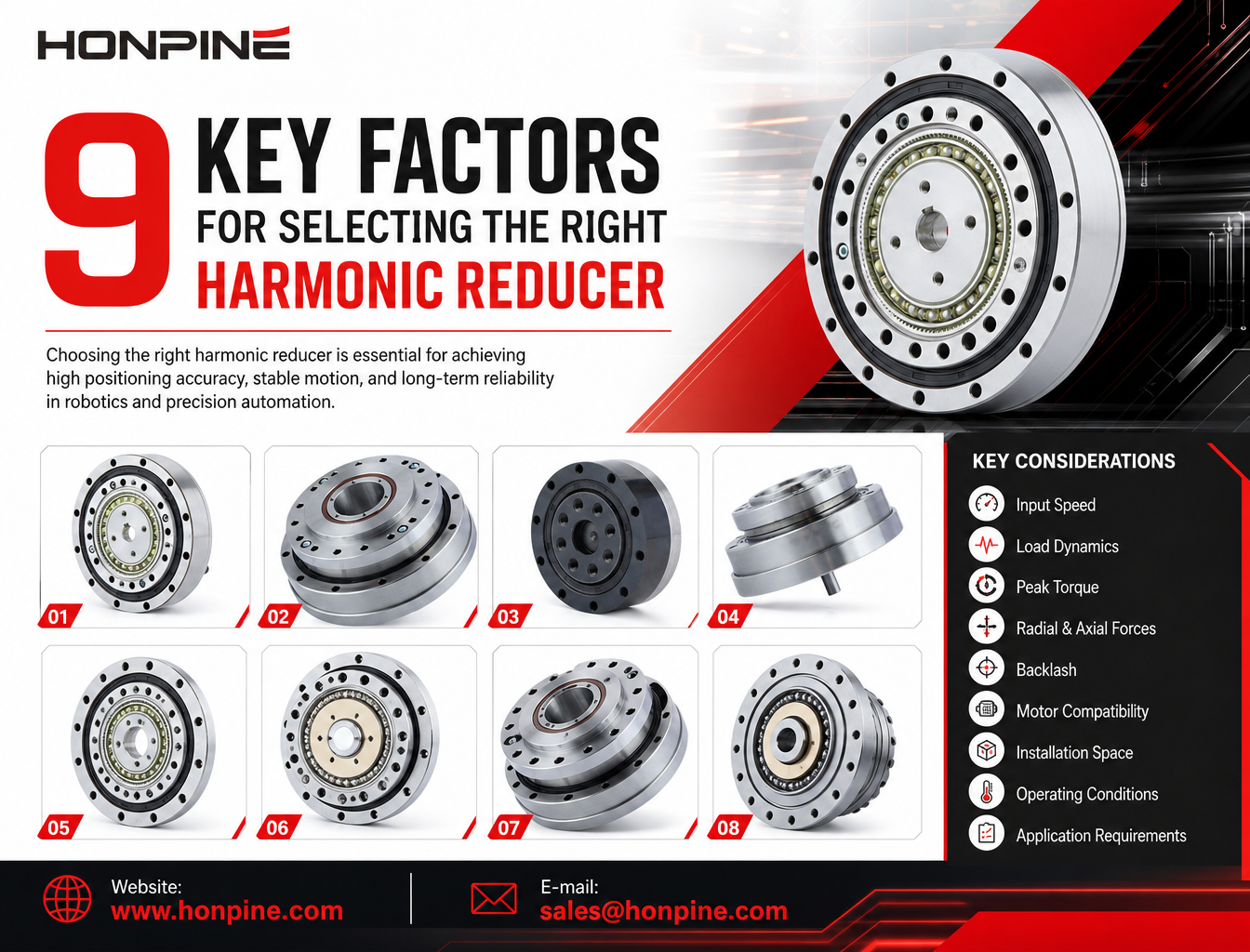
 How to Select a Harmonic Reducer: 9 Key Factors You Need to KnowWhy are more robotics companies choosing integrated robot joint modules instead of traditional distributed drive systems? As humanoid robots, collaborative robots, and rehabilitation exoskeletons continue to evolve, manufacturers are looking for more compact, lightweight, and easier-to-integrate motion solutions. An integrated robot joint module combines essential components such as a frameless torque motor, harmonic reducer, servo drive, encoders, and output bearing into a single assembly. This architecture can reduce mechanical complexity, simplify wiring, improve motion control integration, and shorten robot development cycles. In this article, Theodore Li, Technical Director at HONPINE, explains six key advantages of integrated robot joint modules and compares them with conventional distributed drive configurations.
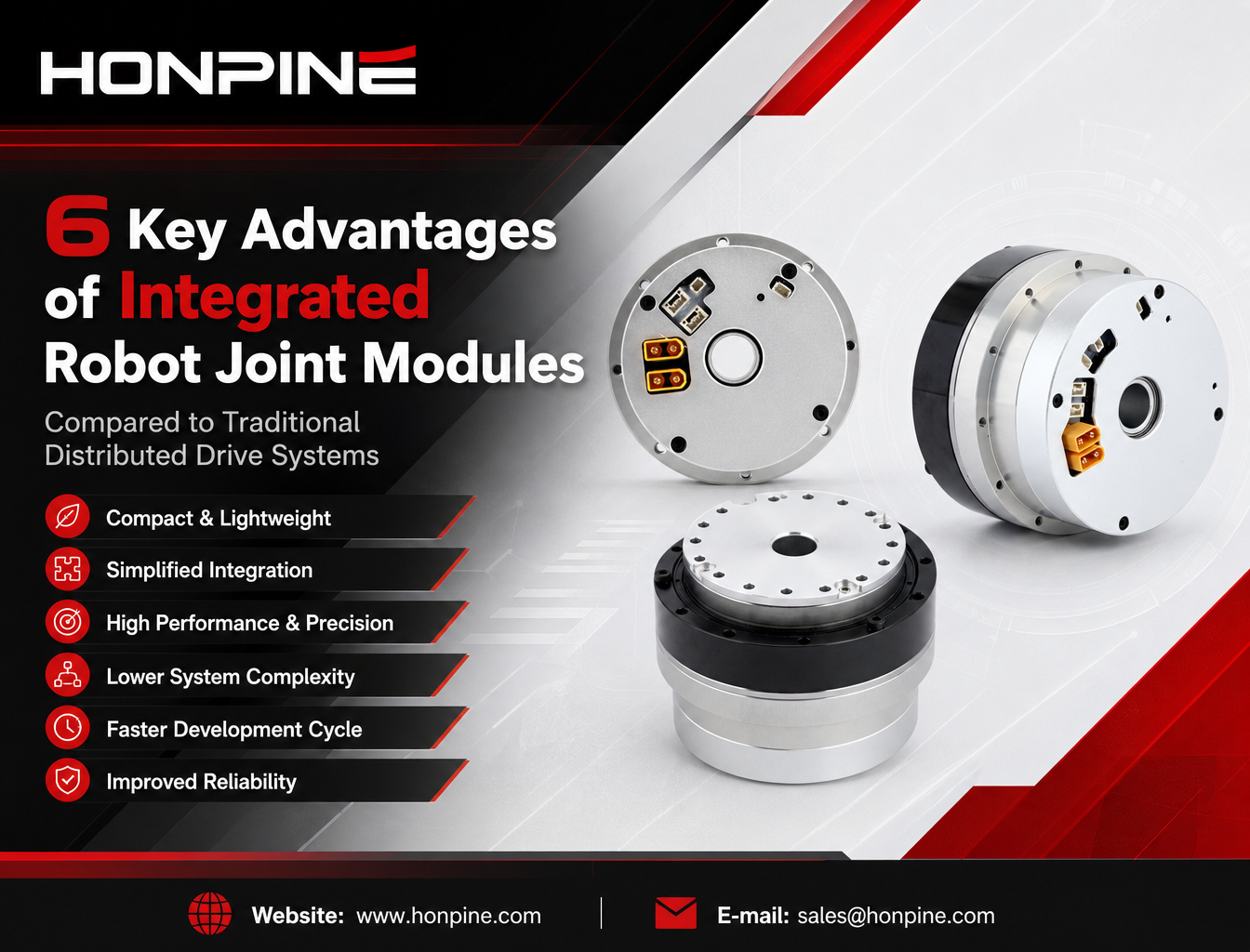
 Why Are More Companies Choosing Integrated Robot Joint Modules?Integrated robot joint modules combine motors, harmonic reducers, servo drives, encoders, and output bearings into compact units. This article compares integrated and distributed drive architectures, exploring their differences in torque density, mechanical reliability, motion control, development efficiency, and practical robotic applications.
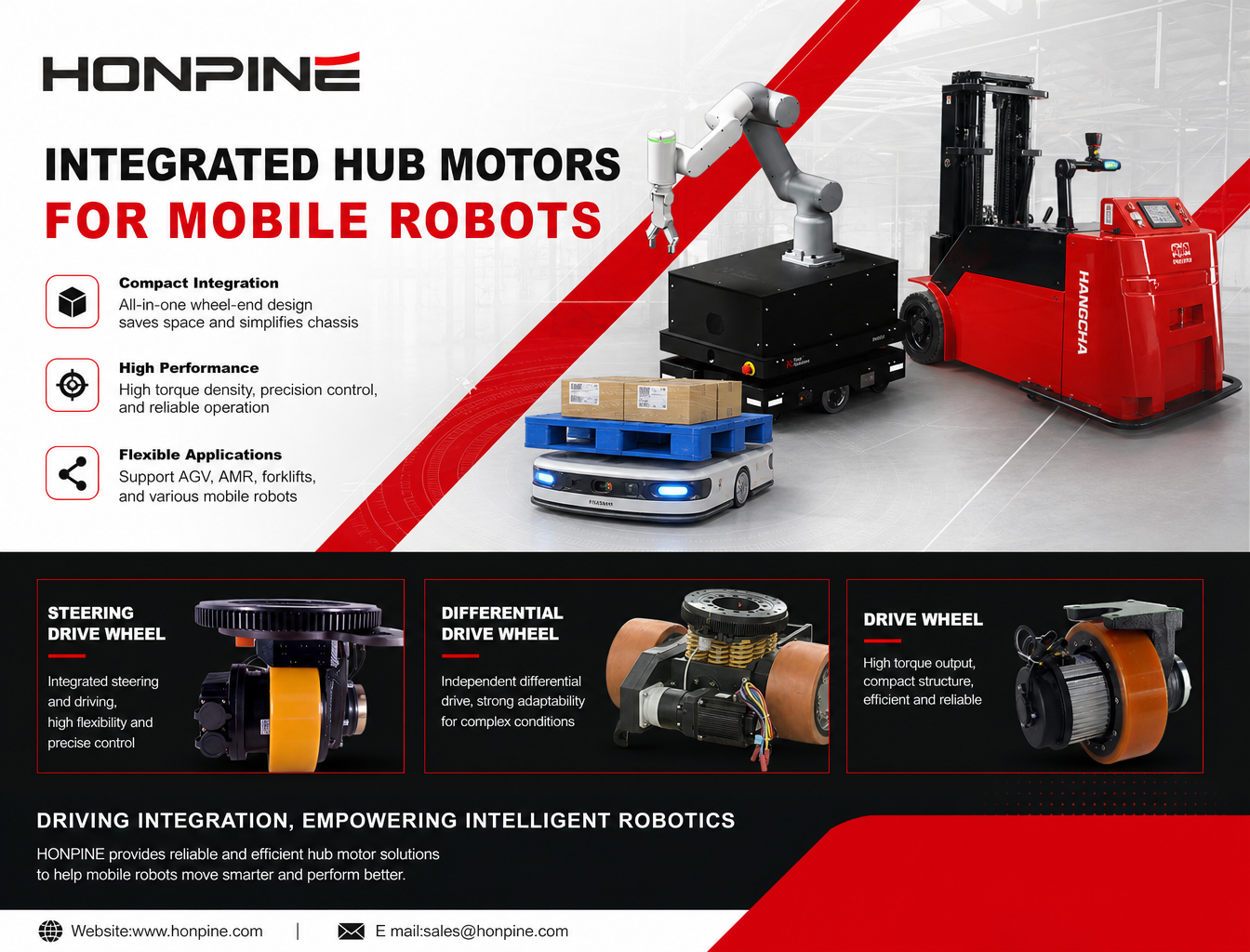
 Why Are More Robots Moving Away from Traditional Drive Systems to Integrated Hub Servo Motors?As mobile robots evolve toward autonomous navigation, flexible operation, and increasingly complex working environments, traditional distributed drive systems are facing new challenges. Separate motors, gearboxes, couplings, and transmission components can increase chassis complexity and limit available installation space. This is why more robot manufacturers are turning to integrated hub servo motors. By combining key drive components within a compact wheel-end unit, hub motors offer new possibilities for improving drive integration, motion control, and chassis design. In this article, we explore the key performance requirements of mobile robots, explain the advantages of integrated hub motors, and examine how HONPINE's Drive Wheels, Steering Drive Wheels, and Differential Drive Wheels support different AGV and AMR applications.
Double Click
We provide harmonic drive reducer,planetary reducer,robot joint motor,robot rotary actuators,RV gear reducer,robot end effector,dexterous robot hand
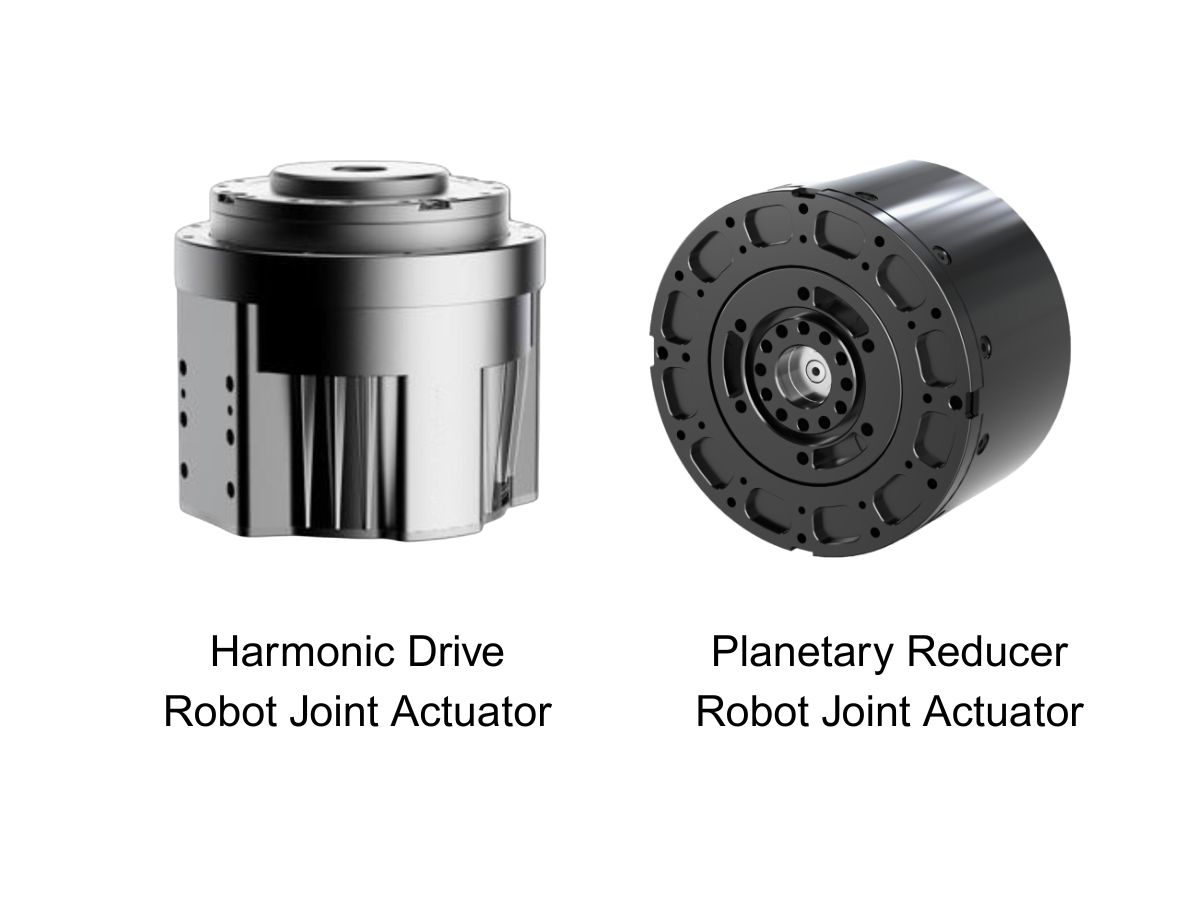
 What is robot joint actuator?How to Choose the Best Robot Rotary Joint Actuator?In core robot joint transmission solutions, planetary and harmonic rotary actuators each have their own strengths. Choosing the right type based on application requirements is essential to achieve the optimal balance between performance and cost.
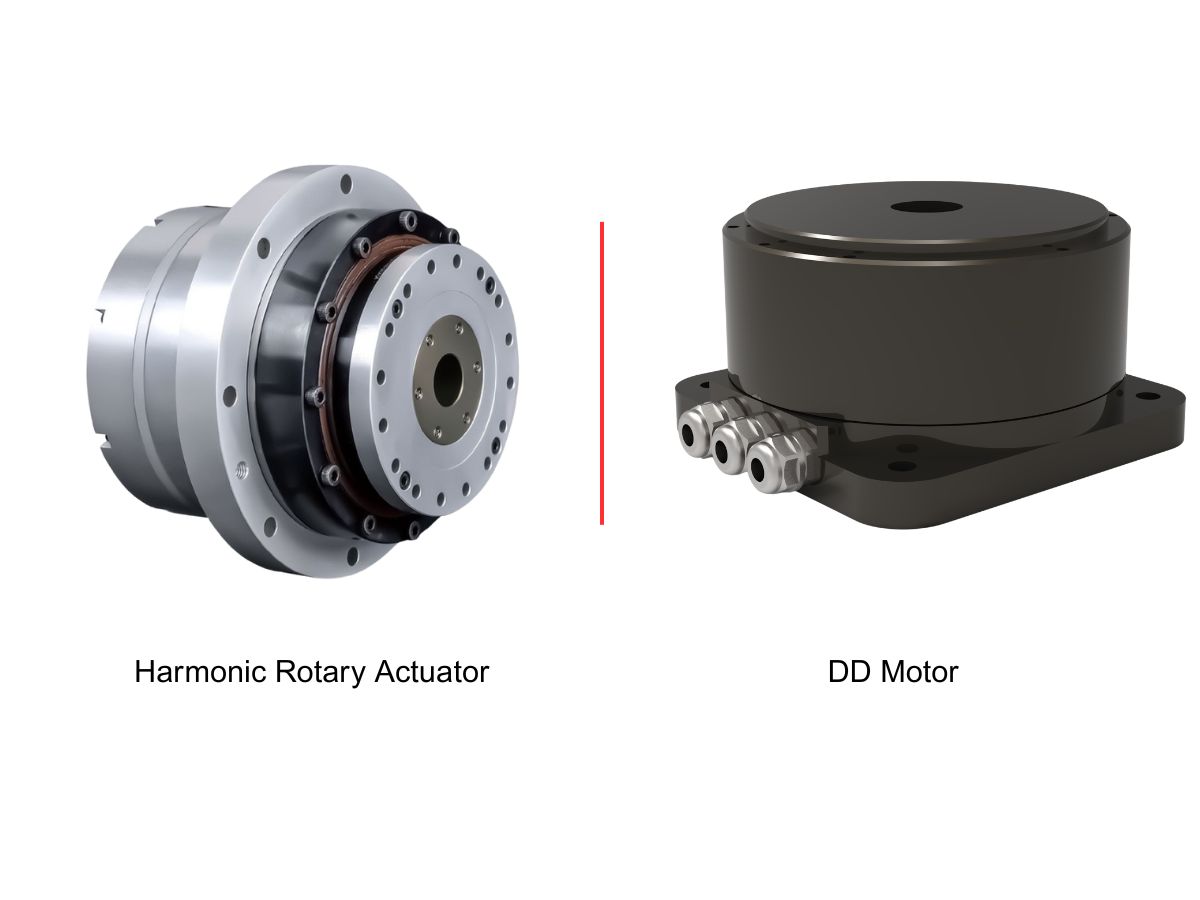
 DD Motors VS Harmonic Rotary ActuatorsThis article provides an in-depth comparison between Direct Drive (DD) motors and harmonic rotary actuators, covering their transmission principles, advantages and disadvantages, and typical application fields.
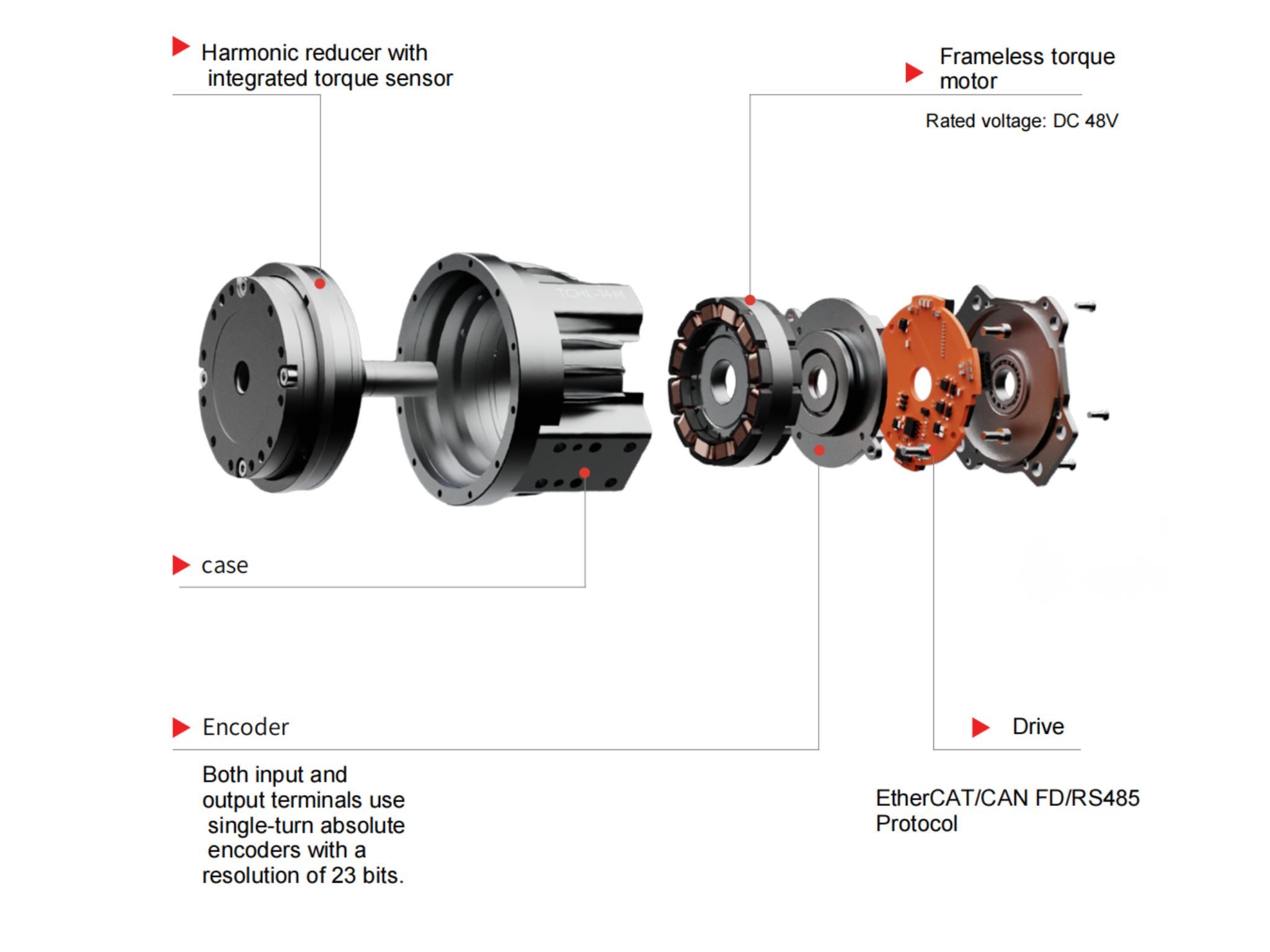
 OMG Ultra Compact Harmonic Drive Joint Module with Built-in Torque SensorHONPINE TCHL series harmonic drive joint module is a game-changing product that achieves disruptive improvements in multiple aspects such as lightweight design, integration level, and connection convenience. This article will analyze its revolutionary enhancements with you.
 Harmonic Gear Motor vs. Harmonic Actuator: What Are the Differences?This article explains the differences between harmonic gear motors and harmonic actuators from the perspectives of product design, system integration, feedback and control functions, installation, and application requirements. Since manufacturers may use these product names differently, it also explores how to evaluate their actual configurations and select the right precision motion solution for robotics and industrial automation.
 HONPINE JM Fourth-Generation Frameless Torque Motor: 30% Higher Torque Density and 10% Lower Operating TemperatureAs robotics technology advances, frameless torque motors are facing increasingly demanding requirements for torque density, motion stability, and thermal management. The HONPINE JM fourth-generation frameless torque motor achieves 30% higher torque density and 10% lower operating temperature through improvements in electromagnetic design, core materials, and winding technology. With torque ripple controlled below 1%, it delivers smoother low-speed operation and improved motion consistency, making it suitable for demanding applications such as surgical robots, humanoid robots, and precision automation equipment. How does HONPINE achieve these performance improvements? Let's take a closer look.
 How to Select a Harmonic Reducer: 9 Key Factors You Need to KnowWhy are more robotics companies choosing integrated robot joint modules instead of traditional distributed drive systems? As humanoid robots, collaborative robots, and rehabilitation exoskeletons continue to evolve, manufacturers are looking for more compact, lightweight, and easier-to-integrate motion solutions. An integrated robot joint module combines essential components such as a frameless torque motor, harmonic reducer, servo drive, encoders, and output bearing into a single assembly. This architecture can reduce mechanical complexity, simplify wiring, improve motion control integration, and shorten robot development cycles. In this article, Theodore Li, Technical Director at HONPINE, explains six key advantages of integrated robot joint modules and compares them with conventional distributed drive configurations.
 Why Are More Companies Choosing Integrated Robot Joint Modules?Integrated robot joint modules combine motors, harmonic reducers, servo drives, encoders, and output bearings into compact units. This article compares integrated and distributed drive architectures, exploring their differences in torque density, mechanical reliability, motion control, development efficiency, and practical robotic applications.
 Why Are More Robots Moving Away from Traditional Drive Systems to Integrated Hub Servo Motors?As mobile robots evolve toward autonomous navigation, flexible operation, and increasingly complex working environments, traditional distributed drive systems are facing new challenges. Separate motors, gearboxes, couplings, and transmission components can increase chassis complexity and limit available installation space. This is why more robot manufacturers are turning to integrated hub servo motors. By combining key drive components within a compact wheel-end unit, hub motors offer new possibilities for improving drive integration, motion control, and chassis design. In this article, we explore the key performance requirements of mobile robots, explain the advantages of integrated hub motors, and examine how HONPINE's Drive Wheels, Steering Drive Wheels, and Differential Drive Wheels support different AGV and AMR applications.
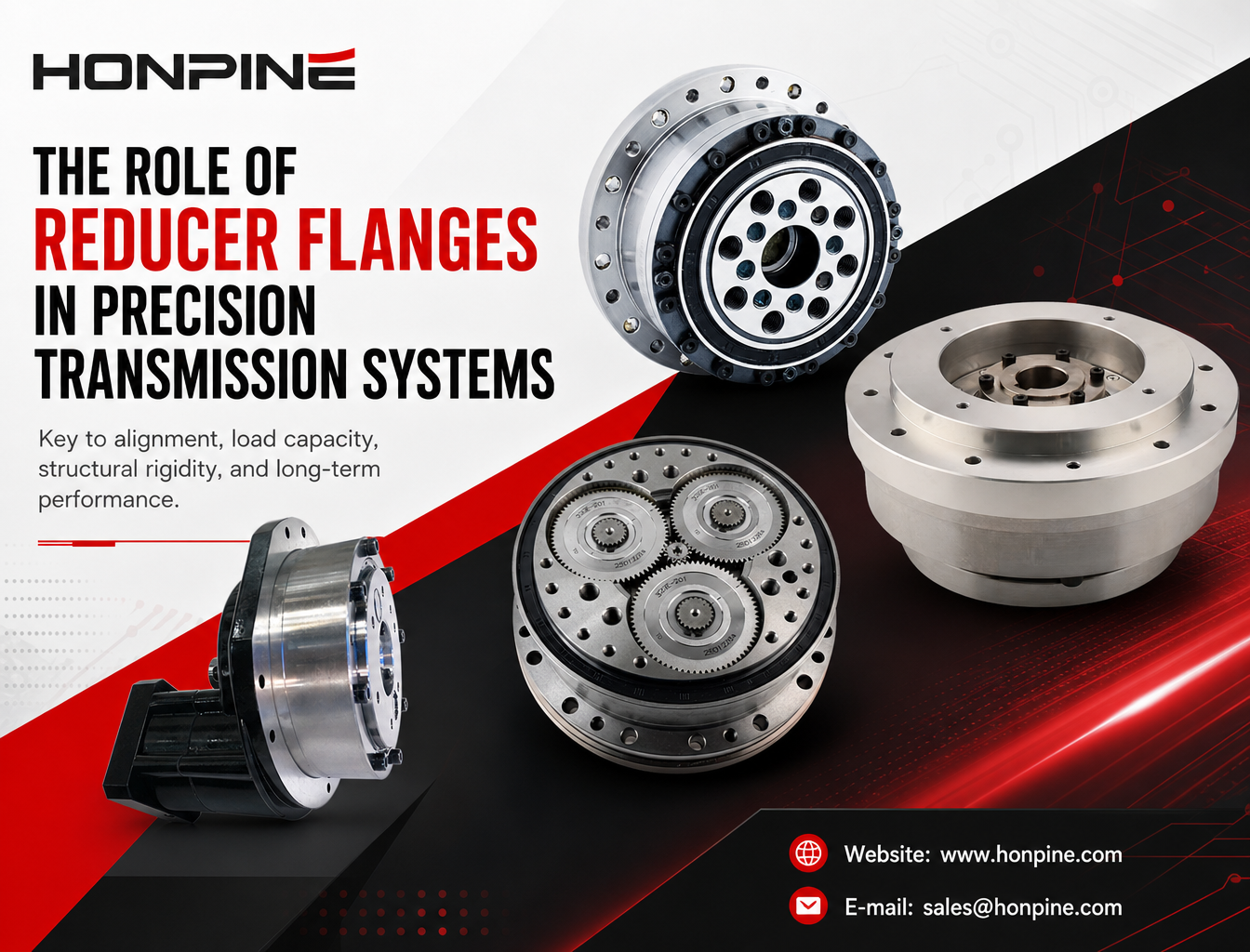
 Why Are Flanges on Harmonic and RV Reducers More Than Just Mechanical Mounting Components?A flange on a harmonic reducer or RV reducer is more than a mounting interface. It plays a critical role in alignment accuracy, load transmission, structural stiffness, and sealing performance. Even minor errors in flange design or installation can affect gear meshing, bearing life, and the overall reliability of a precision motion system. In this article, Theodore Li, Technical Director at HONPINE, explains the key engineering functions of reducer flanges and why they deserve careful consideration when designing and installing precision transmission systems.
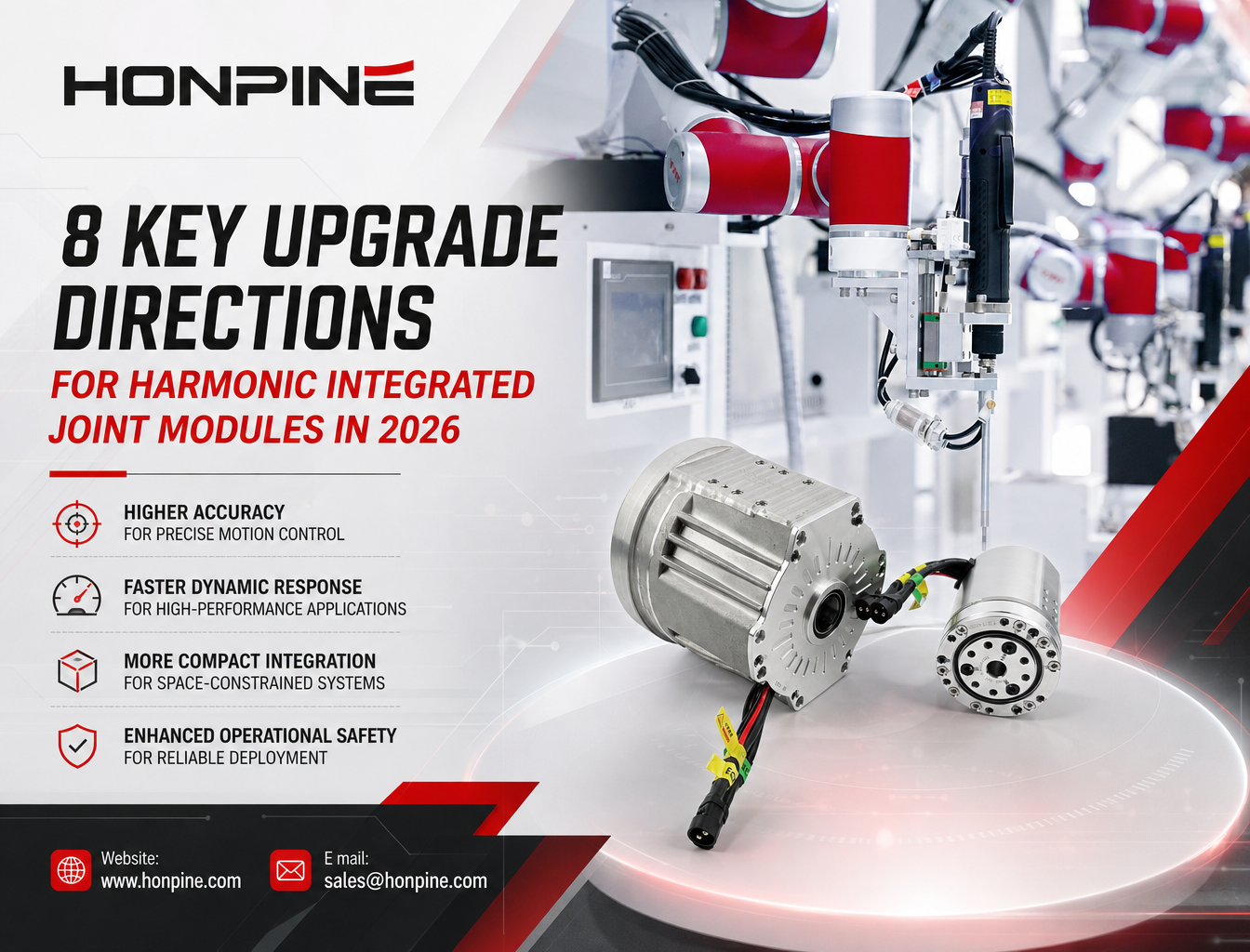
 How Should Manufacturers Upgrade Harmonic Joint Modules for Robotic Arms and Embodied AI in 2026?For engineers planning a robotic system upgrade, the right joint module depends on more than a single specification. EtherCAT synchronization, output-side position feedback, real-time torque measurement, continuous torque capability, and integrated safety functions must work together to meet the demands of the application. By evaluating these factors as a complete electromechanical system, manufacturers can make more informed decisions about joint module selection, integration, and long-term performance.
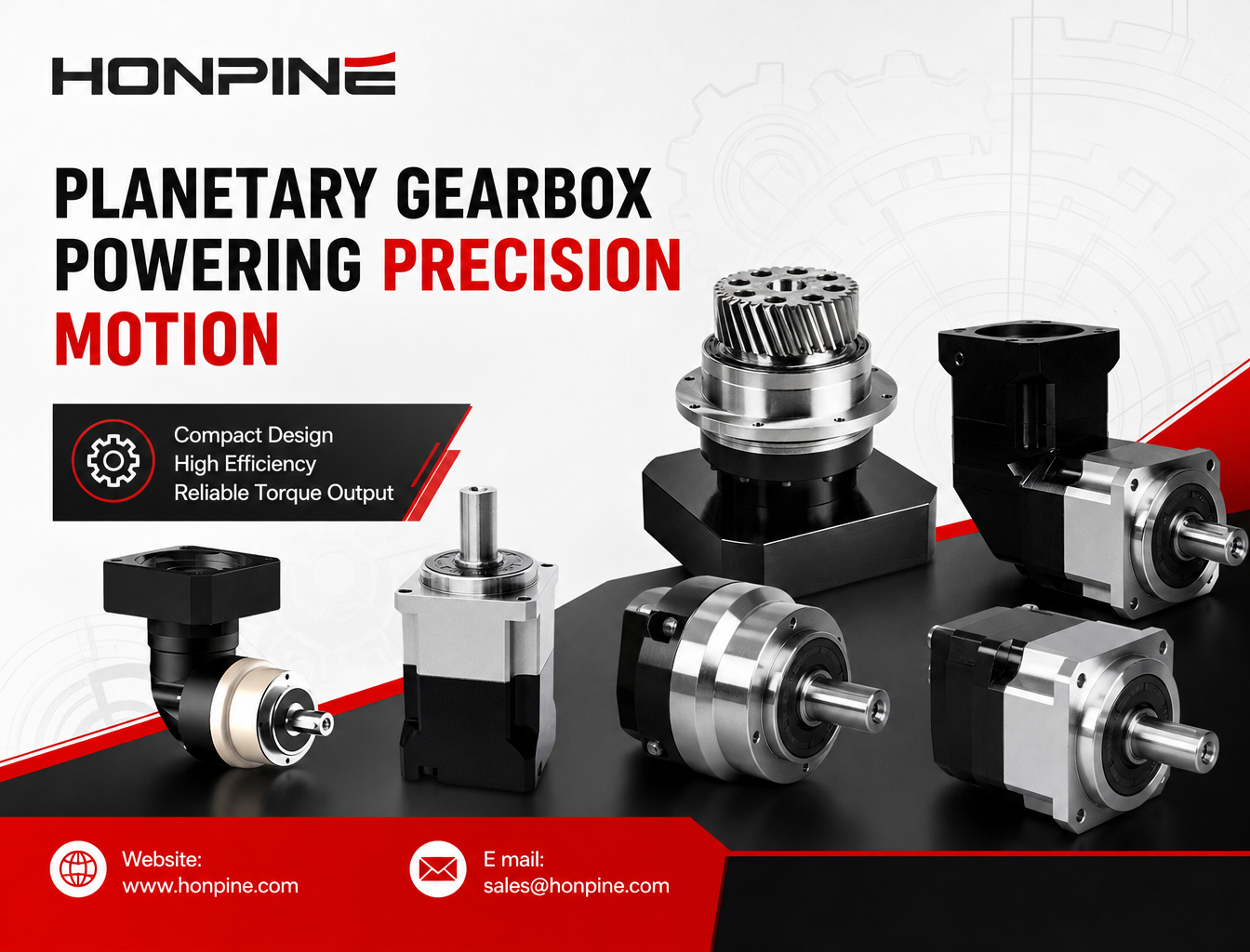
 How Do Planetary Gearboxes Reduce Speed and Increase Torque in High-Precision Automation Equipment?How does a planetary gearbox reduce speed while increasing torque in high-precision automation equipment? By combining a sun gear, multiple planet gears, and an internal ring gear, a planetary gearbox delivers compact, efficient power transmission for applications that require controlled motion and reliable torque output. From industrial robots and CNC machinery to automated assembly systems, selecting the right gearbox involves more than choosing a reduction ratio. This guide explains how planetary gearboxes work, their key advantages, common applications, and practical selection considerations to help engineers identify a suitable transmission solution.
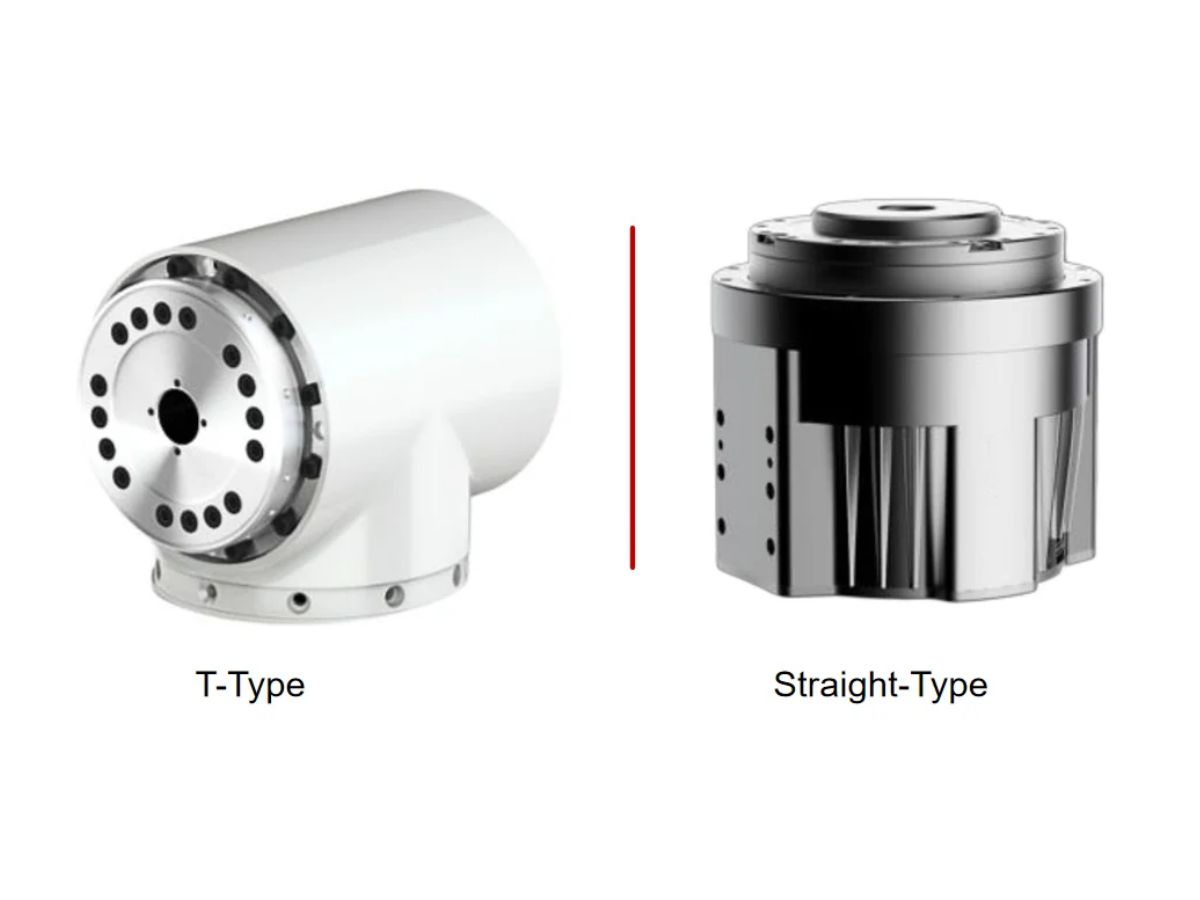
 Should You Choose a T-Type or Straight-Type Harmonic Joint Module for a Collaborative Robot?Choosing the right harmonic joint module is essential when designing a compact, high-performance collaborative robot. Should you use a TCHL straight-type or an HTS T-type harmonic joint module? Although both configurations can support precise robotic motion, their different output flange geometries affect installation space, link connections, cable routing, and mechanical integration. In this guide, Theodore Li, Technical Director at HONPINE, explains the key differences between the two designs, their advantages and limitations, and how to select the most suitable configuration for your collaborative robotic arm.
- harmonic reducer
- harmonic drive
- harmonic gear
- harmonic transmission
- planetary gearboxes
- joint module
- frameless torque motor
- harmonic actuator
- honpine
- honpine harmonic drive
- precision transmission
- harmonic gear motor
- harmonic reducers
- robot joint
- harmonic joint module
- harmonic drive technology
- harmonic
- planetary
- torque motor
- robotic joint
- servo
- actuator
- harmonic rotary actuators
- Integrated Motor
- harmonic actuators