









How Control Bandwidth Affects Robot Joint Motor Performance?
Introduction
When evaluating a robot joint motor, engineers often focus first on rated torque, speed, power, and encoder resolution. However, these parameters alone do not fully determine how quickly and accurately a robot joint can respond to motion commands.
For collaborative robots, humanoid robots, precision robotic arms, and other dynamic robotic systems, control bandwidth is an important indicator of the joint's dynamic response capability.
Modern robot joints are no longer simply a combination of a motor and a gearbox. A complete robot joint module may integrate a servo motor, precision reducer, encoder, servo drive, bearings, housing, and communication interfaces into a single compact actuator. As a result, the achievable control bandwidth is determined by the interaction of the entire joint system rather than by the motor alone.
A high-performance servo motor may have excellent electrical response, but if the transmission has excessive flexibility, the mechanical structure has low stiffness, or the feedback system introduces significant delay, the position control bandwidth cannot be increased indefinitely.
This is why, when evaluating a harmonic joint module or planetary joint module, it is more useful to ask:
What effective control bandwidth can the complete robot joint achieve under actual load and operating conditions?
This article explains how control bandwidth affects robot joint motor performance and examines how the motor, reducer, encoder, drive, mechanical structure, and control system work together to determine the dynamic performance of an integrated robot joint.
What Is Control Bandwidth in a Robot Joint?
Control bandwidth originates from frequency-response analysis in control engineering. For a robot joint, it can be understood as the frequency range within which the closed-loop control system can effectively follow changing motion commands while maintaining stable and predictable performance.
In a typical closed-loop system, control bandwidth is often evaluated using the -3 dB point of the frequency response.
For example, if a robot joint has a position control bandwidth of 30 Hz, this does not mean that the robot can only move at 30 Hz. Instead, it means that as the frequency components of the position command increase, the joint's tracking capability begins to deteriorate significantly as the command approaches this frequency range.
Control bandwidth therefore provides an indication of how quickly a robot joint can respond to changing commands.
Robot trajectories, acceleration changes, rapid reversals, contact events, and force-control actions all contain different frequency components. A lower bandwidth generally means that the system needs more time to follow rapidly changing commands. A higher bandwidth can enable faster response to motion changes and external disturbances.
However, higher control bandwidth is not always better.
If the control bandwidth approaches the resonant frequencies of the mechanical structure, increasing the control gain can amplify vibration, reduce stability margins, and even cause instability.
The objective is therefore not simply to maximize bandwidth, but to achieve an appropriate balance between response speed, mechanical stiffness, noise, stability, and application requirements.
Control Bandwidth Is Not Determined by the Robot Joint Motor Alone
This is one of the most important points when evaluating robot joint performance.
Product specifications often provide motor speed, rated torque, power, and encoder resolution. However, these specifications should not be directly interpreted as the control bandwidth of the complete robot joint.
A typical integrated robot joint can be viewed as a system consisting of:
Motor → Servo Drive → Reducer → Encoder → Bearings and Mechanical Structure → Robot Controller
Every stage can influence the achievable control bandwidth.
The motor determines the fundamental driving capability and electrical response. The servo drive determines the performance of the current, velocity, and position control loops. The reducer changes the relationship between motor speed, output torque, and reflected inertia. The encoder determines the quality and latency of position feedback. Bearings, housing, and mechanical structures determine stiffness, inertia, and mechanical resonance.
Therefore, a high-speed motor does not automatically create a high-bandwidth robot joint.
For example, a servo motor may respond very quickly, but if it is connected to a low-stiffness mechanical structure, increasing the position-loop gain may excite mechanical resonance.
In this case, the actual limitation comes from the complete mechanical system rather than the motor itself.
This is one reason why integrated robot joint modules are becoming increasingly important.
When the motor, reducer, encoder, and drive are designed and matched as a complete joint system, engineers can optimize inertia matching, feedback position, control parameters, mechanical stiffness, and communication latency together instead of integrating independent components at a later stage.
How Does the Cascaded Control Architecture Affect Robot Joint Bandwidth?
Robot joint motors typically use a cascaded control architecture rather than allowing a single position controller to directly control the motor.
A typical architecture includes a current loop, velocity loop, and position loop.
The current loop is closest to the motor and therefore needs the fastest response. It controls motor current and electromagnetic torque and normally operates at the highest control frequency.
The velocity loop is located between the current loop and position loop and controls motor speed. Its bandwidth is normally lower than that of the current loop.
The position loop is the outermost loop and directly determines the position tracking performance of the robot joint. It is strongly affected by mechanical inertia, structural stiffness, reducer flexibility, and mechanical resonance.
This means:
A high-speed current loop does not automatically mean that the robot joint has a high position control bandwidth.
A servo drive may have extremely fast current control, but if the robot joint has significant mechanical flexibility, the position-loop bandwidth still cannot be increased indefinitely.
Therefore, when evaluating a robot joint motor or integrated actuator, engineers should look beyond the drive's control frequency or the motor's electrical response and examine the actual position-loop, velocity-loop, and torque-loop performance at the joint output.
Why Does the Reducer Affect Robot Joint Control Bandwidth?
For robot joints using a mechanical reducer, the reducer is one of the key components affecting dynamic performance.
The primary function of a reducer is to decrease rotational speed and increase output torque, allowing a relatively compact motor to drive a larger robotic load.
From a control perspective, however, the reducer also changes the mechanical characteristics of the entire system.
The reduction ratio affects the relationship between motor-side and load-side inertia. Transmission friction, torsional stiffness, mechanical compliance, and backlash can also influence the frequency response of the joint.
If the mechanical system has significant elastic modes, increasing the controller gain may excite resonance at specific frequencies.
Therefore, a higher reduction ratio is not automatically better.
Robot joint design requires a balance between output torque, output speed, inertia matching, stiffness, friction, and control bandwidth.
This is also why different robot axes may use different reduction ratios or even different types of joint modules.
How Does a Harmonic Joint Module Affect Robot Joint Dynamic Response?
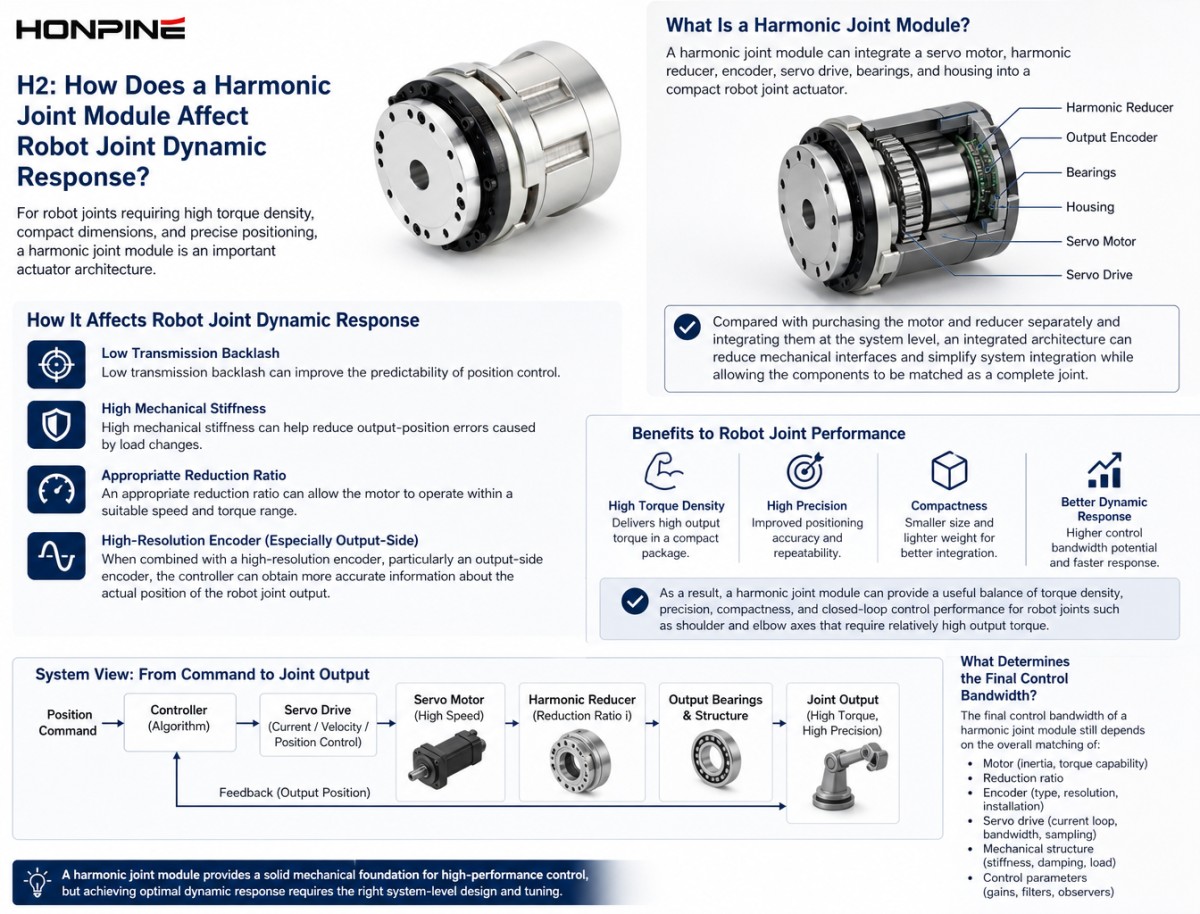
For robot joints requiring high torque density, compact dimensions, and precise positioning, a harmonic joint module is an important actuator architecture.
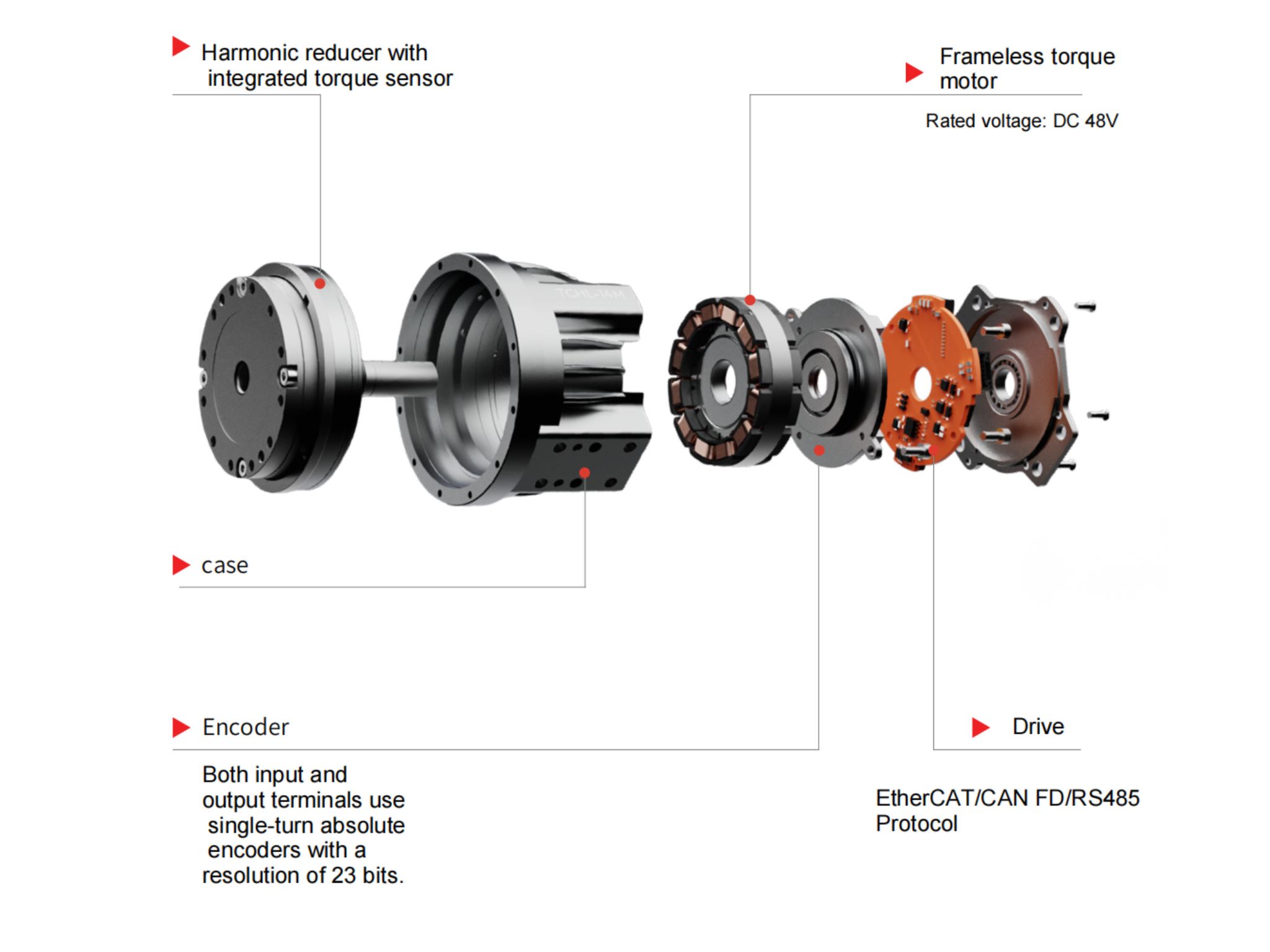
A harmonic joint module can integrate a servo motor, harmonic reducer, encoder, servo drive, bearings, and housing into a compact robot joint actuator. Compared with purchasing the motor and reducer separately and integrating them at the system level, an integrated architecture can reduce mechanical interfaces and simplify system integration while allowing the components to be matched as a complete joint.
From a control bandwidth perspective, the important question is not simply whether a harmonic reducer has a certain bandwidth. Instead, the key question is what kind of mechanical foundation the harmonic transmission provides for closed-loop control.
Low transmission backlash can improve the predictability of position control. High mechanical stiffness can help reduce output-position errors caused by load changes. An appropriate reduction ratio can also allow the motor to operate within a suitable speed and torque range.
When combined with a high-resolution encoder, particularly an output-side encoder, the controller can obtain more accurate information about the actual position of the robot joint output.
As a result, a harmonic joint module can provide a useful balance of torque density, precision, compactness, and closed-loop control performance for robot joints such as shoulder and elbow axes that require relatively high output torque.
However, the final control bandwidth of a harmonic joint module still depends on the overall matching of the motor, reduction ratio, encoder, servo drive, mechanical structure, and control parameters.
How Does a Planetary Joint Module Affect Control Bandwidth?
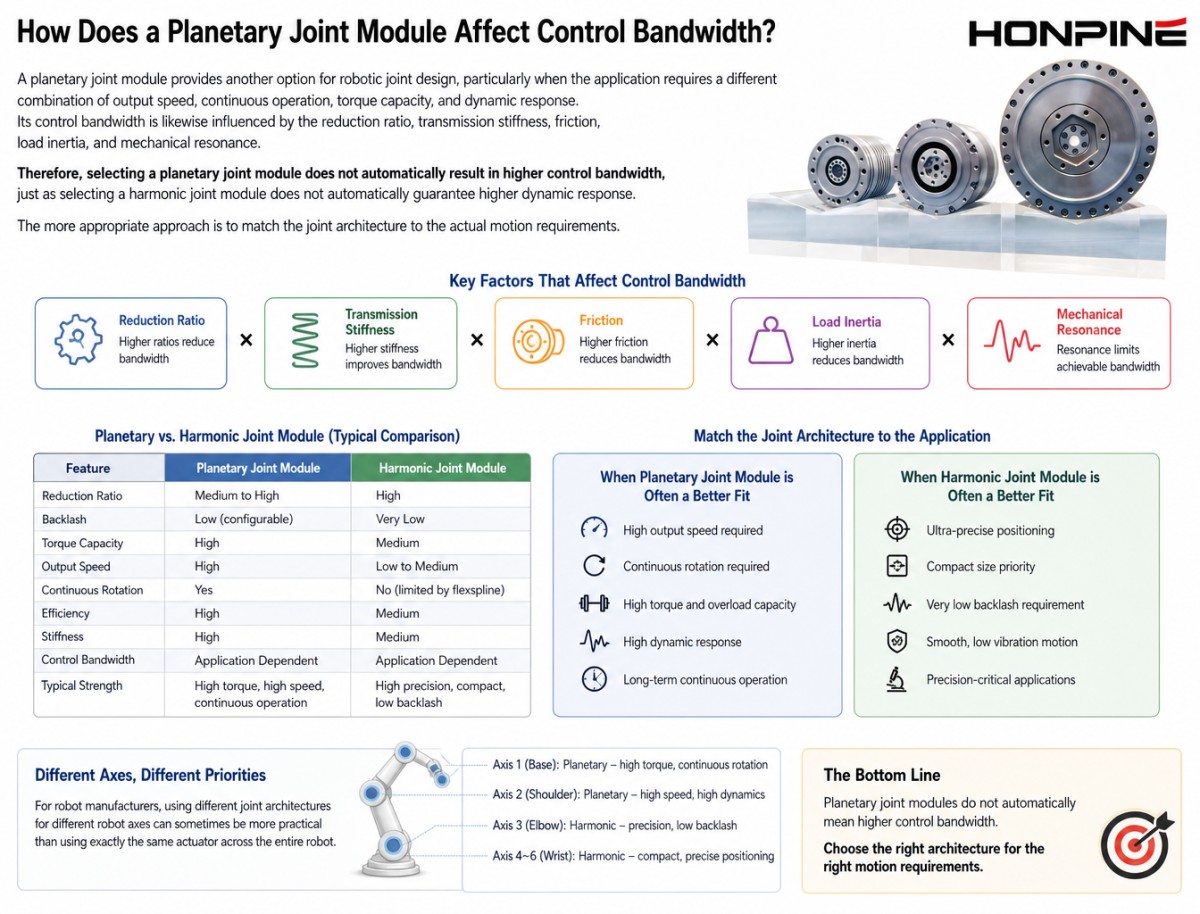
A planetary joint module provides another option for robotic joint design, particularly when the application requires a different combination of output speed, continuous operation, torque capacity, and dynamic response.
Its control bandwidth is likewise influenced by the reduction ratio, transmission stiffness, friction, load inertia, and mechanical resonance.
Therefore, selecting a planetary joint module does not automatically result in higher control bandwidth, just as selecting a harmonic joint module does not automatically guarantee higher dynamic response.
The more appropriate approach is to match the joint architecture to the actual motion requirements.
For example, some robotic joints prioritize high torque, compact dimensions, low backlash, and precise positioning. Other joints may place greater emphasis on output speed, continuous rotation, and dynamic response. In such applications, a planetary joint module can provide an alternative transmission architecture.
For robot manufacturers, using different joint architectures for different robot axes can sometimes be more practical than using exactly the same actuator across the entire robot.
What Is the Relationship Between Reduction Ratio and Control Bandwidth?
Reduction ratio is one of the most frequently misunderstood parameters in robot joint design.
Increasing the reduction ratio can significantly increase output torque, but it does not mean that the control bandwidth of the robot joint will increase proportionally.
From a system dynamics perspective, the reducer changes the inertia relationship between the motor and load. An appropriate reduction ratio can improve motor-load matching and allow the motor to operate within a more suitable speed and torque range. However, an excessively high reduction ratio can also result in lower output speed and different friction, compliance, and dynamic characteristics.
Robot joint design therefore requires a balance between:
Torque Density, Output Speed, Mechanical Rigidity, Inertia Matching, and Control Bandwidth.
This is particularly important for humanoid robots and collaborative robots because they need not only high torque but also frequent changes in direction and stable dynamic performance under different postures and loads.
Why Does Encoder Configuration Affect Robot Joint Control Bandwidth?
The encoder is a critical feedback component in a closed-loop robot joint.
The controller does not directly know the actual position of the robot joint. It relies on encoder feedback to determine the system state. Encoder resolution, sampling rate, and signal latency can therefore affect the achievable control performance.
In conventional motor control, a motor-side encoder is mainly used for commutation, field-oriented control, speed feedback, and position feedback.
For a robot joint, however, motor position is not necessarily identical to output position.
There may be a reducer, bearings, and mechanical structures between the motor and the robot joint output.
For high-performance robot joints, a dual-encoder architecture can therefore provide additional feedback information.
The motor-side encoder can be used for high-speed motor control, while an output-side encoder directly measures the joint output position. This allows the controller to understand both motor-side and output-side motion.
For robotic joints with transmission compliance or changing loads, this feedback architecture can be particularly valuable.
When combined with an output-side torque sensor, the system can further establish a more direct torque-control loop for impedance control, compliant motion, and human-robot interaction.
From a control bandwidth perspective, the encoder should therefore not be viewed simply as a resolution specification. It is part of the entire feedback-loop dynamic performance.
Can Communication Cycle Time Limit Robot Joint Control Bandwidth?
Yes.
Even when a robot joint has a high-resolution encoder and a high-performance servo drive, closed-loop performance can still be limited if feedback data cannot reach the controller quickly enough.
A typical robot control system continuously performs:
Sensor Acquisition → Data Transmission → Control Calculation → Command Transmission → Actuator Response
Every stage introduces some degree of delay.
As the control frequency increases, even small communication and computational delays can introduce significant phase lag and reduce the stability margin.
Therefore, communication technologies such as EtherCAT and CAN should not simply be evaluated by maximum communication speed. Control cycle time, data volume, synchronization, latency, and the overall robot control architecture also need to be considered.
For integrated robot joint modules, integrating the servo drive into the joint can further simplify the system architecture and reduce external wiring and integration complexity between the motor and control electronics.
How Does Load Variation Affect Effective Robot Joint Control Bandwidth?
Robot joint control bandwidth cannot be evaluated independently of the actual load.
A joint may show excellent frequency response under no-load conditions, but once the robot carries a payload, end-effector, or tool, its effective inertia and mechanical loading change.
For example, a robotic arm with its links fully extended can impose very different loads on a joint compared with the same arm in a folded position.
As a result, the same joint module may exhibit different dynamic responses under different operating conditions.
This is why robot joint bandwidth testing should not rely exclusively on no-load measurements.
A more meaningful evaluation considers no-load, rated-load, and representative operating inertia and examines system stability and resonance under each condition.
For robot manufacturers, the most useful specification is therefore not simply the highest bandwidth measured in laboratory conditions, but:
What effective control bandwidth can the robot joint maintain under its actual operating load?
How Is Robot Joint Control Bandwidth Tested?
A sine-sweep test is a common engineering method for measuring the frequency response of a robot joint.
The joint is commanded with sinusoidal position, velocity, or torque signals at progressively increasing frequencies. The actual output amplitude and phase response are then recorded.
As the input frequency increases, the output typically begins to show amplitude attenuation and increasing phase lag. The frequency corresponding to the specified amplitude attenuation can then be used as a reference for control bandwidth.
A Bode plot can provide additional information about system gain, phase response, and resonance peaks.
However, simply reporting a value such as “XX Hz” is not enough to properly evaluate a robot joint module.
The test conditions should also specify the load, output inertia, motion amplitude, control mode, sampling frequency, mechanical installation, and other relevant parameters.
Otherwise, bandwidth values from different robot joint motors or actuator modules may not be directly comparable.
Increasing Robot Joint Control Bandwidth Is Not Simply About Increasing Motor Power
When a robot joint does not respond quickly enough, replacing the motor with a higher-power motor does not necessarily solve the problem.
Control bandwidth is limited by the complete system.
If the mechanical structure has a low-frequency resonance, increasing motor power may actually make vibration more apparent. If the encoder feedback has significant latency, increasing control gain will not eliminate the delay. If the communication cycle is too slow, a high-performance motor still cannot deliver its full dynamic potential.
Increasing robot joint control bandwidth therefore requires system-level optimization.
The motor needs sufficient electrical response capability. The reducer must be properly matched to the motor and load. The mechanical structure must provide sufficient stiffness. The encoder must provide high-quality feedback. The servo drive must support an appropriate control cycle. The control algorithm must balance response speed with stability.
This is another important advantage of an integrated robot joint module.
Instead of independently selecting a motor, reducer, encoder, and servo drive, an integrated actuator can be designed around the complete joint system. This allows key components to be matched during product development and can reduce parameter-matching problems during system integration.
How Should Harmonic and Planetary Joint Modules Be Matched to Control Bandwidth?
For robot manufacturers, the key question is not simply which actuator has the highest control bandwidth. The more useful approach is to select the appropriate joint architecture according to the motion requirements of each robot axis.
For shoulder, hip, elbow, and other axes requiring relatively high output torque while keeping joint size and weight under control, a harmonic joint module can be a strong option. Its high reduction ratio, low backlash, and compact structure can help achieve high output torque and positioning performance within a limited mechanical envelope.
For robot axes that place greater emphasis on output speed, continuous operation, or a different combination of load capacity and dynamic response, a planetary joint module can provide an alternative solution.
The differences between robot joints become even more significant in humanoid robots.
Hip and knee joints may need to handle high loads and dynamic impacts. Shoulder joints need to balance load capacity with range of motion. Wrist and hand joints generally place greater emphasis on size, weight, speed, and dexterity.
Therefore, control bandwidth should not be used as the only criterion for selecting a robot joint architecture. It should be evaluated as part of the complete actuator system.
How Should You Evaluate a Robot Joint Module from a Control Bandwidth Perspective?
When evaluating a robot joint module, it is not enough to ask only for motor power or reduction ratio.
The more meaningful evaluation focuses on the dynamic behavior of the complete actuator under realistic operating conditions.
Engineers should consider motor response, reducer characteristics, output stiffness, encoder configuration, servo-drive cycle time, communication latency, load inertia, and mechanical resonance.
If a joint module uses a high-resolution encoder but has insufficient mechanical stiffness, the encoder resolution cannot be fully converted into actual positioning performance.
If a high reduction ratio is used but the resulting output speed is insufficient for the robot's motion requirements, the actuator is still not an optimal solution.
Likewise, if the motor and servo drive respond quickly but the joint has significant mechanical resonance, increasing controller gain alone cannot solve the problem.
A high-performance robot joint module is therefore the result of system-level matching between the transmission, servo motor, sensors, drive electronics, and mechanical structure.
Why Are Integrated Robot Joint Modules Becoming More Important?
As collaborative robots, humanoid robots, and next-generation robotic systems move toward lighter, more compact, and more dynamic designs, conventional combinations of separate motors, reducers, and servo drives face increasing system-integration challenges.
An integrated robot joint module can combine multiple critical components into a single actuator, allowing robot manufacturers to reduce the engineering effort required to match the motor, reducer, encoder, and drive.
More importantly, integration allows the complete joint to be optimized around the control system from the beginning of the product-development process.
For robots requiring high torque density and precision, a harmonic joint module can provide a compact transmission solution. For axes with different speed, load, and dynamic requirements, a planetary joint module can provide another option.
The future of robot joint performance will therefore not be determined simply by comparing an individual motor or reducer specification. Increasingly, it will depend on the dynamic performance, sensing capability, control capability, and integration level of the complete actuator.
Conclusion: Control Bandwidth Should Be Evaluated as a System-Level Robot Joint Performance Metric
Control bandwidth is not an isolated motor specification. It is an important reflection of the overall dynamic performance of a robot joint.
The motor provides the fundamental driving capability. The reducer determines the relationship between torque and speed. The encoder provides feedback. The servo drive executes the control loops. The mechanical structure determines stiffness and resonance characteristics, while the controller and communication system determine how effectively these components can work together.
Therefore, when evaluating robot joint motor performance, it is more meaningful to look beyond rated torque, motor speed, or control frequency and evaluate the closed-loop dynamic response of the complete robot joint module under actual operating conditions.
For high-torque and compact robotic joints, a harmonic joint module can provide high reduction ratio, low backlash, high torque density, and precise positioning. For robot axes with different speed, load, and dynamic requirements, a planetary joint module can provide an alternative transmission architecture.
By integrating the motor, reducer, encoder, servo drive, and mechanical structure, robot joint manufacturers can optimize dynamic response and control performance at the system level.
For robot manufacturers, the most important question is therefore not simply:
“Which robot joint motor has the highest control bandwidth?”
A more useful engineering question is:
“Which complete robot joint solution can provide fast, stable, and repeatable dynamic response under the actual load, speed, inertia, and control requirements of the robot?”
This system-level perspective provides a more meaningful way to evaluate harmonic joint modules, planetary joint modules, and integrated robot joint motors for collaborative robots, humanoid robots, industrial robots, and other high-performance robotic applications.
Read More
Learn more about the story of HONPINE and industry trends related to precision transmission.
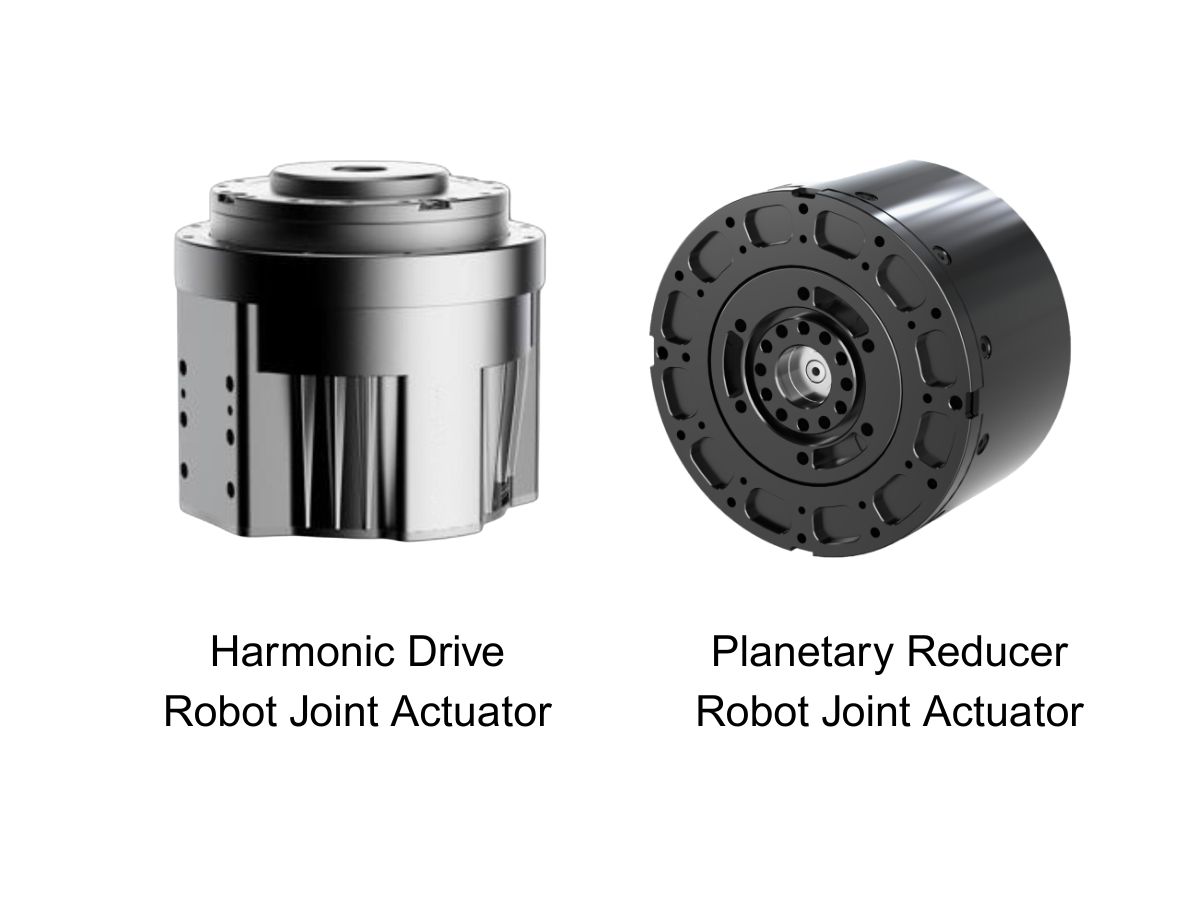
 What is robot joint actuator?How to Choose the Best Robot Rotary Joint Actuator?In core robot joint transmission solutions, planetary and harmonic rotary actuators each have their own strengths. Choosing the right type based on application requirements is essential to achieve the optimal balance between performance and cost.
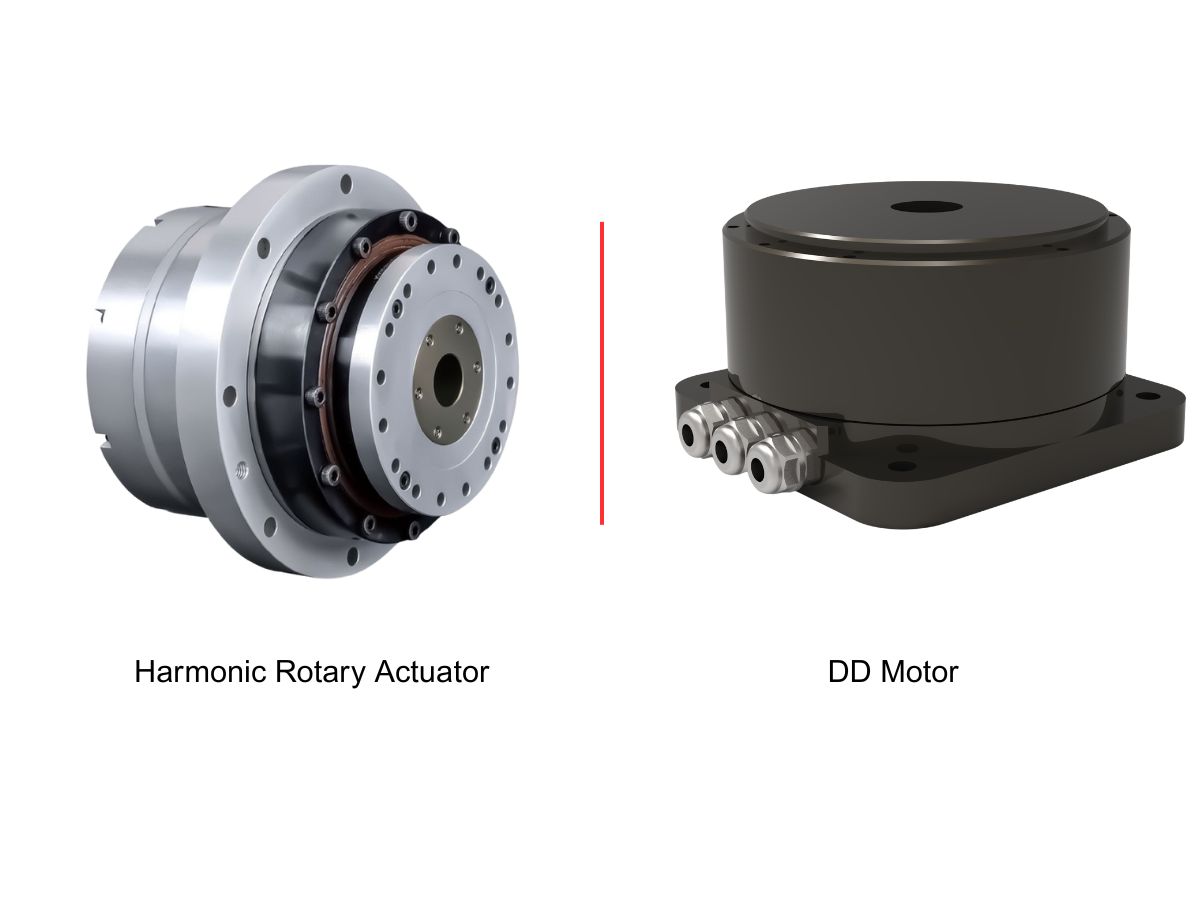
 DD Motors VS Harmonic Rotary ActuatorsThis article provides an in-depth comparison between Direct Drive (DD) motors and harmonic rotary actuators, covering their transmission principles, advantages and disadvantages, and typical application fields.
 OMG Ultra Compact Harmonic Drive Joint Module with Built-in Torque SensorHONPINE TCHL series harmonic drive joint module is a game-changing product that achieves disruptive improvements in multiple aspects such as lightweight design, integration level, and connection convenience. This article will analyze its revolutionary enhancements with you.
 The Role of Harmonic Drive Gears in Achieving 5–10 μm Accuracy in Dental Milling MachinesA dental milling machine is a CNC machining system used to directly process digital dental models into restorations such as crowns, bridges, veneers, inlays, and implant abutments. Dental milling machines require far higher operational accuracy and motion stability than ordinary equipment. This article explains how harmonic drive gear help dental milling machines achieve stable, continuous, and controllable operation.
 Why Are Harmonic Rotary Actuators Perfect for Medical Equipment?Harmonic rotary actuators (typically integrated systems consisting of a harmonic drive reducer, frameless torque motor, encoder, and optional brake) are regarded as key components in medical equipment. The core reason is that they simultaneously meet the most stringent medical requirements for precision, compact size, safety, and controllability. The following explanation is structured from three perspectives: technical characteristics, application scenarios, and medical value.
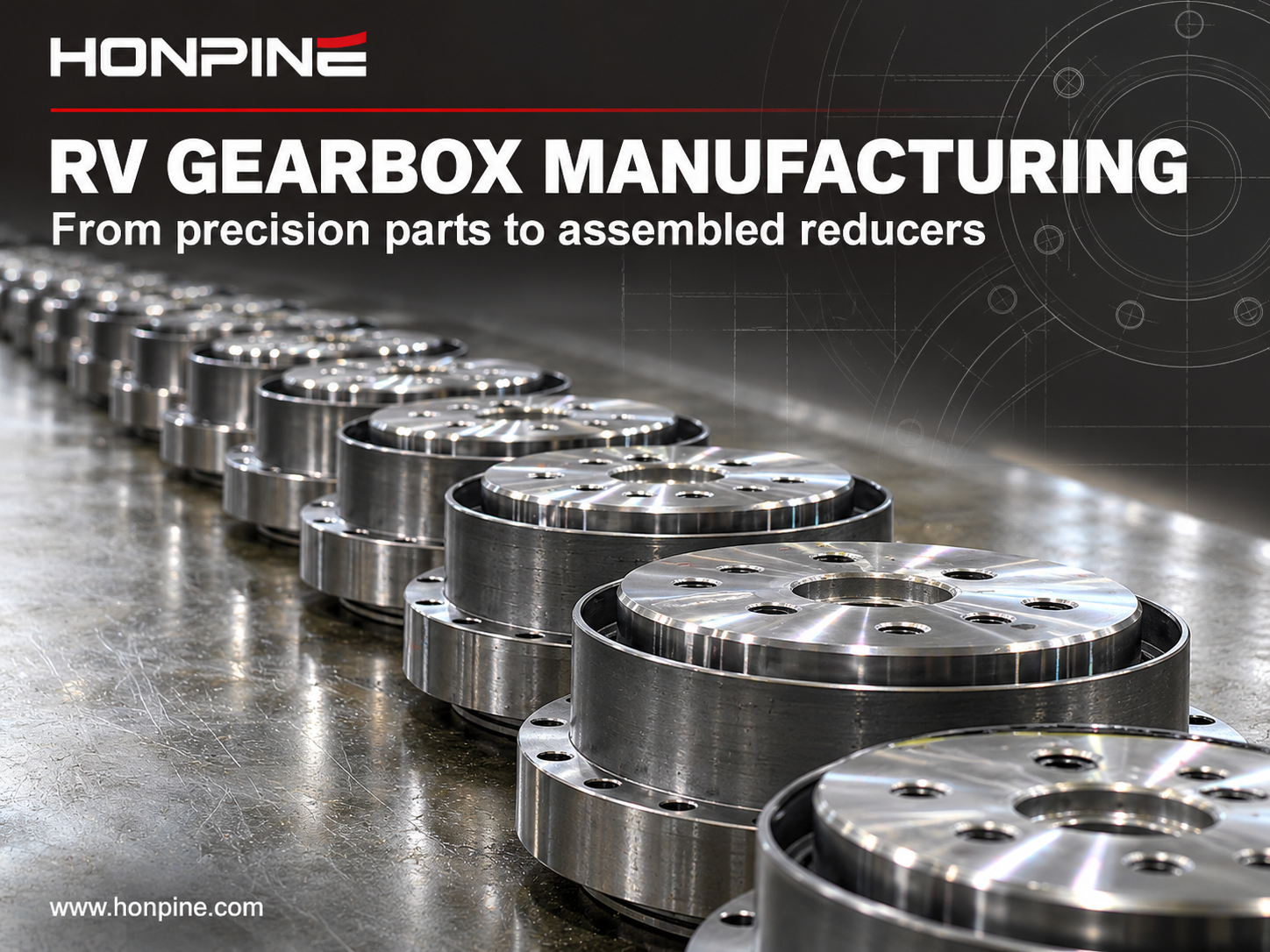
 High-Precision RV Reducers Perfectly Matched for Walking RobotsThe walking axis of a robot is a core component for power transmission and support. RV reducers provide extremely high rigidity, precision, and torque while maintaining a compact size and exceptional reliability, making them an ideal match for the demanding requirements of walking robot joints in terms of load capacity, impact resistance, and precision.
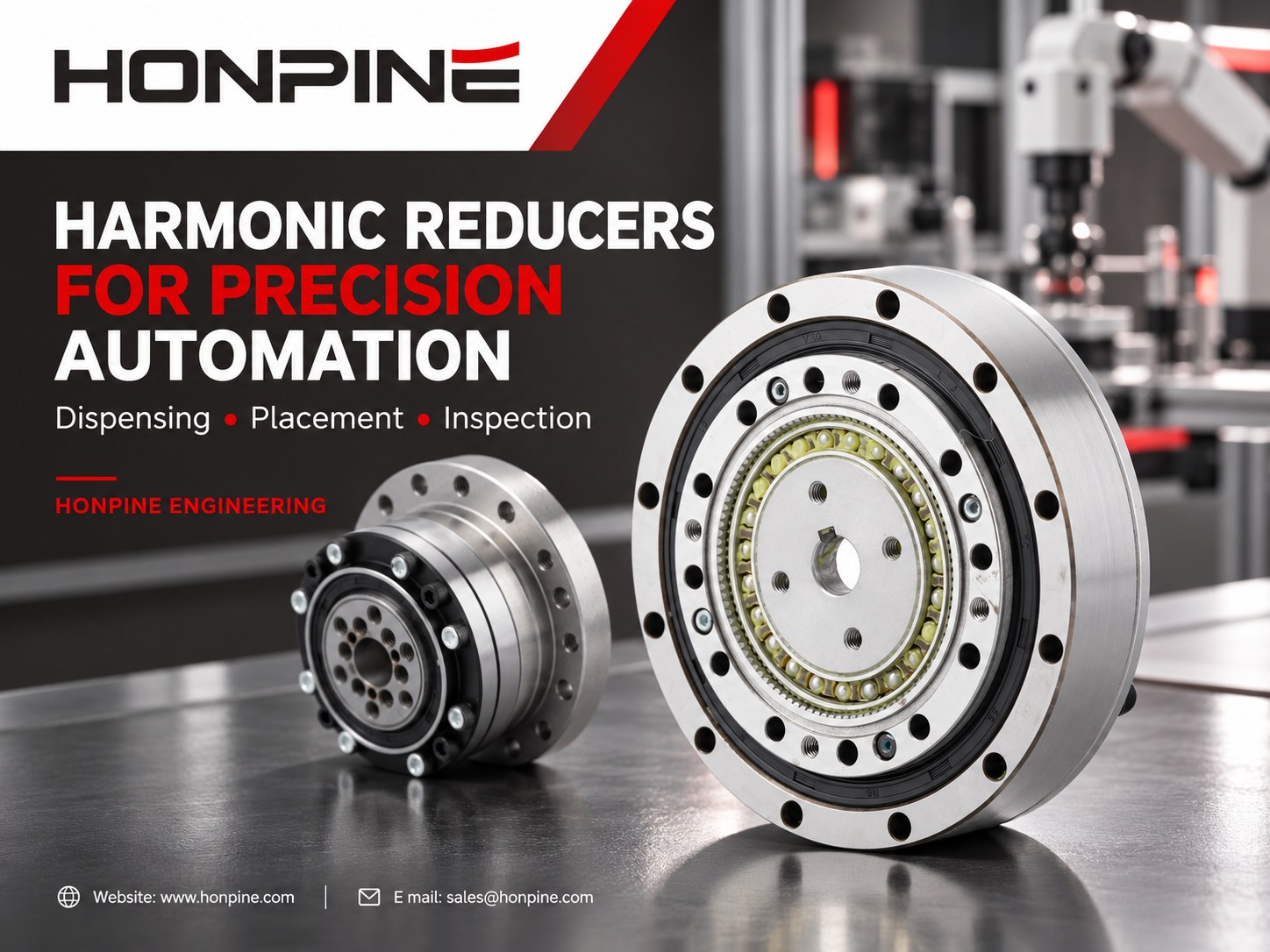
 Why Are Harmonic Reducers Suitable for High-Precision Automation Equipment?Precision automation equipment depends on consistent rotary motion, reliable positioning and compact transmission design. From dispensing head orientation and component angular alignment to automated inspection indexing, harmonic reducers offer a practical solution for applications requiring low backlash and high reduction ratios in limited installation space. This article explains how harmonic reducers support repeatable motion, compares key design configurations, and outlines how to select a suitable reduction ratio and reducer structure based on load, speed, accuracy and machine cycle-time requirements.
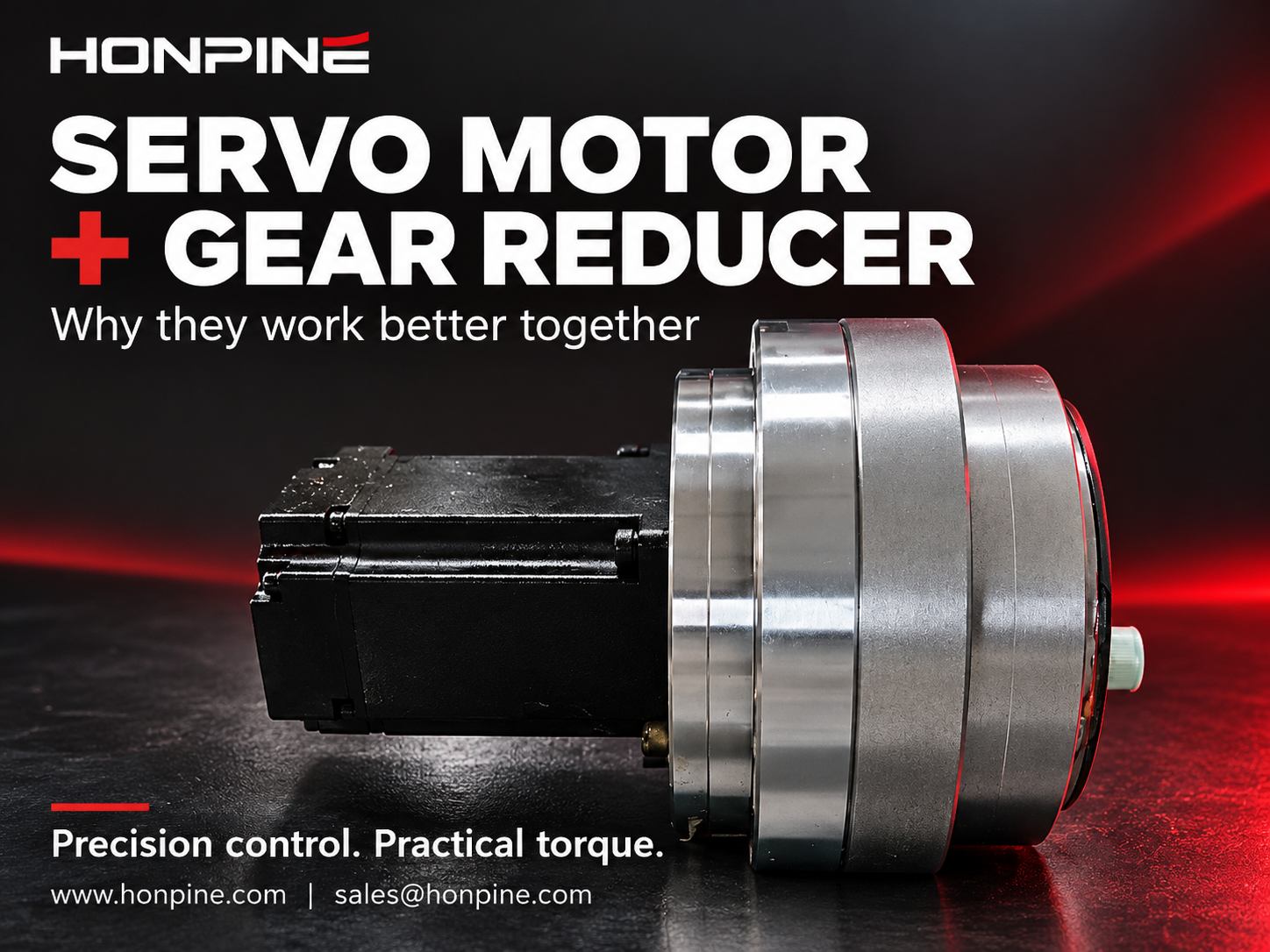
 Why Are Servo Motors and Gear Reducers an Ideal Match?Servo motors provide fast, precise motion control, while gear reducers adapt their speed and torque to the load. This guide explains how servo motors and gear reducers work together through torque multiplication, reflected inertia reduction and finer theoretical position resolution. Learn how inertia matching, backlash, torsional stiffness and reduction ratio influence performance in robotics and industrial automation.
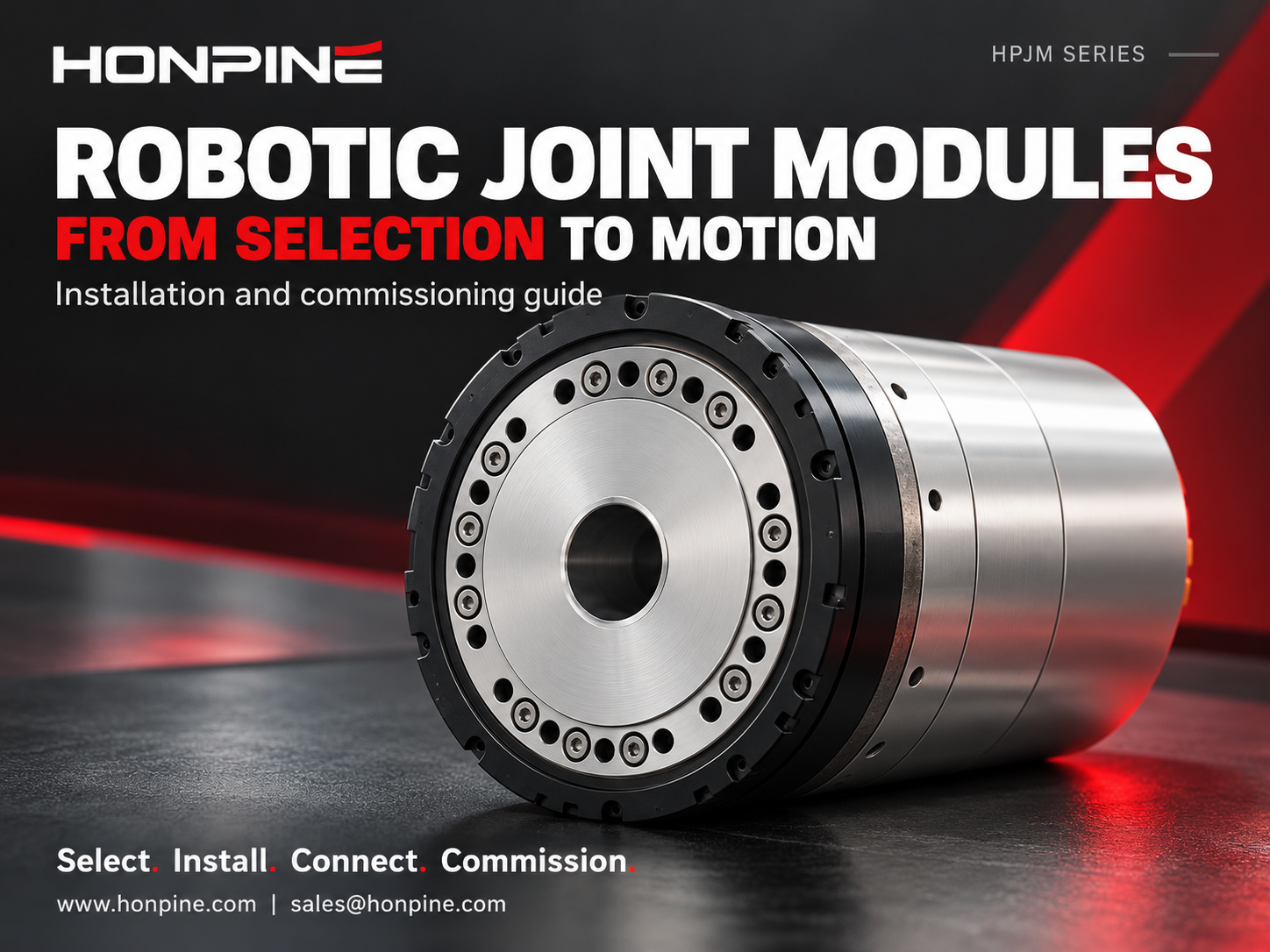
 How to Select and Use Robotic Joint Modules?How do you take robotic joint modules from selection to controlled motion? Using the HONPINE HPJM harmonic joint module as an example, Technical Director Theodore Li explains the key steps in mechanical installation, electrical wiring, CAN and EtherCAT configuration, and control commissioning. Learn what to confirm before integration and how to approach setup so each joint can respond correctly to your controller.
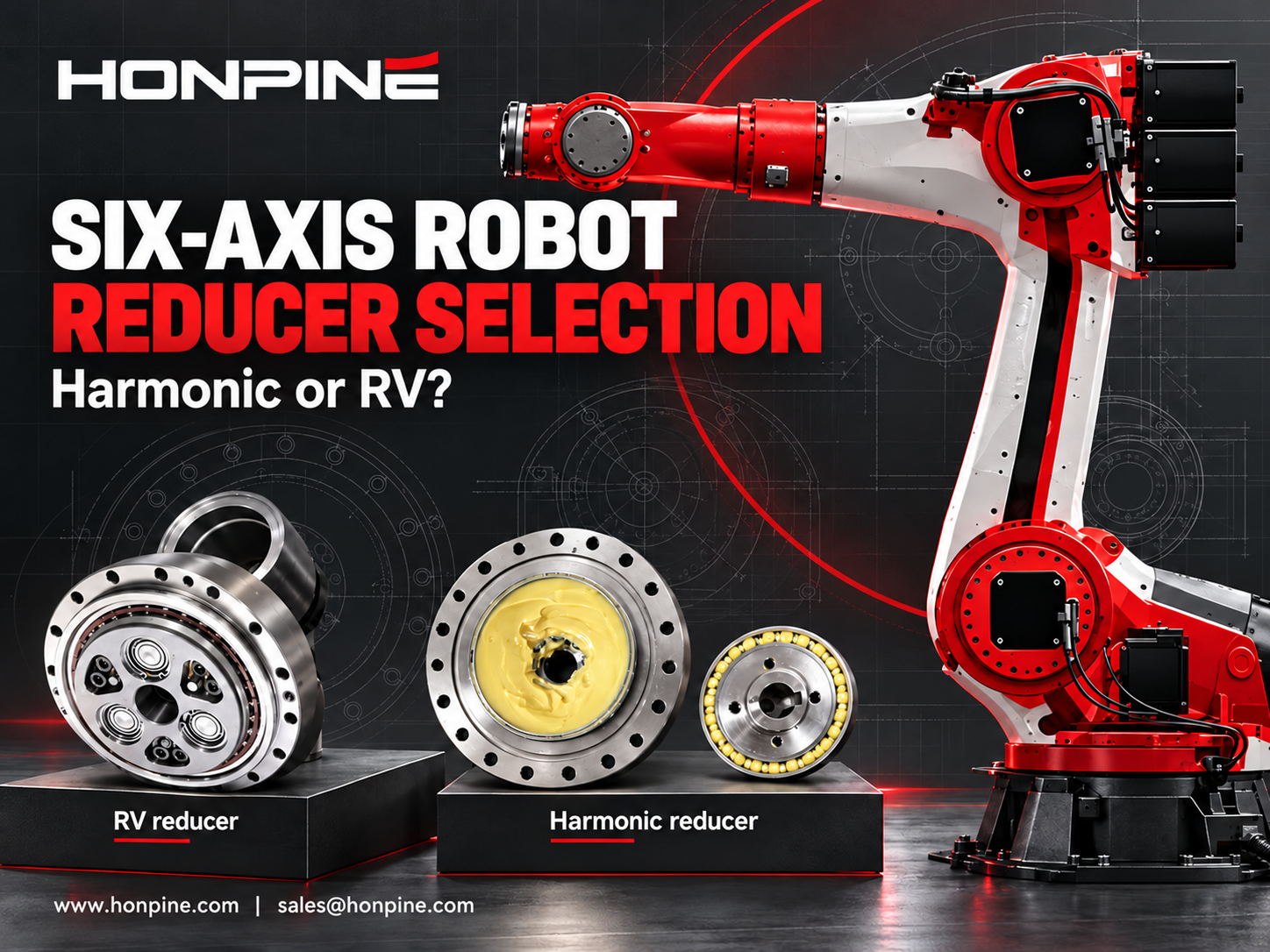
 How to Select Harmonic and RV Reducers for Each Axis of a Six-Axis Robot?What determines whether a six-axis robot joint needs a harmonic reducer or an RV reducer? The answer depends on torque, inertia, impact loads, bearing loads and installation space. This guide explains how to evaluate harmonic and RV reducers for the base, shoulder, elbow and wrist, with practical checks for stiffness, backlash and service life. Use the requirements of each axis to select a suitable reducer configuration.
 Top 7 RV Reducer Gearbox Manufacturers: Why Does Nabtesco Still Dominate?What sets RV reducer gearbox manufacturers apart, and why does Nabtesco remain a benchmark in this market? RV reducer production demands precise component machining, careful assembly and extensive engineering know-how. This article introduces seven manufacturers across RV reducers and related transmission technologies, examines the strengths behind Nabtesco's position, and explores HONPINE's development capabilities to help you understand the supplier landscape.
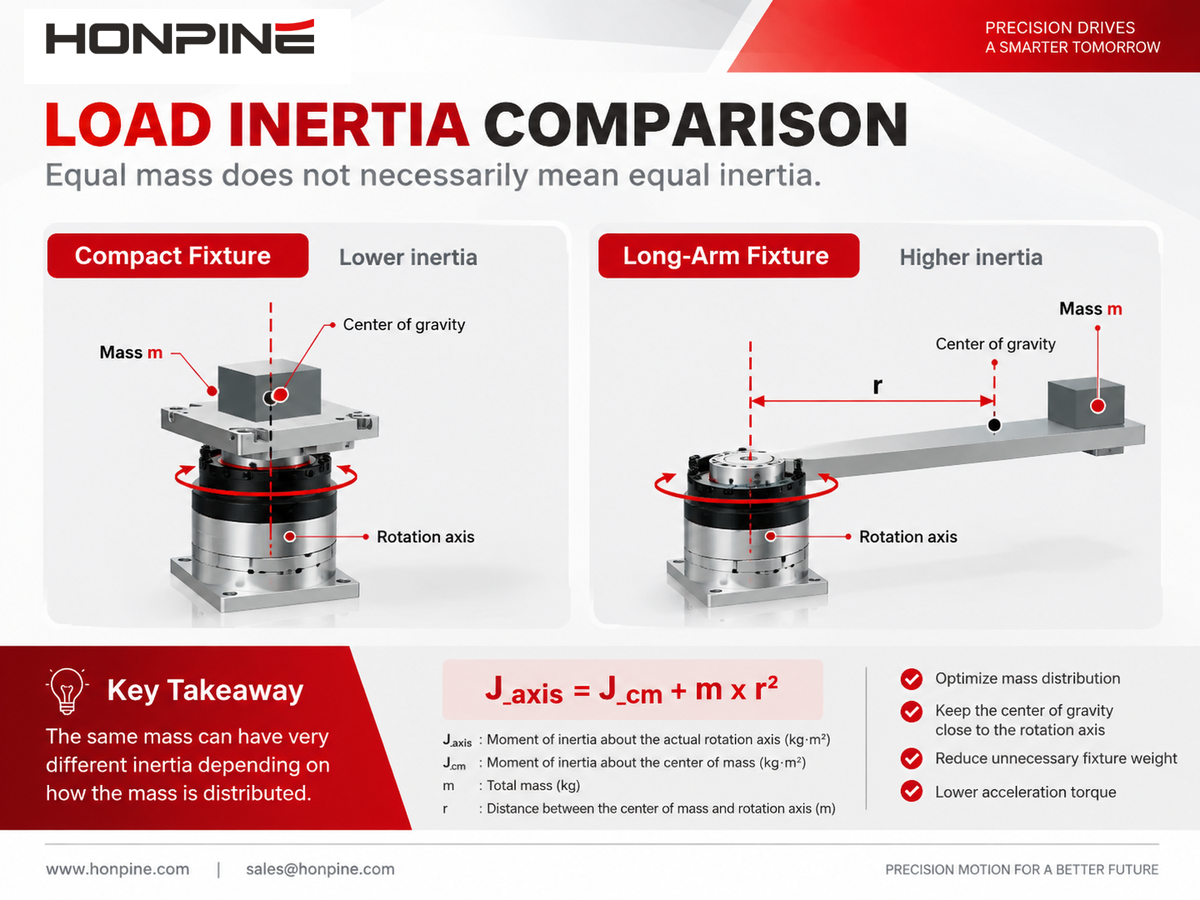
 How to Calculate Torque for a Harmonic Rotary Actuator in a Flipping Mechanism?How much torque does a harmonic rotary actuator need to flip a 10 kg load through 180 degrees? The answer depends on more than weight. Center-of-gravity offset, load inertia, acceleration and operating frequency all affect actuator selection. In this guide, Theodore Li, Technical Director at HONPINE, explains the calculation process using a horizontal-axis flipping example and outlines the checks needed for peak torque, continuous operation, output speed and bearing loads.
Double Click
We provide harmonic drive reducer,planetary reducer,robot joint motor,robot rotary actuators,RV gear reducer,robot end effector,dexterous robot hand
 What is robot joint actuator?How to Choose the Best Robot Rotary Joint Actuator?In core robot joint transmission solutions, planetary and harmonic rotary actuators each have their own strengths. Choosing the right type based on application requirements is essential to achieve the optimal balance between performance and cost.
 DD Motors VS Harmonic Rotary ActuatorsThis article provides an in-depth comparison between Direct Drive (DD) motors and harmonic rotary actuators, covering their transmission principles, advantages and disadvantages, and typical application fields.
 OMG Ultra Compact Harmonic Drive Joint Module with Built-in Torque SensorHONPINE TCHL series harmonic drive joint module is a game-changing product that achieves disruptive improvements in multiple aspects such as lightweight design, integration level, and connection convenience. This article will analyze its revolutionary enhancements with you.
 Why Are Harmonic Reducers Suitable for High-Precision Automation Equipment?Precision automation equipment depends on consistent rotary motion, reliable positioning and compact transmission design. From dispensing head orientation and component angular alignment to automated inspection indexing, harmonic reducers offer a practical solution for applications requiring low backlash and high reduction ratios in limited installation space. This article explains how harmonic reducers support repeatable motion, compares key design configurations, and outlines how to select a suitable reduction ratio and reducer structure based on load, speed, accuracy and machine cycle-time requirements.
 Why Are Servo Motors and Gear Reducers an Ideal Match?Servo motors provide fast, precise motion control, while gear reducers adapt their speed and torque to the load. This guide explains how servo motors and gear reducers work together through torque multiplication, reflected inertia reduction and finer theoretical position resolution. Learn how inertia matching, backlash, torsional stiffness and reduction ratio influence performance in robotics and industrial automation.
 How to Select and Use Robotic Joint Modules?How do you take robotic joint modules from selection to controlled motion? Using the HONPINE HPJM harmonic joint module as an example, Technical Director Theodore Li explains the key steps in mechanical installation, electrical wiring, CAN and EtherCAT configuration, and control commissioning. Learn what to confirm before integration and how to approach setup so each joint can respond correctly to your controller.
 How to Select Harmonic and RV Reducers for Each Axis of a Six-Axis Robot?What determines whether a six-axis robot joint needs a harmonic reducer or an RV reducer? The answer depends on torque, inertia, impact loads, bearing loads and installation space. This guide explains how to evaluate harmonic and RV reducers for the base, shoulder, elbow and wrist, with practical checks for stiffness, backlash and service life. Use the requirements of each axis to select a suitable reducer configuration.
 Top 7 RV Reducer Gearbox Manufacturers: Why Does Nabtesco Still Dominate?What sets RV reducer gearbox manufacturers apart, and why does Nabtesco remain a benchmark in this market? RV reducer production demands precise component machining, careful assembly and extensive engineering know-how. This article introduces seven manufacturers across RV reducers and related transmission technologies, examines the strengths behind Nabtesco's position, and explores HONPINE's development capabilities to help you understand the supplier landscape.
 How to Calculate Torque for a Harmonic Rotary Actuator in a Flipping Mechanism?How much torque does a harmonic rotary actuator need to flip a 10 kg load through 180 degrees? The answer depends on more than weight. Center-of-gravity offset, load inertia, acceleration and operating frequency all affect actuator selection. In this guide, Theodore Li, Technical Director at HONPINE, explains the calculation process using a horizontal-axis flipping example and outlines the checks needed for peak torque, continuous operation, output speed and bearing loads.
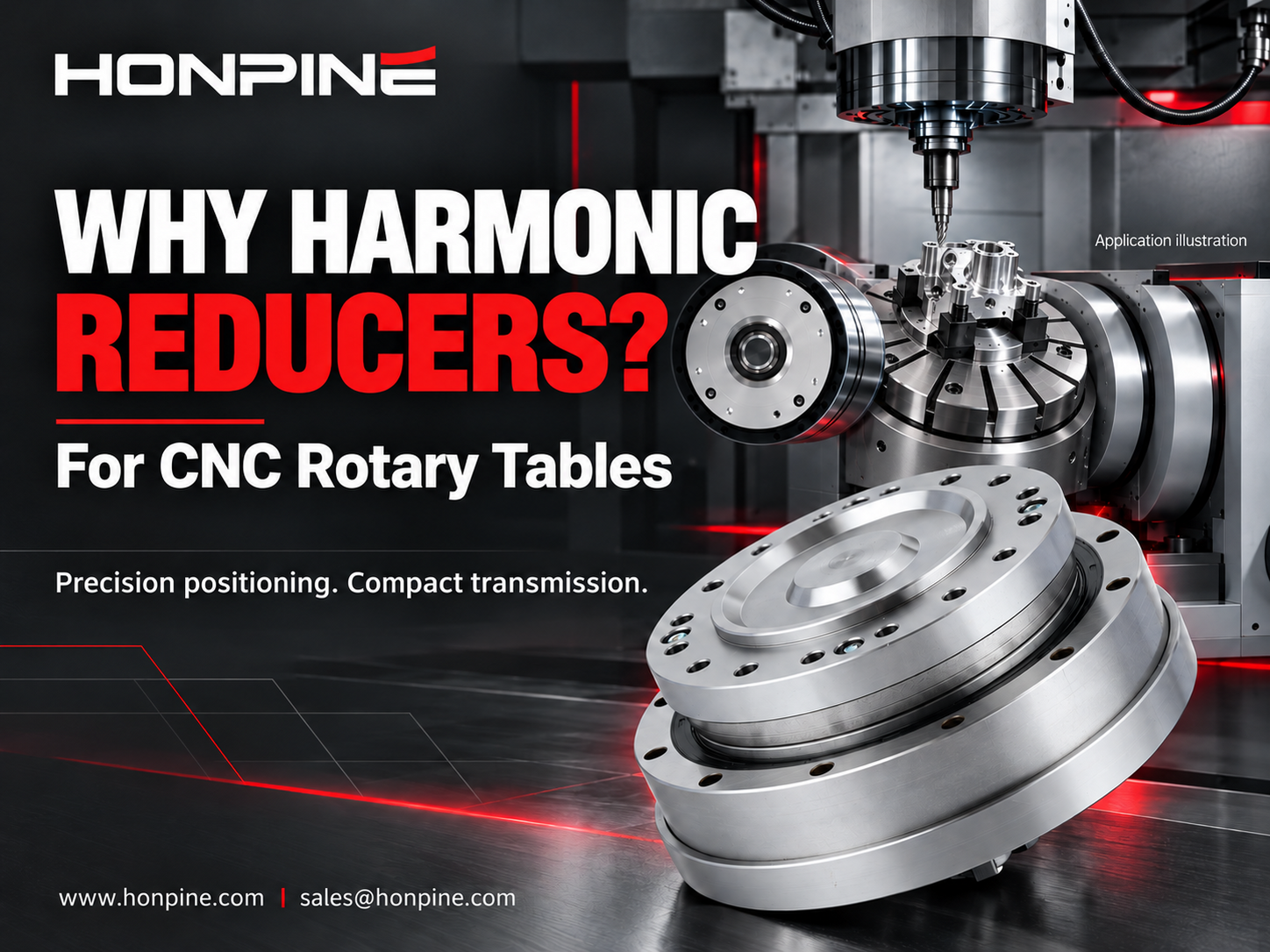
 Why Are Harmonic Reducers Suitable for CNC Machine Tool Rotary Tables?Why choose harmonic reducers for CNC rotary tables? Accurate indexing depends on more than the motor: backlash, torsional stiffness and torque capacity all affect how reliably a rotary table holds its position during machining. This guide explains the key transmission requirements of fourth and fifth axis rotary tables, explores common machine tool applications, and introduces HONPINE harmonic reducer configurations for different installation and load requirements.
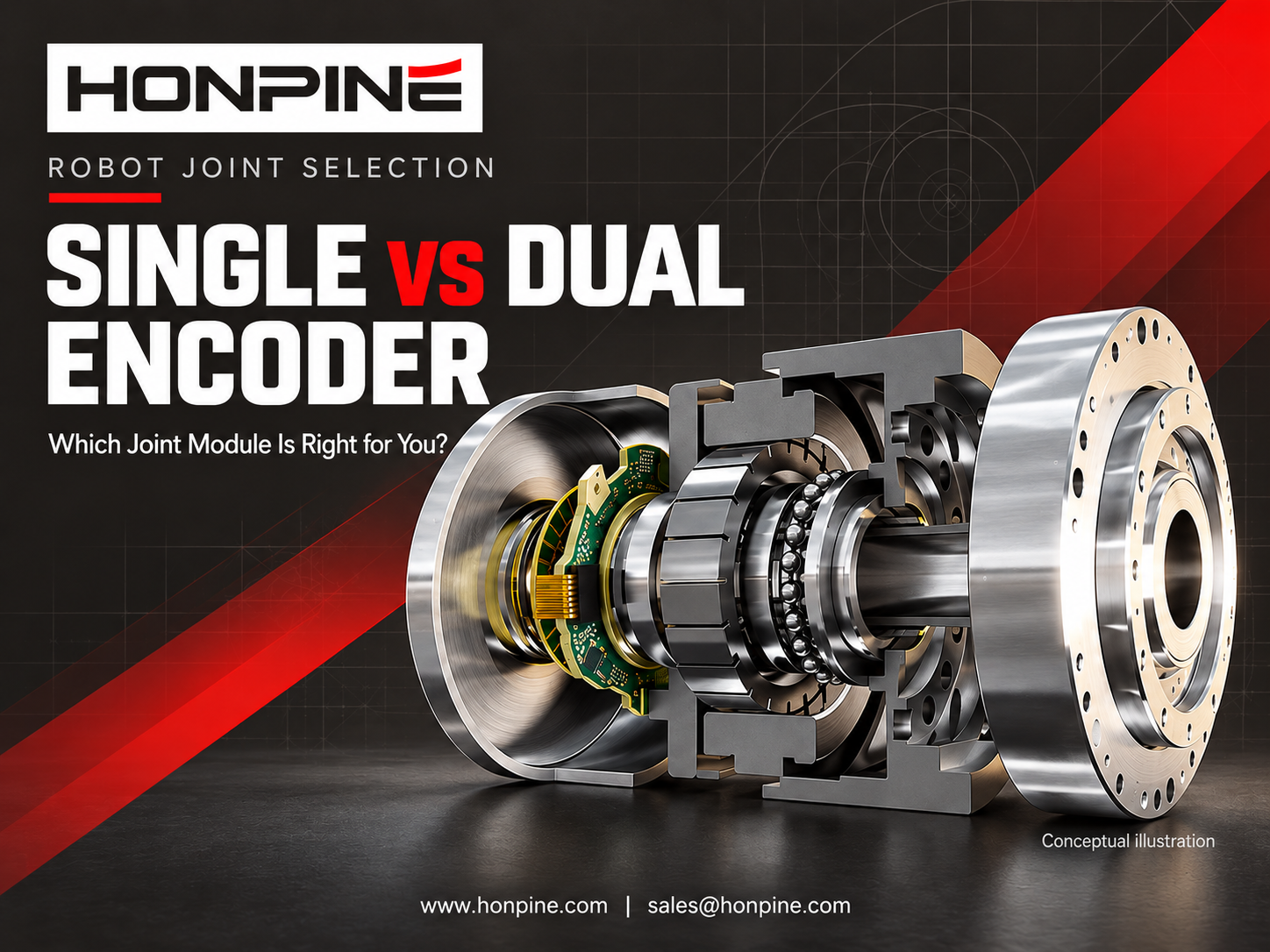
 What’s the Difference Between Single and Dual Encoder Robot Joint Modules?Does your robot need a dual encoder joint module, or is a single encoder enough? The answer depends on positioning requirements, transmission behavior, force control strategy and budget. This guide compares motor-side and output-side feedback, explains where dual encoders can improve control, and examines their costs and limitations. Learn when a single encoder can meet your needs and when additional output feedback is worth considering.
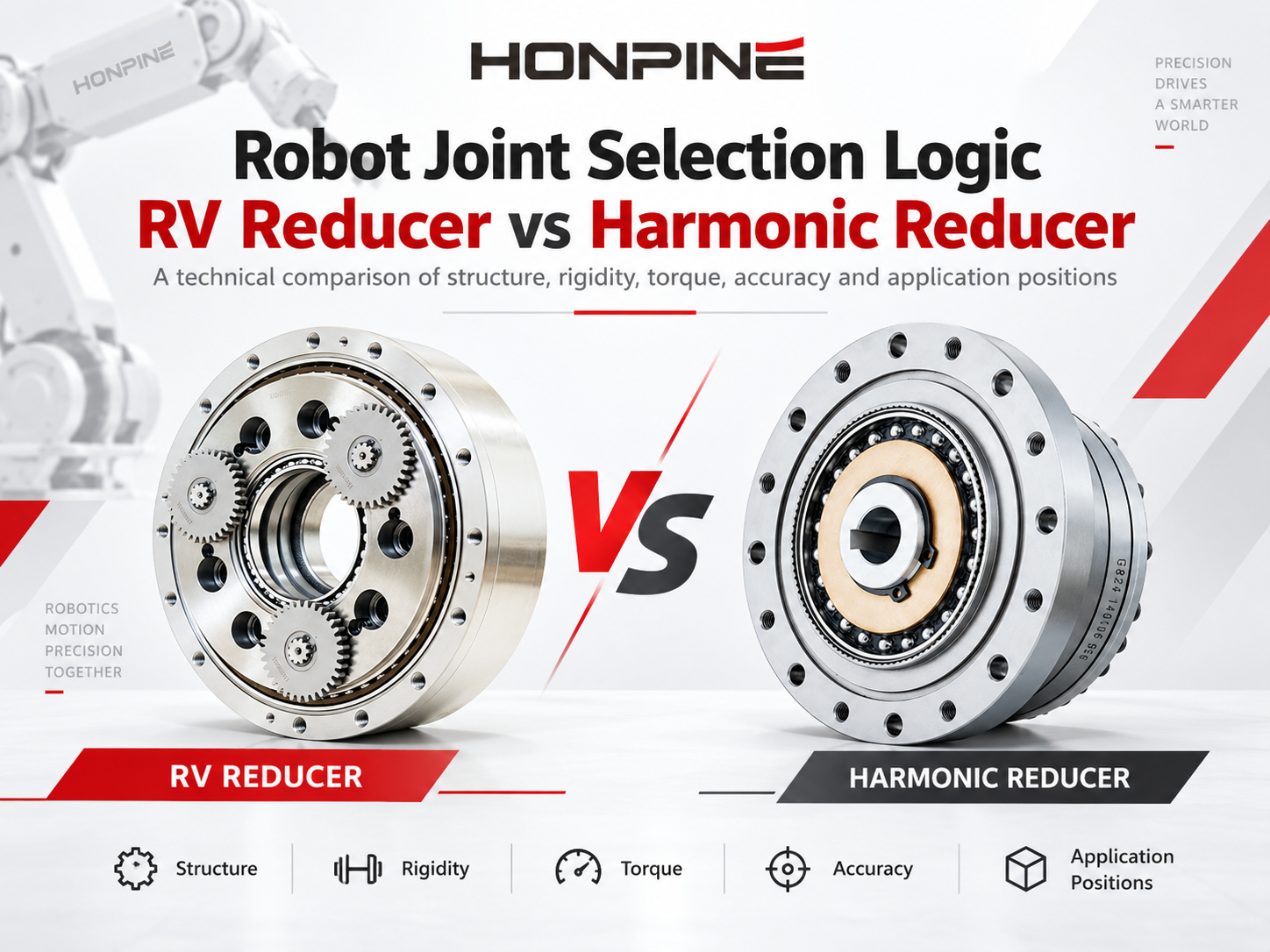
 RV vs Harmonic Reducer: How to Choose the Right Gearbox for Robot Joints?RV vs harmonic reducer: which gearbox is right for your robot joint? The answer depends on torque, rigidity, accuracy, installation space and operating conditions. This guide compares their working principles and five key performance factors, then explains how to evaluate joint loads, reducer life, temperature and lubrication. Whether you are designing a robot base, shoulder, elbow or wrist, use these considerations to match the reducer to the requirements of each joint.
- harmonic reducer
- harmonic transmission
- robot joint motor
- robot joint module
- joint motor
- joint module
- planetary joint module
- robot joint actuator
- precision reducer
- robot joint
- joint motors
- harmonic joint module
- harmonic
- small
- planetary
- robotic joint
- servo
- actuator
- robot joint motors
- joint actuator
- robotic arm