









Small Size Harmonic Drive Reducer: Advantages, Applications and Selection Guide
Small size harmonic drive reducers are designed for precision motion systems where installation space, weight, reduction ratio, backlash, and positioning accuracy all need to be considered at the same time.
Compared with larger harmonic drive reducers used in heavy-duty robot joints and industrial machinery, small size harmonic drive reducers are more focused on achieving high transmission performance within a limited mechanical envelope. They are particularly suitable for compact robot joints, precision rotary mechanisms, semiconductor equipment, medical devices, optical systems, and lightweight automation equipment.
However, selecting a small harmonic drive reducer is not simply a matter of choosing the smallest available model. As the gearbox becomes smaller, torque capacity, torsional stiffness, thermal performance, allowable speed, fatigue life, and load conditions become increasingly important.
This article focuses on the practical characteristics, advantages, limitations, applications, and selection considerations of small size harmonic drive reducers.
Key Performance Characteristics of Small Size Harmonic Drive Reducers
The performance of a small size harmonic drive reducer depends on its outside diameter, reduction ratio, rated torque, input speed, lubrication, load profile, and operating conditions. The following values should therefore be treated as general engineering references rather than universal specifications.
High Reduction Ratio in a Small Package
One of the main advantages of a small harmonic drive reducer is its ability to provide a high reduction ratio without requiring a large transmission structure.
Small harmonic drive models commonly provide reduction ratios from approximately 50:1 to 320:1, with some product families starting from around 30:1.
This allows a compact motor and gearbox combination to achieve a relatively low output speed and high output torque without adding multiple conventional gear stages.
For compact robot joints and rotary actuators, this can help reduce the overall actuator length and diameter.
Near-Zero Backlash in Compact Precision Systems
Small size harmonic drive reducers can provide near-zero backlash through preloaded tooth engagement between the flexspline and circular spline.
This is important in applications where even a small amount of mechanical play can affect positioning accuracy, repeatability, or motion stability.
However, the backlash of the complete motion system is not determined by the harmonic reducer alone.
Bearings, mounting interfaces, couplings, output structures, and other mechanical components can also influence the total system backlash.
Engineers should therefore distinguish between backlash, transmission error, and elastic deformation when evaluating a compact precision transmission system.
High Transmission Accuracy
Small harmonic drive reducers can achieve transmission accuracy at the arcsecond level depending on the product design and precision class.
Standard transmission error may be around 60 arcsec, while high-precision configurations can reach approximately 30 arcsec or even 10 arcsec-level performance, depending on the design and measurement conditions.
For compact rotary mechanisms, this combination of small size, high reduction ratio, and accurate transmission can reduce the need for additional mechanical correction mechanisms.
Compact and Lightweight Construction
Size and weight are often the primary reasons for selecting a small harmonic drive reducer.
A compact harmonic drive can provide a high reduction ratio within a relatively small diameter and axial envelope. This is especially valuable when the gearbox must be integrated into a robot joint, rotary actuator, end-effector, optical mechanism, or other space-constrained equipment.
Hollow configurations can provide additional space for cables, shafts, pneumatic lines, or other internal components.
For mobile and lightweight robots, reducing gearbox mass can also reduce the inertia that must be carried by upstream joints.
Torque and Speed Range
Small harmonic drive reducers generally cover torque ranges from a few N·m to tens of N·m, depending on the outside diameter and reduction ratio.
Some miniature models can support relatively high input speeds, potentially reaching approximately 8,000 RPM, while continuous operating speed normally requires derating according to load, temperature, lubrication, and reduction ratio.
A small gearbox should therefore not be selected according to maximum speed alone.
The actual continuous torque, peak torque, average speed, and duty cycle need to be considered together.
Efficiency
Harmonic drive efficiency varies according to reduction ratio, load, input speed, lubrication, and operating temperature.
Under suitable rated operating conditions, efficiency may typically fall within the 80–90% range.
Efficiency can decrease under light loads, very high reduction ratios, or high input speeds.
For small actuators with limited thermal capacity, heat generation can become an important design factor because the smaller housing provides less surface area for heat dissipation.
Advantages of Small Size Harmonic Drive Reducers
High Reduction Ratio Without Multiple Gear Stages
A small harmonic drive can provide a high reduction ratio within a single transmission stage.
This is useful when the motor and transmission must fit into a limited space while still providing sufficient output torque.
Compared with a multi-stage planetary arrangement, a single-stage harmonic drive can simplify the transmission architecture and reduce the number of gear stages.
Low Backlash for Compact Precision Motion
Near-zero backlash is particularly valuable in small precision mechanisms.
In a compact robot joint, for example, mechanical play at the gearbox output can directly affect joint positioning and repeatability.
A small harmonic drive therefore provides a practical combination of compact dimensions and low-backlash transmission for precision rotary motion.
Low Mass and High Torque Density
For applications such as lightweight robot joints and compact rotary actuators, gearbox weight can have a direct effect on the overall system.
A smaller harmonic drive can reduce actuator mass while maintaining a relatively high reduction ratio and useful output torque.
This makes compact harmonic transmission attractive for robot wrists, elbows, end-effectors, inspection mechanisms, and other moving structures where every gram matters.
Hollow Architecture for System Integration
A hollow harmonic drive can simplify mechanical integration by providing an internal passage for cables, shafts, or other components.
This is particularly useful in robotic joints and rotary actuators, where electrical wiring and signal cables often need to pass through the center of the joint.
The hollow structure can also help reduce external cable routing and improve the overall compactness of the mechanism.
High Precision in a Limited Installation Space
In many compact automation systems, the available space is fixed by the surrounding mechanical structure.
Increasing gearbox size is therefore not always an option.
A small size harmonic drive provides a way to maintain high reduction ratio and precision without significantly increasing the installation envelope.
Limitations of Small Size Harmonic Drive Reducers
Small dimensions also create several engineering limitations that should be evaluated during the design stage.
Limited Torque and Torsional Stiffness
A smaller harmonic drive naturally has a lower torque capacity than a larger model.
Its torsional stiffness may also be lower than that of some RV reducers or high-stiffness planetary gearboxes designed for heavier loads.
This is particularly important when a compact gearbox is subjected to large external forces, high overturning moments, or long cantilever loads.
For heavy-duty applications, increasing gearbox size or using an RV or planetary transmission may be necessary.
Thermal Management Can Be More Difficult
The smaller housing of a miniature harmonic drive provides less surface area for heat dissipation.
During continuous high-speed or high-load operation, heat generation can therefore become a limiting factor.
Engineers should consider motor speed, gearbox efficiency, continuous torque, ambient temperature, lubrication, and installation conditions when evaluating thermal performance.
Flexspline Fatigue
The flexspline undergoes repeated elastic deformation during operation.
This makes fatigue life an important consideration for small harmonic drive reducers, particularly when the gearbox operates continuously or experiences frequent torque reversals.
Service life should be evaluated using the actual load profile rather than simply comparing the nominal motor torque with the gearbox rated torque.
Sensitivity to Shock and Overload
Small harmonic drives have limited capacity for severe impact and repeated overload.
Applications involving frequent mechanical impacts, sudden load reversals, or high peak torque require careful verification.
If shock resistance is a primary requirement, an RV reducer or another transmission architecture may be more appropriate depending on the application.
Installation Accuracy Still Matters
A compact gearbox does not eliminate the need for proper mechanical installation.
Mounting concentricity, bearing support, output loading, housing stiffness, and coupling alignment can all influence the actual performance of the transmission.
This is particularly important in small precision mechanisms because mechanical errors can represent a significant portion of the total system error.
Applications of Small Size Harmonic Drive Reducers
The compact form factor of small harmonic drive reducers makes them particularly suitable for precision applications where space and weight are limited.
Compact Robot Joints and Collaborative Robots
Small harmonic drive reducers are commonly considered for compact robot joints, especially in applications where low backlash, low weight, and high reduction ratio are required.
Typical applications include robot wrists, elbows, lightweight arms, end-effectors, and compact collaborative robot joints.
The gearbox can also be integrated with a frameless torque motor, encoder, brake, and drive to create a compact robot joint actuator.
For larger robot axes with high torque and high external loads, RV reducers or larger planetary transmission systems may be more appropriate.
Humanoid Robot Joints
The increasing demand for lightweight humanoid robots has created new requirements for compact transmission systems.
Small harmonic drive reducers can be considered for joints where the mechanical envelope is limited and accurate rotary motion is required.
Potential applications include:
Robotic elbows
Wrists
Shoulder mechanisms
Hand and finger joints
Compact auxiliary joints
Not every humanoid joint requires the same transmission architecture.
Hip and knee joints, for example, may require significantly higher torque, stiffness, and shock resistance and may therefore use planetary, RV, linear, or hybrid transmission systems.
Semiconductor and Wafer Handling Equipment
Small harmonic drive reducers can be used in compact rotary mechanisms within semiconductor manufacturing equipment.
Potential applications include wafer handling robot arms, EFEM mechanisms, OHSV systems, inspection axes, alignment mechanisms, die bonding equipment, and lightweight indexing mechanisms.
In semiconductor environments, the reducer should also be evaluated for lubrication, particle generation, cleanroom compatibility, and operating temperature.
For high-precision semiconductor stages, specialized linear motors, air bearings, and other precision motion technologies may be used instead of conventional gear reducers.
Medical and Surgical Equipment
Compact harmonic drive reducers can be used in medical mechanisms where the available installation space is limited but accurate motion is required.
Potential applications include surgical robot joints, instrument positioning mechanisms, endoscope orientation systems, rehabilitation equipment, and compact medical rotary mechanisms.
Low backlash and compact dimensions can be particularly useful when the transmission must be integrated into a small moving mechanism.
Optical and Precision Positioning Systems
Optical equipment often requires accurate angular positioning within a limited mechanical envelope.
Small harmonic drive reducers can be used in optical adjustment mechanisms, electro-optical positioning systems, laser alignment mechanisms, telescope auxiliary axes, and compact rotary stages.
The selection should consider not only angular accuracy but also output stiffness, repeatability, load inertia, and environmental requirements.
Lightweight CNC Rotary Axes and Indexing Systems
Compact harmonic drive reducers can be considered for lightweight CNC rotary tables, compact indexing mechanisms, laboratory positioning systems, and auxiliary rotary axes.
They are more suitable when the machining or positioning load is moderate.
Heavy-duty machining applications involving large cutting forces and overturning moments may require a larger RV reducer or another high-stiffness transmission solution.
Inspection, Measurement, and Automation Equipment
Compact inspection systems, measurement equipment, AOI mechanisms, laser positioning systems, and specialized automation often have strict space limitations.
A small harmonic drive reducer can provide the required reduction ratio and angular positioning performance without occupying a large portion of the machine structure.
When Should You Avoid a Small Size Harmonic Drive Reducer?
A small harmonic drive is not automatically suitable simply because the application has limited installation space.
The Required Torque Is Too High
If the required continuous or peak torque exceeds the capability of compact harmonic drive models, a larger transmission or another gearbox architecture should be considered.
The Application Has High Shock Loads
Frequent impact and overload can reduce flexspline fatigue life.
Applications with severe mechanical shock should therefore be evaluated carefully before selecting a miniature harmonic drive.
Large Overturning Moments Are Present
A small harmonic drive should not be expected to independently support large external moments.
When the application has a long cantilever, large radial load, or large overturning moment, the bearing and support structure should be designed separately or a more suitable transmission architecture should be selected.
Continuous High-Speed Operation Is Required
Small gearbox housings can have limited thermal dissipation capability.
If the application requires continuous high-speed operation, efficiency, heat generation, lubrication, and cooling conditions should be verified before final selection.
Extremely Long Service Life Is Required
If a machine must operate continuously for an extremely long period without maintenance, the harmonic drive should be evaluated using an actual service-life calculation.
The nominal rated torque alone is not sufficient for determining expected life.
How to Select a Small Size Harmonic Drive Reducer?
Selecting a compact harmonic drive should begin with the actual operating conditions rather than the smallest available gearbox size.
Evaluate the Complete Load Profile
The first step is to determine the actual load profile.
Engineers should evaluate:
Rated output torque
Average output torque
Peak torque
Output speed
Input speed
Load reversal frequency
Shock loads
Duty cycle
External radial and axial loads
Overturning moment
This information is more useful than simply comparing the motor's nominal torque with the gearbox rated torque.
Match Reduction Ratio With Motor Speed
The required reduction ratio should be calculated from the motor operating speed and required output speed.
A high reduction ratio can make the actuator compact, but extremely high ratios may reduce efficiency and increase thermal load.
The selected ratio should therefore balance output speed, torque, efficiency, and operating temperature.
Check Backlash, Transmission Error, and Repeatability
When selecting a small precision gearbox, engineers should not use "zero backlash" as a substitute for a complete accuracy specification.
Backlash, transmission error, positioning accuracy, repeatability, and elastic deformation describe different aspects of system performance.
The gearbox should be evaluated together with the motor, encoder, bearings, coupling, mounting structure, and controller.
Check Installation Dimensions
For compact equipment, mechanical dimensions can be as important as torque.
Important parameters include:
Outside diameter
Overall length
Hollow diameter
Mounting interface
Input shaft dimensions
Output flange dimensions
Bearing arrangement
Cable routing space
A smaller outside diameter is not always the best solution if the output bearing capacity or mechanical interface cannot meet the application requirements.
Verify Service Life
Service-life verification should include average torque, speed, temperature, lubrication, operating time, and load reversal.
For applications with frequent acceleration and deceleration, the actual duty cycle should be used instead of assuming continuous operation at rated torque.
The larger and heavier structure of an RV reducer can be justified when stiffness and load capacity are more important than minimum size and weight.
Conclusion
A small size harmonic drive reducer provides a practical transmission solution for applications where installation space and weight are limited but high reduction ratio, near-zero backlash, and precision rotary motion are still required.
Its compact architecture makes it particularly relevant to lightweight robot joints, humanoid robot wrists and elbows, semiconductor handling mechanisms, medical equipment, optical systems, inspection equipment, and precision rotary mechanisms.
However, compact dimensions also introduce engineering limitations.
Torque capacity, torsional stiffness, thermal performance, flexspline fatigue, shock loading, external moments, operating speed, and service life all need to be evaluated before selecting a small harmonic drive.
For applications where compact size, low weight, high reduction ratio, and precision are the primary requirements, a small harmonic drive can be an effective transmission architecture.
For applications dominated by heavy loads, high stiffness, severe shock, or very high torque, larger RV or planetary transmission solutions may be more appropriate.
The final selection should always be based on the complete operating profile of the machine rather than gearbox size or rated torque alone.
Read More
Learn more about the story of HONPINE and industry trends related to precision transmission.
 What is robot joint actuator?How to Choose the Best Robot Rotary Joint Actuator?In core robot joint transmission solutions, planetary and harmonic rotary actuators each have their own strengths. Choosing the right type based on application requirements is essential to achieve the optimal balance between performance and cost.
 DD Motors VS Harmonic Rotary ActuatorsThis article provides an in-depth comparison between Direct Drive (DD) motors and harmonic rotary actuators, covering their transmission principles, advantages and disadvantages, and typical application fields.
 OMG Ultra Compact Harmonic Drive Joint Module with Built-in Torque SensorHONPINE TCHL series harmonic drive joint module is a game-changing product that achieves disruptive improvements in multiple aspects such as lightweight design, integration level, and connection convenience. This article will analyze its revolutionary enhancements with you.
 The Role of Harmonic Drive Gears in Achieving 5–10 μm Accuracy in Dental Milling MachinesA dental milling machine is a CNC machining system used to directly process digital dental models into restorations such as crowns, bridges, veneers, inlays, and implant abutments. Dental milling machines require far higher operational accuracy and motion stability than ordinary equipment. This article explains how harmonic drive gear help dental milling machines achieve stable, continuous, and controllable operation.
 Why Are Harmonic Rotary Actuators Perfect for Medical Equipment?Harmonic rotary actuators (typically integrated systems consisting of a harmonic drive reducer, frameless torque motor, encoder, and optional brake) are regarded as key components in medical equipment. The core reason is that they simultaneously meet the most stringent medical requirements for precision, compact size, safety, and controllability. The following explanation is structured from three perspectives: technical characteristics, application scenarios, and medical value.
 High-Precision RV Reducers Perfectly Matched for Walking RobotsThe walking axis of a robot is a core component for power transmission and support. RV reducers provide extremely high rigidity, precision, and torque while maintaining a compact size and exceptional reliability, making them an ideal match for the demanding requirements of walking robot joints in terms of load capacity, impact resistance, and precision.
 Hollow Robot Joint Module: Why Cable Routing Matters in Robotic Joints?A hollow robot joint module provides an internal passage for power cables, signal lines, pneumatic tubes, and other end-effector connections. Compared with external cable routing, a hollow joint module can help reduce cable exposure, improve system integration, and create a cleaner motion path for robotic arms. This article explains why internal cable routing matters in robotic joints and what to consider when selecting a hollow joint module for robotic applications.
 Robot Joint Actuator Selection: From Inertia Matching to System-Level OptimizationSelecting a robot joint actuator is not simply a matter of matching motor torque or achieving a suitable inertia ratio. In a real robotic system, reduction ratio, load spectrum, thermal performance, mechanical stiffness, transmission nonlinearity, encoder architecture, control bandwidth, and service life all interact to determine the final result. A joint may meet its peak torque requirement and still experience vibration, overheating, positioning errors, or premature wear in real operation. This article examines the engineering logic behind robot joint actuator selection and explains why moving from single-parameter matching to system-level optimization can lead to more reliable and predictable robotic joint performance.
 HONPINE HAG Robot Joint Module Undergoing Pre-Shipment InspectionThe HONPINE HAG Robot Joint Module is currently undergoing pre-shipment inspection before delivery.
 How to Choose a Small Harmonic Actuator?HONPINE Series 11 small harmonic actuators provide a compact, high-performance rotary motion solution for precision automation applications. Available with hollow or solid shafts, 48V or 220V options, optional brakes, absolute encoders, and different reduction ratios, the Series 11 is designed for applications requiring compact dimensions, controlled torque, and precise positioning.
 How to Choose a Wheel Motor for a Heavy-Duty AGV? Key Challenges from Dynamic Loads to 120-Ton AGV Drive Wheel SystemsSelecting a Heavy-Duty AGV Wheel Motor is more than matching motor power or rated torque to the vehicle's payload. As AGVs move from conventional material handling to multi-ton and even 120-ton-class applications, the drive wheel system must handle dynamic loads, acceleration, braking, turning forces, traction, and long-term mechanical stress. The actual challenge lies in matching wheel load capacity, wheel-end torque, gearbox performance, steering architecture, suspension, and chassis design under real operating conditions. This article examines the key challenges of Heavy-Duty AGV Wheel Motor selection and explains how Steering Drive Wheels and Differential Drive Wheels can be evaluated for different heavy-duty AGV applications.
 DD Motor Servo System: How to Understand Mechanical Resonance and Solve Machine Vibration?This article explains the relationship between DD motor servo tuning, mechanical resonance, and servo bandwidth in direct drive motion systems. It examines why vibration and instability can occur even after repeated servo parameter adjustments, and explains how mechanical stiffness, moving mass, bearing conditions, load distribution, and structural geometry affect resonance frequency. The article also compares approaches for high- and low-frequency resonance, explains when digital notch filtering can be effective, and provides a practical tuning strategy for engineers working with DD motors, direct drive torque motors, and linear motors.
Double Click
We provide harmonic drive reducer,planetary reducer,robot joint motor,robot rotary actuators,RV gear reducer,robot end effector,dexterous robot hand
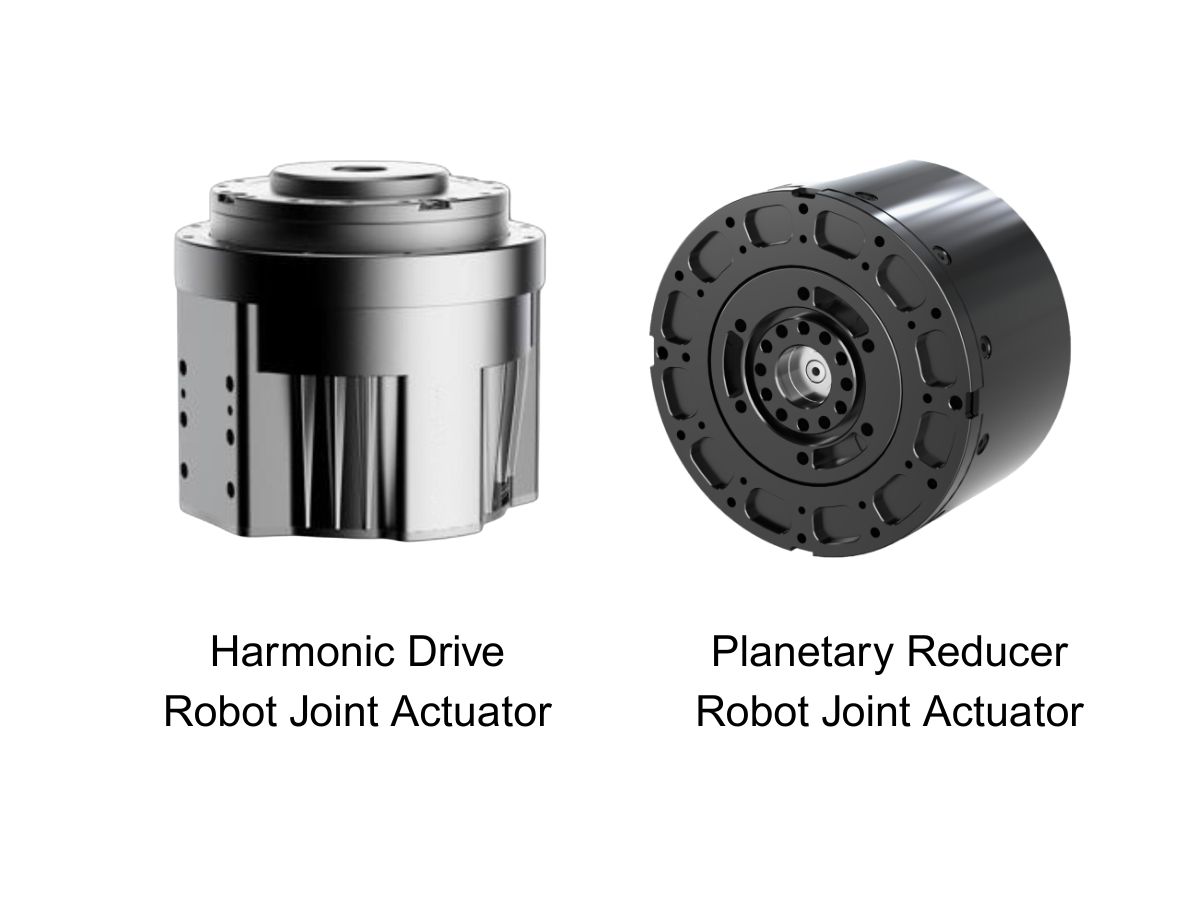
 What is robot joint actuator?How to Choose the Best Robot Rotary Joint Actuator?In core robot joint transmission solutions, planetary and harmonic rotary actuators each have their own strengths. Choosing the right type based on application requirements is essential to achieve the optimal balance between performance and cost.
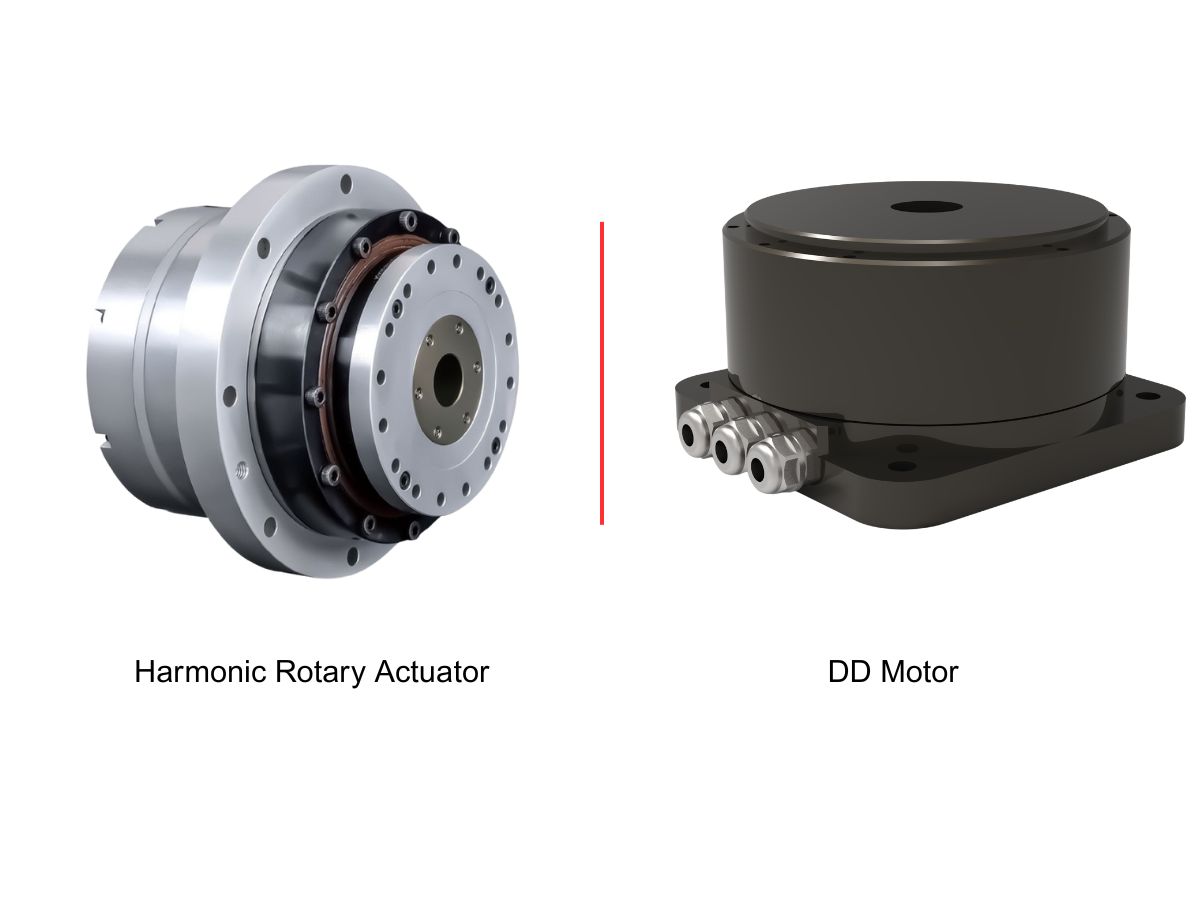
 DD Motors VS Harmonic Rotary ActuatorsThis article provides an in-depth comparison between Direct Drive (DD) motors and harmonic rotary actuators, covering their transmission principles, advantages and disadvantages, and typical application fields.
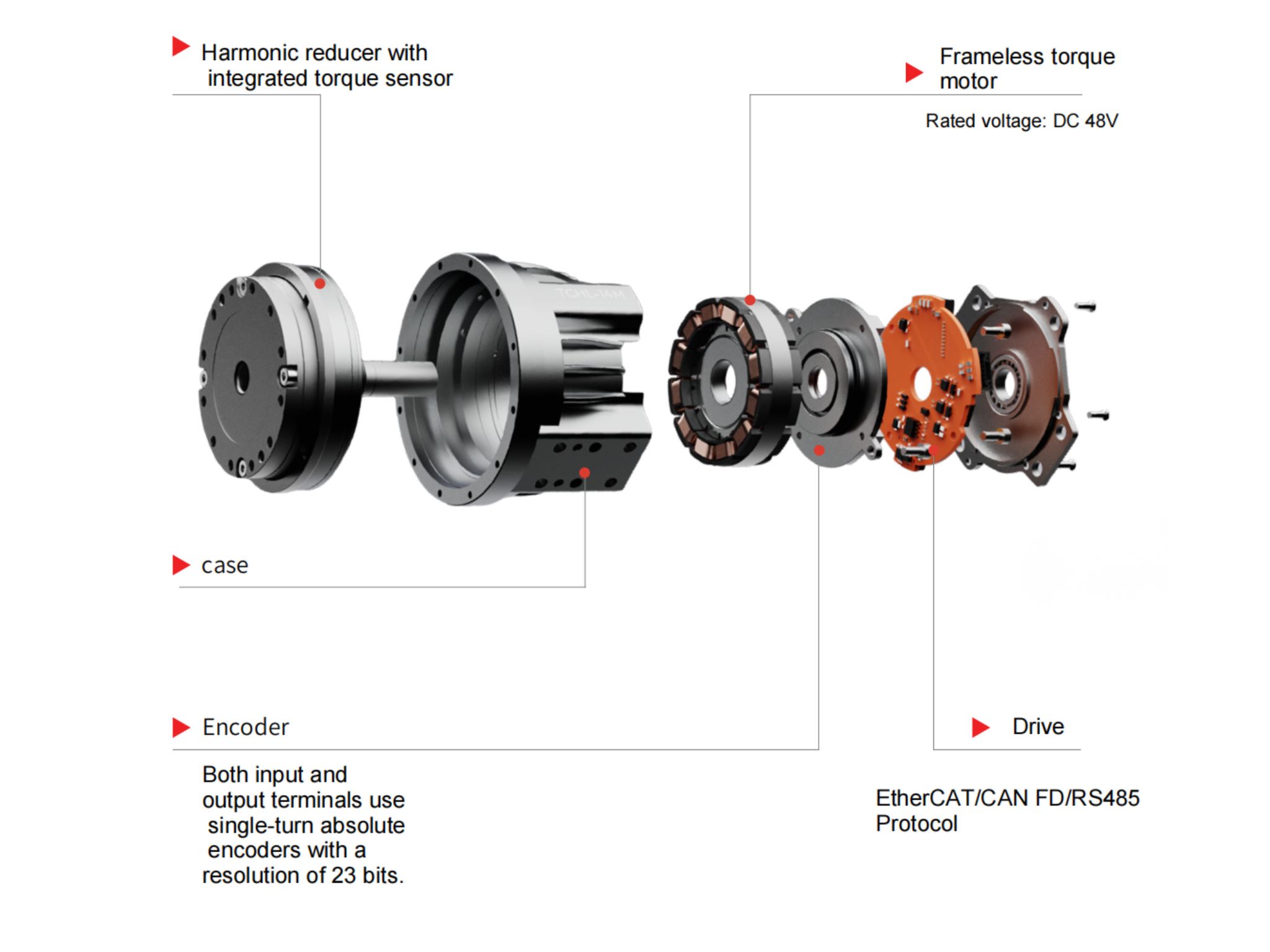
 OMG Ultra Compact Harmonic Drive Joint Module with Built-in Torque SensorHONPINE TCHL series harmonic drive joint module is a game-changing product that achieves disruptive improvements in multiple aspects such as lightweight design, integration level, and connection convenience. This article will analyze its revolutionary enhancements with you.
 Hollow Robot Joint Module: Why Cable Routing Matters in Robotic Joints?A hollow robot joint module provides an internal passage for power cables, signal lines, pneumatic tubes, and other end-effector connections. Compared with external cable routing, a hollow joint module can help reduce cable exposure, improve system integration, and create a cleaner motion path for robotic arms. This article explains why internal cable routing matters in robotic joints and what to consider when selecting a hollow joint module for robotic applications.
 Robot Joint Actuator Selection: From Inertia Matching to System-Level OptimizationSelecting a robot joint actuator is not simply a matter of matching motor torque or achieving a suitable inertia ratio. In a real robotic system, reduction ratio, load spectrum, thermal performance, mechanical stiffness, transmission nonlinearity, encoder architecture, control bandwidth, and service life all interact to determine the final result. A joint may meet its peak torque requirement and still experience vibration, overheating, positioning errors, or premature wear in real operation. This article examines the engineering logic behind robot joint actuator selection and explains why moving from single-parameter matching to system-level optimization can lead to more reliable and predictable robotic joint performance.
 How to Choose a Small Harmonic Actuator?HONPINE Series 11 small harmonic actuators provide a compact, high-performance rotary motion solution for precision automation applications. Available with hollow or solid shafts, 48V or 220V options, optional brakes, absolute encoders, and different reduction ratios, the Series 11 is designed for applications requiring compact dimensions, controlled torque, and precise positioning.
 How to Choose a Wheel Motor for a Heavy-Duty AGV? Key Challenges from Dynamic Loads to 120-Ton AGV Drive Wheel SystemsSelecting a Heavy-Duty AGV Wheel Motor is more than matching motor power or rated torque to the vehicle's payload. As AGVs move from conventional material handling to multi-ton and even 120-ton-class applications, the drive wheel system must handle dynamic loads, acceleration, braking, turning forces, traction, and long-term mechanical stress. The actual challenge lies in matching wheel load capacity, wheel-end torque, gearbox performance, steering architecture, suspension, and chassis design under real operating conditions. This article examines the key challenges of Heavy-Duty AGV Wheel Motor selection and explains how Steering Drive Wheels and Differential Drive Wheels can be evaluated for different heavy-duty AGV applications.
 DD Motor Servo System: How to Understand Mechanical Resonance and Solve Machine Vibration?This article explains the relationship between DD motor servo tuning, mechanical resonance, and servo bandwidth in direct drive motion systems. It examines why vibration and instability can occur even after repeated servo parameter adjustments, and explains how mechanical stiffness, moving mass, bearing conditions, load distribution, and structural geometry affect resonance frequency. The article also compares approaches for high- and low-frequency resonance, explains when digital notch filtering can be effective, and provides a practical tuning strategy for engineers working with DD motors, direct drive torque motors, and linear motors.
 Why Do Industrial Robots and Heavy-Duty Equipment Prefer Dual-Disc RV Reducers?Many engineers have the same question when they first look inside an RV reducer: if a single cycloidal disc can already achieve speed reduction, why do industrial robot RV reducers almost always use two discs? The additional disc increases the number of components, assembly complexity, and manufacturing cost, so its purpose deserves a closer look. The answer is not simply a higher reduction ratio. A dual-disc RV reducer is designed to improve the overall mechanical behavior of the transmission through better force balance, load sharing, backlash control, torsional stiffness, and long-term reliability. In this article, we use an RV reducer assembly model and motion simulation to examine these mechanisms and explain why the dual-disc architecture is widely used in industrial robots, machine tools, rotary tables, and other heavy-duty precision transmission systems.
 Small Size Harmonic Drive Reducer: Advantages, Applications and Selection GuideSmall size harmonic drive reducer for compact precision motion systems, offering high reduction ratio, near-zero backlash, low weight and accurate transmission.
 High Precision Harmonic Drive Robot Joint Actuator Solution for Robotic ElbowsThe robotic elbow joint plays a critical role in arm flexion, posture adjustment, and end-effector positioning. As humanoid robots, collaborative robots, and robotic arms become more capable, elbow actuators need to deliver high torque and precise motion within increasingly limited installation spaces. A high precision harmonic drive robot joint actuator integrates the harmonic reducer, motor, encoder, brake, and drive system into a compact unit, providing low backlash, high stiffness, high torque density, and accurate motion control. In this article, HONPINE introduces three joint actuator series suitable for robotic elbow applications, covering different requirements for size, torque, speed, precision, and integration.
 Explosion-Proof Robot Joint Solution for Chemical Inspection Quadruped Robots: Planetary Joint Actuator with Up to 500 N·m Peak TorqueIn petrochemical, mining, power, and other hazardous environments, inspection robots are moving beyond simple monitoring toward practical operations such as tool handling, equipment inspection, and emergency response. This shift places higher demands on robot joint actuators, particularly in explosion protection, torque output, thermal management, environmental resistance, and mobility. HONPINE's explosion-proof robot joint actuator is designed for quadruped inspection robots and other hazardous-environment robotic platforms, integrating high-load planetary transmission with explosion-proof design and reliable motion performance. With up to 500 N·m peak torque per joint, optional IP67 protection, and Ex db IIB T4 Gb certification, the solution is designed to support demanding robotic applications in high-risk industrial environments.
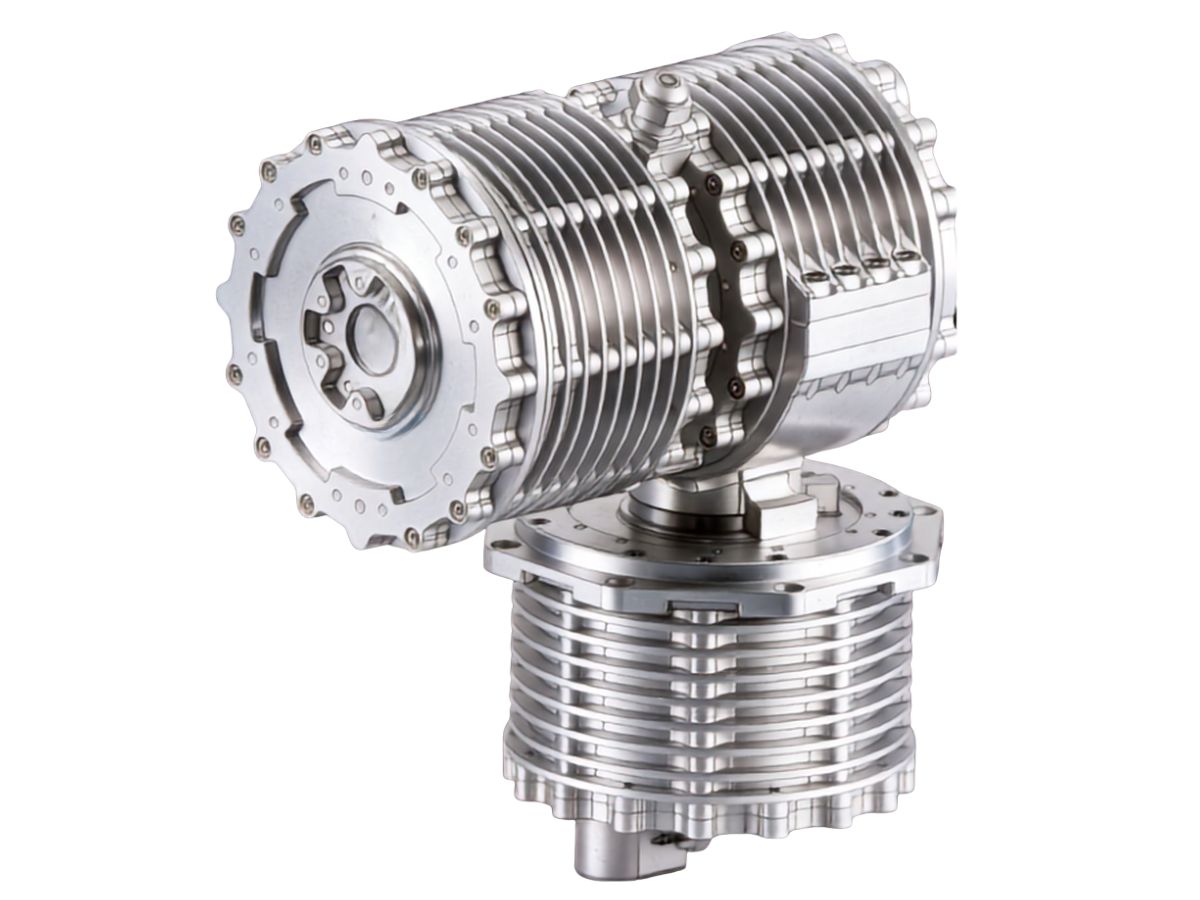
- harmonic reducer
- harmonic drive reducer
- harmonic drive
- miniature harmonic drive
- small harmonic drive
- hollow harmonic drive
- harmonic transmission
- planetary gearboxes
- frameless torque motor
- RV reducer
- precision transmission
- robot joint actuator
- harmonic drive reducers
- robot joint
- harmonic drives
- precision gearbox
- rotary actuator
- harmonic
- small
- planetary
- 90
- torque motor
- humanoid robot
- actuator
- humanoid joint
- joint actuator
- collaborative robot
- Harmonic Drive Efficiency