

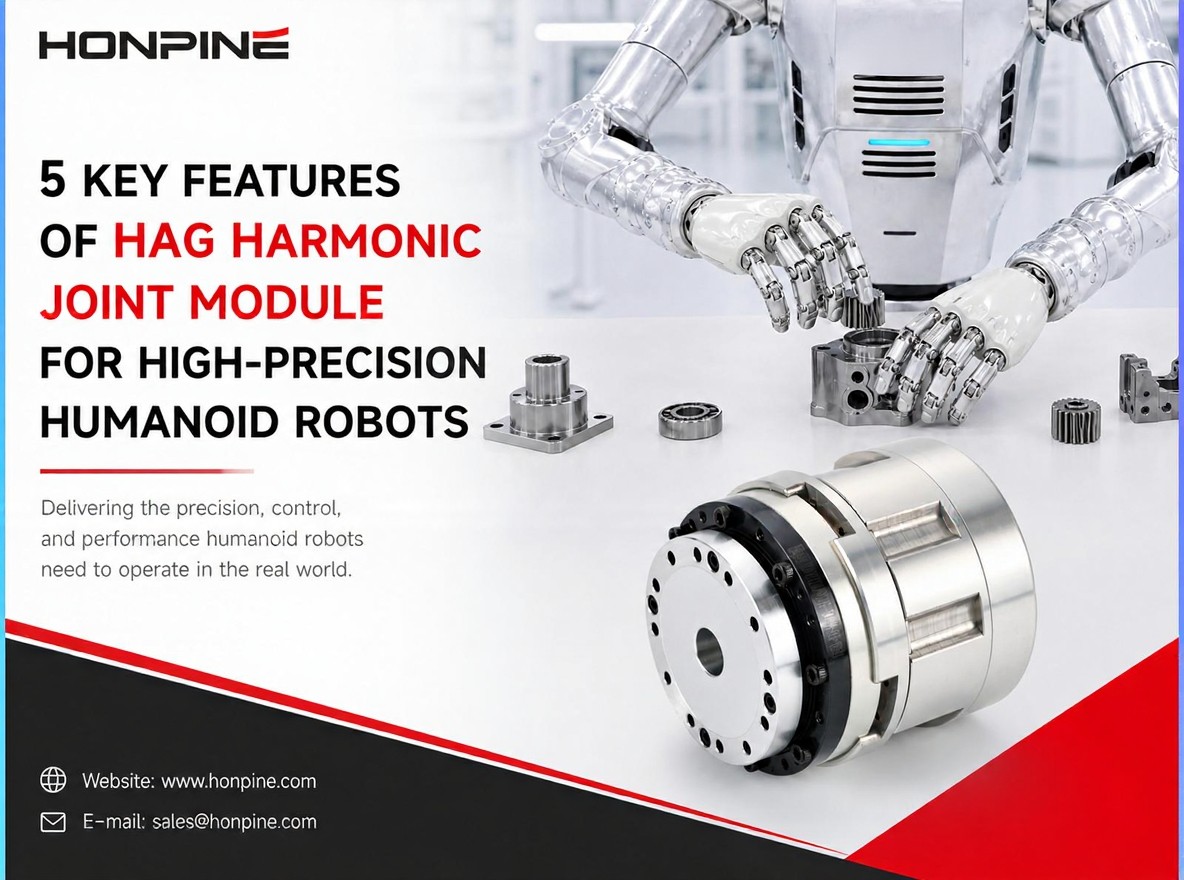
What Kind of Robot Joint Module Should You Choose for High-Precision Humanoid Robot Control?
In 2026, after technical discussions with dozens of humanoid robot manufacturers, one thing has become increasingly clear to me: many companies are not simply developing humanoid robots that can walk or perform basic movements. They are working toward a much more ambitious goal — building humanoid robots capable of performing delicate, practical tasks that genuinely help people in everyday life and industrial environments.
Hello everyone, I'm Theodore Li, Technical Director at HONPINE.
Today, I'd like to introduce a harmonic joint module designed for humanoid robots that need to do more than just move. For robots expected to perform real-world tasks requiring precise positioning, accurate force control, and stable motion, I'd like to recommend the HONPINE HAG Harmonic Joint Module.
Five Key Advantages of the HONPINE HAG Harmonic Joint Module
1. High Positioning Accuracy and Excellent Torque Control
The foundation for human-like and precise movements
Humanoid robots need to perform complex tasks such as assembly, object manipulation, grasping, and walking. These applications place extremely high demands on joint positioning accuracy and motion control.
The HONPINE HAG harmonic joint module offers several features to support high-precision motion control:
Dual Absolute Encoders: All models are equipped with a 20-bit single-turn absolute encoder (1,048,576 counts per revolution) and a 12-bit multi-turn absolute encoder, supporting the BiSS-C communication protocol.
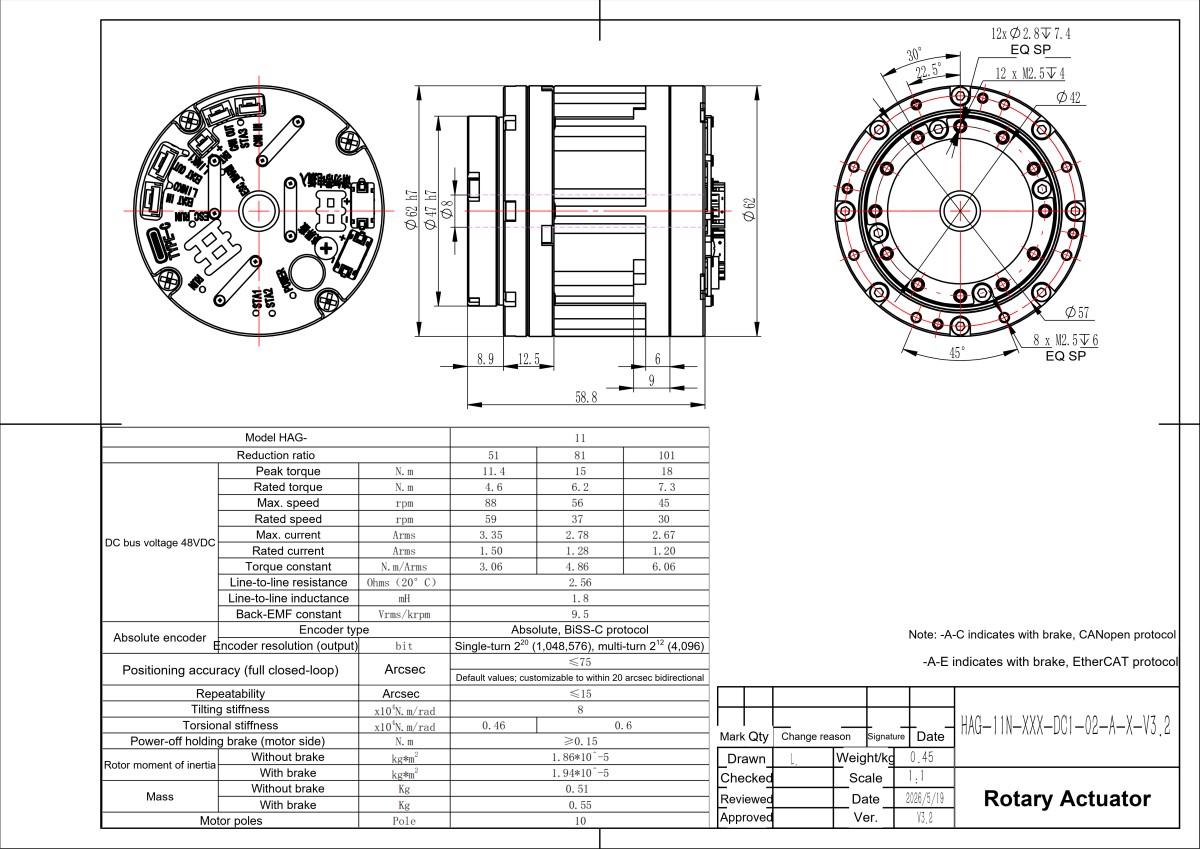
High Positioning Accuracy: Unidirectional positioning accuracy can reach ≤45 arcsec, with repeatability of ≤10 arcsec. These specifications help humanoid robots achieve fine motion adjustments and more consistent positioning during complex operations.
Optional Torque Sensor: According to the product specifications, the HAG series supports an optional integrated torque sensor (T suffix), with measurement ranges covering 25 N·m to 500 N·m and nonlinearity as low as 0.5%.
This enables torque-based control strategies such as compliant interaction, force feedback, and collision detection, which are essential for safer human-robot collaboration and delicate manipulation tasks.
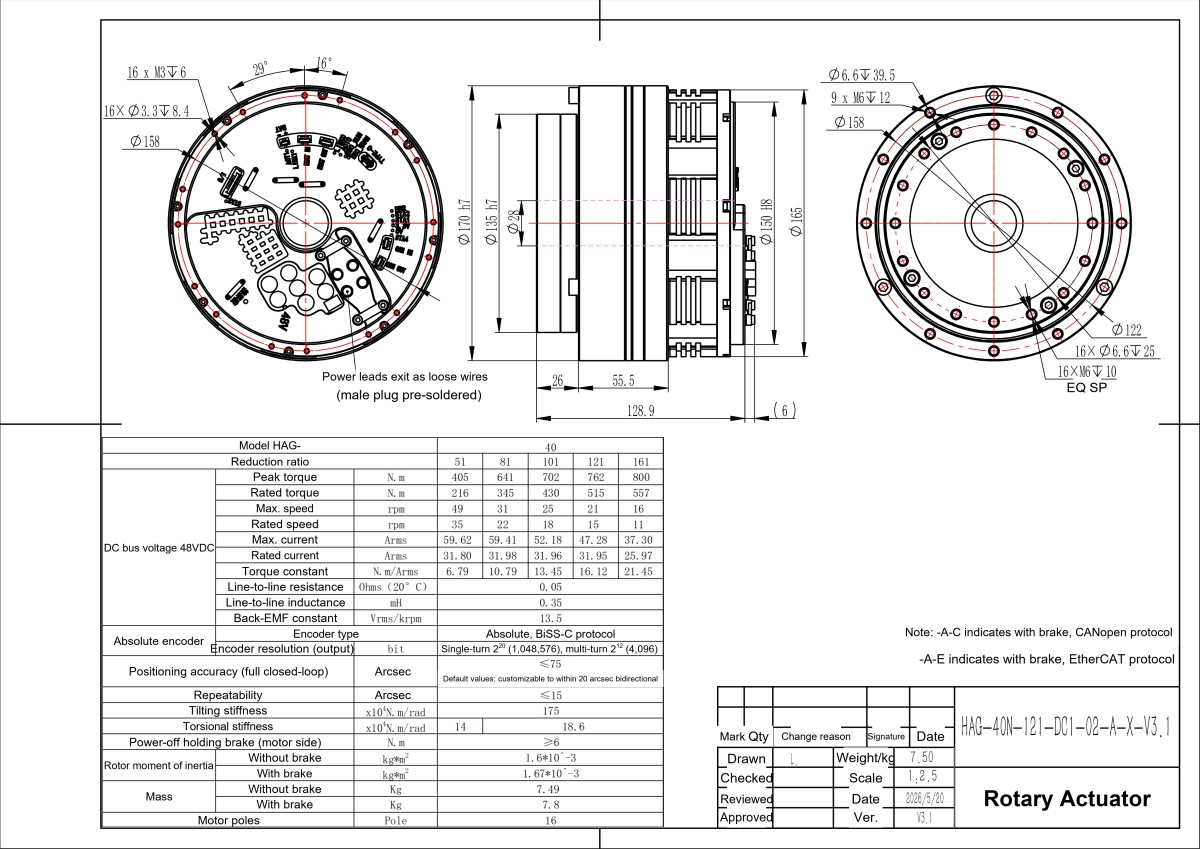
High Torsional Stiffness: Larger models, such as the HAG-40, offer torsional stiffness of up to 18.6 × 10⁴ N·m/rad. High torsional stiffness helps reduce deformation under load, suppress unwanted vibration, and maintain motion stability and end-effector positioning accuracy.
2. High Torque Density and Powerful Overload Capacity
Meeting the demanding power requirements of humanoid robots
Hip and knee joints need sufficient torque to support demanding movements such as jumping, climbing stairs, standing up, and recovering from a fall. At the same time, the limited installation space and battery capacity of humanoid robots make torque density and overall weight critical design considerations.
The HONPINE HAG series provides a broad torque range to accommodate different joint requirements.
A Wide Torque Range: From the HAG-11, with peak torque ranging from 11.4 to 18 N·m, to the HAG-40, which delivers up to 800 N·m of peak torque and 557 N·m of rated torque, the HAG series covers a wide range of humanoid robot joint applications.
Smaller models can be considered for applications such as wrist and arm joints, while larger models are suitable for higher-load joints such as the shoulders, hips, and knees, depending on the robot's mechanical design and load requirements.
Strong Short-Term Overload Capacity: Humanoid robots frequently encounter transient high-load conditions during dynamic movements. For example, the HAG-25 has a rated torque range of 48–115 N·m and a peak torque range of 86–203 N·m.
This additional short-term torque capacity helps support demanding movements such as jumping, rapid acceleration, and fall recovery.
3. Compact, Lightweight Design with Hollow-Bore Cable Routing
Optimized for the limited internal space of humanoid robots
Humanoid robots have highly constrained internal layouts. Every component must be carefully arranged, while excess weight directly affects battery life, dynamic performance, and overall energy efficiency.
The HAG harmonic joint module addresses these challenges through its integrated architecture and hollow-bore design.
Hollow-Bore Cable Routing: The HAG series features a central through-hole for internal cable routing. For example, the HAG-20 has a central bore diameter of Φ16.8 mm, while the HAG-40 provides a Φ28 mm bore.
Power cables, communication lines, and other necessary wiring can pass through the center of the joint, helping simplify internal cable management and reduce interference, bending, and wear caused by external cable routing.
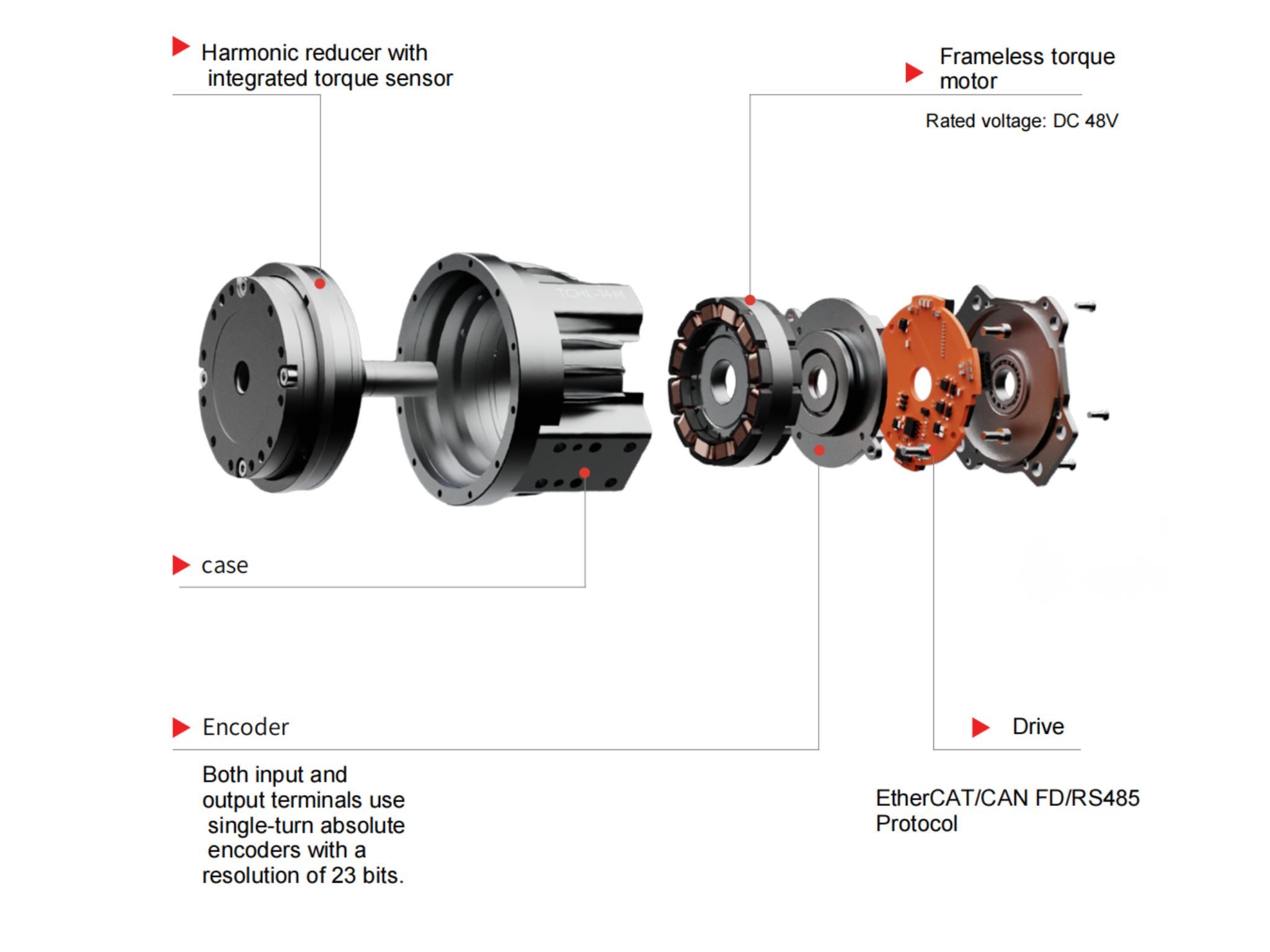
Lightweight and Highly Integrated Structure: The HAG integrates a frameless torque motor, harmonic reducer, driver board, and optional electromagnetic brake into a compact joint assembly.
Taking the HAG-20 as an example, its total weight is only 1.63 kg with the brake installed. This compact structure makes it suitable for humanoid robot designs where installation space and weight are major constraints.
4. Excellent Dynamic Response and Communication Compatibility
Supporting responsive motion and seamless system integration
Humanoid robots must continuously adjust their joint movements in response to changing commands, external forces, and environmental conditions. This requires joint modules with responsive motion performance and reliable communication interfaces.
High-Speed Operation: Smaller models, such as the HAG-14, can reach a maximum speed of 98 rpm, supporting applications that require relatively fast joint movements, including walking and rapid arm movements.
Industrial Communication Protocols: The HAG series supports CANopen and EtherCAT communication protocols, making it easier to integrate the joint module into different robot control architectures.
Built-in STO Safety Function: The HAG also incorporates a Safe Torque Off (STO) function. When triggered by an appropriate safety control system, STO disables the generation of motor torque, helping reduce risks during emergency situations and system faults.
It is important to note that STO does not provide mechanical braking or mechanically lock the joint. Applications requiring position holding after power loss should also consider the optional electromagnetic brake.
5. High Structural Rigidity and Reliable Mechanical Design
Maintaining joint stability under demanding operating conditions
Humanoid robot joints are exposed to complex forces during walking, standing, lifting, and other dynamic movements. In addition to transmitting torque, the joint module must withstand external bending moments and maintain structural stability.
High Tilting Stiffness: Larger HAG models provide high tilting stiffness. For example, the HAG-40 reaches 175 × 10⁴ N·m/rad, helping the joint withstand bending moments generated during robot movement and external loading.
This is particularly important for load-bearing joints such as the hips and knees, where structural deformation can affect the robot's motion accuracy and stability.
Optional Electromagnetic Brake: The HAG series offers an optional brake configuration. For humanoid robots that need to maintain a standing posture or hold a joint position when the motor is not actively driving, an electromagnetic brake can provide additional mechanical holding capability.
This is especially valuable for applications where maintaining joint position during power interruptions or idle periods is an important design requirement.
Is the HONPINE HAG Harmonic Joint Module Right for Your Humanoid Robot?
If your company is developing humanoid robots designed to perform real-world tasks rather than simply demonstrate basic movements, joint module selection deserves careful consideration.
Positioning accuracy, torque control, overload capacity, structural stiffness, dynamic response, and system integration all influence the robot's ability to perform complex tasks reliably.
The HONPINE HAG Harmonic Joint Module combines a harmonic reducer, frameless torque motor, integrated drive electronics, absolute encoders, and optional torque sensing and braking functions in a compact joint solution.
If you are developing humanoid robots that require high-precision motion control and reliable joint performance, contact HONPINE to request the HAG Harmonic Joint Module datasheet and discuss your application requirements with our engineering team.

About Author
Theodore Li serves as the Technical Director at HONPINE, overseeing the R&D strategy for replication products, guiding team selection, and managing both pre-sales and after-sales operations.

Read More
Learn more about the story of HONPINE and industry trends related to precision transmission.
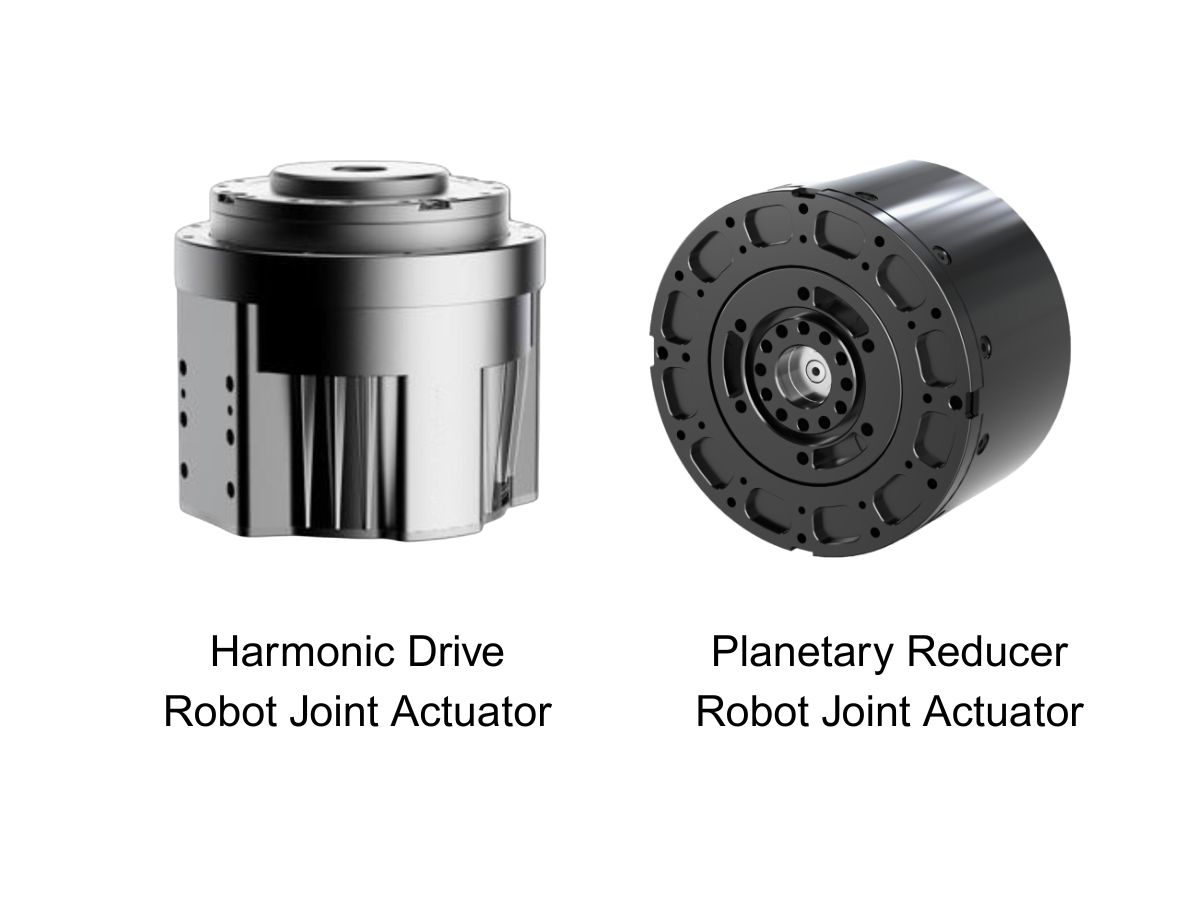
 What is robot joint actuator?How to Choose the Best Robot Rotary Joint Actuator?In core robot joint transmission solutions, planetary and harmonic rotary actuators each have their own strengths. Choosing the right type based on application requirements is essential to achieve the optimal balance between performance and cost.
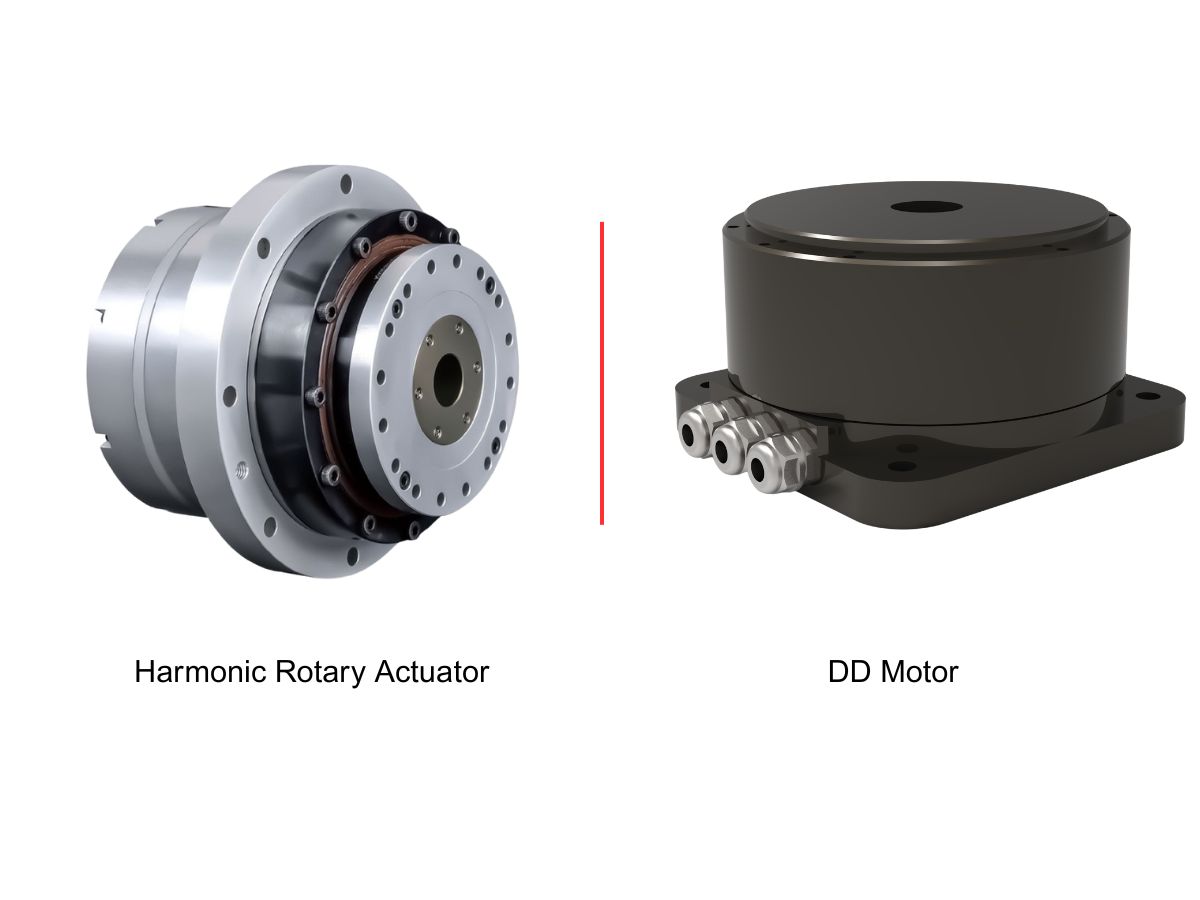
 DD Motors VS Harmonic Rotary ActuatorsThis article provides an in-depth comparison between Direct Drive (DD) motors and harmonic rotary actuators, covering their transmission principles, advantages and disadvantages, and typical application fields.
 OMG Ultra Compact Harmonic Drive Joint Module with Built-in Torque SensorHONPINE TCHL series harmonic drive joint module is a game-changing product that achieves disruptive improvements in multiple aspects such as lightweight design, integration level, and connection convenience. This article will analyze its revolutionary enhancements with you.
 The Role of Harmonic Drive Gears in Achieving 5–10 μm Accuracy in Dental Milling MachinesA dental milling machine is a CNC machining system used to directly process digital dental models into restorations such as crowns, bridges, veneers, inlays, and implant abutments. Dental milling machines require far higher operational accuracy and motion stability than ordinary equipment. This article explains how harmonic drive gear help dental milling machines achieve stable, continuous, and controllable operation.
 Why Are Harmonic Rotary Actuators Perfect for Medical Equipment?Harmonic rotary actuators (typically integrated systems consisting of a harmonic drive reducer, frameless torque motor, encoder, and optional brake) are regarded as key components in medical equipment. The core reason is that they simultaneously meet the most stringent medical requirements for precision, compact size, safety, and controllability. The following explanation is structured from three perspectives: technical characteristics, application scenarios, and medical value.
 High-Precision RV Reducers Perfectly Matched for Walking RobotsThe walking axis of a robot is a core component for power transmission and support. RV reducers provide extremely high rigidity, precision, and torque while maintaining a compact size and exceptional reliability, making them an ideal match for the demanding requirements of walking robot joints in terms of load capacity, impact resistance, and precision.
 What Kind of Robot Joint Module Should You Choose for High-Precision Humanoid Robot Control?As humanoid robots move beyond basic walking and demonstration tasks toward complex real-world applications, their joint modules must deliver more than just high torque. Precise positioning, accurate torque control, structural stiffness, and dynamic response all play important roles in performing delicate operations. So, what kind of joint module should you choose for a humanoid robot designed to handle high-precision tasks? In this article, Theodore Li, Technical Director at HONPINE, introduces the HAG Harmonic Joint Module and explains five key features that make it suitable for demanding humanoid robot applications.
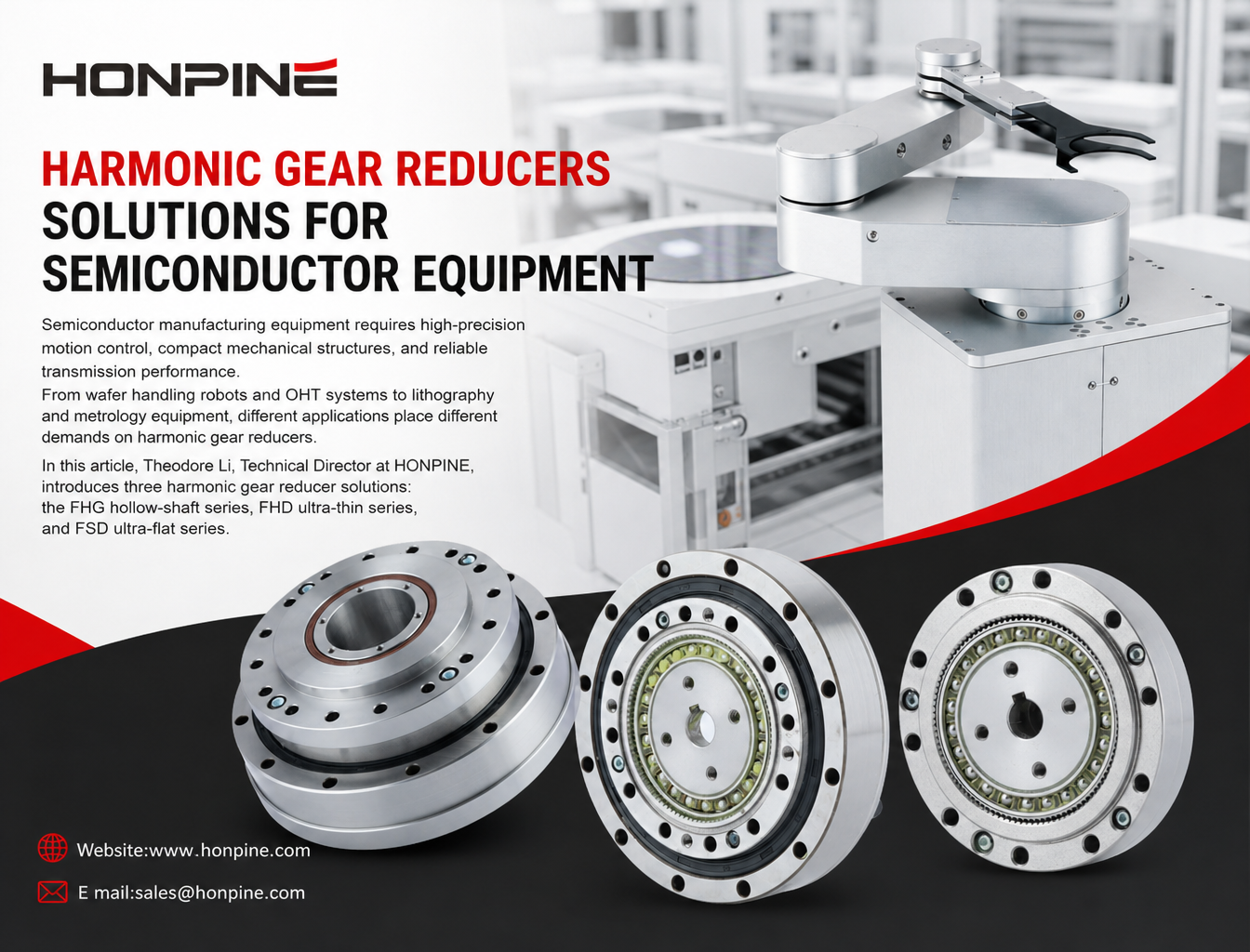
 3 Best Harmonic Gear Reducers for Semiconductor EquipmentSemiconductor manufacturing equipment requires high-precision motion control, compact mechanical structures, and reliable transmission performance. From wafer handling robots and OHT systems to lithography and metrology equipment, different applications place different demands on harmonic gear reducers. In this article, Theodore Li, Technical Director at HONPINE, introduces three harmonic gear reducer solutions: the FHG hollow-shaft series, FHD ultra-thin series, and FSD ultra-flat series. We will also examine 10 key technical parameters engineers should consider when selecting a harmonic gear reducer for semiconductor equipment, including rated torque, backlash, torsional rigidity, hollow shaft diameter, and permissible moment load.
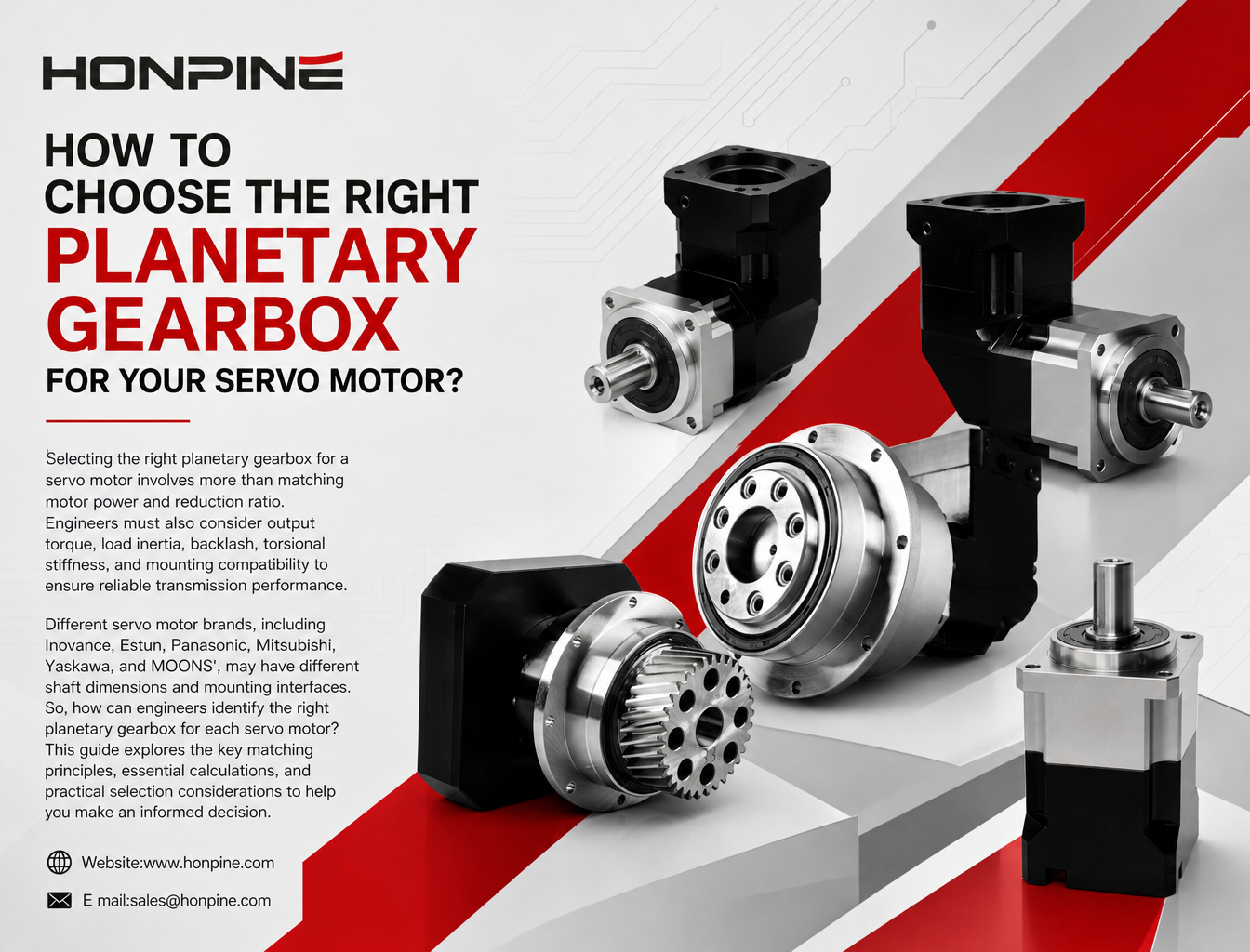
 How to Match Planetary Gearboxes with Servo Motors from 6 Major Brands?Selecting the right planetary gearbox for a servo motor involves more than matching motor power and reduction ratio. Engineers must also consider output torque, load inertia, backlash, torsional stiffness, and mounting compatibility to ensure reliable transmission performance. Different servo motor brands, including Inovance, Estun, Panasonic, Mitsubishi, Yaskawa, and MOONS', may have different shaft dimensions and mounting interfaces. So, how can engineers identify the right planetary gearbox for each servo motor? This guide explores the key matching principles, essential calculations, and practical selection considerations to help you make an informed decision.
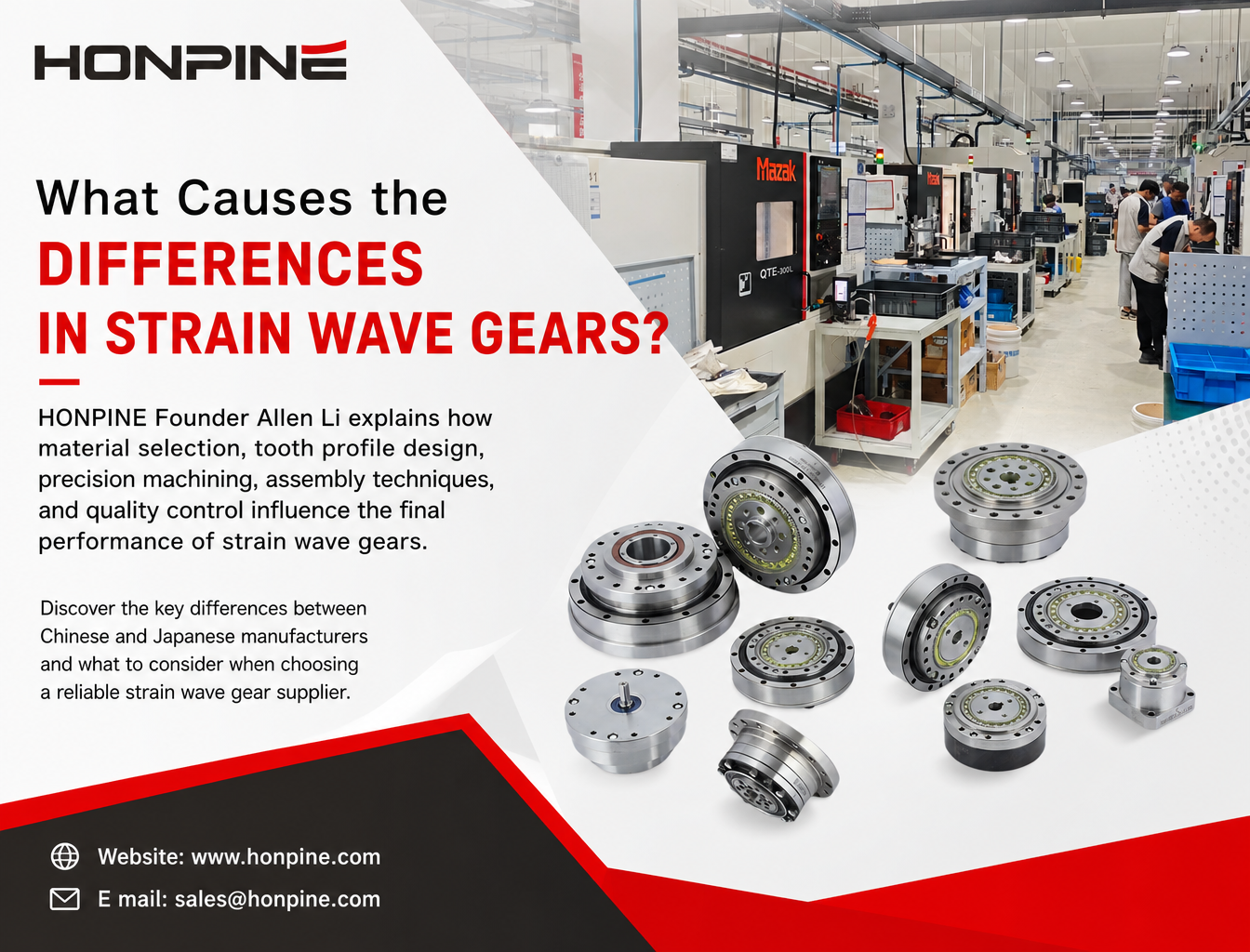
 Why Do Strain Wave Gear Manufacturers Produce Products with Such Different Levels of Quality and Precision?Strain wave gears share the same operating principle, but their quality, precision, and service life can vary significantly between manufacturers. What causes these differences? HONPINE Founder Allen Li explains how material selection, tooth profile design, precision machining, assembly techniques, and quality control influence the final performance of strain wave gears. Discover the key differences between Chinese and Japanese manufacturers and what to consider when choosing a reliable strain wave gear supplier.
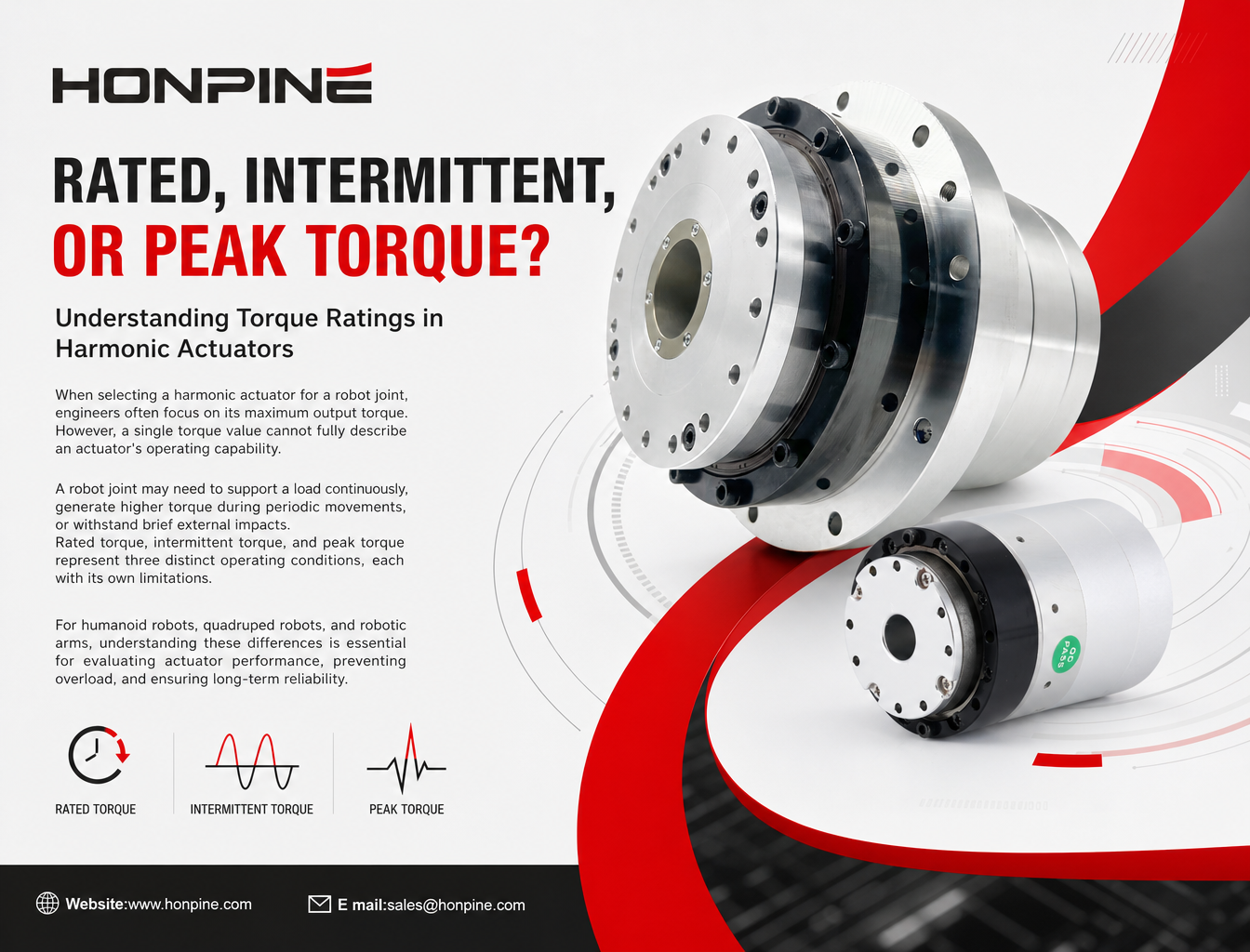
 What Are Rated, Intermittent, and Peak Torque in a Harmonic Actuator?When selecting a harmonic actuator for a robot joint, engineers often focus on its maximum output torque. However, a single torque value cannot fully describe an actuator's operating capability. A robot joint may need to support a load continuously, generate higher torque during periodic movements, or withstand brief external impacts. Rated torque, intermittent torque, and peak torque represent three distinct operating conditions, each with its own limitations. For humanoid robots, quadruped robots, and robotic arms, understanding these differences is essential for evaluating actuator performance, preventing overload, and ensuring long-term reliability.
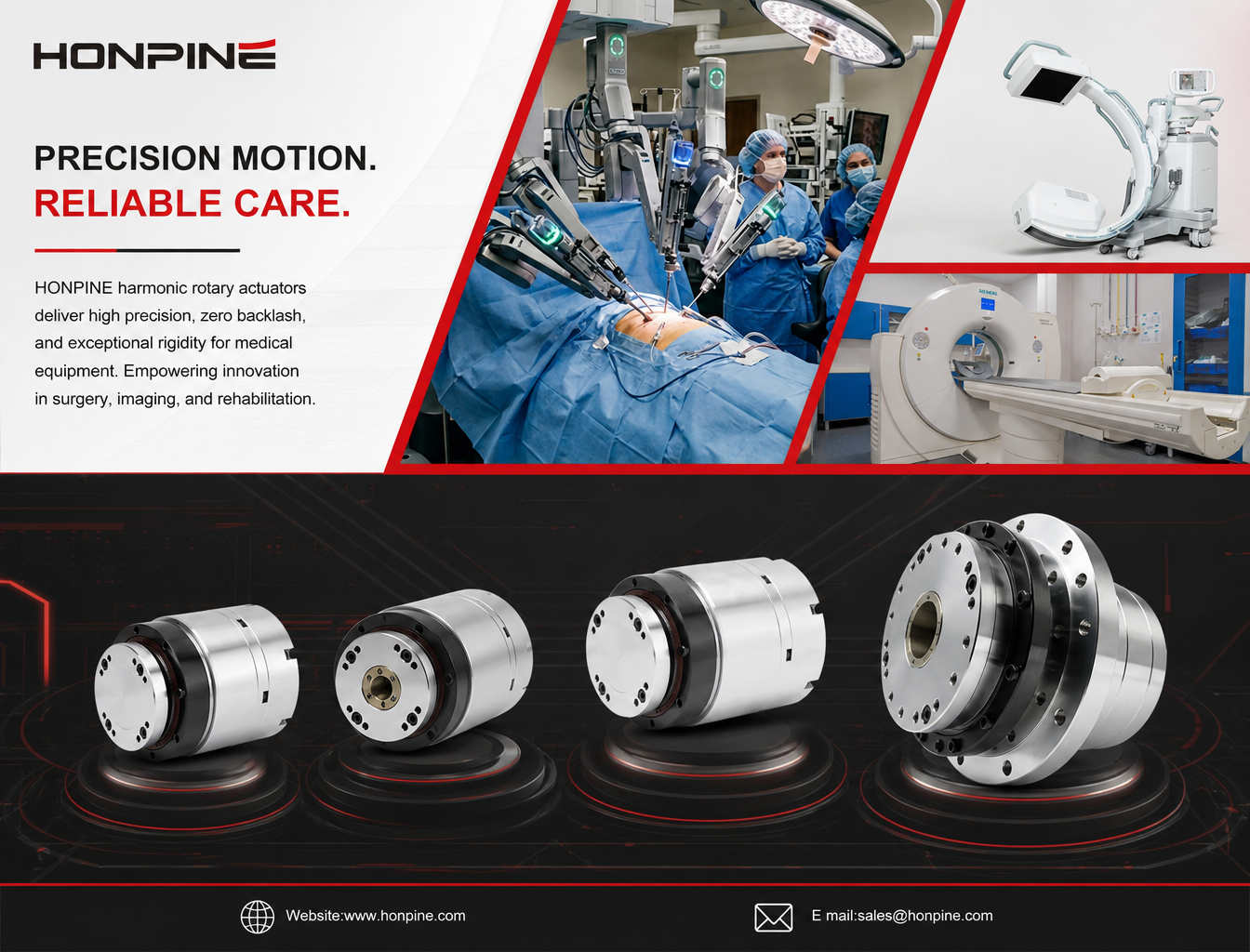
 Harmonic Rotary Actuator for Medical Equipment: ≤10 Arcsec Repeatability and High Overturning StiffnessMedical equipment demands exceptional precision, structural stability, and operational safety from its motion transmission systems. From surgical robots and CT imaging systems to rehabilitation equipment, actuators must deliver consistent positioning accuracy while supporting complex mechanical loads. How can manufacturers achieve both high repeatability and structural rigidity in medical applications? HONPINE harmonic rotary actuators offer repeatability of up to ≤10 arcsec, zero-backlash transmission, high overturning stiffness, and hollow-shaft configurations, providing reliable motion control solutions for next-generation medical equipment.
Double Click
We provide harmonic drive reducer,planetary reducer,robot joint motor,robot rotary actuators,RV gear reducer,robot end effector,dexterous robot hand
 What is robot joint actuator?How to Choose the Best Robot Rotary Joint Actuator?In core robot joint transmission solutions, planetary and harmonic rotary actuators each have their own strengths. Choosing the right type based on application requirements is essential to achieve the optimal balance between performance and cost.
 DD Motors VS Harmonic Rotary ActuatorsThis article provides an in-depth comparison between Direct Drive (DD) motors and harmonic rotary actuators, covering their transmission principles, advantages and disadvantages, and typical application fields.
 OMG Ultra Compact Harmonic Drive Joint Module with Built-in Torque SensorHONPINE TCHL series harmonic drive joint module is a game-changing product that achieves disruptive improvements in multiple aspects such as lightweight design, integration level, and connection convenience. This article will analyze its revolutionary enhancements with you.
 What Kind of Robot Joint Module Should You Choose for High-Precision Humanoid Robot Control?As humanoid robots move beyond basic walking and demonstration tasks toward complex real-world applications, their joint modules must deliver more than just high torque. Precise positioning, accurate torque control, structural stiffness, and dynamic response all play important roles in performing delicate operations. So, what kind of joint module should you choose for a humanoid robot designed to handle high-precision tasks? In this article, Theodore Li, Technical Director at HONPINE, introduces the HAG Harmonic Joint Module and explains five key features that make it suitable for demanding humanoid robot applications.
 3 Best Harmonic Gear Reducers for Semiconductor EquipmentSemiconductor manufacturing equipment requires high-precision motion control, compact mechanical structures, and reliable transmission performance. From wafer handling robots and OHT systems to lithography and metrology equipment, different applications place different demands on harmonic gear reducers. In this article, Theodore Li, Technical Director at HONPINE, introduces three harmonic gear reducer solutions: the FHG hollow-shaft series, FHD ultra-thin series, and FSD ultra-flat series. We will also examine 10 key technical parameters engineers should consider when selecting a harmonic gear reducer for semiconductor equipment, including rated torque, backlash, torsional rigidity, hollow shaft diameter, and permissible moment load.
 How to Match Planetary Gearboxes with Servo Motors from 6 Major Brands?Selecting the right planetary gearbox for a servo motor involves more than matching motor power and reduction ratio. Engineers must also consider output torque, load inertia, backlash, torsional stiffness, and mounting compatibility to ensure reliable transmission performance. Different servo motor brands, including Inovance, Estun, Panasonic, Mitsubishi, Yaskawa, and MOONS', may have different shaft dimensions and mounting interfaces. So, how can engineers identify the right planetary gearbox for each servo motor? This guide explores the key matching principles, essential calculations, and practical selection considerations to help you make an informed decision.
 Why Do Strain Wave Gear Manufacturers Produce Products with Such Different Levels of Quality and Precision?Strain wave gears share the same operating principle, but their quality, precision, and service life can vary significantly between manufacturers. What causes these differences? HONPINE Founder Allen Li explains how material selection, tooth profile design, precision machining, assembly techniques, and quality control influence the final performance of strain wave gears. Discover the key differences between Chinese and Japanese manufacturers and what to consider when choosing a reliable strain wave gear supplier.
 What Are Rated, Intermittent, and Peak Torque in a Harmonic Actuator?When selecting a harmonic actuator for a robot joint, engineers often focus on its maximum output torque. However, a single torque value cannot fully describe an actuator's operating capability. A robot joint may need to support a load continuously, generate higher torque during periodic movements, or withstand brief external impacts. Rated torque, intermittent torque, and peak torque represent three distinct operating conditions, each with its own limitations. For humanoid robots, quadruped robots, and robotic arms, understanding these differences is essential for evaluating actuator performance, preventing overload, and ensuring long-term reliability.
 Why Do Five-Axis CNC Rotary Tables Use Different Reducers for the A-Axis and C-Axis?Five-axis CNC rotary tables require different transmission characteristics for the A-axis and C-axis. While the A-axis often needs high torsional stiffness and load-bearing capacity to support the cradle assembly and workpiece, the C-axis places greater emphasis on low backlash, angular positioning accuracy, and dynamic response. This article explains why RV reducers are often considered for A-axis applications and harmonic reducers for C-axis applications, covering their working principles, mechanical advantages, output-side feedback, and key selection criteria for CNC machine tool manufacturers.
 How Does the HONPINE HPJM Integrated Robot Joint Module Deliver High Torque in a Compact Space?Learn how to optimize installation space while achieving high torque density in robotic joints. This article explores how the HONPINE HPJM integrated robot joint module uses integrated components, hollow-shaft cable routing, compact electrical connectors, and optimized mechanical mounting structures to reduce unnecessary space in humanoid robots and robotic arms.
 Harmonic Gear Motor vs. Harmonic Actuator: What Are the Differences?This article explains the differences between harmonic gear motors and harmonic actuators from the perspectives of product design, system integration, feedback and control functions, installation, and application requirements. Since manufacturers may use these product names differently, it also explores how to evaluate their actual configurations and select the right precision motion solution for robotics and industrial automation.
 HONPINE JM Fourth-Generation Frameless Torque Motor: 30% Higher Torque Density and 10% Lower Operating TemperatureAs robotics technology advances, frameless torque motors are facing increasingly demanding requirements for torque density, motion stability, and thermal management. The HONPINE JM fourth-generation frameless torque motor achieves 30% higher torque density and 10% lower operating temperature through improvements in electromagnetic design, core materials, and winding technology. With torque ripple controlled below 1%, it delivers smoother low-speed operation and improved motion consistency, making it suitable for demanding applications such as surgical robots, humanoid robots, and precision automation equipment. How does HONPINE achieve these performance improvements? Let's take a closer look.