









Thailand Industrial Show Opens With Smart Manufacturing Focus
On June 17, 2026, the Thailand International Industrial Manufacturing Exhibition opened at the IMPACT Exhibition Center in Bangkok, bringing smart manufacturing equipment to the forefront alongside photovoltaic and energy storage, auto parts, and port logistics equipment. The presence of Chinese automation solution providers, including exhibitors showing customized lines for energy storage unit EOL testing and automotive thermal management module assembly, is worth watching because it points to where regional demand, channel development, and OEM cooperation may be concentrating in Southeast Asia.
What the Bangkok event clearly shows
The exhibition opened on June 17, 2026, at the IMPACT Exhibition Center in Bangkok. According to the provided event summary, the show is organized around four main sections: smart manufacturing equipment, photovoltaic and energy storage, auto parts, and port logistics equipment.
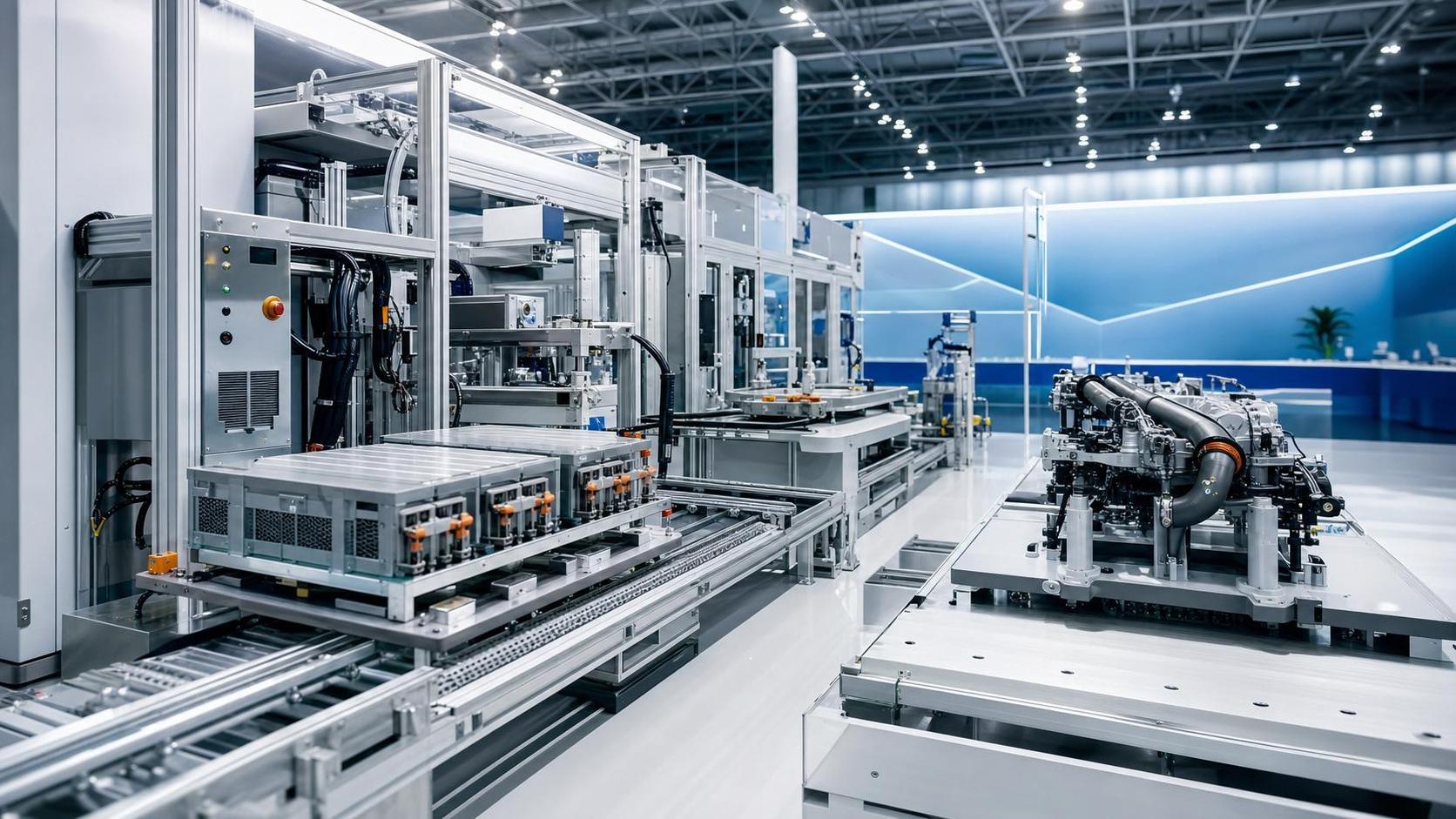
The same summary states that Chinese automation solution providers, including GKG (Shanghai), appeared with customized production lines such as an EOL testing line for new energy storage units and an assembly line for automotive thermal management modules. It also confirms that multiple intended cooperation arrangements were reached on site with Southeast Asian channel agents and OEM partners.
Why different market participants may pay attention
Equipment suppliers and system integrators
From an industry perspective, this event matters to equipment suppliers and automation integrators because the showcased solutions are not generic machines but customized production lines tied to specific application scenarios. The immediate business impact may center on lead generation, partner screening, and the ability to translate technical solutions into local channel and OEM opportunities.
Manufacturers linked to energy storage and automotive systems
Analysis shows that manufacturers in energy storage and automotive-related segments may read this development as a signal that production-line capability, testing capacity, and module assembly solutions are becoming central topics in regional industrial discussions. What deserves closer attention is not only the equipment itself, but also how production requirements, integration needs, and supplier matching may evolve around these categories.
Channel partners and OEM-facing distributors
For channel businesses and OEM-oriented distributors, the confirmed cooperation intentions suggest that exhibition activity is functioning as a market access mechanism as well as a branding platform. The likely impact falls on partner selection, product portfolio decisions, and follow-up negotiations, especially where local representation and project-based sales are involved.
Supply chain and delivery service providers
Observably, companies involved in supply chain coordination, project delivery, and after-sales support may also need to monitor developments from this type of exhibition. If cooperation intentions move toward execution, the pressure points are likely to appear in documentation readiness, delivery coordination, installation support, and communication between overseas suppliers and regional customers.
What companies should track after the exhibition
Whether cooperation intentions convert into formal projects
What deserves closer attention is whether the announced on-site cooperation intentions remain at the discussion stage or move into formal channel agreements, OEM cooperation, or project implementation. That distinction matters for sales forecasting, partner prioritization, and resource allocation.
Which product categories receive sustained follow-up
Companies should watch whether smart manufacturing equipment continues to lead follow-up communication compared with the other featured sections of photovoltaic and energy storage, auto parts, and port logistics equipment. This is especially relevant for firms deciding where to place marketing, technical support, and business development efforts.
How customized line capabilities are presented in customer communication
For vendors and solution providers, the practical issue is how application-specific lines such as EOL testing and thermal management module assembly are translated into customer proposals. The focus should remain on technical fit, project scope clarity, and delivery expectations rather than treating exhibition exposure alone as a completed commercial result.
Readiness for cross-border execution
Analysis shows that firms pursuing Southeast Asian opportunities should review partner qualification materials, commercial documentation, lead times, and communication processes. Where channel and OEM discussions begin at an exhibition, execution risks often emerge later in alignment over specifications, timelines, and responsibility boundaries.
How this development is best interpreted now
Observably, this news is more meaningful as an industry signal than as proof of completed market expansion. The concentration on smart manufacturing equipment, together with the appearance of customized automation lines from Chinese suppliers, suggests active interest in practical manufacturing solutions tied to energy storage and automotive applications.
At the same time, it is more appropriate to understand this as an early-stage commercial and market-development indicator rather than a confirmed long-term outcome. The reported cooperation intentions are notable, but they do not by themselves establish shipment scale, project completion, or durable market share.
A measured reading of the exhibition outcome
This exhibition matters because it highlights where industrial discussion, solution marketing, and partner matching are intersecting in one regional venue: smart manufacturing, energy-related equipment, automotive-linked production, and logistics hardware. For industry participants, the practical takeaway is to treat the event as a useful signal about business focus and regional engagement, while continuing to distinguish between exhibition momentum and verified downstream execution.
Basis of this article and what still needs verification
This article is based on the user-provided news title, event date, and event summary. For this type of industry update, commonly relevant source categories may include official exhibition announcements, company statements, industry association releases, authoritative media coverage, and documents from relevant standards or trade bodies.
No specific official source link was provided in the input, so the underlying details still require continued verification against formal disclosures where available. Follow-up observation should focus on whether the stated cooperation intentions progress into confirmed agency arrangements, OEM projects, or other verifiable business outcomes.
Components Supporting the Next Generation of Automation
Many automation systems displayed at industrial manufacturing exhibitions rely on precision motion-control technologies.
Typical solutions include:
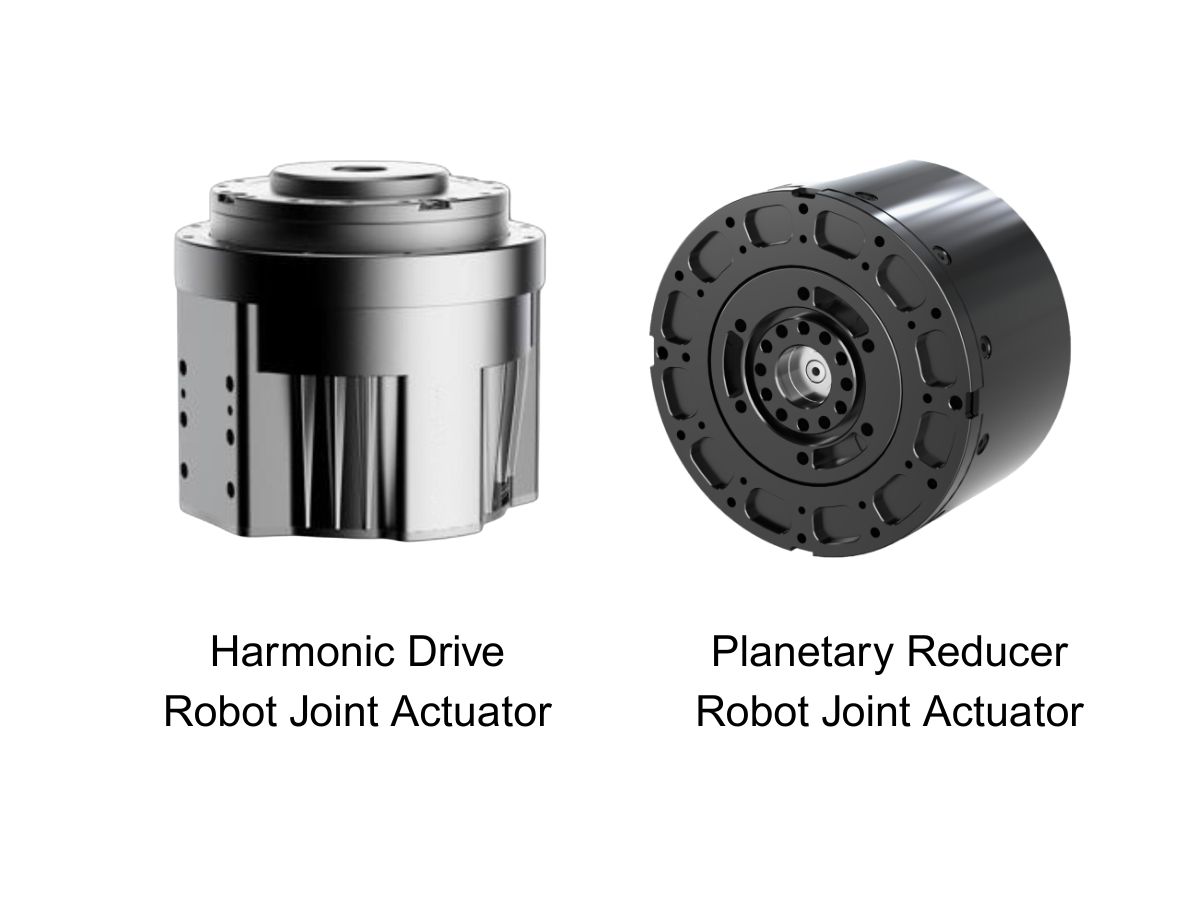
• Harmonic drive reducers for robotic joints
• RV reducers for heavy-duty industrial robots
• Planetary gearboxes for servo applications
• Robot joint motors for articulated robotic systems
• AGV wheel motors for autonomous mobile platforms
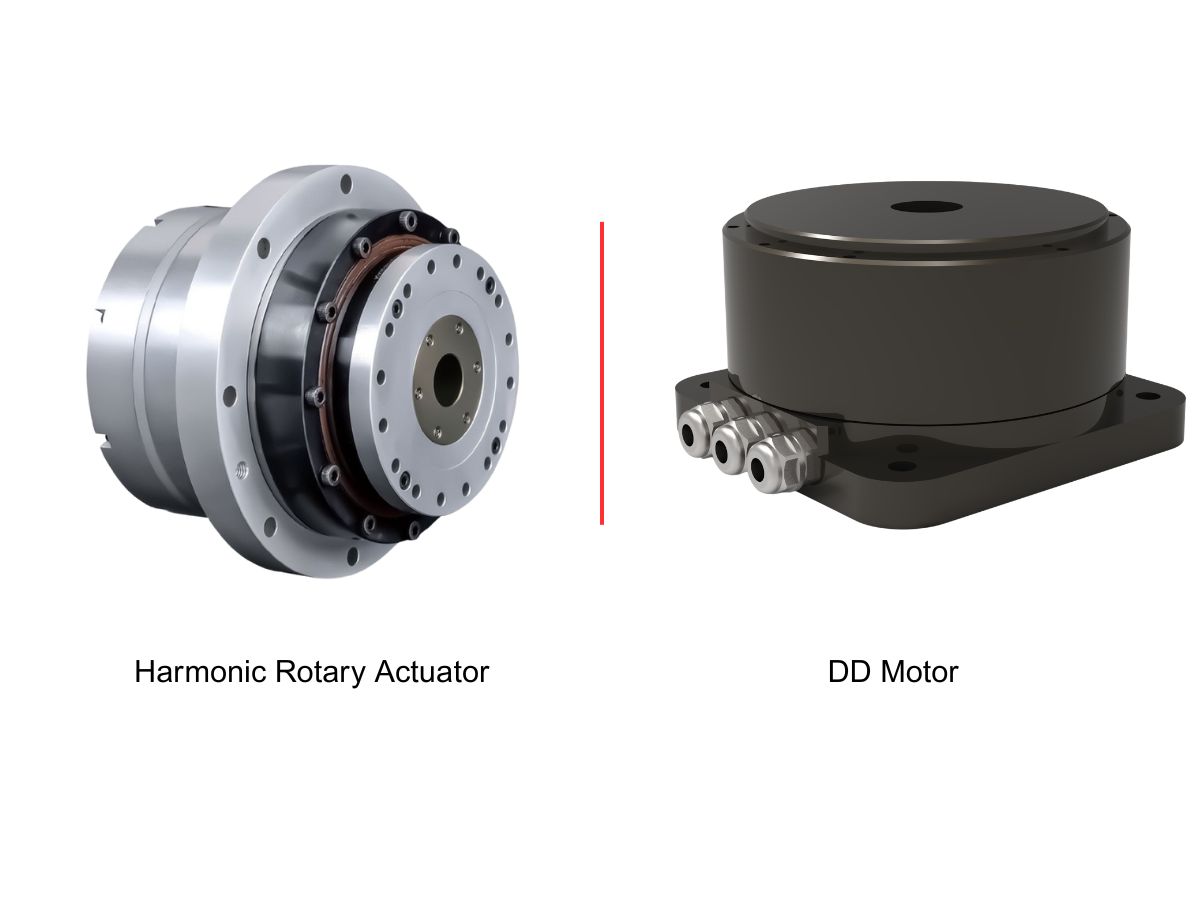
• Direct drive motors for high-precision positioning applications
Read More
Learn more about the story of HONPINE and industry trends related to precision transmission.
 What is robot joint actuator?How to Choose the Best Robot Rotary Joint Actuator?In core robot joint transmission solutions, planetary and harmonic rotary actuators each have their own strengths. Choosing the right type based on application requirements is essential to achieve the optimal balance between performance and cost.
 DD Motors VS Harmonic Rotary ActuatorsThis article provides an in-depth comparison between Direct Drive (DD) motors and harmonic rotary actuators, covering their transmission principles, advantages and disadvantages, and typical application fields.
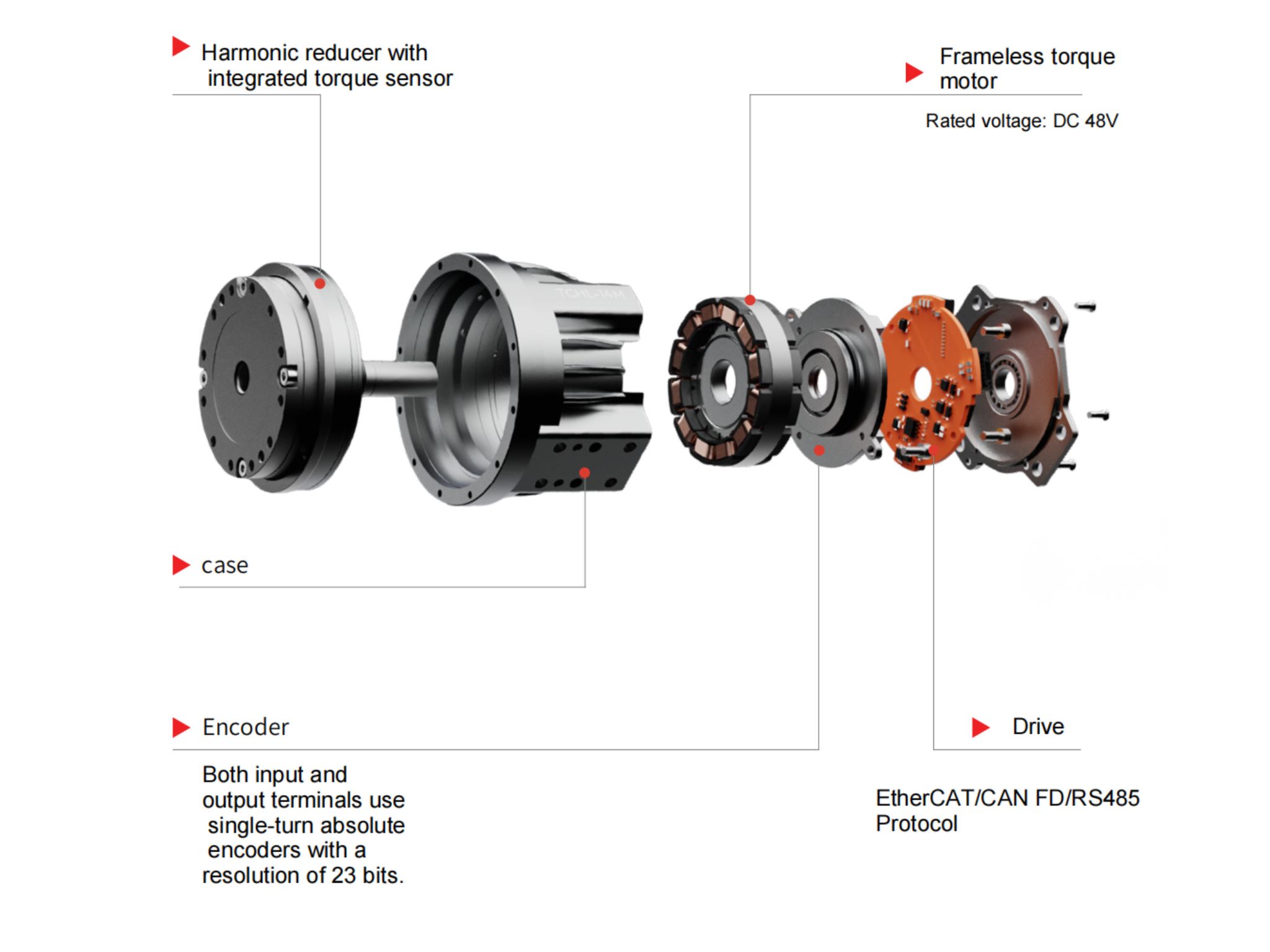
 OMG Ultra Compact Harmonic Drive Joint Module with Built-in Torque SensorHONPINE TCHL series harmonic drive joint module is a game-changing product that achieves disruptive improvements in multiple aspects such as lightweight design, integration level, and connection convenience. This article will analyze its revolutionary enhancements with you.
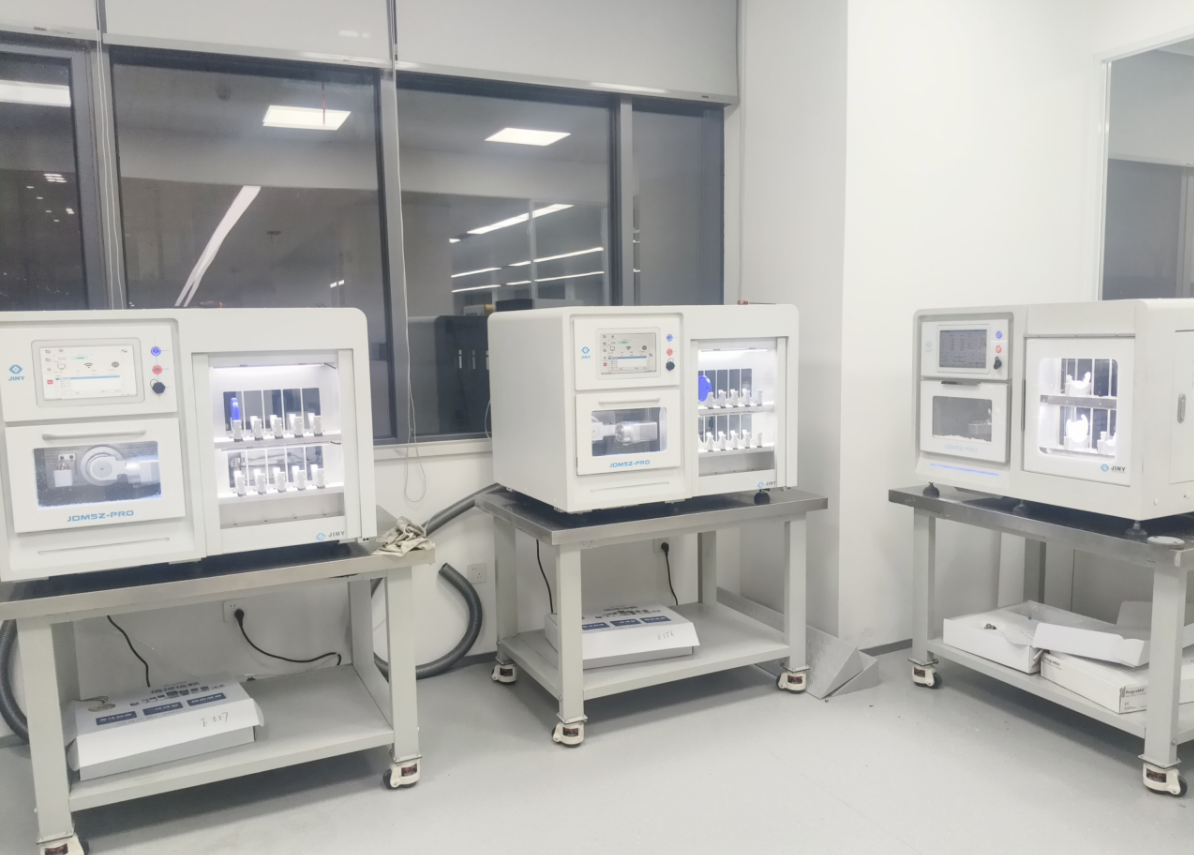
 The Role of Harmonic Drive Gears in Achieving 5–10 μm Accuracy in Dental Milling MachinesA dental milling machine is a CNC machining system used to directly process digital dental models into restorations such as crowns, bridges, veneers, inlays, and implant abutments. Dental milling machines require far higher operational accuracy and motion stability than ordinary equipment. This article explains how harmonic drive gear help dental milling machines achieve stable, continuous, and controllable operation.
 Why Are Harmonic Rotary Actuators Perfect for Medical Equipment?Harmonic rotary actuators (typically integrated systems consisting of a harmonic drive reducer, frameless torque motor, encoder, and optional brake) are regarded as key components in medical equipment. The core reason is that they simultaneously meet the most stringent medical requirements for precision, compact size, safety, and controllability. The following explanation is structured from three perspectives: technical characteristics, application scenarios, and medical value.
 High-Precision RV Reducers Perfectly Matched for Walking RobotsThe walking axis of a robot is a core component for power transmission and support. RV reducers provide extremely high rigidity, precision, and torque while maintaining a compact size and exceptional reliability, making them an ideal match for the demanding requirements of walking robot joints in terms of load capacity, impact resistance, and precision.
 Harmonic Reducer vs. Harmonic Rotary Actuator: Which Is Better for CNC Machine Tools?Choosing between a harmonic reducer and a harmonic rotary actuator is an important decision in CNC machine tool design. Both solutions offer high-precision motion control, but they differ in integration, installation requirements, rigidity, and system flexibility. For CNC fourth-axis rotary tables and compact five-axis machining systems, selecting the right harmonic drive can significantly influence machine performance. In this article, HONPINE Technical Director Theodore Li compares harmonic reducers and harmonic rotary actuators to help engineers identify the most suitable solution for their CNC applications.
 How to Choose Harmonic Joint Actuators for a 7-DOF Robotic Arm?I'm Theodore Li, Technical Director at HONPINE. Choosing harmonic joint actuators for a 7-DOF robotic arm starts with the torque, weight, and installation needs of each joint. This guide uses a TCHL 20 shoulder and TCHL 14 wrist configuration as an example, then explores torque sensing, compliant control, and HAG Series considerations for demanding robotic applications.
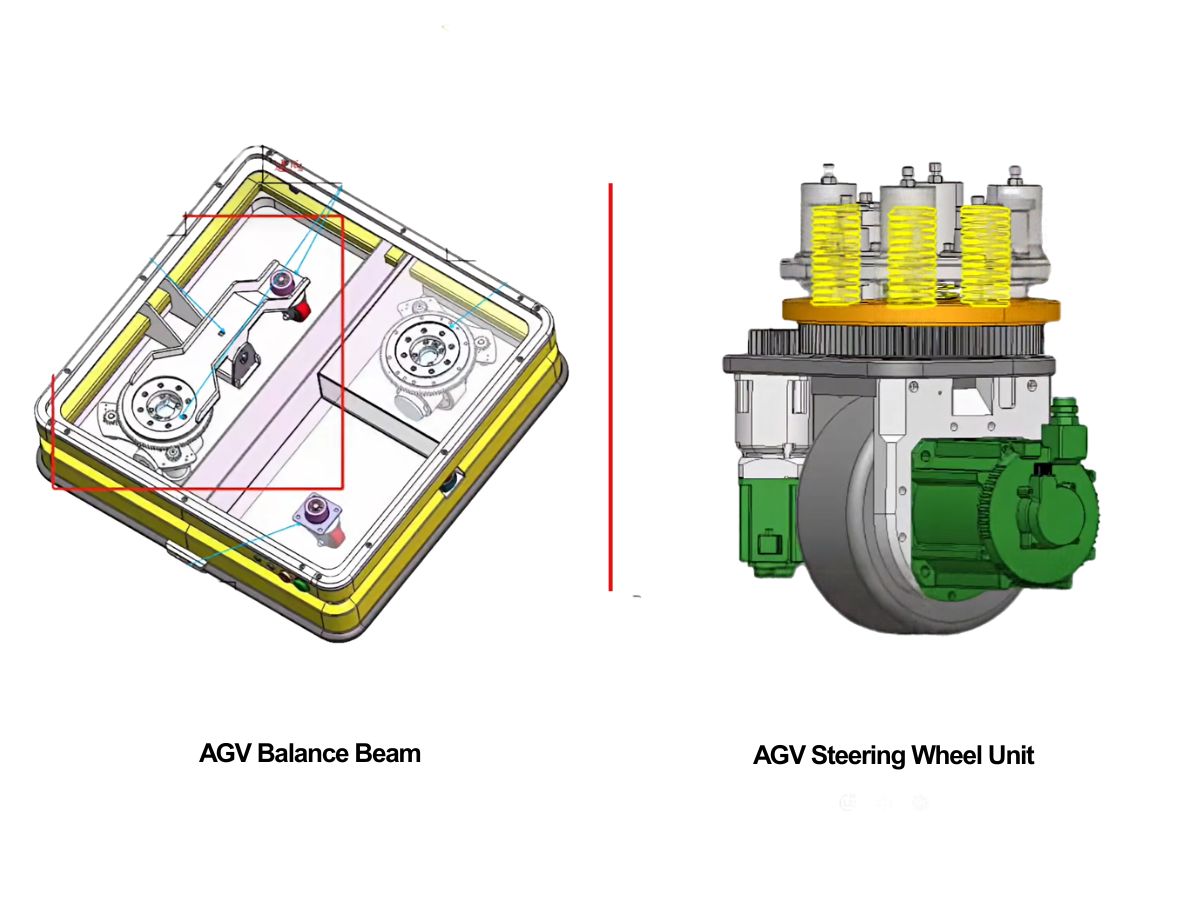
 AGV Suspension: Should You Choose a Balance Beam or a Spring-Loaded Steering Drive Unit?Choosing an AGV suspension system starts with the vehicle’s load range and floor conditions. Balance beams and spring-loaded steering drive units offer different approaches to maintaining wheel contact and managing wheel loads. This HONPINE guide compares both options and explains how to evaluate traction, suspension travel, installation space, and maintenance before choosing a configuration.
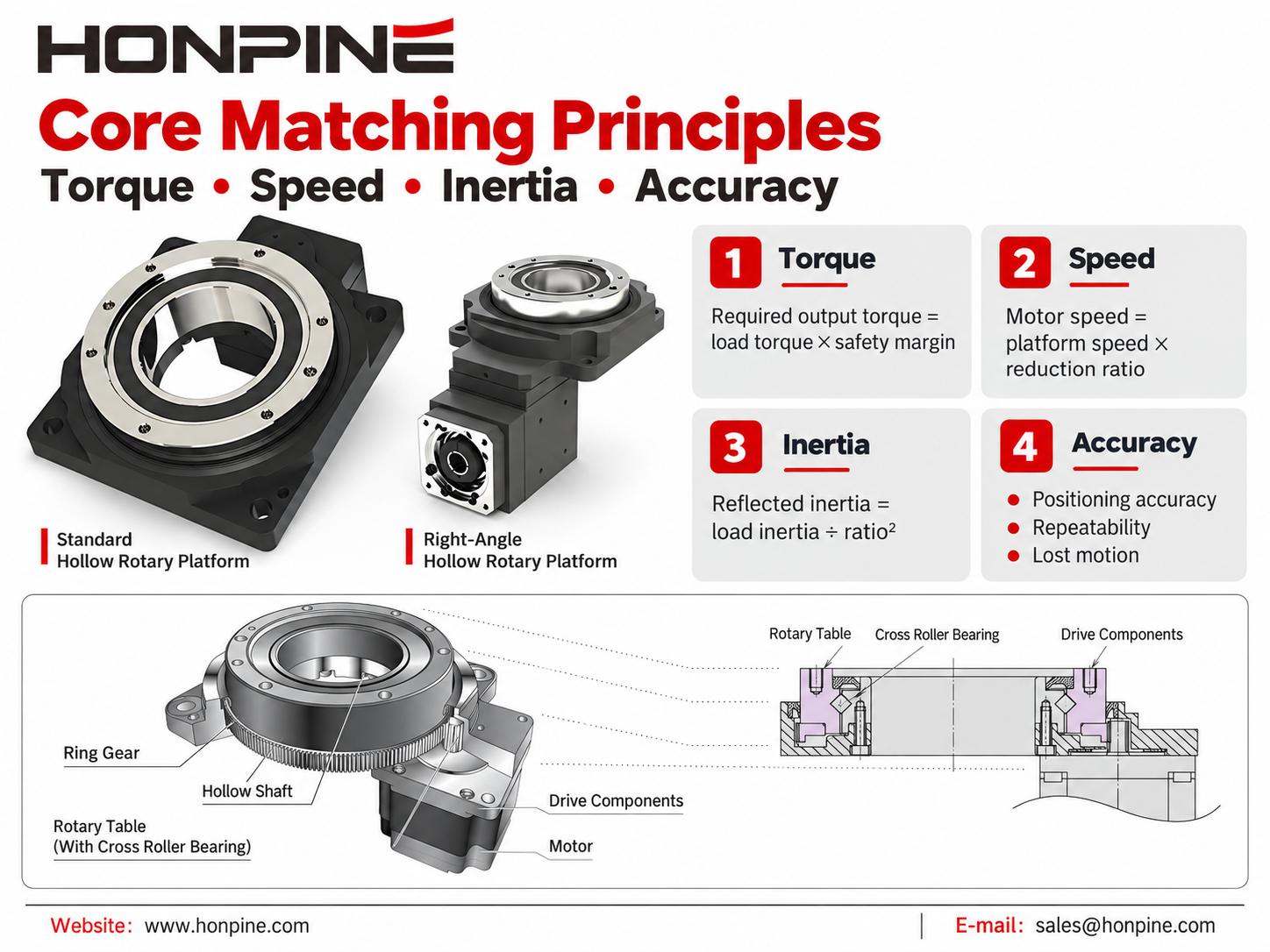
 Hollow Rotary Platform Motor Matching: A Complete GuideSelecting the right motor for a hollow rotary platform is essential for achieving precise positioning, stable operation, and efficient automation. This guide explains how to match servo motors, stepper motors, and brushless DC motors with hollow rotary platforms based on torque, speed, inertia, accuracy, and installation requirements. Explore practical motor selection guidelines, typical application combinations, and space-saving mounting solutions to find the right configuration for your automation project.
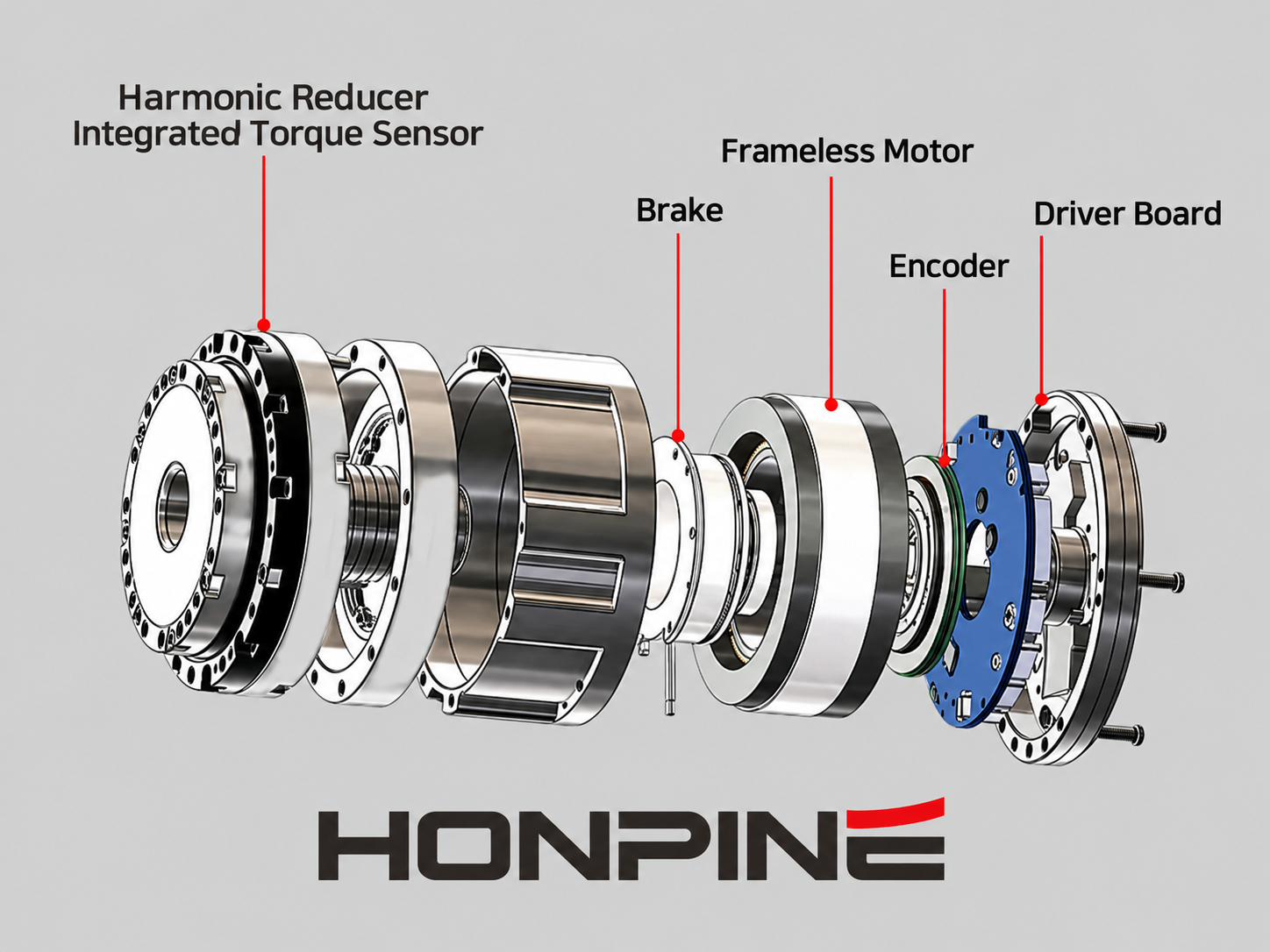
 Can Robots Feel Touch? HONPINE HAG Force-Controlled Harmonic Robot Joint MotorsCan robots respond to a gentle touch? The HONPINE HAG robot joint motor with torque sensor combines a harmonic reducer, integrated torque sensing, and closed-loop control to detect external forces and support smooth, compliant motion. In this article, HONPINE founder Allen Li demonstrates the module's response to light contact and hand-guided movement, explains its key force-control technologies, and shares the vision behind joint modules designed for practical industrial robotics.
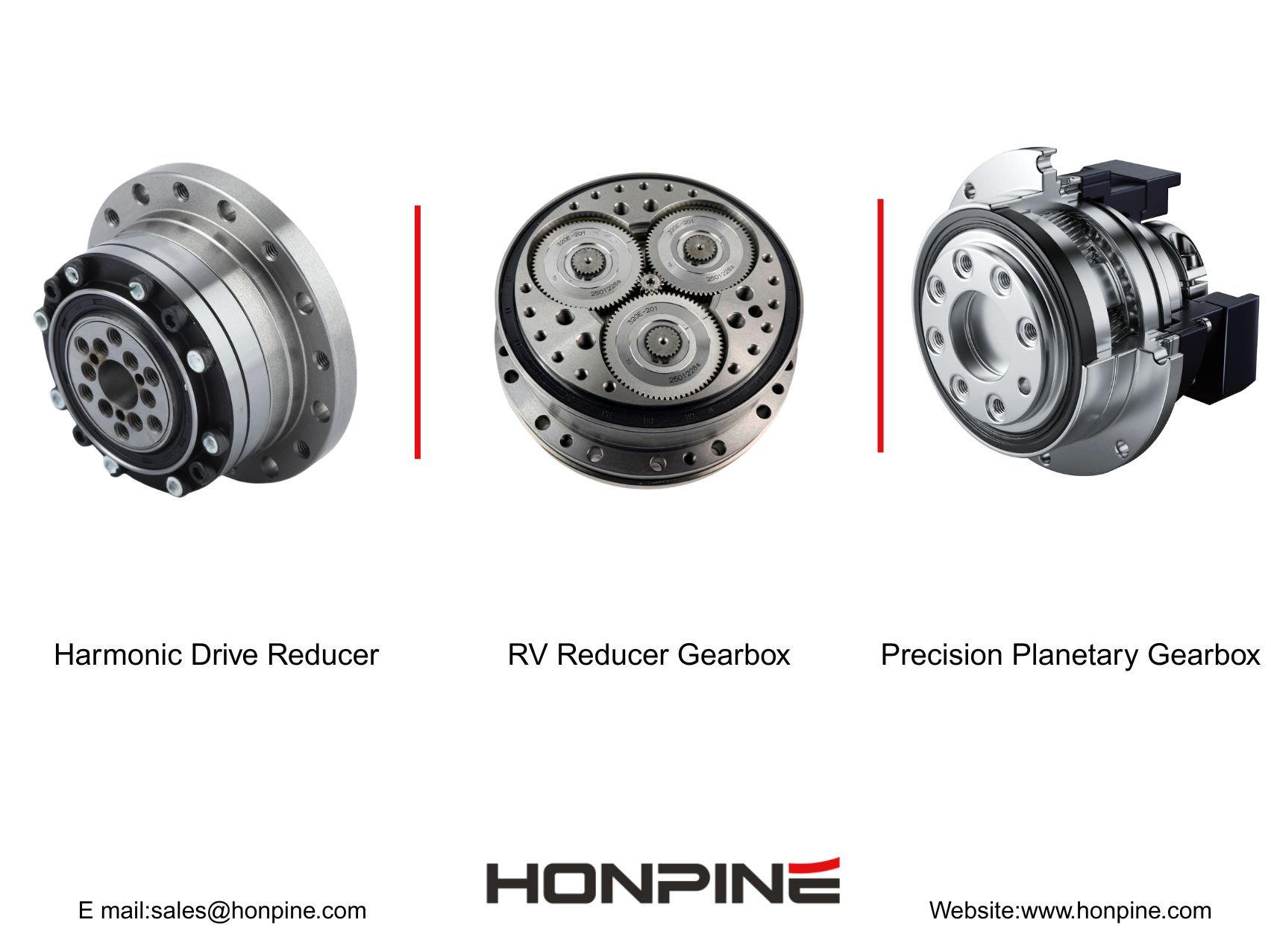
 Does a Higher Gearbox Ratio Mean More Torque? Planetary, Harmonic, and RV Gearboxes ExplainedDoes a higher gearbox ratio mean more torque? This engineering guide explains the relationship between gearbox ratio, output torque, and output speed, and compares planetary gearboxes, harmonic gearboxes, and RV gearboxes. Learn why reduction ratio alone cannot determine gearbox torque capacity, efficiency, dynamic response, precision, or service life, and what engineers should consider when selecting a gearbox for robotics, CNC machines, servo systems, and industrial motion control.
Double Click
We provide harmonic drive reducer,planetary reducer,robot joint motor,robot rotary actuators,RV gear reducer,robot end effector,dexterous robot hand
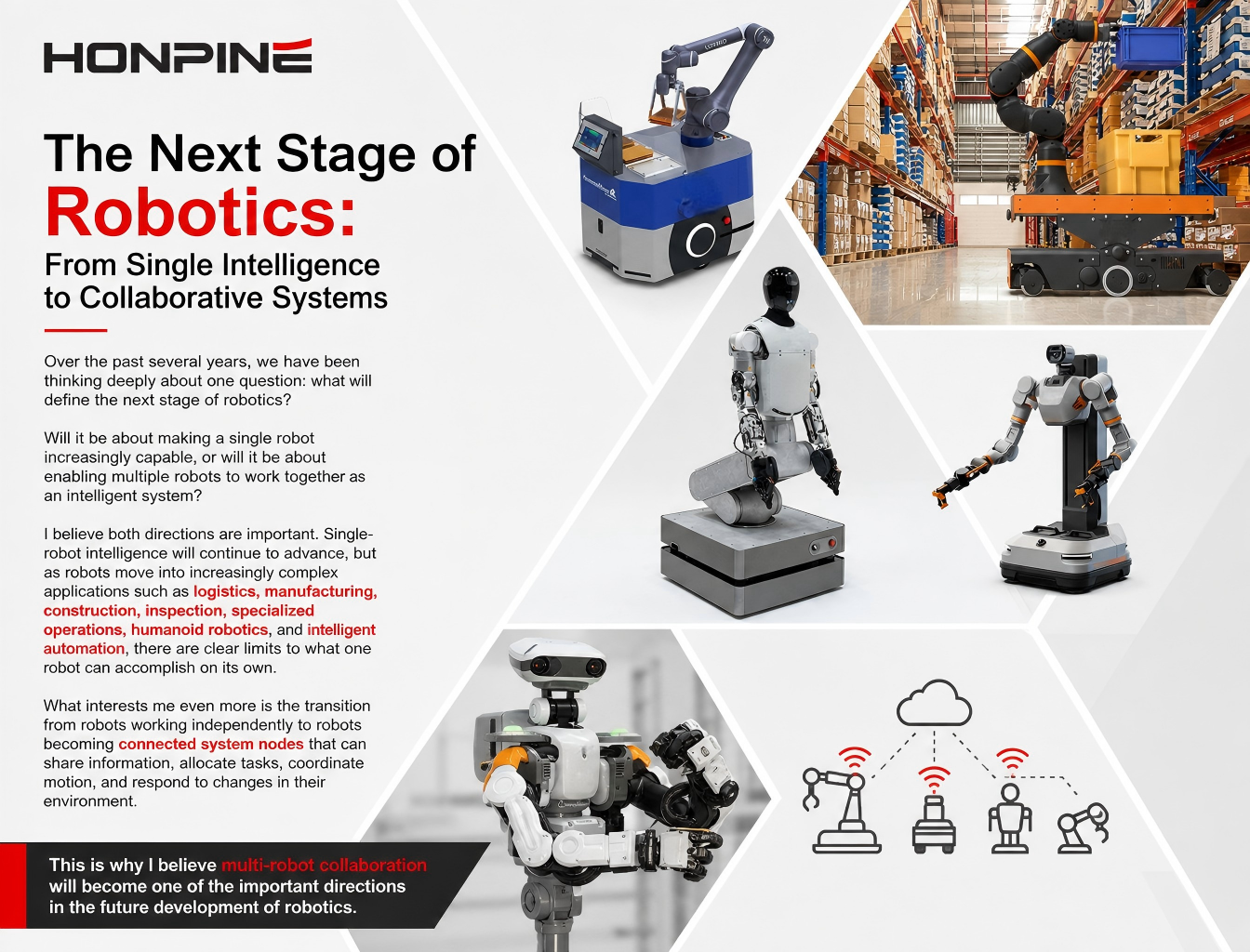
 Multi-Robot Collaboration: From Single-Robot Intelligence to System IntelligenceHello, I’m Allen Li, Founder of HONPINE. As robotics continues to evolve, I believe the next major step will not come only from making individual robots more intelligent, but from enabling multiple robots to work together as coordinated systems. Multi-robot collaboration introduces new requirements for communication, task allocation, motion coordination, state awareness, and safety. This evolution also changes the role of the robot joint. A future intelligent robot joint will need to do more than generate precise motion. With technologies such as dual encoders, torque sensing, integrated drives, real-time communication, and safety functions, the robot joint can become an intelligent motion node connecting robot intelligence with physical movement. In this article, I would like to share how I see the relationship between multi-robot collaboration, system intelligence, and the next generation of HONPINE robot joint modules.
 Automate 2026 Sends a New Signal: Humanoid Robots Enter the Era of AccountabilityAUTOMATE is the leading industrial automation and robotics exhibition in North America. Organized by the Association for Advancing Automation (A3), it is widely recognized as a global benchmark event in the automation industry.
 Thailand Industrial Show Opens With Smart Manufacturing FocusAutomation production line insights from the Thailand Industrial Show: explore smart manufacturing trends, energy storage EOL testing, and automotive module assembly opportunities in Southeast Asia.
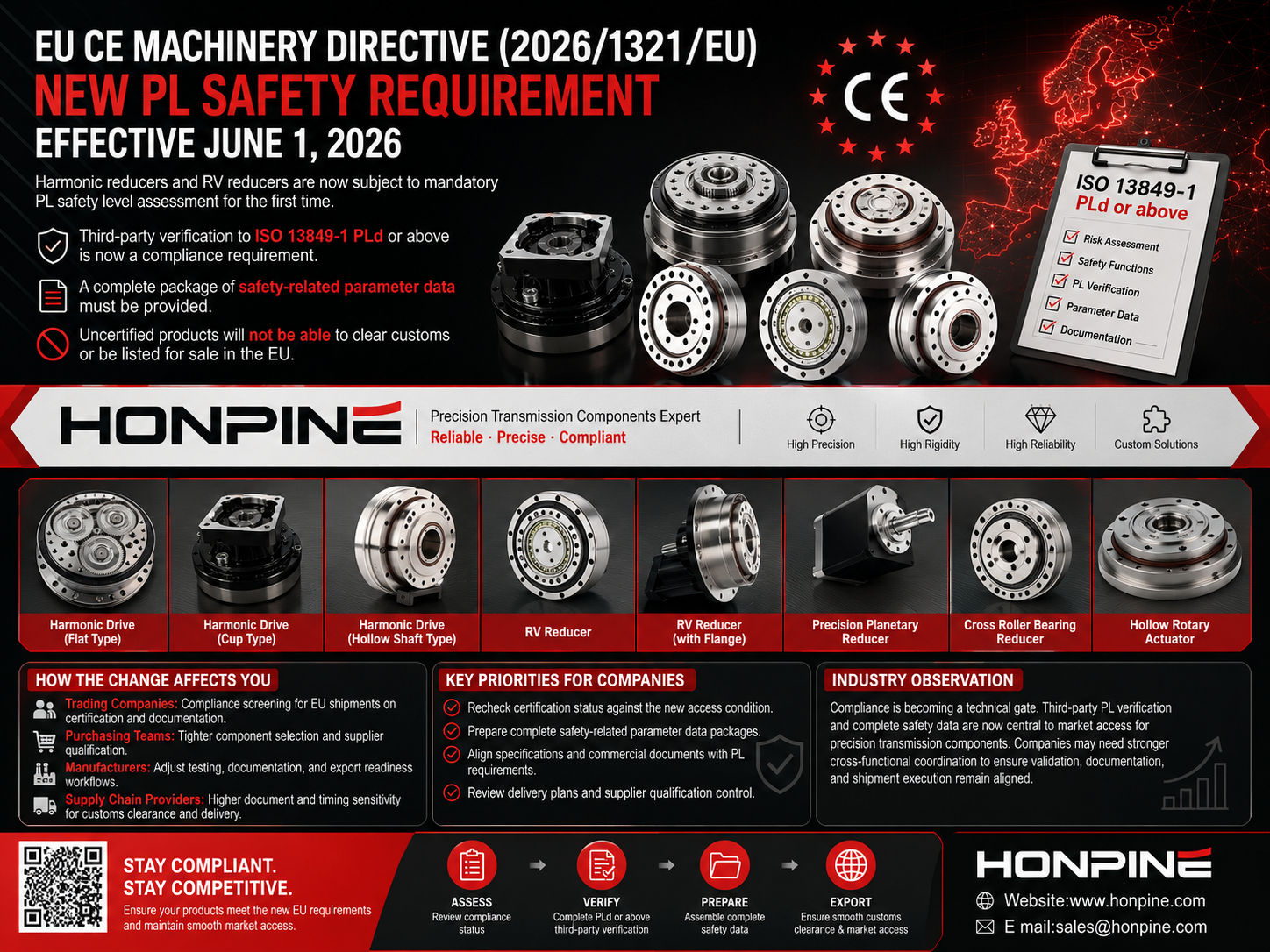
 EU CE Rule Makes PL Certification MandatoryEU CE Rule Makes PL Certification Mandatory: learn how new EU requirements affect harmonic reducers, ISO 13849-1 PLd compliance, customs clearance, and market access.
 China Pavilion at INNOPROM 2026 Expands by 50%China Pavilion at INNOPROM 2026 expands by 50%, spotlighting AI smart factory solutions, CNC machine tools, robotics, and new opportunities for Russia-CIS industrial markets.
 India Tops China Machine Tool Exports, Up 41.2%India tops China machine tool exports as Q1 shipments rise 41.2%. See what this shift means for CNC suppliers, tenders, delivery risks, and after-sales strategy.
 Embedded vs. External Torque Sensors in Robotic Joints Module: Engineering Trade-offs and Future TrendsIn recent years, with the rapid growth of humanoid robots and collaborative robots, high-precision force control has become a core capability for achieving compliant and safe interaction. At the heart of this capability lies a critical component inside the robotic joint module: the torque sensor, responsible for perceiving force.
However, the installation method of torque sensors directly determines joint performance, reliability, and cost. Today, two main technical approaches dominate the market: embedded (integrated) and external (add-on) torque sensors.
This distinction goes beyond simply “built-in” versus “attached.” The fundamental difference lies in whether the torque sensing structure is an intrinsic part of the mechanical transmission chain and integrated within the joint itself. A Complete Guide to Choosing Single-Encoder vs. Dual-Encoder Robot Joint ActuatorsIn a robot joint, encoders play a role similar to human vision and proprioception. They continuously measure the position and speed of both the motor rotor and the output shaft, feeding this information back to the controller to form a precise closed-loop control system.
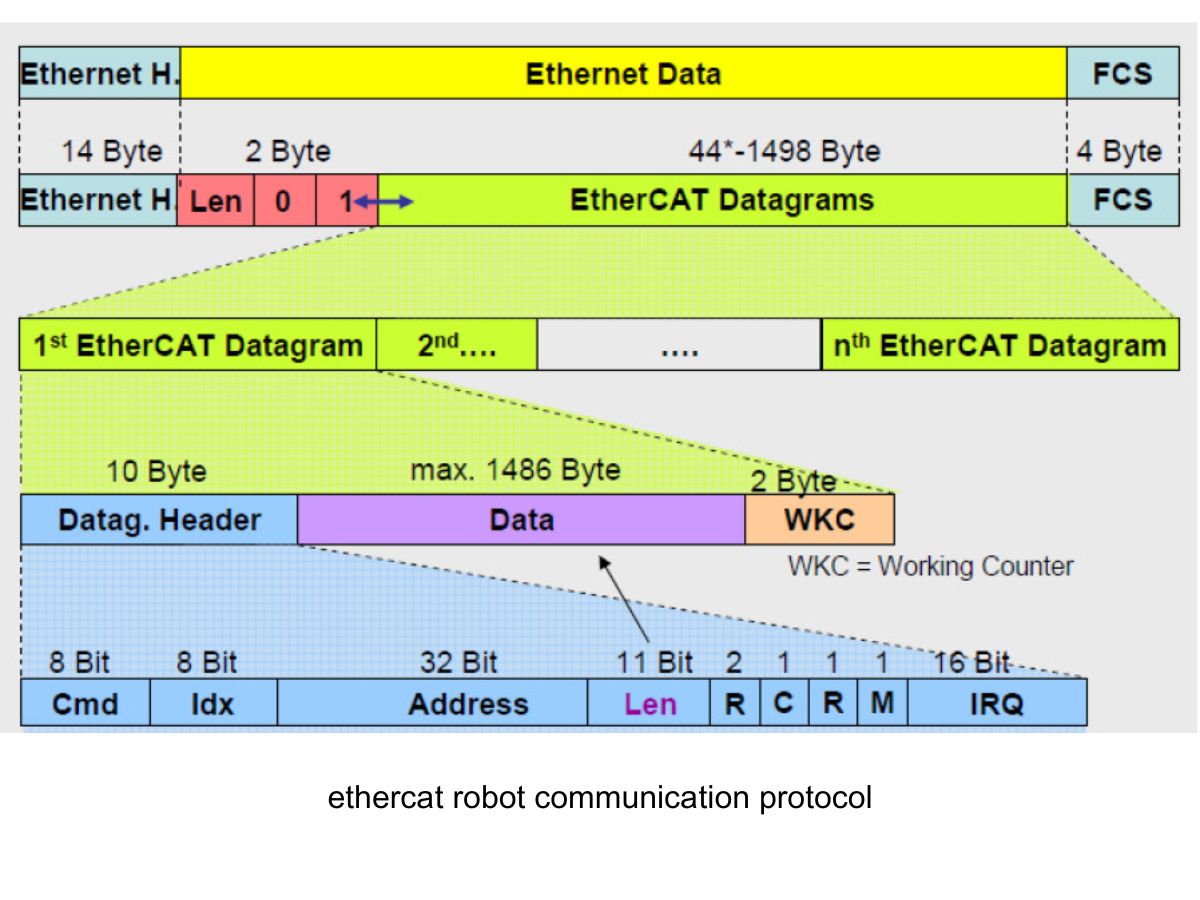
Encoders are also one of the core components of HONPINE joint actuators, directly determining motion accuracy, stability, and safety. Robot Communication Protocols: Why EtherCAT and CAN Are the FutureAccording to statistics released by the EtherCAT Technology Group (ETG) in 2024, EtherCAT has captured 39.2% of the global industrial robot communication protocol market, with an annual growth rate of 12.7%, significantly outperforming other competing protocols. Its advantages are particularly evident in key application scenarios: from multi-joint real-time coordinated control in humanoid robots, to multi-sensor fusion in autonomous driving, and human–machine collaboration in Industry 4.0. EtherCAT is redefining how intelligent systems interact with the physical world.
 Why Is It So Difficult for the Price of High-Performance Humanoid Robots to Decrease?And Why Are Harmonic Joint Modules Still Irreplaceable?The core reason lies in one unavoidable requirement: high degrees of freedom.
High DOF is essential for humanoid robots, and this directly leads to harmonic joint modules accounting for a consistently high proportion of total system value. Harmonic Drive Systems VS Nabtesco VS HONPINE Harmonic Drive MotorThe integrated harmonic joint motor is a highly integrated, high-performance robotic joint solution that combines the motor, reducer, encoder, sensors, and other key components into one unit. It provides powerful drive capability and precise motion control for robots. Regarded as the “heart” of humanoid robot motion, it is installed at various joints to control their movement and directly determines the robot’s overall performance. Therefore, choosing a reliable harmonic joint motor is crucial for humanoid robot development.
 How to Find a Reliable Supplier Amid Soaring Demand for Harmonic Drives and Harmonic Actuators?Under the driving forces of AI, embodied intelligence, and other key technologies, the humanoid robot industry is experiencing explosive growth. The demand for harmonic drives and harmonic actuators has surged accordingly, making it increasingly difficult for machinery companies to find reliable suppliers. So, how is HONPINE responding to this surge in demand?



- harmonic drive reducer
- harmonic drive
- planetary gearbox
- planetary gearboxes
- robot joint motor
- joint motor
- agv wheel motor
- RV reducer
- harmonic drive reducers
- robot joint
- joint motors
- harmonic
- planetary gear
- precision
- planetary
- robotic joint
- servo
- agv wheel
- rv reducers
- robot joint motors
- direct drive motor